pastorjohnb

Thoughts and musings on faith and our mighty God!


Leave a comment

Receive Your Reward

Daniel 12:1 – “At that time, every one of your people who is found written in the scroll will be rescued.”

Today we read Daniel’s visions. These difficult and challenging words carry both a historical meaning and they speak into future times as well. In the historical sense, these words deal largely with Antiochus IV, a Greek king who heavily persecuted the Israelites. His reign brought the first known attempt by a political ruler to wipe out a religion. The historical time frame is 176-164 BCE. These words come much later than Daniel 1-6, set around 400 BCE.

Daniel’s first vision is of four beasts. These kingdoms will rise and fall. All will impact God’s people. But in the end, “the holy ones of the Most High will receive the kingship.” In the end, God will triumph. The fourth, the most evil, represents Antiochus. The 3 1/2 years lines up with his actual reign, as do the wars fought with the “southern king” – Egypt.

Daniel’s second vision of the ram and he-goat are about Persia/Media and the Greeks/Alexander the Great. As strong and powerful and dominant as Alexander will be, his kingdom is divided into four smaller, weaker kingdoms. This vision is followed by Daniel’s prayer in chapter 9. His humble words of confession and repentance move heaven. Gabriel is sent. He affirms Daniel as “greatly treasured” but also confirms the persecution soon to come upon God’s faithful.

Chapter 10 offers insight into another battlefront – the heavenly conflict. Michael helped in the battle against Persia’s powers so that the messenger could get to Daniel. Chapter 11 is some review – the battles between Antiochus and Ptolemy III of Egypt. It is about the persecution the people of God will face too. They are assured that this too will end.

Chapter 12 closes the book of Daniel with words of hope, with words of resurrection and rescue. The messenger speaks of the faithful who “will shine like the stars forever and ever.” In the end, Daniel is also encouraged. He’s told that he “will rest and will stand to receive your reward.” He too will be a part of this glorious eternity. May we also persevere through the challenges, remaining humbly faithful, trusting in God’s power to rescue and redeem.

Prayer: Lord God, as we read these words that the people of God lived through, we too are reminded of the lasting nature of evil. Antiochus wasn’t the first or the last to persecute the faithful. More came. More are yet to come. Lord, lead us to walk in faith, humbling turning to you, the only one with the power to save and rescue. Amen.



Leave a comment

God Alone Can Rescue

Reading: Daniel 4-7

Daniel 6:26 – “All people must fear and revere Daniel’s God because: He is the living God. God stands firm forever.”

Photo credit: Stormseeker

The “story” portion of Daniel continues today. Tomorrow’s reading turns to Daniel’s dreams and visions. Chapter 4 begins with Nebuchadnezzar telling of God’s grace, mercy, and restoration. He has a dream where a very tall tree ruled over all, caring well for everyone. That was Nebuchadnezzar. Yeah! But then the tree was cut down and destroyed, leaving only a stump bound with iron and bronze. He lost his mind for seven years, living amongst the wild animals. Finally, he humbles himself, as Daniel has asked him to do, and God restores him fully. The king worships God, declaring that God’s works are true, that God’s paths are just, and that God’s power will humble the prideful.

Chapter 5 shifts to the next king, Belshazzar. At a big party he calls for and drinks from the goblets taken from the temple. A hand appears and writes on the wall. Fear seizes all. Despite a big reward, no one can read or interpret the words. The queen enters and remembers Daniel. He is summoned and first reminds the king how God humbled Nebuchadnezzar. It is a warning that’s ignored. Daniel then interprets the writing: “Mene, mene, tekel, parsin.” Your days are numbered, you haven’t measured up, your kingdom will be divided. That night Belshazzar is killed. Darius the Mede becomes king.

Darius establishes a new governmental system. 120 regional officials will report to three main officers. Daniel is one of these three at first. Soon Darius is considering making him #1. This spawns jealousy which spawns a plot. The 122 leaders trick Darius into signing a decree that people can only pray to him. Daniel prays to God, “just like he always did.” On the way into the pit, Darius says, “Your God… will rescue you.” After a sleepless night, Darius discovers that God has done just that. He then issues a decree stating, “All people must fear and revere Daniel’s God because: He is the living God. God stands firm forever.” The proof, he says, is that God rescued Daniel. When we must decide between God and career or status or some other thing, may we trust in our God who rescues and saves.

Prayer: Lord God, you alone can rescue. You alone can save. There are many things, God, that can rise up in our selfish hearts, drawing us away from you. When they begin to have voice, when they start to pull at us, remind us of your better plan for our lives. Through the power of the Holy Spirit guide us to stand for and in your promise to rescue and save. Amen.


Leave a comment

To the Test

Reading: Daniel 1-3

Daniel 2:47 – “No doubt about it: your God is God of gods, Lord of kings, and a revealer of mysteries.”

Photo credit: Nadine Shaabana

As the book of Daniel begins, Babylon’s king attacks Jerusalem. Although the city does not fall, God hands over Judah’s king. In addition, they took into exile some men who were good-looking, skilled, intelligent, and capable. These men were to be trained as officials in Babylon’s government. Among these were Daniel, Hananiah, Mishael, and Azariah. The last three will be known as Shadrach, Meshach, and Abednego. Daniel will also receive a Babylonian name, but he will be known as “Daniel” throughout the book.

The first test comes around food. In training they are to eat the king’s food and to drink his wine. This would defile them. Daniel works out a test period, eating and drinking only vegetables and water. In the end they are healthier. God also blessed them with knowledge, wisdom, and understanding. When have you been in a position to eat or drink something that would “defile” you? What insights or strength do you gain from their example?

The second test comes around a dream. In a rage, the king declares that the sages must not only interpret his dream, but they must also tell him the dream. No one can do the impossible. All sages are to be executed, including the four. Daniel secures a brief respite and gathers his friends. They seek help from God. God responds to their trust and faith, allowing Daniel to tell and interpret the dream, doing the impossible. The king is very impressed, declaring, “No doubt about it: your God is God of gods, Lord of kings, and a revealer of mysteries.” When has your trust or faith in God helped another to see God’s power and might at work?

The third test comes around idolatry. King Nebuchadnezzar builds a 90 foot statue and orders everybody to worship it. He has forgotten what he just said about God. Shadrach, Meshach, and Abednego refuse – initially and then when before the king. They boldly declare their allegiance to God alone. Thrown into the fiery furnace, they not only survive but emerge totally unaffected by the flames. This time the king offers words of praise to God. God is working on his heart. How can you stand apart from or even against the things this world idolizes, leading others to praise God?

Prayer: Lord God, our faith is often put to the test. We must decide daily if we will choose to honor you, to trust you, to stand up to be counted as yours. Give us the strength to face these challenges that call us to risk for you. Help us to walk in your will and according to your ways, bringing you praise, honor, and glory. Amen.


Leave a comment

May Blessings Flow

Reading: Ezekiel 53-48

Ezekiel 47:9 – “Wherever the river flows, every living thing that moves will thrive.”

Photo credit: Kazuend

The majority of today’s reading focuses on God’s presence re-entering the new temple and on the ordering of all aspects of worship and temple life. God’s glory fills the temple, leading Ezekiel to fall in worship. God then instructs him to listen carefully and to write down these new instructions. The central focus is on holy versus unholy or clean versus unclean. Building and purifying the altar, proper worship on the Sabbath and during the two festivals (used to be three), honoring the east gate, setting aside sacred spaces, regular offerings – all were aimed at maintaining the holy. To keep and hold these spiritual practices in the highest ways would work against a return to the “detestable practices” of old, to the unholy.

In chapter 47 there is a river that flows from the temple, out the east gate – the gate that God’s holiness entered through. The trickle grows to a vast river that brings life and abundance to the people of God. As God’s presence is brought out into the world, blessings flow with it. This remains true today.

Ezekiel closes by defining Israel’s borders and by allotting land to the tribes. These boundaries connect back to what God originally laid out for Moses back in Numbers 35. Land is allotted, beginning in the north, to Dan, Asher, Naphtali, Manasseh, Ephraim, Reuben, and Judah. Next comes the Holy portion, with the temple at its center. The city and Prince are allotted land here in this central section. Moving to the south, land is allotted to Benjamin, Simeon, Issachar, Zebulun, and Gad. Benjamin and Judah remain central, just flipped from their pre-exile locations. Similarly, the tribes furthest out are the children of the maidservants. Each tribe received an equal portion of the land. This time the Levites are included. The twelve city gates are named after the original sons of Jacob. Joseph’s sons are combined to make space for Levi. God’s new kingdom envisioned here will one day be established here on earth. We await the day!

Prayer: Lord God, what a vision for what will be at the end of this present age. You will be the center, the focus, the life source. Yes, we do await the day. Yet, as we wait, Lord God, use us to draw this world closer to this vision. Use us as the life-giving river that flows out into the world, bringing blessings and abundance into people’s lives. Amen.


Leave a comment

Live Amongst Us

Reading: Ezekiel 38-43

Ezekiel 38:23 – “I will display my greatness, show my holiness, and make myself known in the sight of many nations.”

Chapters 38-39 deal with Gog, a representation of the evil empires. Coming from the north, Gog could represent Nebuchadnezzar. Gog gathers many nations to his side. This mighty army comes to Israel, intent on conquering and looting God’s children. God’s anger is aroused and God unleashes nature on them, followed by turning their swords upon one another. God calls on the birds and animals of prey to feast on the horde’s bodies. So vast was the army, it took Israel seven years to bury the bodies. In the end God promises to pour out “my Spirit” upon Israel. With this Spirit within them, God will never again hide God’s face.

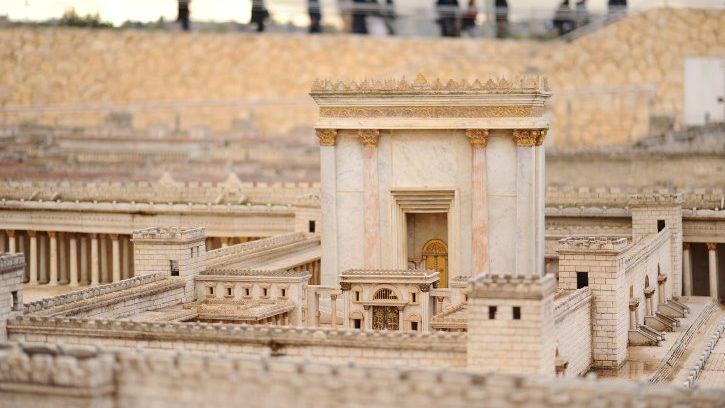
Chapters 40-42 contain the first part of Ezekiel’s temple vision. He is told to pay close attention so he can tell all to Israel. The temple described has some commonalities with Solomon’s temple, but much is different. While a temple will be rebuilt, this temple is never realized in the Bible. Ezekiel’s temple compound is 750 feet by 750 feet. It has three gates, courtyards, chambers, holy places and equipment. The Zadokite clan is set apart as the only Levites to “draw near” to God – to offer sacrifices on the altar. The temple is adorned with winged creatures and palm trees. There are holy chambers, places to store holy things.

The temple is at the center of God’s restoration of Israel, both physically and spiritually. It is a part of the sanctifying process, making Israel into the holy people of God. For Ezekiel and his audience, the temple represented God’s presence with the people. These words and vision bring hope and encouragement to the people living in exile. God longed to live amongst the people of God. God still longs to live amongst us today. May it be so.

Prayer: Lord God, your power and might extend over all things: over Gog and his allies, over today’s idols and temptations, over our selfish hearts. Ezekiel’s temple vision reflects your power and might. But it is still just a building. Just as your presence will fill this visionary temple, fill our hearts with your indwelling spirit, transforming our lives and our hearts. Amen.


Leave a comment

New Heart, New Spirit

Reading: Ezekiel 33-37

Ezekiel 36:27: “I will give you my spirit so that you may walk according to my regulations and carefully follow my case laws.”

Ezekiel is reminded that he is Israel’s lookout. As such, he is to speak when God speaks to him. That is his responsibility. If he fails to speak, then the people’s blood will be on him. But if he speaks and the people ignore him, their blood is on them. The people question God’s judgment next. They are wasting away because of their sin. God encourages them to turn away from their evil ways. Then they will live. God is simply judging each of them “according to your ways.”

Word from back home comes: “The city has fallen.” Twelve years into Ezekiel’s exile, Jerusalem falls. This leads the people in exile to seek Ezekiel and to hear his words. They listen, yes, but they still refuse to heed his words. God then turns the focus to the “shepherds” – to the leaders. They do not tend to the flock. They care nothing for the weak, sick, lost… They prey on them instead. God will rescue and care for the flock. Eventually a Davidic king will be their new shepherd. In chapter 37 God declares that they will once again be one nation with a new covenant.

Ezekiel then prophesies against Israel’s parasitic neighbors. They plunder and take possession of the land, nursing “an ancient grudge.” God promises to restore Israel’s land itself. The land will be renewed and restored. So too will be the people. In chapter 37 Ezekiel is carries to a valley full of very dry bones. They represent Israel’s faith. God will bring them back to life, one step at a time. God will bring them home and cleanse them. God will give them a new heart and then a new and right spirit. Restored to the land, Israel’s faith will be alive.

Prayer: Lord God, when the lookout comes, be it in your Word, your Spirit, or through another means, give us ears to hear and hearts to follow. Give us good and righteous shepherds to guide us, caring well for our souls. And don’t let us get too dry – keep that breath in our lungs so that we can bring you the glory. Amen.


Leave a comment

Much Lament

Reading: Ezekiel 27-32

Ezekiel 28:18 – “Therefore, I will bring fire from your midst. When it has consumed you, I will turn you into dust on the earth.”

Photo credit: Greg Rakozy

Most of chapters 27 and 28 are a lament for Tyre. Tyre had it all: beauty, trade, allies, wealth, abundance. Until God took it all away. Their prince was arrogant, saying, “I am God, I rule the seas!” God conceded that his wisdom and discernment were great, making him rich and powerful. But the claim, the pride – too much. Because the prince exalted himself, God declared, “Therefore, I will bring fire from your midst. When it has consumed you, I will turn you into dust on the earth.” At the end of chapter 28 we find a prophecy against Sidon. There will be a plague followed by the sword. Into this land, God will gather Israel. There they will build houses, will plant vineyards, and will live in safety.

Chapters 29-32 bring judgment against Egypt. God will set hooks in the great crocodile, flinging it onto open ground. Egypt is condemned as a “flimsy crutch” that splintered or broke in times of need. Because Pharaoh also claimed divinity – he created and owned the Nile, God will make Egypt an utter ruin – the most ruined place anywhere. God will one day regather Egypt, but it will remain lowly. Nebuchadnezzar will conquer Egypt and carry off its wealth – “wages for his army.”

In chapter 31 God compares Egypt to Assyria – the tallest of trees. There was no equal to Assyria in Eden, God’s garden. And yet Assyria fell, going down to the underworld. Assyria’s allies went along too. Elam and Edom and Sidon are there too – laid among the uncircumcised, those slain by the sword. Many arrogant and evil nations will come to a bitter end. Much Lament will be shared.

Prayer: Lord God, open our ears today to these warnings against being arrogant and greedy and selfish. When we get to thinking we’re king of the roost, remind us that we’re not. Humble us, bring us down to where we should be. Guide us to walk in your will and way. Amen.


Leave a comment

Charges and Judgments

Reading: Ezekiel 22-26

Ezekiel 22:30 – “I looked for anyone to repair the wall and stand in the gap for me on behalf of the land… But I couldn’t find anyone.”

Photo credit: Jametlene Reskp

We begin with chapter 22, where God brings charges against Jerusalem and then closes with a lament, revealing the heart of God. The charges are a summary of how Judah broke each of the Ten Commandments. God will scatter them and refine them like silver in the process. The chapter ends with this lament: “I looked for anyone to repair the wall and stand in the gap for me on behalf of the land… But I couldn’t find anyone.”

Chapter 23 contains an allegory of two sisters. It is the story of Israel and Judah, God’s people who prostituted themselves with multiple foreign powers and their idols, one after the other. The younger sister, Judah, proceeded to outdo the older sister, Israel. Instead of learning from her sister’s wayward ways, she amplified them. God turned both sisters lovers against them, pouring out God’s wrath upon them.

There are two parts to chapter 24. In the first part Judah is compared to a corroded pot. It will be heated so hot that its corrosion will be consumed. Judah will not be cleansed until God’s wrath has fully burned. In the second part, Ezekiel’s wife dies as a part of a sign act. God directs him not to mourn in any way. He follows instructions. So thorough will be Judah’s defeat that they too will walk around in stunned silence, unable to even grieve.

Chapters 25 and 26 contain oracles or judgments about Judah’s neighbors: Ammon, Moab, Edom, Philistia, and Tyre. Ammon and Moab took great delight in Judah’s downfall. Edom joyfully took part in Jerusalem’s destruction. The Philistines exacted revenge for past defeats and losses. All but Edom “will know that I am the Lord.” Our reading closes with the judgment of Tyre. They too ridiculed Judah (and God) at her downfall. The people around Tyre will shudder in terror at what befalls Tyre, who will “disappear” as God leads them “down into the pit.” Such will be the fate of all who oppose the Lord our God.

Prayer: Lord God, our innate selfishness is on full display today. We continue to struggle with want and greed, with lust and desires, with idolatry and disobedience. We are not all that different than Oholah and Oholibah, than Moab or Philistia. We too deserve your wrath. We too should be refined like silver. Instead, you brought grace in the form of your son. Today, Lord God, we thank you that we stand on this side of the cross, where love was poured out instead of wrath. Thank you, Lord Jesus. Amen.


Leave a comment

Hope, Yes, Even Then

Ezekiel 20:33 – “As surely as I live, with a strong hand, an outstretched arm, and with wrath poured out, I will be your king!”

Good and evil 1

We begin today with a riddle. The great eagle is Nebuchadnezzar, king of Babylon. He planted Zedekiah, but he rebelled, trying to form an alliance with Egypt. But Pharaoh wouldn’t help. Zedekiah went into exile. In chapter 18 God clarifies the consequences of their sin. Contrary to popular understanding, sins and their consequences are not carried on through the generations. Through a three generation example, God reveals that the righteous will live. The sinful will die. God states in verse 30, “I will judge each of you according to your ways.” The chapter concludes with a plea from God: choose life.

Chapters 19 and 20 lament Israel’s leaders and history, respectively. In chapter 19 poor leadership has resulted in Israel and Judah being planted in the desert – in exile – in a “parched and thirsty land.” God then reviews Israel’s long, long, long history of disobedience. Again and again and again God is ready to “pour out my wrath” on Israel and again and again and again we read that “for my name’s sake” God gives Israel another chance. Whether literally or figuratively it was again and again, “one more lap around the desert” as God tried and tried to bring Israel into a lasting covenant relationship. Finally, in 20:33 we read, “As surely as I live, with a strong hand, an outstretched arm, and with wrath poured out, I will be your king!” There will not be another lap, another “again.” Yet even as disaster looms, God speaks hope. After the doom, God will regather the small remnant. God will “bring you into the covenant bond.”

Chapter 21 describes the disaster soon to come. The guard will strike all – left and right, twice and three times. Reminded of their guilt, they will be laid low. “A ruin, ruin, ruin, I’ll make it!” declares the Lord.

Prayer: Lord God, these words of death and loss and devastation and disobedience can be hard to read. They are hard to wrap our heads around. Yet we also must acknowledge that just as you laid out the way to live, the people chose to walk the other way. We too face the same choice: life or death. Guide us to choose life, to choose to walk in your ways of love and grace, of justice and righteousness. Amen.


Leave a comment

Nevertheless

Reading: Ezekiel 12-16

Ezekiel 14:6 – “The LORD God proclaims: Come back! Turn away from your idols and from all your detestable practices. Turn away!”

Our reading begins with Ezekiel modeling the exile in a sign act. With people watching, he packs a bag and tunnels through the wall. Bag in tow, he heads out into the dark. Exile is coming. A few will survive to tell of their detestable practices. God then instructs Ezekiel to eat while trembling, to drink anxiously. During the siege, this will be Judah’s reality.

Some people question God’s timing. God says there will be no delay. The foolish prophets who proclaim peace and that God will be their wall – their lies will be exposed. The prophetesses who are misleading and entrapping people – God will rescue their victims. The focus then turns to those who are worshipping idols. God declares that if they come to God or to Ezekiel for prayers or for guidance, God will send them back to their idols. Yet God longs for Judah to repent. God says, The LORD God proclaims: Come back! Turn away from your idols and from all your detestable practices. Turn away!”

Noah, Daniel, and Job figuratively enter the story in chapter 14. They alone would be saved if wild animals or war or plague or famine were sent by God. These icons of the faith and virtue couldn’t even save their sons or daughters. They could save only themselves. God declares that all four tragedies are coming. Few will survive. Jerusalem is then compared to a vine. It is useful only for burning.

Chapter 16 details Jerusalem’s “detestable practices.” God recalls saving her when she was abandoned and naked. God fed and clothed and cared for her. She grew up and became very beautiful. She then prostituted herself with “all comers” – Egypt then Assyria then Babylon. Jerusalem was worse than Samaria and Sodom – so detestable that they looked righteous by comparison. Yet, in verse 60, we read, “Nevertheless…” God will one day reestablish the covenant. God will forgive their sins. Judah will then know that the Lord is God.

Prayer: Lord God, it was important for Judah to let go of false hope and to hear a call to repentance. It is important for us to be reminded that you are the only hope – our only hope, the only giver of mercy. We too will face judgment. Lead us to walk in covenant relationship with you, O Lord. Amen.