pastorjohnb

Thoughts and musings on faith and our mighty God!


Leave a comment

A Faith Witness

Reading: Psalm 116:1-2 and 12-19

Psalm 116:13 – “I’ll lift up the cup of thanksgiving. I’ll call on the Lord’s name.”

Psalm 116 is part of a collection of Psalms known as the Hallel. These songs were used in the Passover celebration. Psalms 113 and 114 were sung going up to Jerusalem. These two songs celebrate God’s power, might, rescue, and protection. Psalms 115-118 would be sung after the Passover meal. In the Christian tradition, this meal would occur on Maundy or Holy Thursday. These songs celebrate who and what God was and is and they witness to the peoples’ faith and commitment to God.

Psalm 116 begins with the psalmist declaring his or her love for God. This love is founded on God hearing their prayers for mercy. Because God hears, they will always call out to God. We can relate. When we feel like God is answering our prayers and is close to us, our faith soars and our love for God grows.

Verses 12-19 offer the psalmist’s response. Gratitude and acts of thanksgiving dominate these verses. In verse 13 the author writes, “I’ll lift up the cup of thanksgiving. I’ll call on the Lord’s name.” This cup overflows with God’s blessings. Lifting it and calling on God’s name are acts of worship. Keeping the promises made to God, done so publicly, reveals the psalmist’s strong commitment to God. This public witness encourages others in their faith. As we walk through Holy Week may all that we say and do “Praise the Lord!”

Prayer: Lord God, we join the psalmist in gratitude for your presence in our lives. We are so grateful that you hear our prayers. We celebrate the fact that you are on our side. Your love for us calls us to respond with acts of love towards you. May we witness well to our love of you this day and every day. Amen.


Leave a comment

Not My Will

Reading: Luke 22:39-46

Luke 22:42 – “Not my will but your will must be done.”

We are on the verge of the season of Lent. The 40 days leading up to Easter begin this week with services on Ash Wednesday. The service focuses on our need to be reconciled to God. The ashes remind us of our mortality. They are imposed in the shape of a cross as a reminder of our commitment to Christ. The season of Lent is one of prayer and repentance, preparing ourselves for Easter.

Intentional preparation is part of our faith. We read, study, and meditate on scripture to prepare ourselves for our day to day living. We pray to prepare ourselves for a meeting, an event, a hard conversation. In our passage today Jesus did as he often did. He went to the garden to spend intentional time in prayer. He sought to prepare himself for what lay just ahead: arrest, trial, rejection, suffering…

Jesus invites the disciples to pray too. He knows that they will soon face testing. As Jesus prays he admits his own human struggle, asking God to “take this cup of suffering away.” The divine Jesus knows full well what’s about to befall the human Jesus. Recognizing the necessity of what is about to unfold, Jesus adds, “Not my will but your will must be done.” Strengthened, Jesus prays even more earnestly.

The disciples have fallen asleep, “overcome by grief.” The crowd is on the way to arrest Jesus. The disciples have not prepared themselves. One disciple will act impulsively. Then all of the disciples will flee the scene. Jesus will move forward, empowered by prayer. As we ready ourselves to enter this season of Lent, may we too be empowered by prayer, frequently praying, “Not my will…”

Prayer: Lord God, lead and guide us to be intentional as we enter this season of Lent. May it be a time of earnest prayer, committed study, honest introspection, and whole-hearted repentance. Day by day, may our walk with you prepare us to celebrate Easter resurrection. Amen.


Leave a comment

My Grace: Enough

Reading: 2nd Corinthians 11-13

2nd Corinthians 12:9 – “My grace is enough for you, because power is made perfect in weakness.”

As we begin the last three chapters in 2nd Corinthians, Paul confronts the “super apostles” that have been attacking Paul’s reputation and work. He begins with his concern: he promised the church to Christ. They are struggling with their commitment. They’ve gotten off track because they so easily accepted a different version of the Christian faith. We too can end up here, even without anyone’s help.

Paul then resorts to their game: bragging about human credentials. He is all that they are: Hebrew, Israelite, descendant of Abraham, minister of Christ. And he has worked harder and endured much more: imprisonment, beatings, a stoning, lashings, shipwrecks, sleepless nights, hunger and thirst… AND! The stress over all these churches he’s planted and is now working with.

In chapter 12 Paul writes about a “man” who had a vision and heard words directly from God. This same man is now experiencing “a thorn in my body” that God will not take away. God’s response to Paul’s pleading? “My grace is enough for you, because power is made perfect in weakness.” This thorn keeps Paul from being conceited. It keeps him humble. That’s where we experience God’s power and strength too.

Paul then begins to prepare the church in Corinth for a third visit. He warns them: shape up because “I won’t spare anyone.” He invites the church to examine and test themselves. He prays that they will be made “complete.” Paul closes with blessings of love and peace, with the grace of the Lord Jesus Christ, and with fellowship of the Holy Spirit.

Prayer: Lord God, as we close 2nd Corinthians it feels like such a struggle for the church and for those within the church. So many voices, so many messages, so many temptations. Wait, Lord. Is Paul writing to us? In that reality, O God, strengthen and encourage us today to walk humbly in your grace, for there we find all that we need. Amen.


Leave a comment

A Good Plan

Reading: Haggai 1-2

Haggai 2:4 – “Be strong, all you people of the land… Work, for I am with you.”

Photo credit: Robert Linder

As we read Haggai’s words today we move past exile and back to Jerusalem. The small remnant that returned has built homes for themselves. But the temple still lies in ruins. Haggai is sent by God to encourage the people in this next step. At the start of the book, we read that Zerubbabel, Joshua, and the people do not think it’s time to start rebuilding the temple. God questions this. God says there is a reason they sow much and eat little. The drought and the lack of abundance are God’s doing. God’s house lies in ruins. The people hear Haggai’s words and they respond in faith, getting to work.

A month passes and God’s word comes to Haggai. He asks if anyone remembers the first temple. From Ezra 3 we recall that some did remember. They wept when they recalled the former temple’s glory. Haggai encourages them to be strong, to trust that God is with them, saying, “Be strong, all you people of the land… Work, for I am with you.” God then promises to shake the earth, leading nations to bring their wealth to the temple, making it more glorious than the first temple.

Fourteen months in, God’s word comes again. In the first message, Haggai asks questions about being clean and unclean. The priests know the right answers. The faith knowledge is there. God declares that the nation is unclean. The priests and the people have work to do. When God struck them before – providing just enough to survive – they didn’t return to God. But now the people have worked hard and the foundation is complete. God will now begin to bless them.

Haggai’s second word focuses on Zerubbabel directly and on Israel indirectly. God will take down the other nations, securing Israel. On that day, God will appoint Zerubbabel to reign. Once again, one from David’s line will rule over Israel. God has a plan and it is good. Thanks be to God.

Prayer: Lord God, just as you encouraged your people to work on your house, you continue to encourage us to work on building your kingdom here on earth. Just as their obedience was a sign of their holiness and commitment, may our humble acts of service bear witness to our faith and to our love for you and for our neighbors. Use us to reveal your glory to the world. Amen.


Leave a comment

Redemption

Reading: Hosea 1-5

Hosea 2:19 – “I will take you for my wife forever; I will take you for my wife in righteousness and in justice, in devoted love, and in mercy.”

Hosea begins our journey through “The Twelve.” He ministered to Israel during a time of prosperity and expansion. Because times were good, Israel had a very superficial relationship with God. They worshipped idols and relied totally on themselves. These forms of idolatry are denounced as “prostitution” by Hosea. In Hosea’s words we also find hope. Ultimately, and above all else, God seeks to redeem Israel from its sin, bringing both creation and God’s people back into a covenant relationship.

As the book begins, God commands Hosea to marry a prostitute. This relationship and the emotions it generates mirror God’s relationship with Israel. Hosea and Gomer have children. Their names tell the story of Israel’s coming downfall. God will punish Israel. God will have no compassion. God will not be their God. And in the next verse God says, after all that, “Not my people” will be called “Children of the living God.” Redemption and restoration will come.

In chapters 2, 4, and 5, God lays out the charges against Israel. God charges them with giving all that God provided to Baal and other idols. But even so God will one day redeem them. In verse 19 we read, “I will take you for my wife forever; I will take you for my wife in righteousness and in justice, in devoted love, and in mercy.” Then in chapter 4 God condemns the priests. The people have no knowledge of God. Instead, the people “take advice from a piece of wood.” God declares that the spirit of prostitution” is in them. They are addicted to these evil behaviors.

In chapter 3 God directs Hosea to “make love” to Gomer again, even though she is lost in prostitution, just like Israel. Hosea finds her and brings her back home – he redeems her from her lovers – and has her stay with him for a long time without sex. This mirrors Israel’s long time in exile without the temple, without sacrifices, without priests. This time apart will lead Israel to seek the Lord. They will then reenter into God’s goodness.

Prayer: Lord God, you have chosen us. You form us in the womb and you laid out good plans for our lives. You seek to walk with us in Spirit, offering to lead and guide us. One might think we’d be perfect disciples. Yet that’s far from what we are. Like Israel, we wander. We worship other “gods.” We mistreat one another and your creation. And… you remain faithful, loving, forgiving. You are unconditional in your commitment to our relationship. O Lord, help us to be faithful. Amen.


Leave a comment

What Great Love

Reading: Song of Songs 5-8

‭Song of Songs 6:3 – “I belong to my lover and my lover belongs to me.”

Today’s reading begins with a dream or fantasy about a missed opportunity to be with her lover. She was sleeping but did finally go to the door, but he was gone. She searches but doesn’t find him. She longs for the one who is “radiant and ruddy… whose mouth is everything sweet.” Her friends ask where he has gone. He has gone to the garden. She worries not and declares, “I belong to my lover and my lover belongs to me.”

To him, she is an overwhelming site – as beautiful and lovely as Jerusalem. Even though there are 60 queens and 80 secondary wives, she is “my perfect one… one of a kind.” In chapter 7 he admires her. She is graceful and has “smooth curves.” She is “so beautiful, so lovely.” He has a strong desire for her. She makes another statement of belonging. This passionate and deeply intimate love is symbolic of the love possible between God and us. O how to see God this way. God sees us in this way.

Love is consummated as chapter 7 concludes. He holds her, embraces her. We find such a place in God’s embrace once we declare our commitment to God. God also longs to set “a seal over our hearts.” God longs for us to have a love for God that is “as strong as death.” God’s son modeled this kind of love for his father and for us. May we do so as well.

Prayer: Lord God, what great depth of love you have for us! What great passion and commitment is found in your heart. Help us to fully receive this love and then guide us to reflect it back out in our relationships and into the world. Amen.


Leave a comment

Plans

Readings: Exodus 25, Exodus 26, Exodus 27

‭Exodus‬ ‭25:40… – “See to it that you make them according to the blueprint for them that you were shown on the mountain.”

Today’s readings shift into the building of the tabernacle. The great detail and planning remind us once again that God is good and ordered and creative. All of these details and specifications and vision for the tabernacle were given to Moses by God when he was on the mountaintop. Over and over we read, “See to it that you make them according to the blueprint for them that you were shown on the mountain.” God has a plan and calls Moses and then Israelites to follow the plan exactly. As I pondered application for today’s readings, it came to me: our lives are much like the construction of the tabernacle. God has given us a detailed plan. We read three chapters from it today. Within that plan, in the gospels God even gives us a perfect example of what following the plan exactly looks like. And to boot God gifts us with the Holy Spirit, the indwelling presence of Jesus Christ that leads and guides us.

There is great detail in the plans and in the execution of the plan. We find exact dimensions. We find specific colors and designs. We see specific metals used for specific spaces and purposes. We see talents and gifts put to use to execute God’s plan for the tabernacle. As I read through these chapters I imagined each step and what each item looked like. I envisioned the final product. As Moses received these instructions on the mountain I bet he tried to see each item and the final product as God laid out the plan. This thought draws me back to the Holy Spirit – that indwelling presence that knows God’s plans for our lives and works and prays and works to shape and guide and lead and make us into who and what God created us to be. I wonder: In what ways are we contributing to the Holy Spirit’s efforts in our lives?

What also struck me today was the people’s commitment. Every single thing they used for the tabernacle came from them. Every single thing. In the same way, the church (not the building but the church) relies on each of us to be a part of bringing God’s light and love into the world. What are you bringing?

Prayer: Lord God, we see a wonderful and detailed plan for the tabernacle. You have the same kind of plan for our lives and for our churches. Move us to active involvement in the completion of these plans. Amen.


Leave a comment

In Love and in Grace

Readings: Genesis 6, Genesis 7, Genesis 8, Genesis 9:1-17

Genesis 6:9b: “Noah was a moral and exemplary man; he walked with God.”

Today’s readings center on the great flood. God sees that humanity has become “thoroughly evil.” Every thought was “completely evil.” The world was so bad that God even regrets making human beings. This situation leaves God “heartbroken.” Things are almost as bad as they can get. Almost. There is Noah. In Genesis 6:9b we read, “Noah was a moral and exemplary man; he walked with God.” At least there is Noah. At least there is one person that is worth saving.

Today our world is not perfect. It is far from it. Noah was an Old Testament example of piety. I wonder, as God looks down on the earth today, who are the Noahs? Specifically, are you and I modern day examples of an exemplary relationship with God?

In obedience to God, Noah builds an ark and gathers up his family and the animals – a pair of some, seven pairs of others. This gathering up insures not just Noah’s salvation, but the salvation of all of creation. God then shuts the hatch and the rains come down and the “springs of the deep sea” open up. In 7:22 we read, “Everything on dry land with life’s breath in its nostrils died.” The loss of all life is catastrophic, horrific, complete.

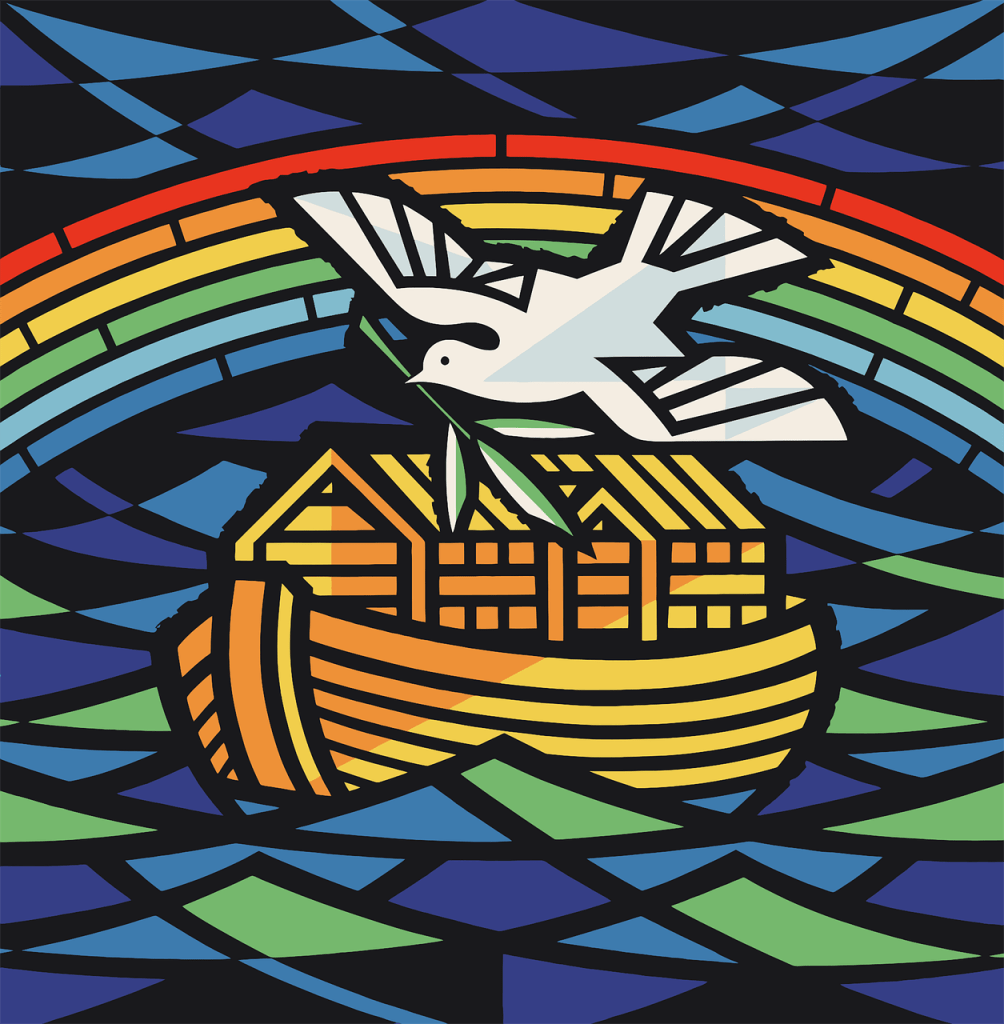
Eventually the waters recede. Noah sends out a dove to test the earth’s readiness for life. The third time the dove does not return. God tells Noah to exit the ark. Noah’s first acts on dry land are to build an altar and then to offer a sacrifice to God. This pleases God and moves God to make a covenant. There will never be another flood “to destroy the earth.” God placed “his bow” in the sky – it will be a frequent reminder to God of God’s commitment to stay in relationship with humanity. This is a gift that we rejoice in yet today.

Prayer: Lord God, what a horrible place the world became. Humanity broke your heart. Things deteriorated to the point that your justice required action. Thanks be to you, O God, that we had Noah – an example of faithful living. In your love you provided a way for the world to continue. In your grace you committed to us and to creation forever. Thank you, God. Amen.


Leave a comment

How God Does It

Reading: Joshua 24:16-25

Verse 24: “We will serve the Lord our God and obey God.”

After declaring that he and his house will serve the Lord, Joshua turns the focus to the people. In today’s passage the people respond to Joshua’s declaration with a recounting of God’s power and presence among them. This recounting ends with “We too will serve the Lord because he is our God.” Joshua challenges this statement. Maybe you’ve done this too with that friend who is less than stellar about walking the walk. They’re maybe quick to volunteer but seldom show. They’re great at committing to things but not so good on following through.

Joshua bluntly tells the people that they are not able to serve God. He tells them that God is jealous and holy. He tells them that God will not again and again forgive their rebellion and sin. The people say, “No! We will serve the Lord!” His challenge to their original commitment raises the bar. He is saying they can’t just talk the talk. That’s easy. Joshua then calls them as witnesses against themselves. He is doubling down, asking them if they’re really, really, really sure. Joshua then once more commands them to “throw away” their idols. In turn the people commit to God once again, saying, “We will serve the Lord our God and obey God.”

As I read this passage and note how Joshua questions their commitment again and again, I wonder how God does it. When I’ve struggled with a difficult sin, I come to God again and again with words of confession and repentance. Each time, yes, I’m a little more committed to actually changing. Each time God’s Spirit convicts me a little quicker, a little more deeply. Each time the Spirit increases my resolve, helping me to better walk the walk. How does God do it? Through unconditional love and unending grace. What an awesome God we serve.

Prayer: Lord God, as I consider the wilderness wanderings of the Israelites and as I think about my own wanderings, I am amazed at your continued presence. In my human understanding it is hard to fathom, hard to comprehend. So great is your love for us, so deep is your mercy, so wide is your forgiveness. I am humbled. I bow before you and say thank you, thank you, thank you. Amen.


Leave a comment

Choose Life

Reading: Romans 6:15-23

Verse 22: “Now that you have been set free from sin… the benefit you reap leads to holiness, and the result is eternal life.”

As we continue today in Romans 6, Paul uses the term “slave” often. Paul is using this term to emphasize one’s total commitment and belonging to someone or something. In our passage, one is either a slave to sin or a slave to God. For each of these choices, there is an outcome. If you belong to sin, the outcome is death. If you belong to God, the outcome is righteousness. Paul rejoices that the Christians in Rome have obeyed the teachings of Christ, becoming slaves of righteousness. The rejoicing continues today. As Jesus taught, the angels in heaven rejoice when someone who was lost is found, when someone without Christ becomes saved.

In verses 19-21 Paul speaks of the weakness of our human nature and of the “benefit” of living in sin. He summarizes by stating: “These things lead to death!” He ends this section by contrasting this to living as ones belonging to God: “Now that you have been set free from sin… the benefit you reap leads to holiness, and the result is eternal life.” What a contrast! Instead of death we find holiness and eternal life. Living a holy life bears witness to the world. It reveals the love and grace of God available to all people. Living a holy life brings an assurance of eternity lived within the love and light of the Lord. Freed from sin, we live as disciples of Jesus Christ, loving God and loving neighbor with all of our being. May it be so for you and for me.

Prayer: Lord God, what a stark contrast: life or death? It seems such a simple choice. Yet the flesh is weak and the power of sin is strong. Lord, how I need you. Only with you can I choose life. Only with you can I be holy. Be present in my heart, O God, leading me to walk in the way that leads to life. Thank you Jesus. Thank you Holy Spirit. Amen.