pastorjohnb

Thoughts and musings on faith and our mighty God!


Leave a comment

Faithful Love Forever

Readings: Psalms 131-136

‭Psalm 135:14 – “The LORD gives justice to his people and has compassion on those who serve him.”

We begin with Psalm 131, a song of humility. The psalmist isn’t proud or conceited, doesn’t stray from his or her lane. There is contentment in God’s presence. So, “Israel, wait for the Lord.” Psalm 132 speaks of why they can and should. God dwells in the temple and God made a covenant with David. The promise was to have a Davidic king on the throne forever – if they’re faithful. God’s presence provides food, salvation, and protection. The faithful one will shine.

Psalm 133 speaks of unity: “how good and pleasing it is.” Living in unity brings blessings and leads to eternal life, two gifts of God. Psalm 134 gives a pattern of response: lift your hands, bless the Lord! Praise the maker of heaven and earth! Psalms 135 and 136 develop this theme.

Psalms 135 and 136 are very similar. Both call for praising the Lord. Both recall acts that show God’s wonder, power, and might in nature and in Israel’s history. Psalm 135 reminds us that idols are “just gold and silver.” How we still need that reminder. Wealth, in whatever form we chase, is “just gold and silver.” Psalm 136 repeats the line, “God’s faithful love lasts forever,” 26 times. It is the repeated response to all that God has done and to all that God is. May it be our response as well!

Prayer: Lord God, lead us to walk humbly today with you and with all that we encounter. Guide us to live as light, as ones anointed in your love. Remind us too of all the ways that you have compassion on us, your children. And use us today to reveal your faithful love to all of creation. Amen.



Leave a comment

For Me. For Us. For You.

Readings: Psalms 113-118

‭Psalm 118:6 – “The LORD is for me — I won’t be afraid. What can anyone do to me?”

Today’s six Psalms are known as the “Egyptian Hallelujah.” These words of praise were recited each year at the Passover meal. Psalms 113 and 114 were recited before the meal. These Psalms celebrate God’s actions on behalf of the poor and needy and on behalf of Israel during the exodus. Psalm 113 exalts the God who lifts up the poor, who raises the needy, who brings the barren woman the joy of motherhood. These words echo “Hannah’s Song” from 1st Samuel 2 where God acted on behalf of the faithful. Psalm 114 remembers the parting of the sea and river, the bringing of water from the rocks – more signs of God’s faithful love.

After eating the Passover meal, Psalms 115 through 118 would be recited. Although lost in translation, Psalms 115 and 118 were originally written and spoken as call-and-response liturgy. Psalm 115 lifts up God’s power and might, contrasting God with worthless idols who “have mouths, but they can’t speak.” God is Israel’s “strength and shield.” 115 closes with blessings to all. Psalm 116 is a celebration of an individual’s rescue, reminding Israel that God is a personal God too. Because of God’s deliverance the individual will “lift up the cup of salvation… will keep the promises” made to God. Psalm 117 lifts up God’s strong love.

The Hallelujah closes with Psalm 118. The setting is an individual coming to the temple to give thanks to God. This Psalm calls Israel, the priests, and all who honor the Lord to declare, “God’s faithful love lasts forever!” Because of their experience with this in the exodus, the psalmist writes, “The LORD is for me — I won’t be afraid. What can anyone do to me?” God was faithful. God is faithful. God will be faithful. What is to fear?

Verses 22 and 27 are often connected to Jesus – the stone rejected, the light that shined, the offering led to the new altar, the cross. These are echoes found in the ever expanding story of God’s love, reflections on the final Passover lamb.

Prayer: Lord God, today’s words celebrate your presence with your people. Just as you rescued and delivered, just as you provided and made a way, do so for us in our lives too, O God. We seek to walk in your strong and faithful love, a love that lasts forever. Thank you, Lord, for your love. Amen.


Leave a comment

The Goodness of God

Readings: Psalms 102-104

‭Psalm 104:24 – “LORD, you have done so many things! You made them all so wisely! The earth is full of your creations!”

Psalm 102 begins in lament. The psalmist cries out for God to hear their prayers. Their bones are crushed; their heart is smashed. They eat ashes instead of bread. And then in verse 12 the psalmist remembers the God who reigns forever. Yes, God will stand up. Yes, God will look down, hear, and set free “those condemned to death.” Even though the psalmist feels like God is “cutting short my days,” the Psalm closes with a petition for God’s presence to be with his or her children and descendants.

The mood shifts in Psalms 103 and 104. These Psalms celebrate God’s love and care for all of creation. Psalm 103 begins with thanks for forgiveness and healing, for love and compassion, for the good things God provides. The psalmist celebrates God’s patience and mercy, remembering that we don’t get what our sins deserve. Instead, God removes our sins “as far as the east is from the west.” It is noted that this because God knows how we are made. God made us! And even though our days “are like grass,” God’s days are forever. The Psalm closes with a call for heaven and earth, for all of creation, to join the psalmist’s whole being in praising the Lord.

Psalm 104 continues this invitation. The psalmist celebrates God’s creative prowess. He or she recognizes the wine, oil, and bread that God provides to sustain and enrich our lives as signs of God’s goodness. The psalmist proclaims, “LORD, you have done so many things! You made them all so wisely! The earth is full of your creations!” What a celebration of who and what God is! In verses 29-30 we are reminded that God is the giver and taker of breath and life. Then at the end of this Psalm we find a request to “wipe clean from the earth” the wicked. When I read this it felt a bit out of place after all of the praise and celebration in verses 1-34. My Bible’s notes revealed this truth: these are those who seek to disrupt the goodness of God and God’s creation. Ah ha!

Prayer: Lord God, yes, we too have our days and seasons when we feel crushed, when we feel oppressed. In these times, Lord, remind us of your constant presence and of how you are faithful to hear and to respond. Bring to memory the healing and restoration we’ve experienced and lead us to trust into your love and compassion for us. From there may we respond with praise and thanksgiving to the one who creates and reigns wisely and faithfully. There may we celebrate the goodness of God. Amen


Leave a comment

God Is Still God

Readings: Psalms 73-75

‭Psalm 74:1 – “Why does your anger smolder at the sheep of your own pasture?”

Psalm 73 faces a reality that we all deal with from time to time. The psalmist envies the wealth and blessings of the wicked. The psalmist states, “I’ve kept my heart pure for no good reason.” He feels as if he stayed innocent for nothing – except to be weighed down by hard work. We can feel this way. We can question if holding onto our faith is really worth it. We can be jealous of what others have: wealth, power, health, popularity. The psalmist then enters the sanctuary. He prayed. He understood that the wicked will perish and that God is always with him. He declares that God is “my heart rock and my share forever.” Hallelujah!

Communal tragedy has struck in Psalm 74. The enemy has won, the temple is burned down, no prophet is left. The psalmist asks the “how long?” question: “Why does your anger smolder at the sheep of your own pasture?” A shift comes in verse 12. Remembered are the mighty works of God’s hand. The psalmist calls on God to remember the covenant. He cries out, “God, rise up! Make your case!” Prove to us and to the world that God is still God.

Psalm 75 closes today’s readings. It “balances” Psalms 73 and 74. It is a promise that God’s justice will come. It is a reminder that God will bring this person down (the wicked) and that God will raise up that person (the righteous.) It is a Psalm that trusts deeply in who and what God is and will be. May we too live righteous lives, trusting in our God of justice and righteousness.

Prayer: Lord God, when our flesh longs for the things of this world, remind us of your everlasting love. When envy or jealousy rises up in our hearts, remind us that you are a jealous God. And when tragedy strikes, remind us of your peace that passes all understanding. Lead us to rest and trust in you. Amen.


Leave a comment

God Is Still God

Readings: Psalms 73-75

‭Psalm 74:1 – “Why does your anger smolder at the sheep of your own pasture?”

Psalm 73 faces a reality that we all deal with from time to time. The psalmist envies the wealth and blessings of the wicked. The psalmist states, “I’ve kept my heart pure for no good reason.” He feels as if he stayed innocent for nothing – except to be weighed down by hard work. We can feel this way. We can question if holding onto our faith is really worth it. We can be jealous of what others have: wealth, power, health, popularity. The psalmist then enters the sanctuary. He prayed. He understood that the wicked will perish and that God is always with him. He declares that God is “my heart rock and my share forever.” Hallelujah!

Communal tragedy has struck in Psalm 74. The enemy has won, the temple is burned down, no prophet is left. The psalmist asks the “how long?” question: “Why does your anger smolder at the sheep of your own pasture?” A shift comes in verse 12. Remembered are the mighty works of God’s hand. The psalmist calls on God to remember the covenant. He cries out, “God, rise up! Make your case!” Prove to us and to the world that God is still God.

Psalm 75 closes today’s readings. It “balances” Psalms 73 and 74. It is a promise that God’s justice will come. It is a reminder that God will bring this person down (the wicked) and that God will raise up that person (the righteous.) It is a Psalm that trusts deeply in who and what God is and will be. May we too live righteous lives, trusting in our God of justice and righteousness.

Prayer: Lord God, when our flesh longs for the things of this world, remind us of your everlasting love. When envy or jealousy rises up in our hearts, remind us that you are a jealous God. And when tragedy strikes, remind us of your peace that passes all understanding. Lead us to rest and trust in you. Amen.


Leave a comment

God Is Still God

Readings: Psalms 73-75

‭Psalm 74:1 – “Why does your anger smolder at the sheep of your own pasture?”

Psalm 73 faces a reality that we all deal with from time to time. The psalmist envies the wealth and blessings of the wicked. The psalmist states, “I’ve kept my heart pure for no good reason.” He feels as if he stayed innocent for nothing – except to be weighed down by hard work. We can feel this way. We can question if holding onto our faith is really worth it. We can be jealous of what others have: wealth, power, health, popularity. The psalmist then enters the sanctuary. He prayed. He understood that the wicked will perish and that God is always with him. He declares that God is “my heart rock and my share forever.” Hallelujah!

Communal tragedy has struck in Psalm 74. The enemy has won, the temple is burned down, no prophet is left. The psalmist asks the “how long?” question: “Why does your anger smolder at the sheep of your own pasture?” A shift comes in verse 12. Remembered are the mighty works of God’s hand. The psalmist calls on God to remember the covenant. He cries out, “God, rise up! Make your case!” Prove to us and to the world that God is still God.

Psalm 75 closes today’s readings. It “balances” Psalms 73 and 74. It is a promise that God’s justice will come. It is a reminder that God will bring this person down (the wicked) and that God will raise up that person (the righteous.) It is a Psalm that trusts deeply in who and what God is and will be. May we too live righteous lives, trusting in our God of justice and righteousness.

Prayer: Lord God, when our flesh longs for the things of this world, remind us of your everlasting love. When envy or jealousy rises up in our hearts, remind us that you are a jealous God. And when tragedy strikes, remind us of your peace that passes all understanding. Lead us to rest and trust in you. Amen.


Leave a comment

The Ideal King

Readings: 2nd Chronicles 5:2-14, 2nd Chronicles 6, 2nd Chronicles 7, 2nd Chronicles 8, 2nd Chronicles 9

2nd Chronicles 5:13c – “Yes, God is good! Yes, God’s faithful love lasts forever!”

Photo credit: Diego Gennaro

Our readings today begin with the dedication of the temple. All Israel gathers as the chest, tabernacle, and holy items are brought up to the temple. As the chest is placed in the holy place, this praise is lifted to God: “Yes, God is good! Yes, God’s faithful love lasts forever!” These words of David, originally spoken when the chest first came into Jerusalem, will be repeated again and again.

Solomon offers a long and beautiful prayer. In many ways he asks God to be with them and to hear and answer their prayers. Prophetically he even included an acknowledgement of sin that will lead to exile. Solomon prays that even then and there, God will hear the prayers of their changed hearts. Fire falls from heaven as God’s initial response to Solomon’s prayer. A great amount of sacrifices and a huge celebration follow. These two things are connected – a holy BBQ!

God visits Solomon again, reiterating God’s covenant loyalty and a deep willingness to listen to Israel’s prayers – if they are obedient, humble, seeking God, and turning from their evil ways. It is as if this last part were a given. Solomon’s reign and legacy will last forever if he and his descendants also walk in these ways.

The last two chapters testify to Solomon’s wealth, wisdom, and fame. He builds and builds. He receives the Queen of Sheba and other foreign powers, adding to both his fame and wealth. He is far and away the greatest king ever. Here ends the chronicler’s report on Solomon as he dies after ruling Israel for 40 years. Solomon has been portrayed as the ideal Davidic king. The chronicler returns to reality as the story continues with Rehoboam.

Prayer: Lord God, as we read and celebrate this part of Solomon’s reign, may we also remember his shadow side as well. Yes, the mountains are magnificent. But the valleys are there too. The valleys are the proving grounds, the refineries, the places of formation and shaping. May we value both, O Lord. Amen.


Leave a comment

Truly Grateful

Readings: 2nd Samuel 5, 2nd Samuel 6, 2nd Samuel 7

2nd Samuel 7:16 – “Your dynasty and your kingdom will be secured forever before me. Your throne will be established forever.”

The rest of Israel comes to David at Hebron and makes the king of Judah the king over all Israel. They recognize that God has declared David to be the one to “shepherd my people.” David makes a covenant with them and they anoint him king. In his first move as king, David captures Jerusalem. In an action that works like a treaty or peace offering, the king of Tyre sends supplies and laborers to build a palace for David.

The Philistines gather and God gives them into David’s hands. They regather and come against David again. And again God has a plan, which David follows exactly, and victory belongs to Israel. David then decides to bring the chest of the Lord to Jerusalem. Along the way Uzzah touches the chest and dies on the spot. This scares David and the chest is left there in Obed-edom’s house. His house is blessed by the presence of the chest. After three months the journey resumes. The chest enters Jerusalem with great celebration. Michal is displeased with how David danced before the Lord with all his might. He says to her, “I may humiliate myself even more” before the Lord.

David, sitting in his palace, realizes that God’s chest is still dwelling in a tent. He thinks God needs a house. But, through Nathan, he learns that his son will build the temple. God then turns the tables, telling David that God will build him a house – a dynasty. Through Nathan, God tells David, “Your dynasty and your kingdom will be secured forever before me. Your throne will be established forever.” Our reading closes with a beautiful prayer to God. David is truly grateful for all that God has done and for all that God promises to do. May it be so for us as well!

Prayer: Lord God, your plans are always good. You lead and guide us when we are obedient and faithful to you. Guide our steps too, blessing us with your presence every day. Amen.


Leave a comment

In Love and in Grace

Readings: Genesis 6, Genesis 7, Genesis 8, Genesis 9:1-17

Genesis 6:9b: “Noah was a moral and exemplary man; he walked with God.”

Today’s readings center on the great flood. God sees that humanity has become “thoroughly evil.” Every thought was “completely evil.” The world was so bad that God even regrets making human beings. This situation leaves God “heartbroken.” Things are almost as bad as they can get. Almost. There is Noah. In Genesis 6:9b we read, “Noah was a moral and exemplary man; he walked with God.” At least there is Noah. At least there is one person that is worth saving.

Today our world is not perfect. It is far from it. Noah was an Old Testament example of piety. I wonder, as God looks down on the earth today, who are the Noahs? Specifically, are you and I modern day examples of an exemplary relationship with God?

In obedience to God, Noah builds an ark and gathers up his family and the animals – a pair of some, seven pairs of others. This gathering up insures not just Noah’s salvation, but the salvation of all of creation. God then shuts the hatch and the rains come down and the “springs of the deep sea” open up. In 7:22 we read, “Everything on dry land with life’s breath in its nostrils died.” The loss of all life is catastrophic, horrific, complete.

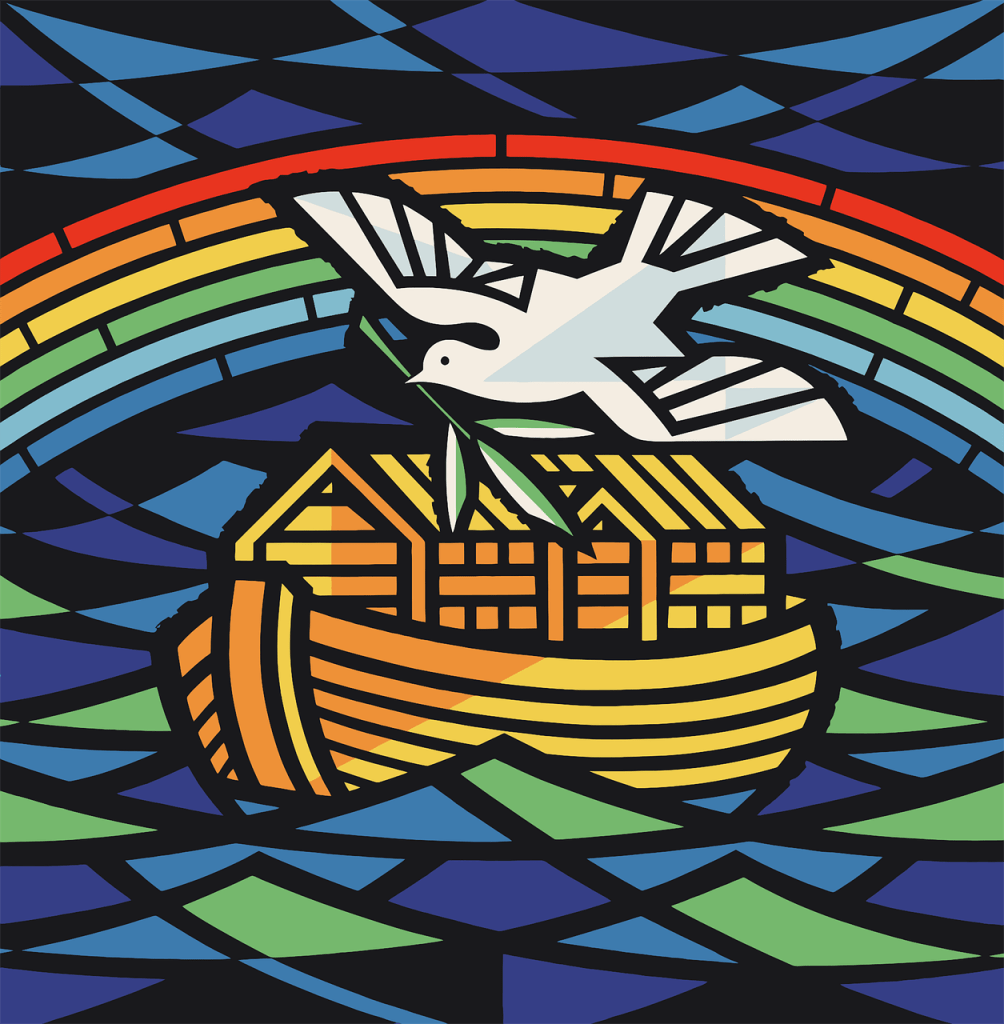
Eventually the waters recede. Noah sends out a dove to test the earth’s readiness for life. The third time the dove does not return. God tells Noah to exit the ark. Noah’s first acts on dry land are to build an altar and then to offer a sacrifice to God. This pleases God and moves God to make a covenant. There will never be another flood “to destroy the earth.” God placed “his bow” in the sky – it will be a frequent reminder to God of God’s commitment to stay in relationship with humanity. This is a gift that we rejoice in yet today.

Prayer: Lord God, what a horrible place the world became. Humanity broke your heart. Things deteriorated to the point that your justice required action. Thanks be to you, O God, that we had Noah – an example of faithful living. In your love you provided a way for the world to continue. In your grace you committed to us and to creation forever. Thank you, God. Amen.


Leave a comment

The One True God

Reading: Isaiah 9:2-7

Verse 6: “And his name shall be called Wonderful Counselor, Mighty God, Everlasting Father, Prince of Peace.”

Photo credit: Diego Gennaro

Just over a week ago at youth group, one of our kids asked about the difference between God and the gods of the Greeks, Romans… It is a good place to begin today’s thoughts on Isaiah 9. The gods were limited and they were flawed. Each god was a god of something – war, love, rain, fertility… The gods fought with one another, played cruel tricks on humanity, sometimes had evil intents. These false gods, however, did not cease to exist with the Romans or whoever. They have new names today – wealth, popularity, beauty… – but they continue to lead us away from the one true God. Pursuing these gods limits our ability to fully be who we were created to be. Allowing these gods to drive our decisions and actions yields flawed results in our lives.

God is unlimited and is perfect. In God there is no darkness or evil. God has only good plans for us. God is everywhere and is always present. In today’s passage Isaiah identifies the coming son as Wonderful Counselor, Mighty God, Everlasting Father, Prince of Peace.” God incarnate, in the flesh, is all of this and so much more. In our times of indecision and struggle, God gives us wonderful counsel and guidance. In our times of weakness and uncertainty, God gives us mighty strength and holy wisdom. In our times of frailty and humanity, God reminds us that he who was and is and always will be is right there with us in that moment. And in the storms and valleys, God covers us in peace and hope and walks right there by our side.

Today we rejoice in our God who upholds and establishes us. Thanks be to our God who both reigns forever and is present right here in our hearts.

Prayer: Lord God, these titles that we find in Isaiah are so true in so many ways. Yet they are just a small part of who and what you are to and for us. Thank you for your total love and for your complete care for us, your children. Amen.