pastorjohnb

Thoughts and musings on faith and our mighty God!


Leave a comment

A Long Line

Reading: Ephesians 1:11-23

Ephesians 1:13 – “You too heard the word of truth in Christ, which is the good news of your salvation.”

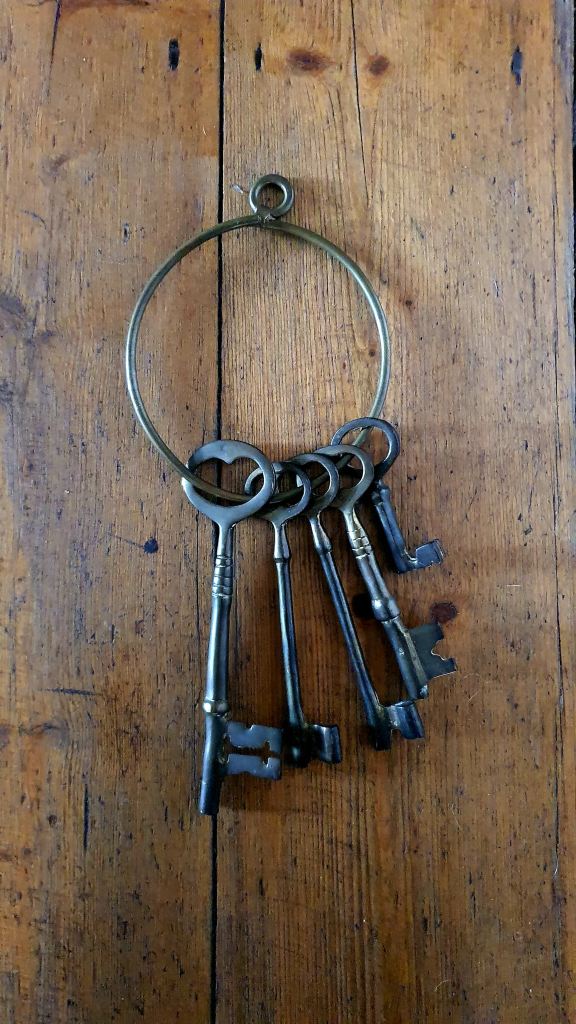
Photo credit: Anne Nygard

Paul first reminds us in today’s passage that we who believe have “received an inheritance in Christ.” Paul sees this outcome as a part of God’s plan for all people. If God were to have God’s way, all people would be disciples of Jesus Christ. That is God’s plan for all people as we are created in the womb. But we do have a choice in the outcome. Sometimes people choose to live by their own way and not God’s way.

For those who have chosen God’s way, choosing to follow Christ, we are called to bring God glory through the living out of our faith. We do this by living as Christ lived. In this living we take our place in a long line of disciples who have shared the faith with others. On this All Saints’ Day we recall those who have lived as Christ, teaching and modeling for us what living a life of faith looks and feels like. In turn, we teach it to and we model it for others – in our homes, in our church, in our workplace, in our community…

We can do so because we have “heard the word of truth in Christ, which is the good news of your salvation.” Accepting this good news we are indwelled by the Holy Spirit. Paul describes this constant presence of the Spirit as a “down payment on our inheritance.” This is a foretaste of being in glory in eternity. The Spirit in us keeps us connected to God. Deposited in our hearts, we are empowered by God. Through this power at work in and through us, we can pass on the faith to others, to the next generation of saints. May it be so!

Prayer: Lord God, today we pray for one another as Paul prayed for the church in Ephesus. Lord, give us “a spirit of wisdom” so that we can know you more and more. Open the “eyes of our heart” so that we can live out the hope that we find in Christ Jesus. Lead us to spiritually kneel before Christ, the head of all things. Amen.


Leave a comment

Answered Prayers

Reading: Joshua 4:20-24

Joshua 4:21 – “In the future your children will ask their parents, ‘What about these stones?'”

As the Israelites crossed into the Promised Land, they passed through the waters of the Jordan River much like their ancestors passed through the Reed (or Red) Sea. This time, when the feet of the priests who carried the ark of the covenant touched the water, it parted. What has been at flood stage stopped flowing and backed up to the north so that the nation could cross over on dry land. Imagine what the people of Jericho thought as they heard reports of what happened that day.

Joshua commanded each tribe to pick a man, a representative. These men picked up a large stone from the middle of the river as they crossed over. In verse 20 we’re reminded that Joshua set up the twelve stones as a memorial marker of what had just happened. Then he says to the Israelites: “In the future your children will ask their parents, ‘What about these stones?'” Joshua is not just talking about their actual children. He is also speaking of the generations and generations after who will ask the question. The basic response follows in the rest of our reading for today.

To make it a good story it would need some context and perhaps a little build up. One would certainly include the “why” of the story: to fulfill God’s covenant promise to Abraham. And if it were an honest retelling, they’d tell if the prayers they prayed to God – before, during, and after. They are prayers we would have all prayed. To look at a river at flood stage and to think about walking through it -> prayer. To walk through with water piling up beside you -> prayer. To look back as the rushing water returned to its bed -> prayer. Yes, the whole story would’ve held stories of God’s power and might. And it certainly would’ve included stories of how God answered their honest prayers.

Prayer: Lord God, when you move in our lives or in the lives of those we know, open our eyes to see. Just as you parted the Jordan, you continue to make a way for us when only you can. Guide us to connect our honest prayers to your actions, building our faith. Amen.


Leave a comment

What God Has Done

Reading: Psalm 22:19-31

Psalm 22:22 – “I will declare your name to my brothers and sisters; I will praise you in the very center of the congregation.”

Photo credit: Robert Linder

Returning to Psalm 22 today we pick up on the desperate tone that dominated yesterday’s verses. David invites God, his strength, to come quickly and to help and deliver him. He pleas for rescue from the dogs, lion, and wild oxen that surrounded and threatened him. At the end of verse 21, though, there is a shift: “you have answered me!”

In verses 22-31 David offers a hymn of praise. In verse 22 David writes, “I will declare your name to my brothers and sisters; I will praise you in the very center of the congregation.” God’s rescue and restoration are worthy of his praise and worship. In the New Testament, in Hebrews 2:12, the author claims these words for Jesus. Jesus’ life and ministry declared who and what God was and is. His “work” was done in Israel, then center of God’s people.

David also sees a widening of the circle in verse 29. Here he declares that both the rich and powerful and the lowly and downtrodden will worship and kneel together before God. The inclusion of all peoples is a theme begun by Jesus and expands as the church moves out into the world. As the Psalm concludes, David looks to the future. He foresees a time when future generations will learn of the Lord. From Jesus’ life and example people will declare God’s righteousness, “telling them what God has done.” This is the sharing of the good news. As it was for the disciples and apostles, may it be for you and for me as we share our faith.

Prayer: Lord God, thank you for the rescue from those things that surround and assail us too. Thank you for your answers to our pleas. Lead us to declare what you have done. Guide us to speak of the rescues and transformations that you have worked in our lives again and again. Each day use us to witness to your love and grace. Amen.


Leave a comment

Hope, Yes, Even Then

Ezekiel 20:33 – “As surely as I live, with a strong hand, an outstretched arm, and with wrath poured out, I will be your king!”

Good and evil 1

We begin today with a riddle. The great eagle is Nebuchadnezzar, king of Babylon. He planted Zedekiah, but he rebelled, trying to form an alliance with Egypt. But Pharaoh wouldn’t help. Zedekiah went into exile. In chapter 18 God clarifies the consequences of their sin. Contrary to popular understanding, sins and their consequences are not carried on through the generations. Through a three generation example, God reveals that the righteous will live. The sinful will die. God states in verse 30, “I will judge each of you according to your ways.” The chapter concludes with a plea from God: choose life.

Chapters 19 and 20 lament Israel’s leaders and history, respectively. In chapter 19 poor leadership has resulted in Israel and Judah being planted in the desert – in exile – in a “parched and thirsty land.” God then reviews Israel’s long, long, long history of disobedience. Again and again and again God is ready to “pour out my wrath” on Israel and again and again and again we read that “for my name’s sake” God gives Israel another chance. Whether literally or figuratively it was again and again, “one more lap around the desert” as God tried and tried to bring Israel into a lasting covenant relationship. Finally, in 20:33 we read, “As surely as I live, with a strong hand, an outstretched arm, and with wrath poured out, I will be your king!” There will not be another lap, another “again.” Yet even as disaster looms, God speaks hope. After the doom, God will regather the small remnant. God will “bring you into the covenant bond.”

Chapter 21 describes the disaster soon to come. The guard will strike all – left and right, twice and three times. Reminded of their guilt, they will be laid low. “A ruin, ruin, ruin, I’ll make it!” declares the Lord.

Prayer: Lord God, these words of death and loss and devastation and disobedience can be hard to read. They are hard to wrap our heads around. Yet we also must acknowledge that just as you laid out the way to live, the people chose to walk the other way. We too face the same choice: life or death. Guide us to choose life, to choose to walk in your ways of love and grace, of justice and righteousness. Amen.


Leave a comment

Lamenting Suffering

Reading: Lamentations 3-5

Lamentations 3:22 – “Certainly the faithful love of the LORD hasn’t ended; certainly God’s compassion isn’t through!”

Photo credit: Falaq Lazuardi

Today’s key verse summarizes the feel of Lamentations 3-5. There is hope in these words of lament. There is a hope that God isn’t utterly done with Israel. Yes, the author knows the promises of rescue and restoration, but in the depths of the suffering, hope can flicker.

Lamentations 3 is in the first person. It reads as if Jeremiah were reflecting on the hardships and trials of his life as a prophet. He has felt God’s hand against him. He has felt like God “silences my prayer.” These memories of suffering bring bitterness. He muses, “Certainly the faithful love of the LORD hasn’t ended; certainly God’s compassion isn’t through!” Hope arises, though, as he declares, “Great is your faithfulness… The Lord is my portion! Therefore I’ll wait for God.” As the chapter continues, there is an invitation to “examine our ways” and to recognize, “We rebelled.” This is step one to forgiveness.

Chapter 4 reflects on the people’s suffering. The children are thirsty and hungry. The author laments that their fate wasn’t like Sodom’s – quick and final. He laments, death by the sword would be better than death by famine. The false prophets draw some of the blame. There is reality in verse 12: “Our end had definitely come.”

The last chapter is a communal lament. They invite God to notice their disgrace. They recognize that they are burdened by past sins. Their joy is gone. They are “doomed because we have sinned.” Hope surfaces again as the community recalls how God reigns from one generation to the next. With that hope, they offer this request: “Return us, Lord, to yourself. Please let us return!” May it ever be so.

Prayer: Lord God, we too lament when we suffer justly for our sins and for our choices to be of the world. We too long to end these seasons and to return to you, our God and king. In the suffering and trial, refine us as you are working to rescue us. Draw us to you, O Lord, again and again. Amen.


Leave a comment

Lament… and Hope!

Reading: Jeremiah 8:18-12:17

Jeremiah 10:21 – “The shepherd kings have lost their senses and don’t seek answers from the LORD. That is why they have failed and their flock is scattered.”

Our reading opens with Jeremiah’s lament: “no healing, only grief… darkness and despair overwhelm me.” He must’ve felt this often. He called out over and over but was ignored, ridiculed, and worse. Jeremiah then wonders where God’s healing is. If only there were enough tears, he would weep day and night for the people of God.

God then joins the lament. They don’t know God. They scheme, lie, and cheat. God weeps for the earth. It will be affected by the coming war. Jerusalem will become ruins, Judah a wasteland, all because they haven’t obeyed God’s Instructions. They have “followed their own willful heart.” God summons professional mourners. Maybe then Judah will understand the coming death and destruction. Maybe then they’ll quit boasting about themselves. Maybe then they’ll turn and boast once again about God and God’s kindness, justice, and righteousness. Maybe then their hearts will be circumcised.

Chapter 10 contrasts idols with God. One is “no different than a scarecrow in a cucumber patch.” The other is the living God, the creator of the earth. This one tells the people to “pack your bags” – exile is coming. Why? On the macro level, “The shepherd kings have lost their senses and don’t seek answers from the LORD. That is why they have failed and their flock is scattered.” Leadership has failed. God then laments that this generation is just like their ancestors. God worked and worked. The people ignored God, turning to idols, breaking the covenant. It is so bad, God instructs Jeremiah to not pray for them.

In chapters 11 and 12 there are schemes against Jeremiah. God will deal with that. God then again laments the reality with Judah. The leaders have “destroyed my vineyard.” Yet we see God’s great grace in verses 12-16. If the non-Israelites will turn to God, then God will build them up “in the midst of my people.” The circle might just open up a little wider. Thanks be to God.

Prayer: Lord God, there is much sadness in today’s readings. It is centered on the state of your children. They are deep in their sin. Consequences are coming. The sadness must yet be present today. We can surely follow our own willful hearts. Lord have mercy. Please continue to be a God of kindness, justice, and righteousness. We so need you. Build us up to be your people, O God. Amen.


Leave a comment

Gifts of God’s Hands

Reading: Ecclesiastes 1:1-2:26

‭Ecclesiastes 2:11 – “When I surveyed all that my hands had done… I realized that it was pointless — a chasing after wind.”

As we begin Ecclesiastes we come to see a different picture of the world. This book presents the world as it is – unvarnished – and it gives us permission to name how frail and fragile life really is. Ecclesiastes asks the hard questions and challenges us to go deeper in our understanding of faith, life, and God.

Ecclesiastes 1 begins by declaring that everything is “perfectly pointless.” This sets the tone for most of today’s reading. One generation comes, another goes. Words are tiring, the eye is never satisfied, the ear isn’t ever filled up. What happens will happen. There is nothing new under the sun. Same old, same old.

The Teacher shared how he investigated and explored the world, gaining great wisdom and knowledge. Madness and folly came along too. This all felt like chasing the wind too. So he turned to wine, to great projects, to gathering servants, vineyards, herds, gold and silver. He refused himself no pleasure. And after all of this he states, “When I surveyed all that my hands had done… I realized that it was pointless — a chasing after wind.”

Then the Teacher recognizes that wisdom is more beneficial than folly. So if one has a choice… But he also realizes that the same fate happens to both. This leads to despair. All that he has accomplished and gathered will go to an heir. Will he be wise or foolish?

Our text today closes with hope. The Teacher acknowledges, “There’s nothing better for human beings than to eat, drink, and experience pleasure in their hard work.” Focus on the moment, enjoy the small things. These are gifts from the hand of God. May it be so for you and for me.

Prayer: Lord God, yes, life can be hard and frustrating and challenging. Yes, it can feel pointless. Sometimes the treadmill never stops. Yet you remain. In you we can find satisfaction and even pleasure. In you, all we need is provided. Walk with us today, O God. Amen.


Leave a comment

Praise God!

Readings: Psalms 145-150

‭Psalm 145:8 – “The LORD is merciful and compassionate, very patient, and full of faithful love.”

We close our time in the Psalms with Psalm 145 and then the “Hallelujah” Psalms, 146-150. These five begin and end with “Praise the Lord” – our translation of the original Hebrew: “hallelu” and “yah.”

Psalm 145 calls for us to praise the Lord, from one generation to the next. This praise is “proclaiming your mighty acts.” Doing so leads the worshippers to “rave in celebration.” That’s a phrase we don’t find often in the Bible! In verse 8 the psalmist writes, “The LORD is merciful and compassionate, very patient, and full of faithful love.” Because of these traits, the psalmist can also write, “The Lord is close to everyone who calls on him.” True and true!

Psalms 146-150 celebrate God’s mighty acts, each with their own focus. Psalm 146 celebrates the God who brings justice to the oppressed and who frees the prisoners, the God who protects the immigrants and who straightens the bent. Psalm 147 celebrates this compassionate heart of God and then adds thanks for God’s generous hand in nature. Psalm 148 calls all of creation to praise God – sun, moon, and stars, hills and trees, all creatures, including “kings of the earth and every single person.” Psalm 149 calls for praise and expresses the belief that the execution of justice will bring honor to God and God’s people. Lastly, Psalm 150 closes with a snapshot of worship. Any and all instruments will be used to praise God. May that include our voices!

Prayer: Lord God, yes, we are called to praise you, to lift your name on high. Lead us to join all of creation in worshipping your holy name. Open our hearts to pour forth praise from our lips. All glory and honor and praise to you, O God! Amen.


Leave a comment

The Cycle

Reading: Judges 4:1-3

Verse 1: “Again the Israelites did evil in the eyes of the Lord.”

This week we turn to the book of Judges. The judges were individuals, both men and women, that God raised up for relatively short periods of time. Their tasks were to lead, guide, and judge disputes. God would raise up a judge to get the people back to faithful living. This raising up was usually in response to their cry for help. This cry was most often a response to the consequences of their sin.

As today’s passage begins, we read, “Again the Israelites did evil in the eyes of the Lord.” This is a very familiar refrain throughout much of the Old Testament. The cycle of sin-consequence-cry out-repent-restoration is an oft-repeated cycle. In today’s instance, they are nearing the end of a 20-year consequence. They have experienced cruel oppression at the hands of a foreign power. That is a long time. It shapes and forms that generation much like the Depression and world wars shaped our grandparents and our great grandparents. This same shaping and forming recently happened during the COVID pandemic. While this event was not shaped by a nation’s sin, the impacts were not unlike what Israel suffered under Sisera many years ago. The fabric of community was torn, death and loss and other hardships were a daily reality, loneliness and isolation took their toll. It often felt more like surviving than living. We can relate to Israel crying out to God because we too cried out to God. Why?

Israel cried out to God because of the cycle. They knew that in spite of their sinful choices, God showed up again and again. They knew that God’s love would never fail and they trusted that God’s mercies would be new every morning. In our next crisis or hardship or time of separation from God, may we too cry out. God is faithful.

Prayer: Lord God, thank you for your enduring patience with me and with us. Sometimes I think we fail more often than we please you. Oh how we would quickly wear thin on one another if we were in your role! But you never tire of us or weary of our sin. Your love is ever steadfast, your grace ever true. Thank you, O God. Amen.


Leave a comment

Words of Teaching and Instruction

Reading: Psalm 78:1-4

Verses 2-3: “I will utter dark sayings from of old, things that we have heard and known, that our ancestors have told us.”

Telling a story, have you ever omitted parts or embellished parts to either gloss over something “bad” or to make a particular point? In telling stories it can be tempting to amend them to suit our purposes. We might even tell an altered version to this person or group of people if it best suits our agenda. There are, of course, inherent dangers in modifying our stories. These dangers magnify when we begin altering our communal history. Psalm 78 was written to be used in worship as a teaching tool. Today’s passage sets the stage for the rest of the Psalm. In the body of the Psalm, Asaph tells the whole story of God’s redemptive work. He includes the reasons for why God had to redeem again and again: the people were often unfaithful and disobedient to God’s leading and guiding.

It can be difficult or hard to “tell the whole truth and nothing but the truth.” As individuals, as churches, as denominations, as communities, as states and nations, we can shy away from the practice of honest truth-telling. Asaph writes, “I will utter dark sayings from of old, things that we have heard and known, that our ancestors have told us.” In the rest of the Psalm he does indeed tell all – the good, the bad, the beautiful, the ugly. Each of these aspects of our stories and of our histories has something to offer both to us and to future generations. We learn from our mistakes; we build upon our successes.

As we offer words of teaching and instruction to our children (and to one another), may we “tell the next generation” of the “deeds of the Lord” in honest and full detail, empowering them for the best future possible. In this way, they too will come to know “the powers and wonders” of God for themselves.

Prayer: Lord God, my past is scattered with bad decisions, failures, hurtful words and actions – both in my life and in the churches that I’ve been a part of. Some were my own doing, some were not. All of these have shaped and formed me into who I am in you. There are hard lessons and some painful moments. All were instructive; all led to growth and maturity. Guide me to use these experiences to mentor and to guide others, to shape a better future. Amen.