pastorjohnb

Thoughts and musings on faith and our mighty God!


Leave a comment

With Us, For Us

Reading: Isaiah 40:26-31

Isaiah 40:28 – “Don’t you know? Haven’t you heard? The Lord is the everlasting God.”

Photo credit: Greg Rakozy

As we turn to Isaiah 40, much of Israel is dispersed across the vast Babylonian empire. In this disconnected state it was hard to hold onto hope. So Isaiah invites Israel to look up at the stars, to remember who created this vast array. The prophet invites them to remember who brings the stars out “one by one, summoning each by name.” Ah yes, it is God. This God of “great strength and mighty power?” Yes, God knows you by name. Yes, God will summon you out of exile.

So then, Isaiah ponders, why do you say that God doesn’t know your plight, that God ignores your exile? We too ask these questions. We think God is absent at times, that God is not powerful enough at other times. We can think that God ignores our great needs. We too need to look up at the sky in awe. We too need to hear, “Don’t you know? Haven’t you heard? The Lord is the everlasting God.”

Our everlasting God does not get tired or even know weariness. Our great God’s understanding is far, far beyond our understanding. So, yes, sometimes we don’t get what God is doing. But if we trust God, we find that God does give us power when we’re tired, that God does revive us when we’re exhausted. We will be tired and exhausted. These things happen. And the promises remain: God is present. God will renew our strength, enabling us to “run and not be tired” and to “walk and not be weary.” Our God is with us. Our God is for us. Thanks be to God.

Prayer: Lord God, when we are tired, when we are weary,v when we feel defeated or all alone, call us to look up. Whether the stars at night or the vast blue sky, remind us that you are present in all of creation, that you are present within us. Fill us with hope, renew our strength. Thank you. Amen.

Leave a comment

Answered Prayers

Reading: Joshua 4:20-24

Joshua 4:21 – “In the future your children will ask their parents, ‘What about these stones?'”

As the Israelites crossed into the Promised Land, they passed through the waters of the Jordan River much like their ancestors passed through the Reed (or Red) Sea. This time, when the feet of the priests who carried the ark of the covenant touched the water, it parted. What has been at flood stage stopped flowing and backed up to the north so that the nation could cross over on dry land. Imagine what the people of Jericho thought as they heard reports of what happened that day.

Joshua commanded each tribe to pick a man, a representative. These men picked up a large stone from the middle of the river as they crossed over. In verse 20 we’re reminded that Joshua set up the twelve stones as a memorial marker of what had just happened. Then he says to the Israelites: “In the future your children will ask their parents, ‘What about these stones?'” Joshua is not just talking about their actual children. He is also speaking of the generations and generations after who will ask the question. The basic response follows in the rest of our reading for today.

To make it a good story it would need some context and perhaps a little build up. One would certainly include the “why” of the story: to fulfill God’s covenant promise to Abraham. And if it were an honest retelling, they’d tell if the prayers they prayed to God – before, during, and after. They are prayers we would have all prayed. To look at a river at flood stage and to think about walking through it -> prayer. To walk through with water piling up beside you -> prayer. To look back as the rushing water returned to its bed -> prayer. Yes, the whole story would’ve held stories of God’s power and might. And it certainly would’ve included stories of how God answered their honest prayers.

Prayer: Lord God, when you move in our lives or in the lives of those we know, open our eyes to see. Just as you parted the Jordan, you continue to make a way for us when only you can. Guide us to connect our honest prayers to your actions, building our faith. Amen.


Leave a comment

Blessings and Peace

Reading: Luke 19:28-39

Luke 19:38 – “Blessings on the king who comes in the name of the Lord.”

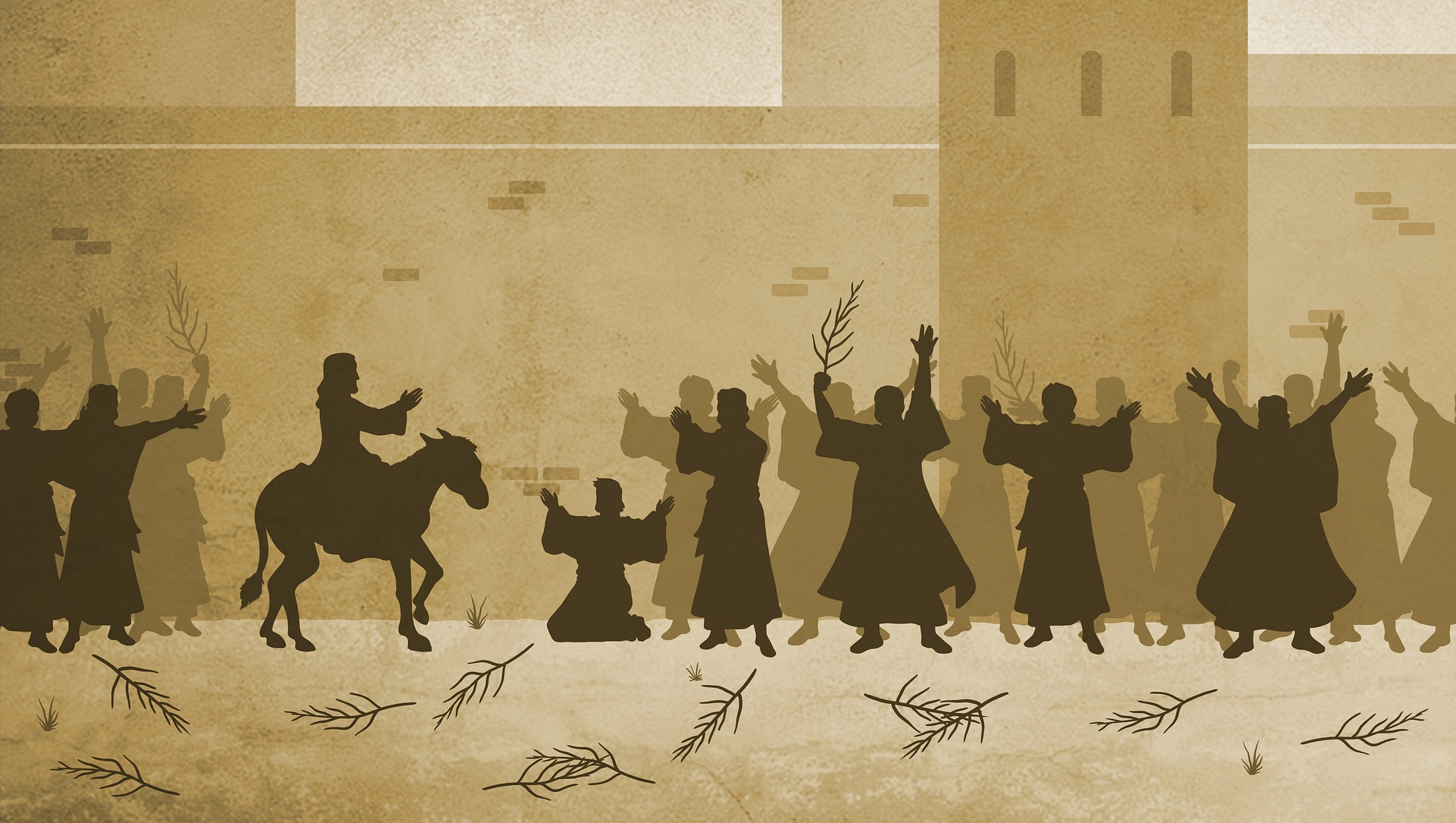
As our passage begins, Jesus prepares to enter Jerusalem. He is just east of the city itself. He gives instructions to two disciples to go and get a colt. Following Jesus’ directions, all unfolds just as Jesus said it would. Even this is a demonstration of his power.

In verses 35-38 we see the actions of others taking over. It is the disciples who place their coats and then Jesus on the colt. It is the disciples who place clothes on the road and rejoice as they near Jerusalem. The crowd begins to praise God because of the “mighty things they had seen” Jesus do. They begin to shout, “Blessings on the king who comes in the name of the Lord.” Why do they do and say all of these things?!

The disciples, the crowd, the Pharisees, and even Jesus – they knew the scriptures, the words of Isaiah, the Psalms written for such a day as this. Prophecy was being fulfilled. Their actions, their words – they were following the script. These events, this fulfillment brought joy and excitement to the people.

Another entry also occurred, on the other side of the city. Each year, at the Passover and other major festivals, Herod would ride into Jerusalem. He would ride in on a mighty warhorse with an entourage of Roman soldiers. This demonstration of force was a reminder to Jerusalem and its leaders: Rome is the power. The counterpoint is Jesus. He brings blessings and peace. What a contrast between the ways of the world and the way of Christ.

Prayer: Lord God, thank you for the way of Jesus – the way of joy and blessing, of humility and peace. This stands in such stark contrast to the ways of the world: force and power and might. This divide continues today. O God, give us the courage and the faith to go into places of darkness and evil, empowered by the light of Christ, challenging these harmful and destructive ways. May our light be fueled by love, bringing blessing and peace. Amen.


Leave a comment

God’s Presence, Goodness, and Love

Reading: Psalm 19

Psalm 19:8 – “The Lord’s regulations are right, gladdening the heart. The Lord’s commands are pure, giving light to the eyes.”

Psalm 19 celebrates God’s presence with us. David first recognizes God in the created world. The Psalm begins, “Heaven is declaring God’s glory.” This is evident in God’s “handiwork.” To take in the vastness of the stars, to feel that limitless power, is to sense and feel God. Yet God’s handiwork is also small and intricate, like a spider web or like a tiny seed that yields a beautiful flower. David also recognizes God in the passing of time. One day to one night, over and over again, reveals God’s good plans for our world. David acknowledges that the sun, moon, and stars do not literally speak, yet the presence of God in them reaches out “to the ends of the earth.”

Starting in verse 7 David turns to God’s “instruction.” He is speaking of the Torah, the collection of laws and commands that governed his life. Following these, David gains wisdom. They gladden his heart and give light to his eyes. The Law is true, worth more than gold, “sweeter than honey.” David finds great reward in keeping God’s will and way. This too is evidence that there is a God, one who ordered not only creation, but life itself. As a follower of Jesus, we also find joy in keeping God’s will and way. We find that doing so, we have a relationship with our God. Within this relationship we experience peace and hope, assurance and contentment, comfort and guidance. Loving God and loving neighbor yields a life centered outside of self, a life that truly reflects God’s goodness and love.

In the closing verses, David shares another way that he experiences God. Fallible and sinful as we are, God is overflowing in forgiveness, redemption, and restoration. This is because God created us to be in relationship – with God and with one another. Again and again God cleansed and restored David to right relationship. Our rock and redeemer will do the same for you and for me. Thanks be to God!

Prayer: Lord God, thank you for your presence in the world – yes, in the heavens but also in the tides, in the spring growth, in the gentle snowfall. Thank you for pursuing us, for seeking us out, for desiring to be in relationship with us, and for being willing to do whatever it takes to keep us there, loving us unconditionally. This day may we honor you by reflecting your love and goodness into the world. Amen.


Leave a comment

Building Blocks

Reading: Luke 19

Luke 19:37 – “The whole throng of his disciples began rejoicing. They praised God with a loud voice.”

Photo credit: Markus Spiske

“Zacchaues intercepts Jesus” is how my Bible’s notes describe this first encounter in our reading. Jesus sees him in the tree and invites himself to Zacchaues’ house for dinner. Perhaps in response to the crowd’s grumbling, Zacchaues announces that he will give half his wealth to the poor and will repay four times over anyone he’s cheated. He’ll do this that very day. The notes suggest that Zacchaues is defending himself by presenting his customary practices of generosity.

This story is followed by one about faithful service. Two servants put the master’s wealth to good use. Instead of working hard, another hides what he was given to use. His wealth is taken and given to the one with much. Jesus continues on to Jerusalem.

Jesus enters the city on a colt, his disciples loudly rejoicing and praising Jesus and the peace that he offers. This parade is a counter display to Herod’s annual Passover parade, when he enters the city on a mighty warhorse with an entourage of soldiers. Jesus enters humbly, from the opposite direction, demonstrating the kingship and peace of God. The Pharisees worry about this challenge to Roman authority. Jesus responds that if the crowd were silent, “the stones would cry out.”

Jesus then laments that these stones will be torn apart. Because the Jews refuse his kingdom of peace, they will revolt, only to be completely crushed. Jesus weeps over this. He proceeds to the temple, where he chases out those turning a huge profit instead of meeting the people’s needs. The religious leaders seek a way to kill Jesus while the people are enthralled with his daily teaching in the temple. What a contrast in these two groups.

Prayer: Lord God, thank you for the examples today of generosity and hard work. Both are building blocks of your kingdom. Lead us to use the blessings you’ve given us to build well. Remind us daily of your peace as we build. Remind us daily of who we serve. Amen.


Leave a comment

That Line

Reading: Nahum 1-3

Nahum 1:12-13 – “I won’t afflict you further, Zion. Now I will break off his yoke from you and tear off your chains.”

Photo credit: Nadine Shaabana

Nahum walks a fine line. The historical content of the book covers Assyria’s fall. The capital city, Nineveh, is the focus. In Jonah we saw a mighty God who was rich in mercy. In Nahum we read of a mighty God who pours out divine wrath on the Assyrians. In the long game, God will not tolerate any form of human pride or the existence of injustice. Here is where we get near that line. It can be tempting to rejoice in the downfall of an enemy. Is this not another form of pride?

Nahum describes God as “jealous… vengeful… strong in wrath… very patient… great in power.” The prophet declares that the world and all who dwell on it cannot stand before God’s indignation and fury. And he declares that God is “good, a haven in a day of distress.” In this spirit, Nahum assures God’s people. Though in exile now, God says, “I won’t afflict you further, Zion. Now I will break off his yoke from you and tear off your chains.” Hope is just around the corner.

From 1:14 through the end of the book, Nahum describes the great fall of Nineveh. God is against the city. The enemy’s sword will devour just as Assyria once devoured others. Assyria will become a spectacle. God declares there is “no remedy… your wound is grievous.” At the end we again come to the line. Nahum shares that all who had suffered under Assyria’s cruelty will “clap their hands over you.” To be relieved, even happy, when the yoke is broken,when the bully gets his or her due, – nearing the line. To be joyful and to celebrate someone’s utter destruction? Where did that line go?

Prayer: Lord God, we can sense your power and might today. We can feel your sense of justice and righteousness. You alone are the judge and the giver of just consequences. Help us to hold these things in holy awe. Curb in us the human tendency to find joy in another’s defeat. Keep us in our own lane. Focus us on our walk with you. Amen.


Leave a comment

Live Amongst Us

Reading: Ezekiel 38-43

Ezekiel 38:23 – “I will display my greatness, show my holiness, and make myself known in the sight of many nations.”

Chapters 38-39 deal with Gog, a representation of the evil empires. Coming from the north, Gog could represent Nebuchadnezzar. Gog gathers many nations to his side. This mighty army comes to Israel, intent on conquering and looting God’s children. God’s anger is aroused and God unleashes nature on them, followed by turning their swords upon one another. God calls on the birds and animals of prey to feast on the horde’s bodies. So vast was the army, it took Israel seven years to bury the bodies. In the end God promises to pour out “my Spirit” upon Israel. With this Spirit within them, God will never again hide God’s face.

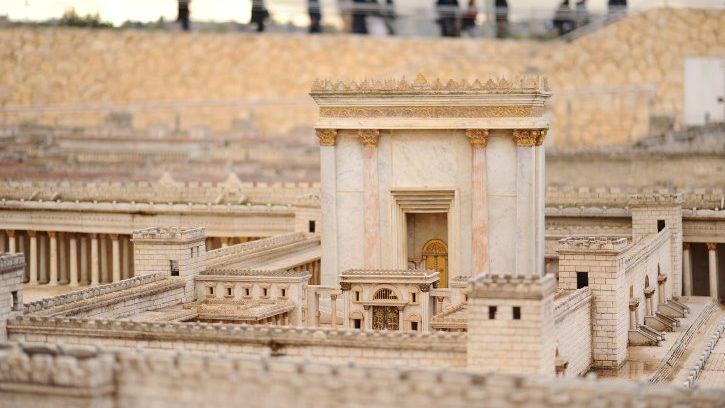
Chapters 40-42 contain the first part of Ezekiel’s temple vision. He is told to pay close attention so he can tell all to Israel. The temple described has some commonalities with Solomon’s temple, but much is different. While a temple will be rebuilt, this temple is never realized in the Bible. Ezekiel’s temple compound is 750 feet by 750 feet. It has three gates, courtyards, chambers, holy places and equipment. The Zadokite clan is set apart as the only Levites to “draw near” to God – to offer sacrifices on the altar. The temple is adorned with winged creatures and palm trees. There are holy chambers, places to store holy things.

The temple is at the center of God’s restoration of Israel, both physically and spiritually. It is a part of the sanctifying process, making Israel into the holy people of God. For Ezekiel and his audience, the temple represented God’s presence with the people. These words and vision bring hope and encouragement to the people living in exile. God longed to live amongst the people of God. God still longs to live amongst us today. May it be so.

Prayer: Lord God, your power and might extend over all things: over Gog and his allies, over today’s idols and temptations, over our selfish hearts. Ezekiel’s temple vision reflects your power and might. But it is still just a building. Just as your presence will fill this visionary temple, fill our hearts with your indwelling spirit, transforming our lives and our hearts. Amen.


Leave a comment

God Has Spoken

Reading: Ezekiel 1-5

Ezekiel 3:4 and 7 – “Human one, go! Go to the house of Israel and speak my words to them… they will refuse to listen to you because they refuse to listen to me.”

The book of Ezekiel begins with the prophet in exile. He was brought to Babylon in the first wave of exiles, five years before the fall of Jerusalem. On his 30th birthday he is called by God to speak God’s word to these hardheaded and hard-hearted people. If not for exile, Ezekiel would’ve begun his formal duty as a priest in the temple on this day. He sees a vision – four magnificent creatures, each with four spinning wheels. Above them is a dome with a throne. On the throne is the glory of God. Ezekiel can feel God’s power and might in this scene.

God commissions Ezekiel to be the prophet to Israel, saying, “Human one, go! Go to the house of Israel and speak my words to them… they will refuse to listen to you because they refuse to listen to me.” God prepared Ezekiel, hardening his face so that he can speak to these rebellious people. God appoints Ezekiel as a lookout. His duty is to warn the people – no more, no less. Obedience falls on them. Or punishment for disobedience. God declares to Ezekiel that the prophet will speak when God speaks and will be silent when God is silent.

Chapters 4 and 5 describe Jerusalem’s fate using “sign acts.” These vivid visuals have a strong impact, amplifying his message. First, Ezekiel depicts the coming siege on Jerusalem. He then lies on his left side for 390 days then on his right side for 40 days – one day for each year of Israel’s and Judah’s rebellion, respectively. Ezekiel then makes bread from scraps. He eats and drinks a small ration of bread and water each day, representing the famine that will befall Jerusalem. The prophet then shaved his head and beard and divides the hair into thirds. He burns the first third. One third of Jerusalem will die by famine and plague. Ezekiel cuts up the next third. One third will die by the sword. Lastly, he scatters one third to the wind. The last third of Jerusalem will be taken into exile. The few strands in his pocket represent the very small remnant that will be left behind. When all of this literally happens to Judah, then God’s “anger will be complete.” Then Israel and Judah will know that God has spoken.

Prayer: Lord God, what a call and what a way to show your people what is about to happen to Jerusalem and Judah. These images raise up a level of awe and fear of you. It is good to recognize your power and might and justice. Help us to see the signs and to hear the words of warning and correction that you speak into our lives today. Soften our too often hard hearts and pry open our too regularly closed ears. Amen.


Leave a comment

God’s Power and Goodness

Reading: Isaiah 36-39

‭Isaiah 38:16 – “The LORD Most High is the one who gives life to every heart, who gives life to the spirit!”

Today’s four chapters come almost word-for-word from 2nd Kings 17-18. The stories of Sennacherib’s invasion and Hezekiah’s illness are also recapped in 2nd Chronicles 32. The only “new” words are Hezekiah’s Psalm-like praise in response to God healing him from his deadly illness.

Chapters 36 and 37 deal with Assyria’s invasion. It began by conquering all of the smaller outlying towns in Judah. Attention was then turned to Jerusalem and King Hezekiah. Sennacherib’s field commander comes and taunts Judah, God, and the king. He calls for their surrender, warning them about trusting in God. Hezekiah humbles himself and goes to the temple, mourning the situation. He prays. Isaiah brings words that assure him. The taunts come again. Hezekiah prays again. Isaiah assures him again. God is in control. God has a plan. That night 185,000 soldiers are struck down by God’s messenger. Sennacherib withdraws. He is assassinated by his sons once back home.

Chapter 38 recounts Hezekiah’s illness and God’s healing. Because of his prayer and tears, God grants him 15 more years. In verses 9-20 we read Hezekiah’s grateful response. There is insight into common thoughts on the afterlife: he will no longer see God because God isn’t there. He also acknowledges God’s gift: “The LORD Most High is the one who gives life to every heart, who gives life to the spirit!” As this is true for us as well, may we too make music to God “all the days of our lives.”

A foreshadowing of what’s to come fills chapter 39. Rising power Babylon has come and seen all that Judah has. Isaiah tells Hezekiah, one day “nothing will be left.” Hezekiah reveals his human nature as he is glad it won’t be in his lifetime. After enduring a siege and surviving a deadly illness, we too might have this same thought!

Prayer: Lord God, it is good to review your mighty acts once again. They remind us of your power and your goodness. You continue to give life to our hearts and to our spirits. Thank you for this gift. Amen.