pastorjohnb

Thoughts and musings on faith and our mighty God!


Leave a comment

Called

Reading: Isaiah 1:1 and 10-20

Verses 16-17: “Stop doing wrong, learn to do right!”

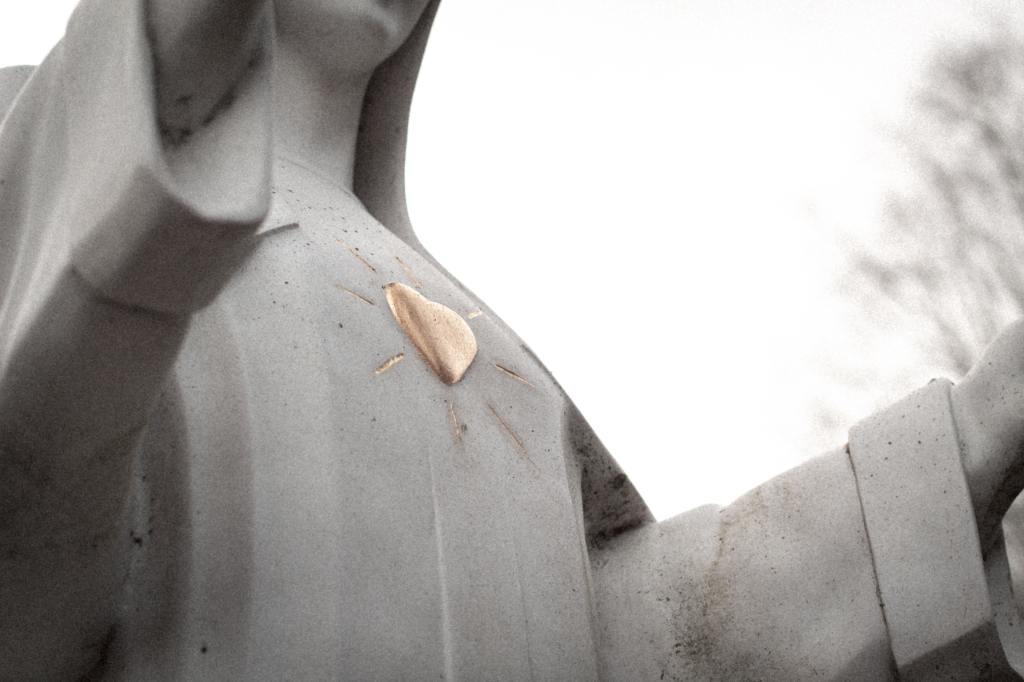
Photo credit: Sophie Walker

Speaking through the prophet Isaiah, God calls out the people of Judah. In verse 10 God refers to the leaders of Judah as “rulers of Sodom” and to the people as “people of Gomorrah.” These were 2 evil-filled cities that God rained down fire and sulphur upon, destroying them completely. When God’s people thought of depravity and greed, these 2 cities would come to mind. To be compared to Sodom and Gomorrah – things must’ve been pretty bad in Judah.

In verse 11 we see that the people are still bringing sacrifices to the altar of God. But God is not pleased by them. These rote rituals are simply a “trampling of my courts.” This creates a vision of them rushing in, getting the deed done quickly, and rushing back out. God decries, “Stop bringing meaningless offerings!” Their hearts are far from God; their “hands are full of blood.”

God says to the children, “Stop doing wrong, learn to do right!” Stop sinning. Learn once again to do good in the world. We see God’s suggestions for doing good in verse 17: seek justice, encourage those who are oppressed, defend the orphans, stand with the widows. These words call out to us today as well. We live in a hurting and broken world. Our question is this: where is God calling us to do good?

Each of us has been called to be a part of the healing of the world. As followers of Christ we are charged with making disciples and with transforming the world. These two go hand in hand. As we seek to partner with God, working to bring about a more just and loving world, we are striving to build the kingdom of God here “on earth as it is in heaven.” May these words not just be a rote ritual that we say each Sunday morning.

Where is God calling you? Where can you be a part of healing this hurting and broken world? Through the power of the Holy Spirit may God use each of us today, according to God’s will.

Prayer: Lord God, where does the world’s brokenness meet my passions? Where does the hurting meet my hope? Where do you need me today? O God, lead me to serve you and your children. Use me as you will today. Amen.


Leave a comment

New Reality, New Life

Reading: Colossians 3:1-4

Verses 1 and 2: “Set your hearts on things above… set your minds on things above.”

Paul begins Colossians 3 reminding us that we have been raised with Christ. This is obviously not a physical resurrection but a spiritual resurrection. When we become willing to die to self and the sin that self generates, then we are made into new creations, alive in Christ. Continuing on we see into the mind of Jews living about 2,000 years ago. They conceptualized heaven in the sky, hell beneath the earth’s surface, and the earth in the middle. At least mentally, this remains how many today “see” or understand this concept.

Continuing, Paul invites us to “set your hearts on things above… set your minds on things above.” Paul invites us to not hold fast to earthly things but instead to focus on heavenly things. Paul focuses next on the parts of us that connect most directly to Jesus Christ – our heart and our mind. Once we die to self and proclaim Jesus as Lord and Savior, the Holy Spirit fills our hearts with Jesus’ living presence, making us new in Christ. The indwelling presence guides and leads us, filling both heart and mind with the things of God and of Jesus Christ, making us more and more like Christ.

Paul next speaks of a new reality: we are then “hidden” in Christ. This is not a worldly, physical reality. The body is still here and we can very much experience death and suffering and trial, much as the early Christians did. Paul is speaking again to a heavenly reality. This earthly life will cease, yes. But true life has already been won. It is found in Christ and is lived out daily here on earth. One day, when we transition to our eternal and true home, wherever it “is,” we will then experience the fullness of Christ’s glory. Thanks be to God.

Prayer: Lord God, thank you for making me new in Christ. Thank you for claiming me as one of your own and for living in my heart and mind. Day by day, new mercies by new mercies, draw me deeper and deeper into your love. Amen.


Leave a comment

Even Though

Reading: Hosea 11:1-7

Verse 2: “The more I called Israel, the further they went from me.”

As God speaks at the start of Hosea 11, we are reminded that God loved Israel and rescued them from slavery in Egypt. This is but one of many stories of God redeeming and guiding the beloved family of God. Another aspect of this familiar pattern comes in verse 2: “The more I called Israel, the further they went from me.” This is the other half of the cycle. For the Israelites, their relationship with God was often one of sin and repentance, forgiveness and restoration. Our faith can follow a similar path.

God laments how the people have turned to false gods. It is a choice we all make in our lives. Whether it is pursuing wealth or popularity or power, at times our focus is askew. We prioritize something other than God. God laments that the people do not recognize who healed them, who led them in love, who lifted the yoke, and who bent down to feed them. At times we too fail to see the work of God in our lives. We can miss the fact that the door that opened or the hole we avoided falling into was God’s hand at work. The verses for today close with a reality: “My people are determined to turn from me.” How often God must think this of me.

Even though we are not always what God designed us to be or who God wants us to be, God’s love remains. Even though we must sorely disappoint God at times, God’s compassion never fails. God ever desires to wrap us in love and kindness. It is a no-matter-what love. Thanks be to God.

Prayer: Lord God, you formed me in my mother’s womb. You’ve loved me since the thought began. I know your love, your compassion. You’ve rescued me and have forgiven me, again and again. Even so, I stray, I wander, I sin. Thank you for a love that always, always reached out, ever drawing me back into right relationship. Amen.


Leave a comment

Rebuild and Restore

Reading: Psalm 85:1-7

Verse 4: “Restore us again, O God our Savior, and put away your displeasure towards us.”

Psalm 85 is written after the punishment and exile that Hosea foretold. God has allowed the people to begin returning and rebuilding what had been destroyed, both physically and relationally. Leaving Babylon, God “showed favor” and “restored the fortunes of Jacob.” God forgave their sins and “turned away from your fierce anger.” Things have gotten better, but…

Have you ever had a really big fight with your spouse or with a good friend? After some time apart, you begin to talk again. Yet all is not fixed, right? Reconciliation and restoration is the goal but you’re not quite there yet. Words must be spoken, behaviors demonstrated in order to begin to repair what was wounded or broken. Often trust must be rebuilt. This is where God and Israel are in their relationship.

In verses 4-6 the psalmist expresses a longing to get back into right relationship with God. There is an implication that Israel feels ready. Lessons have been learned. Humility and reverence are again present. It is usually the party that is at fault who first longs to re-enter relationship and to put the ugliness behind them. In verse 7 the writer asks God to “Show us your unfailing love, O Lord, and grant us your salvation.” Israel longs to be made whole again.

We’ve all been there. We’ve all sinned and created separation between God and ourselves. Today’s text is a good reminder of how we can reapproach God as we seek to rebuild and restore our relationship with God.

Prayer: Lord God, I long to live in a full and complete relationship with you. So often, though, I get in the way. My pride, my selfishness, my desires create a distance between us. Help the me inside to become less and less so that you can become more and more. Amen.


Leave a comment

Risky and Righteous Love

Reading: Hosea 1:2-10

Verse 10: “Yet the Israelites will be like the sand on the shore… In the place where it was said to them, ‘You are not my people,’ they will be called ‘sons [and daughters] of the living God'”.

Photo credit: Nick Fewings

The book of Hosea begins with God telling Hosea to take “an adulterous wife… because the land is guilty of the vilest adultery” against God. The people have turned away from God, practicing all kinds of evil. Marrying Gomer is a parallel to the relationship between God and Israel. It is a risky love that God invites Hosea into with Gomer. It is a risky love that God chooses to live out with you and with me.

The names of Gomer and Hosea’s children are prophetic. God will punish the sin of Israel. God will not show love to Israel. God says Israel is “not my people” so “I am not your God.” God has been hurt to the point that God wants separation from Israel. We too can tend towards this kind of living. We can seek to avoid tension and conflict and discomfort – even when we see or feel a need to respond to injustice or oppression or abuse. We can avoid loving those who might have needs that challenge our patience or generosity or empathy. We can easily choose safe over risky, easy over difficult. But this is not the kind of love that God has for Israel or for you and for me.

Even though deeply hurt by Israel, hear God’s unfailing love for them in verse 10: “Yet the Israelites will be like the sand on the shore… In the place where it was said to them, ‘You are not my people,’ they will be called ‘sons [and daughters] of the living God'”. Even though there is distance in the relationship, even though the people are guilty of vile adultery, God will choose to continue to love them. This risky and righteous love will offer forgiveness and will hold our reconciliation. This risky and righteous love is difficult to live out. Yet it is what we are called to. Love as God loves us. May it be so for you and for me.

Prayer: Lord God, lead me to love as you love, especially when it is risky and difficult. Guide me to those places where others may not go, to those that some may avoid. Give me courage to love as you love, O Lord. Amen.


Leave a comment

Really That Simple

Reading: Galatians 5:1 and 13-21

Verse 14: “The entire law is summed up in a single command: ‘Love your neighbor as yourself.'”

Paul begins our passage today with a word of encouragement: “Christ has set us free. Stand firm.” No longer living under the Law, Paul has found freedom in Christ. Yes, he still wrestles with sin, as we all do, but he has been freed from the guilt and shame. No longer remaining stuck there, Paul has been freed to follow Jesus Christ and to live captive to Christ. No longer hindered by that old “yoke of slavery” to the Law, Paul stands firm in his faith in Jesus Christ and invites us to join him.

The freedom Paul finds is not a “you can do anything you want” freedom but a freedom lived within the bounds of Christ’s words and example. Paul identifies the filter for determining this line in verse 14. Here he reminds us: “The entire law is summed up in a single command: ‘Love your neighbor as yourself.'” Is he speaking of the old Jewish Law or of the new law of Jesus Christ? Or is it both? I believe it is both. Jesus himself said that he did not come to abolish the Law but to fulfill it (Matthew 5). He fulfilled it by being God’s love lived out in the world. Doing so, Jesus was led by God or the Spirit, as Paul refers to in verses 16-18. Led by the Spirit, Christ was not captive to the desires of the sinful nature. We too can claim this Holy Spirit power and the freedom it brings.

In verse 19-21 Paul gives quite the list of “acts of the sinful nature.” Even though quite the list, it is quite incomplete. That maybe being a given, the sins on Paul’s list and on any other list we can generate come down to following the single command given in verse 14. If we truly love our neighbor more than self, we will not sin against them or against God. It’s really that simple: love unconditionally and fully.

Prayer: Lord God, help me to see with your eyes of love. This is where so many of my relationships and my interactions begin, with what I see. So let me see all as you see them, as a beloved child of God. Then lead me to love them – all of them – in a way that they come to better know your love. Amen.


Leave a comment

Darkness

Readings: John 18:25-28 and Isaiah 52:13-53:12

Verse 5: “He was pierced for our transgressions, he was crushed for our iniquities.”

In the story line of Holy Week, by Friday morning Jesus has been arrested in the garden, has been found guilty by the religious leaders, and is brought to Pilate in the early morning. During the late night hours Jesus remained at Caiaphas’ house. Tradition has it that these hours were spent in a dungeon. It was a time alone, spent in a dark place. Perhaps this is what we read of in Isaiah 53:3 – “He was despised and rejected by men, a man of sorrows, and familiar with suffering.” During this time, Peter will deny even knowing Jesus. Three times.

In spite of the rejection, the denial, the persecution, Jesus still chooses the cross. Isaiah 53:4 says, “Surely he took up our infirmities and carried our sorrows.” The weight of the cross itself isn’t the only thing Jesus carried to Golgatha. As the early morning progresses, Jesus is sentenced to death by crucifixion. His body will be nailed to the cross in the third hour – about 9 am. In Isaiah 53:5 we read, “He was pierced for our transgressions, he was crushed for our iniquities.” The nails pierced his skin, the weight of the sin of the world lay heavy upon the innocent one. Verse 10 reminds us, “the Lord makes his life a guilt offering.” Verse 12: “he bore the sins of many.”

At noon darkness falls over the land. As our iniquities sit upon Jesus, all of creation mourns. Pouring out his life for us, Jesus breathes his last at about 3 pm. The body will hastily be placed in Joseph’s tomb – the Sabbath begins at sunset. All feels lost. All is wrapped in sorrow and grief. The incarnate one is dead.

Prayer: Lord, thank you for walking this difficult path for me and for all of humanity. You are familiar with our iniquities and suffering. Yet you chose love. Thank you. Amen.


Leave a comment

Open and Free to All

Reading: Luke 22:14-28

Verse 17: “Take this and divide it among you.”

In our reading today we find Jesus sharing in the first communion with his disciples. Peter and John has been sent ahead to secure the room and to gather the elements to celebrate the Passover. Like it was with the two sent to find the colt, Peter and John “found things just as Jesus had told them.” This is another example of the divinity of Christ.

As they gather Jesus tells them that he has “eagerly desired” to share in this meal one more time before he suffers. During the meal Jesus takes a cup and says, “Take this and divide it among you.” All partake in the sharing of this cup. All will partake in the bread and cup of this first communion. Jesus did not send Judas on some phony errand so that he wasn’t around. Jesus demonstrates in verse 21 that he knew Judas would betray him. Yet he included Judas in communion.

What does this simple act tell us about how we understand and practice communion? First, it tells us that communion is for those who have sinned. So it is for all of us. One mustn’t come to the table already made right with God. One comes seeking to be made right with God. Jesus is telling Judas that he is welcome at the table, even though he has already agreed to betray Jesus. So our second lesson is that we too should invite all to the table of grace. The table is open and free to all people, from the purest saint to the most deeply stained sinner. All are invited to be made new again at the table of grace. Thanks be to God.

Prayer: Lord God, I rejoice in your love that makes me new again every time I kneel at your table of grace. Lead me to invite all to the table of grace so that all may know your love. Amen.


Leave a comment

Unfailing Love

Reading: Psalm 32:6-11

Verse 10: “The Lord’s unfailing love surrounds those who trust in God.”

Returning to the Psalm we continue with this week’s themes of love, mercy, grace, confession, and forgiveness. Verse six begins our passage for today with these words: “Let everyone who is godly pray to you.” David invites us to do so front a place of assurance that he has experienced again and again through prayer. Through a deep and personal connection to God, David says with confidence, “surely when the mighty waters rise, they will not reach them.” Yes, storms and trials will come. But God will protect those who oft come to the Lord in prayer.

David connects the act of prayer back to the act of confession that he wrote about in verses 1 and 2. To move away from the weight of our sins, away from the isolation that comes with sin, we have to take these burdens to God in prayer. Once we do so we find ourselves forgiven and ready to continue on our journey of faith. We begin to be taught again in “the way you should go” as God counsels and watches over us. Receiving these gifts, we are drawn even deeper into relationship with God.

In verse 10 David writes, “The Lord’s unfailing love surrounds those who trust in God.” To be surrounded – that is a place of security and comfort, of contentment and peace. Trust is built through relationship. The prayer driven cycle of confession and forgiveness, where we best experience God’s unfailing love, builds our trust in God. May we often bring our burdens to the Lord in prayer, trusting them to God’s unfailing love.

Prayer: Lord God, thank you for your constant readiness to hear the burdens and sins of my life. Your unfailing love cleanses me and prepares me to hear your counsel, your guidance. Open me today to all you have for me. Amen.


Leave a comment

Blessed Are…

Reading: Psalm 32:1-5

Verse 5: “Then I acknowledged my sin to you and did not cover up my iniquity… and you forgave the guilt of my sins.”

Our passage begins with two beatitudes or blessing statements – “Blessed are…” the one whose sins are forgiven and the one with no deceit in their spirit. To be blessed, to live in right relationship with God and with one another, we must be people of forgiveness and people of honesty and integrity. We must be willing both to receive and to offer forgiveness. We must live an upright life before God and with each other.

In verses 3 and 4 we see the impact of remaining in our sin. David writes, “my bones wasted away” as his “strength was sapped.” To live in sin is life-taking, joy-stealing, and energy-consuming. In those seasons when I have strayed and lived a sinful life, I was always worried about being found out and about how my actions were hurting myself and others. When one knows of the better way, it is hard to live in sin. At other times I have lived with or overlooked iniquities – prejudice, bias, racism, sexism, classism. My silence or inaction was my sin. Worse yet, at times I used these unjust systems to my advantage. There are other ways, of course, that I have fallen short. These failures, when left unconfessed, become “heavy” upon us.

God is faithful. God offers a remedy. In verse 5 we read, “Then I acknowledged my sin to you and did not cover up my iniquity.” David came clean and was honest with himself and with God. He laid bare his sins and iniquities before God. God is faithful. God did not condemn him. No, “and you forgave the guilt of my sins.” God pardoned him. God wiped away the guilt and restored David to right relationship. God once again brought David to a place of blessing. Blessed are we when we confess our sins and iniquities. God is faithful. God will cleanse and restore and redeem us. Thanks be to God.

Prayer: Lord God, temptation is ever before me. The ways of the world and the lies of Satan ever seek to draw me in, to trap me. Fill me with your Spirit, guide me by your will, conform me to Christ. Strengthen me this day and each day so that I may walk as a faithful disciple. Amen.