pastorjohnb

Thoughts and musings on faith and our mighty God!


Leave a comment

God’s Intended Creation

Reading: Psalm 65:9-13

Psalm 65:13 – “The meadowlands are covered in flocks, the valleys decked out in grain.”

Psalm 65 is a song of praise for God’s works. The portion that we read today celebrates God’s provision to the people of the earth. In verses 9-10 the psalmist rejoices over how God brings abundance to the earth through the “rain showers” that enrich the earth and provide grain for the people. From what was chaos in Genesis 1, God has ordered and shaped creation in ways that express God’s love to all of God’s children.

Moving into verses 11-12 we see that it is God’s goodness that creates this overflowing abundance. God provides because God is good. God’s goodness is so graciously given that even the desert is “dressed in pure joy.” This goodness and blessing extends even more to the valleys and meadowlands tended by God’s people. Of these we read, “The meadowlands are covered in flocks, the valleys decked out in grain.” This provision yields a joy that expresses itself in songs of praise to God.

As I read these verses, I think that all of creation and all of humanity should be greatly blessed with all that we need. This is clearly God’s intent for the world that God designed and created. The hard reality, though, is that there is a great wrench that “we” have thrown into God’s plan. Greed and selfishness and the desire for power have twisted God’s plan and design. A very small few are greatly blessed in all ways. And while a good chunk in the middle are doing okay, a too-large group struggles daily for food, shelter, and security. How can we, as the people of God, move our world closer to what it was created to be?

Prayer: Lord God, likely as we read this we sit in the middle group – comfortable enough in life that it can feel okay to ignore those other groups. But, Lord, you call us to more. Awaken in us your spirit of generous abundance for all of creation. Move us to be people who speak and act in ways that bring about your intended world. Amen.


Leave a comment

Trustworthy and Good

Reading: Daniel 6:1-10

Daniel 6:5 – “We won’t find any fault in Daniel, unless we can find something to use against him from his religious practices.”

As our reading begins King Darius appoints three gifted men to rule over his kingdom. Daniel is one of the three who are in charge of 120 chief administrators spread throughout the kingdom. Daniel excels, soon riding above the other two. The king is ready to reorganize, making Daniel the one in charge. Jealousy and envy kick in the other two main officers. They want to maintain their power and status. But instead of working harder… they choose to try to take Daniel down. We see this kind of behavior practiced all the time in our world.

As these men begin to plot and scheme, they soon discover a problem. They can’t find any dirt on Daniel. All he does is trustworthy and good. So they turn to the thing that makes him different. They say to one another, “We won’t find any fault in Daniel, unless we can find something to use against him from his religious practices.” It’s not that Daniel’s religion is wrong or illicit or anything else bad. It’s just different. So these two men, along with the 120 administrators, go to the king and trick him into writing a law that makes Daniel’s faith practices illegal. We also see this done today. Someone or a group of someones is different than “us.” Maybe “they” work harder than we want to or maybe “they” don’t believe or live or act like “we” do. So “we” label “them” and try to find ways to be rid of or to oppress or to extradite “them” from our presence.

The law is signed by the king and Daniel knows it. Despite it now being illegal, Daniel goes to his upper room and prays, as he always did. What leads Daniel to choose to honor God over the king’s law? Daniel is trustworthy and good. His priorities match his commitment. God and his faith are the most important things in Daniel’s life. May it be so for you and for me.

Prayer: Lord God, we can do relate to this story – maybe too often from the wrong side. We can be quick to judge and label others, leading to mistreatment, marginalization, or worse. When we are tempted to do these evils, remind us what absolute faith and trust in you looks like. Guide us to keep you on the throne of our hearts, no matter what. Lead us to live lives that are trustworthy and good. Amen.


Leave a comment

Grace Is Greater

Reading: Romans 3:21-5:21

Romans 5:10 – “If we were reconciled to God through the death of his Son while we were still enemies… how much more certain is it that we will be saved by his life?”

Photo credit: Kate Remmer

As we begin today’s reading, Paul declares that righteousness comes through the faithfulness of Jesus Christ, not through the Law. Under the Law, Paul correctly notes “all have fallen short of God’s glory.” But through the ransom paid by Christ, through grace we can be made righteous. Christ did for us what we could never do for ourselves.

Paul turns to Abraham as a model of righteousness. He has faith in God and he acted on that faith. Because of this, God credited Abraham as righteous. He was yet uncircumcised and there was no Law yet given. Through trust and faith Abraham also believed God’s promise that he would be the father of many nations. Abraham was “fully convinced” that God was able and that God would do what God had promised. This too was credited to Abraham as righteous. Paul then turns it personal, reminding us that we too are credited as righteous through our faith and trust in God through Jesus Christ.

Because of the righteousness that comes through faith we have peace with God. Peace comes through the reconciling work of Jesus on the cross. Paul reminds us that while we were weak, while we were still sinners – even while we were enemies of God – Christ died for us. Paul asks us, “If we were reconciled to God through the death of his Son while we were still enemies… how much more certain is it that we will be saved by his life?” Sin and death came into the world through Adam. Through Christ’s death and resurrection, grace and eternal life were offered to the world. In verse 20 Paul writes, “Where sin increased, grace multiplied even more.” God’s grace is always greater than our sin. Thanks be to God.

Prayer: Lord God, faith, hope, trust – the foundations of our relationship with you. Sacrifice, love, grace, mercy, forgiveness, reconciliation – the foundations of who you are. Thank you God for always loving us beyond our sins. Thank you for the gift of Jesus Christ, Savior and Lord. Amen.


Leave a comment

One Last Act of Love

Reading: Luke 23

Luke 23:34: “Father, forgive them, for they don’t know what they’re doing.”

The trial, the false accusations, the giving in, the death and resurrection – it all feels so fast. It feels like Luke moves quickly through these events, his “carefully ordered account” presenting little more than the facts. Yet, as we read carefully, certain lines and actions stand out.

Both Pilate and Herod find no basis for legal action against Jesus. Pilate offers to whip Jesus, trying to placate the religious leaders and their crowd. The mob mentality that drives shouts of “Crucify!” finally forces Pilate to give in to their will. On the way to “The Skull,” Jesus pauses and addresses the grieving women, telling them not to cry for him but to cry for the days of suffering soon to come.

As he is being crucified between two criminals, Jesus prays, “Father, forgive them, for they don’t know what they’re doing.” Those there – the religious leaders and the soldiers – they mock Jesus. One criminal defends this innocent man. Jesus tells him, “I assure you that today you’ll be with me in paradise.” As Jesus dies, a centurion praises God, recognizing Jesus as “a righteous man.” The crowd goes home beating their chests. Luke notes, “Everyone who knew him… stood at a distance observing these things.”

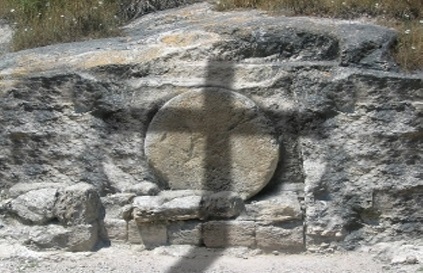
Joseph of Arimathea acts, asking Pilate for Jesus’ body. He was a member of the Jewish council – one that “hadn’t agreed with the plan” that has just been accomplished. The women watch him hastily wrap and lay Jesus’ body in a new tomb. The women go home and prepare spices and oils to properly care for his body. They wait as the Sabbath passes. They wait to offer one last act of love.

Prayer: Lord God, through it all, Jesus does not change. Love, grace, forgiveness, commitment – they continue to flow out from Jesus. His steadfastness to you and to us does not waver a bit. Signs of his love for you and for us are sprinkled throughout this text. Thank you for the example Jesus set, right to the end. This too was one last act of love. Amen.


Leave a comment

Act Differently

Reading: Proverbs 25 and 26

‭Proverbs 26:21 – “Like adding charcoal to embers or wood to fire, quarrelsome people kindle strife.”

Removing the dross from the silver is like removing the evil from the royal court – a beautiful vessel is the result. Removing arrogance and pride not only avoids some embarrassment, it could lead to honor and recognition. Removing fuel from the fire and gossip from conversations both cool the situation. Removing the selfish and evil from our lives yields good outcomes.

Much is said about a lying tongue. False testimony is like a club or sword to the victim. A lying tongue crushes and brings destruction to those affected. The sage compares smooth lips and an evil heart to silver coating on clay – both can look or sound good from a distance but it is oh so fragile underneath.

Fools are slow to learn. They repeat their mistakes often so they are like “a dog jwho returns to their vomit.” Neither makes much sense but both happen. Those without self-control are like a breached city – no walls or filters. So just as a whip is used to control a horse so too must a rod be used on a fool’s back.

The wise act differently. Their words calm strife and build up. These words are like “golden apples in a silver setting.” Instead of making fun of or ignoring their enemies when they’re hungry or thirsty, a wise person gives them food and drink. The wise understand that compassion is much more powerful than hate or anger. So too may our words and actions bring healing and wholeness, peace and hope.

Prayer: Lord God, while it seems so, so clear that wisdom and humility are the much better choices, we can be selfish, we can speak hurtful words, we can gossip and tear down, we can play the fool. So, Lord, help us. Send the Holy Spirit to whisper in our ear when we venture down the wrong path. May the Spirit shout if need be. May the nudge become a shove too if we’re not quite seeing how we’ve gone down the wrong path. Help us, Lord, to be love and healing to our broken world. Amen.


Leave a comment

Wait for the Lord…

Readings: Psalms 128-130

‭Psalm 130:6 – “My whole being waits for my Lord — more than the night watch waits for morning; yes, more than the night watch waits for morning!”

Today’s three Psalms form the rest of the “Songs of Ascent.” Now, that’s not to say that Psalm 17 or Psalm 136 couldn’t be sung on one’s way up to Jerusalem. This is so because just like yesterday’s Psalms 120-127 and just like almost any “set” of Psalms, within these three we find cries to God, oppression by the wicked, trust in God to act, and praises for God’s blessings and presence.

Psalm 128 equated being faithful and working hard to having a truly happy life. It offers blessings for a fruitful wife who produces many children, who are like “freshly planted olive trees.” It closes with a hope to “see your grandchildren” – to experience long life, another sign of God’s blessing.

The psalmist cries out for relief in Psalm 129. The enemy has “plowed my back like farmers.” This implies being scourged. Yet God rescued the writer. He or she prays the enemy would be like “grass on the roof” – that they’d experience a very short life because they are evil.

Today’s reading closes with Psalm 130. It is part cry for help, part recognition of God’s great mercy, part encouragement to “wait for the Lord!” The psalmist is in need of forgiveness. They cry out for mercy. They are grateful that “forgiveness is in you” and they acknowledge that without God’s mercy, no one would make it. So they wait eagerly, “More than the night watch waits for morning!” The repetition emphasizes their desperation. The Psalm closes by encouraging Israel to also wait for the Lord. May we do so as well.

Prayer: Lord God, you are so good to us. Your mercy never ends, your grace abounds, your love never fails. You are our guide and our strength, our shield and our defender, our gracious redeemer and our sure hope. Thank you, O Lord our God! Amen.


Leave a comment

The Ebb and Flow

Reading: Psalm 119:89-176

‭Psalm 119:159 – “Look at how much I love your precepts. Make me live again, LORD!”

The first half of Psalm 119 painted a picture of a new and growing faith. In verses 89-176 we find a more mature faith, one that quickly turns to God, one that expects God to act on behalf of the faithful. The overarching theme of these 11 sections can be summed up in today’s key verse: “Look at how much I love your precepts. Make me live again, LORD!” Much like Job, the psalmist wrestles with the good/reward, bad/punish framework of the ancient faith. We wrestle with this too.

This wrestling can be found in verses 126-127 and in 165-166. In the first the psalmist almost demands God’s actions because others have “broken” God’s law and because he or she loves the law more than gold. In verse 165 the statement is made that the faithful enjoy peace and do not stumble. Then in 166 the psalmist says, “Lord, I want your saving help.” I’m good, God. You should save me!

Throughout these sections we also find a consistent theme of loving God’s law and being angry at or hating those who don’t love God’s law. We see this played out in the New Testament too as the religious leaders clashed with Jesus and then with his followers. They couldn’t stomach how Jesus ate with and touched sinners. We too can be a bit like this. We can look down our noses at those who aren’t acting or believing like we act and believe. We can struggle with brothers and sisters in Christ who seek to minister to “those” people.

Overall these sections of Psalm 119 paint an accurate picture of our faith – for good and for bad. We sincerely want to know, understand, and live out God’s will and ways. We can judge and demand. And we can find ourselves as the psalmist did in verse 176: “I’ve wandered off like a sheep, lost.” And we can pray as the psalmist prayer: “Find your servant because I haven’t forgotten your commandments!” No, likely they’re just conveniently misplaced. Lord, help us.

Prayer: Lord God, the ebb and flow is part of the journey. The call to love the least wrestles with our inclinations towards judgment and condemnation. How fickle we are too. So, yes, help us Lord to know you more, to love you more completely, to serve more steadfastly. Continue to gather us back in. Shepherd us on your path. Amen.


Leave a comment

Sing, O Israel

Readings: Psalms 64-68

‭Psalm 68:9 – “You showered down abundant rain, God; when your inheritance grew weary, you restored it yourself.”

Psalm 64 begins with a prayer for protection and finishes with a celebration of God’s acts. Psalms 65-67 join in the celebration of God’s mighty acts. We close with Psalm 68, mostly more praise but with some petitions for God to act. As we draw close to the end of Book 2, we see the shift towards more praise and less lament.

Psalm 64 begins with prayer of protection against the evil doers’ words or “arrows.” What an appropriate descriptor. The psalmist trusts that God will respond with an arrow too. Then the righteous will rejoice in the Lord. The rejoicing continues in Psalm 65, where David is grateful for God’s listening ear and forgiving heart. David also celebrates how God can “calm the roaring sea.” How we too are grateful for this gift! The Psalm closes with thanksgiving for God’s provision of abundant flocks and grains. Yes, God is good.

Psalm 66 focuses on God’s deeds and power. This power has tested and refined them – a good process. A good one for us too. Not always enjoyable but always fruitful. The psalmist’s response? Offerings given and promises kept, a joyful response! The thanksgiving extends in Psalm 67 to include the gift of salvation. It is to be made known to the nations. Then the nations of the world will better understand the fair judgments that God renders and will better receive the guidance that God desires to give to all of the nations of the world.

Closing today with Psalm 68, the Psalm begins with a grand sweep of God’s acts: scatters the enemy, cares for orphans and widows, sets prisoners free. The psalmist celebrates God’s provision and love: “You showered down abundant rain, God; when your inheritance grew weary, you restored it yourself.” The Psalm closes by remembering God’s past victories, grand worship, and shows of strength. The psalmist longs for these to return. Remind yourselves through song. Sing, O Israel, sing to the God who gives you strength!

Prayer: Lord God, we too thank you for the many ways that you move in our lives and in our world. We offer you our praise and worship! And we too count on your continued presence. Without you, O Lord, we’d be in trouble. Shower us with your abundant love and provision. Go with us day by day. Amen.


Leave a comment

Always There with Us

Readings: Psalms 33-36

‭Psalm 36:6 – “Your righteousness is like the strongest mountains; your justice is like the deepest sea.”

Photo credit: Lidia Nikole

Our readings today begin and end with two Psalms of praise. Psalm 34 begins with praises for God’s goodness and faithfulness, for God speaking creation into being. The psalmist celebrates God’s rule over all the earth. Kings and warriors aren’t saved by their strength and power (and neither are we!) No, the psalmist says, put your hope and trust in the Lord alone. Psalm 36 does begin by recognizing the evil and wicked choices of the sinful. But the psalmist quickly shifts to praising God for God’s faithful love and for “Your righteousness is like the strongest mountains; your justice is like the deepest sea.” God is worthy of our praise! Yes, we take refuge under God’s wings. Yes, God’s light is our light!

Psalms 34 and 35 speak of the good and evil that is present in our world and in our lives. Psalm 34 begins with blessing and praising God for answered prayers and for deliverance. Then the psalmist offers a warning and also some words of encouragement: keep your tongue from evil, do good, seek peace. The author declares that “the Lord is close to the brokenhearted; he saves those whose spirits are crushed.” Note the present tense of these verbs! These warnings, the hope, the encouragement – they apply to our lives too!

Psalm 35 begins with pleas for God to act: “Stand up and help me!” Rescue is needed from those who want to humiliate, shame, and harm. We too have lifted these calls. The psalmist laments that even though he or she fasted and grieved when “they” were sick, now they rejoice in his or her stumbles. The psalmist cries out, “How long…?”

The Psalm closes with renewed requests for justice, for the enemies to be the ones who are disgraced. Then, then the psalmist will praise the Lord. Then… When we are hard-pressed, when we feel the full assault of evil, then, yes, it can be hard to praise the Lord. Yet, as the song goes, “May we praise you in the storm.” May it be so because God is always there with us.

Prayer: Lord God, we so want justice to be served, to see wrongs made right. When we are tempted to execute our justice, pause us and remind us first of your grace that covers us. And then, then remind us that you alone are the judge, that you alone know true justice. Help us to trust, O God, in your strong righteousness and in your deep justice. Help us to stand on that mountain, to wade into that deep sea, for you alone are God. Amen.


Leave a comment

Wedding Clothes

Reading: Matthew 22:11-14

Verse 12: “How did you get in here without wedding clothes, friend?”

Jametlene Respk

The wedding hall has been filled with guests – “both good and bad.” All we’re invited to come. As we continue in Matthew 22, the king comes and begins to mingle with the guests. Soon he noticed a man who was not dressed properly. The king says to the man, “How did you get in here without wedding clothes, friend?” While we might be puzzled by this question, Jesus’ audience would’ve known good and well that you dress (and act) for the occasion, especially if you’re invited by the king!

The man in question is bound and tossed into the darkness, where he will weep and gnash his teeth. This harsh metaphor is the reality that some people will face when they meet the King of kings. Then comes the point of the parable: “Many are invited but few are chosen.”

It can be tempting to respond to God’s invitation as this man did. He thought that he could just show up and be acceptable. Here is where some context is really important. Jesus is saying that there is a big difference between being called and being chosen. We are all called into a relationship with Jesus. Matthew’s audience would also understand that the wedding clothes were a metaphor for clothing oneself in Christ. To accept and live out Christ’s invitation into relationship was to put on Christ’s love, mercy, grace, forgiveness, compassion, hospitality… Understanding this, we can turn to our important question for today: Are you dressed in the proper attire for the great banquet of Christ?

Prayer: Lord God, day by day, as you call me into humble service, may I make the very intentional choice to clothe myself in Christ. Help me to soak in your word, to open my eyes and ears and heart to your Holy Spirit, and to find the strength and courage to live faithfully and righteously each day. Amen.