pastorjohnb

Thoughts and musings on faith and our mighty God!


Leave a comment

Growing and Widening

Reading: Acts 10-12

Acts 11:17 – “If God gave them the same gift he gave us who believed in the Lord Jesus Christ, then who am I? Could I stand in God’s way?”

Photo credit: Uta Scholl

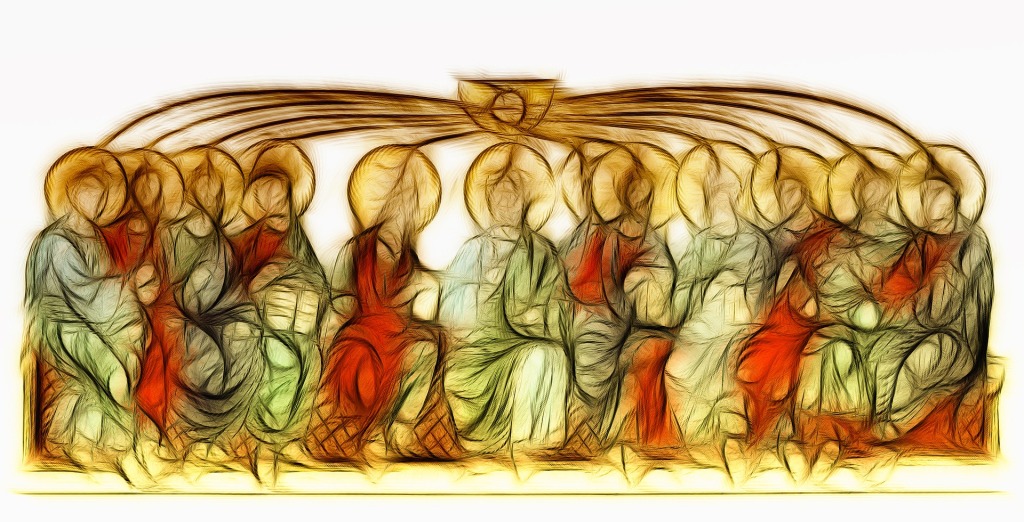
The circle opens wider as God’s angel tells Cornelius to send for Peter. He does so. Meanwhile, Peter has a vision while praying on a rooftop. A sheet holding animals, reptiles, and birds descends from heaven. Peter is told to kill and eat. “Absolutely not!” is the response. Three times this happens and the sheet returns to heaven. Cornelius’ messengers arrive and tell their story. Peter invites them in. They leave in the morning. As Peter is preaching to a receptive audience the Spirit came upon them just as it had at Pentecost. These Gentiles are baptized in the name of Jesus. The circle widens.

When Peter returns to Jerusalem, some of the Jewish believers question Peter’s actions. He entered the home of an uncircumcised Gentile! Peter explained the whole story. Recalling the Lord’s promise of baptizing with the Holy Spirit, he then says, “If God gave them the same gift he gave us who believed in the Lord Jesus Christ, then who am I? Could I stand in God’s way?” The church decided God is at work; it is good. The church continues to grow and spread. In Antioch they first intentionally preach directly to Gentiles. Many come to believe. Barnabas is sent to investigate. He is overjoyed to see God at work. He gets Saul and they preach in Antioch for a year. The disciples are first called “Christians” in Antioch.

Turning to chapter 12, persecution comes from civil authorities. Herod has James killed and then he arrests Peter. Awaiting arraignment, Peter is rescued by an angel as the church prays earnestly. So unbelievable is the escape, it takes a while for the door to Mary’s home to be opened. After telling his story, Peter leaves. Meanwhile, an arrogant Herod dies in Caesarea, punished by God. Barnabas and Saul, along with John Mark, return to Antioch as the church continues to grow.

Prayer: Lord God, you work in amazing and sometimes unbelievable ways. You open the church to “outsiders” and you open prison doors to free the imprisoned. You always provide a way and you continue to call us to trust in where you are leading, growing both our faith and the family of faith. Thank you for your love and faithfulness, O God. Amen.


Leave a comment

Bold Words

Reading: Matthew 26

Matthew 26:35 – “Peter said, ‘Even if I must die alongside you, I won’t deny you.’ All the disciples said the same thing.”

In Matthew 26 we move into Jesus final days. He announces that in two days he will be handed over and crucified. Matthew notes that the chief priests and elders don’t want it to happen during the feast – they fear the people’s reaction. But it will happen as Jesus said and as God has planned.

That night at the house of Simon (formerly the leper), a woman anoints Jesus’ head with very expensive perfume, preparing him for burial. The disciples see it as a waste, but Jesus commends her actions. Judas then goes and agrees to betray Jesus. The next day Jesus and the disciples celebrate the Passover meal. Jesus tells them that one of them will betray him and Judas is eventually identified. Jesus then offers the first communion. Judas is still there. They sing some songs and then go to the Mount of Olives.

Jesus tells them that they’ll all fall away that night. Peter says he’ll never stumble. Jesus tells him that he’ll deny Jesus three times that night – “before the rooster crows.” Boldly Peter says, Even if I must die alongside you, I won’t deny you.” The others echo this sentiment. Jesus moves to the area known as Gethsemane to pray, inviting the disciples to “keep alert” as they join him in prayer. They sleep. Jesus wrestles with the suffering to come but ultimately prays to God that this will be “what you want.” Awakening the disciples, Judas and the crowd arrive.

Identified with a kiss, Jesus is arrested. All is to fulfill the scriptures. All the disciples run away. Jesus is taken not to the temple but to the home of Caiaphas, the high priest. Peter follows at a distance. It is at a distance that he will boldly deny Jesus three times. The fake trial ends with the religious leaders hitting and spitting on a condemned Jesus. Funny how their literal actions mirror what the disciples did to Jesus, figuratively speaking. Sadly, at times, we do the same.

Prayer: Lord God, the sad but glorious ending begins to unfold. Human weakness, pride, jealousy, betrayal – all are present. Obedience, trust, faith, courage – all present as well. Lord, help us to be like you instead of like the religious leaders and like the disciples in their moments of fear. Lord, empower our faith and trust, our obedience and courage. May our words and our actions be bold. Amen.


Leave a comment

What Is Required?

Reading: 1st Thessalonians 4:13-18

Verse 17b: “And so we will be with the Lord forever.”

Today’s words from Paul connect really well with the themes and ideas around All-Saints’ Day. In Revelation 7 the vision of heaven and all its glory brought hope to the believers suffering in John’s time. These words offer hope to all believers. The Thessalonians aren’t quite there yet. The vision detailed in Revelation probably hasn’t reached them. They are concerned with the souls of those who have died (“fallen asleep”) before Jesus returned. The common belief was that Jesus was coming back any day, soon. They fear that these souls might miss out or forever be trapped in limbo.

Paul begins to address their fears and concerns by assuring them that because Jesus died and rose again that one day all who believe in him will one day rise with him. Paul further assures them using Jesus’ own teachings. He reminds them that Jesus taught that when he returns “the dead in Christ will rise first.” Those who have fallen asleep will indeed join Jesus in glory. Paul then turns to those who are alive, reminding them that Jesus taught that those who are still alive “will be caught up together with them.” All who call on Jesus as Lord and Savior “will be with the Lord forever.” What words of hope and encouragement Paul shared with the Thessalonians and with us!

The underlying question that bubbles up here for me is this: What is required of me so that I am one day a part of this heavenly gathering? I first turn to Micah 6:8. These words are my daily prayer of commitment to God. Each day I strive to act justly, to love mercy and kindness, and to walk humbly with the Lord. These words and actions focus and frame my day. What words and practices guide you to living in a way that brings honor and glory to God?

Prayer: Lord, justice, mercy, kindness, and humility – they are a good start but I know that this is not all that is required of me. By the power of your Holy Spirit fill me with your love and compassion, with your grace and forgiveness. Show me the way to daily serve you and neighbor. Amen.


Leave a comment

What Can Anyone Give?

Reading: Matthew 16:24-28

Verse 26: “What can anyone give in exchange for their soul?”

Today’s passage begins with Jesus offering a challenge and an invitation. He states that if one wants to follow him (that’s what happens after we profess him as our Lord and Savior), that one must do two things. First, one must deny self. Second, one must take up their own cross. In the reality of faith, I believe these are often repeated events and practices.

Professing Jesus as Lord is step 1 of denying self. In this confession we are declaring that Jesus is our top priority, that he is the #1, that he occupies the throne of our heart. The flip side is that we are none of these things. This is the beginning of denying self. Making the declaration is the easy part. It is often made in a moment of passion for Christ. We are “on fire.” The much harder and ongoing challenge is keeping the profession as we enter the world. These daily steps are the hardest. The ways, norms, and practices of the world often clash with our faith, causing us to evaluate our choices and decisions one by one in the light of faith.

In the same way, taking up our cross is not a once-in-a-lifetime act. It is not exactly the same as when Jesus took up the actual cross. It is the same in that taking up our cross involves sacrifice and it is on behalf of others. And, oh yes, there is usually also some suffering involved. As with denying self, there is a cost to this act too. One can take up the cross in many ways. Some efforts provide the arc of our faith journey. Think of a missionary in China or of Mother Teresa in India. For most of us, though, they are shorter term. Strung together they reveal the arc of our story of faith. We might stand against an injustice being done. This ends when justice prevails. We might befriend someone who is an outsider or outcast. This ends when our love leads others to love and include this person. We might commit to walking with someone experiencing addiction. This ends with long-term sobriety or recovery. Some of these can be lengthy but not forever.

Taken together these become our journey of faith. Casually speaking, these practices become our lifestyle. Lived out, we experience losing this earthly life and all of its attachments. In turn we gain true life – a life focused ultimately on the gift of eternal life, both for us and for all others. It is a day by day, moment by moment focus. Jesus asks, “What can anyone give in exchange for their soul?” Nothing but a day by day, moment by moment walk of faith. May it be so for you and for me.

Prayer: Lord God, you ask for all of me to be given, to be poured out for you. From the outside it seemed like such an ask. But now on the inside, it feels like the only possible choice, understanding what you did and do for me. Use me this day and every day in loving service to you and to my neighbors. Amen.


Leave a comment

Keys

Reading: Matthew 16:13-20

Verse 19: “I’ll give you the keys of the kingdom of heaven.”

Photo credit: Nerene Grobler

Jesus pauses to get a pulse on how things are going. He asks the disciples who people say he is. The response provides a pretty impressive list of prophets. Jesus has a good amount of respect from the general population. Then he turns to the 12, to his inner circle, to the ones who have been with him practically 24/7 for almost 3 years. He says, “What about you? Who do you say I am?” This is a personal question.

Simon answers first, declaring Jesus the Christ, the Messiah, the Son of God. Jesus recognizes that the Spirit has given him this answer and because of this he says that Peter is blessed. Continuing Jesus renames Simon to Peter, which translates “rock.” He then identifies Peter as the one upon whom Jesus will build his church. Peter will be the leader of the early church.

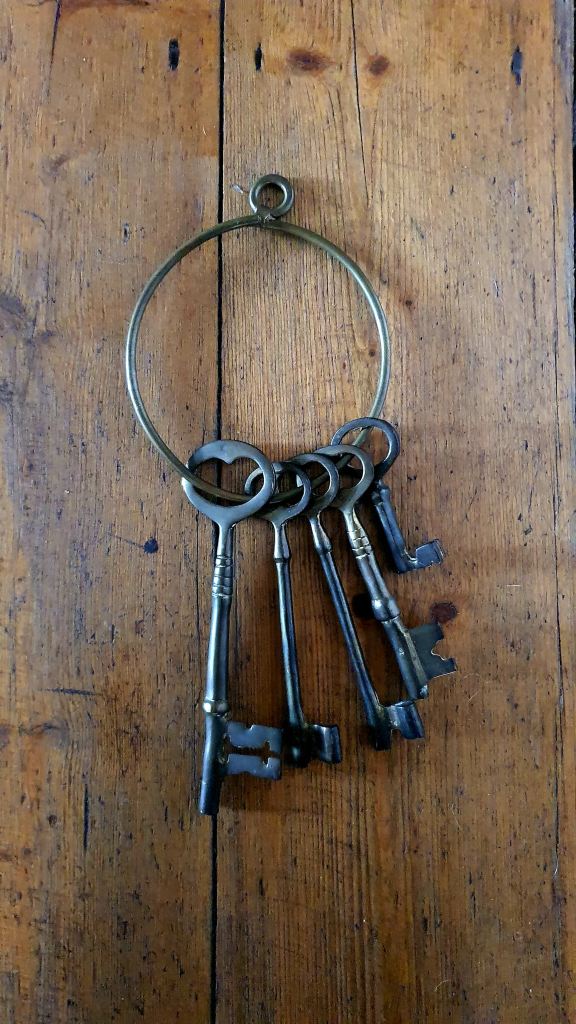
And then Jesus says, “I’ll give you the keys of the kingdom of heaven.” Keys represent access to knowledge. Peter – and all others who come to call on Jesus as Messiah and Lord – will receive all the knowledge necessary to bind or set free from bondage those struggling with or trapped in sin. Just as the Spirit revealed Jesus’ true identity to Peter, so too will the Holy Spirit reveal the words and actions needed to bring others to Christ, the one who sets us free from our sins. With a holy confidence may we witness to this good news!

Prayer: Lord God, thank you for all who have poured into me, building up my faith and my knowledge of you. Thank you for those that continue to do so, including the Holy Spirit. Continue to fill me. Continue to use me to share the good news with a world in need of Jesus Christ. Amen.


Leave a comment

Provision

Reading: Genesis 22:6-14

Verse 14: “So Abraham called that place ‘The Lord will provide.'”

In our Genesis 22 reading God provides the ram as the sacrifice. Isaac is lifted off the altar and he is replaced by this ram. It dies in his place, much as Jesus died in our place to pay the price for our sins. The ram does so that the child can live. In an act of gratitude and worship, Abraham names the place “Jehovah Jireh” – the Lord will provide.

God continues to provide for our needs. Sometimes it is by giving us the words to speak, sometimes it is by guiding us to the correct action to take. And sometimes words fail and God is directing us to simply provide presence. God provides in many other ways. A door can be opened, another closed. A meal or help in some other form can show up unexpected and meet a need.

We too can be used by God as the means of provision. Many years ago, for example, a family in our church was struggling financially. A group got together and left $1,000 in a blank envelope in their mailbox. Our financial blessings are often a way that we can be part of God providing a blessing for others. It can also be something as simple as a card or phone call – hearing “it came exactly when I needed it most” assures us of God’s hand guiding and providing.

The keys to both receiving from God and being used by God to provide for others begins with an open ear, followed closely by a willing heart. May we all be receptive to God’s working in and through us as God loves and provides for our needs.

Prayer: Lord God, use me today to accomplish your will. Use my words or my hands and feet, use my presence, O God, as you seek to love and care for our world and for all of your children. And when your will turns to me, may I humbly receive all that you have for me. Amen.


Leave a comment

Provision

Reading: Genesis 22:6-14

Verse 14: “So Abraham called that place ‘The Lord will provide.'”

In our Genesis 22 reading God provides the ram as the sacrifice. Isaac is lifted off the altar and he is replaced by this ram. It dies in his place, much as Jesus died in our place to pay the price for our sins. The ram does so that the child can live. In an act of gratitude and worship, Abraham names the place “Jehovah Jireh” – the Lord will provide.

God continues to provide for our needs. Sometimes it is by giving us the words to speak, sometimes it is by guiding us to the correct action to take. And sometimes words fail and God is directing us to simply provide presence. God provides in many other ways. A door can be opened, another closed. A meal or help in some other form can show up unexpected and meet a need.

We too can be used by God as the means of provision. Many years ago, for example, a family in our church was struggling financially. A group got together and left $1,000 in a blank envelope in their mailbox. Our financial blessings are often a way that we can be part of God providing a blessing for others. It can also be something as simple as a card or phone call – hearing “it came exactly when I needed it most” assures us of God’s hand guiding and providing.

The keys to both receiving from God and being used by God to provide for others begins with an open ear, followed closely by a willing heart. May we all be receptive to God’s working in and through us as God loves and provides for our needs.

Prayer: Lord God, use me today to accomplish your will. Use my words or my hands and feet, use my presence, O God, as you seek to love and care for our world and for all of your children. And when your will turns to me, may I humbly receive all that you have for me. Amen.


Leave a comment

Peace Be with You

Reading: John 20:19-23

Verse 19: “Jesus came and stood among them and said, ‘Peace be with you!'”

Even though Mary Magdalene has shared the good news of the resurrection and even though Peter and John have seen the empty tomb and even though Mary has seen the risen Christ, the disciples hide behind locked doors “for fear of the Jews.” They have not seen for themselves, so their fears and doubts still guide their thoughts and actions.

Jesus suddenly appears among the disciples and says, “Peace be with you!” This was a standard greeting in Jesus’ day. It is beginning with the familiar. Then Jesus shows them his hands and his side – the scars still fresh. The full realization of who this is brings great joy to the disciples, just as it had to Mary in her encounter with the risen Christ. Isn’t it funny how firsthand experience is so much more powerful?

Repeating the familiar, Jesus again offers peace. Then the commission begins: “As the father has sent me, I am sending you.” The ministry is being passed on. For 3 years these disciples gained firsthand experience in what it meant to be sent by God. Jesus has lived it day in and day out. Now it was their turn to do as Jesus had done. To enable the disciples to do this huge task, Jesus said, “Receive the Holy Spirit” as he breathed it onto and into these men. This living, indwelling presence of the risen Christ would allow them to do as Jesus did, forgiving as lives were changed by the power of God. The disciples were to minister as Christ had ministered.

This gift of the Holy Spirit is something that all who surrender to Jesus Christ as Lord and Savior receive. The Holy Spirit empowers all believers to minister to others just as Christ did long ago. The Spirit empowers you. May the peace of Christ cover you as you seek to be Jesus’ hands and feet and heart in the world today.

Prayer: Lord God, your power is in us. It goes with us. It leads and guides and shows us the way. It gives us the words to speak. Use us today to minister in your name. Amen.


Leave a comment

Inviting Others Along

Reading: 2nd Corinthians 5:20-21 and 6:1-10

Verse 20: “We are therefore Christ’s ambassadors, as though God were making his appeal through us.”

On this first Sunday in Lent, as we take this mostly personal journey of faith, today’s reading brings this question to my mind: Who are we inviting along in this journey? In today’s passage, Paul describes his journey and this can serve as a model for us as we seek to share Christ with others. In the first verse Paul states: “We are therefore Christ’s ambassadors, as though God were making his appeal through us.” Friends, we are all Christ’s ambassadors.

In verses 2 Paul writes of the imperative nature of this role: “Now is the time of God’s favor, now is the day of salvation.” For every lost soul that crossed paths with Paul and for every wayward person that crosses our path, this statement remains true. Today is the day to meet the Savior. In the rest of the passage Paul speaks mostly of his hardships, not as a way to brag or as a means to show how faithful he was, but as a way to show how God has always been with him. Paul is modeling how his faith was not a “stumbling block” to others but was instead what allowed him to live “having nothing, yet possessing everything.”

In each of these hardships Paul sought to and invites us to be servants who “commends ourselves in every way.” In other words, his faith and trust in Jesus is what he relied on and is what carried him through. In our lives, our actions usually speak louder than our words. So the question for us is this: In our times of hardship, how is the power of Jesus Christ revealed in and through us? That is how we invite others into relationship with Jesus Christ and onto this journey of faith.

Prayer: Lord God, in the good and in the bad, but especially in the hardships, may I reveal you in me to the world. Guide me to turn to you first and always, relying not on my own ability or efforts. Lead me to trust fully in you. Amen.


Leave a comment

Looking Up

Reading: Numbers 21: 4-9

Verse 7: “We sinned when we spoke against the Lord and against you. Pray that the Lord will take the snakes away from us”.

Photo credit: Carolina Jacomin

As the Israelites near the end of their journey in the wilderness they are tired, impatient, and irritable. Three weeks into Lent and perhaps a few of us grow tired of the themes of reflection and introspection. In the bigger picture, today the source of our weariness and impatience and irritability is the pandemic. As the Israelites grumble against God and Moses, they are expressing these emotions. They long to go back to what was. Tired of their current situation, they let go of their frustration via complaint. This is the fifth complaint story during their wilderness journey. God has had enough. God sends venemous snakes among the Israelites and many die. Consequences.

Like Jesus’ subversive actions in the temple, this response of God makes us feel a little uncomfortable. Our reality, though, is that we have been here too. We have had the tables turned over a time or two or… We have been bitten by our poorly spoken words or via our sinful actions. We too have experienced how the pain drives us to confession and repentance, to turning back toward God. As we look up to the Lord, just like the Israelites did, we find reconciliation and restoration and forgiveness. God is faithful and moves quickly to bring us back into right relationship.

Lent is a wilderness experience, a season of introspection and reflection. In that spirit, let us consider times when our actions have harmed or caused pain for others. Perhaps we are in the midst of such a time. What words spoken have caused harm? What actions have damaged relationships? What words left unspoken or actions left undone have allowed harm or pain to continue? To wrestle with these questions first requires a humble and contrite spirit. On Ash Wednesday we were reminded that this is the posture of Lent – a humble and contrite spirit. It is what leads to a new heart within us and to the place of healing that God so graciously offers.

The Israelites looked up to the reminder that God is in control, to the serpent fashioned by Moses. Today, we lift our eyes to our source of healing and hope, to the one who offers mercy and grace, restoration and wholeness – Jesus Christ. On this Lenten journey, may the God of love continue to sustain you and to give life, even in the wilderness.

Prayer: Lord of life, you are so gracious and merciful and kind. Your love is overwhelming, your patience without end. Just as you continued to walk with the Israelites, walk with me day by day. Reveal to me the ways that I have caused and do cause harm so that I can repent and become more like your son, the Christ. Amen.