pastorjohnb

Thoughts and musings on faith and our mighty God!


Leave a comment

A Profound Sense of Gratitude

Reading: Deuteronomy 26:1-11

Deuteronomy 26:10a – “I am bringing the early produce of the fertile ground that you, Lord, have given me.”
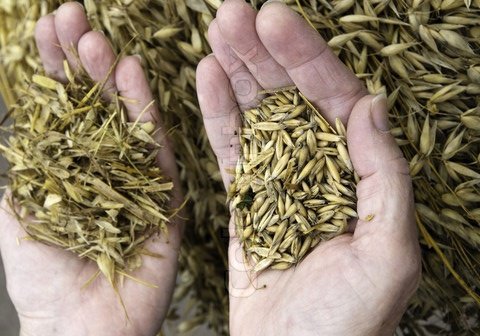
Our first readings this week focus in on giving thanks to God. In our Deuteronomy reading, the Israelites have just come out of many years of bondage and oppression in Egypt. They’ve most recently spent 40 years wandering in the wilderness, testing God and learning from their sinful mistakes. The Israelites have now been prepared to enter the Promised Land. As God has done for the years in Egypt and in the wilderness, God will continue to provide for God’s people as they enter into their inheritance.

As an expression of gratitude and dependence, each Israelite is to take some of the “first fruit” of the land and to bring it as a sacrifice to God. “First” implies not only earliest but also best or chief. God is calling for all of this from the people, giving to God before anything else. The solemn statement in verses 5 through 10a is a reminder of all that God has done since the time of Jacob. This reflection would raise up in Israel a profound sense of gratitude and an awareness that all that they have comes from God.

The reflection ends with these words: “I am bringing the early produce of the fertile ground that you, Lord, have given me.” For the Israelites this was their actual first fruits. What could we substitute into “I am bringing ____ that you, Lord, have given me.” What “crop” or talent or wealth or time could give to God with a profound sense of gratitude? How would being aware of this offering as a returning of something that really already belongs to God increase our thanksgiving? Take a few moments to ponder what you could give and then commit to offering these things with thanksgiving in your heart.

Prayer: Lord God, you are the giver of all things – material, spiritual, physical, relational, communal. Shape our hearts to be grateful for all that we have. Form us into people who generously return some of these blessings to you, O God, for the building of your kingdom in this time and place. Amen.

Leave a comment

Wonderful Love

Reading: Luke 23:39-43

Luke 23:42 – “Jesus, remember me when you come into your kingdom.”

As we continue in the crucifixion scene, we read Jesus’ only real interaction with anyone since he spoke to the mourning women on the way to the cross. In our reading today one criminal joins in the mockery and adds a selfish request: “Save yourself and us!” It is then that another voice speaks, this time for Jesus. The second criminal asks the other, “Don’t you fear God?” This is a telling question. He recognizes that they’ll soon die and that he’ll soon stand before the next judge – the one who will pronounce a sentence of eternal light and love or one of eternal torment and darkness.

Turning to Jesus, the second criminal says, “Jesus, remember me when you come into your kingdom.” He wants to go where Jesus, the innocent one, is going. Jesus offers him words of assurance, of welcome, of love. Yes, “today you will be with me in paradise.” This is so interesting to me. Jesus does not require a confession of sin first. He doesn’t quiz the man about his past life. Jesus doesn’t wait for a pledge of repentance or for a request to be baptized. The man just wants to be with Jesus for whatever is next. He longs for a reality-changing relationship with the Lord. Jesus welcomes the man in love.

This remains who God is. We don’t have to be perfect to present ourselves to God. In fact, God does some of God’s best work when we come broken or hurting or humbled or vulnerable. It us then that we are most malleable, most ready to be made new again. This is love. Thanks be to God!

Prayer: Lord God, it is reassuring to know that your love never changes. At our very best and at our very worst, your love is the same. It is a wonderful love. Lord, help us to have this kind of love. Amen.


Leave a comment

The Lord Will Fight

Readings: 2nd Chronicles 29, 2nd Chronicles 30, 2nd Chronicles 31, 2nd Chronicles 32

2nd Chronicles 32:8 – “All he has is human strength, but we have the LORD our God, who will help us fight our battles!”

Hezekiah is the focus of today’s readings. In the first month of his rule he reopens the temple and sets the priests to making it holy once again. After eight days the temple is purified. Early the next morning sacrifices are offered for all Israel, songs are sung, the Lord is praised. Hezekiah invites the people to bring thank offerings to God. The response is so great that the Levites have to step in and help.

Next Hezekiah reestablishes the celebration of the Passover. He sends word throughout all of Judah – and Israel. Some from up north laugh and make fun of the invitation, but some come from Israel. A huge crowd gathers and celebrates the Passover. So wonderful and joyous is the celebration, they decide to worship God for seven more days. Fueled by this celebration the people go out and cleanse Judah of all idol worship. The pillars, poles, shrines, and altars are all destroyed.

Hezekiah then calls for the resumption of the tithe to support the daily needs of the priests. The people bring their best in great abundance. Judah is at its high point in its relationship with God – the best since the days of Solomon. It is then that King Sennacherib of Assyria comes. Hezekiah trusts fully in God. He encourages the troops to be brave and strong. He says, “All he has is human strength, but we have the LORD our God, who will help us fight our battles!” Hezekiah trusts that the Lord will fight the battle. That very night God’s messenger comes and kills 185,000 Assyrian soldiers (2nd Kings 19.) Sennacherib goes home in disgrace.

A deadly illness then sets in on Hezekiah but he cries out to God and is healed. But in that moment he is too proud to properly thank God. He and Israel begin to feel God’s anger. They repent and God’s blessings return. Hezekiah dies and is buried in the “upper area” of the tombs with David’s sons. Gold star!

Prayer: Lord God, what a great reminder of the value of a long, steady, obedient faith. In the big and the small, your will and your ways were the focus. Trust in you was sure. Help us to live out this kind of faith. Amen.


Leave a comment

Moving Forward

Readings: Numbers 15, Numbers 16, Numbers 17, Numbers 18

Numbers 18:29 – “You will present each gift offering to the LORD from all your gifts, from its best portions and its holiest parts.”

On the heels of choosing fear over faith and being doomed to wander the wilderness for 40 years, in chapter 15 God details the offerings to be given when they do enter the Promised Land. The wander is clearly a detour. God has a plan. So God reviews the offerings required for unintentional sins. God is clear that there is no reconciliation offering for deliberate or intentional sin. They are cut off. In the next chapter we will see what that looks like. The chapter closes with instructions to place blue fringes on all of their clothing. Blue represents holy. The fringes will remind them of the commitment to their holy God.

Chapter 16 contains challenges to Moses and to Aaron. Korah and his Levite clan want more power. Dathan and Abiram think Moses has too much power. Korah and his family are gathered. God plans to consume Korah’s entire household. Moses intercedes for the innocents. God relents. Dathan and Abiram refuse to appear before Moses. They and their families are swallowed up by the earth. Korah and his 250 followers are consumed by God’s fire. The community grumbles against these deaths and therefore against Moses and God. God sends a plague. Moses sends Aaron out into the community to stop the plague. Aaron stands between the dead and the living, halting the plague.

To reiterate God’s call on Aaron, the staffs of the 12 tribal leaders are gathered and placed with Aaron’s staff before the chest. Aaron’s staff buds, revealing God’s choice. The people lament. For now they fail to see the humility required to be in God’s presence. Today’s readings close with priestly duties and their compensation. It mostly reiterates earlier instructions but also adds a requirement of the priests. Since they belong to the Lord they will not be given a land inheritance. Instead they will receive the tenth of the crops and herds given to the Lord. In turn God will require them to give 1/10 of this to the Lord as their gift offering. It is to be “from its best portions.” May we too return to the Lord a portion from the best of our blessings.

Prayer: Lord God, in spite of the Israelites’ disobedience and rebellion and sin you keep the plan moving forward. You see and know the end results. In our lives we disobey and rebel and sin. You continue to work in our lives as well, leading and guiding, shaping and forming us into who and what you call us to be. In response, may we gratefully give our best to you in all situations. Amen.


Leave a comment

The Best Choice

Reading: Matthew 11:2-12

Verse 6: “Blessed is the man [or woman] who does not fall away on account of me.”

Photo credit: Einar Storsul

Returning to Matthew 11 today we delve a little deeper. In verses 7-11 Jesus reminds those there that day about who and what John the Baptist was. He first describes John by describing what he was not. John was not a swaying reed. John knew 100% what his calling was and he spoke the truth to all as he filled his divine role. John was not dressed in fine clothes and he did not live in a palace. John was radically different from the religious leaders of his day. And, Jesus says, he was more: “Yes, I tell you, more than a prophet.” Jesus gives John the Baptist high praise.

Yet Jesus is also aware that John is asking Jesus himself if he is really the one. John, like the rest of us, has doubts. These rise up as he sits imprisoned. I think that is why Jesus gives John’s disciples a two-part answer. In verses 4-5 Jesus gives the religious head answer. All that Jesus has done and will do aligns with John’s understanding of scripture. The second part is the heart answer. In verses 7-10 Jesus is reassuring John, indirectly telling him that he made not just the right choice but the best choice. Jesus recognizes John for sticking to the choice to serve God no matter what life brings.

Verse 6 is aimed at this choice. Here Jesus states, “Blessed is the man [or woman] who does not fall away on account of me.” Before launching into the “why” of verses 7-10, Jesus reminds John that he is blessed even though imprisoned. Yes, Jesus says, “there has not risen anyone greater.” But don’t forget the bigger, longer picture. The blessing of eternity with God is the end result of faithful living. There is no greater reward or blessing. Jesus reminds John and us of this truth. So may we too walk faithfully, ever making the best choice – the one to follow Jesus Christ no matter what.

Prayer: Lord God, give me the courage and inner strength to faithfully walk each day. When the hard or difficult or costly choices and decisions come, lead me to choose the path that Christ would have walked. May it ever be so, O Lord. Amen.


Leave a comment

Christ’s Ambassadors

Reading: 2nd Corinthians 5:16-21

Verse 20: “We are therefore Christ’s ambassadors, as though God were making the appeal through us.”

Photo credit: Ruthson Zimmerman

In our 2nd Corinthians 5 passage, Paul says we are Christ’s ambassador. To understand what Paul is saying, we need to know what an ambassador is. In a general sense, an ambassador is an envoy or a representative. We have government ambassadors who work in embassies all around the world. When two cities form a sister-city relationship, an ambassador goes to represent their city to the other. Sports leagues and all sorts of other organizations have ambassadors too. Ambassadors strive to represent the best that their country, city, sport, organization… has to offer. They share all the good that can be had or found in that connection or relationship. If something bad happens, the ambassador does everything they can to make it right again.

What does it then mean to be an ambassador for Christ? It first means that we share the very best that Christ has to offer to the world. This begins by doing everything in love. We do this by lifting others over self. We’re talking humble service here. It is continued by being merciful and gracious to all. It is practiced with generosity and through radical hospitality. And when we err, when we mess up, when we are less than Christlike, the love is demonstrated by seeking forgiveness and by working towards reconciliation to restore any damage to the relationship.

Living and acting as Christ’s ambassador, God is making “the appeal” through us. The appeal is to live and love this way too. The joy and hope, the peace and contentment, the genuine love for others – these draw people to Christ. A good ambassador represents the best of what Christ has to offer. May we live each moment cognizant of our call to be Christ to the world.

Prayer: Lord God, may all I meet experience the love of Christ. Pour it out of me, into the lives of others, drawing them towards Christ. May my joy and hope be appealing to those without. Amen.


Leave a comment

Your Way, Father God

Reading: Philippians 2: 1-13

Verse 5: “Your attitude should be the same as that of Christ Jesus”.

Today’s passage is confusing to many in the world and counter-cultural in many societies. It always has been. Early on we learned to do well, to excel if possible. In school we quickly learned who the smartest were. Whenever a spelling quiz or multiplication test was passed back, all glanced around to see who had the 100%. On the fields and in the band rooms those who were picked first for the team or who occupied first chair were seen as the goal. As life continued, the world continued to teach us to rise up, to be popular, to keep buying bigger and better. Even in Jesus’ day there was a clear social hierarchy. The Jews, Jesus’ people, saw themselves as far superior to all others. They were, after all, God’s chosen people.

So where in the world did this Jesus come from? Why would he come to this people – and continue to seek to come into worldly people’s lives – with the call to “consider others better than yourselves”? Being the fastest or strongest or best anything wasn’t even on Jesus’ radar. Owning a huge flock of sheep or a big cabinetry factory never drew a second of his attention. Jesus did not care what others thought of him. Accordingly, Jesus chose to take on “the very nature of a servant”. Instead of being a powerful ruler by the world’s standards, Jesus became a conquering servant. Instead of looking at how he climb up the social and political and economic and religious ladders, he sought to dismantle the ladders. Instead of seeking to work his way into the “right” circles, Jesus sought to bring all into his circle. Instead of saying “My way”, Jesus said, “Your way, Father God”.

Jesus was love and obedience lived out. May we each seek to follow Paul’s call day by day: “Your attitude should be the same as that of Christ Jesus”.

Prayer: Living God, lead me today to walk humbly. May I see others and their needs before considering my own. Guide me in the ways of Jesus, your humble servant, my example. Amen.


Leave a comment

Best News Ever

Reading: Romans 10: 5-15

Verse 12: “There is no difference between Jew and Gentile – the same Lord is Lord of all and richly blesses all who call on him”.

Christianity can be exclusive. Since day one it is something we have struggled with. In the very earliest church they thought one had to first be Jewish before one could become a Christian. Soon enough the Gentile Christians were trying to exclude the Jewish Christians. That is partially what Paul is addressing today. To the church in Rome and to all Christians today, Paul says, “There is no difference between Jew and Gentile – the same Lord is Lord of all and richly blesses all who call on him”. All people are loved by God. In similar writings Paul adds slave and free, young and old… to illustrate that God is for all people.

Religion in general has a long history of using beliefs and sacred texts as a means to justify exclusivity and sometimes violence. Jews, Christians, Muslims, and a host of other religions have fought wars, conducted purges, persecuted, imprisoned, … others outside of their faith. This is a fine line we walk. To have a belief system inherently makes one feel that their belief system is “right” or “correct”. If you didn’t, would your faith be worth having and following? But to use those beliefs to do harm of any kind crosses a line that Jesus clearly drew. A quick look at Jesus’ ministry, teachings, and life reveal a God who loves all people.

Tension existed between Jesus and the dominant religion because of his inclusiveness. Jesus interacted with all kinds of people deemed unclean, unholy, and unwelcome. His inclusion of prostitutes and Samaritans, of tax collectors and adulterers, of lepers and other infirm revealed the depth and breadth of God’s love.

Paul ends today’s passage with an encouragement to be like Jesus – preaching and teaching. It is also a claim to exclusivity: to share the good news of Jesus Christ with the whole world. We are called to go and tell of God’s love found in Jesus Christ. It is the best news ever. May we go and tell one and all.

Prayer: Lord of all creation and of all people, may I be a bearer of the good news. May I always tell of a love that conquers all things, defeats all barriers, and welcomes all people. Amen.


Leave a comment

Radical Hospitality

Reading: Genesis 18: 1-8

Verse 2: “When he saw them, he hurried… to meet them and bowed low to the ground”.

The church service has run long again and there won’t be much time before the next mini- congregation enters the sanctuary for their time of worship. You know from past similar experiences that the line will now be extra long at your favorite brunch spot. And your tummy is already growling. When the pastor finally says the last “Amen” you are ready to bolt for the exit. It is then that you spot that new young couple you saw moving in a couple houses down your street.

As Abraham stood at the entrance to his tent in the heat of the day, he was probably weighing a little nap versus going back out there in the hot sun. It was then that he saw three men standing nearby. Instead of a quick wave on the way to ducking into his tent, we read that this was his response: “When he saw them, he hurried… to meet them and bowed low to the ground”. Abraham welcomed them into his presence and extended generous hospitality. He asks them to stay, bringing water to wash their feet. He invites them to rest in the shade of the tree while having the finest bread and tenderest calf prepared. When this is ready, he serves it with milk and curds. Abraham offers the best that he has to these three strangers.

Would you pretend that you did not see the young couple and rush off to brunch with the regulars? Would you wave and point at your watch, adding a little shrug as you head the other way? Or would you make your way over to them, introduce yourself, and welcome them to the neighborhood and hopefully to the church? Would you, like Abraham, go the extra step to offer them some choice food and drink, extending an invitation to begin a relationship?

As we will see as we continue to read tomorrow, when and perhaps because Abraham extended radical hospitality, he experiences the divine. As we make the choice to offer radical hospitality, maybe we too will experience the power and might of the Holy Spirit working in and through us. May it be so for our churches and for each of us as well.

Prayer: Holy Lord, lead me today to be like Abraham, choosing to offer all of myself to others today. May I give the very best that I can. Meet me in that space, O Lord. Amen.


Leave a comment

Unity and Diversity

Reading: 1st Corinthians 12: 3b-13

Verse 12: “The body is a unit, though it is made up of many parts… they form one body”.

Paul is writing today about the balance of unity and diversity. Whether in church or politics, whether on a team or in a family, this balance is essential if that organization or group is going to be its best. An organization or group can function in total unity but it is less than it would be with some diversity. Yet if one swings to the other extreme and only diversity is honored, it can challenge the functioning of the organization or group. When an organization or group is sure of those essential beliefs or elements that bring unity, there is often space created for diversity.

We have all been in an organization or group where everyone was or wanted to be the same or equal. On Pentecost all the believers were given the same gift – to speak in different languages. Imagine, though, how incomplete the church would be if that was the only gift of the Spirit. Imagine if the Spirit did not give wisdom, knowledge, faith, healing, and prophesying too. If everyone in the church was exactly the same, how hard it would be to learn and grow in the faith. So instead the Spirit “gives them to each one, just as he determines”. Our diversity of gifts allows the church to accomplish far more for the kingdom of God.

In verses twelve and thirteen Paul speaks to the idea of unity and diversity existing in balance. Here he writes, “The body is a unit, though it is made up of many parts… they form one body”. Think about what you would be without a heart or without a spine or without a foot or without ears. You would definitely be less – if you were anything at all. The church is the same. Through the gifts of the Holy Spirit each and every one of us has something to offer that makes the whole better. Yes, when people withhold or do not use the gifts that they have been given, the church is less.

Paul reminds us that we were all baptized into one body by the one Spirit. May that be evident in our words, thoughts, and actions each day.

Prayer: God of all, help me to cherish diversity amidst our unity. Guide me to value each person for the gift that they are and for the gifts that they bring. Lead me to help folks see and develop and use their gifts for the better building of your kingdom. Amen.