pastorjohnb

Thoughts and musings on faith and our mighty God!


Leave a comment

The Goodness of God

Readings: Psalms 102-104

‭Psalm 104:24 – “LORD, you have done so many things! You made them all so wisely! The earth is full of your creations!”

Psalm 102 begins in lament. The psalmist cries out for God to hear their prayers. Their bones are crushed; their heart is smashed. They eat ashes instead of bread. And then in verse 12 the psalmist remembers the God who reigns forever. Yes, God will stand up. Yes, God will look down, hear, and set free “those condemned to death.” Even though the psalmist feels like God is “cutting short my days,” the Psalm closes with a petition for God’s presence to be with his or her children and descendants.

The mood shifts in Psalms 103 and 104. These Psalms celebrate God’s love and care for all of creation. Psalm 103 begins with thanks for forgiveness and healing, for love and compassion, for the good things God provides. The psalmist celebrates God’s patience and mercy, remembering that we don’t get what our sins deserve. Instead, God removes our sins “as far as the east is from the west.” It is noted that this because God knows how we are made. God made us! And even though our days “are like grass,” God’s days are forever. The Psalm closes with a call for heaven and earth, for all of creation, to join the psalmist’s whole being in praising the Lord.

Psalm 104 continues this invitation. The psalmist celebrates God’s creative prowess. He or she recognizes the wine, oil, and bread that God provides to sustain and enrich our lives as signs of God’s goodness. The psalmist proclaims, “LORD, you have done so many things! You made them all so wisely! The earth is full of your creations!” What a celebration of who and what God is! In verses 29-30 we are reminded that God is the giver and taker of breath and life. Then at the end of this Psalm we find a request to “wipe clean from the earth” the wicked. When I read this it felt a bit out of place after all of the praise and celebration in verses 1-34. My Bible’s notes revealed this truth: these are those who seek to disrupt the goodness of God and God’s creation. Ah ha!

Prayer: Lord God, yes, we too have our days and seasons when we feel crushed, when we feel oppressed. In these times, Lord, remind us of your constant presence and of how you are faithful to hear and to respond. Bring to memory the healing and restoration we’ve experienced and lead us to trust into your love and compassion for us. From there may we respond with praise and thanksgiving to the one who creates and reigns wisely and faithfully. There may we celebrate the goodness of God. Amen

Leave a comment

The Path of God and Salvation

Readings: Psalms 50-53

‭Psalm 50:3 – “Our God is coming; he won’t keep quiet. A devouring fire is before him.”

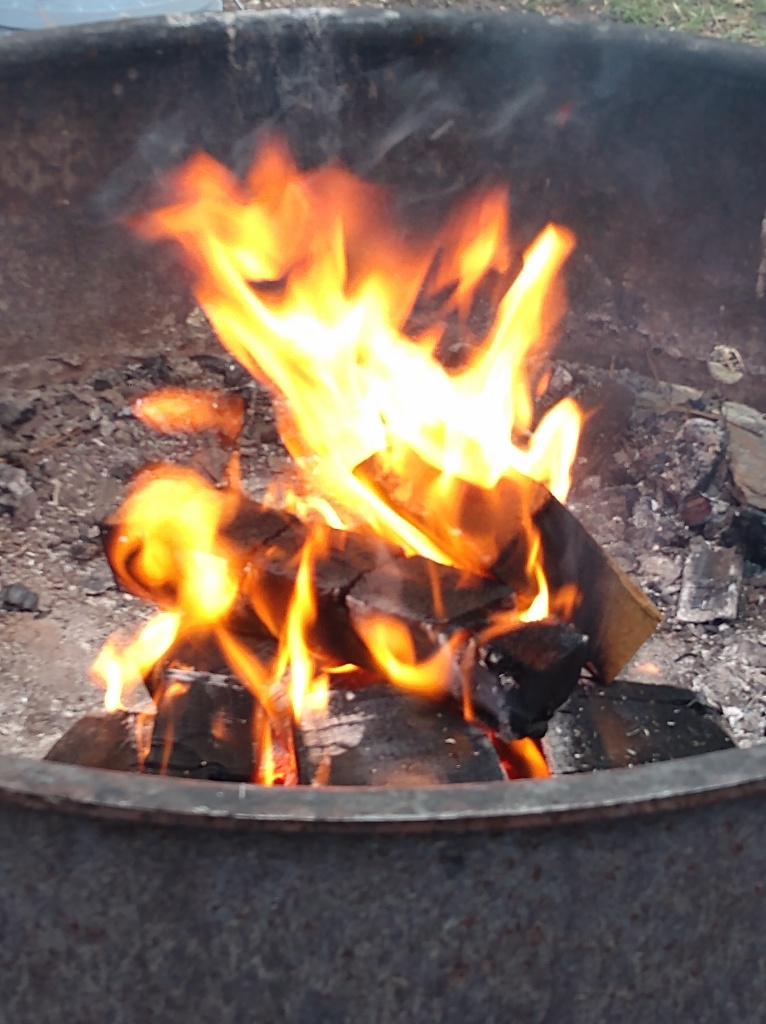
Today’s first two Psalms focus on divine judgment and forgiveness. The second two focus on wickedness and unbelief. Asaph begins with God’s voice and presence. He warns: “Our God is coming; he won’t keep quiet. A devouring fire is before him.” The fire devours evil and it devours the sin in our lives. In Israel’s life one sin is going through the motions. God desires that their sacrifices come from the heart, not from the routine. The Psalm closes by addressing the behavior of the wicked. They hate both discipline and God’s word. They are given a choice: choose the correct path of God’s salvation or “I’ll rip you to pieces.” This is their choice. We too face this choice: life or death?

David chooses the path of salvation in Psalm 51. He has walked about as far from God as one can: lust, adultery, murder. In the opening verses he begs for God to wash him of his sin. He admits his guilt and asks God to purify him, to allow him to “hear joy and celebration again.” David asks God to “create a clean heart… a faithful spirit” within him. From this place of brokenness and contrition David will once again praise the Lord. It is a good and honest and right place to go. It is part of choosing the path of salvation.

Psalms 52 and 53 paint evil for what it is: bragging, deceptive, destructive, corrupt, selfish. It comes from both the words of the tongue and from the deeds of the hands. Evil words and deeds result in shame and in being uprooted by God. This sounds bad. Really bad. Yet at times we do make the choice to sin. When we do, may we remember David’s acts of confession and repentance and may we offer his words of prayer: “wash me… whiter than snow.” Then God’s love and mercy will purify us once again. May it be so.

Prayer: Lord God, the right path is clear. The poor choices are obvious. Yet we stray and sin and fall. Lord, remember your great love, that which is far greater than our sin. Restore us as we confess and repent. Consume the sin in our hearts, leaving us with clean hearts and hands. Amen.


Leave a comment

Clean Hands, Pure Heart

Readings: Psalms 21-24

‭Psalm 22:19 – “But you, LORD! Don’t be far away! You are my strength! Come quick and help me!”

What a range we have in today’s four Psalms. Psalm 21 celebrates God’s protection of the king. Psalm 22 begins as a desperate plea for help and turns into praise. Psalm 23 is all about trusting in God’s care. Psalm 24 celebrates God’s control over all things.

Psalm 21 begins with thanksgiving for all that God has done to establish the king. There is a two-way street: the king will not stumble because he trusts the Lord. The psalmist returns to thanksgiving in verses 8-12. This thanks is for God’s protection against enemies. There are parallels with Psalm 23 abounding here in this Psalm. Praise be to God!

Turning to Psalm 22 the immediate question is, “Where are you, God?!” The psalmist cries out day and night. Although faithful since birth, the author is now “poured out like water.” These words and others in these four Psalms echo the scene of Jesus on the cross. The cry to the Lord is renewed in verse 19: “But you, LORD! Don’t be far away! You are my strength! Come quick and help me!” This cry, however, is quickly followed by words of praise and proclamation. It is as if the psalmist of verse 4 (“Our ancestors trusted you”) has reconnected to the Lord our God. Psalm 23 speaks deeply of this trust and connection. This Psalm reminds us of the thoroughly sufficiency of God’s care for us in all of life.

Psalm 24 takes the themes and ideas of Psalm 23 and makes them corporate. All is God’s. The God who walks with us “through the darkest valley” is also the God who is strong and powerful in battle. Psalm 24 reminds us that “only one with clean hands and a pure heart” can ascend to the mountain of God. May it be so for you and for me.

Prayer: Lord God, how glorious, how mighty, how majestic, how powerful are you, O God. And yet you hear our cries in the night and our pleas by day. All-powerful yet personally intimate. You hold our hand in the valleys. Your hand anoints us with the oil of blessing. You are the king of glory! You are our God. Amen.


Leave a comment

Good, Bad, Bad…

Readings: 2nd Kings 18, 2nd Kings 19, 2nd Kings 20, 2nd Kings 21

2nd Kings 19:16 – “LORD, turn your ear this way and hear!…  Listen to Sennacherib’s words. He sent them to insult the living God!”

After the evil king Ahaz, Hezekiah is a bright light. He removes all idol worship and follows God’s ways. The Assyrian king Sennacherib invades, conquering outlying towns in Judah. Hezekiah buys some time by paying a huge tribute. Soon, though, representatives of Sennacherib are back, threatening Judah, insulting God. Hezekiah goes to the Lord, seeking rescue. He prays, “LORD, turn your ear this way and hear!…  Listen to Sennacherib’s words. He sent them to insult the living God!” God’s response comes through Isaiah – don’t fear. God’s got this. During the night 185,000 Assyrian soldiers are struck down by God’s messenger. Sennacherib goes back to Assyria.

Hezekiah then falls deathly ill. Isaiah confirms that he will die. Hezekiah prays and cries out to the Lord. God has mercy. The king will live. As a sign from God, a shadow moves backwards. The Babylonian king sent a get-well message. Hezekiah shows the Babylonian officials everything. Isaiah tells Hezekiah that the day is nearly there when Babylon comes to conquer Judah. Hezekiah is relieved that it won’t be during his lifetime.

Manasseh is the next king of Judah. His reign is 55 years of extreme evil. He restores all idol worship, rebuilding what his father tore down. He sacrifices his son and he builds idol altars in the temple. He sheds much innocent blood. God promises to bring disaster on Judah. Judah will be wiped clean as a plate is wiped clean.

His son Amnon rules for two years. He took is evil. Amnon is assassinated by his own officials, who are assassinated by the people. As bad as things are, there is a good king just around the corner.

Prayer: Lord God, the roller coaster ride continues. When your people walk faithfully your presence leads and guides and protects. When they turn their back on you, violence and evil grows. Lord, help us to recognize the outcomes apply to us as well. Fill us with your Holy Spirit’s power, encouraging us to walk in your ways. Amen.


Leave a comment

Do This So That…

Readings: Deuteronomy 13, Deuteronomy 14, Deuteronomy 15, Deuteronomy 16

Deuteronomy 14:29b – “Do this so that the LORD your God might bless you in everything you do.”

Chapter 13 concludes the laws that pertain to unpacking the first two of the Ten Commandments. This chapter is aimed at prohibiting the inclusion of foreign gods. If a prophet or even if a relative tries to lead you or others into worshipping a foreign god, they are to be executed. And if a town is led astray and begins to worship a foreign god, all people and animals are to be killed and everything is to be burned. God is serious about no other gods or idols. Imagine if we were 1/100th as serious when others (or ourselves) tempt us with wealth or power or status or…

The third and fourth commands of the Ten Commandments are the focus of chapters 14 and 15. Keeping God’s name holy includes avoiding local religious rites for the dead. It involves eating only food that is holy or clean. These dietary laws also function as a way to differentiate Israel from its neighbors. In verse 22 we shift to the fourth commandment. The main idea here is that the Sabbath is not exclusive to just one day. The same is true for us: we are not Christians just for that one hour on Sunday morning. Our faith, as it was with the Hebrews, is to permeate all of our days and lives. Generosity is the defining characteristic in this passage. Yearly give one-tenth to God. Every three years give a tenth at the city gates for the Levites and for the poor. Cancel debts and free your servants every seven years – if it is a fellow Hebrew. This is an adaptation of what was given in the Law in Exodus. Running throughout chapter 15 is a concern for the poor and vulnerable. Generosity and a right spirit are essential to this care. It is at the end of chapter 15 that we find the overarching “why” – “Do this so that the LORD your God might bless you in everything you do.”

In chapter 16 we shift to the three yearly festivals. To remember what God has done is a part of worshipping the Lord, of living out the Sabbath. Our regular festivals – Easter, Christmas, communion… – they too remind us of who and what God is and of who and what we are called to be. In verse 18 the focus shifts to the fifth of the ten commandments. Here the idea of honoring father and mother is extended to include justice and honor for all people. Justice and care for the vulnerable is a core characteristic of God. May it be so for you and for me as well.

Prayer: Lord God, open my heart and my hands to those that you open your heart and hands to. Create in me a spirit of generosity and a sense of fellowship and community with all people. In all that I do and in all that I am, may everything be an act of worship that brings you glory. Amen.


Leave a comment

Faithfully (?) Forward

Readings: Numbers 19, Numbers 20, Numbers 21

Numbers 21:34 – “Don’t be afraid of him, for I have handed over all his people and his land.”

Photo credit: Felipe Correia

As we continue into Numbers 19-21 we begin to see the people learning some of the rules of the road. There are still times when the step forward is followed by a step back. Yet they are finally beginning to move forward and to better understand what God requires and expects of them as a holy nation.

Chapter 19 contains more instructions. It begins with instructions on how to make the waters of purification. A flawless, unworked red bull is slaughtered… Its ashes are mixed with water, creating a holy water that can be used to purify uncleanliness. Next comes an application of said water. This water will be used to purify people and things that come into contact with a dead body, making them unclean for 7 days. On days 3 and 7 all that is unclean is sprinkled by the water. On day 7 unclean people bathe and wash their clothing, allowing them to return to community life.

At the start of chapter 20 Miriam dies and is buried. There is no water there. Complaints arise. God tells Moses and Aaron to gather the people and to tell the rock to provide water. God’s glory will be revealed. Instead, Moses strikes the rock, in essence claiming that he and Aaron brought forth water. God then declares that Moses will not enter the Promised Land because of his disobedience. Moving on the Israelites ask for safe passage through Edom. The king refuses and comes out in force to prevent their passing through. They begin the long trek around Edom. Aaron dies along the way on Mount Hor. Leadership as high priest is passed on to his son Eleazar. Israel mourns 30 days for Aaron.

In chapter 21 the Israelites are attacked and they seek God’s help. God gives them the victory! And they follow this up with more complaints about another lack of water. God responds by sending poisonous snakes into the camp. This serves as a wakeup call. The people repent, Moses prays, God saves. After marching for a bit, the Israelites offered up songs of praise and thanksgiving. This is followed up by a crushing defeat of the king of Sihon. As the next battle draws near, God says, “Don’t be afraid of him, for I have handed over all his people and his land.” Victory over Og follows. Israel now possesses all of the lands east of the Jordan – the natural barrier into the Promised Land. The journey is nearing its close.

Prayer: Lord God, while all is not perfect and is, in many ways still far from it, we are beginning to see signs of faith and trust poking out here and there. Israel is yet a work in progress here. So too are we, O God. Guide and lead our journeys of faith too. Build up our faith and trust in you as we learn to live faithfully and obediently. Amen.


Leave a comment

Love and Care

Readings: Leviticus 11, Leviticus 12, Leviticus 13, Leviticus 14

Leviticus 11:40 – “I am the LORD your God. You must keep yourselves holy and be holy, because I am holy.”

Today’s reading begins with dietary laws. They generally fall along the lines of clean versus unclean. The clean animals have completely divided hooves and rechew their food. These are the animals that are used for sacrifices. Also edible are water creatures with fins and scales, non-carion birds, and insects that hop. All other creatures are unclean and therefore cannot be eaten. At the end of this section we read, “I am the LORD your God. You must keep yourselves holy and be holy, because I am holy.” Clean = holy.

Chapter 12 contains instructions for becoming clean again after childbirth. A mother is unclean for 7 days after birth. After this isolation period, she spends 33 days in a state of “blood purification” if it is a boy. In this state she cannot enter or touch the holy. If the child is a girl this state lasts for 66 days. Welcome to a patriarchal society!

Chapters 13 and 14 deal with infections and contagious diseases and the process of purification required to re-enter society. The priest serves as a physician or as the inspector. In general, open wounds made one unclean. Seven day quarantines were pretty standard. This time apart helped with diagnosis and it prevented spread. Unclean persons were required to appear in a state of mourning (torn clothes…) and shouted “Unclean!” to prevent clean people from coming near.

The purification ritual began with two birds being offered as cleansing. Clothes were washed and all hair was shaved off. After seven days of isolation, washing and shaving was repeated. If clean, the person brought animals, grain, and oil to the priest. Each was offered as prescribed. Blood and oil were applied to the right earlobe, thumb, and big toe. This blessed what the clean person would hear and do, and where they would go as they re-entered the community.

As I read and pondered these ancient laws and rituals, I am struck that these were the means and ways that God cared for and loved the people in that time and place. With very limited medical understanding this was how God kept the people safe, clean, whole, and holy. This is love and grace in action.

Prayer: Lord God, thank you for the love and care that you used to guide and lead and protect Israel. The realities of their time and place – they were part of your plan. You continue to love and care for us in this time and place. Thank you. Amen.


1 Comment

Responding to the Call

Reading: Mark 1:1-8

Verse 4: “John the baptizer appeared in the wilderness, proclaiming a baptism of repentance for the forgiveness of sins.”

Photo credit: Savvas Kalimeris

We begin the week in Mark’s gospel. It was the first gospel written. It is short and concise. Mark mostly focuses on the three years of Jesus’ active ministry. Matthew’s and Luke’s gospels were built upon Mark’s and add much more detail to Jesus’ life, particularly to his birth. John’s gospel is similar to Mark’s in its focus. After a short Genesis-ish “birth story,” John jumps right to where Mark begins, with John the Baptist. Just think – if we only had Mark’s and John’s gospels we’d likely not have nativity sets and childrens’ Christmas programs and…

Verse 1 states that Mark’s gospel is “about Jesus Christ, the son of God.” And then Mark leads us out into the Judean wilderness. Quoting from Isaiah as a means to quickly set the stage, Mark reminds his readers of the prophecy that foretold of one “calling in the desert.” The call was to prepare oneself for the coming of the Lord, to straighten out one’s life so that one was ready to receive the Messiah into one’s heart.

Responding to this call from God, we read, “John the baptizer appeared in the wilderness, proclaiming a baptism of repentance for the forgiveness of sins.” John called people to repent of their sins – to clean up their lives. This was the first step in readying people for Jesus’ coming. Laying their sins before God and repenting of them – committing to holy living – people were then baptized in the Jordan River. In this season of Advent may we too make ourselves right with God and, remembering our baptism, may we commit our lives once again to holy living.

Prayer: Lord God, may we hear the call of John the Baptist as a call upon our lives and hearts too. Help us to realize the full weight of the call to repent, to turn away from our sin and disobedience, and to walk closely with you again. And may we also remember that the burden is light and that the way is easy because you walk with us. Amen.


Leave a comment

Who Are We?

Reading: 1st Corinthians 1:26-31

Verse 26: “Brothers and sisters, think of what you were when you were called.”

Today Paul casts a vision of the wideness of God’s kingdom and love. It was a start, a beginning point. Since these days our understanding of the wideness of God’s love has grown and grown and grown.

Paul begins this section with an invitation to “think of what you were when you were called.” This is a great question for us to reflect on too. Who and what were you before Christ called you into a saving relationship? As we consider the wideness of God’s love today, let us ponder another question: Who and what would you be if you never heard the call of Jesus Christ upon your life?

Continuing on, Paul admits that most called by Jesus himself were not wise or influential or noble. Quite the opposite – they were considered foolish and weak by the world. Many who were called were lowly and despised. And yet the Lord called them. And because Christ called them, they received “righteousness, holiness, and redemption.” Praise be to God!

In spite of ample evidence of the wideness of God’s love, at times the church has struggled with this concept. We continue to struggle today. We love to claim that all are welcome and that we have “open doors.” Yet in the swath of Christianity humanity has added lots of “but”s. You’re welcome here but you can’t speak from the pulpit. Our doors are open but please fix that “sin” before you come in. Limits? Barriers? There are none in the wideness of God’s love.

Today’s “Disciplines” devotional offered this truth: “Some arrogantly claim the right to declare who gets to sit and eat” at the table of grace and love. Every single person is created and formed by God. Each of us carries the spark of the divine within us. Who are we to say that another child of God is worthy of or unworthy of receiving righteousness, holiness, and redemption?

Prayer: Lord God, when my eyes narrow and my heart starts to harden as I begin to judge another’s worthiness, rain down your powerful love from in high, washing me clean of all that may limit another’s access to the table. Amen.


Leave a comment

A Simple Faith

Reading: 2nd Kings 5:1-14

Verse 3: “If only my master would see the prophet who is in Samaria! He would cure him of his leprosy.”

As we begin the first of two days in 2nd Kings 5 let us focus on the supporting characters. Tomorrow we’ll look at the main characters: Naaman and Elisha. Verse 1 sets the scene. Naaman is a great and powerful man, an army commander from Aram. He is highly regarded by the king of Aram. But Naaman has leprosy, a skin disease.

The main supporting character is a slave girl from Israel. She was taken captive, possibly in a raid led by Naaman. She surveys his condition and declares, “If only my master would see the prophet who is in Samaria! He would cure him of his leprosy.” What an honest and strong faith she has! Just go and see the prophet and be healed. Her declaration leads Naaman to the king, who says, “By all means, go.” He sends a letter along to the king of Israel, expecting Naaman to be healed. This is a lot of trust to place in the faith of a simple slave girl.

The king of Israel receives the letter and tears his robes. He fears that the king of Aram is trying to pick a fight by asking him to do the impossible. What a contrast to the faith of a simple slave girl. Elisha intercedes and Naaman is sent to Elisha. A servant of Elisha – not the prophet himself – comes out and gives instructions. Angry and insulted, Naaman is ready to go home mad. But his servants intervene, calling him to trust in this simple slave girl’s faith. Naaman submits and he is healed. He in made clean.

What a great healing comes from the contagious faith of a simple slave girl! In this big old world most of us are not a Naaman or an Elisha. Yet we can practice a powerful faith, one that trusts in the power of God and invites others to do the same. May it be so.

Prayer: Lord God, in my heart I know that you can do anything. Help me today to reflect that in my words, actions, and thoughts. Doing so, may others come to know you too. Amen.