pastorjohnb

Thoughts and musings on faith and our mighty God!


Leave a comment

Connection, Belonging, Faith

Readings: Genesis 21, Genesis 22, Genesis 23

Genesis 22:7 – “Isaac said, ‘Here is the fire and the wood, but where is the lamb for the entirely burned offering?’”

Chapter 21 brings a shift in the family dynamics. Sarah gives birth to Isaac. Her laughter of doubt and shame turns to the laughter of joy and celebration. As Isaac grows so too does the tension over the inheritance. This leads to Hagar and Ishmael being sent away. God assures Abraham of their future too, so he is able to send his firstborn son away. Death soon feels near and Hagar and Ishmael cry out to God. Once again God sees her and hears their cries. God promises to make him into a “great nation.” The chapter closes with Abraham making a treaty with Abimelech. This secures water rights for an immigrant living in a foreign land. This reality comes up again in chapter 23.

In chapter 22 God tests Abraham. He is instructed to sacrifice Isaac – his one and only son, again in a place that God will reveal. Showing radical obedience once more, Abraham rises early, chops the wood, and heads out – the fire, the knife, and also Isaac in tow. Leaving the two servants behind, Abraham says to them, “The boy and I will walk up there, worship, and then come back to you.” Carrying the wood himself and seeing the fire, Isaac asks, “But where is the lamb for the entirely burned offering?” Abraham’s response – “God will see to it” – demonstrates his faith. Going so far as to raise the knife over Isaac then demonstrates his trust. God intervenes, providing a ram. Then God reiterates the covenant promise of many, many descendants.

Sarah dies at the beginning of chapter 23. After grieving for her, Abraham goes to the Hittites – the locals – to buy land to bury Sarah. He is at their mercy. Abraham is a temporary immigrant. After some culturally necessary back and forth, he buys land at a very high price. It provides a burial space and it begins a social relationship with the Hittites. To a small degree, they have now become “family.” There is connection and there is belonging, something we all need.

Prayer: Lord God, as the story progresses we see that you do not change. You are faithful, you provide, you are grace. Abraham experiences all of these things again and again as he walks faithfully and obediently with you. Encourage and guide us as we seek to walk this same walk. As we do, Lord, bless us too with your care, your provision, your grace. Amen.


1 Comment

Covenant Faithfulness

Readings: Genesis 15, Genesis 16, Genesis 17

Genesis 17:7-8 – “I will be your God and your descendants’ God after you. I will give you… the whole land of Canaan.”

Today we begin with God’s promise to Abram of a biological heir. To illustrate the abundance of God’s promise, Abram is invited to look to the stars – “this is how many children you will have.” A sacrifice seals the covenant promise. As fire, God passes through the sacrifice, sealing God’s commitment to the covenant. Within this section God also reiterates and ties in the promise of this land for Abram’s descendants.

In chapter 16 we see Abram and Sarai taking matters into their own hands. It has been about 15 years since God first promised them descendants. Abram sleeps with Hagar, Sarai’s slave girl. Her pregnancy creates a rift in the family. Treated harshly by Sarai, Hagar runs away. God meets her there and promises Ishmael a large family, land… Hagar names God “El Roi” – the God who sees me. She returns to Sarai and Abram with God’s assurances of blessings.

Chapter 17 brings a reaffirmation of the covenant promises. “El Shaddai” – the God of power and might – invites Abram to walk with God. Abram becomes Abraham and Sarai becomes Sarah. This name change signals a new era and status for them. God initiates circumcision on the 8th day of life as a symbol of the covenant, saying, “Your flesh will embody my covenant as an enduring covenant.” That very day Abraham will circumcise his entire household, including himself at 99 years old. God assures Abraham and Sarah that the covenant will be fulfilled through their son Isaac. God tells them that Ishmael will be blessed too, but the covenant will run through Isaac’s descendants.

Reflecting on Abraham’s actions in these chapters, I wonder which Abraham I am most often like. Am I more often like the one who takes things into his own hands? Or am I more often like the one that acts on God’s word right then and now?

Prayer: Lord God, most of the time Abram/Abraham was a great example of faith. Guide me to be so obedient and faithful. At times, though, he stumbled and failed. At times, I do too. As you did with Abraham, continue to walk with me. Amen.


Leave a comment

In Love and in Grace

Readings: Genesis 6, Genesis 7, Genesis 8, Genesis 9:1-17

Genesis 6:9b: “Noah was a moral and exemplary man; he walked with God.”

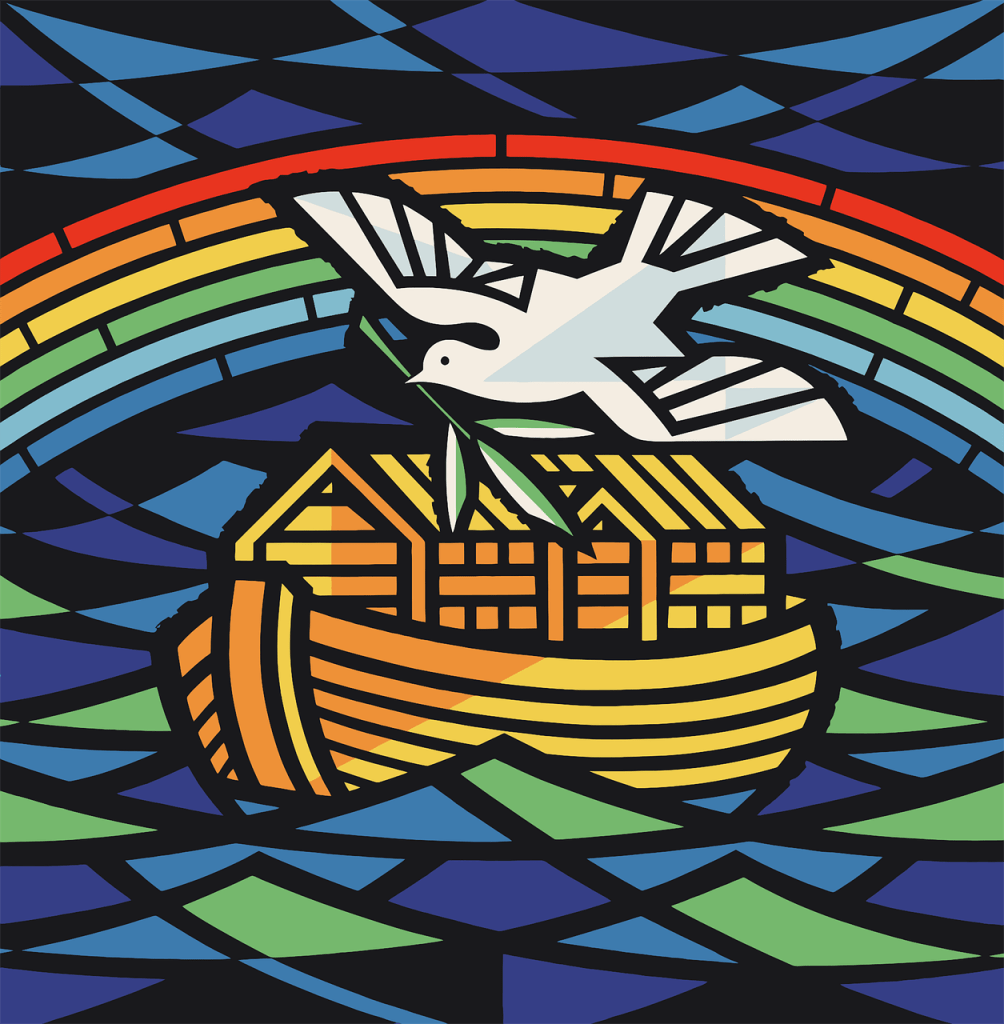
Today’s readings center on the great flood. God sees that humanity has become “thoroughly evil.” Every thought was “completely evil.” The world was so bad that God even regrets making human beings. This situation leaves God “heartbroken.” Things are almost as bad as they can get. Almost. There is Noah. In Genesis 6:9b we read, “Noah was a moral and exemplary man; he walked with God.” At least there is Noah. At least there is one person that is worth saving.

Today our world is not perfect. It is far from it. Noah was an Old Testament example of piety. I wonder, as God looks down on the earth today, who are the Noahs? Specifically, are you and I modern day examples of an exemplary relationship with God?

In obedience to God, Noah builds an ark and gathers up his family and the animals – a pair of some, seven pairs of others. This gathering up insures not just Noah’s salvation, but the salvation of all of creation. God then shuts the hatch and the rains come down and the “springs of the deep sea” open up. In 7:22 we read, “Everything on dry land with life’s breath in its nostrils died.” The loss of all life is catastrophic, horrific, complete.

Eventually the waters recede. Noah sends out a dove to test the earth’s readiness for life. The third time the dove does not return. God tells Noah to exit the ark. Noah’s first acts on dry land are to build an altar and then to offer a sacrifice to God. This pleases God and moves God to make a covenant. There will never be another flood “to destroy the earth.” God placed “his bow” in the sky – it will be a frequent reminder to God of God’s commitment to stay in relationship with humanity. This is a gift that we rejoice in yet today.

Prayer: Lord God, what a horrible place the world became. Humanity broke your heart. Things deteriorated to the point that your justice required action. Thanks be to you, O God, that we had Noah – an example of faithful living. In your love you provided a way for the world to continue. In your grace you committed to us and to creation forever. Thank you, God. Amen.


Leave a comment

A People the Lord Has Blessed

Reading: Isaiah 61:8-11

Verse 11: “The LORD God will grow righteousness and praise before all the nations.”

In the second half of this week’s Isaiah 61 passage God declares a love for justice and a corresponding hate of robbery and iniquity. In all things God loves good and hated evil. This is because God is good and in God there is no evil whatsoever. Created in God’s image, God’s intent is for us to mirror the character of God. In verse 8 God promises an everlasting covenant. Through this covenant the people of the Lord will be blessed.

Beginning in verse 10, Isaiah responds. The promises of God bring delight and joy to his soul. The prophet noted that God has “clothed me with garments of salvation… in a robe of righteousness.” Covered in these figurative garments, Isaiah is empowered to practice and to reflect the character of God. The living out of a deeply rooted faith will be a witness to the people of God and to the world. This connects back to verse 9b, where we read, “‭All who see them will recognize that they are a people blessed by the LORD.”

Our passage also connects with an analogy that I’ve touched on the last two Sundays. In these words of hope and of a promise of new life, Isaiah draws on the image of a garden. The soil and the seed are essential. Good tending is necessary. And then God gets involved as the seed sprouts, grows, and eventually bears a crop. The same concepts are true in our faith. Time in the Bible tolls the soil of our hearts. Worship and study and prayer plant seeds that we must tend to and nourish. Then God’s Holy Spirit gets involved, leading and guiding our growth, causing our faith to grow deeper, allowing it to be witnessed by all, leading others to seek out the One in whom we delight and find joy, the One who leads us in righteousness and into salvation. May this be so for you and for me today and every day.

Prayer: Lord God, your covenant remains true today – you are our God and we are your people. Clothe us in righteousness, fill us with the joy and delight of salvation through Jesus Christ. Then set us out into the world, Lord, drawing others into a saving faith. Amen.


Leave a comment

This Same God

Reading: Isaiah 51:1-6

Verse 6: “My salvation will last forever, my righteousness will never fail.”

Isaiah 51 reminds reminds me of the “then and now” of our faith. Written to those “who pursue righteousness and who seek the Lord,” it calls them and us to remember the long arc of the relationship between God and God’s people. Looking into today and beyond into eternity, we are also reminded of God’s standing promise: “My salvation will last forever, my righteousness will never fail.”

Isaiah writes these words to the Israelites living with him in exile. Their time in exile has grown long. They are living as strangers in a place far away from all they’ve ever known. It has been a wearying and difficult stay. So Isaiah calls them to remember where they came from and whose they are. He calls them to remember Abraham and Sarah, the ones who received the covenant and who were blessed as God fulfilled the promise. When we find ourselves in a trial or in a season of suffering, it is good to remember the great stories of faith and to be reminded of “the rock” that we too stand upon.

The prophet also speaks of hope and restoration. Isaiah tells the exiles that God looks “with compassion on all her ruins” – both those back home and those that are their lives now. He prophesies that God will transform these dry and barren places and lives into a garden paradise, into a place where there will be “thanksgiving and the sound of singing.” Isaiah tells them that justice and salvation are on the way! This was all probably hard to hear in the darkness and despair of exile. But, wait. Remember, God took one and “blessed him and made him many.” This same God promises to restore Israel. This same God can and will bring us through our trials and sufferings. Thanks be to God.

Prayer: Lord, it is good to remember and to know once again that your promises of salvation and compassion are for all people who call on you and who seek your righteousness. The promises are for us. Thank you, Lord. Amen.


Leave a comment

To Preserve a Remnant

Reading: Genesis 45:5-15

Verse 7: “God sent me ahead of you to preserve for you a remnant on earth.”

Photo credit: Tyler Milligan

As Joseph’s reunion with his brothers continues, he offers them words of assurance and encouragement. Joseph fully believes that it is God’s plan unfolding. He is 100% sure that God’s plan has both human and divine purposes.

There are a few human purposes. The first is to preserve lives. Joseph is placed in mighty Egypt, in a country with large enough resources to grow and store enough extra food to sustain themselves and others during 7 years of famine. That is a monumental task. God gifted and directed Joseph to orchestrate this massive food program. Without Joseph there it is unlikely that any of this would’ve happened. And God sent Joseph ahead to be in a spiritual place to offer grace and forgiveness to his brothers. The trials and sufferings accompanied by the joys and victories have readied his heart to reconcile with his brothers.

As amazing as this all is, there was a greater purpose being worked out: “God sent me ahead of you to preserve for you a remnant on earth.” Everything that has happened is wonderful. But the main purpose was to preserve a remnant of God’s people to keep alive God’s covenant promises. The family of Israel moves to Egypt and not only survives but thrives. They become a great nation. This is ample proof of God’s love for Israel.

Today I look at the church and the word remnant comes to mind. God and faith seem to have less and less space in our collective hearts. The church’s influence feels in decline. Yet God is faithful. In the end we know that Jesus returns and makes all things new. Evil does not win. This brings to mind a question: How is God using you and me to preserve a remnant that will ultimately triumph over all?

Prayer: Lord God, you are faithful and true. Not a word has gone out or will go out from your lips that isn’t forever. Give us hope. Encourage us as we seek to be your faithful disciples here on earth. Amen.


Leave a comment

The Natural Response

Reading: Psalm 105:1-11

Verse 8: “God remembers the covenant forever, the promise God made, for a thousand generations.”

Photo credit: Rainier Ridao

Psalm 105 calls us to praise God as we remember, recall, and celebrate God’s promises and God’s actions in the past. The psalmist is writing the people of God – to the Israelites – and inviting them to remember all of their great stories of faith. Stories about the parting of the sea or river, stories about the walls coming down, and stories about God’s presence in the hardest of times would be remembered and retold as a means to reassure themselves, to rekindle their faith and trust in God, and to pass these treasures along to the next generation. The natural response would be to praise God.

All of the Israelites stories were based upon the covenants – especially the one given to Abraham. This covenant promised descendants as numerous as the stars (or sand in the beach), the land in and around Canaan, and God’s presence with the people of God. Much of the rest of Psalm 105 speaks of the exodus out of Egypt and the journey to the Promised Land. This epic journey is filled with story after story detailing God’s love, care, provision, and presence. Again, as these stories are told and the covenants are remembered, praise is the natural response offered to God.

We too journey in faith, using our own stories of God’s love, care, provision, and presence to encourage and reassure ourselves. We also connect to and lean into the promises and covenants to continue walking in faith, especially on those hard days. As we recall our stories today, may we praise the Lord. And as we recall the covenants and promises may we raise a joyful song!

Prayer: Lord God, your love and care for your children began in the garden and it has continued right through to this day. Our scriptures are filled with examples and our lives are filled with accountings of your love and care, of your provision and presence. Thank you for being the God who so deeply loves us. All praise and honor to you, almighty God! Amen.


Leave a comment

Abundant Blessings

Reading: Genesis 24:34-38

Verse 38: “Go to my father’s family and to my own clan, and get a wife for my son.”

In a day and age when we fall in love and court and get married to that very special someone, the story of Isaac and Rebekah might be hard to wrap our heads around. It might feel impersonal. It might feel odd or even icky to seek a spouse from one’s own family. All of this is true. Yet this is not the story of Abraham working everything out. It is the story of God guiding and directing and providing for the continuation of God’s promises to Abraham and Sarah and to you and me.

God continues to be faithful, even when Abraham and Sarah fail to be faithful. God continues to work with their failures and imperfections, working out God’s plan in spite of human-made detours. God’s covenant love flows on, making a connection between Isaac and Rebekah.

Today’s passage is a retelling of the events that just happened. The back story and actual events happen in verses 1-33. We get the recap in today’s verses. The Lord has blessed Abraham abundantly and now has blessed his son Isaac by providing him with a wife. Things unfolded with God’s hand clearly guiding and directing things. This is the culmination of the servant’s oath to “Go to my father’s family and to my own clan, and get a wife for my son.” How could this not be God’s hand at work?

This same covenant love continues to be at work in the world and in our lives. God’s good plans and the fulfillment of God’s promises remain at work, inviting us to be a part of the plans and to partake in the promises. May we choose to walk in covenant love with our God, experiencing God’s abundant blessings as we walk faithfully and obediently.

Prayer: Lord God, I know that you have good plans for those that love you. I know that you have sealed our salvation through the blood of your only son. I know that your love pours out mercy and grace along with provision, guidance, and blessing. Lead me in a faithful and obedient walk day by day as I seek to dwell in your covenant love and in an everlasting relationship with you, my Lord and Savior. Amen.


Leave a comment

Ever the Teacher

Reading: Luke 24:44-53

Verse 51: “While he was blessing them, he left them and was taken up into heaven.”

We step outside of the regular lectionary readings today as we turn to Luke 24. Today is known as “Ascension Day” – the day when the risen Christ returns to heaven to sit at the right hand of God. Ever the teacher, Jesus summarizes the overarching story of the Hebrew Bible one last time.

Jesus begins by unpacking all that was written about the Messiah in “the Law of Moses, the Prophets, and the Psalms.” Jesus works his way through all of the Hebrew scriptures, revealing that he was the fulfillment of all of these prophetic writings. Jesus then summarizes with his suffering and resurrection – the means to give salvation to the world. He reiterates their task moving forward: to preach “repentance and forgiveness of sins” to the whole world. This continues to be the way to eternal life: we repent and God forgives. Humility and grace, worked out again and again by those involved in covenant relationship: us and God. What a gift.

Jesus returns to heaven in a most humble way: “While he was blessing them, he left them and was taken up into heaven.” While still offering himself in service to others, giving the disciples a blessing, Jesus simply rises up. The disciples must’ve sensed or known that this was it. But they are not sad. They are filled with great joy. Minds opened to all that had been written, filled with these truths, they worship God. Fully understanding who and what Jesus Christ was and is, they are ready for the last step. Their training and preparation complete, they are ready to receive the Holy Spirit. This final step will launch them into the mission that Jesus has given them. In 10 days it will come. Filled with the Spirit these disciples will change the world. Thanks be to God.

Prayer: Lord God, we stand in this long line of disciples who have come to know and then accept Jesus Christ as Lord and Savior. Doing so we’ve been filled with the Holy Spirit. Lead and guide us to be disciples who continue to change the world. Amen.


Leave a comment

Blessing or Curse?

Reading: Deuteronomy 30:15-20

Verse 16: “For I command you today to love the Lord your God, to walk in obedience to him, and to keep his commands, decrees and laws.”

Photo credit: Einar Storsul

This week we turn to Deuteronomy 30. This book is part of the Pentateuch, the first five books of the Bible. These five books establish the early covenants with God and they provide many laws that guide how ancient Israel was to live in covenant relationship with God. The covenant was and is built upon God’s unconditional love for the people of God. The many laws found in these books shepherded the Israelites and provided them a framework for living in right relationship with God and with one another. Covering virtually all aspects of life, these laws were broad and the code was immense.

This week’s passage from Deuteronomy 30 focuses not on the laws themselves, but on the outcome of keeping (or failing to keep) the laws. These words, usually attributed to Moses, were given to Israel as they prepared to enter the Promised Land. Our passage opens with these words: “See, I set before you today life and prosperity, death and destruction.” This places faith in a very black and white setting. Continuing we read, “For I command you today to love the Lord your God, to walk in obedience to him, and to keep his commands, decrees and laws.” Moses calls Israel and he calls us to a daily, disciplined, faithful, steadfast walk with God. I believe to call oneself a Christian, one would expect no less.

The ‘reward’ of following the command? “You will live and increase, and the Lord your God will bless you.” And the ‘consequence’ if not obeying the command? “I declare to you this day that you will certainly be destroyed.” Blessing or curse? Life or death? These words, this choice, will form the backbone of how the Israelites will understand and will interact with God. They will be the basis for how they will seek to live in the world and will guide their relationships with God and with one another.

These ancient words have meaning yet today. When we walk in God’s ways and love God, we experience life abundant here and we know that life eternal awaits. In all we do and say and think, may we seek the Lord with all that we are. And may our lives reflect a heart lived in covenant relationship with God and with each other.

Prayer: Lord God, your ways are good and you are holy and just. By the power of the Holy Spirit, lead me to walk in your will and ways and to honor you with all of my life. Amen.