pastorjohnb

Thoughts and musings on faith and our mighty God!


Leave a comment

Good, Evil, Good, Evil…

Readings: 2nd Chronicles 25, 2nd Chronicles 26, 2nd Chronicles 27, 2nd Chronicles 28

2nd Chronicles 25:15 – “Why do you seek the gods of this people? They couldn’t even deliver their own people from you!”

Amaziah begins today’s readings about the kings of Judah. He did what was right in God’s eyes – mostly. In verse 2 we read, “but not with all his heart.” I think this is typical of most Christians today, myself included. We want to and try to follow God faithfully and obediently but the flesh inside each of us rises to the top now and then. This seems to be a part of being human.

Amaziah leads and administers well. He has successes. Then he decides to worship false gods. A prophet comes to him and asks, “Why do you seek the gods of this people? They couldn’t even deliver their own people from you!” Great questions. He gets angry at the prophet. In arrogance and foolishness he challenges King Joash of Israel. Judah and Amaziah are soundly defeated, humiliated, and looted. Amaziah is killed by his own people. Uzziah succeeds him. As long as the prophet Hezekiah is instructing him, Uzziah is faithful and has success. He becomes powerful and wealthy and famous. Arrogance sets in and he begins to worship false gods. The priest Azariah confronts Uzziah burning incense in the temple. Uzziah gets angry and God gives him a skin disease. Uzziah lives isolated the rest of his life. His son Jotham runs the kingdom.

Jotham becomes king next and does right by God. He rebuilds and wins battles. Ahaz succeeds him as king after 16 years. Ahaz is thoroughly evil. He worships Baal. He burns his sons alive in the altar of a pagan god. He suffers massive defeats. Israel shows great mercy and faithfulness, caring for and returning prisoners taken in battle. Even this faithful act does not change Ahaz’s evil heart. He instead aligns himself with Assyria, inviting disaster upon Judah. His reign ends by closing up the temple and the destruction of the temple equipment – by Ahaz. He is not buried with the other kings.

Prayer: Lord God, lessons learned: faithful -> good things… disobedient -> bad things. These are connections we know and understand. Yet we can struggle to be faithful and obedient. Lord, help us in our daily walks of faith. Strengthen us in our moments of weakness and temptation. Help us through. Amen.


Leave a comment

Clear Outcomes

Readings: 2nd Chronicles 21, 2nd Chronicles 22, 2nd Chronicles 23, 2nd Chronicles 24

2nd Chronicles 24:20 – “Because you have abandoned the LORD, he has abandoned you!”

Jehoram succeeds Jehoshaphat. He does evil in God’s eyes. Edom and Libnah rebel, weakening Judah. Jehoram builds shrines and leads Judah astray. Via letter Elijah confronts Jehoram and predicts a family downfall and a deadly illness. Both occur quickly. In verse 21:20 we read, “No one was sorry he died.” He is not buried with the other kings of David’s line.

Ahaziah rules next, for one year. He allies himself with Israel’s King Joram. This brings him into the path of Jehu’s decimation of Ahab’s family. Ahaziah’s mother, Queen Athaliah, quickly seizes power. This evil queen kills all but one member of the royal family. Jehoash (or Joash) is hidden away and then raised in the temple for six years. Jehoiada, the priest, organizes a successful coup. Jehoash is crowned and Athaliah is killed. For a season, Judah returns to God. The priests are reassigned. Temple worship resumes. The temple tax is collected – the people give gladly and generously. The temple is restored to its glory days. And then Jehoiada dies. His leadership is honored by the people as he is buried with the kings of Judah.

Under the influence of Judah’s leaders, Jehoash abandons the temple and Judah again worships idols at the sacred poles. An angry God sends Zechariah. He declares, “Because you have abandoned the LORD, he has abandoned you!” He is then stoned to death. Aram once again invades and defeats Judah. Jehoash is injured and then is finished off by his own officials. He is also not buried with the kings of David’s city.

Today we again see the clear outcomes of being faithful to God or of being disobedient to God. May these insights guide us well.

Prayer: Lord God, lead us to walk in your ways. When evil voices speak and when other temptations arise, raise up the voice of your Holy Spirit. Remind us of our call to faith and trust. Empower us to walk the long road with you instead of against you. Amen.


Leave a comment

Finding God

Readings: 1st Samuel 4, 1st Samuel 5, 1st Samuel 6, 1st Samuel 7

1st Samuel 5:11 – “Send the chest of Israel’s God away! Let it go back to its own home so it doesn’t kill us and our people.”

Have you ever been around someone who has said something like, “I feel like we should say a prayer or something?” This thought reminds me of Israel at this point in their story. They have a vague notion of God but have no clue about how to really connect to the Lord. As the battle with the Philistines goes badly, they wonder why God would let this happen. But instead of praying or doing anything else that might connect them to God, they decide to bring the ark of the covenant to the next battle. This battle turns out worse. 30,000 die, the ark is captured, and Hophni and Phinehas die. This news causes Eli to fall over dead.

The ark brings nothing but trouble to the Philistines. They put it in their temple and their god Dagon falls over. They set it aright and the next morning it’s toppled again, this time missing its head and hands. The hand of God brings tumors on the people. Finally the Philistines say, “Send the chest of Israel’s God away! Let it go back to its own home so it doesn’t kill us and our people.” The Philistines even include an offering to honor God. At this point they know God better than the Israelites know God. The ark is received back. Time passes and Israel begins to long for God. Something is beginning to stir in their hearts.

Samuel calls the people back to God. He tells them to get rid of their idols and foreign gods. They gather with Samuel at Mizpah. Samuel draws and pours out water. They fast and confess their sins. And the Philistines gather an army. Israel is afraid. They look to Samuel. He prays to God and makes an offering. God brings Israel the victory. Samuel sets up an Ebenezer – a stone of remembering. There is peace. Samuel rules as a judge. All seems well…

Prayer: Lord God, today I’m reminded of how life seems to go when we go it on our own versus walking with you. When I’m tempted to sort of seek you, call me out. Remind me that it is my whole heart, soul, and mind that you seek. Pour those temptations out like water and draw me to the rock of faith that is a sure foundation. Amen.


Leave a comment

When Will They Learn?

Readings: Numbers 11, Numbers 12, Numbers 13, Numbers 14

Numbers 14:8 – “If the LORD is pleased with us, he’ll bring us into this land and give it to us.”

Photo credit: Anne Nygard

Chapters 11-14 are a great summary of the Israelites time in the wilderness. It has it all: complaint and grumbling, anger and punishment, faith and doubt, trust and fear, intercession and forgiveness, victory and defeat.

Our reading begins with a little grumbling. God’s fire burns against this unnamed complaint, burning the edges of camp – a sign of warning. Some “riffraff” ignore the warning. They allow their craving for meat to lead to grumbling and a longing for those “better days” in Egypt. Moses is frustrated and overwhelmed. God responds by giving him leaders to help bear the weight of leadership. And God brings waves and waves of quail. God will be so abundant that “it will come out of your nostrils and nauseate you.” God’s anger then burns against the riffraff. They are buried there in the desert.

The complaining turns personal as Aaron and Miriam question Moses’ leadership. They are jealous. They claim a connection to God that only Moses has. Miriam is struck with a skin disease. Aaron begs for Moses to intercede. Miriam must bear the shame of their sin for seven days. After her isolation period she is healed and returns to camp.

Chapters 13 and 14 cover the exploration of the Promised Land and the people’s lack of faith and trust. The spies return with huge grapes and stories of huge people and fortified cities. Caleb tries to rally the people. Rumors ensue and soon the people are discouraged. The people once again long for Egypt – or at least to die in the desert instead of by the sword. Joshua then speaks, trying to rally their faith. He says, “If the LORD is pleased with us, he’ll bring us into this land and give it to us.” That is a really big “if.” The people want to stone Joshua and Caleb.

God’s anger burns hot as God decides to start over with just Moses. Moses intercedes again and God’s anger relents. But there will be a consequence: those 20+ will indeed die in the desert. They will wander for 40 years – one year for each day of exploration. Bitter mourning follows this news. And yet a group decides to enter the Promised Land anyway. Moses warns them. They are struck down by the people of Canaan.

Prayer: Lord God, how clear are the results of faith versus fear, of obedience versus disobedience. I start to think, when will they learn?! And then I realize that we’re still learning, that I’m still learning. Thank you, Lord, for your unending love and for your enduring faithfulness. You give mercy and grace that we and I don’t deserve. Yet it flows generously and abundantly. Thank you, God. Amen.


Leave a comment

It Rests on Christ

Reading: 2nd Timothy 2:8-15

Verse 8: “Remember Jesus Christ, raised from the dead, descended from David. This is my gospel.”

Turning to our Epistle reading for the week, Paul encourages young Timothy with some foundational truths and with some “trustworthy” sayings. Paul is writing from prison in Rome, “chained like a criminal.” Yet he is the one doing the teaching and encouraging. He has not forgotten the call that Jesus Christ has on his life. Serving his Lord and Savior, Paul seeks to pour into Timothy in order to strengthen his walk of faith.

Paul begins by exhorting Timothy to “Remember Jesus Christ, raised from the dead, descended from David. This is my gospel.” It was important for Paul’s faith to remember these two truths: Jesus resurrected and of the line of David. The first truth is certainly important to all believers. Because Jesus defeated the power of death, we too can attain eternal life. The second truth is also important to our faith. It connects the person of Jesus to the entire Bible. He is the fulfillment of dozens and dozens of prophesies found in the Old Testament. If you could, what other foundational truths would you add? If I could do so, I’d add that Jesus died for my sins and that he showed what God’s love looks like when lived out in real life. What would you include in your statement of the gospel or good news?

Paul also adds a few “if-then” type sayings. If we choose to die to self, then we will live with Jesus Christ in our hearts. If we endure hardship and trial faithfully, then we will triumph over the things of this world. If we deny Jesus or are faithless, then he will disown us, yes, but “he will remain faithful.” What does this twist at the end mean? It means that Jesus Christ will love us no matter what. It means that when we fail, Jesus does not falter in his love for us. When we declare him as Lord and Savior, we become a part of him and he becomes a part of us. Our inheritance in the family of God is secure because it rests not on our love or effort. It rests on Christ’s love and effort. Thanks be to God.

Prayer: Lord, thank you for your sacrifice for us – from taking on flesh to living amongst us to dying and rising again to give us victory over sin and death. All was done in love. I am so grateful that your love remains – no matter what I do or do not do. It is an amazing love. Thank you for this love. Amen.


Leave a comment

What Has Just Happened?!

Readings: Psalm 127 and Lamentations 1:1-6

Lamentations, verse 2: “Bitterly she weeps at night, tears are upon her cheeks.”

Photo credit: Shane Rounce

Our Old Testament readings speak of the disaster that has befallen God’s people. The looming disaster that Isaiah and Jeremiah have been forecasting these past two months has become reality. The sins of the people have led to a mighty consequence. The Babylonians have arrived and have squashed the chosen people, leaving Israel in ruins while carrying many people off into exile. Many are the tears upon their cheeks. Both of these writings come from this place of shock and dismay. What has just happened?

This is a question we all ask at times. Unexpected personal twists and turns can leave our heads spinning and dazed. Corporate events can have the same impact. 9/11 was one of those events that left a nation and a world asking this question. More recently COVID-19 brought the world a prolonged time of suffering and hardship. The closures and isolation, the grief and illness impacted our world and all of our lives. The experience was both corporate and personal. Individually and collectively we all asked, ‘What has just happened?!’

The authors of Lamentations and Psalm 127 experiences utter defeat. Their lives were totally out of their control. Heads spinning, they needed to make sense of their new reality. In these words they began to process and feel, to sort out and to begin to understand their new reality. They give us a great model to follow. Whether we’re reeling yet from COVID or if a personal crisis has impacted you more recently, how are you expressing your emotions and feelings? Take a few moments to express them to God in prayer.

Prayer: Lord God, your ear and heart are ever attuned to your people. You long to hear us put voice and words to the desires and pains, to the joys and hurts of our lives. Lord, give us a holy confidence and a blessed trust in your love and care for each and every one of us as we express our emotions and feelings to you. Amen.


Leave a comment

Something Better

Reading: Hebrews 11:39-40

Verse 40: “God had planned something better for us so that only together with us would we be made perfect.”

The writer of Hebrews notes that all of these heroes of the faith – from Abel right on up to the time of Jesus – were commended by God for their faithfulness. These men and women lived in faith, striving to walk obediently with God. Yet none received what has been promised. The covenants with Abraham, Moses, David, and Jeremiah remained unfulfilled. Yet the promise of these covenants gave a vision for what God had planned. This vision gave them hope.

In verse 40 we read, “God had planned something better for us so that only together with us would we be made perfect.” The new covenant of Jesus Christ is the “something better.” His perfect sacrifice once and for all defeated the power of sin. By paying the price once for all, Jesus opened the way to salvation for all who follow him as Lord and Savior. By rising from the grave, Christ became the first fruit of eternity. Christ left the Holy Spirit as a deposit of our eternal inheritance. The Holy Spirit, Christ in us, has the power to lead and guide us in faithful living here so that one day we can claim our eternal inheritance in heaven, finally being made perfect in Christ. Something better indeed! Thanks be to God!

Prayer: Lord, thank you for the gift of your son, Jesus Christ. Through him all will be made new again. I await the day when you join the new heaven and earth. Thank you for so great a love. Amen.


Leave a comment

Because He Lives

Reading: 1st Corinthians 15:12-20

Verse 20: “Christ has indeed been raised from the dead, the first fruits of those who have fallen asleep.”

As we continue in 1st Corinthians today we read about another division in the church that Paul has to address. There is disagreement around the resurrection of the dead. There is no discord surrounding Jesus’ resurrection. That is sure. The conflict revolves around what happens to regular folks, especially the followers of Jesus. Different understandings about life after death were common at this time. This issue, for example, was the primary split between the Sadducees and Pharisees.

Paul speaks first to those arguing that there is no resurrection of the dead. He argued that if this were the case then Jesus was not resurrected either. In this case, Paul states, “our preaching is useless and so is your faith.” Resurrection – new life after this earthly life is over – is central to our understanding of Christianity. Resurrection gives us hope; it is how God will one day make us and all of creation new again, restoring all to wholeness and perfection. This is a process we experience daily as well. Each day our faith draws us closer and closer to Christ and his example. As John Wesley said, we are “ever going on to perfection.” The simple fact that Christ continues to live in our hearts lends credence to the resurrection.

Paul also recognizes that if Jesus did not rise, then he did not defeat the power of sin either. That means that “you are still in your sins.” Without resurrection, Paul argues, the atoning sacrifice has not been made. He connects the victory over death to the victory over sin. Both came through the single action of the death and resurrection of Jesus Christ. Our passage concludes with this summarizing statement: “Christ has indeed been raised from the dead, the first fruits of those who have fallen asleep.” Witnesses bear it out. Paul just went through this list in verses 5-8. For Paul, because Jesus lives, one day all who believe will live too. Thanks be to God.

Prayer: God, thank you for the hope you give in this life and for the life to come. Thank you too for the presence of the Holy Spirit, the indwelling, personal part of Christ alive in me. Amen.


1 Comment

Playing Our Part

Reading: Ephesians 4: 1-6

Verses 5 and 6: “There is one body and one Spirit… one Lord, one faith, one baptism”.

Photo credit: Wylly Suhendra

Paul writes today about unity within the body of Christ – the church. Unity almost sounds like a foreign concept. Unity almost feels like an impossible dream. We seem to divide and separate over the smallest of things. Paul is seeing the churches he founded in and around Ephasus beginning to have fissures and cracks.

Inviting those in these churches to “live a life worthy of the calling”, Paul reminds them of some virtues to practice: humility, patience, gentleness, peace… To these he adds belief. In verses five and six he writes, “There is one body and one Spirit… one Lord, one faith, one baptism”. Paul sees the church universal, not the church divided. Paul envisions the unity brought through Jesus Christ, not any divisions. I believe the same is still possible today. There are core beliefs that all churches have regardless of their denominational flavors: God, the creator of all things, sent his only son, Jesus Christ, to live out his love and to die to defeat the power of sin and death, paving the way for the salvation of our souls. You may word this or parts of it differently, but the ideas are the core of our faith.

The body of Christ can make the choice to live into unity instead of choosing division, to live into the core beliefs instead of accentuating differences and things that divide. Unity begins with each one of us – in our churches, then in our communities, then in our world. May we each commit to playing our part to bring unity to the body of Christ.

Prayer: Lord God, grant me the heart required to build unity. Lead me to elevate and value our core beliefs over our minor differences. May Jesus Christ become more of my focus. May our unity bring Christ the glory. Amen.


Leave a comment

A New Thing Is Coming

Reading: Isaiah 55: 1-11

Verse 3: “Give ear and come to me; hear me, that your soul may live”.

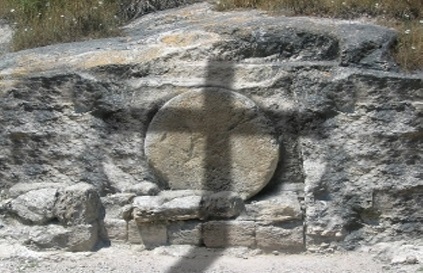
In Holy Week today is a day of waiting. Jesus has been crucified and laid in the grave. This day feels like a day of grief, like a day of defeat. For the followers of Jesus, today must have felt like what most days felt like for the exiles in Babylon. These words of Isaiah are good words for Holy Saturday. I hope the disciples and followers of Jesus recalled or read these words on that difficult day long ago.

Through Isaiah, God calls “all who are thirsty” and then invites those without to come and eat. This is the table of fellowship – a place where all are welcome, a place where we share what we have to offer as a means of caring for the other. Isaiah issues God’s invitation to “eat what is good, and your soul will delight in the richest of fare”. It is an invitation to blessed community, to a place of belonging. For those in exile, for those struggling through this day in the gospel stories, this is a welcome invitation.

Once connected to this community, the invitation is the extended: “Give ear and come to me; hear me, that your soul may live”. God’s words bring life, reviving the soul and the spirit. Reminding us of the everlasting covenant established by Jesus Christ, we again hear the promise that God will draw all people to him, to the Christ. In verse six Isaiah reminds us of our role. Here he writes, “Seek the Lord while he may be found; call on him while he is near”. This day, this sacred day, may we seek the Lord. May we seek his voice, for we too have this promise: “My word that goes out from my mouth, it will not return to me empty, but will accomplish what I desire”.

God desires connection, relationship, fellowship with you and with me. God desires community – it is there that we find strength, joy, love, support, encouragement. It is there that we find life. All seems lost to the grave on this day of grief. Yet a new thing is coming. Tomorrow the Son rises.

Prayer: Lord God, in your great love you always seek to draw us in, to deepen our relationship with you. On this grey day, thank you for the reminder that all things work according to your purposes. Amen.