pastorjohnb

Thoughts and musings on faith and our mighty God!


Leave a comment

Faithfully (?) Forward

Readings: Numbers 19, Numbers 20, Numbers 21

Numbers 21:34 – “Don’t be afraid of him, for I have handed over all his people and his land.”

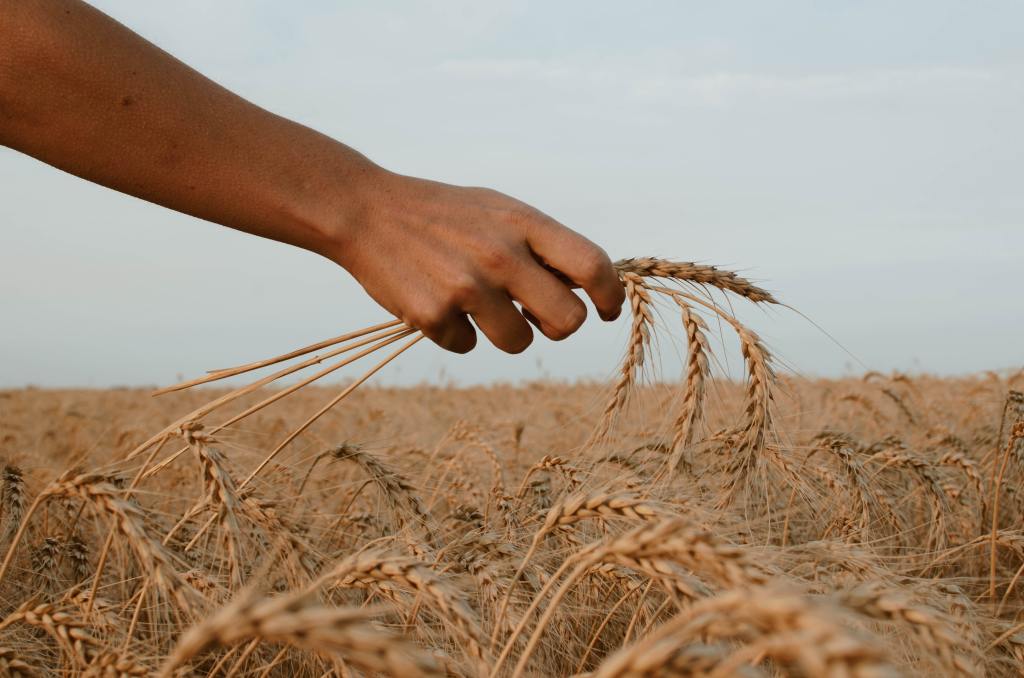
Photo credit: Felipe Correia

As we continue into Numbers 19-21 we begin to see the people learning some of the rules of the road. There are still times when the step forward is followed by a step back. Yet they are finally beginning to move forward and to better understand what God requires and expects of them as a holy nation.

Chapter 19 contains more instructions. It begins with instructions on how to make the waters of purification. A flawless, unworked red bull is slaughtered… Its ashes are mixed with water, creating a holy water that can be used to purify uncleanliness. Next comes an application of said water. This water will be used to purify people and things that come into contact with a dead body, making them unclean for 7 days. On days 3 and 7 all that is unclean is sprinkled by the water. On day 7 unclean people bathe and wash their clothing, allowing them to return to community life.

At the start of chapter 20 Miriam dies and is buried. There is no water there. Complaints arise. God tells Moses and Aaron to gather the people and to tell the rock to provide water. God’s glory will be revealed. Instead, Moses strikes the rock, in essence claiming that he and Aaron brought forth water. God then declares that Moses will not enter the Promised Land because of his disobedience. Moving on the Israelites ask for safe passage through Edom. The king refuses and comes out in force to prevent their passing through. They begin the long trek around Edom. Aaron dies along the way on Mount Hor. Leadership as high priest is passed on to his son Eleazar. Israel mourns 30 days for Aaron.

In chapter 21 the Israelites are attacked and they seek God’s help. God gives them the victory! And they follow this up with more complaints about another lack of water. God responds by sending poisonous snakes into the camp. This serves as a wakeup call. The people repent, Moses prays, God saves. After marching for a bit, the Israelites offered up songs of praise and thanksgiving. This is followed up by a crushing defeat of the king of Sihon. As the next battle draws near, God says, “Don’t be afraid of him, for I have handed over all his people and his land.” Victory over Og follows. Israel now possesses all of the lands east of the Jordan – the natural barrier into the Promised Land. The journey is nearing its close.

Prayer: Lord God, while all is not perfect and is, in many ways still far from it, we are beginning to see signs of faith and trust poking out here and there. Israel is yet a work in progress here. So too are we, O God. Guide and lead our journeys of faith too. Build up our faith and trust in you as we learn to live faithfully and obediently. Amen.


Leave a comment

Moving Forward

Readings: Numbers 15, Numbers 16, Numbers 17, Numbers 18

Numbers 18:29 – “You will present each gift offering to the LORD from all your gifts, from its best portions and its holiest parts.”

On the heels of choosing fear over faith and being doomed to wander the wilderness for 40 years, in chapter 15 God details the offerings to be given when they do enter the Promised Land. The wander is clearly a detour. God has a plan. So God reviews the offerings required for unintentional sins. God is clear that there is no reconciliation offering for deliberate or intentional sin. They are cut off. In the next chapter we will see what that looks like. The chapter closes with instructions to place blue fringes on all of their clothing. Blue represents holy. The fringes will remind them of the commitment to their holy God.

Chapter 16 contains challenges to Moses and to Aaron. Korah and his Levite clan want more power. Dathan and Abiram think Moses has too much power. Korah and his family are gathered. God plans to consume Korah’s entire household. Moses intercedes for the innocents. God relents. Dathan and Abiram refuse to appear before Moses. They and their families are swallowed up by the earth. Korah and his 250 followers are consumed by God’s fire. The community grumbles against these deaths and therefore against Moses and God. God sends a plague. Moses sends Aaron out into the community to stop the plague. Aaron stands between the dead and the living, halting the plague.

To reiterate God’s call on Aaron, the staffs of the 12 tribal leaders are gathered and placed with Aaron’s staff before the chest. Aaron’s staff buds, revealing God’s choice. The people lament. For now they fail to see the humility required to be in God’s presence. Today’s readings close with priestly duties and their compensation. It mostly reiterates earlier instructions but also adds a requirement of the priests. Since they belong to the Lord they will not be given a land inheritance. Instead they will receive the tenth of the crops and herds given to the Lord. In turn God will require them to give 1/10 of this to the Lord as their gift offering. It is to be “from its best portions.” May we too return to the Lord a portion from the best of our blessings.

Prayer: Lord God, in spite of the Israelites’ disobedience and rebellion and sin you keep the plan moving forward. You see and know the end results. In our lives we disobey and rebel and sin. You continue to work in our lives as well, leading and guiding, shaping and forming us into who and what you call us to be. In response, may we gratefully give our best to you in all situations. Amen.


Leave a comment

When Will They Learn?

Readings: Numbers 11, Numbers 12, Numbers 13, Numbers 14

Numbers 14:8 – “If the LORD is pleased with us, he’ll bring us into this land and give it to us.”

Photo credit: Anne Nygard

Chapters 11-14 are a great summary of the Israelites time in the wilderness. It has it all: complaint and grumbling, anger and punishment, faith and doubt, trust and fear, intercession and forgiveness, victory and defeat.

Our reading begins with a little grumbling. God’s fire burns against this unnamed complaint, burning the edges of camp – a sign of warning. Some “riffraff” ignore the warning. They allow their craving for meat to lead to grumbling and a longing for those “better days” in Egypt. Moses is frustrated and overwhelmed. God responds by giving him leaders to help bear the weight of leadership. And God brings waves and waves of quail. God will be so abundant that “it will come out of your nostrils and nauseate you.” God’s anger then burns against the riffraff. They are buried there in the desert.

The complaining turns personal as Aaron and Miriam question Moses’ leadership. They are jealous. They claim a connection to God that only Moses has. Miriam is struck with a skin disease. Aaron begs for Moses to intercede. Miriam must bear the shame of their sin for seven days. After her isolation period she is healed and returns to camp.

Chapters 13 and 14 cover the exploration of the Promised Land and the people’s lack of faith and trust. The spies return with huge grapes and stories of huge people and fortified cities. Caleb tries to rally the people. Rumors ensue and soon the people are discouraged. The people once again long for Egypt – or at least to die in the desert instead of by the sword. Joshua then speaks, trying to rally their faith. He says, “If the LORD is pleased with us, he’ll bring us into this land and give it to us.” That is a really big “if.” The people want to stone Joshua and Caleb.

God’s anger burns hot as God decides to start over with just Moses. Moses intercedes again and God’s anger relents. But there will be a consequence: those 20+ will indeed die in the desert. They will wander for 40 years – one year for each day of exploration. Bitter mourning follows this news. And yet a group decides to enter the Promised Land anyway. Moses warns them. They are struck down by the people of Canaan.

Prayer: Lord God, how clear are the results of faith versus fear, of obedience versus disobedience. I start to think, when will they learn?! And then I realize that we’re still learning, that I’m still learning. Thank you, Lord, for your unending love and for your enduring faithfulness. You give mercy and grace that we and I don’t deserve. Yet it flows generously and abundantly. Thank you, God. Amen.


Leave a comment

Necessary Steps to Take Steps

Readings: Numbers 1, Numbers 2, Numbers 3, Numbers 4

Numbers 1:2-3 and 46 – “Take a census… of every male 20 years old and above… All those enlisted were 603,550.”

Today is day 34 of our Bible Year reading project. Today we begin Numbers, the fourth book of the Bible. Leaving Mount Sinai in chapter 10, their journey will continue. As God leads, guides, and provides, Israel is shaped more and more into a kingdom of priests. At times they will step forward as a faithful nation. Much of the time they will allow fear to lead to disobedience. The generation that walked out of Egypt will pass and the next generation enters the Promised Land under Joshua’s leadership. Along the way God walks with this holy nation.

Numbers begins with a census. All males 20+ are counted. The men eligible for military service totals 603,550. The Levites are not included in this census. They are assigned to the tent of meeting. God orders the camp – three tribes will camp on each side of the tent of meeting. Then the Levites are counted and assigned places to camp. They form a buffer zone around the tent of meeting. There are 22,000 Levite males age one month and older. A tally of the oldest males is made for all the Israelites. This equals 22,273. The extra 273 are redeemed to their families by paying 5 shekels each.

Lastly, duties are assigned to the 3 Levite clans. The Kohathites are responsible for carrying the Holy items – the chest, table, lamp stand, altar… The Gershonites are responsible for carrying the coverings and the Merarites are responsible for the frames, poles, bars, bases… Only Aaron and his sons can touch the holy items. These are packed and covered in cloth and then in fine leather. In all, there are 8,580 Levite males age 30-50 responsible for taking down, setting up, and transporting the tent of meeting and all of its equipment.

These laws and counts and organization are necessary steps for the holy nation to step forward towards the Promised Land. Again today we are reminded that God is a God of order and detail. There is a plan. And, always, everything is done “as the Lord commanded Moses.” Obedience is necessary too. Likewise, may we too do all that the Lord commands us to do.

Prayer: Lord God, what efforts are made to organize this holy nation of Israel. These are practical things necessary for your people to move forward. Lead and guide us today, Lord, so that we too can move into the world to take the good news of Jesus Christ to all people. Amen.


Leave a comment

Questions

Readings: Exodus 15:22-27, Exodus 16, Exodus 17, Exodus 18

Exodus 16:8 – “Who are we? Your complaints aren’t against us but against the LORD.”

Coming fresh off of the amazing rescue at the sea, today we become familiar with an oft-repeated pattern in the wilderness. The Hebrews are lacking in something so they argue/complain/grumble against Moses. Moses, often in frustration, turns to God and God provides food, water, protection… We often see a version of this played out in our lives, just without Moses as the middle man. We go straight to God with our grumbles, complaints, charges…

At Marah the water is bitter. God makes it sweet. Those hardships or challenges that become blessings? We experience these too, don’t we? Then, in the Sin Desert, hunger sets in. They long for the meat and bread of slavery. Ever look back in the good old days? God provides meat and bread. These come with instructions. These begin to establish the Sabbath. It was not possible in Egypt. As slaves of another they worked 7 days a week. We have a choice. Do we allow ourselves to be controlled by work…? Or do we honor God and ourselves in sabbath rest?

After preserving some manna for future generations, the Israelites travel on to Rephidim. No water. They accuse Moses (read: God) of bringing them out into the desert to die of thirst. Moses hits the rock at Horeb with his staff -> water comes out! Then Amalek comes to fight them. Joshua leads the troops into battle as Moses, Aaron, and Hur go up the mountain. The staff, now held aloft, continues to represent God’s presence. Aaron and Hur help Moses and God gives Israel victory. This leads into Jethro’s visit and suggestion. He sees Moses is too busy. He won’t last like this. Following his wise father-in-law’s advice, Moses appoints judges, sharing the load. God shared the load in battle. Moses shared the load with others. Which kind of sharing is harder for you? What did you learn today about sharing?

Prayer: Lord God, it is a little scary to see how little we’ve changed since Moses’ time. We get caught in nostalgia, we lose faith quickly, we question your love. Today I thank you so much for your enduring patience through the generations and for your great patience with me. Teach me to turn quicker to you and to hold onto your hand longer and more steadily. Amen.


Leave a comment

Obedience and Faith

Readings: Exodus 1, Exodus 2, Exodus 3, and Exodus 4

Genesis 2:24-25 – “God heard their cry… God remembered his covenant… God looked at the Israelites, and God understood.”

Today we begin the story of the Exodus! It is the story of God’s deliverance from oppression and it is the story of the formation of God’s people. The story begins with the fulfillment of part of the covenant – Abraham’s descendants become numerous. Seventy quickly grows to be thousands upon thousands. Pharaoh fears them then enslaves the Hebrews. Growth continues. Faith is demonstrated by Shiphrah and Puah, thwarting plan A. Plan B is to drown all Hebrew baby boys in the Nile River. Moses is born and goes into the Nile – in a tarred basket. Providence has him rescued by Pharaoh’s daughter. He grows up largely as an Egyptian.

Turning to adulthood, Moses defends a slave, killing an Egyptian. Moses then flees to Midian where his rescue of some shepherdesses connects him to Jethro and family. Moses marries, settles down. The Israelites cry out. At the end of chapter 2 we read, “God heard their cry… God remembered his covenant… God looked at the Israelites, and God understood.”

Out tending the flock on Mount Horeb/Sinai, Moses is drawn to a burning bush. It is holy ground – God is present. God asks Moses to rescue the Hebrews. Moses has lots of excuses. Sound familiar?! The excuses: Who am I? Who are you? How will they know you sent me? But I can’t talk well! Can’t you just send someone else?! Only the last one angers God. Yet God relents and sends a long Aaron to help. Pharaoh’s stubbornness is foreshadowed, as is the final plague.

Obediently, Moses goes. Yet obedience must be complete. On the way, God appears and tries to kill “him.” Is Moses or his son Gershom? Either way this is about circumcision – the symbolic act that identities the Israelites as God’s people. Zipporah reads the scene correctly and she acts quickly. The chapter closes with Moses and Aaron’s initial meeting with the Hebrew elders. They believe and then they worship the Lord their God.

Prayer: Lord God, oh how we are like Moses! Raised in two worlds – yours and this place we call home. We too can be confused about who and whose we are. And when you come to us, we can make excuses with the best of them. Yet, in love you lead and guide us. You desire relationship. You are not a tyrant. You invite us to be co-creators with you, loving and caring for your intended world. Thank you for the invitation. May we respond with both obedience and faith. Amen.


Leave a comment

Abiding Faith

Readings: Genesis 46, Genesis 47, Genesis 48, Genesis 49, Genesis 50

Genesis 50:24 – “God will certainly take care of you and bring you out of this land to the land he promised to Abraham, to Isaac, and to Jacob.”

Photo credit: Niko Photos

Today we conclude the book of Genesis. In these 15 days we’ve covered the first half of the early story of God’s people. As chapter 46 begins Israel and his entire household move to Egypt, settling in Goshen, “the land’s best location.” There is a joyous reunion with Joseph and a sincere and respectful welcome from Pharaoh. This reflects the place of honor that Joseph has risen to in Egypt.

The famine worsens. The people have given all of their silver for grain. The next year they give their livestock and in the next year they give their land. All now belongs to Pharaoh. Joseph gives the people seed to plant the land. 1/5 of the crops will go to Pharaoh. The people will keep and live off the remaining 4/5.

Chapter 48 begins with Israel blessing Joseph’s sons, Ephraim and Manasseh. He makes them equal to all of his other sons – Reuben, Simeon, Levi… Israel also blessed Ephraim over Manasseh. Ephraim will be greater. Joseph is also blessed. Israel gives him an extra portion of the promised land. Then, in the next chapter, the “blessings” continue. Judah, the fourth son, is elevated to the place of firstborn son. Reuben, Simeon, and Levi’s misdeeds have disqualified them. Judah will be the leader and the line that produces kings. The chapter closes with Israel expressing his wish to be buried with his ancestors.

The final chapter in Genesis begins with the grand burial of Israel in the cave that Abraham had bought from the Hittites. His death triggers a fear in Joseph’s brothers. So they concoct a lie, trying to protect themselves. Joseph assures them of his love and care. But even moreso, he reminds them of God’s hand guiding it all. Joseph also reminds them of the covenant promise made “to Abraham, to Isaac, and to Jacob.” Joseph expresses his wish to be buried in Canaan, in the Promised Land, before he dies, closing out the book of Genesis . What great faith Joseph expressed in God. May our lives reflect this abiding Faith too.

Prayer: Lord God, this part of the story ends yet points forward to the covenant promises. Throughout we see a deep faith in your plan. That plan and pointing yields the next stages in the Israelites’ journey. May our deep faith in you lead us on our continuing journey of faith as well. Amen.


Leave a comment

God with Joseph

Readings: Genesis 37, Genesis 38, Genesis 39, Genesis 40, Genesis 41

Genesis 39:2 – “The LORD was with Joseph, and he became a successful man.”

Chapter 37 gives us some great foreshadowing. Within his family, Joseph is both the most favored and the most deeply hated. He is Jacob’s favorite. He tattles and shares his dreams boastfully, leading his brothers to despise him. The ability to interpret dreams will come in useful in the next parts of Joseph’s life. The brothers’ hatred of Joseph eventually leads them to sell him into slavery and to lie to Jacob about it.

Chapter 38 interrupts Joseph’s story with the story of Tamar. Here we become more familiar with the practice of “levitate marriage” – a method of protecting widows and of insuring possession of ancestral lands. But greed gets in the way. This places Tamar in a very vulnerable position. She takes matters into her own hands and tricks Judah into sleeping with her. Tamar becomes pregnant. One of her twins is Perez, a direct ancestor of King David and, many years later, of Jesus.

Chapters 39-41 return to Joseph’s story. Three times we see this pattern play out: Joseph is wronged, he remains true, God blessed him and brings him success. Sold into slavery he is bought by Potiphar. Joseph excels and is made #2 in the household. Potiphar’s wife lies about him and Joseph ends up in prison. Here he excels and ends up #2 in the prison. He meets Pharaoh’s cup bearer and bread maker. God gives him the interpretation of their dreams. Joseph asks the cup bearer to remember him. Two years pass and Pharaoh has a dream that no officials can interpret.

The cup bearer remembers Joseph and God once again gives Joseph the interpretation. The healthy cows and grain are 7 abundant years followed by 7 years of famine – the sickly cows and grain. Joseph lays out a plan to survive the famine. Pharaoh is so impressed that he makes Joseph #2 in all of Egypt. Joseph is married to Asenath who bears two sons – Manasseh and Ephraim. The 7 year cycles unfold exactly as Joseph said they would. Egypt has bread during the famine and the world comes to Egypt to buy grain.

Today we again see God choosing the unlikely and then transforming and shaping them, leading and guiding them, eventually revealing God’s power. In Joseph’s story we see yet again how God can work all things for God’s purposes. As we allow God to work, trusting in God’s unfolding plan, we too will see God’s power at work.

Prayer: Lord God, soften me as you need to in order to use me as part of your plan. Fill me with a steadfast faith that yields to your will and to your ways. Amen.


Leave a comment

What a Tale!

Readings: Genesis 28:10-22, Genesis 29, Genesis 30

Genesis 29:30 – “Jacob slept with Rachel, and he loved Rachel more than Leah. He worked for Laban seven more years.”

Photo credit: Patrick Schneider

As we wrap up chapter 28 Jacob has a dream. He sees a stairway connecting earth and heaven. The Lord appears to Jacob and reiterates the covenant promises made to Abraham and to Isaac: many descendants and the promised land. The Lord also adds promises of presence, protection, and guidance. Jacob recognizes the sacredness of this place and of this encounter. He sets up a sacred pillar and names the place “Bethel” – the house of God. And, yet, Jacob’s faith is still immature. In verse 20 he begins, “If God…” The relationship is still very conditional.

In chapter 29 Jacob arrives in Haran and soon meets Rachel and then Laban, her dad. Laban welcomes Jacob. After a month, Laban asks Jacob’s price for his labor. Jacob offers 7 years of labor in exchange for marrying Rachel. After 7 years, the night comes. There is a great banquet and much celebration. Jacob awakens in the morning to find Leah in his tent. He must work 7 more years for Rachel. Older before the younger, you know – customs!

What follows next would put the best ever soap opera to great shame. Leah is unloved so God opens her womb. She thought sons would make Jacob love her. After son 4, she instead praises God for the gift of another son. To get in the game Rachel gives her servant girl to Jacob. This produces 2 sons. To try to again win his favor (or to compete with her sister), Leah gives her servant girl to Jacob. 2 more sons. Then God “responds” to Leah again – 2 more sons and a daughter! Finally God “remembers” Rachel and she bears Jacob a son, taking away her shame.

In Genesis 30:25 Jacob declares his desire to go back home. But he has no wealth. He worked 14 years to pay the customary bride price. He had left home with nothing. Laban sees Jacob’s presence has blessed him, so he agrees to an arrangement to build Jacob’s flocks – the only measure of wealth at this time. Both men try to trick and outwit the other. Laban steals livestock and Jacob manipulates the mating. Jacob ends up “very, very rich.” What a tale we are weaving! The story continues tomorrow.

Prayer: Lord God, blessing, competition, jealousy, the gift of children, trickery and theft. Phew! Promises, a God who sees, provides, loves. Ah… Today we turn pages and read an almost unfathomable tale. And then we pause and realize that this is still our world, still our lives today. Lord, when we are tempted by status or power or possessions, remind us of where we find our true identity and worth – in our relationship with you. Amen.


Leave a comment

God Is So Faithful

Readings: Genesis 24, Genesis 25:1-18

Genesis 25:27: “Bless the LORD, God of my master Abraham, who hasn’t given up his loyalty and his faithfulness to my master.”

Photo credit: Shane Rounce

The bulk of today’s reading covers finding a suitable wife for Isaac. In the culture of the day, that meant finding a wife from within one’s kinship group. This would insure continuity of religious and cultural norms and beliefs. Abram has married from within his kinship group and knew that was essential for his son Isaac too. Living as “temporary immigrants” in a foreign land, Abraham knew how important this would be for Isaac and for his future descendants. What follows is an amazing story of our faithful God at work.

The story begins with the oldest servant swearing an oath to Abraham to try to carry out his wishes for Isaac’s wife. Abraham is sure that God will go before and will guide this process, providing the right wife for Isaac. Arriving at the well outside of Nahor’s city, the servant prays to God for a woman who will give him a drink and then will water his ten camels. Rebekah does exactly that. The servant gazes in awe and wonder as this scene unfolds. He praises God, saying, “Bless the LORD, God of my master Abraham, who hasn’t given up his loyalty and his faithfulness to my master.” Once at the family home, he recounts the whole story. Essentially asking to take Rebekah back home with him to marry Isaac, both dad and brother respond, “This is all the Lord’s doing.” The next day the journey home begins. On arrival, Isaac and Rebekah meet each other and are married.

All set in order, Abraham makes final arrangements. He wills everything to his son Isaac and sends his second wife and their children far away. Abraham dies at 175. Isaac and Ishmael bury their father with Sarah. It is beautiful that both “first sons” are a part of this. Our reading closes with another example of God’s love and faithfulness. Ishmael dies at 137, leaving a line of 12 sons/princes to build his “great nation,” as promised by God to Hagar and Abraham. Our God is so faithful and true. Thanks be to God!

Prayer: Lord God, what a powerful witness to who and what you are! All unfolds exactly as you had it planned and we, like the servant, stand in awe and wonder. From that posture, Lord, may we step forward in faith each day, trusting in you to guide and lead our steps as we seek to do your will. Amen.