pastorjohnb

Thoughts and musings on faith and our mighty God!


Leave a comment

Restore Us!

Reading: Psalm 80:1-7

Psalm 80:7 – “Restore us, God of heavenly forces! Make your face shine so that we can be saved!”

Psalm 80 is a prayer for restoration after a national tragedy. The prayer begins with Asaph calling out to the “shepherd of Israel.” The psalmist uses this familiar shepherd-sheep metaphor to bring up images of protection and provision, of guidance and direction. In verse 2 we read, “Wake up your power! Save us!” This is a plea for God to once again be Israel’s shepherd and king. The need is reiterated in the next verse where Asaph seeks the restoration of Israel through God’s presence with them.

Verses 4-6 contain a familiar refrain. The psalmist asks the questions that we ask during tragedies and prolonged periods of trial and suffering. “How long…?” The tears have flowed and flowed. The neighbors continue to act as enemies. Why us, O God? When will this end, Lord God? We ask these questions, we cry these tears, we feel this anger and maybe even rage. All point to our deep need for God’s power and presence.

Verse 7 cries out again, “Restore us, God of heavenly forces! Make your face shine so that we can be saved!” This cry invites not only God but also the heavenly beings at God’s disposal to respond, to save, to rescue and restore Israel. God’s face shining is a revelation of God’s presence with the people. It is a reminder of light to guide the way, of love to dry the tears, of grace to heal the anger and rage. Yes, O God, may your face shine upon us!

Prayer: Lord God, when tragedy strikes, when unexpected loss occurs, when painful relationships linger on, draw near to us. Guide us, comfort us, ease our pain, soothe our anger. Walk with us in the valley, lifting us and encouraging us with your presence and power. Restore us, O God! Amen.


Leave a comment

Faithful, Joyful Living

Reading: Psalm 100

Psalm 100:1 – “Shout triumphantly to the Lord, all the earth!”

Joy in the Lord flows throughout Psalm 100. Unlike happiness that comes and goes, joy is a state of being. It is a state of being that becomes our “norm” as we spend more and more time walking with the Lord. It is from this state of being that the psalmist declares, “Shout triumphantly to the Lord, all the earth!” This declaration invites all of creation to praise God. This invitation is not limited to the psalmist’s community of faith. It is quite the opposite. All people and all of creation are the work of God’s hands. All are invited. This concept is also echoed in verse 3. We are all the “sheep” of God’s pasture.

The Psalm is filled with action. It calls us to a living faith. We’re invited to serve God with celebration, to offer shouts of joy, to thank God often, and to bless God’s name. This open invitation to active, faithful living and worship creates a place of welcome and community. This kind of living breaks down walls and barriers. Joyful worship draws others in.

Faithful living and joy as our state of being are not rooted in ourselves. We find the source in the last verse. We can be faithful and we can be joyful because of who and what God is. We are made in the image of God – the one who is good, who is loyal in love, who is always and forever faithful. God is our source of joy. God gives us the power to be faithful. God is with us. We are God’s. Thanks be to God!

Prayer: Lord God, we celebrate our place in your pasture. We are your family and you are our God. What joy! From our place of belonging, help us to extend invitation to others. From our place in community, guide us to make all feel included. All for your praise and glory! Amen!


Leave a comment

All We Need

Reading: Jeremiah 23:1-6

Jeremiah 23:5 – “He will rule as a wise king. He will do what is just and right in the land.”

Photo credit: Hans Heiner Buhr

Chapter 23 of Jeremiah is titled “Promise of Restoration.” The promise begins with a warning and then adds God’s solution. In verse 1 the prophet declares, “Watch out, you shepherds…” Jeremiah is specifically referring to the kings of Judah but also to the religious leaders. While the king is ultimately responsible for the well-being of the people, the priests also had a prominent role to play in helping the people remain faithful to God. All of the shepherds, however, have become inwardly focused. Instead of tending to the needs of the flock, the selfish behaviors of the leaders has, in effect, “scattered my flock and driven them away.” God declares to these bad leaders, “revenge” is coming.

Verse 3 shifts leadership back to God. God will act, gathering the sheep, making them fruitful and numerous again. God will “place over them shepherds who care.” Under good shepherds, there will be no fear or worry. Needs will be met. All will be well cared for. Jeremiah’s words get more specific in verses 5 and 6. These messianic words point to Jesus, the one who will rule as a “wise king.” Guided by the Spirit, the wisdom from on high, Jesus’ kingdom will be one of justice and righteousness. He will offer salvation to all people.

When Jesus arrived in Israel, they needed a Savior. The people longed for someone to save them from the Romans. Jesus longed to save them from their sins and lack of abiding faith. Jesus taught and healed, inviting the people back into an intimate, dependent relationship with their God. He then died, offering self as the sacrifice, offering salvation to the world. This Jesus, he continues to save us from self and to give us all that we truly need. Thanks be to God.

Prayer: Lord God, we can long for things we do not need. We can wish that you would wipe away our problems and our enemies. Remind us again and again that you love us so much. Remind us that you always provide just what we need. Help us to abide in you, trusting in your will and way. Open our eyes to see that your way is always the best way. Amen.


Leave a comment

Shepherd of the Flock

Reading: John 10:11-16

John 10:14 – “I am the good shepherd. I know my own sheep and they know me.”

Photo credit: Patrick Schneider

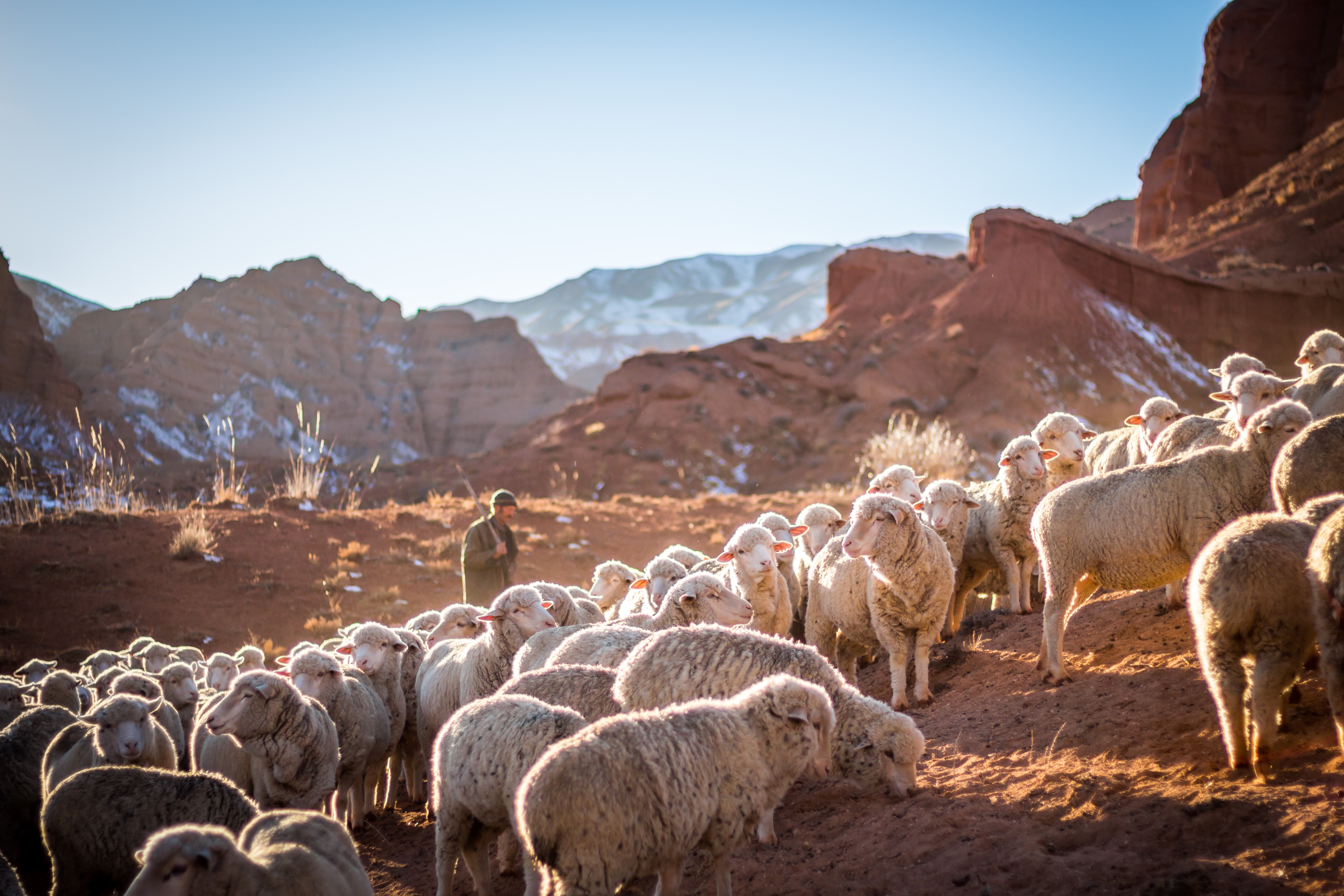
In the agrarian society of Jesus’ day, he often spoke in ways that connected to this reality. Sheep in particular are a common subject in Jesus’ teachings. He comes by this naturally. In tomorrow’s reading God identifies as “the good shepherd” too!

For the most part, Jesus attracted a crowd from the lower levels of society. “Blue collar” folks and people who lived on the edges were drawn to Jesus. His normal audience would be familiar with his shepherd imagery. Jesus states two times in this passage that he is the “good shepherd.” In the first instance, he declares that he will “lay down his life for the sheep.” He will not run away because the sheep truly matter to him. He will face the cross.

The second time, Jesus says, I am the good shepherd. I know my own sheep and they know me.” Here Jesus is speaking into the intimacy between shepherds and their sheep. Sheep learn the voice of their shepherd(s) and will only follow the voice(s) they know. Jesus sets the example in the ways that he follows God’s voice. He calls his sheep to do the same. Jesus then reiterates the fact that he will give his life for the sheep. In this spirit we too are called to sacrifice for others.

Jesus then extends the circle to include those who are not yet following him. Here Jesus is referring to both Jews and Gentiles, which really is another way of saying “all people.” Jesus longs to be known by all people, to shepherd them in his love. One day, may this be so, O Lord.

Prayer: Lord God, you lead us beside still waters and into green pastures. You provide rest and you offer sustenance. You protect us and you guide us. When we wander, you find us and bring us back home. You gave everything for us and continue to do about anything to keep us in the flock and to add to the flock. Thank you, Jesus. Amen.


Leave a comment

Believe

Reading: John 20 and 21

John 20:31 – “These things are written so that you will believe that Jesus is the Christ, God’s Son, and that believing, you will have life in his name.”

Early on the day after the Sabbath Mary Magdalene goes to Jesus’ tomb and finds it empty. Telling Peter and John, they go and find it empty – except for the linen cloths. They did not yet understand what had happened. Mary remained, though, crying alone outside the tomb. Looking in she sees two angels who ask why she is crying. Jesus’ body is missing. A man who she thinks is the gardener asks why she is crying and asks who she’s looking for, answering his first question. Same response. Calling her by name, Jesus says, “Mary.” Recognizing Jesus, she is then commissioned to go and tell the disciples, “I’ve seen the Lord.”

Later that day Jesus appears to the disciples. He breathes the Holy Spirit on them in preparation for sending them out into the world. An absent Thomas struggles to believe. He wants tangible proof of a risen Jesus. We’ve all been there, hearing a story so unbelievable that we need to see it with our own eyes. Eight days later Jesus offers Thomas that proof and says to him, “No more unbelief. Believe!” Jesus appears again, this time lakeside. A miraculous catch is followed by a simple meal together.

After the meal, Jesus restores Peter. Jesus asks him three times, “Do you love me?” After the third ask, Peter is sad. Each time Peter declares his love for Jesus and each time he is tasked with caring for and feeding Jesus’ sheep – the emerging church.

Both chapters end with similar declarations. In chapter 20 we read, “These things are written so that you will believe that Jesus is the Christ, God’s Son, and that believing, you will have life in his name.” Chapter 21 ends with John’s words that his testimony – his Gospel – is true. May we each choose to believe in Jesus, finding life in his name.

Prayer: Lord God, just as you overcame the grace and death, so too did you help the disciples to overcome their fear and disbelief. As we read and study your word, O God, deepen our belief and faith in your son, Jesus Christ, our Lord and Savior. May we be counted among those “who don’t see and yet believe.” Amen.


Leave a comment

So It Will Be with Us

Reading: Matthew 24-25

Matthew 24:46 – “Happy are those servants whom the master finds fulfilling their responsibilities when he comes.”

Chapter 24 is almost all about the signs of Jesus’ return. The end of chapter 24 and most of chapter 25 is about being ready or prepared for that day. Chapter 25 closes with the consequences of our decisions and actions leading up to that day. The conversation begins outside the temple, where Jesus predicts its destruction. This leads the disciples to ask about the end times when Jesus will return in glory.

Jesus says there will be many things that will happen. There will be false prophets and false christs. There will be war, famine, earthquakes, great suffering, and persecution. Many will fall away. Then the sun and moon will go dark and the planets will shake. Christ will come on the clouds in great splendor and power. The angels will gather the chosen ones. Jesus then reminds us that no one knows the day or hour. It will come upon the earth just as the flood came upon the people of Noah’s day. The message is clear: stay alert, always be prepared for the day.

From 24:45 through 25:30 we find three parables that describe what it looks like to be alert and prepared. In the first parable we read, “Happy are those servants whom the master finds fulfilling their responsibilities when he comes.” The bad or unfaithful servants will be cut to pieces and thrown into hell when the master returns unexpectedly. In the second parable the wise bridesmaids had plenty of oil (faith.) They will enter the wedding (heaven) when the late groom (Christ) arrives. The door will be closed. The foolish or unprepared will hear, “I don’t know you” when they try to get in. In the third parable the faithful who have put their gifts to work will hear, “Come, celebrate with me.” The lazy and evil will be thrown into the “furthest darkness.”

We close with the parable of the sheep and the goats. This summarizes the results of how one lived. The sheep lived for others, feeding the hungry, visiting the prisoners, welcoming the strangers. They did so in the name of Christ. Eternal life is their final reward. The goats ignored the hungry… Their final reward is eternal punishment. So it will be with us.

Prayer: Lord God, how we live day by day matters. Keep us faithful in the small things, attending to all that you place before us, using the gifts and blessings you have given us to bring your kingdom to fruition. Amen.


Leave a comment

Worthy of the Kingdom

Reading: Matthew 9-10

Matthew 10:22 – “Everyone will hate you on account of my name. But whoever stands firm until the end will be saved.”

Photo credit: Shane Rounce

Chapter 9 is mostly about the healings that Jesus brought to people. There is the calling of Matthew too and the questioning of why Jesus ate with “tax collectors and sinners.” Chapter 10 shifts first to the calling and sending of the 12. The chapter ends with the realities of the cost of discipleship. This was and still is a reality for the followers of Jesus.

Chapter 9 begins with the healing of a paralyzed man. Jesus begins by forgiving his sins. This is just a means to draw in the “legal experts,” to prove that Jesus has the power to forgive sins and to heal sicknesses. Jesus then calls Matthew, saying, “Follow me.” Later, at dinner, the Pharisees question Jesus’ choice of table mates. He declares, “I didn’t come to call righteous people, but sinners.” As the chapter continues, Jesus heals five more people and Matthew closes with a summary of Jesus’ early ministry. Jesus taught and healed, announcing the good news of the kingdom. The chapter closes with a lament: the harvest is huge but the workers are few. Jesus encourages his disciples to “plead” with God for workers.

Chapter 10 begins with God’s response. The 12 are called and given authority to cast out demons and to heal diseases. They are then sent out to “the lost sheep… of Israel.” The disciples are to go without anything, relying on worthy people to take them in. They will bless these homes. If no one is found worthy in a place, the disciples will move on.

Starting in verse 16, Jesus begins to detail the cost of discipleship. The 12 go out as “sheep among wolves.” They will be arrested and beaten. But the Spirit will be with them and in their words. Jesus says, “Everyone will hate you on account of my name. But whoever stands firm until the end will be saved.” Families will come apart and turn on one another because Jesus did not “come to bring peace but sword.” The disciples are encouraged to “pick up their cross” as they follow Jesus. Doing so, they will be counted as worthy in the kingdom of God. May it be so for you and for me.

Prayer: Lord God, send us out as workers, fully cognizant of the cost of discipleship and fully aware of your Spirit’s presence with us. Lord, use us to bring healing and wholeness to others, encouraging them with the good news of your kingdom through us and our ministries. Strengthen and empower us as we too seek to follow in the footsteps of Jesus. Amen.


Leave a comment

The Lord Will Reign

Reading: Zechariah 10-15

Zechariah 13:1 – “On that day, a fountain will open to cleanse the sin and impurity of David’s house.”

In the last chapters of Zechariah, Judah and Jerusalem are lifted up and are torn down. They experience defeat and victory – both through the Lord. Zechariah refers twice to a king who has been seen as Jesus since the earliest days of the church. In the end, God is present in the new Jerusalem. All nations come to worship and give glory to God.

As our reading begins, God invites the people to ask God for rain. Instead they turn to idols as their shepherd(s) lead them astray. God will punish “the goats.” Judah will then be strong because God is with them. Strengthened, they will walk in the name of the Lord. But this faith doesn’t remain long. Two staffs – Delight and Harmony – are made and then are broken. The covenant is ended and the alliance between Judah and Israel is over. A bad shepherd won’t care well for the flock and will be doomed by God.

In chapter 12 God again defends and restores Judah. They again become strong in the Lord. God promises to pour out a spirit of grace and mercy. But then the people will “look to me concerning the one whom they pierced.” There will be mourning throughout the land. In 13:1 we read, “On that day, a fountain will open to cleanse the sin and impurity of David’s house.” Later in chapter 13: Zechariah returns to what the church reads as Jesus. They will strike the shepherd and the sheep will scatter. There will be a purifying fire (persecution) that will refine the faithful. God will look upon these and say, “They are my people.”

In the last chapter we read of Jerusalem falling and half going into exile. Then God, along with the “holy ones,” fights for them, bringing them home. Running water will flow from this new Jerusalem. It will be secure. Nations will come to pay homage to God. The Lord will reign forever. This is the end of the story we know too. Thanks be to God.

Prayer: Lord God, although sin and disobedience separated you from Judah and Israel – as it does us at times – you remain unconditionally committed to loving your children. I am grateful for your faithfulness, mercy, and grace through all of our failures. You are so worthy of our praise. Use us this day to bring glory and honor to your name. Amen.


Leave a comment

Focused on God

Readings: Psalms 96-101

‭Psalm 99:5 – “Magnify the LORD, our God! Bow low at his footstool! He is holy!”

Today’s six Psalms are songs of praise and are calls to celebrate God as Lord over all. Many common themes run through these Psalms: sing to the Lord, the Lord reigns, God is righteous and just, God’s love lasts forever. A feeling of joy arches over today’s readings.

Psalm 96 invites all people to “Bring gifts! Enter his courtyards.” Here we see an early indication of the widening of God’s kingdom. It is “all families of the nations” that are invited. All. There is also a recognition for the “all” in the Psalm: “He will judge all people fairly.” Just judgment will come to all people.

Psalm 97 reminds us that fire goes before God, “burning up his enemies.” Zion and Judah celebrate these acts of justice. In Psalm 98 the song exalts the victory won by “his own strong hand.” The shouts are triumphant. All of creation celebrates the victory of God’s justice. The themes of justice and righteousness continue in Psalm 99. The call is to “Magnify the LORD, our God! Bow low at his footstool! He is holy!” The footstool represents the ark of the covenant. Moses, Aaron, and Samuel were the givers and keepers of the Law. Therefore God heard and answered their cries, forgiving them when they strayed.

Psalm 100 celebrates that Israel is “the sheep of his own pasture.” Made and chosen by God, they live in God’s faithful love generation after generation. Psalm 101 closes with a call to integrity. To walk with integrity (and within God’s love) one must focus on the will and way of God while also not abiding any evil. May this be our walk as we seek to worship our God of love, justice, and righteousness with our lives.

Prayer: Lord God, what great reminders today of who and what you are: loving, just, holy, faithful, righteous, worthy of our praise. We too are the sheep of your pasture. As such, lead and guide us to daily bring these character traits to bear on the world. In all things – thoughts, words, and deeds – may we glorify you! Amen.


Leave a comment

God Is Still God

Readings: Psalms 73-75

‭Psalm 74:1 – “Why does your anger smolder at the sheep of your own pasture?”

Psalm 73 faces a reality that we all deal with from time to time. The psalmist envies the wealth and blessings of the wicked. The psalmist states, “I’ve kept my heart pure for no good reason.” He feels as if he stayed innocent for nothing – except to be weighed down by hard work. We can feel this way. We can question if holding onto our faith is really worth it. We can be jealous of what others have: wealth, power, health, popularity. The psalmist then enters the sanctuary. He prayed. He understood that the wicked will perish and that God is always with him. He declares that God is “my heart rock and my share forever.” Hallelujah!

Communal tragedy has struck in Psalm 74. The enemy has won, the temple is burned down, no prophet is left. The psalmist asks the “how long?” question: “Why does your anger smolder at the sheep of your own pasture?” A shift comes in verse 12. Remembered are the mighty works of God’s hand. The psalmist calls on God to remember the covenant. He cries out, “God, rise up! Make your case!” Prove to us and to the world that God is still God.

Psalm 75 closes today’s readings. It “balances” Psalms 73 and 74. It is a promise that God’s justice will come. It is a reminder that God will bring this person down (the wicked) and that God will raise up that person (the righteous.) It is a Psalm that trusts deeply in who and what God is and will be. May we too live righteous lives, trusting in our God of justice and righteousness.

Prayer: Lord God, when our flesh longs for the things of this world, remind us of your everlasting love. When envy or jealousy rises up in our hearts, remind us that you are a jealous God. And when tragedy strikes, remind us of your peace that passes all understanding. Lead us to rest and trust in you. Amen.