pastorjohnb

Thoughts and musings on faith and our mighty God!


Leave a comment

So It Will Be with Us

Reading: Matthew 24-25

Matthew 24:46 – “Happy are those servants whom the master finds fulfilling their responsibilities when he comes.”

Chapter 24 is almost all about the signs of Jesus’ return. The end of chapter 24 and most of chapter 25 is about being ready or prepared for that day. Chapter 25 closes with the consequences of our decisions and actions leading up to that day. The conversation begins outside the temple, where Jesus predicts its destruction. This leads the disciples to ask about the end times when Jesus will return in glory.

Jesus says there will be many things that will happen. There will be false prophets and false christs. There will be war, famine, earthquakes, great suffering, and persecution. Many will fall away. Then the sun and moon will go dark and the planets will shake. Christ will come on the clouds in great splendor and power. The angels will gather the chosen ones. Jesus then reminds us that no one knows the day or hour. It will come upon the earth just as the flood came upon the people of Noah’s day. The message is clear: stay alert, always be prepared for the day.

From 24:45 through 25:30 we find three parables that describe what it looks like to be alert and prepared. In the first parable we read, “Happy are those servants whom the master finds fulfilling their responsibilities when he comes.” The bad or unfaithful servants will be cut to pieces and thrown into hell when the master returns unexpectedly. In the second parable the wise bridesmaids had plenty of oil (faith.) They will enter the wedding (heaven) when the late groom (Christ) arrives. The door will be closed. The foolish or unprepared will hear, “I don’t know you” when they try to get in. In the third parable the faithful who have put their gifts to work will hear, “Come, celebrate with me.” The lazy and evil will be thrown into the “furthest darkness.”

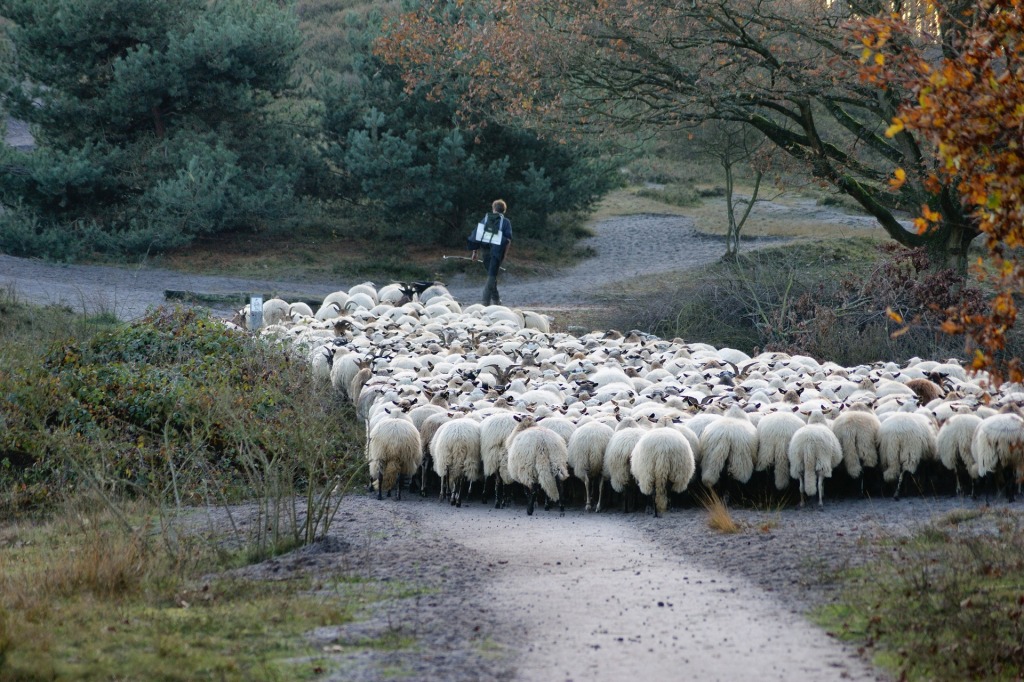
We close with the parable of the sheep and the goats. This summarizes the results of how one lived. The sheep lived for others, feeding the hungry, visiting the prisoners, welcoming the strangers. They did so in the name of Christ. Eternal life is their final reward. The goats ignored the hungry… Their final reward is eternal punishment. So it will be with us.

Prayer: Lord God, how we live day by day matters. Keep us faithful in the small things, attending to all that you place before us, using the gifts and blessings you have given us to bring your kingdom to fruition. Amen.



Leave a comment

Worthy of the Kingdom

Reading: Matthew 9-10

Matthew 10:22 – “Everyone will hate you on account of my name. But whoever stands firm until the end will be saved.”

Photo credit: Shane Rounce

Chapter 9 is mostly about the healings that Jesus brought to people. There is the calling of Matthew too and the questioning of why Jesus ate with “tax collectors and sinners.” Chapter 10 shifts first to the calling and sending of the 12. The chapter ends with the realities of the cost of discipleship. This was and still is a reality for the followers of Jesus.

Chapter 9 begins with the healing of a paralyzed man. Jesus begins by forgiving his sins. This is just a means to draw in the “legal experts,” to prove that Jesus has the power to forgive sins and to heal sicknesses. Jesus then calls Matthew, saying, “Follow me.” Later, at dinner, the Pharisees question Jesus’ choice of table mates. He declares, “I didn’t come to call righteous people, but sinners.” As the chapter continues, Jesus heals five more people and Matthew closes with a summary of Jesus’ early ministry. Jesus taught and healed, announcing the good news of the kingdom. The chapter closes with a lament: the harvest is huge but the workers are few. Jesus encourages his disciples to “plead” with God for workers.

Chapter 10 begins with God’s response. The 12 are called and given authority to cast out demons and to heal diseases. They are then sent out to “the lost sheep… of Israel.” The disciples are to go without anything, relying on worthy people to take them in. They will bless these homes. If no one is found worthy in a place, the disciples will move on.

Starting in verse 16, Jesus begins to detail the cost of discipleship. The 12 go out as “sheep among wolves.” They will be arrested and beaten. But the Spirit will be with them and in their words. Jesus says, “Everyone will hate you on account of my name. But whoever stands firm until the end will be saved.” Families will come apart and turn on one another because Jesus did not “come to bring peace but sword.” The disciples are encouraged to “pick up their cross” as they follow Jesus. Doing so, they will be counted as worthy in the kingdom of God. May it be so for you and for me.

Prayer: Lord God, send us out as workers, fully cognizant of the cost of discipleship and fully aware of your Spirit’s presence with us. Lord, use us to bring healing and wholeness to others, encouraging them with the good news of your kingdom through us and our ministries. Strengthen and empower us as we too seek to follow in the footsteps of Jesus. Amen.


Leave a comment

The Lord Will Reign

Reading: Zechariah 10-15

Zechariah 13:1 – “On that day, a fountain will open to cleanse the sin and impurity of David’s house.”

In the last chapters of Zechariah, Judah and Jerusalem are lifted up and are torn down. They experience defeat and victory – both through the Lord. Zechariah refers twice to a king who has been seen as Jesus since the earliest days of the church. In the end, God is present in the new Jerusalem. All nations come to worship and give glory to God.

As our reading begins, God invites the people to ask God for rain. Instead they turn to idols as their shepherd(s) lead them astray. God will punish “the goats.” Judah will then be strong because God is with them. Strengthened, they will walk in the name of the Lord. But this faith doesn’t remain long. Two staffs – Delight and Harmony – are made and then are broken. The covenant is ended and the alliance between Judah and Israel is over. A bad shepherd won’t care well for the flock and will be doomed by God.

In chapter 12 God again defends and restores Judah. They again become strong in the Lord. God promises to pour out a spirit of grace and mercy. But then the people will “look to me concerning the one whom they pierced.” There will be mourning throughout the land. In 13:1 we read, “On that day, a fountain will open to cleanse the sin and impurity of David’s house.” Later in chapter 13: Zechariah returns to what the church reads as Jesus. They will strike the shepherd and the sheep will scatter. There will be a purifying fire (persecution) that will refine the faithful. God will look upon these and say, “They are my people.”

In the last chapter we read of Jerusalem falling and half going into exile. Then God, along with the “holy ones,” fights for them, bringing them home. Running water will flow from this new Jerusalem. It will be secure. Nations will come to pay homage to God. The Lord will reign forever. This is the end of the story we know too. Thanks be to God.

Prayer: Lord God, although sin and disobedience separated you from Judah and Israel – as it does us at times – you remain unconditionally committed to loving your children. I am grateful for your faithfulness, mercy, and grace through all of our failures. You are so worthy of our praise. Use us this day to bring glory and honor to your name. Amen.


Leave a comment

Focused on God

Readings: Psalms 96-101

‭Psalm 99:5 – “Magnify the LORD, our God! Bow low at his footstool! He is holy!”

Today’s six Psalms are songs of praise and are calls to celebrate God as Lord over all. Many common themes run through these Psalms: sing to the Lord, the Lord reigns, God is righteous and just, God’s love lasts forever. A feeling of joy arches over today’s readings.

Psalm 96 invites all people to “Bring gifts! Enter his courtyards.” Here we see an early indication of the widening of God’s kingdom. It is “all families of the nations” that are invited. All. There is also a recognition for the “all” in the Psalm: “He will judge all people fairly.” Just judgment will come to all people.

Psalm 97 reminds us that fire goes before God, “burning up his enemies.” Zion and Judah celebrate these acts of justice. In Psalm 98 the song exalts the victory won by “his own strong hand.” The shouts are triumphant. All of creation celebrates the victory of God’s justice. The themes of justice and righteousness continue in Psalm 99. The call is to “Magnify the LORD, our God! Bow low at his footstool! He is holy!” The footstool represents the ark of the covenant. Moses, Aaron, and Samuel were the givers and keepers of the Law. Therefore God heard and answered their cries, forgiving them when they strayed.

Psalm 100 celebrates that Israel is “the sheep of his own pasture.” Made and chosen by God, they live in God’s faithful love generation after generation. Psalm 101 closes with a call to integrity. To walk with integrity (and within God’s love) one must focus on the will and way of God while also not abiding any evil. May this be our walk as we seek to worship our God of love, justice, and righteousness with our lives.

Prayer: Lord God, what great reminders today of who and what you are: loving, just, holy, faithful, righteous, worthy of our praise. We too are the sheep of your pasture. As such, lead and guide us to daily bring these character traits to bear on the world. In all things – thoughts, words, and deeds – may we glorify you! Amen.


Leave a comment

God Is Still God

Readings: Psalms 73-75

‭Psalm 74:1 – “Why does your anger smolder at the sheep of your own pasture?”

Psalm 73 faces a reality that we all deal with from time to time. The psalmist envies the wealth and blessings of the wicked. The psalmist states, “I’ve kept my heart pure for no good reason.” He feels as if he stayed innocent for nothing – except to be weighed down by hard work. We can feel this way. We can question if holding onto our faith is really worth it. We can be jealous of what others have: wealth, power, health, popularity. The psalmist then enters the sanctuary. He prayed. He understood that the wicked will perish and that God is always with him. He declares that God is “my heart rock and my share forever.” Hallelujah!

Communal tragedy has struck in Psalm 74. The enemy has won, the temple is burned down, no prophet is left. The psalmist asks the “how long?” question: “Why does your anger smolder at the sheep of your own pasture?” A shift comes in verse 12. Remembered are the mighty works of God’s hand. The psalmist calls on God to remember the covenant. He cries out, “God, rise up! Make your case!” Prove to us and to the world that God is still God.

Psalm 75 closes today’s readings. It “balances” Psalms 73 and 74. It is a promise that God’s justice will come. It is a reminder that God will bring this person down (the wicked) and that God will raise up that person (the righteous.) It is a Psalm that trusts deeply in who and what God is and will be. May we too live righteous lives, trusting in our God of justice and righteousness.

Prayer: Lord God, when our flesh longs for the things of this world, remind us of your everlasting love. When envy or jealousy rises up in our hearts, remind us that you are a jealous God. And when tragedy strikes, remind us of your peace that passes all understanding. Lead us to rest and trust in you. Amen.


Leave a comment

God Is Still God

Readings: Psalms 73-75

‭Psalm 74:1 – “Why does your anger smolder at the sheep of your own pasture?”

Psalm 73 faces a reality that we all deal with from time to time. The psalmist envies the wealth and blessings of the wicked. The psalmist states, “I’ve kept my heart pure for no good reason.” He feels as if he stayed innocent for nothing – except to be weighed down by hard work. We can feel this way. We can question if holding onto our faith is really worth it. We can be jealous of what others have: wealth, power, health, popularity. The psalmist then enters the sanctuary. He prayed. He understood that the wicked will perish and that God is always with him. He declares that God is “my heart rock and my share forever.” Hallelujah!

Communal tragedy has struck in Psalm 74. The enemy has won, the temple is burned down, no prophet is left. The psalmist asks the “how long?” question: “Why does your anger smolder at the sheep of your own pasture?” A shift comes in verse 12. Remembered are the mighty works of God’s hand. The psalmist calls on God to remember the covenant. He cries out, “God, rise up! Make your case!” Prove to us and to the world that God is still God.

Psalm 75 closes today’s readings. It “balances” Psalms 73 and 74. It is a promise that God’s justice will come. It is a reminder that God will bring this person down (the wicked) and that God will raise up that person (the righteous.) It is a Psalm that trusts deeply in who and what God is and will be. May we too live righteous lives, trusting in our God of justice and righteousness.

Prayer: Lord God, when our flesh longs for the things of this world, remind us of your everlasting love. When envy or jealousy rises up in our hearts, remind us that you are a jealous God. And when tragedy strikes, remind us of your peace that passes all understanding. Lead us to rest and trust in you. Amen.


Leave a comment

God Is Still God

Readings: Psalms 73-75

‭Psalm 74:1 – “Why does your anger smolder at the sheep of your own pasture?”

Psalm 73 faces a reality that we all deal with from time to time. The psalmist envies the wealth and blessings of the wicked. The psalmist states, “I’ve kept my heart pure for no good reason.” He feels as if he stayed innocent for nothing – except to be weighed down by hard work. We can feel this way. We can question if holding onto our faith is really worth it. We can be jealous of what others have: wealth, power, health, popularity. The psalmist then enters the sanctuary. He prayed. He understood that the wicked will perish and that God is always with him. He declares that God is “my heart rock and my share forever.” Hallelujah!

Communal tragedy has struck in Psalm 74. The enemy has won, the temple is burned down, no prophet is left. The psalmist asks the “how long?” question: “Why does your anger smolder at the sheep of your own pasture?” A shift comes in verse 12. Remembered are the mighty works of God’s hand. The psalmist calls on God to remember the covenant. He cries out, “God, rise up! Make your case!” Prove to us and to the world that God is still God.

Psalm 75 closes today’s readings. It “balances” Psalms 73 and 74. It is a promise that God’s justice will come. It is a reminder that God will bring this person down (the wicked) and that God will raise up that person (the righteous.) It is a Psalm that trusts deeply in who and what God is and will be. May we too live righteous lives, trusting in our God of justice and righteousness.

Prayer: Lord God, when our flesh longs for the things of this world, remind us of your everlasting love. When envy or jealousy rises up in our hearts, remind us that you are a jealous God. And when tragedy strikes, remind us of your peace that passes all understanding. Lead us to rest and trust in you. Amen.


Leave a comment

Criteria

Reading: Matthew 25:31-46

Verse 45: “Whatever you did not do for one of the least of these, you did not do for me.”

Today’s passage takes us to the end of this world as we know it. Jesus is sitting on the throne or on the judgment seat. In the opening verses we read that “all nations” will be gathered before him. Jesus will then separate those destined for heaven from those destined for hell. Even if we die before this day, we will still be judged worthy or unworthy of heaven.

It is interesting to me that both the sheep and the goats address Jesus as “Lord.” To me it feels like more than a polite title. It feels like even the goats thought they were worthy of inclusion in heaven. So what then is used to separate one from another?

In verses 35 and 36 Jesus lays out the criteria. In his own words it is whether or not one fed the hungry, gave drink to the thirsty, invited the stranger in, clothed the naked, cared for the sick, and visited the imprisoned. Both groups want to know when they saw Jesus hungry, thirsty… The answer is pretty much the same to both the sheep and the goats. They each saw Jesus in “the least of these” – the outcast, the leper, the Samaritan, the tax collector, the woman at the well… Some chose to have compassion and to act to meet needs. Others did not.

The challenge of this passage is to ask where we fit. To which herd do we belong? Maybe we’d like to tell ourselves that this is just one of the many criteria that Jesus will use to judge us worthy or not. But what if it is the only criteria that he uses?

Prayer: Lord God, change my heart, O God. Raise up a compassion in me that sees and responds to needs consistently, not just when convenient or easy. Yes, change my heart, O God. Amen.


Leave a comment

Giving Thanks

Reading: Psalm 100:1-3

Verse 3b: “It is God who made us, and we are God’s; we are God’s people, the sheep of God’s pasture.”

Psalm 100 is subtitled “A Psalm. For Giving Thanks.” in my home Bible. It is a fitting passage for today and tomorrow, for collectively offering our thanks for God’s blessings and presence in our lives and in our world. The psalmist begins by encouraging us to “shout for joy” and to “worship the Lord with gladness.” This is an encouragement that we need often.

We need to be reminded because life often happens in ways that can derail our joy and that can dampen our gratitude. Those unexpected twists and unwanted turns can leave us anything but thankful. It is precisely in these times that we need the words of Psalm 100 – especially verse 3.

Verse 3 begins with a reminder and a call: “Know that the Lord is God.” In all and through all and over all, God is God. God does not cause our hardship or difficult situation or unwanted change – these are part of life – but God does desire to be with us in all of life. By making the intentional choice to walk with God, we make our journey lighter, our road less rocky, our valley less challenging… because we are not alone.

The verse continues with these words: “It is God who made us, and we are God’s; we are God’s people, the sheep of God’s pasture.” This verse speaks of the deep connection and foundational relationship that we have with God. We are God’s and God is ours. We are the sheep of God’s pasture. God is our good and loving shepherd. In all and through all and over all, God is with us and we are with God. Thanks be to God!

Prayer: Lord God, I rejoice in your love for us, your family. With joy and with thanksgiving I praise you for your presence in all of life. You chose us before our lives even began. You desire to walk with us every day. May we choose you always. Amen.


Leave a comment

A Disconnect

Reading: Matthew 21:33-46

Verse 46: “They looked for a way to arrest him, but they were afraid of the crowd because the people held that he was a prophet.”

This week’s gospel lesson is a parable about some tenants who reject, refuse, abuse, and even kill the messengers sent to them. This parable is an extension of Jesus’ answer to the chief priests and elders question: “By what authority are you doing these things?” (Matthew 21:23) In this second response Jesus and the religious leaders take center stage. In the parable the tenants refuse to listen to messenger after messenger. They even refuse to listen to the landowner’s son. They kill him, thinking they can take the inheritance (the vineyard) for themselves. Asking those who have killed the messengers and prophets what should happen to these tenants, the religious leaders answer, “He will bring those wretches to a wretched end.” Trap set, bait taken.

Beginning in verse 42, Jesus unpacks the parable. Quoting from the Old Testament he speaks of a “marvelous thing” that God has done and of the rejection that he, “the capstone,” is currently experiencing. Speaking even more directly, he point blank tells the religious leaders that the kingdom of God (the vineyard) will be taken from them and given to those “who will produce fruit.” The religious leaders are stung by these words and their truth. They do not see the disconnect that has grown between their faith and the way that they live out their religion. Instead, they begin to think about how they can arrest and eventually eliminate the vineyard owner’s son.

Moving to today, I ask: Are we and are our churches producing fruit? We are good, I believe, at tending to our buildings, to our worship services, to our sheep. But are we producing fruit? Are we making new disciples of Jesus Christ? In the parable, the religious leaders wait to arrest Jesus because the people held that he was a prophet.” There is not a disconnect here with the people. There continues to be a crowd out there that holds Jesus as a prophet, as an important part of their lives. And there is a disconnect between their faith and the institutional church. Once again, are we and are our churches being fruitful? Put another way, have we hunkered down inside the walls or are we stepping out into the world, seeking to make disciples of Christ, seeking to form a new connection? Have we, as followers of Jesus Christ and as churches, in essence rejected the model of the one who went out into his world, loving far beyond the walls of the temple and synagogues?

Prayer: Lord, open our eyes and our heart to the commission given by the capstone. Send us our, seeking to engage and make disciples of Jesus Christ. Move us beyond the comfort of our walls, out into the world, out where Jesus found the harvest to be most plentiful. Amen.