pastorjohnb

Thoughts and musings on faith and our mighty God!


Leave a comment

Offerings to God

Readings: Leviticus 1, Leviticus 2, Leviticus 3, Leviticus 4

Leviticus 4:35 – “In this way, the priest will make reconciliation for you for the sin you committed, and you will be forgiven.”
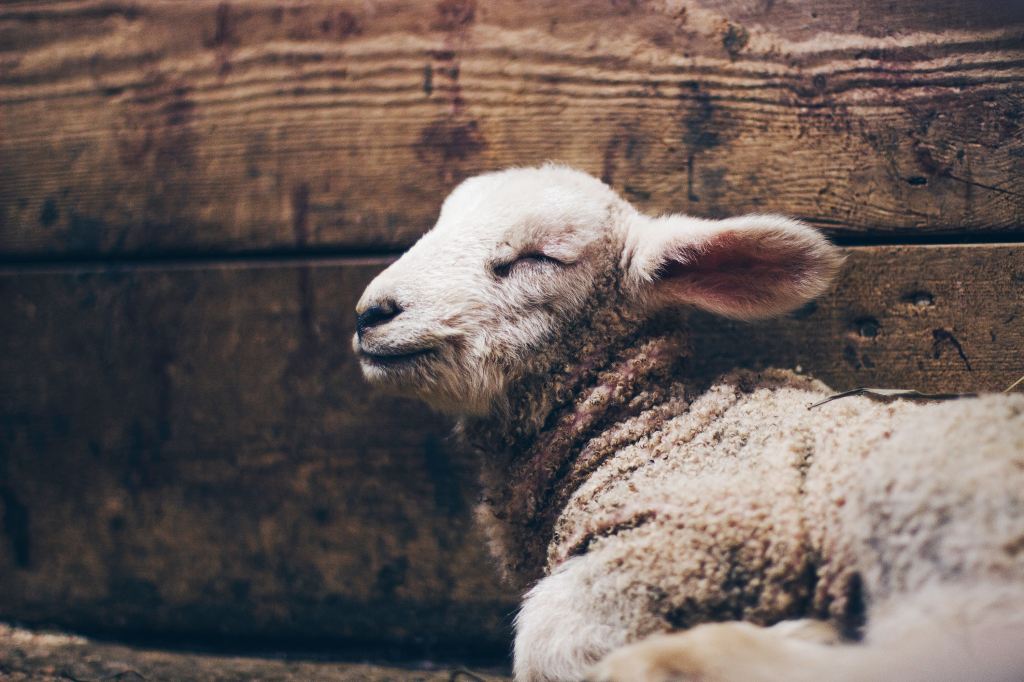
The book of Leviticus lays out the patterns of worship and the expectations for daily behavior for God’s people. This book also teaches the Israelites how to make sacrifices of atonement to cover their sins. While the overall theme of the book is a call to holy living, it also acknowledges that as human beings we will fall short. In and through these faith disciplines and practices, the Israelites will come to understand their call to be a “holy nation” and a “kingdom of priests.”

Today’s readings all deal with offerings made to the Lord. In each offering the priest plays an integral role. Chapter 1 describes the entirely burned offering. These were made in atonement for sin. The flawless animal brought, a hand was placed on its head, the animal was slaughtered. Placing one’s hand on the head of the animal symbolized a solidarity with the animal that reflected the idea of a life for a life. Blood went into the altar and sometimes other places too. The whole animal was burned on the altar.

Grain offerings are covered in chapter 2. These were given at the time of harvest and at other times of celebration as a thank offering to the Lord. Oil and frankincense were added and burned with the grain. The priest kept all but the “token portion.” Chapter 3 covers well-being sacrifices. These non-required sacrifices involved burning only the fat. The rest of the animal was consumed by the family. The rest of the ritual was the same: flawless animal, hand on head…

Chapter 4 deals with sacrifices given to atone for unintentional sin that was later discovered. The ritual practices were still the same. If the sin was by a priest or the whole community, a bull was sacrificed. A leader or individual brought a goat. Again, just the fat was burned on the altar. The rest of the bull was burned outside of camp but the goats could be eaten. These sacrifices brought reconciliation with God and yielded the forgiveness of sins.

Prayer: Lord God, in this system and in these sacrifices we see great attention to detail. The sacrificial system offered thanks to you and it sought forgiveness too. Your holiness covered both. Lead and guide us to live out our faith in such obedience and honesty. Amen.


Leave a comment

Building God’s Dwelling

Readings: Exodus 35, Exodus 36, Exodus 37, Exodus 38, Exodus 39, Exodus 40

Exodus 40:33-34 – “When Moses had finished all the work, the cloud covered the meeting tent and the LORD’s glorious presence filled the dwelling.”

Photo credit: Kyle Johnson

Today’s six chapters cover the construction of the tabernacle. To accomplish this monumental task God and Moses call for a free will offering. So great is the generosity of the people that Moses finally has to say, “Stop!” In total the people brought 2,200 pounds of gold, 7,500 pounds of silver, and 5,300 pounds of copper/bronze – not to mention the cloth, yarn, gemstones, wood, spices… The census was taken. 603,500 men give their half shekel to the sanctuary of God.

Leaders are appointed and the work begins. Men and women contribute. It is a community effort. This project is like a lot of church projects. Generous hearts and willing hands are needed. As it was then so it is now: the people are the heart and soul of the community of faith. The work is done exactly as the Lord has commanded in Exodus 25-31. Every detail is done exactly as the Lord desired. What an example of obedience and attention to detail. In this way it reflects the creation story.

The work is done and the tabernacle is erected. Everything finds its place and the priests are blessed. Moses blesses the people for their work just as God blessed creation when that task was completed. In verses 33-34 of chapter 40 we read, “When Moses had finished all the work, the cloud covered the meeting tent and the LORD’s glorious presence filled the dwelling.” Exactly one year after Israel was delivered from Egypt, the tabernacle is finished and God’s presence comes to dwell among the people. This is the fullest expression of God’s presence in the Old Testament. It expresses God’s desire to be with all people. This desire continues today. Thanks be to God.

Prayer: Lord God, you were present in and through this magnificent process. You opened hearts and hands to give and serve. Through this your glory was revealed. Continue to be present in and through us, O God. Continue to open our hearts and hands in service to you, O Lord Almighty. In and through us may your glory be revealed! Amen.


Leave a comment

God Is…

Readings: Exodus 31, Exodus 32, Exodus 33, Exodus 34

Exodus 34:6-7 – “The LORD! A God who is compassionate and merciful, very patient, full of great loyalty and faithfulness… forgiving.”

Photo credit: Diego Gennaro

Chapter 31 begins with the appointment of two skilled artisans to oversee the building of the tabernacle. This is followed up by a reiteration of the Sabbath guidelines. God’s point: even the building of God’s home is not to be used as an excuse to break the Sabbath. All of our excuses pale by comparison.

The story of the gold bull calf fills chapter 32. The people go astray and Aaron goes along. Moses has been gone a long time. The people forget who and what God has been and done. An idol is made and is worshipped. God is ready to “devour” them in fury, but Moses intercedes, reminding God of their history. God’s anger relents. Moses and Joshua return to camp. Moses becomes furious, smashing the covenant tablets. He destroys the bull calf and forces the Israelites to drink its ash mixed in water. Moses then rallies the Levites. About 3,000 are killed by the sword. A plague then follows.

As chapter 33 begins, God refuses to go with these stubborn people. Moses sets up a tent outside of the camp, symbolic of real separation that their sin has created. God meets with Moses in the tent. The people are faithful, paying close attention. Moses again intercedes for the people, laying his relationship with God on the line. God relents. Moses is then allowed to see God’s glory. Passing by Moses, God declares that God is compassionate and merciful, very patient, full of great loyalty and faithfulness… forgiving.”

God then renews the covenant with the people. God warns the people about making a covenant with those that God will drive out. God instructs them to purge the land of the idols and altars that are there. They are warned about marrying the locals. God then reiterates much of the material from the first covenant. This time Moses comes down with a face aglow – reflecting God’s glory.

In today’s return to a story format we can again see ourselves – at times as the sinful, idol-worshipping Israelites and at times as Moses as he pleads with God. We can see ourselves as the Israelites eagerly watching for God and as the people who need warnings about the pagan culture around us. Through it all, though, both then and now, God remains compassionate and merciful, patient and forgiving. Thanks be to God.

Prayer: Lord God, how true and faithful you are. What a long, patient walk you have been on with your children. I am awed by your love. Amen.


Leave a comment

Holy and Perfect

Readings: Exodus 28, Exodus 29, Exodus 30

Exodus 29:45 – “I will be at home among the Israelites, and I will be their God.”

Today’s readings are mostly about the priestly clothing and their ordination into service. Reading these verses led me to reflect on the changes that have occurred around some of our “priestly clothing.” In some denominations today the clergy wear a robe whenever they are “on duty.” In other denominations robes are rarely worn, even in worship. Changes are also reflected in the peoples’ attire too. “Sunday best” also represents a wide spectrum in many of our churches.

In Exodus 28 instructions are given for how to make the priestly garments for Aaron and his sons. This uniform is to be worn whenever they are on duty. Instructions are given for the undergarment, the robe, the vest, the chest pendant, the flower ornament, and the turban. There is a strong connection to the twelve tribes of Israel and to the holy role that the priests will play in the life of Israel. We again see great attention to detail and we see meaning and purpose in all that God does.

In Exodus 29 and 30 we mostly read about the instructions for ordination. There is great ritual embedded in this process. This reflects the importance of the priest’s roles. We read about a daily sacrifice too – a “soothing smell,” a gift to the Lord. In our lives and in our faith we are to mirror this idea. We do so in our daily commitment to prayer, Bible study, and holy living. We read about the census and “temple tax.” We mirror this support too – in our gifts to God, both monetary and time/talents. On either side of this we read about the making of the incense altar, the washing basin, and the incense recipes. In even these small items we see detail, purpose, holiness.

In these three chapters we see a focus on being holy and perfect. This is for one purpose: “I will be at home among the Israelites, and I will be their God.” May all that we do and say and think also be ordered and ordained by God so that our heart too is a home for God.

Prayer: Lord God, today the detail of your plans amaze me. They reveal who you are and who Israel needed to be so that you could dwell among them and with them. You call us to live detailed, holy lives too. May it be so. Amen.


Leave a comment

Plans

Readings: Exodus 25, Exodus 26, Exodus 27

‭Exodus‬ ‭25:40… – “See to it that you make them according to the blueprint for them that you were shown on the mountain.”

Today’s readings shift into the building of the tabernacle. The great detail and planning remind us once again that God is good and ordered and creative. All of these details and specifications and vision for the tabernacle were given to Moses by God when he was on the mountaintop. Over and over we read, “See to it that you make them according to the blueprint for them that you were shown on the mountain.” God has a plan and calls Moses and then Israelites to follow the plan exactly. As I pondered application for today’s readings, it came to me: our lives are much like the construction of the tabernacle. God has given us a detailed plan. We read three chapters from it today. Within that plan, in the gospels God even gives us a perfect example of what following the plan exactly looks like. And to boot God gifts us with the Holy Spirit, the indwelling presence of Jesus Christ that leads and guides us.

There is great detail in the plans and in the execution of the plan. We find exact dimensions. We find specific colors and designs. We see specific metals used for specific spaces and purposes. We see talents and gifts put to use to execute God’s plan for the tabernacle. As I read through these chapters I imagined each step and what each item looked like. I envisioned the final product. As Moses received these instructions on the mountain I bet he tried to see each item and the final product as God laid out the plan. This thought draws me back to the Holy Spirit – that indwelling presence that knows God’s plans for our lives and works and prays and works to shape and guide and lead and make us into who and what God created us to be. I wonder: In what ways are we contributing to the Holy Spirit’s efforts in our lives?

What also struck me today was the people’s commitment. Every single thing they used for the tabernacle came from them. Every single thing. In the same way, the church (not the building but the church) relies on each of us to be a part of bringing God’s light and love into the world. What are you bringing?

Prayer: Lord God, we see a wonderful and detailed plan for the tabernacle. You have the same kind of plan for our lives and for our churches. Move us to active involvement in the completion of these plans. Amen.


Leave a comment

Our Covenant God

Readings: Exodus 22, Exodus 23, Exodus 24

Exodus 24:7 – “They responded, ‘Everything that the LORD has said we will do, and we will obey.’”

Photo credit: Paul Pastourmatzis

The first part of today’s reading contains more of the instructions found in the covenant scroll. The first instructions cover the proper use and treatment of other’s stuff. We are still called to live by the ideals found here. If I break a tool I’m borrowing, for example, then I buy a new one and return that to the lender. Then the instructions shift to personal responsibilities, to how we are to treat and care for and interact with each other. Several verses touch on how to treat the immigrant, widow, and orphan – the vulnerable and powerless. We are to treat them well. God extends doing the right thing even to our enemies. Taken as a whole, these instructions reveal “God’s subtle yet steady work of grace.”

The Israelites are then reminded to observe three yearly festivals. The first is from the Passover – God’s great rescue of Israel. The other two center on the harvest and on giving God thanks for God’s provision. Then the text leads us into the provision of the Promised Land. A conflict in the text struck me today – “wipe out… completely destroy” and “I’ll drive them out… little by little.” There is a faith concern: mixing in with the locals will threaten Israel’s fidelity to God. And there is a practical concern: the Israelite population will not be large enough yet to properly care for the whole Promised Land.

These instructions are written into the covenant scroll and read to the people. It is sealed with burned offerings and with blood. The people declare, “Everything that the LORD has said we will do, and we will obey.” Moses and the elders are then brought into God’s presence. They worship and celebrate their covenant God. They see God and they do not die. Then Moses goes up the mountain to receive the stone tablets and many more instructions. Moses will be with God for a long time – 40 days and nights. He leaves Aaron and Hur in charge.

Prayer: Lord God, thank you for the grace and love that flows throughout your instructions. You remind us to care for the vulnerable and to treat even our enemies with love and grace. May we read these words and also declare our intent to walk in your ways as we seek to witness to your love and grace in the world. Amen.


Leave a comment

Relationship

Readings: Exodus 19, Exodus 20, Exodus 21

Exodus 20:1 – “I am the Lord your God.”

Photo credit: Robert Linder

As the Israelites travel on in the wilderness they arrive at Mount Sinai. Moses goes up the mountain and God speaks to him. Through Moses, God invites the people into relationship – obey me and stay true to the covenant. To accept means that Israel will become “my most precious possession… a kingdom of priests, a holy nation.” The people accept the invitation, paving the way for the giving of the Law. In order to be ready to receive God’s law, the people prepare themselves, becoming ritually clean.

God descends on the mountain, filling the people with fear. They are warned to stay off of the mountain while God is present. Then Aaron joins Moses as they go up the mountain. In chapter 20 God begins to give Moses the Law. It begins with the Ten Commandments. These well-known verses begin with this foundational statement: “I am the Lord your God.” The “I am” echoes who and what God is. This was God’s name that Moses brought with him when he first went to Egypt.

The first four commandments are about us living in right relationship with God – no other gods or idols, no using God’s name carelessly, honor the Sabbath to covenant with God. The last six deal with our relationship with one another. They cover how to treat each other. An interesting side note – the last one, the one dealing with coveting, is the only one against inward thoughts. One can look at the last as a summary too. Coveting leads to the actions covered in commandments five through nine.

Today’s readings close with instructions that apply these relationship rules to some specific situations: slavery and animals. While many of these do not apply to us anymore, there is value in understanding their spirit. John Wesley’s simple rules “do no harm” and “do good” convey this same spirit. They are about treating and loving each other as God loves and treats us. May this be the spirit that we live by.

Prayer: Lord God, thank you for taking the time to define, to explain, to invite us into faithful living with you, our covenant God. Fill us with your Spirit and empower us to live as your witness to love, grace, and mercy. Amen.


Leave a comment

Questions

Readings: Exodus 15:22-27, Exodus 16, Exodus 17, Exodus 18

Exodus 16:8 – “Who are we? Your complaints aren’t against us but against the LORD.”

Coming fresh off of the amazing rescue at the sea, today we become familiar with an oft-repeated pattern in the wilderness. The Hebrews are lacking in something so they argue/complain/grumble against Moses. Moses, often in frustration, turns to God and God provides food, water, protection… We often see a version of this played out in our lives, just without Moses as the middle man. We go straight to God with our grumbles, complaints, charges…

At Marah the water is bitter. God makes it sweet. Those hardships or challenges that become blessings? We experience these too, don’t we? Then, in the Sin Desert, hunger sets in. They long for the meat and bread of slavery. Ever look back in the good old days? God provides meat and bread. These come with instructions. These begin to establish the Sabbath. It was not possible in Egypt. As slaves of another they worked 7 days a week. We have a choice. Do we allow ourselves to be controlled by work…? Or do we honor God and ourselves in sabbath rest?

After preserving some manna for future generations, the Israelites travel on to Rephidim. No water. They accuse Moses (read: God) of bringing them out into the desert to die of thirst. Moses hits the rock at Horeb with his staff -> water comes out! Then Amalek comes to fight them. Joshua leads the troops into battle as Moses, Aaron, and Hur go up the mountain. The staff, now held aloft, continues to represent God’s presence. Aaron and Hur help Moses and God gives Israel victory. This leads into Jethro’s visit and suggestion. He sees Moses is too busy. He won’t last like this. Following his wise father-in-law’s advice, Moses appoints judges, sharing the load. God shared the load in battle. Moses shared the load with others. Which kind of sharing is harder for you? What did you learn today about sharing?

Prayer: Lord God, it is a little scary to see how little we’ve changed since Moses’ time. We get caught in nostalgia, we lose faith quickly, we question your love. Today I thank you so much for your enduring patience through the generations and for your great patience with me. Teach me to turn quicker to you and to hold onto your hand longer and more steadily. Amen.


Leave a comment

Strength and Power

Readings: Exodus 12:30-51, Exodus 13, Exodus 14, Exodus 15:1-21

Exodus 14:13 – “Don’t be afraid. Stand your ground, and watch the LORD rescue you today.”

We begin with Pharaoh’s response to the death of the firstborn: “Get up! Get away from my people… Just go!” The Egyptians hurry their exit, giving the Israelites the gold and silvery jewelry and the clothing that they ask for. 600,000 men plus women, children, and livestock leave Egypt. There are non-Israelites that leave too. God’s power has attracted some of the local inhabitants.

God then reiterates the Passover regulations, reminding them of circumcision as a requirement. This will enable the “diverse group” that left with the Israelites to be a part of the yearly remembrance. Connecting to the final plague – as what will become known as a thank offering – the Lord requires that every firstborn male be dedicated to God. A provision is also established to “ransom” their firstborn sons with a sacrificial offering of an animal.

God then leads and guides the Israelites on a wandering yet safe path. Pharaoh changes his mind (with God’s help), rallying the troops to bring back Israel. As the enemy army approaches, the Hebrews immediately forget the mighty acts of God that literally just happened. They ask Moses, “Weren’t there enough graves in Egypt?” A brave and faithful Moses confidently responds, “Don’t be afraid. Stand your ground, and watch the LORD rescue you today.” The Lord does fight for them. The cloud provides protection, the sea parts, Israel passes through on dry ground, Egypt’s army follows but gets stuck, and the sea closes back in, killing every Egyptian soldier.

Our readings today close with two songs of worship. Worship is a natural response to what God has done. The songs celebrate the victory, God’s strength and power, the oneness of God, and the fear that this event strikes in the local tribes. Verse 18 states, “The Lord will rule forever and always.” Yes, God will and does. Thanks be to God for the victory brought to Israel and for the victories brought to the faithful today and always!

Prayer: Lord God, what a mighty and powerful God you are. These events at the sea – what an amazing corporate witness to your love for your people. God, please continue to part the seas that trouble and challenge our lives and faith. Continue to fight for us, your people. Amen.


Leave a comment

Act(s) of Salvation

Readings: Exodus 7:14-25, Exodus 8, Exodus 9, Exodus 10, Exodus 11, Exodus 12:1-30

Exodus 12:14 – “This day will be a day of remembering for you. You will observe it as a festival to the LORD… for all time.”

Photo credit: RebeccaB Designs

As the plagues begin, the Lord turns the Nile to blood and then brings frogs upon all the land. Pharaoh’s religious experts duplicate these acts of God. Pharaoh is stubborn, refusing to let the Israelites go to worship God. Next comes the plague of lice. The experts are unable to do this. They tell Pharaoh, “This is something only God could do!” Pharaoh remains stubborn. Next comes a swarm of insects. Pharaoh says he’ll let Israel go worship but changes his mind after God removes the insects.

Chapter 9 brings the plague of sores and blisters. This time we read that God made Pharaoh stubborn. The animals that die are only the ones belonging to the Egyptians. This plague begins to build to a climax in chapter 12. Hail then pounds the land next – but not in Goshen. Pharaoh admits his sin and asks for prayer, saying he’ll let them go. Moses will make it stop but also states that he knows Pharaoh and his officials do not take God seriously. Again Pharaoh gets stubborn, refusing to let Israel go.

The plague of locust and the plague of darkness come in chapter 10. Again God differentiates between Egypt and Israel. Again Pharaoh almost budges but then turns stubborn. The chapter closes with Pharaoh threatening Moses. We see a shift in chapter 11. God gives very specific instructions to the Israelites. This prioritizes reenactment and remembering over the actual event. The Passover is about shaping and forming each generation to come. This is why God says, “This day will be a day of remembering for you. You will observe it as a festival to the LORD… for all time.” The lamb, its slaughter, the blood, the meal – it will be reenacted each year to remember and to be shaped by this act of salvation. This festival remains the high point of the Jewish religious year. For us, it connects to the blood of the Lamb that spread on the cross, again a mighty act of salvation for the people of God. For this event that we reenact every year, for this act of grace that shapes and forms us, we too say thanks be to God.

Prayer: Lord God, thank you for the gifts of salvation – for both the one in Egypt and for the one on Calvary. Thank you for the love that will stop at nothing to rescue, save, and redeem us. Amen.