pastorjohnb

Thoughts and musings on faith and our mighty God!


Leave a comment

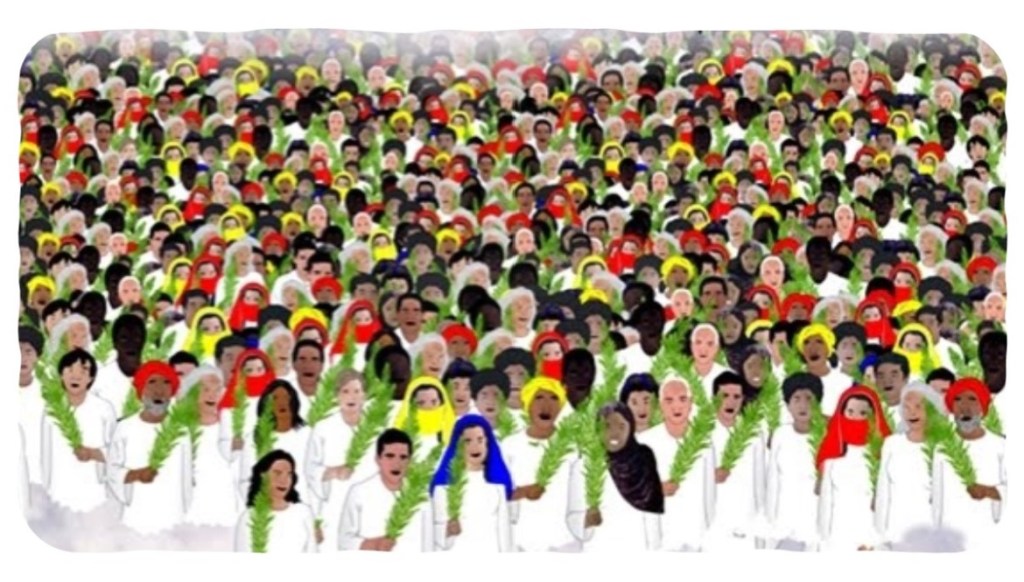
Rejoice and Be Glad

Reading: Matthew 5:10-12

Verse 11: “Blessed are you when people insult you, persecute you and falsely say all kinds of evil against you because of me.”

The closing verses of the Beatitudes bring home the reality that the practice of our faith can bring challenge and trial to our life. The demands that Christ places upon us to be love and grace and mercy lived out in the world – these practices will create tension and even angry responses at times. When our faith leads us to take a stand against an injustice or oppression or other evil actions of the world, the one(s) causing these evils will react against our presence and the words of truth that we speak. The reaction often takes the form of some type of persecution.

In verses 10 and 11 Jesus tells us “blessed are” you when we are persecuted. He unpacks what we may experience in verses 11: when people insult you, persecute you and falsely say all kinds of evil against you because of me.” When we shine the light of truth into the darkness of the world, that darkness tries to snuff out the light. Darkness cannot stand being in the light. Darkness will try anything to avoid being in that light. Jesus tells us to “rejoice and be glad” when the darkness strikes against us. He can say this because he knows the same truth that we do: “great is your reward in heaven.” Living faithfully may we rejoice in this promise always.

Prayer: Lord God, give me the strength and courage to live faithfully at all times, especially in those situations that may bring challenge and hardship. I know you are with me at all times – good, bad, and in between. Use me to stand and speak for those without the power or ability to do so for themselves. Amen.


Leave a comment

Who Are We?

Reading: 1st Corinthians 1:26-31

Verse 26: “Brothers and sisters, think of what you were when you were called.”

Today Paul casts a vision of the wideness of God’s kingdom and love. It was a start, a beginning point. Since these days our understanding of the wideness of God’s love has grown and grown and grown.

Paul begins this section with an invitation to think of what you were when you were called.” This is a great question for us to reflect on too. Who and what were you before Christ called you into a saving relationship? As we consider the wideness of God’s love today, let us ponder another question: Who and what would you be if you never heard the call of Jesus Christ upon your life?

Continuing on, Paul admits that most called by Jesus himself were not wise or influential or noble. Quite the opposite – they were considered foolish and weak by the world. Many who were called were lowly and despised. And yet the Lord called them. And because Christ called them, they received “righteousness, holiness, and redemption.” Praise be to God!

In spite of ample evidence of the wideness of God’s love, at times the church has struggled with this concept. We continue to struggle today. We love to claim that all are welcome and that we have “open doors.” Yet in the swath of Christianity humanity has added lots of “but”s. You’re welcome here but you can’t speak from the pulpit. Our doors are open but please fix that “sin” before you come in. Limits? Barriers? There are none in the wideness of God’s love.

Today’s “Disciplines” devotional offered this truth: “Some arrogantly claim the right to declare who gets to sit and eat” at the table of grace and love. Every single person is created and formed by God. Each of us carries the spark of the divine within us. Who are we to say that another child of God is worthy of or unworthy of receiving righteousness, holiness, and redemption?

Prayer: Lord God, when my eyes narrow and my heart starts to harden as I begin to judge another’s worthiness, rain down your powerful love from in high, washing me clean of all that may limit another’s access to the table. Amen.


Leave a comment

Evidence of the Power

Reading: 1st Corinthians 1:18-25

Verse 23: “We preach Christ crucified: a stumbling block to Jews and foolishness to Gentiles.”

Photo credit: Thanti Nguyen

In the first half of this week’s Epistle reading Paul both encourages the Corinthian church and he reminds them of the challenges they face. For example, in verse 18, he encourages them with the tangible power of the cross to save and he reminds them that much of the world still sees this as foolishness. To the worldly, the story of the cross was one of weakness and defeat.

Paul writes about Jews demanding “miraculous signs” and Greeks demanding “wisdom”. The Jews wanted the power of Christ demonstrated in amazing ways – a new version of the parting of the sea, if you will. The Greeks wanted to be argued into believing. Both groups were really saying, ‘Prove to me that Jesus is real, that he still has power.’ This remains the sticky point for many today. People still want proof. Today many think, ‘Yes, nice stories and some good examples to follow, but what will it do for my life today?’ So to many people today the cross remains a “stumbling block” and to others it appears as “foolishness.”

But, as Paul points out, the cross is also “the power of God and the wisdom of God.” To those who believe, the cross brings new life. In the cross we see God wisely recognizing what needed done for our transformation to be possible. In God’s wisdom it was identified and through God’s power the sacrifice was offered. It is because the price was paid that we can be made new again. Freed from the chains of this world we are able to live as new creations in Christ. Filled with joy and hope and peace and love and grace and mercy and forgiveness we live as examples of the power and wisdom of the cross. And this, my friends, is the proof that the world needs. Day by day, may the transformation wrought in us be the evidence that leads others to a saving faith in Jesus Christ.

Prayer: Lord God, through your power I am made again and again, each time a little more into who you created me to be. May this power at work in me be the story that others see, drawing them towards the Savior. Amen.


Leave a comment

The Power to Transform

Reading: 1st Corinthians 1:10-18

Verse 17: “Christ did not send me to baptize, but to preach the gospel.”

Yesterday we considered Paul’s call to unity in the church. We recognized the costs of bickering and infighting. These behaviors diminish the witness of the church and its members. Paul resisted the temptation to enter the fray, to claim his place. He certainly could have. He had that Damascus road encounter with the risen Christ. He had a deep knowledge of the Jewish faith – he was a Pharisee. Paul had built the church in Corinth from the ground up. His name was known and his letters were read throughout the Christian world. Paul could’ve claimed a place of power and authority for himself.

Many in Paul’s day and many in our day enjoy the limelight. In Paul’s day both rabbis and philosophers sought to gain large groups of followers. Today we ask one another how many friends we have on Facebook or how many followers we have on Twitter… In Paul’s day the powerful attached their names to building projects and social actions. Today we plaster names on everything from buildings to bowl games. These are but two examples of ways people seek recognition and to build popularity and status.

Stepping outside of the popularity contest, Paul states, “Christ did not send me to baptize, but to preach the gospel.” Yes, baptism was important. It was an outward sign of an inward change. But the inward change came through knowing the good news of Jesus Christ. It was Christ’s life and example, magnified on the cross, that has the power to change and transform lives. Paul knew this with all of his heart. He had experienced it himself and poured all of himself into helping others to experience the power of Jesus Christ. May we do the same.

Prayer: Lord God, Christ, through the cross, changed everything. In one radical act of obedience Jesus reset the power imbalance. No longer would darkness reign. Light and love came into the world and gave all for our sake. Use me this day and every day to help people know the one who changed my life. Amen.


Leave a comment

Perfectly United

Reading: 1st Corinthians 1:10-18

Verse 10: “I appeal to you… that all of you agree… no divisions among you… be perfectly united in mind and thought.”

Photo credit: Clay Banks

As we turn to our Epistle reading, Paul appeals to those in the church to find unity. There are quarrels and divisions in this church community. There are particulars to this strife – factions are wanting to follow different leaders – but this detail is secondary to resolving the bickering and fighting. Their infighting is tearing at the fibers of community and it is greatly diminishing the church’s witness to the world.

There will always be differences in our churches. Some people may, for example, like the gospel of Matthew better than the gospel of Mark. They like the fact that it has more stories and better connects to the Old Testament. But others prefer the more straight-forward, quicker pace of Mark. Both are right factually about each gospel. Both writings are valuable to Christians seeking to grow in their faith. Yet if both “sides” were to begin talking down to the other, using their gospel truth to bash the other side, then the focus would shift from the words and teachings of Jesus to the bickering and infighting of those in the church. That would not be a good thing.

Paul’s call is to be a community of faith “perfectly united in mind and thought.” Unity comes through having the mind of Christ, from speaking and acting as Christ did. In all things both big and small, may we begin in Christ and with his example. May it be so.

Prayer: Lord God, bring me back again and again to the one in whom we find our faith. Draw me to Christ’s example and to his humility and love. Ground me in these things always. Amen.


Leave a comment

The Light!

Readings: Isaiah 9:1-4 and Matthew 4:12-17

Verse 16: “The people living in darkness have seen a great light.” (Matthew 4)

Our passages today are connected. In Isaiah 9 we read a prophecy about a day to come when one who is light walks among the Gentiles. At the time of this writing it would have been a radical thing to consider. It was maybe even a bit scandalous. God, our God, stepping outside this tightly constructed circle drawn securely around Israel? How could that ever be?! God is the God of Israel. Those Gentiles are clearly outside of God’s love, mercy, light…

Fast forward several hundred years and Jesus, God in the flesh, moves into the land of the Gentiles. Doing so, Jesus begins to fulfill these words of Isaiah: “The people living in darkness have seen a great light.” Darkness was and continues to be an absence of God’s presence. Light was and is God’s presence. Coming as the light that illuminates the darkness, Jesus proclaims: “Repent, for the kingdom of God is near.” Repent, turn away from the darkness within. Turn and walk in the light as the Christ has come. The light is here.

Turning back to Isaiah 4, we see the result of walking in the light, of walking with Jesus Christ. There is a joy and a rejoicing that comes from a life lived in Christ. There is a freedom from the darkness: “You have shattered the yoke that burdens them.” The light of Christ in our hearts wards off the darkness. And even when we stumble and stray into the darkness now and again, the light always shines, drawing us back even as it drives away the darkness. Thanks be to God.

Prayer: Lord God, let your light shine into my life, showing me the way to go, lighting the path that you would have me walk. When temptation creeps in, blast it with your light. O light of the world, be with me always. Amen.


Leave a comment

Come and See

Reading: John 1:35-42

Verse 41: “The first thing Andrew did was to find his brother Simon and tell him, ‘We have found the Messiah.'”

As we turn again to John’s gospel today we see that two of John the Baptist’s disciples leave him to follow Jesus. After hearing John declare Jesus “the Lamb of God,” Andrew and another disciple follow Jesus down the road. Noticing someone is tailing him, Jesus asks them what they want. They ask where he is heading – this is a polite way to ask if they can join him. Jesus responds by saying, “Come and you will see.” Jesus invites them to join him – and not just for the day.

Andrew then exhibits a practice that we all should emulate. Knowing in his heart that Jesus is the Messiah, he goes and finds his brother. Simon comes and sees Jesus too. Without introduction, Jesus identifies Simon by name and informs him that he will be called Cephas (or Peter in Greek).

A few questions come to my heart as I reflect on this passage. First, how regularly do I come and see Jesus? This can be going to church, reading the Bible, praying, fasting… Second, who is our Simon? Who is our brother or sister, our neighbor or friend, stranger, or relative that needs to come and see Jesus too? And, third, how will we connect the two? We can pick them up and bring them to church or Bible study. We can take them to coffee or to lunch…

In our hearts we know that Jesus is the Messiah. May we invite and help others to come and see the Lord.

Prayer: Lord God, you are my all in all, my rock and my redeemer, my Savior and my friend. This day use me so that others may come and see the Christ. Amen.


Leave a comment

The Lamb of God

Reading: John 1:29-34

Verse 29: “Look, the Lamb of God, who takes away the sin of the world!”

Photo credit: Milo Weiler

Turning to John’s gospel today and tomorrow, we begin with Jesus coming toward John the Baptist. As he approaches John says, “Look, the Lamb of God, who takes away the sin of the world!” These are unique words to apply at this time in Jesus’ ministry. Usually we call Jesus the Good Shepherd when referring to sheep and shepherds. For most of his ministry, Jesus is not the lamb. At the end, yes, Jesus goes to the cross as our perfect sacrifice. We get the lamb references then.

Yet in today’s passage, as Jesus’ ministry is about to begin, John the Baptist identifies Jesus as the Lamb of God. Since the days of Passover a perfect and spotless lamb (or goat) was the offering made to God as the people of God remembered how they were freed from slavery in Egypt. Each and every year the rescue story is celebrated and remembered. To see Jesus in this role immediately identifies him as the one who rescues, redeems, restores, and saves. It is a powerful image to be placed in the minds of the Jews.

Continuing on, John the Baptist offers proof that Jesus is indeed the Messiah, the one who comes to save. John recounts the Spirit coming down and remaining on Jesus after he was baptized. This fulfills what God said would happen. Jesus is the son of God. Not only will he take away the sins of the world, one day the Christ will defeat all evil, claiming final victory as he establishes the new heaven and earth. For the salvation Christ offers and for the final victory yet to come, we say thanks be to God.

Prayer: Lord God, today we are reminded of such great news. You came in the flesh to take away our sins, to rescue us from captivity to self. One day you will come again to banish all evil as you create heaven here on earth. Day by day, lead and guide us to make this vision more and more of a reality here and now as we await your final return in victory. Amen.


Leave a comment

Knowledge and Gifts

Reading: 1st Corinthians 1:4-9

Verse 5: “In Christ you have been enriched in every way.”

Continuing in our Epistle reading for this week, Paul reminds those in the church in Corinth that they have been “enriched in every way.” In and through Christ, these Christians have been enriched in both speech and knowledge. Along these same lines, Paul tells them that they are not lacking in any spiritual gift. What a great place this church is in!

Before getting to the heart of the letter, Paul closes the opening section by encouraging them. He shares that Christ will keep them strong to the end. They will be blameless because God is faithful. Wow! What words of encouragement! It sounds almost too good to be true.

To have knowledge and gifts, it can be dangerous. To know one knows more than others, to see that one is more blessed than most folks – that can be disastrous. We’ve all seen examples of this in the sports world, in the entertainment industry, in the economic and political arenas. We’ve all been turned off by someone’s ego or arrogance or judgmental attitude. When one’s faith goes down this road, it is especially dangerous.

To be arrogant and prideful around one’s faith is an immense turn-off. It creates division when one person or group thinks they’re better than everyone. It is a more massive cause of division and hurt when Christians take this approach, looking smugly down upon those outside the community of faith. There is trouble brewing in the church in Corinth. It will be good reading. It is also good reading for us today. Stay tuned!

Prayer: Lord God, you do bless us in so many ways. You are the only way to life eternal and to true joy in this present life. But instead of holding these things over others, instead of allowing them to be used for division, let us use our blessings to bless others. Let us use our relationship with you to draw others into relationship. Guide us to gently and generously share all that you offer. May we live in love with the world, not with ourselves. Amen.


Leave a comment

Receive and Practice Grace

Reading: 1st Corinthians 1:1-9

Verse 4: “I always thank my God for you because of God’s grace given you in Christ Jesus.”

Photo credit: Fuu J

After the introduction and greeting Paul turns to thanksgiving. As we begin 2 days with this text, we begin today with verse 4. In this verse we read, “I always thank my God for you because of God’s grace given you in Christ Jesus.” Thanking God for the gifts that we have received and for the gifts that we see in others is a habit that Paul practiced regularly and that we should practice regularly. But let us not be thankful just for the gift. Let us also be thankful for the ways in which the gift is manifest in our lives and in the ways that the gift helps us to witness to Jesus Christ.

In that spirit let us consider the gift of grace a little deeper today. Grace is something that we receive from God that we are also to extend to others. God’s grace does not hold us accountable for our mistakes, our failures, our shortcomings, our sins. God’s grace continues to love us as we work through these things. We are to look at and treat others this way. When a friend makes a mistake, for example, and our gut reaction is to cut ties, grace calls us to move past that and to continue being their friend. God’s grace offers us forgiveness without expecting us to do anything to earn it or to prove we’re worthy of it. Grace is not conditional. It has no strings attached. Because God offers grace this way, we cannot say to another, “I’ll forgive you if you ___.” We simply say, “I’ll forgive you.”

These are but two of the ways that we receive God’s grace and, in turn, extend grace to one another. Grace is just one way that we reflect Christ to the world. Today may we be grace-full.

Prayer: Lord God, your grace reveals your heart to me. It is powerful and transforming. As I grow in grace, use me to be grace in the world more and more, day by day. Amen.