pastorjohnb

Thoughts and musings on faith and our mighty God!


Leave a comment

Steadfast Presence

Reading: Jeremiah 31:7-9

Jeremiah 31:9 – “With tears of joy they will come… I will lead them by quiet streams and on smooth paths so they don’t stumble.”

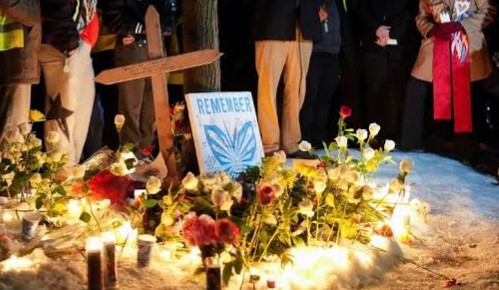
Photo credit: Lili Popper

Jeremiah proclaims a glorious future for the people of God in chapter 31. We pick up today in verse 7, where the prophet calls on the “remaining few” to sing with joy because God will save them. Speaking to those scattered during the time of exile, God declares that they will be brought back “from the ends of the earth.” For a nation living in exile, grieving all that has been lost, sorrowful over their present but seemingly unchangeable reality, the promise of God acting to redeem and restore them offered great hope.

Life will make us feel like the exiles felt. At times we will grieve – over the loss of a loved one or a career, over the ending of a relationship, over the changes caused by aging… We feel scattered and often all alone during these seasons. It is good to be reminded that God’s plan is to save us, to restore us, to redeem us, to bring healing and wholeness back to our lives.

Turning to verses 8b and 9, we see that God will bring back all of the people of God, including the blind, the disabled, the pregnant… By naming those on the margins and those who are most vulnerable, by including them specifically, God is emphasizing that “all” means ALL. This is good news for the “least of these” and it is for us when we feel this way too. Tears of joy and prayers of thanksgiving will both flow freely. God will lead them by quiet streams and on smooth paths so they don’t stumble.” God will guide the way, making the return peaceful and safe, two essentials when healing from grief and loss. God will comfort Israel as a parent comforts a child. In our seasons of need, God will bring us peace and safety, comfort and healing too. Thanks be to God!

Prayer: Lord God, we rejoice in your steadfast presence in the past, with us now, and in the future. Your love never fails. Your mercy and compassion always meet us in our times of need. Your grace brings us peace. Your strength lifts us up and guides our journey. Thank you for being with us always, especially in our times of grief and sorrow. Amen.


Leave a comment

Light and Love

Reading: John 1:1-14

John 1:5 – “The light shines in the darkness, and the darkness doesn’t extinguish the light.”

On Christmas Eve day we turn to John 1. While not a birth story in the sense of Matthew 1:18-25 or Luke 2:1-20, our reading today is very much a “birth” story – the birth of our world, the birth of light, the birth of welcome and belief, the birth of God in the flesh, the birth of glory, “full of grace and truth.” Throughout the passage, John uses the image of light again and again. This light is Jesus Christ, God in the flesh.

Each time I read and study and meditate on this passage, something new is learned, applied, realized. This is often the case when we return to a passage. God’s word is alive and active. It meets us where we are at and takes us where we need to go each time we engage a passage. Today as I read and reread these verses, this one stood out: “The light shines in the darkness, and the darkness doesn’t extinguish the light.” My first thought centered on the idea that the light enters the darkness, pushing it away, so to speak. My second thought focused on the idea that light goes as far as its power allows it to go. A small light like a candle will light up a small space. A big light like our sun will light up whole worlds. The light of Christ can make the sun seem like a candle. The light of Christ will shine everywhere and forever, if we allow it to do so.

In today’s Disciplines devotional, Rev. Dr. Dottie Escobar-Frank shared these words: “The true light shines into our hidden spaces, our dirty places, our wounded spots, and illuminates them so that healing and wholesome can be ours.” Christ’s light will shine into our souls, if we allow it in. Christ’s love will make us whole again, if we allow it in. May we say again and again, ‘Come, Lord Jesus, come.’ May it be so. Shine your light and love deep into our hearts and lives.

Prayer: Lord God, so much of who we are desires to walk always with you. This is who you created us to be. The Spirit always leads and guided us in this desire. But the darkness is ever there, too, ready to seep back in. So, Lord, we ask you to fill us with your light and love. Filled, the darkness is held at bay. Thank you, God. Amen.


Leave a comment

Jesus Offers, Invites

Reading: Matthew 11:2-6

Matthew 11:3 – “Are you the one who is to come, or should we look for another?”

By the time Matthew’s gospel reaches chapter 11, Jesus has given the Sermon on the Mount, has healed many people, has calmed a literal storm, has gathered the twelve disciples, and has begun training them to carry on his ministry of healing and wholeness. During this time, John the Baptist’s ministry has diminished and he now finds himself in prison, having angered King Herod. Searching for hope, John sends his own disciples to ask Jesus, “Are you the one who is to come, or should we look for another?” From his prison cell, it must not feel like the kingdom of God is what he’d hoped it would be.

Presenting evidence of what the kingdom of God looks like here on earth, Jesus mostly quotes from Isaiah 35 and 61, adding a few of his own words too. Jesus is reminding John of how the Old Testament prophets described the Messiah and his kingdom. Healing and wholeness, fullness of life, deep relationships and community, humble service – this is God’s plan for this created world. It is to be as Jesus taught, “on earth as it is in heaven.”

The evidence that Jesus gives are both our inheritance and our marching orders. Jesus offers to open our eyes so we can see as he sees, just as he invites us to do the same for others. He walks with us when we cannot walk alone and he asks us to do the same with one another. Jesus cleanses us of our “diseases” and he speaks truth into our hard hearts. He brings life to what was once “dead” and he restores relationships. All of these, in turn, Jesus invites us to do for the world. As we find healing and wholeness through Jesus Christ, may we work to bring these to our world in need. May it be so.

Prayer: Lord God, open our hearts and minds to receive all that you offer. Being filled with your love, guidance, presence, healing, and hope, turn us out into the world, pouring ourselves out for the healing and wholeness of all creation. Use us to manifest your kingdom here on earth. Amen.


Leave a comment

Healing and Wholeness

Reading: Isaiah 35:1-7

Isaiah 35:6 – “Then the lame will keep like a deer and the tongue of the speechless will sing.”

Isaiah 35 envisions a time when the wilderness will blossom with life. The dry and barren land will “burst into bloom” as “streams in the wilderness” bring abundant life to the wilderness. Creation itself will “rejoice with joy and singing” as God restores all the earth back to what it was like in the garden of Eden. This restoration will proceed the return of God’s children to this new promised land. Living in exile, imagine what these words of hope would mean and sound like to you. Imagine what they would feel or sound like living in Gaza or Ukraine or on one of our poorest reservations or in an inner city shelter. People in all of these places long for God’s restoration of the land and of all who dwell in it.

After creation is restored, Isaiah envisions the restoration of all of humanity. This is also a return to the way it was in the garden. The weak hands and unsteady knees will become strong. Those with disabilities will be made new and whole again. Verse 6 sums it up beautifully: “Then the lame will keep like a deer and the tongue of the speechless will sing.” Like creation, the restored humanity with celebrate with joy and singing. The trauma and suffering of exile will be no more. Pondering this day would bring great hope and longing to those in exile, in Gaza, in Ukraine, on the reservation, in the inner city…

There will be times and seasons when we find ourselves in dry and barren places or in exile. In these moments when we experience trauma and suffering, we can trust into God to bring healing and wholeness and strength to us and to our lives. This is the promise. God’s grace is here and now. Thanks be to God.

Prayer: Lord God, what hope and promise you offer through the words of Isaiah! To return to a land of abundance for all, to a place without fear or violence or greed, to a time when all people are made whole – what a day that will be. Walk with us daily, O God, guiding us to work to make this envisioned day more and more of a reality here and now. Amen.


Leave a comment

Humble Surrender

Reading: 2nd Kings 5:1-3 and 5-14c

2nd Kings 5:14b – “Now I know for certain that there’s no God anywhere on earth except in Israel.”

Photo credit: Shane Rounce

A powerful general from Aram has a skin disease. Unlike in Israel, this does not make him an outcast in his country. But this disease still creates a physical need for healing. By chance (?) an Israelite girl is a slave in Naaman’s home. She comments, ‘Only if my master could see the prophet in Samaria…’ In no time, Naaman is off to Israel’s king – letter, thank you gift, and entourage in tow. The king of Israel is powerless to heal him so he receives this visit as an attempt to pick a fight. Elisha the prophet hears of this and tells the king to send Naaman his way.

Ultimately following Elisha’s simple directions, Naaman is beyond healed. His skin was restored to the skin of his youth. Not just the bad spot was cleansed. Returning to Elisha’s house, Naaman declares, “Now I know for certain that there’s no God anywhere on earth except in Israel.” The outsider, the foreigner, is profoundly affected. Professing his faith in God alone, Naaman will bring dirt back home so that he has a place to worship God. The cleansing of his disease has begun Naaman on a path that leads to wholeness for Naaman. This is found only in a relationship with the Lord.

Wholeness comes through living daily in a right relationship with God. This week we’ve talked about one means to focus on living this way. The Examen’s steps of request, relish, review, repent, and resolve take us daily to a place of honest reflection and introspection, drawing us closer to the Lord, empowering our daily walk. This discipline is grounded in humility and surrender. Kneeling on proverbial dirt, may we worship the Lord our God each day.

Prayer: Lord God, we can struggle as Naaman did, allowing pride and status to mislead us, to keep us from a place where we open ourselves up to your healing power. Like the servant who called him to humble surrender, may we hear the voice of your Spirit calling us to this place daily. Amen.


Leave a comment

Fire and Water

Reading: Psalm 66:5-12

Psalm 66:10 and 12 – “But you, God, have tested us – you’ve refined us like silver… we’ve been through fire and water.”

In today’s verses from Psalm 66, the author invites the reader to remember how “awesome” God’s works have been. The specific event remembered is the crossing of the sea. With Pharaoh’s army in hot pursuit, God “turned the sea into dry land” so that Israel could pass through the waters. The nation rejoiced in God’s power as the water closed back in on the Egyptians, freeing Israel. The rebellious leader (and his army) that had exulted self over God was no more. Israel took this as a word of warning against exulting self over God.

The third step in the Examen is “review” – the practice of looking back over the past day. While the corporate review of a major act of God is good for Israel and for our faith, it is the daily reflection that will shape and form us more intentionally. In reviewing the past day we ask ourselves questions like these: When did my words, actions, and thoughts bring healing or hope or light into another’s life? When did my words, actions, or thoughts bring harm to another or to myself? Where was God present? When did I miss or ignore God’s presence? How was I blessed? When did I bless others? When and how did I sin or otherwise fall short?

While the psalmist first celebrates God’s saving acts (relish), the second part of our reading reveals thoughts on these kinds of “review” questions. In verses 10 and 12 we read, “But you, God, have tested us – you’ve refined us like silver… we’ve been through fire and water.” The movement of review reminds us of the waters and fires of our previous day. Both the blessings and the struggles have things to teach us – most profoundly when we are very intentional in our time of reflection. May it be so for us each day as we practice this deep spiritual discipline.

Prayer: Lord God, be with us in Spirit as we pause to reflect on our past day. Help us to be honest – both with the good and with the bad of the day. Guide us to be truthful with ourselves and with you. Lead us to see where change and faith can be applied in order to deepen our walk with you and with one another. Amen.


Leave a comment

Finding Hope and Strength

Reading: Psalm 137

Psalm 137:5 – “Jerusalem! If I forget you, let my strong hand wither!”

Photo credit: Wylly Suhendra

Psalm 137 wrestles with holding onto faith during a time of deep grief. This is a struggle we’ve all faced or will face at some point in life. The emotions of the Psalm are real and honest, especially in verses 7-9. If grief we feel these emotions too, but usually choose not to give them voice. The psalmist and fellow Israelites find themselves in Babylonian exile, grieving alongside a river. They have put away their musical instruments, thinking, who could sing at a time like this? In grief we too can set aside certain practices or activities that we used to do with the departed loved one. It feels too painful for these things in the midst of grief. The departed loved one for Israel is God, personified in Jerusalem. While God is still present, it doesn’t feel like it for Israel. When their “tormentors” mockingly call for a song, the Israelites wonder, “How could we sing a joyful song at a time like this?!”

Yet there is something in the psalmist that knows they must maintain a connection with God. In verse 5 we read, “Jerusalem! If I forget you, let my strong hand wither!” Verse 6 offers a similar pledge. For the psalmist, hard as it might be, music is a way to remember and to honor and to be connected to God. Music brings the Israelites into the presence of God and it brings them into community. In times of grief, we often just want to be alone. It feels like that would just be easier. Frankly, it is. But healing comes most often in community, in being with others, in being reminded of God’s presence with us. Here one finds the beginnings of those seeds of hope and the strength to ponder next steps. In their grief, with the gifts of hope and strength, the Israelites began to step forward in faith. May it be so for you and for me in our times of grief.

Prayer: Lord God, sometimes life is hard and it rains down grief, feelings of disorientation, moments of withdrawal. When this happens to those we know, send us into their lives, being your light and love, your hope and strength. And when we find ourselves in this hard place, guide us into community – with you and with our brothers and sisters in Christ. Amen.


Leave a comment

Lean In, Trust

Reading: Psalm 79:1-5

Psalm 79:5 – “How long will you rage, Lord? Forever? How long will your anger burn like fire?”

Today the psalmist asks a question we all ask: How long? In almost every difficult situation that we face and endure, we come to this question. Whether referring to the waves of grief that don’t relent or to the job search that won’t resolve itself or to the bullying that your child faces day after day or to the violence and destruction that the psalmist faces, in times of trial or pain or suffering or grief, we ask God: How long?

While we do not ever receive a specific time and date from God that tells us when relief or resolution will occur, we can have a hand in how we walk in and through these dark valleys. We can choose to shout “How long?” with a clenched fist raised against God. Or we can choose to whisper “How long?” with hands open to receive from God. The psalmist models the second option. For us, we must begin where the psalmist began, naming the situation. In this case, the writer names what it looks and feels like in the aftermath of the Babylonians destroying Jerusalem and the temple. The physical scene is horrific. To look at it and to name it begins to move one past the “Is this real?” stage. While painful, acceptance is an important step in our healing process.

The psalmist is also open and vulnerable with his emotions. From his perspective, all has been done to God’s city, to God’s temple, to God’s people. This goes against previous religious understandings and creates disorientation, forcing a new understanding of God and the world. Adding to the trauma is the ridicule coming from pagan neighbors. At times of grief or suffering or pain perhaps you or someone you know has heard, “If you just did (or didn’t)…” These words sting – as if you would have chosen this terrible outcome.

Laying it all on the table before the Lord and others we love and trust is an act of surrender, a practice in humility. Even as the psalmist asks “How long?” there is a leaning into God’s presence, a trust in God to act and move even in this place of death, loss, suffering… In our times of deep need, may we too be open and vulnerable and honest with God and with those close to us. May our hands be open to receive.

Prayer: Lord God, these initial steps can be so hard. We’d rather close our eyes and withdraw. When this is our first step, Lord, help us to feel your hand reaching out, to sense your Spirit surrounding us. Walk with us in love and grace. Amen.


Leave a comment

Building the Kingdom

Reading: Matthew 12:24-30

Matthew 12:25 – “Every kingdom involved in civil war will become a wasteland. Every city or house torn apart by divisions will collapse.”

We begin a week focusing on unity, peace, and love with a passage from Matthew 12. The Pharisees and Jesus often had interactions that highlight the differences between faith in Jesus and the religion of Judaism. The point of contention in today’s reading centers around the casting out of demons.

After healing a demon-possessed man, some people are beginning to ask of Jesus, “This man couldn’t be the Son of David, could he?” The Pharisees do not think Jesus is the Messiah, so they seek to offer an alternate explanation for the healing of the man. The Pharisees declare that Jesus can cast our demons because he is in cahoots with Satan. In response to this claim, Jesus counters with: “Every kingdom involved in civil war will become a wasteland. Every city or house torn apart by divisions will collapse.”

Unfortunately we have seen this happen again and again in kingdoms, cities, homes, and even in the church. Civil strife, personal conflict, selfish ambitions – they all lead to and very often end in disunity, division, collapse. Satan is almost always the author of this. What Jesus is doing is just the opposite. By the power of God’s spirit, Jesus heals, bringing reunification, belonging, wholeness. With the same power of the Holy Spirit we can counter disunity and division.

Jesus offers a summary statement in verse 30: “Whoever isn’t with me is against me, and whoever doesn’t gather scatters.” When we speak words of peace and love that lead to unity, we are gathering with Jesus. When we work to end strife, conflict, and other sins that lead to division, then we are working with Jesus, seeking to build the kingdom of God. May it be so.

Prayer: Lord God, where there is division, use us to bring unity. Where there is conflict, use us to bring peace. Where there is hatred, use us to spread love. Where there is separation, use us to build a bridge. In all ways, use us to bring the kingdom of heaven to earth. Amen.


Leave a comment

Contagious

Reading: 2nd Corinthians 7:5-7

2nd Corinthians 7:6 – “God comforts people who are discouraged, and he comforted us by Titus’ arrival.”

Photo credit: Uta Scholl

As Paul and his companions arrive in Macedonia there is no rest for the weary. There are problems – “external conflict… internal fears.” For Paul and his coworkers these trials and hardships could be barriers to ministry. But God has other plans. In verse 6 we read, “God comforts people who are discouraged, and he comforted us by Titus’ arrival.” At just the needed time, God sends Titus, bringing along the encouragement that he has received himself in Corinth. In turn, Titus encourages Paul and others there in Macedonia.

When one lives out their faith it often inspires others to live out their faith too. This isn’t just true for comfort. It also works this way with peace, joy, trust, generosity, assurance, grace, humility, mercy, contentment, forgiveness… The practices of our faith are contagious!

Titus also brings a personal message for Paul. The church in Corinth longs to see Paul. They want an opportunity to express their regret for what happened during his last visit. On that second visit Paul was deeply hurt. The church has dealt with this person but still wants to apologize and receive forgiveness face to face. This news brings Paul much happiness. To mend a relationship, to offer care and concern, to restore what was broken, these things bring us much joy and happiness too.

Where do we need to bring comfort through our words of reconciliation and grace? Where do we need to respond to the brokenness in our lives or in the world?

Prayer: Lord God, guide our lives, leading us to be people who live out a contagious faith. May the light and love of Christ in our hearts be cast wide in the world, bringing healing and wholeness to our relationships and to other’s lives. Amen.