pastorjohnb

Thoughts and musings on faith and our mighty God!


Leave a comment

Praise Be to God!

Reading: Psalm 148

Psalm 148:13 – “Let all of these praise the Lord’s name, because only God’s name is high over all.”

Psalm 148 is a song of praise to God. The word “praise” appears 11 times in these 14 verses. This call to praise goes out to all parts of our world. In verses 1-6 the psalmist invites the heavens to praise God. The sun, moon, and stars are called to praise God because they were each created at God’s command, set in place “always and forever.”

Verses 7-10 call on the created world to praise God. From sea monsters to hail and snow, to mountains and hills, to animals wild and tame – all are invited to praise the Lord. These too are the work of God’s hands. We are the focus of verses 11-12. The psalmist calls “every single person,” whether young or old, to praise God. We too are the beloved work of God’s powerful and mighty hands. Like the stars and the trees, we would not exist if not for God forming each of us in the womb.

Psalm 148 closes with a universal plea: “Let all of these praise the Lord’s name, because only God’s name is high over all.” Our creator is reigning on high. God’s majesty is over all the earth! For all that we are and for the one who formed us and walks with us today, we shout with all of creation, thanks be to God!

Prayer: Lord God, thank you for your creative power and work that is evidenced by all of creation. Looking within and without we can see your fingerprints on all things. That divine touch continues to shape and form us, to lead and guide us. Thank you, Lord. Amen.

Leave a comment

Jesus Calls

Reading: Luke 19:1-10

Luke 19:10 – “The Human One came to seek and save the lost.”

Today we read the story of Zaccheaus, the height-challenged tax collector. In addition to being looked down upon physically, he was also looked down upon socially and religiously. Zaccheaus worked for the occupying force, collecting taxes to fund their empire. As the story goes, one day Jesus is passing through Jericho. Zaccheaus wants to see this Jesus, just to watch him pass by. He climbs a tree to do so.

When Jesus gets to the place in the road by the tree, he stops and engages the one whom everyone else avoids. Then, to the great dismay of the crowd, Jesus invites himself into the home of Zaccheaus. I wonder, where could I go, where could you go, that would upset our good, upright friends and family?

Zaccheaus is moved, both physically and spiritually. He climbs down out of that tree, leaving the safe place, up high and at a distance. He is also moved in his heart. All it took was Jesus stopping and engaging him, inviting him to begin a relationship. Zaccheaus commits to becoming a generous giver and a righter of wrongs. He will use some of his wealth to do good, to love his neighbors in need. Zaccheaus will also use some of his wealth to correct wrongs, repaying those he held power over and cheated as a tax collector.

Jesus continues to call people out of their safe, far off places. He continues to change hearts, once people draw near. You and I are living examples of this. We are living proof of verse 10: “The Human One came to seek and save the lost.”

Prayer: Lord God, we are grateful for our rescue. Thank you for calling us near, for changing our hearts, for empowering us to be people of generosity and reconciliation. Use us today to model these things when called upon. Guide us to live out our faith in ways that lead others to hear your call. Amen.


Leave a comment

Willing to Risk

Reading – 1st Kings 18:1-15

1st Kings 18:15 – “As surely as the Lord of heavenly forces lives, the one I serve, I will appear before Ahab today.”

Today we begin thr story of Elijah versus the prophets of Baal. It was three years ago that Elijah said to Ahab, “There will be neither dew or rain unless I say so” (1st Kings 17:1.) Elijah then fled for fear of his life. Ahab was a wicked king. He worshiped Baal and did great evil in Israel. As the drought worsened, Ahab searched and searched for Elijah. But God kept Elijah safe during this time.

At the start of chapter 18 God summons Elijah to go to Ahab. As evidence of the severity of the drought, Ahab and Obadiah are out looking for water. During this search, Obadiah and Elijah meet. Obadiah is a faithful but secret follower of God. He has hidden and cared for 100 prophets of God, keeping them safe from Jezebel, Ahab’s wife. Imagine how hard this must have been during a severe drought. And how risky!

Elijah asks Obadiah to tell Ahab that the prophet is here to meet Ahab. This thought strikes fear into Obadiah. He has two fears. First, Ahab will kill him at the mention of Elijah’s name. Second, God will once again whisk Elijah away, resulting in Obadiah’s death. But Elijah says to him, “As surely as the Lord of heavenly forces lives, the one I serve, I will appear before Ahab today.” Obadiah has Elijah’s word but still must decide what to do. More on that tomorrow.

When we are in a similar situation, asked to invite an evil and cruel person to a faith encounter, are we willing to risk their reaction? Are we will to risk self so that another might experience the power of God?

Prayer: Lord God, in our world we do not have to look far to find people who are opposed to you and to our faith in you. When your Spirit moves us to invite them to church or to an event, when your Spirit nudges us to share a word of hope or encouragement from your Word, when the Spirit invites us to love on them in your name – give us courage, fill us with strength, empower us to live out our faith boldly. Amen.


Leave a comment

How Majestic!

Reading: Psalm 8

Psalm 8:1 – “Lord, our Lord, how majestic is your name throughout the earth!”

Photo credit: Greg Rakozy

Psalm 8 begins and ends with the same words, praising God for who and what God is. The words in between celebrate the creation and humanity’s place within the world God created.

The psalmist looks up at the skies and is awed. The work of God’s “fingers” is vast and powerful and amazing. We’ve had these feelings and responses when we’ve looked up at the stars. The Psalm then pivots to humanity. The psalmist muses about God even paying attention to something so relatively small. We’ve also each felt our own smallness as we have stared heavenward.

In verse 5 the psalmist acknowledges that God has made humanity “only slightly less than divine.” Of all creation, only humanity is created in the image of God. Accordingly humanity has been charged with ruling over God’s “handiwork.” All has been put “under their feet.” It would be easy to read these words and to find justification for devouring the planet and its resources, eating our fill of the earth’s “fruit.” When thus tempted, may we be reminded of our smallness and of the earth being God’s handiwork. These reminders keep us humble and invite us to care for our world as God would care for our world. May it all be so.

Prayer: Lord God, yes, Lord, how majestic is your name and your creation. From the skies to a baby’s cry, your handiwork calls for praise and adoration. Lead and guide us to care for this world as acts of praise and adoration, bringing you all the glory. Amen.


Leave a comment

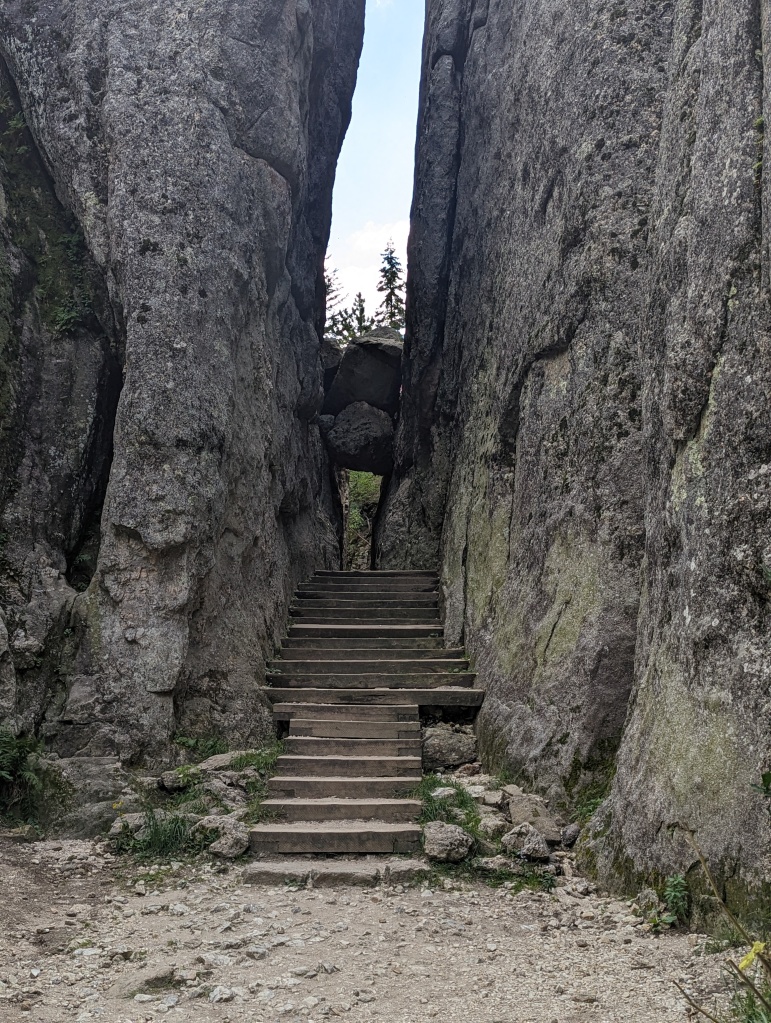
Narrow and High

Reading: Luke 13-14

Luke 13:24 – “Make every effort to enter through the narrow gate. Many, I tell you, will try to enter and won’t be able to.”

Today we largely center on Jesus’ call to “change your hearts and lives.” He begins by describing God’s patience. An owner wants to cut down an unproductive fig tree. The gardener asks for one more year – to tend to and fertilize the tree. The tree might produce fruit the next year. Faith is like a mustard seed or some yeast. It grows or spreads almost without notice. Patience is required. Yet the walk of faith is not easy or for the half-hearted. In 13:24 Jesus says, “Make every effort to enter through the narrow gate. Many, I tell you, will try to enter and won’t be able to.” Then, in 14:33, he adds, “None of you who are unwilling to give up all your possessions can be my disciple.” The gate is narrow because the requirement is hard. God must be #1 in all aspects of our life.

Twice Jesus demonstrates that love and compassion trump the rules established by man. He heals two people in the Sabbath. We too will be asked to disregard man-made rules or expectations at times if we are to keep God #1 in our life. This “cost” – like the tower project – is necessary to keep in mind as one chooses Jesus as Lord and Savior and as one continues to walk as his disciple.

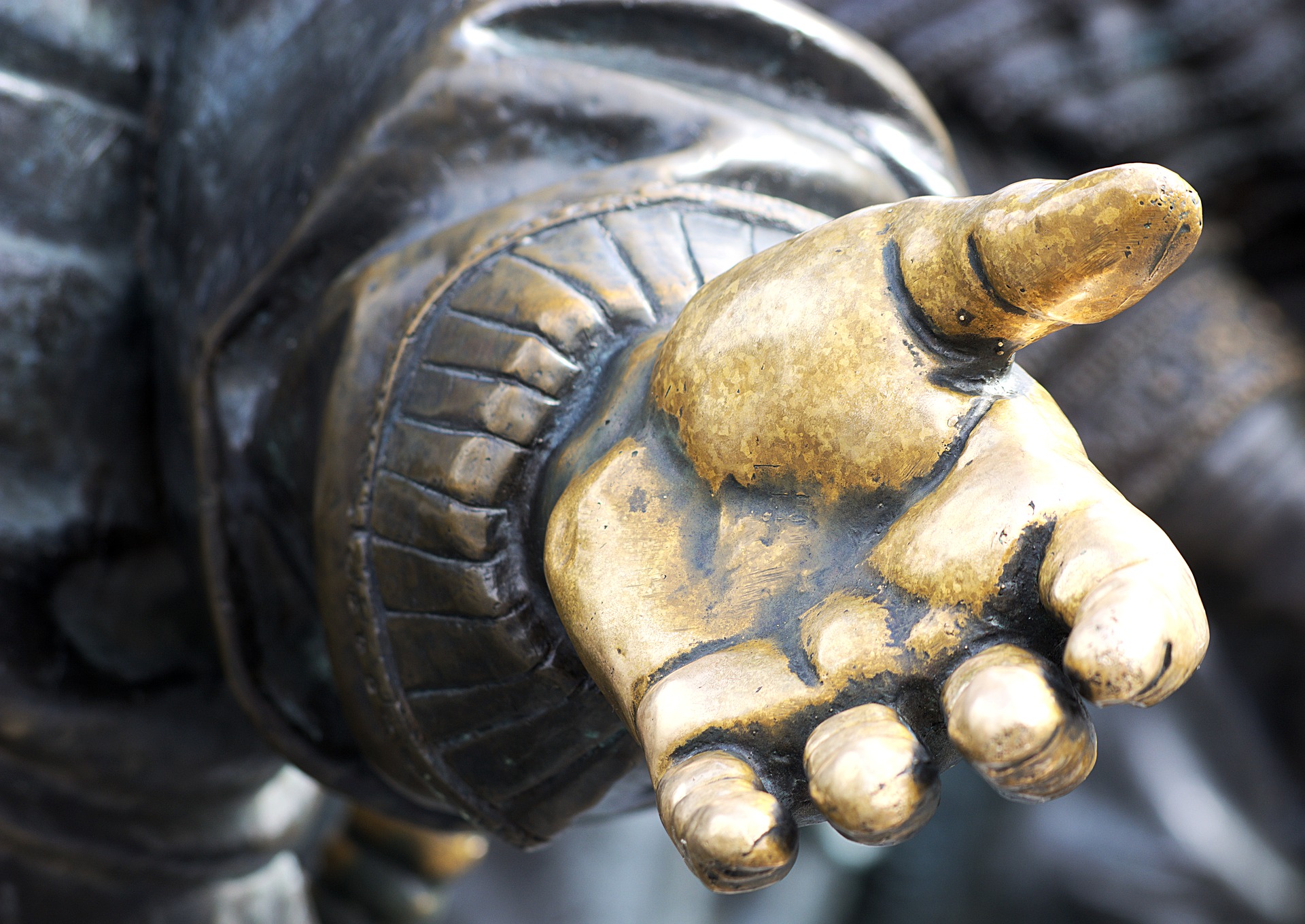
Jesus drills down on the superficial “faith” of the religious leaders. They jostle for the best seats at the table. Jesus preaches humility. They invite people just like themselves to their own parties. Jesus preaches inviting the lost and broken. Jesus laments over those who refuse to come to him. The hand, the invitation, it is always open, always extended. Until the door is closed. At that point our fate is decided.

Yes, the road is narrow and the expectation or requirement is high. For those who carry their cross daily, keeping God as their only priority, “Happy are those who will feast in God’s kingdom.” This is true now and in the kingdom to come. May it all be so for you and for me.

Prayer: Lord God, what do you require of us? It’s simple: keep you as the only occupant of the throne of our hearts. It’s also very difficult: keep you as the only occupant of the throne of our hearts. Lord, guide and encourage us daily as we seek to walk “the narrow way.” It is only possible with your presence. Amen.


Leave a comment

Go and Make Disciples

Reading: Matthew 27-28

Matthew 28:7 – “Now hurry, go and tell his disciples, ‘He’s been raised from the dead. He’s going on ahead of you to Galilee. You will see him there.’”

Jesus is brought before Pilate, the Roman governor. Seeing what’s happening, Judas is filled with regret. He returns the silver pieces and takes his own life. The silver is used to buy a field to bury strangers. Pilate asks Jesus if he is king of the Jews. Jesus does not respond to Pilate or defend himself. Because of his wife’s dream, Pilate tried to free Jesus. But the religious leaders invited the crowd. They call for Barabbas’ release and for Jesus’ crucifixion.

The Romans soldiers mock and abuse Jesus. On the way to Golgatha, Simon from Cyrene helps carry the cross. Jesus is crucified and his clothes are divided by casting lots. A sign above Jesus’ head reads, “Here is Jesus, king of the Jews.” The religious leaders, those passing by, and the criminals in Jesus’ left and right all mock and make fun of him. A handful of faithful women watch it all from a distance.

At noon it grows dark. Jesus shouts aloud at three, asking why God has left him. Then he shouts and dies. The inner curtain of the temple is torn in two. The earth shakes. A centurion declares, “This was certainly God’s son.”

Joseph of Arimathea asks for, received, wraps, and places Jesus’ body in his own new tomb. Mary Magdalene and the other Mary watch. A guard is set to prevent the theft of Jesus’ body. Early the next day Mary and Mary return to the tomb. An angel has removed the stone. He announces the resurrection and gives the women instructions, saying, “Now hurry, go and tell his disciples, ‘He’s been raised from the dead. He’s going on ahead of you to Galilee. You will see him there.’” The religious leaders fabricate one more lie, offering one more feeble attempt to control God’s narrative. The disciples do meet Jesus in Galilee. He commissions them, saying, “Go and make disciples of all nations, baptizing them in the name of the Father and of the Son and of the Holy Spirit, teaching them to obey everything that I’ve commanded you.” The mission continues. May it be so with us.

Prayer: Lord God, so much drives these events – fear, jealousy, deceit, betrayal, manipulation, insecurity. And then there is Jesus: obedient, faithful, courageous, humble. He remains above the house and the evil around him. In the end there is victory over evil and over death. The mission is given and it continues. Guide and strengthen us, O God, to walk as Jesus walked, carrying the good news to the ends of the earth. Amen.


Leave a comment

The Banquet

Reading: Matthew 22-23

Matthew 22:21 – “Give to Caesar what belongs to Caesar and to God what belongs to God.”

Chapter 22 begins with a parable about God’s kingdom. The scene is a wedding party for the king’s son. Proper guests are first invited. But they refuse to come. Then all people are invited – the good and the bad. The banquet hall is filled. But one enters who isn’t prepared to be there. He is removed and thrown into the deepest darkness. Those who were invited first represent the religious leaders and all Jews who refused to accept God’s son as Lord and Savior. The man represents those who say they follow Jesus but really live for self.

Jesus is asked about paying taxes. After examining the coin he declares, “Give to Caesar what belongs to Caesar and to God what belongs to God.” We are to be good and responsible citizens and faithful followers of God. Jesus clarifies the order when asked about the greatest commandment. First, we are to love God with all that we are. The second is to love neighbor as self. We are to first be faithful followers of God and then to be good and responsible neighbors.

In chapter 23 Jesus condemns the hypocritical ways of the legal experts and the Pharisees. They pile Law upon Law, rule upon rule, on the people but don’t lift a finger to help them in their walk of faith. By contrast, we recall Jesus’ yoke is easy and the burden light. The legal experts and Pharisees love to be seen and noticed. But the “greatest among you” will become the servant. They give a tenth of their spices but ignore justice, peace, and faith. They look great and righteous on the outside but are “full of pretense and rebellion” in their hearts. They refuse to come to the wedding banquet.

There is lament to close out today’s reading. Just as their ancestors abused and killed the prophets, so too will they abuse and kill Jesus, the disciples, the apostles… Jesus longs to gather Jerusalem as a “hen gathers her chicks.” They refuse. They too will not enter the wedding banquet.

Prayer: Lord God, as we read these words today we reflect now on the condition of our hearts. Do we love you with all our being? Is this reflected in how we love neighbor, in how we practice justice, peace, and mercy? Have we truly become part of your kingdom? Or do we just have one foot inside the banquet hall? Lord, help us all. Amen.


Leave a comment

Are Any Unworthy?

Reading: Jonah 3-4

Jonah 3:5 – “They proclaimed a fast and put on mourning clothes, from the greatest of them to the least significant.”

Photo credit: Clay Banks

God tells Jonah a second time, “Go to Nineveh.” Deposited on the nearby shore, he gets up and goes. Jonah proclaims, “Just forty days and Nineveh will be overthrow.” This simple warning moves people’s hearts. Here is their response: “They proclaimed a fast and put on mourning clothes, from the greatest of them to the least significant.” This is step one towards a repentant heart. Words get to the king and he proclaims the next steps: call on God, change your ways. When conviction came upon their hearts, all of Nineveh responded immediately. Conviction can come quickly up on our hearts too.

God sees their changed hearts and decides not to destroy Nineveh. Jonah is deeply angered, thinking this “utterly wrong.” He says this is why he ran. Jonah recognizes God as “merciful… compassionate… very patient, full of love, and willing not to destroy.” Jonah would rather die than see God save his enemy. He exits the city and plops down to see what happens, ignoring God’s question: “Is your anger a good thing?” God sends Jonah some shade. He is very happy about this mercy. Then God takes away his shade, provoking his anger and renewing his wish to die. Again God asks him, “Is your anger… a good thing?” Jonah believes it is good – “even to the point of death.”

God invites Jonah to consider God’s mercy, compassion… Jonah was grateful for the mercy that came in the shade. God asks, “Can’t I pity Nineveh?” They are a people that don’t really know any better. The story ends here, inviting us to consider ways that we want to limit God’s mercy, grace, compassion, forgiveness… Jonah’s hard heart calls us to reflect upon the condition of our own heart, especially as it regards to those who we might feel utterly unworthy of God’s (and our) forgiveness and grace.

Prayer: Lord God, the story ends in an uncomfortable place for Jonah and for us. Your love, mercy, grace, and forgiveness for the repentant is amazing. We can be less free with these things at certain times, with certain people. Lord, open our hearts to the vastness of your love and mercy and grace. It truly is for all people. Amen.


Leave a comment

Truth and Contentment

Reading: Proverbs 30

‭Proverbs 30:5 – “All God’s words are tried and true; a shield for those who take refuge in him.”

Today’s words of wisdom come from Agur, an otherwise unknown man. He was likely not an Israelite. Massa is connected to Assyria. In the first few verses he admits that he had no knowledge of God. He was tired and exhausted. Questions about creation drew him towards God. Finding God, he can now declare, “All God’s words are tried and true; a shield for those who take refuge in him.” Agur recognizes God’s power and might. This is a first step in gaining wisdom and understanding.

Agur has two requests of God. First, may he be a man of truth. He asks God to keep fraud and lies far away. Second, he seeks contentment. He doesn’t want to be rich or poor. “Give me just the food I need.” We reflect this idea in the Lord’s Prayer: “Give us this day our daily bread.” Truth and contentment are two core pieces of our faith.

This is then contrasted with foolish behavior. Fools curse mother and father, they are arrogant and greedy – ready to devour the poor and needy. Agur then writes of power that are never satisfied, perhaps analogies for the greed and lust of the fool. The grave and the barren womb always long to be filled. The desert and fire consumes all before them. In the next verses he recognizes things large and small that amaze him. He finds pleasure in God’s creation. Is this not an extension of truth and contentment?

Agur closes by calling out to the foolish and arrogant. He invites them to cover their mouths, ceasing their evil words and behaviors. May we too guard our words, offering good words, silencing the evil.

Prayer: Lord God, open our eyes to your presence and guidance in our lives. Bring for a contentment in you and a trust in your word. Fill our hearts and mouths with your truths. Lead us to walk in the way that leads to life eternal. Amen.


Leave a comment

Heirs in Christ

Reading: Galatians 4:4-7

Verse 7: “So you are no longer a slave, but God’s child; and since you are God’s child, God has made you also an heir.”

Paul connects into the story of Christmas as he writes, “When the time had fully come, God sent his Son.” When God’s timing said that now is the time, Jesus entered into the world. Paul reminds his audience that Jesus was born a Jew – “born under law” – who came to redeem his fellow Jews. I wonder if when Paul penned verses like these, if he thought of his former life as Saul and rejoiced in the redeeming work that Jesus had done in his own life. Paul writes of that which he knows firsthand.

Paul notes that when we are redeemed we “receive adoption to sonship.” This leads to each of us receiving the indwelling presence of the Holy Spirit, which reminds us again and again of our family connection to God the Father. Another ‘right’ comes in verse 7: “So you are no longer a slave, but God’s child; and since you are God’s child, God has made you also an heir.” Through our redemption we become brothers and sisters in Christ, heirs with and in Christ. To be a brother or sister is to be a part of the family. But to be an heir – what does that mean?

To be an heir means we receive an inheritance. Parts of our inheritance are things like salvation and eternal life. Parts are the peace, love, hope, joy, grace… that we receive and live in every day. And… we also inherit the living example of Jesus Christ. This part of our inheritance calls us to expand the family – to “make disciples of all peoples” is how Jesus put it. We are called to live as Jesus lived, bringing light and love into the world. We are called to do as Jesus did, standing with and caring for the hurting, the suffering, the outcasts. Living in these ways of Jesus, our lives will invite others to seek to be a part of this wonderful family of God. May it be so.

Prayer: Lord God, we rejoice over being a part of your family. We celebrate and offer thanksgiving for all that this means in our lives. Let us not be content here, Lord. Guide us out into the world, living as Christ’s brothers and sisters, so that others can be welcomed home. Amen.