pastorjohnb

Thoughts and musings on faith and our mighty God!


Leave a comment

Rule with Justice and Righteousness

Reading: Isaiah 13-16

‭Isaiah 14:1 – “The LORD will have compassion on Jacob, will again choose Israel, and will give them rest in their own land.”

Our readings for today and tomorrow contain mostly oracles against the nations surrounding or occupying Judah/Israel. We do find hope sprinkled in these verses too. For example, tucked in the middle of the oracle against Babylon and her king, we find: “The LORD will have compassion on Jacob, will again choose Israel, and will give them rest in their own land.”

Chapters 13-14 detail the fall of Babylon. Isaiah makes it clear that God is “mustering an army for battle.” God will raise up the Medes to make Babylon like “Sodom and Gomorrah.” A restored Israel will then taunt the broken king of Babylon. The underworld will wait restlessly for this king. His final rest will be on “a bed of maggots” under a “blanket of worms.” His arrogance and pride will be laid low. God will also cut off all of his offspring too.

Before an oracle against Philistia, we read, “I will break Assyria in my land… and remove its yoke from my people.” The Philistines are not so blessed. They rebelled against Assyria, yes, but a new viper will come from the north.

Chapters 15-16 hold an oracle against Moab. They will be devastated and humiliated. In verse 2 we read, “Every head is shaved, every beard cut off.” The waters will be full of blood. In three years Moab’s remnant will be “few and feeble.” Amidst this sadness and loss we also find hope, mercy, compassion. Isaiah’s heart “cries out for Moab.” God invites Judah to “consider carefully, act justly.” Judah is told to hide the outcasts and fugitives. Isaiah also speaks of the time when the oppressor is gone, of a time when one will rule with justice and righteousness from the throne of David. This too is our ultimate hope. Thanks be to God.

Prayer: Lord God, you continue to oppose leaders and nations that bring evil and oppression upon this world. You oppose us when we do the same. Instead, Lord, use us to create the kingdom of justice and righteousness that Isaiah spoke of today. Then you will be with us, walking amongst us in Spirit and power. Amen.


Leave a comment

On That Day…

Reading: Isaiah 8-11

‭Isaiah 11:10 – “On that day, the root of Jesse will stand as a signal to the peoples. The nations will seek him out, and his dwelling will be glorious.”

Photo credit: Nathan Dumlao

Chapter 8 begins with a prophecy about the downfall of Aram and Israel. It will come before Isaiah’s newborn son can speak. Assyria is on the rise. They will destroy Aram and Israel. They will sweep into Judah, getting all the way to Jerusalem. But they won’t conquer it. God tells Isaiah not to fear. Wait on the Lord. Yes, distress will come, but God is with us. The people will rejoice as God shatters the yoke, lifting their burden. And one day a great light will come. A child will be born. He will establish justice and righteousness forever. One day…

The Assyrians fall mightily upon Israel. This is meant to be a word of warning to Judah. To those who have deprived the needy of their rights and who have robbed the poor, God asks, “Where will you stash your wealth?” One day they too will become prisoners. But at present, it is Assyria who went too far. Because of the king’s pride and arrogance the word of warning became an assault on Judah. The Assyrians swept in, right up to Jerusalem, “the neck.” God will punish the Assyrians. God asks, “Will the ax glorify itself over the one who chops with it?” The hand guiding Assyria’s success will turn on it. The Assyrians army is destroyed with “terrible power.” They limp home, thoroughly defeated.

Chapter 11 brings more words of hope. It is similar to 9:2-7. While Isaiah and later readers hoped for a David-like king in their time, for centuries Christians have read these words as words that foretold Jesus. A shoot, a king, will come from Jesse’s line. The Spirit of God will be upon him. The Spirit will give him wisdom, strength, knowledge, and a fear of the Lord. He will be a champion for the poor and the suffering. What a contrast to the leaders described at the start of chapter 10! Peace and harmony will abound. The nations and the survivors will stream to this king on the holy mountain. “On that day, the root of Jesse will stand as a signal to the peoples. The nations will seek him out, and his dwelling will be glorious.” Thanks be to God.

Prayer: Lord God, thank you for continuing to shape and form us to be your people, to make us into who you created us to be. As you choose to use the powers and things of this world to refine and remake us, help us to see your hand of love guiding it all. Lead us to trust in your ways. Help us to faithfully walk the path illuminated by the light shining in the darkness. Amen.


Leave a comment

The Path of God and Salvation

Readings: Psalms 50-53

‭Psalm 50:3 – “Our God is coming; he won’t keep quiet. A devouring fire is before him.”

Today’s first two Psalms focus on divine judgment and forgiveness. The second two focus on wickedness and unbelief. Asaph begins with God’s voice and presence. He warns: “Our God is coming; he won’t keep quiet. A devouring fire is before him.” The fire devours evil and it devours the sin in our lives. In Israel’s life one sin is going through the motions. God desires that their sacrifices come from the heart, not from the routine. The Psalm closes by addressing the behavior of the wicked. They hate both discipline and God’s word. They are given a choice: choose the correct path of God’s salvation or “I’ll rip you to pieces.” This is their choice. We too face this choice: life or death?

David chooses the path of salvation in Psalm 51. He has walked about as far from God as one can: lust, adultery, murder. In the opening verses he begs for God to wash him of his sin. He admits his guilt and asks God to purify him, to allow him to “hear joy and celebration again.” David asks God to “create a clean heart… a faithful spirit” within him. From this place of brokenness and contrition David will once again praise the Lord. It is a good and honest and right place to go. It is part of choosing the path of salvation.

Psalms 52 and 53 paint evil for what it is: bragging, deceptive, destructive, corrupt, selfish. It comes from both the words of the tongue and from the deeds of the hands. Evil words and deeds result in shame and in being uprooted by God. This sounds bad. Really bad. Yet at times we do make the choice to sin. When we do, may we remember David’s acts of confession and repentance and may we offer his words of prayer: “wash me… whiter than snow.” Then God’s love and mercy will purify us once again. May it be so.

Prayer: Lord God, the right path is clear. The poor choices are obvious. Yet we stray and sin and fall. Lord, remember your great love, that which is far greater than our sin. Restore us as we confess and repent. Consume the sin in our hearts, leaving us with clean hearts and hands. Amen.


Leave a comment

Judge, Rescuer, Creator

Readings: Psalms 5-8

‭Psalm 7:8 – “The LORD will judge the peoples. Establish justice for me, LORD, according to my righteousness and according to my integrity.”

Photo credit: Michael Michelovski

Psalms 5-7 are Psalms of lament and sorrow. All three cry out to God, lifting cries for rescue, protection, deliverance – all from those who do evil, whether it is those in the world or if the evil is within us. The psalmist(s) cry out, “Hear my words, Lord!”… “Have mercy on me, Lord” … “Get up, Lord; get angry!” There is an urgency and there is a trust that God will act. This trust is built on God’s “abundant, faithful love” and on a God who is “a righteous judge.” In the end, there is a belief that our good, loving, just God will surely triumph over evil.

These Psalms also express a sure need for God. In Psalm 5: “Make your way clear, right in front of me.” We need guidance. In Psalm 6: “Come back to me, Lord! Deliver me.” We need God’s presence and God’s rescue. In Psalm 7: “Save me from all who chase me!” We need God’s deliverance. Each Psalm acknowledges that there is evil in the world that we cannot overcome on our own. We saw this in Job’s story. In 7:8 the psalmist writes: “The LORD will judge the peoples. Establish justice for me, LORD, according to my righteousness and according to my integrity.” Job could’ve spoken these words. We would like to be able to speak these words.

There is a strong shift as we turn to Psalm 8. It is a Psalm of Praise sprinkled in amongst the laments. It is needed after Psalms 5-7. The Psalm opens and closes by acknowledging the majesty of God. This is noticed in the night sky – the works of God’s fingers. The vastness and majesty of the stars and moon is initially contrasted with the smallness of humanity. The author asks, “What are human beings that you pay attention to them?” Well, they are divinely made in God’s image and they are tasking with caring well for God’s creation. Both of these are awesome responsibilities. In these roles may we strive to reflect God’s spirit, intention, and purpose in creation, shining brightly for all to see.

Prayer: Lord God, today we hear the cries of the psalmist(s) for your presence, for your justice, for your righteousness, for your power and might. When we are in need, remind us of these words and of the trust and faith contained in them. And, Lord, when we have the opportunity to care well for one another and for all other parts of your creation, may your generous love guide us. Amen.


Leave a comment

Joy and Sorrow

Readings: Ezra 1, Ezra 2, Ezra 3

Ezra 1:3 – “If there are any of you who are from his people, may their God be with them! They may go up to Jerusalem… and build the house of the LORD.”

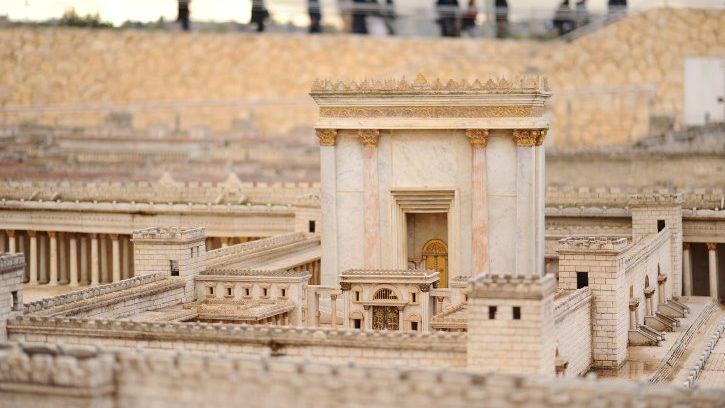
Ezra continues the story of the chronicler. It might even be the same author. The start of Ezra 1 mirrors the end of 2nd Chronicles 36. King Cyrus of Persia issues a proclamation. God tells Cyrus to build a house for God in Jerusalem. In response he proclaims: “If there are any of you who are from his people, may their God be with them! They may go up to Jerusalem… and build the house of the LORD.” Cyrus also calls for support from those who do not go and he sends along the temple items that Nebuchadnezzar had looted. The ending of the exile and the proclamation to build the temple fulfill Jeremiah’s prophecy.

Chapter 2 contains the list of those “whose spirit God stirred up” to go home to rebuild the temple. Almost 50,000 make the journey. This is the total for phase one – the rebuilding of God’s house. This is but a small piece of the multitude sent into exile. The first step is to settle in, to become inhabitants in the land. After seven months the returnees gather in Jerusalem. Jeshua and Zerubbabel rebuild the altar together. The head priest and the political leader work together. Entirely burned offerings are given. They celebrate the Festival of Booths – a reminder of God’s provision when Israel lived in tents (or booths) during their time in the wilderness. From this point on, the daily offerings required by the law of Moses will be given.

The work is organized and construction begins. Cedarwood is contracted for. In the second month of year two, workers begin to lay the temple’s foundation. Upon its completion, there is a great celebration. There is great joy amongst the priests and the people. But mixed in is great weeping. The oldest remember the first temple. There is a grief in this. The old and the new intersect in this moment of joy and of sorrow. God is present in both.

Prayer: Lord God, the rebuilding of your people has begun. You use an earthly power to fulfill your prophet’s words. Your presence moves some people to action. A new thing is being done both physically and spiritually. O Lord, continue to be at work in us, repairing what has been broken, shaping and forming us into your people too. Amen.


Leave a comment

A Powerful Spirit

Readings: 1st Kings 1, 1st Kings 2, 1st Kings 3, 1st Kings 4, 1st Kings 5, 1st Kings 6, 1st Kings 7, 1st Kings 8:1-15 (PS – from 2nd Kings – can’t edit without redoing links.)

1st Kings 5:15 – “Now I know for certain that there’s no God anywhere on earth except in Israel.”

Photo credit: Daniel Hooper

King Ahaziah falls and sends a servant to a foreign god to seek news. Elijah intercepts him and sends him back, asking Ahaziah, “It is because there’s no God in Israel?” This will be a persistent question. Three times Ahaziah sends men to Elijah. The first two groups die as Elijah demonstrates God’s power. Showing mercy to the third group, Elijah goes and repeats the earlier question. Ahaziah dies and Joram becomes king. He soon faces a rebellion from Moab. While this trouble is brewing Elijah is taken home to heaven. He tries to shake Elisha. Prophets along the way remind Elisha that Elijah is about to be taken. Elisha persists as they travel to Bethel and Jericho. At the Jordan, Elijah parts the water with his coat. On the other side Elijah asks Elisha what he wants. It is “a double portion of your spirit.” He does see Elijah taken up in a whirlwind, this receiving the blessing. Elisha picks up the coat and performs the first of many miracles.

As war brews, Joram recruits allies. They head out to battle Aram but soon run out of water. Elisha is summoned at King Jehoshaphat’s request. As prophesied, pools of water appear and a foolish Moab is defeated. Next, Elisha saves a widow through the miracle of the oil. Then he receives great hospitality and in return a son is born to the woman. But he dies. She is upset with Elisha. He comes and, through God’s power, the boy lives again. Two good miracles follow, bringing Elisha’s total to 8. Elijah offered seven miracles.

Next, Naaman comes to Samaria. The great general seems healing. He ends up at Elisha’s front door. Angered that Elisha doesn’t even come out, Naaman is ready to head home – still sick. A servant calms him. Completely healed, he says to Elisha, “Now I know for certain that there’s no God anywhere on earth except in Israel.” As an act of faith, he brings home dirt so that he can worship God on soil from Israel. What great faith!

Aram again attacks Israel but Elisha’s gift keeps Israel one step ahead. Learning of why, the king of Aram sends the army to capture Elisha. God is on Elisha’s side. The Arameans are struck blind and led into the middle of Samaria. Instead of killing them, Elisha instructs the king to feed them and send them back. This act of mercy ends this skirmish. But soon Ben-hadad invades and lays siege to the capital. A great famine follows. The story of his people eating their children causes the king to get angry at Elisha. He is blaming God for what is happening. Elisha is the easier target of his anger.

God rescues them again. Four lepers discover that the Aramean camp has been abandoned in haste. In the night, God made them think that a huge army was coming against them. They fled in great fear. The king doubts the news, but investigates and finds it true. God has rescued them once again.

After saving the Shunem woman from another famine, Elisha goes to Aram. Ben-hadad is I’ll and hears that Elisha is there. He sends Hazael to inquire of his fate. He will recover but he will not live. An emotional Elisha tells Hazael that as king he will do great violence to Israel. He questions this at first yet goes and assassinates Ben-hadad. Hazael becomes the next king of Aram.

Prayer: Lord God, we see your powerful spirit at work, even as it shifts from Elijah to Elisha. The new prophet continues to walk in your ways, leading and guiding Israel. You remain present through Elisha. We ask today that this same spirit – a spirit that is with all who believe – that this spirit would empower us to live in ways that witness to your power and presence in our world and in our lives. Use us to make you known. Amen.


Leave a comment

With and Without

Readings: 1st Kings 20, 1st Kings 21, 1st Kings 22

1st Kings 20:13 – “Do you see that great army? Today I am handing it over to you. Then you will know that I am the LORD.”

Photo credit: Einar Storsul

Today’s readings center on war between Israel and Aram. Ben-hadad leads a huge army and makes demands of Ahab. After giving in to the first, Ahab refuses the next demand. God sends a prophet to Ahab, saying, “Do you see that great army? Today I am handing it over to you. Then you will know that I am the LORD.” District officials lead Israel to victory this day. Ahab sees what walking with God looks like. Warfare resumes the next spring. Again, the prophet brings basically the same words of assurance. A great victory is won. But Ahab is merciful to Ben-hadad, being disobedient to God. Another prophet reveals that it will now be Ahab’s life for Ben-hadad’s life. Walking without God has its consequences.

Upset and irritated, Ahab goes home. He tries to get something new to feel better. Been there? But Naboth refuses to sell his family inheritance. Ahab pouts. Jezreel notices and takes matters into her own hands. Through a sham trial she arranges Naboth’s death. While inspecting his new vineyard, Ahab is visited by Elijah. God condemns Ahab and Jezreel. In response, though, Ahab mourns and fasts. Because of this, disaster will fall in the next king.

There is again war with Aram. Ahab invites Jehoshaphat to fight alongside him. Prophets are consulted. A false spirit gives bad information. Sensing something is wrong, Jehoshaphat asks for another prophet. In the end, Micaiah reveals that soon Israel will be like sheep without a shepherd. Then, in spite of disguising himself, a “random” arrow hits Ahab. He dies. Israel and Judah retreat.

Jehoshaphat continues to rule in Judah, walking with God. Ahaziah, Ahab’s son, rules in Israel, walking without God. This angers the Lord. His story concludes tomorrow as we turn to 2nd Kings.

Prayer: Lord God, what a profound difference we find when we choose to walk with you. Spirit of God, help us when we are weak and tempted. Guide us to God’s heart and to walking with God. Amen.


Leave a comment

Lines Drawn

Readings: 1st Samuel 18, 1st Samuel 19, 1st Samuel 20

1st Samuel 18:3 – “Jonathan and David made a covenant together because Jonathan loved David as much as himself.”

Photo credit: Nadine Shaabana

Jonathan and David become bound together, making a covenant because Jonathan loved David as much as himself.” He gives David his robe, sword, bow… – this symbolizes the passing on of the right to the throne. Jonathan is committed to David, and vice versa. Next, Saul’s anger rises as the woman sing of David’s greater victories. As the evil spirit returns to Saul, he tries to kill David – twice. David spends time away at war. The Lord gives him great success.

Saul then tried marriage as a means to control David. But David feels unworthy. A second attempt leads to a plot by Saul. God continues to be with David and he provides the wedding bounty. He married Michal, Saul’s youngest. After more success in battle, Saul orders David’s death. Jonathan defends David, placating Saul temporarily. But again the evil spirit rises up. David escapes a second spear and then Michal helps him to escape.

David flees to Ramah, where Samuel is. Saul sends three sets of messengers to retrieve David. All three sets fall into a prophetic frenzy and return empty handed. Saul himself goes and he suffers the same fate. Clearly the Spirit of the Lord is protecting David. These episodes lead David back to Jonathan. They devise a plan to see if Saul really wants to kill David. Yes, he certainly does. Jonathan and David renew their covenant and part ways for now. The lines have been drawn between Saul and David. Jonathan must now walk the difficult line between son and covenant friend.

Prayer: Lord God, in our moments of testing, may we be as faithful to you as David and Jonathan were. No matter what evil swirls around us, lead and guide us to walk in the way that is right and holy and true. Be a shield about us, O God, keeping us from harm. Amen.


Leave a comment

Filled with Wisdom and Spirit

Readings: Deuteronomy 31, Deuteronomy 32, Deuteronomy 33, Deuteronomy 34

Deuteronomy 31:6 – “Be strong! Be fearless! Don’t be afraid and don’t be scared by your enemies, because the LORD your God is the one who marches with you.”

Today, on the 50th day of our plan to read through the Bible in a year, we close out the book of Deuteronomy. This is the close of the Torah, or the Law. Moses has been the central character and the driving force. We have been walking with Moses since day 16. That’s just over 200 pages in my Bible!

In chapter 31 Moses announces his death. Joshua is commissioned to lead next. The words above, spoken over and to Joshua, will guide his life and his leadership. Moses then stipulates that the Instructions (the Law) must be kept by the covenant chest and must be read every seven years so that all Israel will hear it and learn it. God then foretells the downfall of Israel. This couldn’t have been a surprise to Moses – he’s walked long with this stubborn and rebellious people.

God then commissions Moses to speak a poem to all of Israel. It is a witness against them, a warning to be remembered, taught, and heeded. Poetry is the format – it is both memorable and memorizable. Memory is key to obedience. The poem is part history, part promise of God’s mercy and compassion.

Moses then speaks from his own heart as he offers a blessing to Israel. In chapter 33 Moses gives blessings to almost all of the tribes and to all of Israel. The blessings are material and militaristic with some about faithfulness and God’s continued presence. This feels like a fitting end to Moses instruction of Israel.

Moses then climbs the mountain and sees the whole land that Israel will possess. Although still healthy and vigorous, Moses dies and is buried by God. The people mourn. Joshua is filled with Moses’ wisdom and spirit. He is ready to lead. To close, a poignant note from John Wesley’s commentary on Moses’ death: “God’s servants must die, that they may rest from their labors, receive their recompense, and make room for others.” So it is in the great cloud of witness and in the kingdom of God.

Prayer: Lord God, what a life of faith Moses led. He was not perfect but he was an exemplary model of faith and trust. May we too walk faithfully, teaching by word and example, raising others up, passing along the faith. Amen.


Leave a comment

Simple, Challenging, Difficult

Readings: Deuteronomy 9, Deuteronomy 10, Deuteronomy 11, Deuteronomy 12

Deuteronomy 10:12-13 – “Revere the LORD… by walking in all his ways, by loving him, by serving the LORD… with all your heart and being… by keeping the LORD’s commandments.”

Chapter 9 begins with a reminder – keep the credit where the credit is due. God is the consuming fire… It is the other nation’s wickedness, not Israel’s goodness, that is driving God’s actions. Moses then reviews the whole golden bull calf incident as a case in point. He reminds Israel that they did not trust and did not obey. He reminds them that they were rebellious. And Moses reminds them of how he interceded to save them.

In the middle of chapter 10 we find a great question. After reviewing all that God has done for Israel, the question is this: “What does the Lord ask of you?” Moses says, “Only this: to revere the LORD… by walking in all his ways, by loving him, by serving the LORD… with all your heart and being,and by keeping the LORD’s commandments.” Show God with all that you are that God is all you are. Now, the people are not there yet. Just as we aren’t there yet. So Moses implores them to “circumcise” their hearts, to cut away what makes them stubborn, disobedient, rebellious. This is the spirit of the season of Lent, which we are invited to enter today, beginning the process of aligning our hearts more closely with God’s heart.

Moses then reviews (again) God’s mighty acts in the exodus story. It is because of these things that the people should choose obedience to the commandments. And so that God will bring rain, abundant crops… Here we find another “watch yourself.” Don’t be like the Canaanites… To counter what will be a temptation, place God’s commands on hands and foreheads, on doorframes and city gates. Remind yourself over and over of God’s ways. Keep them ever before you, literally.

Chapter 12 calls for Israel to set up a central place of worship. God warns them of the distraction that idol worship will be. Accordingly they are to completely destroy all aspects of Canaanite worship. God then makes an allowance for the slaughter of animals away from what will become Jerusalem. The prohibition against consuming blood remains. We also find two more “watch yourself” statements. Don’t forget the Levites and don’t follow or seek Canaanite religion. Do good and be blessed. Disobey and be cursed. It’s generally simple. It’s also challenging and difficult.

Prayer: Lord God, you call Israel to you and to you alone. You tell them to keep away from the trappings of the world. You desire to be our all in all too. So strengthen and encourage us to walk faithfully and obediently. Guide us in the ways that we should go. Amen.