pastorjohnb

Thoughts and musings on faith and our mighty God!


Leave a comment

Act of Worship: Living Sacrifice

Reading: Romans 12: 1-2

Verse 1: “I urge you… to offer your bodies as living sacrifices, holy and pleasing to God”.

In the book of Romans there is a doxology at the end of chapter eleven. It is Paul’s way of announcing an intentional shift in focus. Starting in chapter twelve Paul addresses how to live a life of faith. In chapter twelve, he begins with how to worship God. He is writing to the church in Rome. It is a mix of Jewish and Gentile believers, many of whom are Romans. In our opening verse, Paul urges them to “offer your bodies as living sacrifices”. The idea of sacrifice would be familiar to all. Jews and pagans alike practiced sacrifices as part of their worship. The idea of giving oneself in sacrifice, however, would be a foreign concept to all.

When Paul uses the term “living sacrifice” he is not referring to what all in the Roman church would initially think of – that cow or ram or dove that is alive when brought to the altar. Yes, it gives its life as the sacrifice. Paul is thinking along these lines, but with one significant change. The physical life of the believer is not taken. As such, a believer can give oneself over and over again in sacrificial worship and service to God. Being a “living sacrifice” does involve dying to self, yes, but it is also about finding new life through this act of worship.

As we continue into verse two, Paul encourages them to step away from the patterns of the world and to allow themselves to be “transformed by the renewing of your minds”. The process of giving of self sacrificially, when repeated over and over, does have a transforming affect. It changes us to be more and more like Jesus Christ. As we walk this road, we become increasingly a part of knowing and living out God’s will and ways. We live his “good, pleasing, and perfect will” out better and better day by day. As we seek to grow closer and closer to our Lord and Savior, may this be our spiritual act of worship.

Prayer: Living God, open my will to your will. Focus my eyes on what you see. Attune my heart to what makes yours sing. This day and every day, guide me to give all of myself so that I can fully experience your transforming power. May it be so. Amen!


Leave a comment

Step by Step

Reading: Matthew 16: 17-20

Verse 20: “Then he warned his disciples not to tell anyone that he was the Christ”.

In response to the question that we were pondering yesterday Peter had declared that Jesus is the Christ, the Messiah. As we continue today in Matthew 16, Jesus praises both God and Peter for this revelation. Jesus is elated that God has blessed Peter with this understanding. Jesus tells Peter that he will be the foundation of the church. Jesus will use Peter to lead the church as the Holy Spirit moves out in mission. Peter and the disciples will be given the “keys” – the wisdom, courage, faith, trust, words, actions… to loose Christianity upon the world, binding hearts to God. It is quite the statement that Jesus makes. It is one of the most effusive and encouraging statements from Jesus that we find in the Gospels.

And then Jesus warns the disciples “not to tell anyone that he was the Christ”. What?! Wait a minute. Hold on! Without digging a little deeper, this warning seems out of place. Just as Jesus’ words to Peter are a future thing, so too is sharing that he is the Messiah. To go out and to start proclaiming this would be like reading the last few pages of the book first. It would alter how you read the story. It would be like us sharing “Jesus’ blood will wash away your sins” as our opening line to a non-believer. In their minds they would think, “Blood? Sins?” and our conversation would be over. Yes, we might keep talking.

While the statement is true, it is not a good starting point for sharing our faith with a non-believer. We can get there, but first we must share how Jesus makes a difference in our lives. We can get to salvation and atonement and justification… but we must start with how Jesus changed our life. Our relatively simple but deeply personal faith stories have the power to change lives.

Through Jesus’ life and teachings and through the disciples and apostles, people came to know Jesus as the Messiah, as the Lord of their lives. It is a journey, not a destination. Faith grows one step at a time. Today may we help another move one step closer to Jesus Christ.

Prayer: Lord God, give me the words to say, the level at which to share, in each encounter today. Guide me by the power of the Holy Spirit to help draw others closer to you. Amen.


Leave a comment

Answers of the Heart

Reading: Matthew 16: 13-16

Verse 15: “But what about you? Who do you say I am”?

Jesus takes the disciples to Caesarea Philippi, about 25 miles north of the Sea of Galilee. Here the headwaters of the Jordan River are formed. The waters flow south, bringing life to Israel. So much history is wrapped up in these waters. This place was established most recently by Philip, a Roman tetrarch or ruler. His father had built a statue of Caesar here to stand by the statue of Pan that the Greeks had built. Pan was one of the gods of the earth. Caesar was believed to be a god. It is here that Jesus asks the disciples, “Who do people say the Son of Man is”? In the midst of these other religious symbols, he raises this question. Even the Pharisees and Sadducees acknowledge that Jesus is from God, so the answers the disciples give are not surprising: John the Baptist, Elijah, Jeremiah, some other prophet. Their answer is an A-list of the who’s who of Jewish prophets. It would be very flattering to anyone else.

Then Jesus turns the question to his inner circle, to those who know him best. The disciples have had a close, personal, intimate relationship with Jesus. They have seen and been a part of all kinds of miracles. They have heard great teachings and parables – and received an explanation on many occasions. He says to them, “But what about you? Who do you say I am”? If anyone could give a good answer to this question, it would be these twelve men. It is Peter who responds,“You are the Christ, the Son of the living God”. Peter speaks the truth, identifying Jesus as God incarnate, as the Messiah, as the Savior. Jesus is far more than John the Baptist, Elijah, Jeremiah, or any other prophet or king.

Turning the question even more personal, the real question here is how would I answer Jesus’ question. To connect to last week’s Matthew 15 passage, these are the answers I would give with my lips. But what are the answers that lie at the core of my being, in my heart? There do I reveal Jesus as Lord, Savior, Messiah, Son of the living God? How about you? Who is Jesus in your heart?

Prayer: Living God, may my heart be as true as the easy words that roll off my lips. It is easy to say “I love you” – do my actions, thoughts, prayers… reveal true love? Each day work in me to make this more and more true. Thank you. Amen.


2 Comments

Faithfulness

Reading: Exodus 2: 1-10

Verse 3: “When she could hide him no longer, she got a papyrus basket… and put it among the reeds”.

With Pharaoh’s edict to throw all newborn Hebrew male babies into the Nike still fresh in our minds, Moses is born. He is not yet Moses though. He is born to a Levite family – the clan that will one day become the priests to all of Israel. His mother keeps him secretly for as long as she dares. Finally, at three months, she must give him up. In verse three we read, “When she could hide him no longer, she got a papyrus basket… and put it among the reeds”. It reads so matter of fact. I cannot imagine the tears that flowed and the sorrow that gripped her heart as she did each step. What she felt must have come close to what Mary felt as she watched Jesus in his final hours.

Just as he was on the path to Calvary, God is faithful on the path to the river’s edge. Moses’ sister watches the basket from afar as his mother places the basket in the river and walks away – how could she stay? God’s hand guides the small basket to the very place that Pharaoh’s daughter comes to bathe. Her ears hear crying and her eyes are guided to the basket. Her heart is filled with compassion. Bravely Miriam steps forward and offers to get a Hebrew woman to nurse the baby “for you”. Somehow she knows this is but a temporary thing. Pharaoh’s daughter gives the baby to his mother, offering to pay her for caring for the child. Imagine the mother’s gratitude to God! Imagine how her faith grew that day. What sorrow had turned to joy!

How faithful is our God! When the baby is weaned he is returned to Pharaoh’s daughter. It is then that he is named Moses because she “drew him out of the water”. This letting go was much different for Moses’ mother. She was not giving him up to death but to life. Her son was stepping from slavery and a hard life into safety, security, and freedom. What had transpired was so much more than she could have ever envisioned that day she placed her son in the river. God is an amazing God.

On our days when life takes a twist or when it delivers up a hard pill to swallow, may we recall the faithfulness of both mother and God. In trust and faith may we too allow God to guide, walking forward in his love.

Prayer: God of all graces, thank you for the reminder today of your faithful love. Through the power of the Holy Spirit remind me of your love at all times, especially in the trials. Amen.


Leave a comment

God’s Way

Reading: Exodus 1: 8-22

Verse 17: “The midwives, however, feared God and did not do what the king of Egypt had told them to do”.

As followers of the most high God, we must place the reign of God above or ahead of the reign of man. At times there may be a cost for this choice. We may lose a friend or a job. It may even cost us a bit more – a family member or significant other. In our lives, though, the cost does not usually rise to the cost faced by Shiphrah and Puah, the Hebrew midwives.

As the years have passed since the arrival of Joseph’s family, the Hebrews grew in great numbers. Their large population was seen as a threat by the new Pharaoh, so he enslaved them. In spite of harsh treatment and hard labor the number of Hebrews continued to grow. God was blessing his people. In another attempt to slow population growth, Pharaoh ordered Shiphrah and Puah to kill all the male babies born to Hebrew women. In verse seventeen we read, “The midwives, however, feared God and did not do what the king of Egypt had told them to do”. They could not kill the boy babies – they were God’s children. When summoned before Pharaoh to explain, God provides the words that guide them away from death. Shiphrah and Puah are also blessed for their faithfulness with their own families.

Early on in life I was faced with a dilemma. The person I worked with wanted to make a little extra money on the side on many jobs. It was dishonest to the customers and was displeasing to God. After a short time I objected to this practice. I enjoyed the job and we were making good money. This person was a good friend. It was a risk to say something. God led my choice of words and I believe he worked in my friend’s heart. We began to run an ethical business. God blessed it for many years.

For many people, it is a daily struggle to choose the ways of God over the ways of the world. For some, the struggle is less often. Maturity of faith has a lot to do with where we fall along this spectrum. For all, though, there is only one right way. It is God’s way. Shiphrah and Puah made the right choice. May we do so as well.

Prayer: Lord God, help me to discern when I am being pulled in a way that is less than your way. Fill me with Holy Spirit wisdom and guidance and courage to always choose your will and way over all else. Amen.


Leave a comment

Heart Condition

Reading: Matthew 15: 10-20

Verse 18: “The things that come out of the mouth come from the heart, and these make a man unclean”.

In response to the Pharisees, Jesus addresses what it is that makes a person ‘unclean’. A person who was unclean was cut off from or had to live outside of community. In terms of faith, it meant separation from God. For the Pharisees being clean or unclean boiled down to whether or not one followed all of the law. For Jesus, being clean or unclean came down to the condition of one’s heart.

At the start of chapter fifteen the religious leaders question Jesus about the disciples eating without following the ceremonial cleansing rituals. They did not properly wash their hands before they ate. The implication was that the disciples were now unclean. That meant seven days outside the temple, seven days outside of community – according to the religious leaders. Responding to their lack of understanding, he says, “The things that come out of the mouth come from the heart, and these make a man unclean”. Jesus bases the condition of our relationship with God not on what we eat but on what our heart is filled with. The “dull” disciples are sharp enough to know that these words jab at the religious leaders. Their man-made traditions and overemphasis on following the law of Moses has left them with a rule following, box checking religion. But no faith.

Today’s passage calls us to consider the condition of our heart. Does your heart contain some of what Jesus lists in verse nineteen – evil thoughts, false testimony, adultery, slander, theft? Or perhaps others – gossip, greed, lust, jealousy, pride? Or maybe doubt, fear, worry, stress, anxiety? What we have in our hearts will eventually come out of our mouths. Jesus’ point here is more about what is in our heart than about what comes out of our mouth. In the heart is where sin is born or is where we choose to stomp it out. If, instead of filling our heart with evil, what if we fill it with love and compassion, with mercy and grace, with generosity and a vent towards service, with kindness and self-control? Then there is less room for sin and evil.

What is the condition of your heart?

Prayer: Lord God, fill me daily with your word and your will. Send the Holy Spirit to whisper words of life into my heart. Guide me to be filled with your love so that I can be love in the world. Amen.


Leave a comment

Merciful God

Reading: Romans 11: 1-2a and 29-32

Verse 1: “I ask then: Did God reject his people? By no means”!

At times the news can be so hard to listen to. In this pandemic time we have all had moments or days or even weeks when the news of rising death tolls and of new spreading of COVID has left us empty, downcast, anxious. We, like many, have sometimes questioned where God is in the midst of all this. Has God finally rejected humanity? Paul asks this type of question.

Paul has just finished lamenting Israel’s unbelief. While some Jews have accepted Jesus as Lord and Savior, the vast majority have not. What had been a very tight circle that included just one nation has been opened wide as Christianity has spread to the edges of the known world. The Gentiles and potentially the whole world has been grafted into God’s family. It feels as if almost all of Israel is now on the outside looking in instead of being the only ones inside. Paul turns to this question: “Did God reject his people”? In essence, has God moved on?

God has fulfilled the Old Testament prophecies concerning the Messiah. Jesus Christ was born, lived among the Jews, taught of God’s love. He was crucified and buried. Jesus was resurrected. Right before their eyes the Messiah, the incarnate God, came, lived, and returned to the Father. Paul hypothetically wonders if the Jews have missed out. His response to the question is very decisive: “By no means”! God remains the God of Israel. And God is the God of a much larger family too.

Paul goes on that the rejection of Jesus is just one more season of disobedience. As God has always done, God will continue to be faithful, seeking ways to be merciful anyway. This too is our experience with God. On a regular basis we reject God, we are disobedient. Yet God still loves us. God still seeks to be merciful, to draw us back into relationship. God ever desires to wash us clean with his mercy. Thanks be to God.

Prayer: Supremely loving and merciful God, thank you for your love and mercy. How do I say more? Thank you, thank you, thank you. Amen.


Leave a comment

Building the Kingdom

Reading: Psalm 133

Verse 3: “For there the Lord bestows his blessing, and even life forevermore”.

Over the course of Israel’s history the reading or singing of this Psalm would evoke many reactions and thoughts. At times it was sung whole heartedly, rejoicing in God’s presence and blessings. At other times it was sung with sadness, a memory of better times. Today many of us reading the Psalm identify with the rejoicing times. We are happy and comfortable and well cared for. Our jobs and families are rewarding. Yet some, even here in the land of opportunity and of plenty, read this Psalm and wonder, “When?” And others look in from outside; their question is “How?”

In is easy for us to live in unity and in Christian community within our churches and neighborhoods. It is comfortable to stay there, where all is familiar and safe. Yet if we are to be a part of realizing true unity and community with all of God’s children, we must step outside of our little world and engage the people who live in places where food, shelter, education, and other necessities are lacking or are non-existent. Yes, this is the immigration centers and the food deserts in many cities. Yes, this is many of our reservations. But it is also our neighborhoods and our communities. In every single community there are families struggling to provide the basics. In all communities there are people with emotional and spiritual needs – the abused, the grieving, the lonely, the sick.

The last line of today’s Psalm reads, “For there the Lord bestows his blessing, and even life forevermore”. In places where Christ’s love is known, yes, there are blessings and the hope of life everlasting. It is in your home, it is in my home. But it is not universal. It is not even in every house in our neighborhoods. May we each be a part of the building of God’s kingdom here on earth, venturing to where the hurt and need of the world must meet God’s love and care and provision… and blessing. May we go forth in love.

Prayer: Loving God, as I get to know my community, slowly in this time of pandemic, lead me to the places that really need to know your love. Guide me to be love and compassion in these places, sharing all that I am and all that I have. Amen.


Leave a comment

Good and Pleasant

Reading: Psalm 133

Verse 1: “How good and pleasant it is when brothers [and sisters] live together in unity”.

Psalm 133 is a song of praise. It begins with a reminder of the fellowship of believers: “How good and pleasant it is when brothers [and sisters] live together in unity”. I did add ‘sisters’ in because God’s inclusive love revealed in Jesus has shown us that all people have innate value and sacred worth in God’s kingdom. It is good and pleasant not only for God when humanity lives in harmony, but it is good and pleasant for us as well. Faith is not meant to only be a solo pursuit. While there are times for personal prayer, study, meditation, and worship, God designed humanity as social beings. We were created to live and worship in community. Communal worship and Christian fellowship are important parts of our faith.

For the Israelites worship was led by the priests. Aaron was the first high priest. He would lead worship in the tabernacle out in the desert. Aaron’s descendants would continue to serve in the temple, leading worship, offering the sacrifices, caring for the place of worship. The oil referred to by the psalmist would be the fragrant consecration oil used yearly to anoint the priests. It carried a beautiful aroma that was also good and pleasant to God and to God’s people. The oil signified the pouring out of God’s blessings upon his people. The fragrance was a tactile reminder of God’s love.

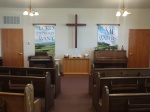
Gathering together for worship is another tactile reminder of God’s love. To gather in the sanctuary, to look around at our diversity – young and old, single and married, rich and poor, men and women… – does good for the soul. To see the diversity gathered together to praise and worship the Lord is a good and pleasant thing for God and for each worshipper. It is a visual reminder that we are all God’s children. As you consider your church family and recall the last time you gathered together, smile and rejoice as you thank God for how good and pleasant your family of faith is to you!

Prayer: Dear God, thank you for my church family. Thank you for my immediate congregation as well as for brothers and sisters from past congregations and for fellow believers from other traditions. Together we are a beautiful tapestry. Thank you God. Amen.


Leave a comment

Forgiven and Forgiving

Reading: Genesis 45: 1-15

Verse 5: “Do not be angry with yourselves for selling me here, because it was to save lives that God sent me ahead of you”.

Today’s passage centers on forgiveness. In the Christian faith we understand that forgiveness is a two-way street. Each Sunday most of us pray these words: “forgive us our trespasses as we forgive those who trespass against us”. If we want to partake of God’s mercy, grace, and forgiveness, we need to extend these same things to one another. For me, and perhaps for you, at times I struggle with each side of this equation.

It can be hard to admit we are wrong. It can be hard with both God and with others. There are times when it is difficult to admit I am wrong or have done harm. It can be easy to justify myself or to be self-righteous. Wanting to seek revenge or to get even can be tempting. But the way of love calls us to more. Jesus calls us to humility and honesty and transparency, to vulnerability and weakness, to confession and repentance. To enter and walk the path of Jesus, one must first practice forgiveness when we have sinned or caused harm. This was the first step for both Joseph and his brothers. For Joseph, it was to reckon with his younger self – the bratty, spoiled, arrogant Joseph – and the role that played. For the brothers it was to accept responsibility for what they did. Yes, God was at work behind the scenes, but they still harmed Joseph.

Sometimes it is difficult to extend forgiveness. At times it would seem easier just to keep that person on the outside, to keep them in a place where they cannot have a chance to be hurtful or harmful. (And, yes, there are times when it is necessary to end a relationship – in an abusive situation, for example.) As Jesus told Peter, we are not to forgive seven times, but seventy times seven! Just as we are each a work in progress before God, so too are all of God’s children. God has no limits or a quota on forgiving us. May we be the same, forgiving just as we are forgiven.

Prayer: Lord God, help me to ever be a person of grace. Help me to see and believe the best in everyone. Lead me to give my best and to recognize when I have given less, especially when I need to ask for or extend grace, mercy, and forgiveness. Guide me, O God. Amen.