pastorjohnb

Thoughts and musings on faith and our mighty God!


Leave a comment

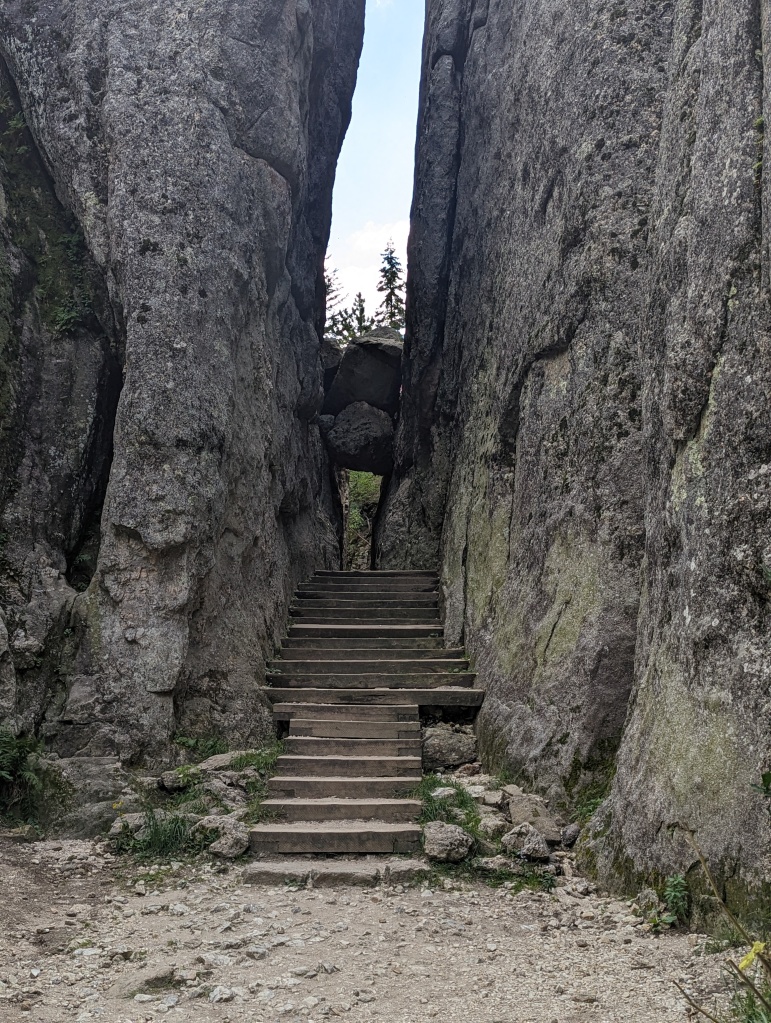
Narrow and High

Reading: Luke 13-14

Luke 13:24 – “Make every effort to enter through the narrow gate. Many, I tell you, will try to enter and won’t be able to.”

Today we largely center on Jesus’ call to “change your hearts and lives.” He begins by describing God’s patience. An owner wants to cut down an unproductive fig tree. The gardener asks for one more year – to tend to and fertilize the tree. The tree might produce fruit the next year. Faith is like a mustard seed or some yeast. It grows or spreads almost without notice. Patience is required. Yet the walk of faith is not easy or for the half-hearted. In 13:24 Jesus says, “Make every effort to enter through the narrow gate. Many, I tell you, will try to enter and won’t be able to.” Then, in 14:33, he adds, “None of you who are unwilling to give up all your possessions can be my disciple.” The gate is narrow because the requirement is hard. God must be #1 in all aspects of our life.

Twice Jesus demonstrates that love and compassion trump the rules established by man. He heals two people in the Sabbath. We too will be asked to disregard man-made rules or expectations at times if we are to keep God #1 in our life. This “cost” – like the tower project – is necessary to keep in mind as one chooses Jesus as Lord and Savior and as one continues to walk as his disciple.

Jesus drills down on the superficial “faith” of the religious leaders. They jostle for the best seats at the table. Jesus preaches humility. They invite people just like themselves to their own parties. Jesus preaches inviting the lost and broken. Jesus laments over those who refuse to come to him. The hand, the invitation, it is always open, always extended. Until the door is closed. At that point our fate is decided.

Yes, the road is narrow and the expectation or requirement is high. For those who carry their cross daily, keeping God as their only priority, “Happy are those who will feast in God’s kingdom.” This is true now and in the kingdom to come. May it all be so for you and for me.

Prayer: Lord God, what do you require of us? It’s simple: keep you as the only occupant of the throne of our hearts. It’s also very difficult: keep you as the only occupant of the throne of our hearts. Lord, guide and encourage us daily as we seek to walk “the narrow way.” It is only possible with your presence. Amen.


Leave a comment

Great Love and Compassion

Reading: Luke 7-8:39

Luke 7:50 – “Your faith has saved you. Go in peace.”

Luke 7 begins with a story about a man with great faith. The centurion first asks Jesus to come heal his valued servant. He then realizes that he is unworthy to have Jesus come to him. So he sends words, recognizing Jesus’ authority to simply speak a word to heal the servant. It is so.

Jesus next encounters a funeral procession. A widow’s only son has died. With great compassion Jesus resuscitates the son, providing for the widow.

From prison John the Baptist sends some disciples to ask Jesus, “Are you the one?” Jesus heals many people right then and tells the disciples to tell John what they saw. This is a physical demonstration that fulfills Isaiah 35 and 61. It is Jesus’ “yes” to John’s question. He then laments this current generation’s lack of faith.

Jesus is then invited to dinner at a Pharisee’s home. While there, a sinful woman comes and washes Jesus’ feet with her tears and hair, kissing them and then anointing them with oil. In his thoughts, the Pharisee is condescending of both Jesus and the woman. This leader skipped all the normal hospitality customs. Jesus says to the woman, “Your faith has saved you. Go in peace.” Her revelation of great love leads to her salvation.

After naming some of the women who support Jesus’ ministry, he tells the parable of the soils. It is about our receptivity to Jesus’ words and example. These women are the good soil. Jesus then encourages us to let our light shine. It is to shine on all soil/soul types.

Jesus then reveals his power over wind and sea before encountering “Legion” – a man long possessed by many demons. The demons recognize Jesus and negotiate release into the pigs. The man is totally healed. The townfolk are awed but are also afraid of Jesus’ unexplainable power. They ask him to leave. The man is told to stay behind, to witness to Jesus’ power. He goes home to “tell the story.”

Prayer: Lord God, you continue to have great love and compassion for us. You respond when we call out in faith. And you sometimes come even when we don’t call out. You know what we need and this drives your responses. Thank you. Amen.


Leave a comment

Service and Sacrifice

Reading: Mark 9-10

Mark 10:24 – “Children, how hard it is to enter the kingdom of God!”

Photo credit: Shane Rounce

The transfiguration of Jesus begins today’s readings. On a mountain top with Peter, James, and John, Jesus becomes “amazingly bright.” Elijah and Moses come and talk with Jesus. God speaks, saying, “This is my Son, whom I dearly love. Listen to him!” These words echo God’s words at Jesus’ baptism. Coming down the mountain Jesus finds a hubbub. The disciples were unable to cast out a demon. Jesus laments the lack of faith. The father begs Jesus for his son’s healing and admits his own lack of faith. Jesus casts out the demon. How do you think this affected the father’s lack of faith?

Jesus tells the disciples once again of his coming death. They, in turn, argue about who is the greatest among them. Jesus gathers the disciples and reminds them that the first will be the least, the servant. He explains that there is a cost to being a follower. It might cost a hand or foot or eye if that leads one into sin. Jesus is telling them to do anything to avoid sin and disobedience to God.

A rich man comes and asks about obtaining eternal life. He has kept the commands faithfully. After Jesus “looked at him carefully and loved him,” he is instructed to sell all that he has. The man goes away sad. Jesus goes on to say, “Children, how hard it is to enter the kingdom of God!” Much can get between us and Jesus. It’s not just our wealth or our possessions. When Jesus looks carefully at our hearts, what does he see that vies for the throne of our hearts?

Once again Jesus tells of his death. This time he is very clear. James and John come with a request: to sit at Jesus’ left and right in heaven. Power is their struggle. Jesus, with great patience, again tells the 12 that the greatest will be the servant and the first will be slave to all. Jesus again reminds them – and us – that he came not to be served but to serve and to give his life “to liberate many people.” May we too choose service and sacrifice.

Prayer: Lord God, humble servant, slave to all, keeping you #1 in our hearts – no, discipleship is not easy. We must first die to self – the greatest barrier to walking humbly and obediently. Guide us in this necessary and daily act of surrender. Grant us the faith and trust, the strength and courage to do so each day. Amen.


Leave a comment

Putting on the Yoke

Matthew 11:29 – “Put on my yoke, and learn from me. I’m gentle and humble. And you will find rest for yourselves.”

John the Baptist is the focus of the start of chapter 11. He sends his disciples to Jesus (he is in prison), asking, “Are you the one?” The response Jesus gives is to tell John what they see and hear. The blind see, the dead are raised… The fruit of his ministry is the proof: Jesus is the Messiah. John was an important one too, Jesus says: “He is the Elijah who is to come.” Jesus then laments this generation. They misunderstood John and they’ll misunderstand Jesus. This leads Jesus to lament about the places that he has ministered. They saw the miracle and did not change hearts or lives. He later declares that Nineveh will condemn this generation. They heard Jonah’s message and changed hearts and lives.

At the end of chapter 11 Jesus praises God for keeping “these things” hidden from the wise and intelligent (the religious leaders). He issues an invitation to those who are struggling and carrying heavy loads (the poor): “Put on my yoke, and learn from me. I’m gentle and humble. And you will find rest for yourselves.” What a contrast to the Pharisees. They and Jesus both called for a devout adherence to the Law. For one, though, the Law was a heavy weight to carry. For Jesus, “my burden is light.” Here one finds rest, not weariness.

Sabbath adherence is the focus of the beginning of chapter 12. These two encounters highlight the heavy/light contrast. Eating when famished and doing good supersedes the “do no work” mandate. Mercy trumps sacrifice. Love always wins. These clashes begin the Pharisees down the road to snuffing out this threat. The next clash centers on healing a demon-possessed mute man. The Pharisees attribute the healing to Jesus working with Satan. He rebukes this idea, claiming it is by the Holy Spirit that he heals. Jesus condemns them for their “useless words.” They demand a sign. Remember Jonah?, he asks. Jesus tells them he will be in the “heart of the earth for three days and nights.” What a surprise ending that story will have too! Even better than Jonah’s!

Today’s reading closes with Jesus calling his true family his disciples. They have taken on his yoke and are walking with Jesus. The disciples are Jesus’ “brothers, sisters, mothers.” May it be so for us as well.

Prayer: Lord God, you continue to speak the words of life. Some hear and understand, some do not. Give us ears to hear. You continue to invite us to change our hearts and lives, growing deeper and more connected to you. Give us a spirit that is ever willing. Draw us more completely into your family, O God. Amen.


Leave a comment

Worthy of the Kingdom

Reading: Matthew 9-10

Matthew 10:22 – “Everyone will hate you on account of my name. But whoever stands firm until the end will be saved.”

Photo credit: Shane Rounce

Chapter 9 is mostly about the healings that Jesus brought to people. There is the calling of Matthew too and the questioning of why Jesus ate with “tax collectors and sinners.” Chapter 10 shifts first to the calling and sending of the 12. The chapter ends with the realities of the cost of discipleship. This was and still is a reality for the followers of Jesus.

Chapter 9 begins with the healing of a paralyzed man. Jesus begins by forgiving his sins. This is just a means to draw in the “legal experts,” to prove that Jesus has the power to forgive sins and to heal sicknesses. Jesus then calls Matthew, saying, “Follow me.” Later, at dinner, the Pharisees question Jesus’ choice of table mates. He declares, “I didn’t come to call righteous people, but sinners.” As the chapter continues, Jesus heals five more people and Matthew closes with a summary of Jesus’ early ministry. Jesus taught and healed, announcing the good news of the kingdom. The chapter closes with a lament: the harvest is huge but the workers are few. Jesus encourages his disciples to “plead” with God for workers.

Chapter 10 begins with God’s response. The 12 are called and given authority to cast out demons and to heal diseases. They are then sent out to “the lost sheep… of Israel.” The disciples are to go without anything, relying on worthy people to take them in. They will bless these homes. If no one is found worthy in a place, the disciples will move on.

Starting in verse 16, Jesus begins to detail the cost of discipleship. The 12 go out as “sheep among wolves.” They will be arrested and beaten. But the Spirit will be with them and in their words. Jesus says, “Everyone will hate you on account of my name. But whoever stands firm until the end will be saved.” Families will come apart and turn on one another because Jesus did not “come to bring peace but sword.” The disciples are encouraged to “pick up their cross” as they follow Jesus. Doing so, they will be counted as worthy in the kingdom of God. May it be so for you and for me.

Prayer: Lord God, send us out as workers, fully cognizant of the cost of discipleship and fully aware of your Spirit’s presence with us. Lord, use us to bring healing and wholeness to others, encouraging them with the good news of your kingdom through us and our ministries. Strengthen and empower us as we too seek to follow in the footsteps of Jesus. Amen.


Leave a comment

Trust in God, Wait with Hope

Reading: Habakkuk 1-3

Habakkuk 3:2 – “LORD, I have heard your reputation. I have seen your work. Over time, revive it. Over time, make it known.”

Habakkuk has a chat with God. The chat revolves around why God allows the righteous to suffer while the wicked prosper. Habakkuk struggles to understand how a good God could allow such evil to exist. We continue to wrestle with these struggles today.

The book begins with a question: “Lord, how long will I call for help and you will not listen?” This is a question we’ve all raised. Habakkuk cries out about the violence and injustice. God responds, “I’m about to rouse the Chaldeans.” Babylon will sweep in, taking “captives like sand.” Habakkuk questions how God could choose to use this evil empire, the one that sacrifices to its own strength. He declares that he will “take my post” as he waits for God to respond.

God responds with a vision. Habakkuk is to clearly write it down on tablets. This vision is for an appointed time. While they will wait for it, God declares, “For it is surely coming; it will not be late.” God tells Habakkuk that the righteous will live honestly. The arrogant – the ones who are never satisfied – they will fall. The ones who plundered will be plundered. Doom is coming to all who trust in idols. The Lord is holy. At the appointed time, the earth will be silent before the Lord.

Habakkuk then goes to the Lord in prayer. He begins, “LORD, I have heard your reputation. I have seen your work. Over time, revive it. Over time, make it known.” He trusts that God will one day “tread the nations,” defeating wickedness. Habakkuk trusts into God’s vision for the future. Right now the fig doesn’t blossom. Right now the pens and stalls are empty. But right now, Habakkuk declares, “I will rejoice in the Lord… my deliverance… my strength.” He chooses to trust in God. He chooses to wait with hope. May we choose to do the same when we are suffering, when we are in the struggle. God is loving. God is faithful.

Prayer: Lord God, when we are struggling with the evil in the world, when we are questioning your activity or inactivity in the world, lead us to use Habakkuk as our guide. May we lay our lament before you. May we trust in you to respond. May we choose a bold faith, one that trusts and hopes in you alone. Amen.


Leave a comment

All Things New

Reading: Amos 5-9

Amos 5:24 – “But let justice roll down like waters, and righteousness like an ever-flowing stream.”

Concluding the book of Amos we read words of lament and doom mixed in with words of hope and restoration. Ultimately, Amos closes with words of promise and blessing for God’s people. We too walk through this mix in our lives, holding onto God’s promises that will one day eternally be ours. Thanks be to God.

Amos 5 begins with a song of lament for the great losses soon to come and then encourages people to seek the Lord. The prophet then condemns those who are crushing the weak, taking bribes, and refusing to help the poor. Amos presents the correct choice: seek good and not evil. But the leaders choose evil. Therefore God rejects their worship and sacrifices. They are meaningless. God then presents the correct choice, saying, “But let justice roll down like waters, and righteousness like an ever-flowing stream.”

Chapters 6 and 7 contain warnings and visions from Amos. Those “resting comfortably” while drinking “bowls of wine” – they will be the first to go into exile. God promises to “shatter the great house [Israel] into bits… and pieces.” God’s people do not measure up to God’s plumb line. All will be laid to waste. These words lead to a confrontation with Amaziah the priest. He tells Amos to go home to Judah, to prophesy there. In response, Amos declares that it is Amaziah who will be going away, into exile, losing family and land as well.

Judgment continues in chapter 8 and the first half of chapter 9. God judges Israel’s immoral business practices, their greed, and their dishonesty. Feasts will become sad affairs. But the days are coming when there will be a thirst for hearing God’s word. There will be a day when broken places are rebuilt, when blessings flow, when God’s people will be planted upon their land. God will make all things new. Thanks be to God.

Prayer: Lord God, your justice and righteousness will prevail. They will indeed flow like water in a never-ending stream. You will remove all evil and establish your new kingdom here on earth. Worship will be pure and true. All will focus on your love, flowing from your heart into our hearts. What a day that will be! In between them and now, Lord, guide us to be justice, righteousness, and love here and now, as we seek to bring your kingdom to this earth. Amen.


Leave a comment

Much Lament

Reading: Ezekiel 27-32

Ezekiel 28:18 – “Therefore, I will bring fire from your midst. When it has consumed you, I will turn you into dust on the earth.”

Photo credit: Greg Rakozy

Most of chapters 27 and 28 are a lament for Tyre. Tyre had it all: beauty, trade, allies, wealth, abundance. Until God took it all away. Their prince was arrogant, saying, “I am God, I rule the seas!” God conceded that his wisdom and discernment were great, making him rich and powerful. But the claim, the pride – too much. Because the prince exalted himself, God declared, “Therefore, I will bring fire from your midst. When it has consumed you, I will turn you into dust on the earth.” At the end of chapter 28 we find a prophecy against Sidon. There will be a plague followed by the sword. Into this land, God will gather Israel. There they will build houses, will plant vineyards, and will live in safety.

Chapters 29-32 bring judgment against Egypt. God will set hooks in the great crocodile, flinging it onto open ground. Egypt is condemned as a “flimsy crutch” that splintered or broke in times of need. Because Pharaoh also claimed divinity – he created and owned the Nile, God will make Egypt an utter ruin – the most ruined place anywhere. God will one day regather Egypt, but it will remain lowly. Nebuchadnezzar will conquer Egypt and carry off its wealth – “wages for his army.”

In chapter 31 God compares Egypt to Assyria – the tallest of trees. There was no equal to Assyria in Eden, God’s garden. And yet Assyria fell, going down to the underworld. Assyria’s allies went along too. Elam and Edom and Sidon are there too – laid among the uncircumcised, those slain by the sword. Many arrogant and evil nations will come to a bitter end. Much Lament will be shared.

Prayer: Lord God, open our ears today to these warnings against being arrogant and greedy and selfish. When we get to thinking we’re king of the roost, remind us that we’re not. Humble us, bring us down to where we should be. Guide us to walk in your will and way. Amen.


Leave a comment

Hope, Yes, Even Then

Ezekiel 20:33 – “As surely as I live, with a strong hand, an outstretched arm, and with wrath poured out, I will be your king!”

Good and evil 1

We begin today with a riddle. The great eagle is Nebuchadnezzar, king of Babylon. He planted Zedekiah, but he rebelled, trying to form an alliance with Egypt. But Pharaoh wouldn’t help. Zedekiah went into exile. In chapter 18 God clarifies the consequences of their sin. Contrary to popular understanding, sins and their consequences are not carried on through the generations. Through a three generation example, God reveals that the righteous will live. The sinful will die. God states in verse 30, “I will judge each of you according to your ways.” The chapter concludes with a plea from God: choose life.

Chapters 19 and 20 lament Israel’s leaders and history, respectively. In chapter 19 poor leadership has resulted in Israel and Judah being planted in the desert – in exile – in a “parched and thirsty land.” God then reviews Israel’s long, long, long history of disobedience. Again and again and again God is ready to “pour out my wrath” on Israel and again and again and again we read that “for my name’s sake” God gives Israel another chance. Whether literally or figuratively it was again and again, “one more lap around the desert” as God tried and tried to bring Israel into a lasting covenant relationship. Finally, in 20:33 we read, “As surely as I live, with a strong hand, an outstretched arm, and with wrath poured out, I will be your king!” There will not be another lap, another “again.” Yet even as disaster looms, God speaks hope. After the doom, God will regather the small remnant. God will “bring you into the covenant bond.”

Chapter 21 describes the disaster soon to come. The guard will strike all – left and right, twice and three times. Reminded of their guilt, they will be laid low. “A ruin, ruin, ruin, I’ll make it!” declares the Lord.

Prayer: Lord God, these words of death and loss and devastation and disobedience can be hard to read. They are hard to wrap our heads around. Yet we also must acknowledge that just as you laid out the way to live, the people chose to walk the other way. We too face the same choice: life or death. Guide us to choose life, to choose to walk in your ways of love and grace, of justice and righteousness. Amen.


Leave a comment

Lamenting Suffering

Reading: Lamentations 3-5

Lamentations 3:22 – “Certainly the faithful love of the LORD hasn’t ended; certainly God’s compassion isn’t through!”

Photo credit: Falaq Lazuardi

Today’s key verse summarizes the feel of Lamentations 3-5. There is hope in these words of lament. There is a hope that God isn’t utterly done with Israel. Yes, the author knows the promises of rescue and restoration, but in the depths of the suffering, hope can flicker.

Lamentations 3 is in the first person. It reads as if Jeremiah were reflecting on the hardships and trials of his life as a prophet. He has felt God’s hand against him. He has felt like God “silences my prayer.” These memories of suffering bring bitterness. He muses, “Certainly the faithful love of the LORD hasn’t ended; certainly God’s compassion isn’t through!” Hope arises, though, as he declares, “Great is your faithfulness… The Lord is my portion! Therefore I’ll wait for God.” As the chapter continues, there is an invitation to “examine our ways” and to recognize, “We rebelled.” This is step one to forgiveness.

Chapter 4 reflects on the people’s suffering. The children are thirsty and hungry. The author laments that their fate wasn’t like Sodom’s – quick and final. He laments, death by the sword would be better than death by famine. The false prophets draw some of the blame. There is reality in verse 12: “Our end had definitely come.”

The last chapter is a communal lament. They invite God to notice their disgrace. They recognize that they are burdened by past sins. Their joy is gone. They are “doomed because we have sinned.” Hope surfaces again as the community recalls how God reigns from one generation to the next. With that hope, they offer this request: “Return us, Lord, to yourself. Please let us return!” May it ever be so.

Prayer: Lord God, we too lament when we suffer justly for our sins and for our choices to be of the world. We too long to end these seasons and to return to you, our God and king. In the suffering and trial, refine us as you are working to rescue us. Draw us to you, O Lord, again and again. Amen.