pastorjohnb

Thoughts and musings on faith and our mighty God!


Leave a comment

True Power and Presence

Reading: Isaiah 7:10-13

Isaiah 7:11 – “Ask a sign from the Lord your God. Make it as deep as the grave or as high as heaven.”

Photo credit: Dan Kiefer

At the start of chapter 7, King Ahaz of Judah receives a word from God through the prophet Isaiah. Ahaz is told that Aram and Israel will not overpower Judah. Both will fall to a resurgent Assyria. In the first half of this week’s reading from Isaiah 7, God says to Ahaz, “Ask a sign from the Lord your God.” A sign could be very reassuring for a still-fearful Ahaz. In times of tension or danger or doubt or fear, it is natural to want a sign that God is with us. It is normal to not want to feel all alone. A sign indicating God’s power and presence helps us to move forward, to not be so afraid…, to have some hope.

In the remainder of verse 11 God adds, “Make it as deep as the grave or as high as heaven.” Often we want this kind of sign from God. We want a flashing neon billboard-sized sign from God, one that is as high as the heavens (or as low as the grave.) We’d prefer a sign so large that there is absolutely no mistaking that God is present and large and in total control. Ahaz does not fall into this temptation. He states that he does not “want to test the Lord.” Although still fearful, Ahaz resists the temptation to ask God to prove God’s power, presence…

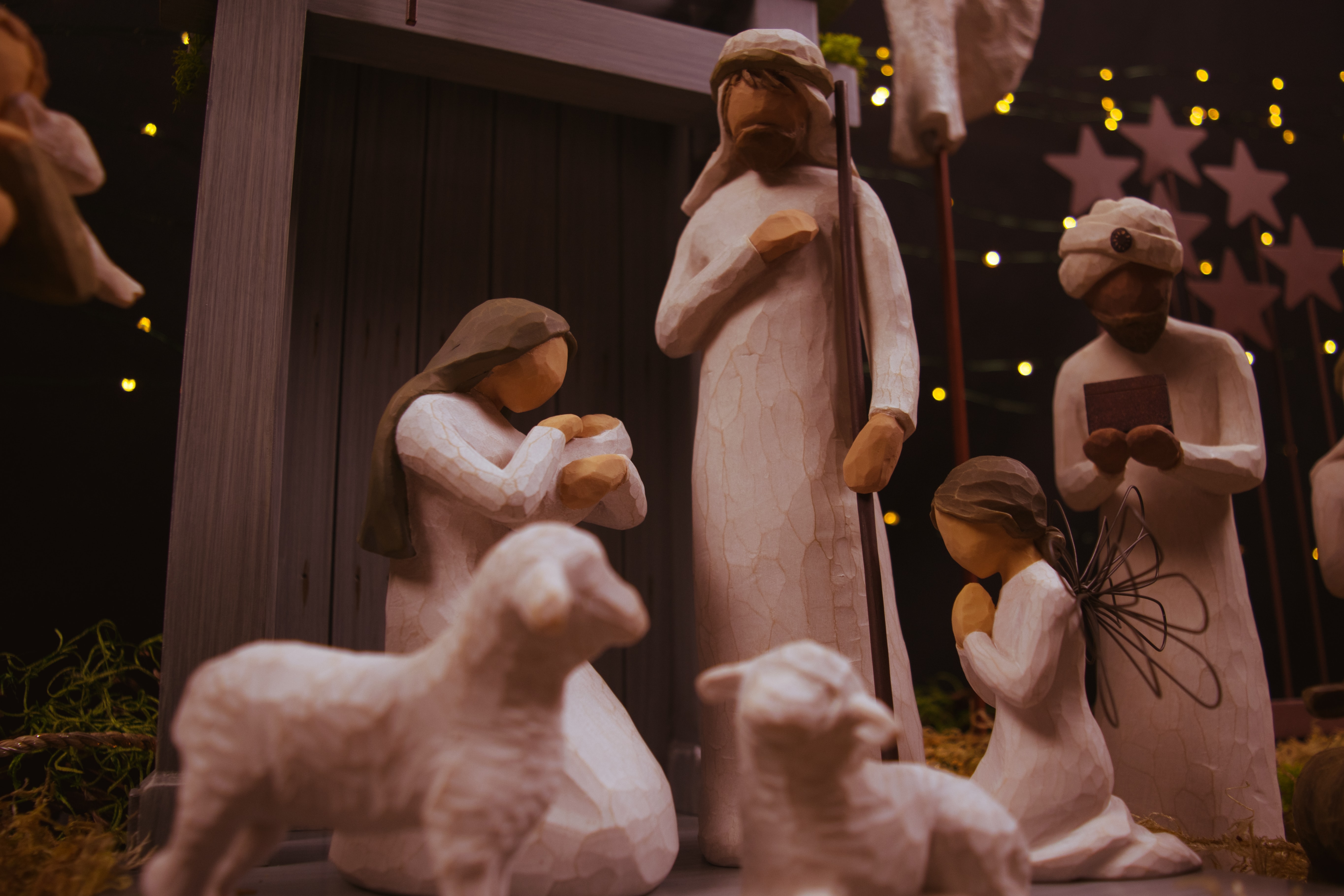
In this season of Advent we’re reminded that Immanuel, God with us, did not come in grand fashion. Christ wasn’t born into a powerful and wealthy family. Instead, Jesus was born to humble parents in the simplest of settings. In times when we are seeking God’s power and presence, may we remember that God most often comes in the humble, simple, and everyday of life. When this is the God that we seek, we will find signs of God’s true power and presence.

Prayer: Lord God, in our times of need, turn our eyes and hearts away from the amazing and awesome. Instead, focus our eyes and hearts on the many ways that you are present in and amongst us – in Spirit, in your Word, in one another, and in creation. May this constant presence strengthen and encourage us. Amen.


Leave a comment

Choices and Actions

Reading: Obadiah 12-15

Obadiah 15: “The day of the Lord is near… As you have done, so it will be done to you.”

Obadiah’s short, one chapter letter takes aim at Edom, Israel’s neighbor to the southeast. Israel and Edom are connected. Jacob and Esau are the beginning seeds of these two groups of people. The tension that existed between the brothers has remained a part of the relationship between these two nations. As Obadiah writes, Jerusalem (and Judah) has just fallen to Babylon’s army.

Have you even been in a situation where someone you disliked or didn’t get along with was “getting their due?” The bully has fallen or the dishonest one has been revealed. Whatever the case, it can be tempting to join in – maybe with a judgmental comment, a stinging barb, or even worse, with some verbal or physical abuse. It can be tempting.

As Israel was falling to Babylon, Edom jumped in. They “took pleasure” over Israel’s downfall, rejoicing over their misery. Edom entered the defeated city and “stole possessions.” The Edomites “waited on the roads to destroy escapees” – those lucky enough to escape Babylon’s attack. Edom killed some and handed others back over to Babylon. Edom fell to the temptation to “get even.” Big time.

Obadiah speaks a word of God’s judgment against Edom, saying, “The day of the Lord is near… As you have done, so it will be done to you.” God has taken note of how Edom treated Israel in its time of need. They slapped the hand just barely above the surface of the water instead of reaching out to help. One day these choices will bring similar suffering to Edom. So it will be when we allow pride and envy to dictate our choices and actions.

Prayer: Lord God, instead of thoughts of judgement and revenge, fill our hearts and minds with thoughts of empathy and compassion. When the temptation rises to “take our opportunity” or to pile on, move us instead to offer healing and comfort. May your love for us be reflected in our love for all people, even those hardest to love. Amen.


Leave a comment

Fear, Shame, Guilt…

Readings: Matthew 26:69-75 and 27:3-10, 15-26

Matthew 27:24 – “So he took water and washed his hands in front of the crowd.”

Photo credit: Falaq Lazuardi

Today’s readings contain denial, betrayal, and giving in to social pressure. These actions are driven by fear, shame, guilt, regret, greed, power. These are actions and emotions that we too wrestle with as we try to walk faithfully with our Lord and Savior, Jesus Christ.

Peter had followed the mob who had arrested Jesus – at a distance. He feared being caught up in what was happening. In the high priest’s courtyard, Peter is accused three times of being with Jesus. Each time Peter’s denial of Jesus grows stronger as the fear rises. His fear turns to shame as the rooster crows. When was the last time that you denied Jesus, either in word or deed? What “crowed” to lead you to tears?

Judas agreed to betray Jesus for thirty pieces of silver. Seeing that Jesus is condemned to die, Judas feels “deep regret” for betraying “an innocent man.” The religious leaders refuse to change course. Guilt and regret lead Judas to take his own life. When have you felt deep regret because you betrayed Jesus? How did you resolve your inner turmoil?

Pilate has the power of life and death in his hands. He tries to free Jesus. His wife tells him to “leave that righteous man alone.” Tension builds and Pilate gives in to the mounting social pressure. To try to relieve his guilt and regret, he “took water and washed his hands in front of the crowd.” Pilate allows the power to slip through his fingers like the water slips through. We’ve all given in to the crowd, turning away from Jesus. What do you do to relieve your guilt and regret?

Prayer: Lord God, it is hard to admit, but at times we’ve played the roles of Peter, Judas, and Pilate. When we’ve failed you, we’ve felt what they feel. It is our human nature rising up to protect self, position, status… In our next moments of testing, Lord, raise up the voice of your Holy Spirit. May it be louder and stronger than our fear, shame, guilt… And when we fail, remind us of your unconditional love and endless grace. Amen.


Leave a comment

Why Jesus Came

Reading: Acts 13:1-15:21

Acts 15:10 – “Why then are you now challenging God by placing a burden on the shoulders of these disciples that neither we or our ancestors could bear?”

Photo credit: Frank McKenna

Beginning in chapter 13 we see the spread of the church past the first Gentile city out into the Gentile world. Paul, Barnabas, and John Mark are sent out from Antioch as missionaries. There is great success overall but the growth of the church is not without persecution and controversy.

The missionaries begin in Cyprus, proclaiming the word of God. Paul confronts a false prophet, demonstrating the power of the Holy Spirit. Moving on to Pisidian Antioch, John Mark deserts Paul and Barnabas, returning to Jerusalem. Paul accepts the invitation to preach on the Sabbath. His powerful sermon on Jewish history and Jesus’ ministry yields an invitation to preach again. A large crowd gathers on the next Sabbath, stirring up jealousy amongst the Jews. Their rejection of the message leads Paul and Barnabas to focus on the Gentiles. Moving on to Iconium, Luke reports that “the same thing happened” – some believe but others are opposed to their message.

Paul and Barnabas move on to Lystra. Here Paul heals a man who believed that he could be healed. The locals mistake Paul and Barnabas for Greek gods. They head off the sacrifice of bulls to them, but Jews arrive from Antioch and Iconium, stirring up the crowd. Paul is stoned and left for dead. He gets up and they travel to Derbe the next day. After making disciples there, Paul and Barnabas work their way back to Antioch. Along the way they encourage the believers and they appoint elders to lead these new churches.

Jews from Jerusalem arrive in Antioch and stir up some tension. They tell the Gentile believers that they must first be circumcised in order to be saved. The idea of “you’ve got to be just like us” is not an invention of the modern church. Paul, Barnabas, Peter, and James all argue against placing Jewish requirements on Gentile believers. Peter asks the pertinent question: “Why then are you now challenging God by placing a burden on the shoulders of these disciples that neither we or our ancestors could bear?” No one has been able to keep the Law. This is why Jesus came – to do for us what we could not do on our own. By his life, he gave us what we cannot earn and what we do not deserve: the forgiveness of sins that leads to life eternal. Thanks be to God.

Prayer: Lord God, how wide and deep is your love. It flows from your heart, out in all directions. It does not avoid certain places or people. It carries the power to wash away sins, barriers, and presumptions. May your love wash over us, filling us to overflowing with your love. Amen.


Leave a comment

One Priority

Reading: Acts 5:17-7:60 (8:1a)

Acts 5:29 – “We must obey God rather than humans!”

Jealousy and anger drive one side of the tensions found in today’s reading. The Holy Spirit drives the other side. One side is fully in alignment with God’s will and ways. One side focuses on worldly things.

Jealousy leads the Jewish leaders to arrest the apostles. An angel comes and frees them in the night, instructing them to keep teaching in Jesus’ name. Found and brought before the Jerusalem Council, Peter and the other apostles state, “We must obey God rather than humans!” A wise council member suggests patience. Gamaliel suggests that if this new movement is of human origins, ultimately it will fail. But if it is of God, then they will actually find themselves fighting God. The apostles are beaten and released, warned again not to teach in Jesus’ name. After rejoicing because they were counted worthy of suffering for Jesus’ name, they resume preaching and teaching.

After reading about the apostles working through an administrative issue with an administrative solution, we read the story of Stephen. He stood out among the believers because of the way that God’s grace and power was with him. Again jealousy stirs up tension and then false accusations. Stephen’s response is a history lesson that focuses in on Israel’s rejection of Moses, the Law, and all of the prophets, including Jesus. The council members are enraged. As he’s condemned Stephen has a vision of Jesus standing at God’s right side in heaven.

Furious, the council members drag Stephen out of the city and stone him as Saul oversees and approves. As he is being stoned, Stephen asks God to accept his life and he asks for God to forgive his attackers. These statements parallel Jesus’ words from the cross in Luke’s Gospel. Here we again see steadfast faith built upon love, grace, and mercy. May our lives also exhibit all of these, bringing glory to God in Jesus’ name.

Prayer: Lord God, filled with the Holy Spirit the early apostles lived out their faith boldly, unafraid, and with passion. All that the world could do to them was counted as trivial, unimportant. All that mattered was faith in Jesus’ name. Proclaiming their faith to the world was their one priority in life. May it be so for us too, O Lord. Make it so. Amen.


Leave a comment

When We Choose

Reading: Obadiah

Verse 15 – “As you have done, so it will be done to you.”

Obadiah condemns Edom for its attitude and for its behavior. The nation of Edom is proud. It rejoices when its ‘neighbor’ is defeated. They choose to then join in the plundering and violence. Edom kills those who escaped Babylon’s swords and they sell the refugees as slaves. There is much for God to condemn and judge concerning Edom and their choices.

There is a long history between Edom and Judah/Israel. These peoples are descended from Jacob and Esau. In real life there was great tension between these twin brothers. That tension persisted down through time. Perhaps today we’d say there is ‘bad blood’ between these two nations. Today, when one side or the other suffers or falls or experiences some defeat, there is often rejoicing on the other side. When long held animosity and tension lie just beneath the surface, that can flow out and lead to things like Edom did to Judah.

This same reality, this same scenario also scales down. We see it between the police and inner city residents. We see it between gangs who compete to thrive upon people’s weaknesses. We see it between neighbors and family members who refuse to even speak to one another. We see the tension there, just beneath the surface, always there. Then, at times, it rises up, it erupts, it shows its ugliness. Such was the case with Edom when Judah fell to the mighty Babylonians.

God declares to Edom, “As you have done, so it will be done to you.” About 750 years later a relative of God’s would share this same sentiment. He encouraged those who saw each other as less than to choose love over hate, empathy over apathy, compassion over condemnation, welcome instead of exclusion. Funny thing is this: when we choose love, empathy, compassion, welcome, grace, forgiveness… it is also said: “As you have done, so it will be done to you.” May it be so.

Prayer: Lord God, it can be hard to choose not to celebrate when a rival loses, to not rejoice when an ‘enemy’ falls. It can even be tempting to join in, to pile on, to release those old, bad feelings. These are the ways of the world. This is not your way. As your children and as your examples in this world, use us to choose the better way, to speak and act and think in ways that reveal your heart for all people. Amen.


Leave a comment

Tension Remains

Readings: 2nd Samuel 15, 2nd Samuel 16, 2nd Samuel 17, 2nd Samuel 18, 2nd Samuel 19

2nd Samuel 15:25 – “Carry God’s chest back into the city. If the LORD thinks well of me, then he will bring me back.”

Photo credit: Kim West

Our reading begins with Absalom subtly beginning a rebellion. He curries favor at the city gate. He builds alliances for four years. Then he gathers people in Hebron – some don’t know why – and he declares himself king. David and his household flee Jerusalem. On the way out, the priests offer sacrifices by the chest. David sends Zadok, the chest, and the rest of the priests  back into the city, saying, “Carry God’s chest back into the city. If the LORD thinks well of me, then he will bring me back.” He trusts the outcome of this rebellion to God.

Alliances, betrayals, and conceit abounds. Ziba lies for material gain. Shimei curses David. Spies give false advice, buying David and his troops needed time. They cross the Jordan safely and receive aid from Barzillai. Troops on both sides prepare for battle. David is convinced to stay behind. He gives a command to protect Absalom. David’s forces win the battle. Absalom gets caught in a tree while trying to escape. Joab begins and then oversees Absalom’s death.

News reaches David and he mourns deeply. Victory turns to sadness. The troops slink back into camp. Joab goes to David and calls him on this. David goes out to greet the troops. As David returns to Jerusalem, Israel argues about bringing him back as king. David reconnects with Judah and they take the lead in restoring David as king. This upsets the rest of Israel. Tension remains in the air. The sword is not far from David’s house.

Prayer: Lord God, so many do the wrong things in today’s passages. They chase the things of this world – power, possessions, status. Yet there are still those who do right. These are ones after your heart. Spirit, lead us to do right and to hold God’s will and ways above all else in our hearts and lives. Amen.


Leave a comment

Risky and Righteous Love

Reading: Hosea 1:2-10

Verse 10: “Yet the Israelites will be like the sand on the shore… In the place where it was said to them, ‘You are not my people,’ they will be called ‘sons [and daughters] of the living God'”.

Photo credit: Nick Fewings

The book of Hosea begins with God telling Hosea to take “an adulterous wife… because the land is guilty of the vilest adultery” against God. The people have turned away from God, practicing all kinds of evil. Marrying Gomer is a parallel to the relationship between God and Israel. It is a risky love that God invites Hosea into with Gomer. It is a risky love that God chooses to live out with you and with me.

The names of Gomer and Hosea’s children are prophetic. God will punish the sin of Israel. God will not show love to Israel. God says Israel is “not my people” so “I am not your God.” God has been hurt to the point that God wants separation from Israel. We too can tend towards this kind of living. We can seek to avoid tension and conflict and discomfort – even when we see or feel a need to respond to injustice or oppression or abuse. We can avoid loving those who might have needs that challenge our patience or generosity or empathy. We can easily choose safe over risky, easy over difficult. But this is not the kind of love that God has for Israel or for you and for me.

Even though deeply hurt by Israel, hear God’s unfailing love for them in verse 10: “Yet the Israelites will be like the sand on the shore… In the place where it was said to them, ‘You are not my people,’ they will be called ‘sons [and daughters] of the living God'”. Even though there is distance in the relationship, even though the people are guilty of vile adultery, God will choose to continue to love them. This risky and righteous love will offer forgiveness and will hold our reconciliation. This risky and righteous love is difficult to live out. Yet it is what we are called to. Love as God loves us. May it be so for you and for me.

Prayer: Lord God, lead me to love as you love, especially when it is risky and difficult. Guide me to those places where others may not go, to those that some may avoid. Give me courage to love as you love, O Lord. Amen.


Leave a comment

All Around Us

Reading: Acts 5:27-32

Verse 29: “We must obey God rather than men.”

Photo credit: Josh Calabrese

As we return to Acts 5 today we look at the apostles’ basis for their actions. When asked why they continue to teach in Jesus’ name when they’ve been ordered to stop, they reply: “We must obey God rather than men.” For the religious leaders, in general, they would agree with this statement. In fact, it was the basis for some of their interactions with the Romans. The place of conflict with this statement in this situation is with where it intersected with their authority and power. It is the same today with those in power in both secular and religious institutions: practicing or exercising ones faith is fine as long as one still follows their rules. It is when faith conflicts with established laws or norms or rules that it can become controversial, dangerous, costly.

Today and tomorrow millions will go to churches, synagogues, mosques… to worship, to pray. No religious leader or civic authority will bat an eye. Many will be pleased. In a generic way, religion is a community-positive thing. It teaches conformity, respect for rules, doing good for others. This was how the Romans saw Judaism. So how does faith create conflict or tension within a community or in larger levels of society?

In happens when faith shifts from passive to active. It is often a subtle shift. Faith can compel us to help a neighbor or one in need. Maybe it begins with helping a single mother with her electric bill. All are happy, pleased. That interaction leads to bringing food and some clothes for the children. All are happy, pleased. Once there, in the home, seeing the poor conditions, one is moved to intervene, to speak out, to try and remedy the situation. Not all are happy. Someone is upset that those Christians are poking around in their business. There is tension and conflict. This is but one simple example. It is one way that obeying God and living an active faith can lead to a place of conflict and tension.

So, a question to ponder today: what are the conditions, circumstances, or situations in your neighborhood or community that need addressed, changed, redeemed?

Prayer: Lord God, lead your church to engage in our communities and with our neighbors. Guide us to those who need a voice or a hand, or maybe both. Give us a willingness to obey your love, your justice, your ways. Give us the courage to choose right and just over comfortable and easy. Let it begin with me. Amen.


Leave a comment

Filled with Zeal

Reading: John 2: 13-17

Verse 17: “His disciples remembered that it is written: ‘Zeal for your house will consume me'”.

Photo credit: Tobias Rademacher

The story of Jesus clearing the temple can be found in all four gospels. It is different than almost all the other stories. The story takes place in the days leading up to the celebration of the Passover. The city is already getting crowded. The Roman authorities are probably getting more nervous by the day as the Jews prepare to celebrate how God freed them from slavery in Egypt long ago. The religious leaders, who are also the Jews’ political leaders, are well aware of the growing tensions.

The temple will be the place where all will gather to remember God’s saving acts, to worship their God, and to offer sacrifices. As Jesus arrives at the temple it is being made ready for the crowds that will soon come. Vendors are beginning to fill every nook and cranny of the temple courts, looking to sell their animals. The money changers are setting up tables, eager to exchange Roman coins for the necessary temple coins. Jesus takes all this in and then makes a whip and begins to drive the people and animals out of this make-shift market. Watching this unusual behavior from Jesus, the disciples recall a verse from Psalm 69: “Zeal for your house will consume me”. In the other gospels Jesus speaks of the temple being a house of prayer, not a den of thieves and robbers. The vendors and money changers have corrupted a place that is holy. It is this fact that so upsets Jesus. With Zeal he restores his father’s house to what it should be – a holy and sacred place.

As ones seeking to follow Jesus 2,000 years later, we are called to follow this Jesus too. All that God created is good. Much has been corrupted just as the temple courts were in today’s passage. We do not need to look far to see corruption, oppression, injustice, poverty, marginalization… These evils have no place in the kingdom of God. As we live out our daily lives we will encounter places where these evils exist and we will meet people suffering from these evils. When we do, may we be filled with zeal for God’s creation, drawing the kingdom of God near as we bear his light and love into these places and lives. In the presence of light, darkness flees. May we be the light.

Prayer: God of light and love, as I encounter the evils of this world, fill me with zeal and compassion for those affected. Guide me by the power of the Holy Spirit; use me as a light in that darkness. Through me may the light and love of Jesus shine, driving out the evil. Amen.