pastorjohnb

Thoughts and musings on faith and our mighty God!


Leave a comment

Divinity and Humanity, Strengths and Weaknesses

Reading: Luke 22

Luke 22:42 – “Not my will but your will must be done.”

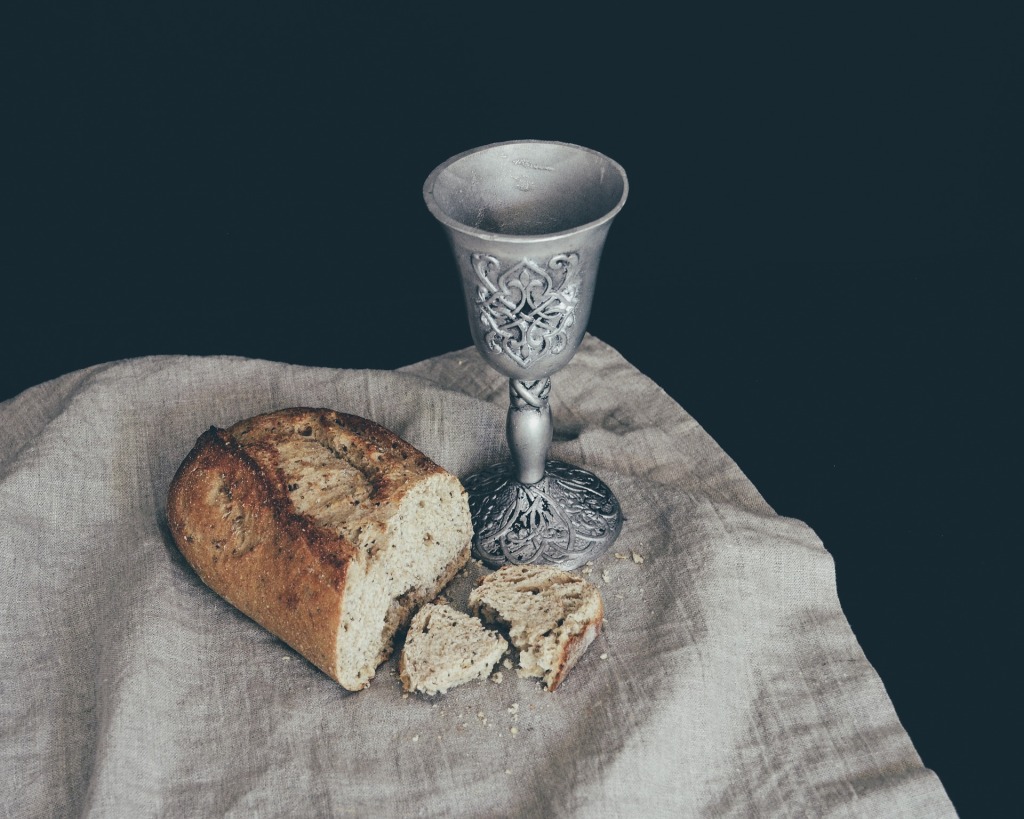
Our reading begins with Judas agreeing to hand Jesus over. It must be an opportunity without a crowd. This time comes as Jesus goes to the Mount of Olives to pray, which he does regularly. Another regular event was the celebration of the Passover meal. Peter and John are tasked with setting it up. At the table, though, Jesus becomes irregular. He changes the words and the meaning of this ancient ritual. The bread represents his body and the cup of wine represents the new covenant of his blood. He will become the new Passover lamb, sacrificed for many.

At the table, Jesus tells the disciples that his betrayer is present. They question who it could be, which leads to an argument about who is the greatest. To prove that we’re not the “weak link” we often resort to sharing our strengths to prove our own innocence. Jesus reigns them in, reminding them to become low, like a servant, like Jesus himself. He also offers words of encouragement. Because they have (and will) continue to walk with Jesus, one day they’ll eat and drink at his table in heaven. One day they’ll each sit on a throne overseeing the tribes of Israel.

Jesus shifts gears, sharing with the disciples that Satan will “sift you all like wheat.” Peter boldly states that he is ready to go to prison or even to die with Jesus. Alas, Peter, you will deny Jesus three times this very night – all before the rooster crows. Jesus then goes to the Mount of Olives to pray. He first asks God to take away this cup of suffering and death. He then prays, “Not my will but your will must be done.” Jesus is committed to God’s plan. He’s then betrayed by a kiss, is arrested, is beaten and questioned. In the midst of all this, he heals a servant. Peter denies him three times, then breaks down, sobbing uncontrollably. Jesus makes the claim that he will now be seated at God’s right hand. His words seal his fate.

Prayer: Lord God, a plan hurtles towards completion. We know the story and the steps. We’re reminded of both Jesus’ divinity and of his humanity. We too carry these within us. We’re also reminded of the disciples’ strengths and weaknesses. We too possess plenty of both. Lord, be present to us today so that we too might know and follow your will. Amen.



Leave a comment

God Has Spoken

Reading: Ezekiel 1-5

Ezekiel 3:4 and 7 – “Human one, go! Go to the house of Israel and speak my words to them… they will refuse to listen to you because they refuse to listen to me.”

The book of Ezekiel begins with the prophet in exile. He was brought to Babylon in the first wave of exiles, five years before the fall of Jerusalem. On his 30th birthday he is called by God to speak God’s word to these hardheaded and hard-hearted people. If not for exile, Ezekiel would’ve begun his formal duty as a priest in the temple on this day. He sees a vision – four magnificent creatures, each with four spinning wheels. Above them is a dome with a throne. On the throne is the glory of God. Ezekiel can feel God’s power and might in this scene.

God commissions Ezekiel to be the prophet to Israel, saying, “Human one, go! Go to the house of Israel and speak my words to them… they will refuse to listen to you because they refuse to listen to me.” God prepared Ezekiel, hardening his face so that he can speak to these rebellious people. God appoints Ezekiel as a lookout. His duty is to warn the people – no more, no less. Obedience falls on them. Or punishment for disobedience. God declares to Ezekiel that the prophet will speak when God speaks and will be silent when God is silent.

Chapters 4 and 5 describe Jerusalem’s fate using “sign acts.” These vivid visuals have a strong impact, amplifying his message. First, Ezekiel depicts the coming siege on Jerusalem. He then lies on his left side for 390 days then on his right side for 40 days – one day for each year of Israel’s and Judah’s rebellion, respectively. Ezekiel then makes bread from scraps. He eats and drinks a small ration of bread and water each day, representing the famine that will befall Jerusalem. The prophet then shaved his head and beard and divides the hair into thirds. He burns the first third. One third of Jerusalem will die by famine and plague. Ezekiel cuts up the next third. One third will die by the sword. Lastly, he scatters one third to the wind. The last third of Jerusalem will be taken into exile. The few strands in his pocket represent the very small remnant that will be left behind. When all of this literally happens to Judah, then God’s “anger will be complete.” Then Israel and Judah will know that God has spoken.

Prayer: Lord God, what a call and what a way to show your people what is about to happen to Jerusalem and Judah. These images raise up a level of awe and fear of you. It is good to recognize your power and might and justice. Help us to see the signs and to hear the words of warning and correction that you speak into our lives today. Soften our too often hard hearts and pry open our too regularly closed ears. Amen.


Leave a comment

Criteria

Reading: Matthew 25:31-46

Verse 45: “Whatever you did not do for one of the least of these, you did not do for me.”

Today’s passage takes us to the end of this world as we know it. Jesus is sitting on the throne or on the judgment seat. In the opening verses we read that “all nations” will be gathered before him. Jesus will then separate those destined for heaven from those destined for hell. Even if we die before this day, we will still be judged worthy or unworthy of heaven.

It is interesting to me that both the sheep and the goats address Jesus as “Lord.” To me it feels like more than a polite title. It feels like even the goats thought they were worthy of inclusion in heaven. So what then is used to separate one from another?

In verses 35 and 36 Jesus lays out the criteria. In his own words it is whether or not one fed the hungry, gave drink to the thirsty, invited the stranger in, clothed the naked, cared for the sick, and visited the imprisoned. Both groups want to know when they saw Jesus hungry, thirsty… The answer is pretty much the same to both the sheep and the goats. They each saw Jesus in “the least of these” – the outcast, the leper, the Samaritan, the tax collector, the woman at the well… Some chose to have compassion and to act to meet needs. Others did not.

The challenge of this passage is to ask where we fit. To which herd do we belong? Maybe we’d like to tell ourselves that this is just one of the many criteria that Jesus will use to judge us worthy or not. But what if it is the only criteria that he uses?

Prayer: Lord God, change my heart, O God. Raise up a compassion in me that sees and responds to needs consistently, not just when convenient or easy. Yes, change my heart, O God. Amen.


Leave a comment

More and More

Reading: Ephesians 1:15-23

Verses 22-23: “God placed all things under his feet and appointed him to be head over everything for the church, which is his body.”

Photo credit: Shane Rounce

After opening his letter to the church in Ephasus with a reminder of their spiritual blessings, Paul offers words of prayer that they would live into these blessings. He has heard of their faith and love and he has prayed each day for them. This is not just a prayer of thanksgiving but it is also for growth and greater understanding. Paul wants to see their faith mature and deepen.

To this end, Paul prays for “the Spirit of wisdom and revelation.” These abilities, enhanced by the Holy Spirit, will enable them to “know him better.” The “him” and the “he” that Paul keeps referring to is Jesus. Adding to head knowledge, Paul prays that “the eyes of your heart may be enlightened.” Here Paul connects to the spiritual blessings that he wrote about in verses 3-14. With hearts open to fully receive, Paul prays for them to know the hope of their salvation, the glorious inheritance that is guaranteed by their adoption into the family of God, and the power that is theirs through Jesus Christ – the one who came to “bring all things in heaven and in earth together.”

Paul then reminds the Ephesians and us that God raised Jesus up and placed him “at his right hand,” giving Jesus full authority over all things. In verses 22-23 we read, “God placed all things under his feet and appointed him to be head over everything for the church, which is his body.” There is a totality to Jesus’ reign. While this has not yet been fully realized, it will be a complete reality one day. In the interim, for the church in Ephasus and for the church today, our task is to live in such a way that makes this more and more of a reality day by day. May it be so for us all.

Prayer: Lord God, your desire is to be in all and over all and through all. You want to sit squarely on the throne of our hearts. You want us to give ourselves to you and to this world more and more each day. Yes, may it be so, O Lord. Amen.


Leave a comment

The Way to Abundant Life

Reading: Psalm 106:1-6 and 19-23

Verse 6: “We have sinned, even as our ancestors did; we have done wrong and acted wickedly.”

Psalm 106 begins by praising and giving thanks to God because God is good and because God’s love endures forever. To praise and give thanks to God for these things is something that we should do every day. The psalmist then notes that we are blessed when we “maintain justice” and when we “do what is right.” Living in alignment with God’s will and ways is a blessed way to live. This is the experience spoken of in verses 4-5. The people of God – when living as the people of God – they enjoy prosperity and joy. What blessing!

The Psalm suddenly turns in verse 6. It gets real honest. Here the psalmist writes, “We have sinned, even as our ancestors did; we have done wrong and acted wickedly.” This is as true for us as it was for the psalmist. Humanity is prone to sin. Left unchecked by the will and way of God, we become selfish and greedy and prideful… We become the one on the throne or we try and surround ourselves with things that make us feel safe and secure. We seek to achieve and gather, these things soon growing into idols. It might not be a golden calf, but it is certainly as temporal and manmade.

We make idols and lose our way for the same reason that the Israelites did: “They forgot the God who saved them.” We do this when we fail to do what the psalmist prescribed in verses 1-6. Praising God for the love and blessings, living out God’s justice and righteousness, and frequently confessing and repenting of our sins – these are the antidotes to becoming selfish, greedy, prideful… This is the way to abundant life, both now and into eternity. May this be the way that we choose to live day by day.

Prayer: Lord God, forgive my wayward and selfish decisions and choices. Strengthen me to change, to grow less selfish and prideful. Replace these with your justice and righteousness. Open my eyes to your works, filling my heart with praise and thanksgiving – for your mighty deeds and for your gentle touches. All praise and glory to you, O God! Amen.


Leave a comment

All My Days

Reading: Psalm 27:4-5

Verse 4: “One thing I ask from the Lord, this only do I seek: that I may dwell in the house of the Lord all the days of my life.”

Photo credit: Kyle Johnson

As we focus on Psalm 27 again today, we hone in on two verses. These verses express David’s trust in God and his desire to be with God. For David and for the Jewish people for much of the time covered in the Old Testament, God dwelled in a place. For many years, beginning in Moses’ time, God dwelt in the tabernacle. Then, in Solomon’s day, the temple was built and this became God’s dwelling place. From this frame of understanding David writes, “One thing I ask from the Lord, this only do I seek: that I may dwell in the house of the Lord all the days of my life.” Connection was found in the house of the Lord, be that the tabernacle or the temple. To “be” with God, one went to the house of the Lord.

With the incarnation of Jesus there was a shift in this understanding and in our relationship with God. Yes, today many, myself included, will enter a sanctuary to spend time with God. It is a space filled with the holiness and presence of God. There are many such sanctuaries, some indoors and some outdoors. The shift, though, was that Jesus, Immanuel, God with us, came to us. God in Jesus walked and lived among humanity. This “with us” relationship was continued after his earthly death as Jesus sent the Holy Spirit to live in our hearts. God’s constant presence in our life became an option as our hearts became the new temple of God.

God’s presence, though everywhere, is an option. At times we can and do choose to sit on the throne of our own hearts. We get greedy or selfish or jealous or angry or anxious or doubtful or… and we step in to lead or guide the show. Or, like David, we can choose a better option. We can seek and ask daily, desiring above all else to walk in relationship with God all of our days. God is faithful. God is ever present. The choice is ours. May we daily seek and desire God, the one who is as close as our next heartbeat.

Prayer: Lord God, help me to daily seek your presence. By the power of your Spirit living inside of me, remind me again and again to search you out, to follow your guidance and direction for my life. All my days, may you alone sit on the throne of my heart. Amen.


Leave a comment

Here Am I

Reading: Isaiah 6:1-8

Verse 8: “Then I heard the voice of the Lord saying, ‘Whom shall I send? And who will go for us?'”

Photo credit: Daniel Hooper

Imagine being in Isaiah’s place as chapter 6 opens! He has a vision or experience of heaven. He sees God on the throne, “high and exalted.” There are magnificent creatures, called “seraphs,” hovering above the throne. These beings with 6 wings sang in powerful voices, “Holy, holy, holy is the Lord Almighty; the whole earth is filled with God’s glory.” Their song shakes the doorposts and thresholds of heaven. What an amazing and powerful experience!

Suddenly, right in the middle of this splendor and might, Isaiah has a realization. He does not really “fit” in this perfect place. Discomfort riding, he blurts out, “Woe is me! I am ruined! I am a man of unclean lips.” Have you ever felt really out of place before? As the realization sunk in perhaps you too thought, “Oh no…” Isaiah also extends this thought to the people that God has sent him to. They are “a people of unclean lips.” Double trouble!

Yet God, our God of compassion and mercy and grace, recognizes Isaiah’s distress. One of the seraphs takes a live coal and touches Isaiah’s lips – those unclean lips – and says, “Your guilt is taken away and your sin atoned for.” He is made right, able to stand holy and pure before God in that moment. It is like the moment when we’ve confessed and repented and take in the juice and the bread. Then too we stand for a moment perfect in God’s site.

Into this moment God asks, “Whom shall I send? And who will go for us?” God needs a servant. God needs someone to minister to these people of unclean lips. This same needs exists today. Isaiah responds to God’s plea, saying, “Here am I. Send me.” May our response be the same.

Prayer: Lord God, use me today to draw someone closer to you. By the power of the Holy Spirit living in me, send me to the one in need. There, give me the words that they need to hear. Amen.


Leave a comment

Open and Free to All

Reading: Luke 22:14-28

Verse 17: “Take this and divide it among you.”

In our reading today we find Jesus sharing in the first communion with his disciples. Peter and John has been sent ahead to secure the room and to gather the elements to celebrate the Passover. Like it was with the two sent to find the colt, Peter and John “found things just as Jesus had told them.” This is another example of the divinity of Christ.

As they gather Jesus tells them that he has “eagerly desired” to share in this meal one more time before he suffers. During the meal Jesus takes a cup and says, “Take this and divide it among you.” All partake in the sharing of this cup. All will partake in the bread and cup of this first communion. Jesus did not send Judas on some phony errand so that he wasn’t around. Jesus demonstrates in verse 21 that he knew Judas would betray him. Yet he included Judas in communion.

What does this simple act tell us about how we understand and practice communion? First, it tells us that communion is for those who have sinned. So it is for all of us. One mustn’t come to the table already made right with God. One comes seeking to be made right with God. Jesus is telling Judas that he is welcome at the table, even though he has already agreed to betray Jesus. So our second lesson is that we too should invite all to the table of grace. The table is open and free to all people, from the purest saint to the most deeply stained sinner. All are invited to be made new again at the table of grace. Thanks be to God.

Prayer: Lord God, I rejoice in your love that makes me new again every time I kneel at your table of grace. Lead me to invite all to the table of grace so that all may know your love. Amen.


Leave a comment

Reflect the Reign

Reading: Psalm 132: 10-18

Verse 13: “The Lord has chosen Zion, he has desired it for his dwelling.”

Today we turn to the second half of Psalm 132. The main theme continues to be relationship. This section of the Psalm begins with the Davidic covenant – God’s promise to David that his descendant would be on the throne forever and ever. This promise would be fulfilled in Jesus Christ. In verse thirteen we read, “The Lord has chosen Zion, he has desired it for his dwelling.”

Many years after these words were written God incarnate came to Israel and dwelled among the people. Jesus came and revealed what God’s love looks like when lived out to the full. Jesus took God’s love out into the world. On the back roads, by the seashore, in the temple and synagogues, by wells, in homes and on hillsides – here Jesus met folks where and how they were. Whenever and wherever, he ministered to all he met. Jesus prayed, fasted, worshipped God. He also walked into valleys and dark places, sharing the hope and healing found in relationship with God. Here Jesus experienced the pain and suffering of the world. Here Jesus brought love, peace, comfort, and strength.

Today is “Reign of Christ” Sunday in many of our churches. As we end the Christian year and move towards Advent next Sunday, may we remember Jesus’ example of love and may we strive to live and love with Jesus Christ reigning on the throne of our hearts. In the interactions we have with friends and family and with the stranger and the outcast, may all we say and do reflect the reign of Jesus Christ in our lives.

Prayer: Lord God, may your reign in my life be more than words on a page. In my actions may others see your love being lived out. In my words may others hear your love being made known and shared. Fill me with your love and pour me out into the world. Amen.


Leave a comment

One Day

Reading: Psalm 50: 3-6

Verse 3: “Our God will come and will not be silent”.

Photo credit: Bill Oxford

The reality of God is on full display in these verses from Psalm 50. While we prefer to avoid this truth about God, in fact he will one day judge us all. Whether we stand or kneel before him all by ourselves or whether we come to the throne of judgment following the rapture or the final days, we will all find ourselves in the place of judgment. The psalmist opens with “Our God will come and will not be silent”. The creator of this world and all that is in it has the right to determine our worthiness to enter his perfect eternity. God will not be silent on that day.

Continuing into verse four the psalmist declares that God will indeed “judge his people”. As the fire devours some, God will bring before him the “consecrated ones” – those who chose to enter the covenant to live in right relationship with God and with one another. Ultimately the comparison will be made with Jesus, the one who came and showed us what it means, what it looks like to love God and neighbor with all that we are. We have no better example. While God does not expect us to be perfect, to never sin, to always get it just right, God does expect us to strive to be more like Christ, to resist sin, and to ever answer and follow the call of the Holy Spirit. To use a John Wesley term, we are ever “going on to perfection”. Day by day we are to seek to grow in our love of God and in our love of neighbor, coming closer and closer to the perfection that we find in Jesus Christ so that one day we may be perfected.

The day and hour remain unknown. One day the righteous one will come, God himself as judge. As we consider the condition of our soul and as we ponder our daily walk with Jesus, where will we be judged worthy? Where are we still falling short? Day by day may we honor the covenant more and more, ever bringing increasing glory to the Lord of Lords and King of Kings.

Prayer: Lord God, walking day by day with you is such a joy. Yet some days I fail to love you completely. Other days I fail to love my neighbor as Jesus would have loved them. Each day become more of me so that I may reflect more of you to the world. Grow in me so that I may grow in you. Amen.