pastorjohnb

Thoughts and musings on faith and our mighty God!


1 Comment

Claim and Proclaim

Reading: 1st Timothy 1:5-10

1st Timothy 1:7 – “God didn’t give us a spirit that is timid but one that is powerful, loving, and self-controlled.”

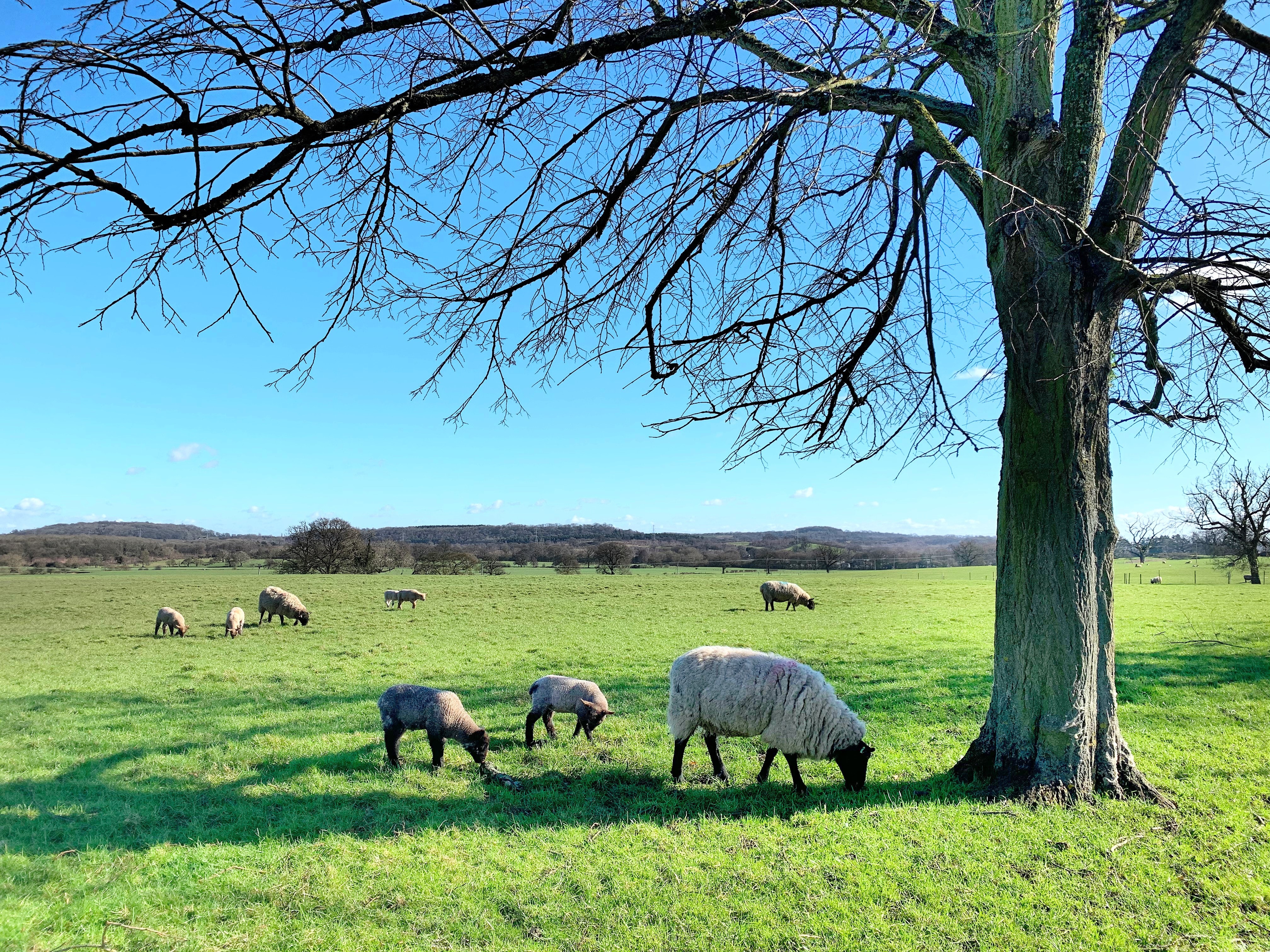
Photo credit: Shane Rounce

Paul’s second letter to Timothy focuses on the character of a faithful pastor. It is the follow-up to the first letter, which focused on the character of a faithful church. Paul’s goal in this personal letter is to encourage a timid but gifted young pastor. As we focus on facing our fears this week, a key idea is faith over fear. Today in our reading, Paul seeks to build up Timothy’s faith so that he can minister faithfully in Ephesus. These words also offer encouragement to us as we seek to minister to our communities.

Paul begins by reminding Timothy of his “authentic faith.” It is a faith rooted in his family upbringing. It remains in him but is also present in his family that is close by. Paul reminds Timothy of the blessing he was given by God through Paul’s laying on of hands. The gift of the Spirit came through this blessing. Of this Spirit Paul writes, “God didn’t give us a spirit that is timid but one that is powerful, loving, and self-controlled.” We too receive this gift and its power when we accept Jesus as our Lord and Savior.

In times of suffering and other hardship (when our fears usually rise up,) Paul encourages Timothy to “depend on God’s power.” Trust the faith and Spirit within – not on your own power. That will not be enough in the trials. Timothy is reminded that he was saved by grace (not by anything he did or can do) and that he has a “holy calling,” a purpose given him by God. We are all gifted by this sane grace and are all called according to our gifts. This is God’s purpose for us all, one body with many parts. Paul closes this section with a reminder that Jesus Christ brought life eternal through his death and brought true live now through the good news that he taught. May we claim and proclaim the good news of Jesus Christ, both for these days and for the life to come.

Prayer: Lord God, what encouraging reminders Paul offers to Timothy in today’s verses. These words and therefore this encouragement belong to us as well. Build up in us our faith through the Spirit. Fill us with power, love, and self-control as we strive to live out our faith in this world. Amen.


Leave a comment

Grace, Blessing, and Presence

Reading: Psalm 67

Psalm 67:1-2 – “Let God grant us grace and bless us… so that your salvation becomes known among the nations.”

This week we focus on God’s blessings – some physical and some spiritual. Our readings will culminate in Revelation with the tree of life that provides food and healing for the nations. Ezekiel 47 will also connect to this gift of God. Other readings this week focus on the peace, grace, and salvation offered by the Lord. We begin today with Psalm 67.

In the opening verses of Psalm 67 the writer invites God’s grace, blessing, and presence to be upon Israel. This is not just a request for Israel. These gifts from God will draw other nations to Israel so that they too can know the salvation that God offers. Our faith and our churches should function the same way. A quote often attributed to Francis of Assissi encourage us to preach the good news always, using words when necessary. God’s presence and love should be revealed in and through our lives, drawing others towards Christ and salvation.

Israel’s response and the response of those who receive salvation should be thanksgiving, celebration, and joy. God is just and fair and will guide all people to receive abundant life here and one day in the life to come. The physical joins these spiritual blessings in verse 6, where the psalmist acknowledges God’s hand at work. Here he or she writes, “The earth has yielded its harvest.” This too is a blessing from our creator God. It is how God designed and created this world. While this is yet to be realized, we pray for a time when all people experience the abundance that God intends for all the earth. This is God’s plan and design. With hope we join our voices with those in the far ends of the earth as we rejoice and say, thanks be to God!

Prayer: Lord God, we thank you today for the many ways in which you bless our lives. Here you are our provider and guide, our encourager and sustainer, our hope and our light. You call us to abundantly and graciously share these blessings with others, opening their hearts to receive from you. This is just the beginning though. You also offer eternity in your glorious presence through the salvation of our souls. For all of this, O God, we too thank you. Amen.


Leave a comment

Powerful Prayer

Reading: James 5:13-18

James 5:16b – “The prayer of the righteous person is powerful in what it can achieve.”

Today’s verses from James 5 fall under the heading “Final Instructions.” These words are a reminder to keep prayer at the center of our faith. James begins with two extremes. If we are suffering, then pray. If we are happy, then pray. Implied is this: If we are anywhere in between these extremes, then pray. God desires that our prayers are a constant conversation with God. This desire is not for God’s benefit but for ours.

James then turns to the power of corporate or intercessory prayer. When we are sick or when one we love is sick, we are to gather the elders or leaders of the church (by example not by virtue of title) to pray over the one who is sick and to anoint them with the oil of God’s blessing. James tells us, done from a place of sincere faith, this will lead to restoration of health.

The idea of living our faith together extends into the confession of our sins. James connects this practice to healing. When we harbor sin in our lives or when we are holding onto anger or hurt because of someone else’s sins against us, then we are not coming to pray in faith. This echoes Jesus’ words about being reconciled to one another before approaching the altar of God (Matthew 5:23-24.)

Connecting into the miracle of rain through Elijah’s faithful prayer, James writes, “The prayer of the righteous person is powerful in what it can achieve.” May this be true if us and of our prayers to God on high.

Prayer: Lord God, lead and guide us to be people of prayer. Draw us deep into regular time with you, sharing our joys and concerns, our sins and our thanksgiving. Through shared prayer draw us closer to one another, deepening and strengthening the bond of love. Thank you, Lord. Amen.


Leave a comment

Come Near

Reading: James 4:1-12

James 4:10 – “Humble yourselves before the Lord, and God will lift you up.”

Photo credit: Kyle Johnson

James 4 addresses the conflict in the early church. In general, conflict over the things of this world are normal in the world. It should not be so in the church. In the opening verses of chapter 4 James identifies the issue: “cravings that are at war.” He then names want and jealousy as the primary drivers of these cravings. Our human natures focuses on self and our desires for power, status, possessions. These desires, left unchecked, lead us down evil paths. On this path we “struggle and fight,” we gossip and judge and slander, and even “commit murder” in extreme cases

James chooses language such as “hostility… enemy…” because there is a battle within us. Echoing Jesus’ teaching about our inability to serve two masters, James pits friendship with the world against friendship with God. He then offers the Christian choice: “Submit to God. Resist the devil, and he will run away from you.” When we make this choice it leads us to repent of our sins, to purify our hearts. Continuing, we read, “Humble yourselves before the Lord, and God will lift you up.” Humility – thinking less of self and more of God and neighbor – is one of the key practices of an authentic faith and is absolutely essential in this battle. Walking in humility works against those worldly lures that tear apart community and fellowship.

Our prayer life is where much of this battle is fought. It is in prayer that we offer humble confessions and commi to repentance. It is in prayer that we find strength to resist the lures of this world. It is in prayer that we offer thanks for God’s blessings, provision, and grace. It is in prayer that we “Come near to God” so that “God will come near to you.” May it be so.

Prayer: Lord God, the walk of faith is not an easy walk. The voices of the world are loud and powerful. But you are far greater. Your Spirit places us within your power. In that place, fill us with strength today, O God, so that we can walk faithfully with you and with one another. Amen.


Leave a comment

God’s Promises

Reading: Numbers 13:25-33

Numbers 13:30 – “Now Caleb calmed the people before Moses and said, ‘We must go up and take possession of it, because we are more than able to do it.'”

This week, as we weave our way to the Jericho story and the fulfillment of some of God’s promises, we begin where most of us falter in our trust in said promises. In the story of God’s people, they have arrived on the edge of the Promised Land. In 13:1 God says to Moses, “Send out men to explore the land of Canaan, which I’m giving to the Israelites.” A leader from each of the twelve tribes is sent to explore the land which God promised to their ancestor, Abraham.

The twelve men return after exploring Canaan for forty days. Their report begins by stating that the land “actually is full of milk and honey.” This phrase is used often to describe the Promised Land – in Exodus 3 and 33, in Deuteronomy 6 and 26… It is a phrase that implies blessing and abundance. If this is actually true, then what of the promise given to Abraham and reiterated to Isaac, Jacob…?

The “but” comes next. There are powerful people living in huge fortified cities. And there are giants. The explorers mostly see challenge. Fear and doubt and mistrust rise up. Joshua and Caleb, though, see promise. It is Caleb who speaks up in faith, saying, “We must go up and take possession of it, because we are more than able to do it.” This is trusting in God’s promises. Fear, however, is greater this day. The men who felt like “grasshoppers” next to these giants convince the people that God’s promises cannot be trusted. There are giants there! They will return to wandering the desert until this generation dies off. Only Caleb and Joshua will one day enter the Promised Land.

Prayer: Lord God, in our hearts we know that your promises are true. You are always faithful and steadfast in your love for us, your people. Lord, in those moments when the world pushes up against our faith, in the times when fear and doubt rise, whisper into our hearts and minds. In your Spirit power, guide us to step forward unafraid, trusting in you alone. Amen.


Leave a comment

A Faith Witness

Reading: Psalm 116:1-2 and 12-19

Psalm 116:13 – “I’ll lift up the cup of thanksgiving. I’ll call on the Lord’s name.”

Psalm 116 is part of a collection of Psalms known as the Hallel. These songs were used in the Passover celebration. Psalms 113 and 114 were sung going up to Jerusalem. These two songs celebrate God’s power, might, rescue, and protection. Psalms 115-118 would be sung after the Passover meal. In the Christian tradition, this meal would occur on Maundy or Holy Thursday. These songs celebrate who and what God was and is and they witness to the peoples’ faith and commitment to God.

Psalm 116 begins with the psalmist declaring his or her love for God. This love is founded on God hearing their prayers for mercy. Because God hears, they will always call out to God. We can relate. When we feel like God is answering our prayers and is close to us, our faith soars and our love for God grows.

Verses 12-19 offer the psalmist’s response. Gratitude and acts of thanksgiving dominate these verses. In verse 13 the author writes, “I’ll lift up the cup of thanksgiving. I’ll call on the Lord’s name.” This cup overflows with God’s blessings. Lifting it and calling on God’s name are acts of worship. Keeping the promises made to God, done so publicly, reveals the psalmist’s strong commitment to God. This public witness encourages others in their faith. As we walk through Holy Week may all that we say and do “Praise the Lord!”

Prayer: Lord God, we join the psalmist in gratitude for your presence in our lives. We are so grateful that you hear our prayers. We celebrate the fact that you are on our side. Your love for us calls us to respond with acts of love towards you. May we witness well to our love of you this day and every day. Amen.


Leave a comment

Here and Now

Readings: Luke 17:20-21 and 22:14-20

Luke 17:21 – “Don’t you see it? God’s kingdom is already among you.”

In Luke 17 some Pharisees ask Jesus when God’s kingdom is coming. Maybe they hope Jesus will turn into the kind of Messiah they’re looking for: strong, powerful, able to defeat the Romans. Or maybe they hope that since Jesus claims to be the “Son of Man,” then he’ll be able to tell their when their Messiah will come. Inviting these religious leaders into the present reality, Jesus says, “Don’t you see it? God’s kingdom is already among you.” Open your eyes and hearts, it is here and now.

This can be a question Christians can ponder too. One can think that accepting Jesus will be a cure for all that ails us. One can think that life will only be blessed because we’re following Jesus. No, all of life still happens. Jesus will and does walk with us, bringing peace and hope in the storms, comfort and strength in the trials… In turn, we offer these to others. This is the kingdom of God at work here and now.

Almost a week later, Jesus gathers in Jerusalem with his disciples. It is Passover and they are gathered around the table. Jesus shares two interesting things with the disciples. First, he “earnestly desires” to share this meal with them. Second, he tells them, “I won’t eat it until it is fulfilled in God’s kingdom.” Little did they know, this would be the next day. Jesus then share the bread as his “body… given for you.” Then the cup is shared as the “new covenant… poured out for you.” After Jesus fulfills these words and their promise, completing this act of sacrifice, followers of Christ will remember this gift by celebrating Holy Communion. Each time, in that moment, God’s kingdom is here and now.

Prayer: Lord God, thank you for your presence with us and through us. When we experience or share your light and love, your grace and peace, your hope and strength, the kingdom of God manifests itself here and now. We are reminded of the depth of your light and love… in the sacrifice you made on the cross. When we remember this act, we are made new again, here and now. Thank you for this gift. Amen.


Leave a comment

But I Say to You…

Reading: Matthew 5:21-22 and 38-39

Matthew 5:21 – “You have heard that it was said…”

As the Sermon on the Mount progresses, Jesus begins to address the Law, starting in verse 17. He begins by stating that he did not come to do away with the Law and prophets but “to fulfill them.” Jesus declares that teaching and keeping the Law will result in righteousness. Then, in verses 21-48, Jesus teaches on the Law, calling on his followers to go above and beyond the basic letter of the Law. Each section begins with “You have heard that it was said…” followed by “But I say to you…” Each time Jesus expands the Law, getting down to the heart of the matter.

Our first verses deal with “Do not murder,” one of the 10 Commandments. Yes, Jesus begins, murder brings judgment. Then he expands this idea, getting down to the root causes, adding anger as something that places one in danger of judgment. And if one speaks harshly or cruelly to another, we are “in danger of a fiery hell.” Jesus goes even deeper in the next verses, demanding reconciliation and forgiveness, steps leading to the restoration of right relationship. We are not simply to stuff down our feelings of anger or judgement. We are to eradicate them if we want to be righteous.

Verses 38-38 deal with another Old Testament Law. This Law was given in Exodus 21, just after the giving of the 10 Commandments. “An eye for an eye…” was a means of limiting revenge and punishment. By Jesus’ time this has mostly shifted away from physical to monetary compensation. Again, Jesus calls his followers to more. He calls for forgiveness not revenge, for blessing not punishment. Jesus calls his followers to forgive as God forgives us – freely, generously, graciously. May it be so.

Prayer: Lord God, in each of these case studies of the Law, Jesus calls us to much more than the minimum. He calls us to stand out from the ways of the world, to rise up to the law of love in all situations. This is a call to surrender – to die to the human nature within us, to take on your nature. Lord, strengthen and encourage us in this pursuit of love. Be our guide. Be our power. Amen.


Leave a comment

Blessings and Peace

Reading: Luke 19:28-39

Luke 19:38 – “Blessings on the king who comes in the name of the Lord.”

As our passage begins, Jesus prepares to enter Jerusalem. He is just east of the city itself. He gives instructions to two disciples to go and get a colt. Following Jesus’ directions, all unfolds just as Jesus said it would. Even this is a demonstration of his power.

In verses 35-38 we see the actions of others taking over. It is the disciples who place their coats and then Jesus on the colt. It is the disciples who place clothes on the road and rejoice as they near Jerusalem. The crowd begins to praise God because of the “mighty things they had seen” Jesus do. They begin to shout, “Blessings on the king who comes in the name of the Lord.” Why do they do and say all of these things?!

The disciples, the crowd, the Pharisees, and even Jesus – they knew the scriptures, the words of Isaiah, the Psalms written for such a day as this. Prophecy was being fulfilled. Their actions, their words – they were following the script. These events, this fulfillment brought joy and excitement to the people.

Another entry also occurred, on the other side of the city. Each year, at the Passover and other major festivals, Herod would ride into Jerusalem. He would ride in on a mighty warhorse with an entourage of Roman soldiers. This demonstration of force was a reminder to Jerusalem and its leaders: Rome is the power. The counterpoint is Jesus. He brings blessings and peace. What a contrast between the ways of the world and the way of Christ.

Prayer: Lord God, thank you for the way of Jesus – the way of joy and blessing, of humility and peace. This stands in such stark contrast to the ways of the world: force and power and might. This divide continues today. O God, give us the courage and the faith to go into places of darkness and evil, empowered by the light of Christ, challenging these harmful and destructive ways. May our light be fueled by love, bringing blessing and peace. Amen.


Leave a comment

A Regular Practice

Reading: Isaiah 56:1, 3-5, 7-8

Isaiah 56:1 – “Act justly and do what is righteous because my salvation is coming soon.”

The opening of Isaiah 56 is about keeping the Sabbath. The idea of Sabbath originates in the creation story. After creating the heavens, the earth, and everything in and on them, God rested. When God began to formalize who and what God’s people would be, the practice of Sabbath was included in the Ten Commandments. During the time in exile and the period that followed, the keeping of the Sabbath was especially important. It set the Jews apart from the rest of the world. To be Sabbath-keepers remains counter-cultural.

In today’s reading Isaiah is reminding Israel that Sabbath is not just for the Jews. The idea of including immigrants and servants has been a part of Sabbath ever since Moses received what we identify as Exodus 20:8-11. Animals and the earth itself are part of Sabbath rest. Isaiah includes the eunuchs and other outcasts in his words that declare that God’s family and home are places of welcome and inclusion for all people who honor the covenant, who live according to God’s will and ways.

As I reflect on these words today I am struck by how wide open God’s heart is for all who seek to walk as a child of God. I’m also becoming aware that Sabbath is aimed at creating a just world. Rest is part of God’s design for all things – people and all of creation. This concept of rest and shalom, of blessing and renewal also reveals the wideness of God’s love for all people and for all of creation. It is in these times of not doing that we can foster our relationships with God and with one another. This investment of time builds connection and it builds community. May Sabbath be a regular practice for you and for me as we seek to build God’s kingdom here and now.

Prayer: Lord God, thank you for the gift of Sabbath. This time set apart has the power to deepen our love for you and our love for each other. Open us to the wideness of your heart and your love as we practice this discipline. Lead and guide us in this regular practice, O God, so that holiness and justice, and peace and righteousness abound in our lives and in our world. Amen.