pastorjohnb

Thoughts and musings on faith and our mighty God!


Leave a comment

Abundant and Generous

Reading: Isaiah 55:6-11

Isaiah 55:7 – “Let them return to the Lord so that he may have mercy on them… because he is generous with forgiveness.”

Photo credit: Freestocks

Isaiah 55 is an invitation to the feast of the Lord. The rations of captivity will become an abundant divine banquet. The covenant of love between God and Israel will be renewed. Through the prophet, God is telling Israel that pardon and return is possible. There are times in our lives when a relationship is strained or broken and we wonder if things can ever be made right again. We wonder if pardon and renewal are even possible.

Verses 6 and 7 reveal the first steps for Israel. First, seek and call on the Lord “while he is yet near.” The time is now. Isaiah invites the wicked to turn from their sinful ways and schemes. For us, these might be first steps too. To begin healing what is broken, seeking God’s wisdom and guidance in prayer is step one. And if the hurt or harm is ongoing, we must certainly stop this at once.

In the last part of verse 7 we read, “Let them return to the Lord so that he may have mercy on them… because he is generous with forgiveness.” God desires to forgive and restore, to renew the covenant relationship. For Israel and sometimes for us, we do not understand God’s terms. Our rational and prideful ways can block mercy and forgiveness. This is why we’re reminded that God’s ways and plans are so much higher than ours. God pours out generous forgiveness. With God, these promises and invitations, they are like the rain and snow that renews the earth. If we turn to God, if we abandon our sinful ways, then we will experience generous and abundant forgiveness and renewal. Following this model we can also experience forgiveness and renewal in our own broken relationships. May it be so.

Prayer: Lord God, thank you for your generous forgiveness and for your deep desire to walk with us, fallible as we are. Your grace and your love go far beyond our understanding yet we can grasp how we are to live and be in the world, how we are to treat one another. Forgiven and renewed ourselves, empower us to practice well your generous forgiveness and abundant love and grace. Amen.


Leave a comment

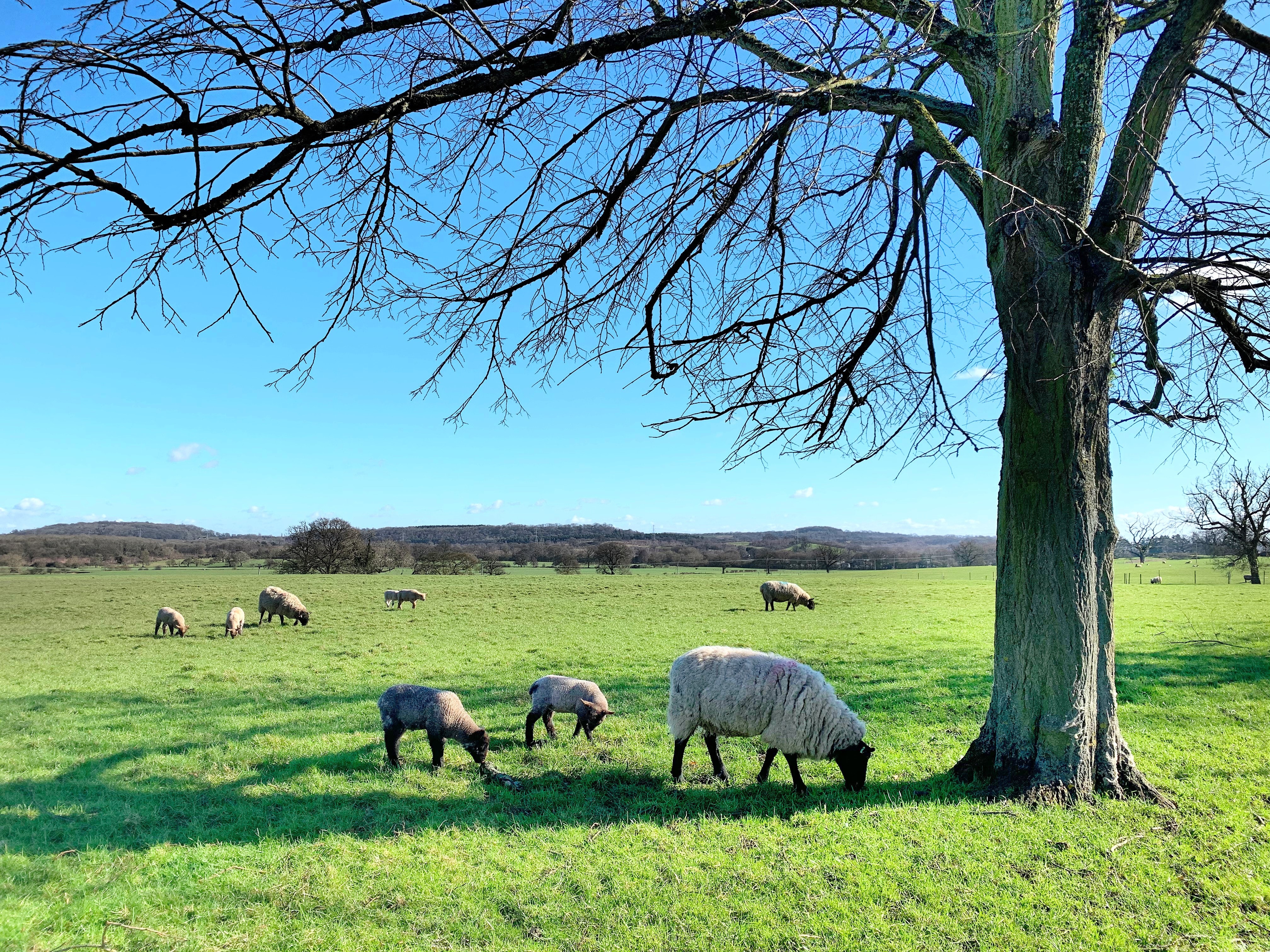
A Good Shepherd

Reading: Ezekiel 34:11-12 and 20-31

Ezekiel 34:27 – “They will be safe on their fertile land, and they will know that I am the Lord when I break the bars of their yoke.”

Photo credit: Ronnie Khan

Chapter 34 begins with the denouncement of Israel’s current leaders. What was the case before exile has continued in exile. God through Ezekiel pronounces doom on these poor leaders for living in luxury while ignoring the weak, the sick, the injured, the strays, the lost. There are many injustices so the flock scattered and then became prey. God promises to hold these bad shepherds accountable.

Beginning in verse 11, God offers the remedy. Here God proclaims: “I myself will search for my flock and seek them out… I will rescue them…” God will gather the scattered and care for the weak, the sick, the injured… As we continue in our reading we see that God will judge between the “fat and lean” sheep – between those living in luxury and those who struggle to survive.

God promises restoration, a new era. A David-like ruler will be appointed and a new covenant of peace will be established. Rains of blessing will pour down. Oppression and injustice will be no more. In verse 27 we read, “They will be safe on their fertile land, and they will know that I am the Lord when I break the bars of their yoke.” Without the yoke of oppression and injustice, there will be peace. There will be no famine; there will be no disgrace.

While the bad shepherds ignored these words of judgment, these words would offer great hope to the weak, the sick, the injured… to those living on the margins and edges. These words feel very relevant today. As injustices scatter people, as oppression sits heavy on others, as callous acts increase hunger, the people of God long for a good shepherd – not just for ourselves but also for the least of these among us. God’s children long for the rains of blessing and for a time of peace and grace. O God, may it be so.

Prayer: Lord God, you’ve always, always, always had a heart for the weak, the sick, the injured… You’ve always, always, always called for the faithful to join you in your care for the least of these. Lord, bridge the huge gulf between our reality and your preferred future. Use us to be a part of that bridge, each in our own ways caring for the weak, the sick, the injured… for the scattered and the oppressed. Amen.


Leave a comment

An Intent to Obey and Honor

Reading: Luke 15:13-19

Luke 15:16 – “He longed to eat his fill from what the pigs ate, but no one gave him anything.”

Photo credit: Mitchel Lensink

The parable of the lost son is well-known. In his youthful pride the younger son demands his share of the inheritance. He is ready to be his own man. As our reading begins the young man gathers all he has and travels to a land far away to make his mark on the world. But the lost son was not ready. He quickly wasted his wealth in selfish and extravagant living. Far from home, with no resources, the young man suffers during the famine that strikes the land.

The lost son finds work feeding pigs, an unclean animal according to Jewish law. He is low as low can get. In verse 16 we read, “He longed to eat his fill from what the pigs ate, but no one gave him anything.” In deep trouble and in great need, the prodigal son comes to his senses. It may be tempting to tsk-tsk the young man, but we’ve all likely been there. For some of us, more than once or four times. We have tried everything we can think of. We’ve tried bargaining with God. At rock bottom, alongside desperation, humility begins to kick in. A willingness to offer apologies and to seek forgiveness replaced the pride that led us astray.

The young man resolves to go home, to admit his sin against his father and against God, and to ask to simply be a hired hand. This place of mind and heart reminds me of a line from John Wesley’s Covenant Prayer: “I am no longer my own, but thine. Put me to what thou wilt, rank me with whom thou wilt.” It is a prayer of surrender and humility. These words declare an intent to obey and honor God in all things. May this intent be revealed in all we do, say, and think.

Prayer: Lord God, pride is so dangerous. Not only does it place self first, it also places others below our judgment seat. When we enter this dangerous place, O God, lead us to a place of surrender. Maybe through suffering, maybe by another means, draw us back into relationship, back to a place where your will and way become our will and way. Thank you for your patience and for your grace. Amen.


Leave a comment

A Hand Always Extended, Always Giving

Reading: Isaiah 55:6-11

Isaiah 55:9 – “Just as the heavens are higher than the earth, so are my ways higher than your ways, and my plans than your plans.”

Today we turn to Isaiah 55, at the end of what is known as ‘Second Isaiah.’ This middle section jumps to the time in exile in Babylon, which is drawing to a close by chapter 55. This chapter is titled “An Invitation to the Feast” – an invite to return to covenant relationship with God. Verse 6 begins our reading today with “Seek the Lord when he can still be found.” God is extending a hand to Israel. Will they take God’s hand? Do we take it when God extends it to us?

The wicked are invited to abandon their evil and selfish schemes. If willing, they are then invited to return to the Lord, “so that he may have mercy on them.” This too is God extending a hand. Yes, all are invited into relationship with God. Why? “Because he is generous in forgiveness.” Being in relationship is more important to God than holding onto past sins. How gracious!

And how unlike us. Yes, God is not the same as us. God’s plans are not our plans. Our ways aren’t naturally God’s ways. That is why we must work at being in a relationship with God. In verse 9 we read, “Just as the heavens are higher than the earth, so are my ways higher than your ways, and my plans than your plans.” We must work at our relationship with a God who we’ll never fully understand or comprehend.

The passage for today closes with an illustration of verse 9. God designed creation so that the rain and snow water the earth, providing for humankind’s physical needs. In the same way, God’s word doesn’t return empty. It has purpose. God’s word enters in and settles into our hearts and minds, providing for our spiritual needs, accomplishing God’s purposes. Sometimes the word is like a seed, planted until the time comes for it to take root and grow. Other times God’s word gives us just what we need in the moment – encouragement, hope, comfort, peace, strength… So generous! Thanks be to God!

Prayer: Lord God, your hand is always extended to us in love. In all situations and at all times, you desire to be present and to give us what you know we need. Help us to understand and accept your provision, especially when it is your will and way, not ours. Humble us to walk in covenant relationship with you. Amen.


Leave a comment

Has Been, Is, and Always Will Be

Reading: 1st Kings 8:46-53

1st Kings 8:48 – “And if they return to you with all their heart and being… listen to their prayer and request.”

Photo credit: Diego Gennaro

Our passage today comes from Solomon’s prayer during the dedication of the temple. Seven years in the making, all is now complete. Standing beside the altar, Solomon reminds God of the covenant, of God’s promises, and of the temple as God’s dwelling place. These words also remind Israel of who and what God has been, is, and always will be.

As we turn to verse 46 Solomon acknowledges a reality: “When they sin…” As humans we are prone to sin. Perhaps that is why he raises this subject for the third time in this prayer. Solomon foresees that the people’s sin will lead to defeat and exile. In that place, Solomon asks about God’s response when the people change their heart and beg God for mercy.

Solomon continues with these words: “And if they return to you with all their heart and being… listen to their prayer and request.” If they change and if they pray towards the temple, towards the land that God gave them, then God will listen. Solomon believes that God will “Do what is right for them, and forgive your people.” Just as we are sinful by nature, by nature God is merciful, loving, and forgiving. Solomon is reminding God, himself, Israel, and us of what and what God has been, is, and always will be. For the everlasting covenant, for the steadfast promises, for God’s love, mercy, and grace, we say thanks be to God!

Prayer: Lord God, we are reminded today of our weakness and of your strength. We are often tempted and we sin against you. But you never change. You remain steadfast and true, loving and forgiving. As we seek to become more and more like you, develop these same qualities in our hearts. Modeling who and what you are, O God, make us more like you. Amen.


Leave a comment

We Are All Called

Reading: Luke 1:42-55

Luke 1:52 – “He [God] has pulled the powerful down from their thrones and lifted up the lowly.”

Photo credit: Fuu J

Our passage today begins as Elizabeth welcomes Mary into her home. She “blurted out” a greeting, so moved was she by what is stirring inside of her. Moved by the child she carries and by the Spirit, Elizabeth celebrates God’s blessings upon Mary. She ponders aloud why she is honored to be visited by the one carrying the Lord in her womb. Elizabeth rejoices that Mary said “yes” to God’s invitation to bear the Savior of the world.

In verses 46-55 we find what is often called the “Magnificat.” This Latin word translates “magnify” and that is what Mary does in her praise song to God. Mary rejoices over finding God’s favor, in being lifted from low to high. She also rejoices in the opposite reality that is also part of God’s upside-down kingdom, singing, “He [God] has pulled the powerful down from their thrones and lifted up the lowly.” As Mary continues she notes that the hungry are filled and the rich are left empty-handed. With eyes of faith Mary sees that through this unfolding, miraculous birth story, God is coming to Israel, just as promised in the covenants of old.

Both Elizabeth and Mary represent people who heard and felt God’s call upon their lives. Both willingly stepped forward in faith, humbly offering their lives to bring God the glory. While we may not receive an angelic visit (or we might,) God still clearly speaks by the whispers and nudges of the Holy Spirit. We are all called, in one way or another, to humbly offer our lives for God’s glory. May it be so when we’re called.

Prayer: Lord God, draw us deeper into our daily walk with you. Open our souls and our spirits to your story of faith that has been unfolding down through the generations. Engaged in the story, give us a willing heart to step into the story as you call us forward. Enable us to hear the calls and empower us to say “yes.” In all things may our lives bring you the glory and the praise. Amen.


Leave a comment

Answered Prayers

Reading: Joshua 4:20-24

Joshua 4:21 – “In the future your children will ask their parents, ‘What about these stones?'”

As the Israelites crossed into the Promised Land, they passed through the waters of the Jordan River much like their ancestors passed through the Reed (or Red) Sea. This time, when the feet of the priests who carried the ark of the covenant touched the water, it parted. What has been at flood stage stopped flowing and backed up to the north so that the nation could cross over on dry land. Imagine what the people of Jericho thought as they heard reports of what happened that day.

Joshua commanded each tribe to pick a man, a representative. These men picked up a large stone from the middle of the river as they crossed over. In verse 20 we’re reminded that Joshua set up the twelve stones as a memorial marker of what had just happened. Then he says to the Israelites: “In the future your children will ask their parents, ‘What about these stones?'” Joshua is not just talking about their actual children. He is also speaking of the generations and generations after who will ask the question. The basic response follows in the rest of our reading for today.

To make it a good story it would need some context and perhaps a little build up. One would certainly include the “why” of the story: to fulfill God’s covenant promise to Abraham. And if it were an honest retelling, they’d tell if the prayers they prayed to God – before, during, and after. They are prayers we would have all prayed. To look at a river at flood stage and to think about walking through it -> prayer. To walk through with water piling up beside you -> prayer. To look back as the rushing water returned to its bed -> prayer. Yes, the whole story would’ve held stories of God’s power and might. And it certainly would’ve included stories of how God answered their honest prayers.

Prayer: Lord God, when you move in our lives or in the lives of those we know, open our eyes to see. Just as you parted the Jordan, you continue to make a way for us when only you can. Guide us to connect our honest prayers to your actions, building our faith. Amen.


Leave a comment

Our Great High Priest

Reading: Hebrews 10:19-24

Hebrews 10:19 – “Brothers and sisters, we have confidence that we can enter the Holy of Holies by means of Jesus’ blood.”

Hebrews 10 begins with a description of Christ’s “once-for-all” sacrifice. The author explains that Jesus, through his sacrificial death, put an end to the old sacrificial system. This system was unable to “take away our sins.” In addition, the mechanics of the system prevented a personal connection to God. The priest heard your sin and offered the atoning sacrifice on your behalf. There was also a second barrier to God. The Holy of Holies, the space which held the ark (God’s presence,) was separated off by a huge curtain. The high priest alone entered this most intimate and sacred space just once a year, seeking forgiveness and blessing for the people of God.

Verses 19-24 are a summary of what Christ’s sacrifice means for us. In the first verses we read, “Brothers and sisters, we have confidence that we can enter the Holy of Holies by means of Jesus’ blood.” As Christ breathed his last breath the curtain in the temple was literally torn in two, top to bottom. The physical barrier was removed. Christ opened the way, “a new and living way,” so that we could have a personal relationship with God. Christ is our new “great high priest” that invites us to draw near to God with a genuine, cleansed heart. Forgiveness and cleansing are ours every time we confess and repent of our sins. Jesus’ blood was and is the “once-for-all” sacrifice that stones for our sin. Hebrews also reminds us that we can “hold onto the confession of our hope,” because Jesus is faithful. We have confessed Jesus Christ as our Lord and Savior. It is only in and through him that we can remain faithful too. Thanks be to God.

Prayer: Lord God, thank you for the new covenant, one written on our hearts because Christ’s Spirit dwells in our hearts. This personal and intimate connection is a great gift. You are with us always. Lord, lead and guide us to live out our faith, encouraging one another in love. May this love lead us to be and do good in the world, drawing others into the new and living hope that we have in you. Amen.


Leave a comment

The Kingdom of God

Reading: John 18:33-38a

John 18:36 – “My kingdom doesn’t originate from this world.”

As we continue in John’s passion story, Jesus is before Pilate for a second conversation. Verses 28-32 hold the first exchange. In this encounter it is clear that the religious leaders want Jesus charged and killed. In the words John shares, there is no stated charge. It is clear that only Pilate has the power and authority to bring about Jesus’ death. As we turn to verse 33 we can infer that there must have been more to the conversation about Jesus. In this verse Pilate asks Jesus, “Are you the king of the Jews?” This is a question without a “yes” or “no” answer in this setting.

Jesus responds with a question. He is trying to force Pilate’s hand. As the conversation continues, Pilate shares that the Jews and chief priests have handed him over. Pilate’s “What have you done?” reveals his level of concern. Prior to this, Jesus was not on Rome’s radar. If Jesus is indeed a rebel with messianic claims then he is a threat to Rome. If not, Pilate has no issues with Jesus. Jesus confirms that he is not a physical threat to Rome, stating, “My kingdom doesn’t originate from this world.”

Pilate hears “kingdom” and asks Jesus if he is indeed a king. Again, not a yes/no question. Jesus tells Pilate that he came into the world “to testify to the truth.” Pilate scoffs at this answer but is sure that Jesus is no threat to him or to Rome. No, Jesus is not an immediate threat. But Jesus is a threat to all worldly kingdoms.

Jesus is a threat because of what “truth” is. Jesus came to fulfill God’s covenant plan. He revealed in word and deed what it looks like to love God and neighbor with all of one’s being. This impacts all of our relationships and all of our choices – social, religious, personal, vocational, political, economic. The world’s kingdoms run on selfishness, greed, power, pride. Yes, Jesus’ kingdom is a threat to the kingdoms of this world.

Prayer: Lord God, we feel the pull of both of these kingdoms. Part of us is human so we feel the call for more, for self. Yes we are also of your kingdom, brothers and sisters in Christ. Guide us to align our hearts, our words, our actions with your kingdom. Use us to build your kingdom here on earth. Amen.


Leave a comment

Here and Now

Readings: Luke 17:20-21 and 22:14-20

Luke 17:21 – “Don’t you see it? God’s kingdom is already among you.”

In Luke 17 some Pharisees ask Jesus when God’s kingdom is coming. Maybe they hope Jesus will turn into the kind of Messiah they’re looking for: strong, powerful, able to defeat the Romans. Or maybe they hope that since Jesus claims to be the “Son of Man,” then he’ll be able to tell their when their Messiah will come. Inviting these religious leaders into the present reality, Jesus says, “Don’t you see it? God’s kingdom is already among you.” Open your eyes and hearts, it is here and now.

This can be a question Christians can ponder too. One can think that accepting Jesus will be a cure for all that ails us. One can think that life will only be blessed because we’re following Jesus. No, all of life still happens. Jesus will and does walk with us, bringing peace and hope in the storms, comfort and strength in the trials… In turn, we offer these to others. This is the kingdom of God at work here and now.

Almost a week later, Jesus gathers in Jerusalem with his disciples. It is Passover and they are gathered around the table. Jesus shares two interesting things with the disciples. First, he “earnestly desires” to share this meal with them. Second, he tells them, “I won’t eat it until it is fulfilled in God’s kingdom.” Little did they know, this would be the next day. Jesus then share the bread as his “body… given for you.” Then the cup is shared as the “new covenant… poured out for you.” After Jesus fulfills these words and their promise, completing this act of sacrifice, followers of Christ will remember this gift by celebrating Holy Communion. Each time, in that moment, God’s kingdom is here and now.

Prayer: Lord God, thank you for your presence with us and through us. When we experience or share your light and love, your grace and peace, your hope and strength, the kingdom of God manifests itself here and now. We are reminded of the depth of your light and love… in the sacrifice you made on the cross. When we remember this act, we are made new again, here and now. Thank you for this gift. Amen.