pastorjohnb

Thoughts and musings on faith and our mighty God!


Leave a comment

An Invitation to All

Readings: Mark 14:22-24 and Luke 22:19-21

Mark 14:24 – “This is my blood of the covenant, which is poured out for many.”
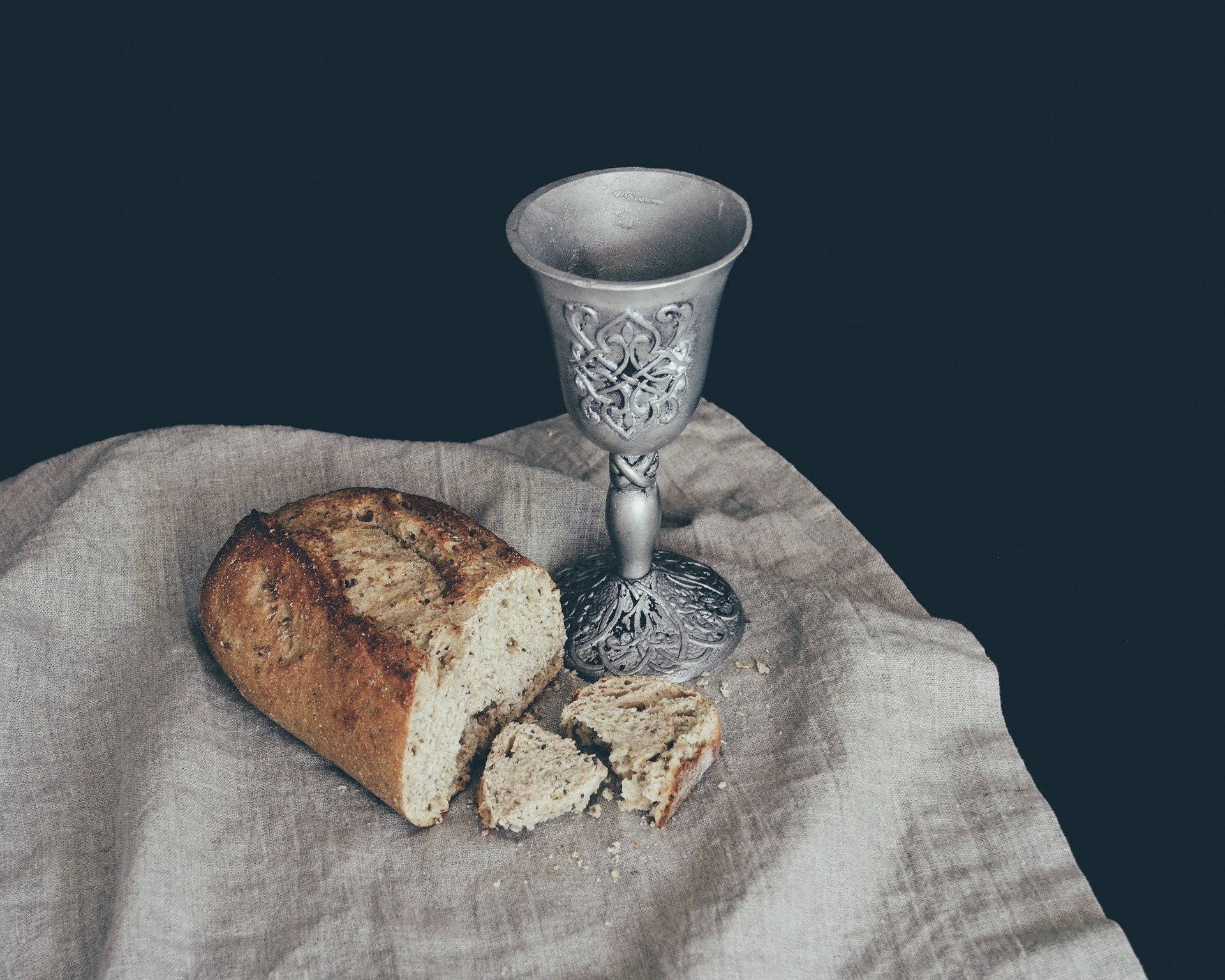
In both passages that we read today, we see Jesus instituting the sacrament of communion. This event is set within the context of the Passover meal. This meal was an annual event in which the Jews would remember and celebrate how God saved them as the angel of death passed over their houses. This final plague led to Pharaoh releasing Israel from bondage and slavery.

Mark and Luke both present Jesus offering the bread as symbolic of his body, broken for them and for us. Jesus’ body will be broken on the cross. In using the common element amongst the rich and the poor and all in between, Jesus takes the everyday and connects bread to himself and to us all.

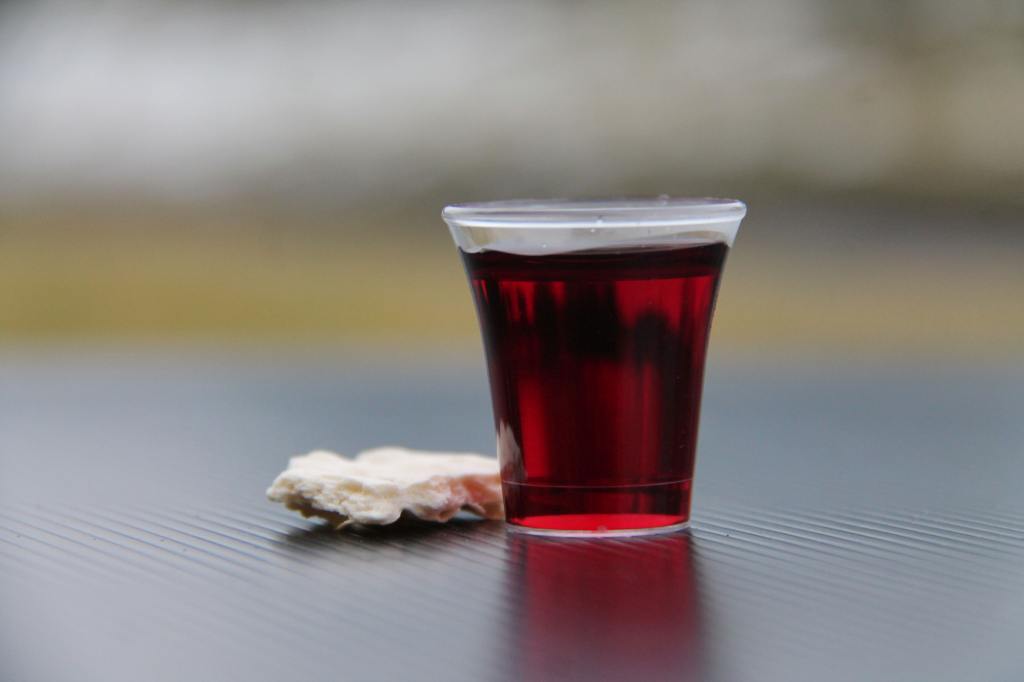
Both gospels present the cup – representative of Jesus’ blood – as poured out for many, establishing the “new covenant.” Mark recalls these words of Jesus: “This is my blood of the covenant, which is poured out for many.” The new covenant is wrapped in mercy and grace, in forgiveness of sins. This common element of wine – again Jesus connecting the ordinary to his extraordinary gift.

In Mark’s gospel they sing a few songs and head to the Mount of Olives. But in Luke’s gospel, Jesus says, “But look! My betrayer is with me; his hand is on this table.” Jesus celebrates the first communion knowing that Judas will betray him. This is an invitation to us all – sinners each of us – to come to the table of grace. There we too will find welcome and forgiveness. Thanks be to God.

Prayer: Lord God, we humbly thank you for the gift of grace. Your Son did for us what we could not and cannot do for ourselves. It is only because of and through Jesus’ sacrifice that we are forgiven and made new, freed from the bonds of sin and death. Thank you, thank you, thank you. Amen.


Leave a comment

Radical and Unconditional

Readings: Isaiah 56:1-8 and Matthew 21:12-16

Isaiah 56:6-7 – “Everyone who keeps the Sabbath… who hold fast to my covenant: I will bring them to my holy mountain, and bring them joy in my house of prayer.”

Photo credit: Jon Tyson

Beginning with Isaiah 56 we feel the connection that God desires to have with all people who act justly and do what is right. To those who keep the Sabbath and honor the covenant, God’s salvation is “coming soon.” God’s prophet includes two groups that are normally excluded from the temple: immigrants and eunuchs. In verses 6 and 7 we read, “Everyone who keeps the Sabbath… who hold fast to my covenant: I will bring them to my holy mountain, and bring them joy in my house of prayer.” In New Testament language we would say there is no Jew or Gentile, no slave or free, no rich or poor… All people – all – who are devoted to God’s ways are welcome in God’s “house of prayer,” the temple. These were radical words to the closed-circle Jews of Isaiah’s day.

Turning to Matthew 21 we see another prophet doing and saying radical things. Entering God’s house, Jesus forces out the people changing money into temple coins and the folks selling animals for sacrifice. Quoting from our Isaiah 56 passage and Jeremiah 7:11, Jesus denounces these profiteering practices. Cleared of these “crooks,” the blind, the lame, and the children enter the temple. Jesus makes space for these normally excluded groups, mirroring the spirit of Isaiah 56. He heals the blind and the lame and rejoices over the children. The religious leaders are angry about all of this. Their closed circle has been broken wide open by the radical and unconditional love of God present in Jesus. May this breaking open of the circle and of our hearts also be our regular practice as we seek to follow Jesus’ example.

Prayer: Lord God, it is a beautiful thing when you reclaim and include those often excluded and unwelcome by the religious of the world. You create each and every one of us in your image. You weave each of us together in the womb with intention and purpose. From our first breath you long to walk in relationship with each of us. Lord, as you walk with us, fill us with your radical and unconditional love. Filled with this great love, may our regular habit be to include and welcome all people into your house and into your family. Amen.


Leave a comment

A Regular Practice

Reading: Isaiah 56:1, 3-5, 7-8

Isaiah 56:1 – “Act justly and do what is righteous because my salvation is coming soon.”

The opening of Isaiah 56 is about keeping the Sabbath. The idea of Sabbath originates in the creation story. After creating the heavens, the earth, and everything in and on them, God rested. When God began to formalize who and what God’s people would be, the practice of Sabbath was included in the Ten Commandments. During the time in exile and the period that followed, the keeping of the Sabbath was especially important. It set the Jews apart from the rest of the world. To be Sabbath-keepers remains counter-cultural.

In today’s reading Isaiah is reminding Israel that Sabbath is not just for the Jews. The idea of including immigrants and servants has been a part of Sabbath ever since Moses received what we identify as Exodus 20:8-11. Animals and the earth itself are part of Sabbath rest. Isaiah includes the eunuchs and other outcasts in his words that declare that God’s family and home are places of welcome and inclusion for all people who honor the covenant, who live according to God’s will and ways.

As I reflect on these words today I am struck by how wide open God’s heart is for all who seek to walk as a child of God. I’m also becoming aware that Sabbath is aimed at creating a just world. Rest is part of God’s design for all things – people and all of creation. This concept of rest and shalom, of blessing and renewal also reveals the wideness of God’s love for all people and for all of creation. It is in these times of not doing that we can foster our relationships with God and with one another. This investment of time builds connection and it builds community. May Sabbath be a regular practice for you and for me as we seek to build God’s kingdom here and now.

Prayer: Lord God, thank you for the gift of Sabbath. This time set apart has the power to deepen our love for you and our love for each other. Open us to the wideness of your heart and your love as we practice this discipline. Lead and guide us in this regular practice, O God, so that holiness and justice, and peace and righteousness abound in our lives and in our world. Amen.


Leave a comment

Communion = Community

Reading: 1st Corinthians 11:23-32

1st Corinthians 11:28 – “Each individual should test himself or herself, and eat from the bread and drink from the cup in that way.”

Photo credit: Geda Zyvatkauskaite

We seek to “stay in love with God” through various means of grace. One of these is Holy Communion. This sacrament first reminds us of Christ’s loving sacrifice on our behalf. The giving of his innocent blood in place of ours made atonement for our sins, paying the price for forgiveness. We approach this gift with a deep sense of awe and reverence.

Sometimes we do something for a while and it becomes just going through the motions. Perhaps you’ve felt that before with something like the Lord’s Prayer. For the church in Corinth, the Lord’s Supper had become one of those things. It was now causing more harm than good. It was creating division in the church. At this point it was more like what we’d call a “love feast” than what we recognize as a communion with its liturgy and formality. In Corinth, it had become a “private meal” with the rich getting drunk and stuffed while the poor were left hungry and thirsty. The church has forgotten that love, sacrifice, service, and community were at the heart of the Lord’s Supper.

Paul addresses this situation by reminding the church that the Lord’s Supper is centered on and celebrates the new covenant made by Jesus Christ. He also reminds them, though, that this communal celebration begins with individual preparation: “Each individual should test himself or herself, and eat from the bread and drink from the cup in that way.” Each person must come before God, humbling confessing and repenting of their sins. This necessary step prepares each to be made “new” again as the blood of the Lamb washes away their sin. To not take this step is to hide or hold onto one’s sin. This brings judgment and condemnation instead of forgiveness and grace.

For each person to come before God, to confess and repent, it levels the playing field. It places us all equally before the table of grace, all sinners redeemed by his blood. In this way, community is restored. It brought one body to the one bread, one blood. That was Paul’s goal. It should be our goal. May it be so.

Prayer: Lord God, draw us to our knees, to the place of confessing and repenting of our sins. Open up our hands and hearts to release all that separates us from you and from one another. As we come clean, thank you for making us clean. Thank you for your great love that washes away our sins and failures. Thank you for your redeeming love. Amen.


Leave a comment

Love Lived Out

Reading: Deuteronomy 6:4-9

Deuteronomy 6:5 – “Love the Lord your God with all your heart, all your being, and all your strength.”

Today and this week is all about staying in love with God. This is John Wesley’s third simple rule. This last “rule of life” empowers one’s efforts to keep the first two rules: “do no harm” and “do good.” These two encapsulate the command to love neighbor as oneself. Our love of neighbor is rooted in our love of God.

In verse 4 we are reminded that there is only one God. Our God is not one of many gods. This too is how God looks at you and at me and at everyone. Each of our relationships with God is supremely important to God. I’m reminded of a line from the book The Shack. Each time Mac asks God about this person or that person, God says, “I’m especially fond of that one.” Every time.

We read one of the two great commands in verse 5: “Love the Lord your God with all your heart, all your being, and all your strength.” Love was a word used in ancient covenants. In this Near Eastern context this kind of love implied total obedience and faithfulness to the covenant. But because our God is a relational God, this concept of love extends far beyond our expected external and ethical behaviors. Within the faith context, there is an added depth of internal devotion. Hence the charge to love God with all that we are: heart, being, and strength.

Verses 6-9 reveal how this internal, comprehensive love of God is meant to impact all of communal life. We are to remind ourselves and our children to love God and neighbor, “talking” about it all the time. We are to “write” this command to love on the hand and forehead, on the doorframes of our houses, and in the gates of our cities. We are to talk and write about the love of God in our homes, in our neighborhoods, and in our communities. We talk and write by being love lived out in all aspects of life. May it be so.

Prayer: Lord God, this call to love is comprehensive. May it begin in our heart and soul, growing our love of you through worship, study, meditation, and prayer. Then may it grow from this place, moving out into all of our relationships, allowing each person we encounter to experience your great love for them. Amen.


Leave a comment

High Priest, Mediator, Perfect Sacrifice

Reading: Hebrews 7-9

Hebrews 9:24 – “Christ didn’t enter the holy place… made by human hands, but into heaven itself, so that he now appears in God’s presence for us.”

The focus of Hebrews 7-9 is to establish Jesus as high priest forever, as the mediator of the new covenant, as the perfect sacrifice for the sins of the world. The writer begins his or her case by looking back to Melchizedek, the priest of God who blessed Abraham. He was not a Levite but remains “a priest for all time.” Yes, earthly priests will collect a tithe and will offer sacrifices again and again. But they die and don’t continue serving. The Levitical priesthood, part of the old covenant, offered sacrifices that “can’t perfect the conscience.” The guilt and the shame and the power of sin, they remain.

Jesus came as the “guarantee of a better covenant.” High priest forever, Jesus is “holy, innocent, incorrupt, separate from sinners, raised high above the heavens.” He offered himself, “once for all,” providing his own blood as the blood necessary for forgiveness. This initiated the second or new covenant. Quoting from Jeremiah 31, the author of Hebrews declares that God revoked the old covenant (written under the Law) and prepared for a new covenant (written on our hearts) and sealed by the blood of Jesus. Unlike the old covenant, Jesus’ blood will “wash our consciences clean,” freeing us to serve the living God. Jesus himself was “the sacrifice without any flaw.”

The mediator of the new covenant, Jesus Christ, offers all who are called the promise of “eternal inheritance.” Leading the way, “Christ didn’t enter the holy place… made by human hands, but into heaven itself, so that he now appears in God’s presence for us.” In heaven, Jesus mediates for us, standing for us in God’s presence. We await Christ’s second coming, when he will save and redeem us and our broken world. In this advent season, we say, come, Lord Jesus, come.

Prayer: Lord God, we are so grateful for the gifts you gave us through the sacrifice of your Son, Jesus Christ. Through his blood we are forgiven and cleansed, sins washed away, made holy in your sight. Christ did what the old covenant never could do. He made a new way, one that opened eternity to all who call on Jesus as Lord and Savior. Thank you for these gifts. Amen.


Leave a comment

From One Degree to the Next

Reading: 2nd Corinthians 1-3

2nd Corinthians 2:16 – “We smell like a contagious dead person to those who are dying, but we smell like the fountain of life to those who are being saved.”

Today we begin Paul’s second letter to the Corinthian church. It was written about 18 months after his first letter, written on the heels of a humiliating personal experience in Corinth. Of his 13 letters, this is Paul’s most personal letter. He wants to reestablish his place of authority as an apostle and he wants to restore his relationship with the church.

Chapter 1 begins with a declaration that God is the God who comforts us. God does this so that we can comfort others. We share in Christ’s suffering too. Paul speaks of the troubles “far beyond our strength” that God rescued them from in Asia. Because of this rescue, Paul and his companions have set their hope on God.

Paul then speaks of their conduct. It has been with “godly sincerity and pure motives.” They desire for the Corinthians to more fully understand their own faith. Paul wants to visit again, but has delayed the visit. He did not want to visit when still so upset. In fact, he wrote in tears with an “anxious and troubled heart.” Even so, he asks the church in Corinth to forgive and comfort the one who humiliated Paul. He states that he is testing them with this request – “to see if you are obedient.”

Next Paul talks of his ministry. He notes that it is like “the fragrance of the knowledge of Christ.” It goes before then and “We smell like a contagious dead person to those who are dying, but we smell like the fountain of life to those who are being saved.” This is a powerful thought and image. It begs the question: What does our life and ministry smell like to others?

Chapter 3 connects the church to Paul. They are the letters of Christ, the fruit of his ministry. Christ is written on their hearts by the Holy Spirit. They represent the new covenant, established by Jesus, sustained by the Spirit. Daily they are being transformed into the image of Jesus Christ, “from one degree of glory to the next.” What a thought! May it be so.

Prayer: Lord God, at times we receive comfort and at times we give comfort. At times we suffer and this equips us to comfort others in their suffering. We daily seek to write Christ more and more upon our hearts, deepening our faith and hope. As we do so, God, transform us more and more into the image of your son, Jesus Christ. Amen.


Leave a comment

Divinity and Humanity, Strengths and Weaknesses

Reading: Luke 22

Luke 22:42 – “Not my will but your will must be done.”

Our reading begins with Judas agreeing to hand Jesus over. It must be an opportunity without a crowd. This time comes as Jesus goes to the Mount of Olives to pray, which he does regularly. Another regular event was the celebration of the Passover meal. Peter and John are tasked with setting it up. At the table, though, Jesus becomes irregular. He changes the words and the meaning of this ancient ritual. The bread represents his body and the cup of wine represents the new covenant of his blood. He will become the new Passover lamb, sacrificed for many.

At the table, Jesus tells the disciples that his betrayer is present. They question who it could be, which leads to an argument about who is the greatest. To prove that we’re not the “weak link” we often resort to sharing our strengths to prove our own innocence. Jesus reigns them in, reminding them to become low, like a servant, like Jesus himself. He also offers words of encouragement. Because they have (and will) continue to walk with Jesus, one day they’ll eat and drink at his table in heaven. One day they’ll each sit on a throne overseeing the tribes of Israel.

Jesus shifts gears, sharing with the disciples that Satan will “sift you all like wheat.” Peter boldly states that he is ready to go to prison or even to die with Jesus. Alas, Peter, you will deny Jesus three times this very night – all before the rooster crows. Jesus then goes to the Mount of Olives to pray. He first asks God to take away this cup of suffering and death. He then prays, “Not my will but your will must be done.” Jesus is committed to God’s plan. He’s then betrayed by a kiss, is arrested, is beaten and questioned. In the midst of all this, he heals a servant. Peter denies him three times, then breaks down, sobbing uncontrollably. Jesus makes the claim that he will now be seated at God’s right hand. His words seal his fate.

Prayer: Lord God, a plan hurtles towards completion. We know the story and the steps. We’re reminded of both Jesus’ divinity and of his humanity. We too carry these within us. We’re also reminded of the disciples’ strengths and weaknesses. We too possess plenty of both. Lord, be present to us today so that we too might know and follow your will. Amen.


Leave a comment

Real Stories

Reading: Mark 14

Mark 14:31 – “But Peter insisted, ‘If I must die alongside you, I won’t deny you.’ And they all said the same thing.”

Just before the Passover, Jesus is in Bethany. A woman anoints Jesus with some very expensive perfume, preparing his body for burial. Although the disciples think this is a waste, Jesus defends her and tells them that her actions will be remembered and told as part of the good news. Judas leaves and agrees to betray Jesus.

Gathering the 12, Jesus celebrates the Passover. Again his instructions about how and where come true. Jesus announces his betrayal and they all ask, “It’s not me, is it?” While eating the meal Jesus says of the bread, “Take, this is my body.” Taking the cup, he says, “This is my blood of the covenant, which is poured out for many.” After singing praises, they head out to the Mount of Olives.

There, Jesus tells them they will all fall away. Peter boldly declares his loyalty to Jesus. But Jesus says to Peter, before the roosters crowd twice you’ll deny me three times. Peter insists, “If I must die alongside you, I won’t deny you.” The other eleven say the same thing. Yet when asked to pray with and for Jesus, they all fall asleep. Jesus struggles with the coming suffering, yet remains committed to God’s plan and purposes.

Judas then comes with a mob and betrays Jesus with a kiss. Jesus is arrested and all the disciples run away. We too profess a faith willing to die for Jesus yet in those moments when discipleship has a cost, how often we too run away. A sham trial seals Jesus’ fate. It is Jesus’ words of truth that actually condemn him.

We close today with Peter living our Jesus’ words. Three times Peter denies being with Jesus. The rooster crows. Peter recalls Jesus’ words and breaks down in tears. We too are familiar with failing Jesus and with the feelings of remorse. They too are signs of our humanity. And they are a step on the path of mercy and grace. Thanks be to God for both.

Prayer: Lord God, how real today’s stories are. Sometimes we are the woman – a part of a story of faith. Sometimes we are Peter – sure of our rock solid faith yet so vulnerable to fear. And sometimes we’re Judas – betraying you with our words and actions. No matter what, though, you love us just the same. For your great and unconditional love, we say thank you. Amen.


Leave a comment

Come to Honor Jesus

Matthew 2:1-2 – “Magi came from the east to Jerusalem. They asked, ‘Where is the newborn king of the Jews?… we’ve come to honor him.'”

We begin our New Testament reading with the genealogy of Jesus. This establishes Jesus’ political, national, and covenantal relationship with and for Israel. In verses 2-11 we recognize most of the names, a product of our time reading and studying the Old Testament. Verses 12-15 are post-exile. We have very few writings from this time period, therefore the names are mostly unfamiliar to us. Within this list we find four female names – a rarity in Jewish genealogies. Ever rarer is the fact that these women are not Jews. These facts speak to Jesus’ mission to a much broader audience than simply “God’s chosen people.”

Turning to verse 18 we find Jesus’ birth story. During Mary and Joseph’s engagement, she becomes pregnant by the Holy Spirit. Through a dream Joseph receives reassurance and a name for the child, plus the declaration, “He will save his people from their sins.” This birth fulfills the words of Isaiah 7. After the birth, some Magi arrive in Jerusalem, the capital city and logical place for their search. We read, “Magi came from the east to Jerusalem. They asked, ‘Where is the newborn king of the Jews?… we’ve come to honor him.'” This troubles Herod and “everyone in Jerusalem.” Herod gathers information – time and place. The magi continue following the star, arriving with joy at Mary and Joseph’s home. They enter and honor Jesus, presenting him with three gifts. This is why we have three wise men in our Christmas programs. In reality it could’ve been two, but was much more likely 6… or 11… or…

Warned in a dream, the magi do not report back to Herod. Warned in a dream, Joseph flees to Egypt with Mary and Jesus – “during the night.” In a fury Herod sends soldiers to the Bethlehem area, killing every child under two. There is weeping and grieving. The mothers refuse to be comforted “because they were no more.” And in another dream Joseph is told to return home. Yet fearing Herod’s sin, he settles the family in Nazareth, a small town tucked away in Galilee, far from Jerusalem. This fulfills the fifth Old Testament prophecy – so far.

Prayer: Lord God, it is good to transition into the New Testament. We know this collection of stories a bit better. Even so, Lord, continue to open our eyes and hearts to the details, to the “new” that you want to reveal. Move us deeper into the story, closer to our call to bear your image to the world. Amen.