pastorjohnb

Thoughts and musings on faith and our mighty God!


Leave a comment

Long and Steady

Reading: Luke 16:27-31

Luke 16:31 – “If they don’t listen to Moses and the prophets, then neither will they be persuaded if someone rises from the dead.”

In a rare moment for the rich man, he thinks of someone else. So great is his torment in hell, he begs Abraham to send Lazarus to his five brothers. Perhaps this warning will save his brothers from “this place of torment.” More importantly, hearing Lazarus’ story might change their hearts, shifting some of their focus away from self to those in need.

Abraham reminds the rich man that his five brothers have Moses and the prophets to listen to – just as the rich man had. The rich man knows that just as he did not, his brothers are not listening to the word of God. If he did, he would not be suffering in hell. This is why the rich man begs for “someone from the dead” to go to them. Maybe Lazarus will scare them into faith. It might – for a season. To walk the long walk of faith, that requires a steady diet of the word, not just one powerful moment.

Abraham says it this way to the rich man: “If they don’t listen to Moses and the prophets, then neither will they be persuaded if someone rises from the dead.” Many in Israel encountered one who would rise from the dead. The miracles did attract many followers. But when Jesus got down to the hard teachings, to the call to daily pick up one’s cross in order to be his disciple, then the crowd got a lot thinner. The powerful moment, yes, it can get our attention. And that moment can lead to a sustained change in one’s life. It is only so, however, when we daily choose to follow Jesus, placing his way of love and humble service ahead of our desires to please self.

Prayer: Lord God, thank you the powerful moments when we do feel or sense your presence in our lives. But Lord, don’t allow us to think that these moments are the foundation of our faith. Instead, teach us to walk the long and steady road of faithful discipleship, daily encountering you in small but transformative ways. Thank you, Lord. Amen.


Leave a comment

Are We Willing?

Reading: Luke 14:25-33

Luke 14:22 – “Whoever doesn’t carry their own cross and follow me cannot be my disciple.”

Today in Luke’s gospel we read some words that can feel challenging. Jesus is speaking to a large crowd that is traveling with him. These are words that all who consider Jesus Christ as Lord and Savior need to hear often. For those present and for us today who read these words, the question is being asked: Are you willing to do what is required to walk in the footsteps of Jesus?

Jesus begins with this: Are you willing to put Jesus first in your life? Only if Jesus is ahead of family and “even one’s own life,” only then can one follow Jesus. When there is no one between Jesus and you, yes, can you pick up your cross to follow him. Jesus must be the only one on the throne of our hearts, otherwise we’ll lay down that cross when things get hard…

The initial question is followed up with a consideration of the cost of following Jesus. Like everything else in our life that we commit to, there is a cost to discipleship. Using the example of building a tower, Jesus invites his followers to consider if they’re willing to make a lifelong commitment. We need to understand that a walk of faith is 24/7 – long, steady, constant, and all-encompassing.

Jesus then uses a war example, reminding us that a walk of faith is a constant battle. The forces fighting against our daily faithful walk are powerful and unrelenting. Satan and the lures of this world must be fought against regularly. We must be willing to battle almost constantly if we are to walk with Jesus. Our biggest battle is with “things.” Are we willing to put where we live, what we wear, our gifts and talents, even our status and power, to use in the building of God’s kingdom? Are we willing to give up whatever is required to prioritize humble service to Christ above all else?

Prayer: Lord God, these words are challenging and difficult. But they are also encouraging. Jesus lays out the requirements, yes, but is also reminding us that faith is a choice that we do not make alone. We have within us all that we need to walk faithfully each day: the Holy Spirit. Lead and guide us today. Empower and equip us, O Lord, to follow in Christ’s footsteps. Amen.


Leave a comment

Reconciled Together

Reading: Ephesians 2:11-16

Ephesians 2:13 – “But now, thanks to Christ Jesus, you who were once so far away have been brought near by the blood of Christ.”

Chapter 2 opens with Paul reminding the believers in Ephesus that they were all once “people of this world,” living for self, doing whatever felt good. Living this way, they were “children headed for punishment.” But because of God’s great love and grace, they were saved. The believers were offered and accepted the gift of salvation through faith in Jesus Christ.

Beginning in verse 11, Paul reminds the Gentile Christians that they were once without Christ. Non-Jews by birth, they were “aliens rather than citizens… strangers to the covenants.” Because they were on the outside looking in, they were without hope. Continuing from this place of lostness, Paul writes, “But now, thanks to Christ Jesus, you who were once so far away have been brought near by the blood of Christ.” The Gentile Christians now know the love and grace of God. They now are citizens of God’s family, heirs to the promises.

Shifting gears, now addressing the Jewish Christians yet wanting the Gentile Christians to still hear, Paul writes, “Christ is our peace.” Jesus is what unites Jew and Gentile into one group. Through his sacrifice, Jesus “broke down the barrier” that had separated them. The law of love detailed in Christ’s life and teachings has now replaced the “detailed rules” found in the Law of Moses. “By the cross,” Jesus reconciled both Jews and Gentiles to God, making them one, ending their hostility to God and to one another.

As Christ continued to break down barriers, the division between Jew and Gentile became less and less. Yes, there were still parts of each that remained, but it no longer divided them. Today, what divides Methodist from Catholic from Baptist from… is much less important than what unites us as the body of Christ. May this truth increasingly become a reality for all believers today, just as it did in Ephesus.

Prayer: Lord God, continue to open hearts to unity in the body of Christ. Help us to see our great commonalities rather than our small differences. Lead the church today to be united as the family of God. Amen.


Leave a comment

Answered Prayers

Reading: Joshua 4:20-24

Joshua 4:21 – “In the future your children will ask their parents, ‘What about these stones?'”

As the Israelites crossed into the Promised Land, they passed through the waters of the Jordan River much like their ancestors passed through the Reed (or Red) Sea. This time, when the feet of the priests who carried the ark of the covenant touched the water, it parted. What has been at flood stage stopped flowing and backed up to the north so that the nation could cross over on dry land. Imagine what the people of Jericho thought as they heard reports of what happened that day.

Joshua commanded each tribe to pick a man, a representative. These men picked up a large stone from the middle of the river as they crossed over. In verse 20 we’re reminded that Joshua set up the twelve stones as a memorial marker of what had just happened. Then he says to the Israelites: “In the future your children will ask their parents, ‘What about these stones?'” Joshua is not just talking about their actual children. He is also speaking of the generations and generations after who will ask the question. The basic response follows in the rest of our reading for today.

To make it a good story it would need some context and perhaps a little build up. One would certainly include the “why” of the story: to fulfill God’s covenant promise to Abraham. And if it were an honest retelling, they’d tell if the prayers they prayed to God – before, during, and after. They are prayers we would have all prayed. To look at a river at flood stage and to think about walking through it -> prayer. To walk through with water piling up beside you -> prayer. To look back as the rushing water returned to its bed -> prayer. Yes, the whole story would’ve held stories of God’s power and might. And it certainly would’ve included stories of how God answered their honest prayers.

Prayer: Lord God, when you move in our lives or in the lives of those we know, open our eyes to see. Just as you parted the Jordan, you continue to make a way for us when only you can. Guide us to connect our honest prayers to your actions, building our faith. Amen.


Leave a comment

He Came to Save

Reading: John 3:13-17

John 3:17 – “God didn’t send his son into the world to judge the world, but that the world might be saved through him.”

As we turn to the gospel of John for the week ahead, today we read one of this gospel’s most well known verses: “God so loved the world…” This verse is seen on signs at ball games, on T-shirts, on artwork in homes and houses offices. It is an important reminder of the depth of God’s love for us and of the gift that Jesus’ sacrifice was for you and for me.

In verse 13 we’re reminded of the incarnation, itself a sacrifice. Paul reminds us that Jesus emptied himself, giving up his divinity to come to earth in the flesh. Coming from heaven also allowed Jesus insight into what he would die for: so that we could one day join him there.

Connecting to the healing and life that the Israelites received in the wilderness when Moses lifted the golden serpent (Numbers 21,) Jesus declares that he must be lifted up for us to receive eternal life. Is he referring to being lifted up onto the cross, being lifted up out of the grave, being lifted up into heaven, or all three?

Jesus’ death and resurrection defeated the powers of sin and death. We are forgiven and raised to new life through these actions of Jesus on our behalf. In verse 17 we read, “God didn’t send his son into the world to judge the world, but that the world might be saved through him.” Jesus did not come to judge or to condemn. He came to save – to save us from ourselves, from the lies of the world, and, yes, from the powers of sin and death. Thanks be to God.

Prayer: Lord God, thank you for your great love for us. It was revealed first in your taking on flesh. It culminated in sacrificing that flesh as the atonement for our sin. All so that you could save us. What a deep love you have for us, your sons and daughters. Thank you, Lord. Amen.


Leave a comment

Today

Reading: Luke 23:32-43

Luke 23:41 – “But this man has done nothing wrong.”

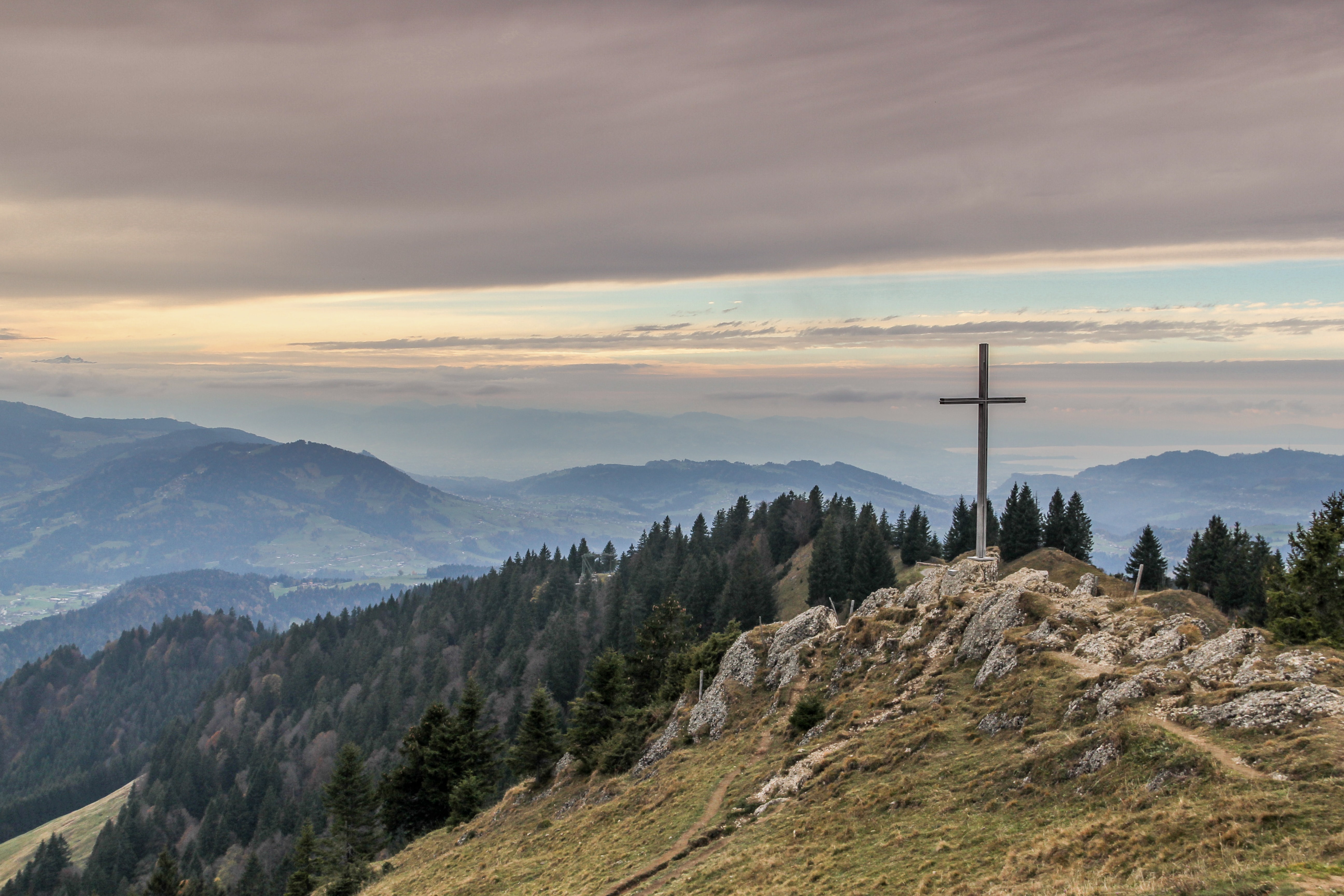
Photo credit: Thanti Nguyen

Most of Luke’s account of Jesus’ crucifixion takes place in our reading for today. In some ways Jesus is treated like a common criminal. He is crucified between two. His charge is placed above his head: “This is the king of the Jews.” Like the crucifixion itself, the posting of the charge was also a deterrent.

Almost everyone present mocks or insults Jesus. The religious leaders mock the one who saved others. If he really was who he said he was then he’d save himself. The soldiers mock his kingship. If he really was a king, he’d surely be able to save himself. One of the criminals being crucified insults Jesus for not saving himself – and his fellow criminals. All of these people understand “save” in a different, more limited context. The immediate situation is all they are thinking about. Perhaps that is part of the reason Jesus prays at the outset, “Father, forgive them, for they don’t know what they’re doing.”

The second criminal sees beyond this moment on the cross. He rebukes the other criminal, admits that they are “tightly condemned,” and states, “But this man has done nothing wrong.” Grasping who Jesus truly is, this man asks Jesus to remember him “when you come into your kingdom.” This repentant man is told, “Today you will be with me in paradise.” Today. Not some distant, future date. Today. The same is true for us. When we ask Jesus to remember us, he is present with us today. The kingdom of God is here and now. Jesus is with us here and now. Thanks be to God.

Prayer: Lord God, help us to see and to live into your kingdom here on earth. Open our hearts to feel your presence. Open our eyes to see you with and among us. And, Lord, use us to build your kingdom here on earth as we seek to be love and light to the world. Amen.


Leave a comment

Kingdoms

Readings: Luke 22:6-12 and 13:31-33

Luke 13:32 – “Go, tell that fox, ‘Look, I’m throwing out demons and healing people today and tomorrow, and on the third day I will complete my work.'”

As Jesus’ path to the cross continues, there is a detour in Luke’s gospel. Hearing that Jesus is from Galilee, Pilate sends him to Herod Antipas, the ruler of that region. Pilate is trying to extricate himself from this sticky situation, thrusting it upon his political enemy. But Herod is happy to see Jesus – at first. He’s wanted to see Jesus for a long time. Herod has heard the stories and hopes that Jesus will “perform a sign” for him.

Jesus refuses to answer any questions and Herod’s curiosity turns to anger and mockery. Dressing Jesus in “elegant clothes,” he sends Jesus back to Pilate. This wasn’t Herod’s first exposure to Jesus, though. In chapter 13 the religious leaders warn Jesus that Herod wanted to kill him. Herod was notoriously violent and unstable, especially against anyone he saw as a threat to his power. The bad blood with Pilate began long ago when Herod and his brothers had Pilate charged and punished by Tiberius Caesar. And Pilate ruled over the land once ruled by Herod the Great, Herod Antipas’ father.

In chapter 13, in response to Herod’s threat, Jesus says, “Go, tell that fox, ‘Look, I’m throwing out demons and healing people today and tomorrow, and on the third day I will complete my work.'” The Jews saw foxes as destructive and worthless pests. This was not a compliment. The casting out and healing were signs of God’s kingdom amongst the people. Jesus’ finished work on the third day, resurrected to life, would validate his claims of bringing the kingdom to earth. Working together against this perceived threat to their power, Pilate and Herod became friends that day. So it is with the kingdoms and powers of this world.

Prayer: Lord God, in Pilate and Herod we see two men with power willing to do anything to hold onto or to build that power. We see this in our world today as people strive and connive to gather more power, wealth, status… Jesus’ kingdom runs counter to these ways of the world. His is a kingdom of healing, giving, and pouring out of self. O God, draw us into this kingdom and use us to build your kingdom in our time and place. Amen.


Leave a comment

God/World

Reading: Mark 8:27-33

Mark 8:33 – “You are not thinking God’s thoughts but human thoughts.”

Chapter 8 is about the halfway point of Mark’s gospel. In Mark’s 16 chapters, he covers the three years of Jesus’ ministry. There is no birth story or Jesus in the temple as a teenager. This short gospel begins with John the Baptist already baptizing in the wilderness. Chapter 1 through part of chapter 8 covers the first 155 weeks of Jesus’ ministry (+/- a week or so.) Mark 8:27 through chapter 16 cover the last week of Jesus’ ministry, known as the passion of Christ.

As Jesus turns toward Jerusalem and the cross he asks for an evaluation of sorts: “Who do people say that I am?” Generally, the people believe that he is a prophet. He is seen by many as one sent by God, speaking on behalf of God. They are partly correct. Wanting to go deeper, Jesus asks, “And what about you? Who do you say that I am?” This is a question we could and should ask ourselves regularly.

Peter responds, “You are the Christ.” We want to give Peter props for his answer identifying Jesus as the Messiah. But as we read on, we see that Peter’s understanding of Jesus (at this point) is not our understanding of Jesus. After Jesus shares what the passion of the Christ will look like, Peter scolds him. The suffering, trial, death… does NOT match Peter’s definition of a Messiah. Jesus’ response is swift and cutting: “Get behind me Satan.” Perhaps Jesus is thinking of when Satan tempted him in the wilderness, dangling human desires before him. Is Peter’s vision tempting to Jesus at this point?

Continuing on, Jesus adds, “You are not thinking God’s thoughts but human thoughts.” Peter and likely the other disciples cannot see beyond themselves right now. At times, we too struggle with this. Our selfish and sinful nature is ever at odds with the divine within us. May the Holy Spirit ever whisper and nudge (and convict) us to choose God over the world.

Prayer: Lord God, at times we can be like Peter, thinking not if you and your purposes. Our thoughts can turn to self and to our wants. We can be quite selfish. In those frequent moments, remind us of who Christ truly is – humble servant, gentle good shepherd, redeemer, salvation. Draw us back into obedience to your will and way. Thank you, Lord. Amen.


Leave a comment

Not My Will

Reading: Luke 22:39-46

Luke 22:42 – “Not my will but your will must be done.”

We are on the verge of the season of Lent. The 40 days leading up to Easter begin this week with services on Ash Wednesday. The service focuses on our need to be reconciled to God. The ashes remind us of our mortality. They are imposed in the shape of a cross as a reminder of our commitment to Christ. The season of Lent is one of prayer and repentance, preparing ourselves for Easter.

Intentional preparation is part of our faith. We read, study, and meditate on scripture to prepare ourselves for our day to day living. We pray to prepare ourselves for a meeting, an event, a hard conversation. In our passage today Jesus did as he often did. He went to the garden to spend intentional time in prayer. He sought to prepare himself for what lay just ahead: arrest, trial, rejection, suffering…

Jesus invites the disciples to pray too. He knows that they will soon face testing. As Jesus prays he admits his own human struggle, asking God to “take this cup of suffering away.” The divine Jesus knows full well what’s about to befall the human Jesus. Recognizing the necessity of what is about to unfold, Jesus adds, “Not my will but your will must be done.” Strengthened, Jesus prays even more earnestly.

The disciples have fallen asleep, “overcome by grief.” The crowd is on the way to arrest Jesus. The disciples have not prepared themselves. One disciple will act impulsively. Then all of the disciples will flee the scene. Jesus will move forward, empowered by prayer. As we ready ourselves to enter this season of Lent, may we too be empowered by prayer, frequently praying, “Not my will…”

Prayer: Lord God, lead and guide us to be intentional as we enter this season of Lent. May it be a time of earnest prayer, committed study, honest introspection, and whole-hearted repentance. Day by day, may our walk with you prepare us to celebrate Easter resurrection. Amen.


Leave a comment

Confessing Christ

Readings: Philippians 2:6-11 and Luke 23:39-43

Luke 23:42 – “Jesus, remember me when you come into your kingdom.”

In our Philippians passage Paul encourages us to adopt the attitude of Christ. This is what a disciple or follower of Jesus seeks to do. In this “Christ Hymn” we find three attitudes that we can emulate. These and other parts of the hymn point to a fourth attitude that we are called to practice. First, “he emptied himself.” Jesus was willing to become like us so that he could relate to us. Second, “he humbled himself” – becoming willing to fully associate with us. Third, Jesus was fully obedient to God. While we likely will not be pushed to the point of dying, we are to seek to obey God always. These three attitudes and the actions the hymns speaks of point to the fourth attitude: love. It was love that drove the other three, that arches over the emptying, the humility, the obedience.

Turning to our Luke 23 passage we see these four attitudes lived out. The religious leaders, the soldiers, the crowd – they all mocked and taunted Jesus. He hung on the cross, nearly spent, perhaps one foot already in heaven. It would’ve been easy to just shut out all the noise, to close the eyes, to slip quickly back into heaven. “Easy” is too often our path. But here in this moment Jesus encounters a seeker. This second criminal defends Jesus. So Jesus connects to this man, emptying himself a bit further. Jesus humbled himself even more, meeting this criminal where he was at. Jesus remained obedient to God’s big command. In love Jesus responded to the criminal’s request, telling him that today he’d see Jesus in paradise. The man’s tongue confessed that Jesus was Lord, to the glory of the Father. May it be so with our whole lives this day and every day.

Prayer: Lord God, lead and guide us today to hold fast to the attitude of Christ. Grant us the courage and the will to elevate the other over self and to strive to live out your love in all we do, say, and think. Amen.