pastorjohnb

Thoughts and musings on faith and our mighty God!


Leave a comment

Raining Down Love

Reading: Colossians 3:12-17

Colossians 3:14 – “And over all these things put on love, which is the perfect bond of unity.”
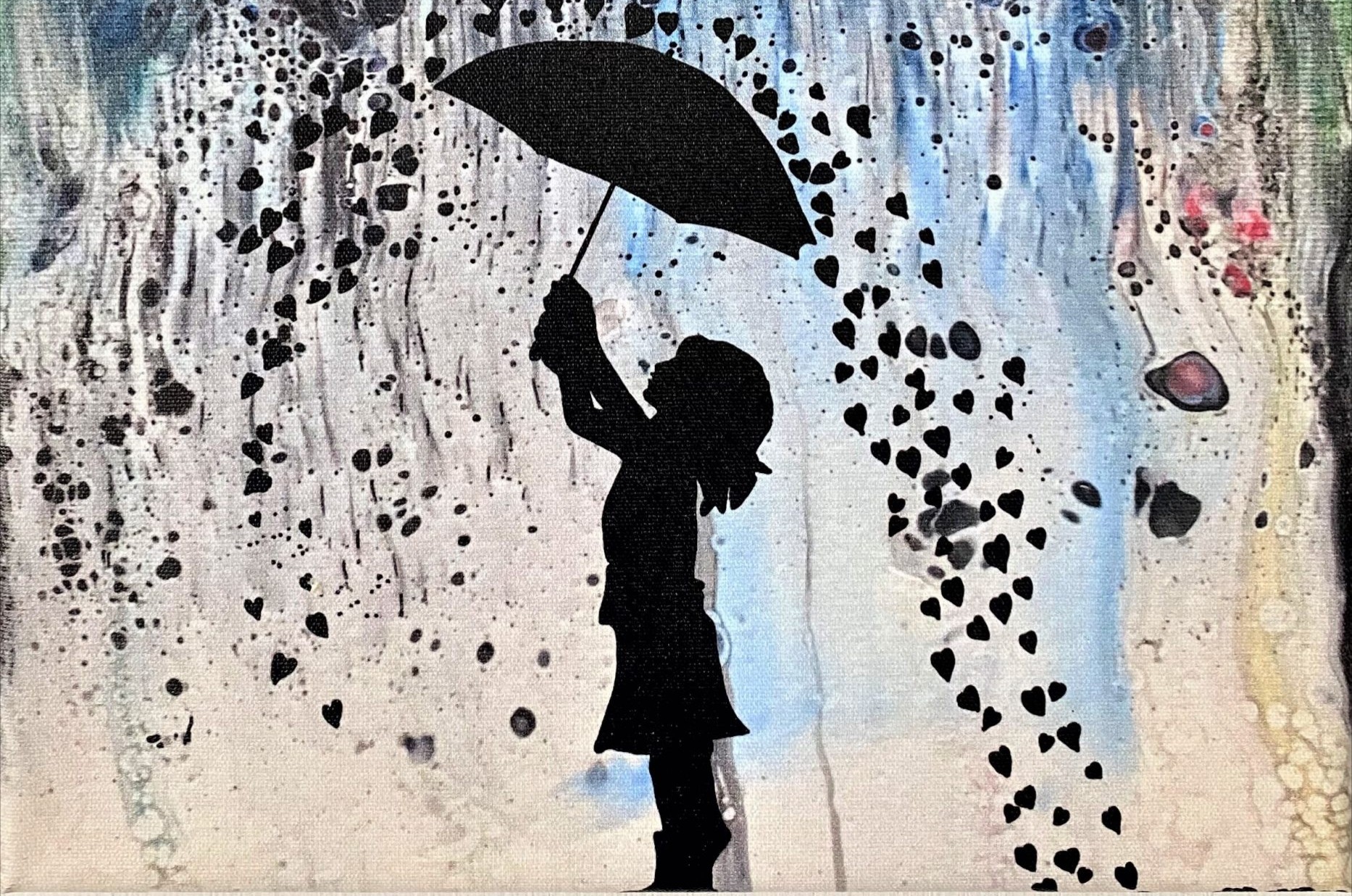
Credit: Rebecca Gelaney

Today’s reading is a call to authentic holy living. Paul begins by inviting the Colossians to being “clothed” in the practices and attitudes of Jesus. The Colossians are encouraged to put on “compassion, kindness, humility, gentleness, and patience.” These five characteristics, when lived out fully each day, would reflect Christ to each other and to the world.

The focus then shifts to the other side of the equation: how to act and be with one another when the other isn’t practicing these Christlike traits. Paul exhorts the believers to be “tolerant with each other” and to regularly practice forgiveness. They are to do these things because God regularly does this with them.

Paul then turns to what John Wesley said “contains the whole of Christian holiness.” This one characteristic connects and undergirds all the others. In verse 14 Paul writes, “And over all these things put on love, which is the perfect bond of unity.” In all you do and say and think, lead with love. Doing so we will find that the peace of Christ does control our hearts. Leading in love we will express gratitude to God and for one another. Because of our love for our brothers and sisters in Christ, we will teach and warn each other, helping all to walk in faith.

In all things, in all ways, in all places and times, may we “do it all in the name of the Lord Jesus.” This witness of love holds the power to transform hearts, systems, cultures, and nations. May it be so.

Prayer: Lord God, you call us to be love in the world, to bring light into the darkness. Use us as a witness that stands out from the ways of the world. Use us to rain down love into all of our relationships, into all of the brokenness, into the lives of all that we interact with. Fill us to overflowing with the spirit and heart of Christ, pouring these things back out into the world all around us. Amen.



Leave a comment

Warning and Promise, Reality and Hope

Reading: Lamentations 1-2

Lamentations 2:19b – “Pour out your heart before my Lord like water. Lift your hands up to him for the life of your children.”

Photo credit: Shane Rounce

Today and tomorrow we read through Lamentations. These five acrostic poems lament the fall of Jerusalem and the suffering that followed. Jeremiah (and/or others writing in his voice) give a vivid and emotional account of this dark time in Israel’s history. Jews have read this book yearly during the month of Ab as a reminder of the consequences of sin and disobedience to God’s Instruction.

Chapter 1 opens with “Oh no!” This phrase evokes the wailing customary in a Hebrew funeral dirge. Jerusalem is personified as a woman, sitting alone, widowed and enslaved. There is no one to comfort her. She recalls the treasures that filled the palace and temple. She also laments the walls and gates being destroyed. She now feels “naked.” There is also the harsh reality of survival laid bare in these words. Hunger is prevalent. People sit on the ground and moan, fainting from lack of strength. As I envision this scene, my mind goes to places like Gaza and the Ukraine.

Running throughout chapters 1 and 2 is an acknowledgement. Israel and Judah have brought this upon themselves. Their sin, their disobedience, the false prophets – all led to this outcome. The nation who touted God’s presence, power, and might has been laid low by God’s almighty hand. Israel’s enemies rejoice. But even though God “ripped down, showing no compassion” and even though “the comforter who might encourage me is nowhere near,” there remains a faith and a hope in God. The writer encourages Israel and us to, “Pour out your heart before my Lord like water. Lift your hands up to him for the life of your children.” May this be our prayer when we find ourselves in times of suffering and hardship.

Prayer: Lord God, the reality of pain and suffering is right there. The cost of turning from you and walking in the ways of the world is laid bare today. May we read and feel these words, O Lord, as both warning and promise, as both reality and hope. May they work in us to yield faith and obedience to your will and way. Amen.


Leave a comment

Ups, Downs, Highs, Lows

Readings: Psalms 85-89

‭Psalm 86:2 – “Guard my life because I am faithful. Save your servant who trusts in you — you! My God!”

Photo credit: Franzie Allen Miranda

Today’s Psalms rise and fall like the highs and lows of our lives. Like these Psalms, our faith can bounce from “Praise God!” to “Where are you, God?” more often than we’d like. Psalm 85, for example, begins with thanks for God’s forgiveness then quickly pivots to a God who seems angry, who yet needs to forgive their sins. The Psalm closes beautifully and with hope. “Truth springs up… righteousness looks down.” Walk with the Lord!

Psalm 86 begins with a series of petitions, each followed by a “because.” In verse 2, for example, we read, “Guard my life because I am faithful. Save your servant who trusts in you — you! My God!” Do these things, God, because I have faith! After celebrating times when God was faithful, the psalmist invites God to act once again: “Come back to me! Have mercy on me!” A faithful one asks, “Where are you, God?”

A short Psalm 87 celebrates that those from Zion are blessed.

Next we turn to Psalm 88. Frankly, it is hard to read. It is a lament that goes down and down, ending in hopelessness. The psalmist cries out to God but feels beyond help. Friends have abandoned the writer. It feels like God has too. The Psalm concludes: “My only friend is darkness.” So why read Psalms like this? There is a really good reason. They remind us that life is not easy. Many people end up here. If you’re not one, then read this Psalm and allow yourself to feel the pain and darkness. The connection will bring a measure of empathy to how you minister to those who walk in the darkness.

We close with Psalm 89 as book 3 ends. A lengthy remembrance of God’s power and of God’s promises to David and his dynasty is followed by 15 verses that ask where God is. It seems that God has broken the covenant. It begs God to let the anger pass. There is an implied plea for restoration. Because you promised this God and because I am faithful… We can certainly relate.

Prayer: Lord God, we encounter so many ups and downs, so many highs and lows today in our readings. Thank you, Lord, for the reminder. We all struggle. We all need support, encouragement, understanding – from you and from one another. We can all offer these things to others. Guide us, O God, each day. As we receive, may we give. Amen.


Leave a comment

Listen, Save, Deliver

Readings: Psalms 37-41

‭Psalm 37:37 – “Observe those who have integrity and watch those whose heart is right because the future belongs to persons of peace.”

As we close our Book 1, today’s Psalms have a more personal, more intimate feel. Psalm 37 lifts up the life of righteousness. I love verse 3: “Trust the Lord and do good… farm righteousness.” What a great image – plant it, water it, feed it, tend it, nurture it, produce a crop. There’s an honest admission in verse 23: the righteous will trip up. But they won’t be thrown down because God holds their hand! We find great advice in verse 37: “Observe those who have integrity and watch those whose heart is right because the future belongs to persons of peace.” And let us tend to the other side of this equation too: may we model the faith well; may we be persons of peace in this world.

Psalms 38-41 all share connected themes. They speak of the consequences of our sin, of God’s forgiveness, and of the brevity of life. In Psalm 38 the writer acknowledges that the weight of our sin is “way too heavy for me.” Psalms 38 and 41 speak of how people abandon us when we struggle in our sin. In Psalm 40 their wrongdoings have caught up with them. We too have played this game. Psalm 41 begs for healing from their sin. These Psalms also express a strong belief and trust in God’s forgiveness and restoration. There is a deep confidence in God’s unconditional love. Psalm 40 closes with these words: “You are my help and rescuer. My God, don’t wait any longer.” Save me NOW!

Sitting in the middle is Psalm 39. It is a reflection on the brevity and difficulty of life. The psalmist tried holding their tongue to avoid sinning. It did no good. Sin resides in not just our words. The psalmist compares our lives to “a puff of air.” Our blip is just that on God’s eternal timeline. Yet, even so, the psalmist says to God, “Please don’t ignore my tears.” They matter to us, each day. God, don’t ignore our tears either. Listen to our cry. Deliver us, O God.

Prayer: Lord God, what are we, really, that you are mindful of us? Our lives come and go with a blinking of your eye. Yet from our perspective, our years hold meaning. Moments and seasons matter. Teach us to value our time, to use it wisely, to live it all for your glory. Be our helper and rescuer, O God. Hold our hand. Walk with us each of our days. Amen.


Leave a comment

Fully Poured Out

Readings: 2nd Kings 22, 2nd Kings 23, 2nd Kings 24, 2nd Kings 25

2nd Kings 25:21 – “So Judah was exiled from its land.”

Photo credit: Mukund Nair

Today’s reading begins with Josiah. While repairing the temple, the instruction scroll is found. Hearing its words, Josiah rips his clothing in anguish and sends folks to inquire of the Lord. He recognizes how far Judah (and Israel) had wandered from the Lord. Disaster is coming soon, says the Lord. And yet Josiah sets out to love God with all his heart, being, and strength. The covenant is restored. All of the shrines, altars, temples, poles… are removed. They celebrate the Passover. And Josiah dies in a battle with Pharaoh Neco.

Jehoahaz’s short reign in followed by Jehoachin. Fulfilling God’s word to Josiah… King Nebuchadnezzar and Babylon’s army arrives. In addition, raiding parties from many local tribes damage Judah. After three months, Jehoachin surrenders. All of the temple and palace treasures are hauled off, the temple items are cut up, and most of the people are taken into exile. A handful plus the poor are left behind to manage the crops. Newly renamed Zedekiah is left to rule. After 11 years, he rebels against Babylon. A new siege leads to a severe famine in Jerusalem. Zedekiah tries to escape but is caught. He watched his sons die and then is blinded, chained, and hauled off to exile in Babylon.

Guard commander Nebuzaradan oversees the burning of the temple, palace, and homes of Jerusalem. He oversees the Chaldeans tearing down the entire wall. The poor are left to farm the land. In 25:21 we read, “So Judah was exiled from its land.” All is in ruins. God’s anger has been fully poured out.

2nd Kings closes with a small happy note. After 37 years in prison in exile, Jehoachin is paroled by new king Awil-merodach. He allows Jehoachin to eat at his table.

Prayer: Lord God, perhaps the high point in Judah since the days of David and Solomon are followed by the great fall of Judah and the ruin of Jerusalem. This brings with it feelings associated with Holy Saturday. Today is a solemn day of final introspection and reflection as we close the season of Lent. It is much like the time in exile will be. Lead and guide us, O Lord, meld and mold us, remake us even, so that we can walk faithfully in ways. Amen.


Leave a comment

Things Feel Good… Until…

Readings: 2nd Kings 8:16-29, 2nd Kings 9, 2nd Kings 10

2nd Kings 9:6-7 – “I anoint you king over the LORD’s people, over Israel. You will strike down your master Ahab’s family.”

Photo credit: Falaq Lazuardi

As we begin our readings Jehoram becomes Judah’s king. He does evil. Edom and then Libnah rebel. Jehoram dies and Ahaziah becomes king. He does evil. He joins Joram, Israel’s king, in a battle against Aram. Joram is injured and withdraws. We don’t know how the battle turns out.

In chapter 9 the focus shifts to Jehu. Elisha sends a fellow prophet to anoint Jehu king of Israel. He instructs Jehu to strike down your master Ahab’s family.” Jehu and his men head towards Jezreel. Joram sends two chariots out to see if they come in peace. Neither returns so Joram and Ahaziah head out to see. Jehu asks how could there be peace with all of Jezebel’s sins? Joram and Ahaziah are killed as they flee. Jezebel greets Jehu rudely from an upper window. He asks the officials there with her if they’re on his side. They throw Jezebel out the window. Her body is later devoured by dogs, fulfilling Elijah’s words.

Next Jehu cleverly but brutally disposes of Ahab’s 70 sons. He then kills all others who belonged to Ahab as well as Ahaziah’s brothers. Jehu then turns his focus to the Baal worshippers. He claims to be a super Baal worshipper and calls for a huge sacrifice to Baal. All who follow Baal flock in. “No one stayed home.” 80 soldiers mercilessly kill them all and then destroy the Baal temple and all that was inside of it.

Jehu has done much to remove evil from Israel. Things feel good. Until we turn to 10:29 – “However, Jehu didn’t deviate from the sins that Jeroboam… had caused Israel to commit.” Jehu’s family will reign for four generations. Meanwhile, God begins to whittle down the size of Israel.

Prayer: Lord God, so much heads in the right direction, and, then, evil. I am reminded of David’s great sin. But there is no repentance here with Jehu. We too will strive to walk in your ways, O God, only to stumble and fall. In those critical moments, draw our hearts to a place of repentance. Guide us to humble ourselves and to rejoin you in our walk of faith. O Lord, may it be so. Amen.


Leave a comment

Down, Down, Down

Readings: 1st Kings 12, 1st Kings 13, 1st Kings 14, 1st Kings 15, 1st Kings 16

1st Kings 14:8 – “I tore the kingdom from David’s house and gave it to you. But you haven’t been like my servant David.”

In today’s five chapters we see the unfolding of God’s judgment against Solomon’s house and against Israel. Rehoboam follows Solomon and has an opportunity to begin well. But immaturity leads to a split in the kingdom. Jeroboam becomes king of Israel, the ten northern tribes. Rehoboam rules Judah – made up of the tribes of Judah and Benjamin. Egypt attacks a weak Judah and carries off all of the wealth that Solomon had gathered.

In the north Jeroboam sets up two places of worship – alternatives to Jerusalem – each with its own golden calf. He appoints his own priests and sets up his own religious festivals (that mirror the traditional festivals.) A man of God comes to him and warns him of the outcome of his sin, twice demonstrating God’s power. The man of God is tricked by another prophet and he dies a tragic death. Jeroboam continues in his evil ways. His son gets sick and he sends his wife, in a disguise, to the prophet Ahijah. He tells her the son will die and he tells her that all of Jeroboam’s house will die too.

We then shift back to Judah, where Rehoboam is doing evil in God’s eyes. They worship foreign gods and engage in illicit sex with the cultic prostitutes. Rehoboam dies and his son Abijam rules three years, doing evil in God’s eyes. His son Asa rules next. Asa is our one bright spot. He removes the prostitutes and the idols. He even removes his grandmother from her position as the queen mother. She was an idol worshipper. But he allows the shrines to remain and he forms an alliance with Aram.

We shift back to Israel as Nadab rules. After two years Baasha kills him and all of Jeroboam’s house. He rules 22 years, doing evil in God’s eyes. Jehu the prophet comes and warns him of his downfall. Things do not change. Zimri assassinates Baasha and then kills all of his household. Zimri rules for seven days. Omri the general leads next, for 12 years. Evil increases under Omri. His son Ahab rules next. Ahab does even more evil than anyone before him. He worships Baal and Asherah. The stage is set. The low point has been reached in Israel. It is time for God to return to the scene in full force.

Prayer: Lord God, one after another after another do evil in your eyes. Down, down, down goes Israel and Judah. A moment of light and hope comes, then Israel goes further down the slope. Yet we know the end of the story. Thank you for that. It’s needed with readings like today’s. Amen.


Leave a comment

Paul’s Witness – Part 1

Reading: Acts 17:22-31

Verses 22-23: “I see that in every way you are very religious… I even found an altar with this inscription: to an unknown god.”

Our focus this week is on being prepared to offer our witness to our faith. As we spend today and tomorrow in Acts 17, we will gain some insight from Paul’s example. While there is not any one right way to share our faith with others, some general do’s and do not’s are helpful.

As Paul prepares to minister in Athens he first spends some time in observation. He gets to know his audience. This provides Paul a place to engage them, to meet them where they are at. When we are nearing an opportunity to share our faith, these are steps we take naturally if the person is someone we know personally. If not, these are wise steps to take. Paul begins the conversation with this acknowledgement: “I see that in every way you are very religious.” He commends them for being spiritual. Continuing, he shares this observation: “I even found an altar with this inscription: to an unknown god.” This is the place from which he can engage in a conversation. Paul will connect their unknown god to the God that he knows. More on that tomorrow!

But for today, let’s consider what Paul does not do at this point. He did not say ‘You think you are religious’ and then launch into belittling or ridiculing or tearing apart their religion because they worship a god they don’t know and can’t even name. He does not comment on how they worship a plethora of gods, as if the breadth might cover all their bases. And he does not tell them how wrong they are as a means to provide space to prove how right he is or to share just how much he knows. There is nothing negative or insulting or confrontational about Paul’s witness to his one true God.

As we consider our natural approach to sharing our faith, ponder which of these do not’s might be your tendency.

Prayer: Lord God, part of the power of our faith comes from really believing what we believe. That’s great, right God? And yet… God, please guard my heart and mind against using my belief as a battering ram or as a stick to pound on another. Instead, Lord, use my faith as a loving and gentle tool to share you with others. Amen.


Leave a comment

Reflecting God?

Reading: Psalm 79:1-9

Verse 8: “May your mercy come quickly to meet us, for we are in desperate need.”

Photo credit: Ricardo Gomez Angel

Psalm 79 begins with the plight of Israel. The temple has been defiled and the walls of Jerusalem torn down. Dead bodies decay in the streets. Israel is the object of scorn and ridicule – from the pagan nations around them. It is from this reality that the psalmist asks God, “How long?!” He wants to know how long Israel will suffer for the sins of the people.

In response to all that has befallen them, in verse 6, the psalmist invites God to pour out wrath upon these pagan nations – the ones that God has used to punish Israel for their unrepentant sins. From this perspective that would make no sense. That’d be like badmouthing and tearing down those across the aisle that you’re supposed to be serving with. It’d be like posting an inspiring Bible verse on Facebook and then a second later ripping into someone because they don’t see an issue the exact same way you do. Like the psalmist, we can turn in an instant, not connecting one dot to the next because it doesn’t suit our agenda or our purposes.

In verse 8 the psalmist pleads with God, saying, “May your mercy come quickly to meet us, for we are in desperate need.” Can these words come on the heels of wishing destruction upon others? Can we beg mercy for ourselves and something else, something bad, for one not like us? When we do so we are not reflecting the image of God in us. God loves all of creation passionately and completely. To pray for devastation on another or to heap destruction upon others is to pour it out upon God. May it not be so.

Prayer: Lord God, tame our tongues and rein in our overly impassioned emotions. Fill out spirit with your love and grace. Let these be the things that flow from our mouths and keyboard strokes. May we first see in all people the image of you. Amen.


Leave a comment

Pray, Speak, Stand

Reading: 2nd Samuel 11: 1-5

Verse 2: “One evening David got up… walked around on the roof… saw a woman bathing”.

Photo credit: Joshua Oluwagbemiga

Today we enter one of the uglier stories in the Bible. The story begins with a bad decision and spirals down from there. David decides to stay home when the army goes off to war instead of leading them into battle. But a king can do what a king wants to do. Then one night he can’t sleep. In verse two we read, “One evening David got up… walked around on the roof… saw a woman bathing”. His eyes and heart wander. He spies a very beautiful woman bathing. Lust is born. As the story unfolds one of his servants asks, “Isn’t that Bathsheba… Uriah’s wife”? Hint, hint. But a king can do what a king wants to do. David sends for her and sleeps with her. Forced himself upon her is the much, much more likely reality. David is finished with her and sends her back home. It is an ugly story that ends with an unexpected pregnancy.

On Sunday in church we talked about breaking down walls and about standing with the abused, oppressed, taken advantage of… We would have loved to have been there and to have stood up for Bathsheba. We think we would have stood and shouted, “No more of this ‘But a king can do what a king wants to do’ stuff”! Yet today people with power continue to force their way, to coerce others, to play by their own set of rules. Naming realities helps to break down walls. Sex trafficking and other forms of sexual exploitation are still alive and well. One of the top sex trafficking events in the US will take place just up the road in a couple of weeks. I believe the Sturgis Rally is second only to the Super Bowl. Most of us are appalled by and disgusted by the story of David and Bathsheba. Are we equally so when we recognize that sex trafficking and pornography are huge business in our nation?

Just as those in David’s palace should have stood up for and then cared for Bathsheba, so too must we pray for and speak for and stand with those who are exploited and used by others. May it be so.

Prayer: Lord God, we peak today at the ugliness of a person in power forcing his way. Hold our eyes and hearts for a few moments; help us to connect to Bathsheba. Then turn our eyes and hearts to the ugly realities of today. Money and power and lust still lead to ugliness today. Guide us all to do what we can – some to pray, some to speak, some to stand with the victims. May your love bring healing to the brokenness of our world and lives. Amen.