pastorjohnb

Thoughts and musings on faith and our mighty God!


Leave a comment

A Faith Witness

Reading: Psalm 116:1-2 and 12-19

Psalm 116:13 – “I’ll lift up the cup of thanksgiving. I’ll call on the Lord’s name.”

Psalm 116 is part of a collection of Psalms known as the Hallel. These songs were used in the Passover celebration. Psalms 113 and 114 were sung going up to Jerusalem. These two songs celebrate God’s power, might, rescue, and protection. Psalms 115-118 would be sung after the Passover meal. In the Christian tradition, this meal would occur on Maundy or Holy Thursday. These songs celebrate who and what God was and is and they witness to the peoples’ faith and commitment to God.

Psalm 116 begins with the psalmist declaring his or her love for God. This love is founded on God hearing their prayers for mercy. Because God hears, they will always call out to God. We can relate. When we feel like God is answering our prayers and is close to us, our faith soars and our love for God grows.

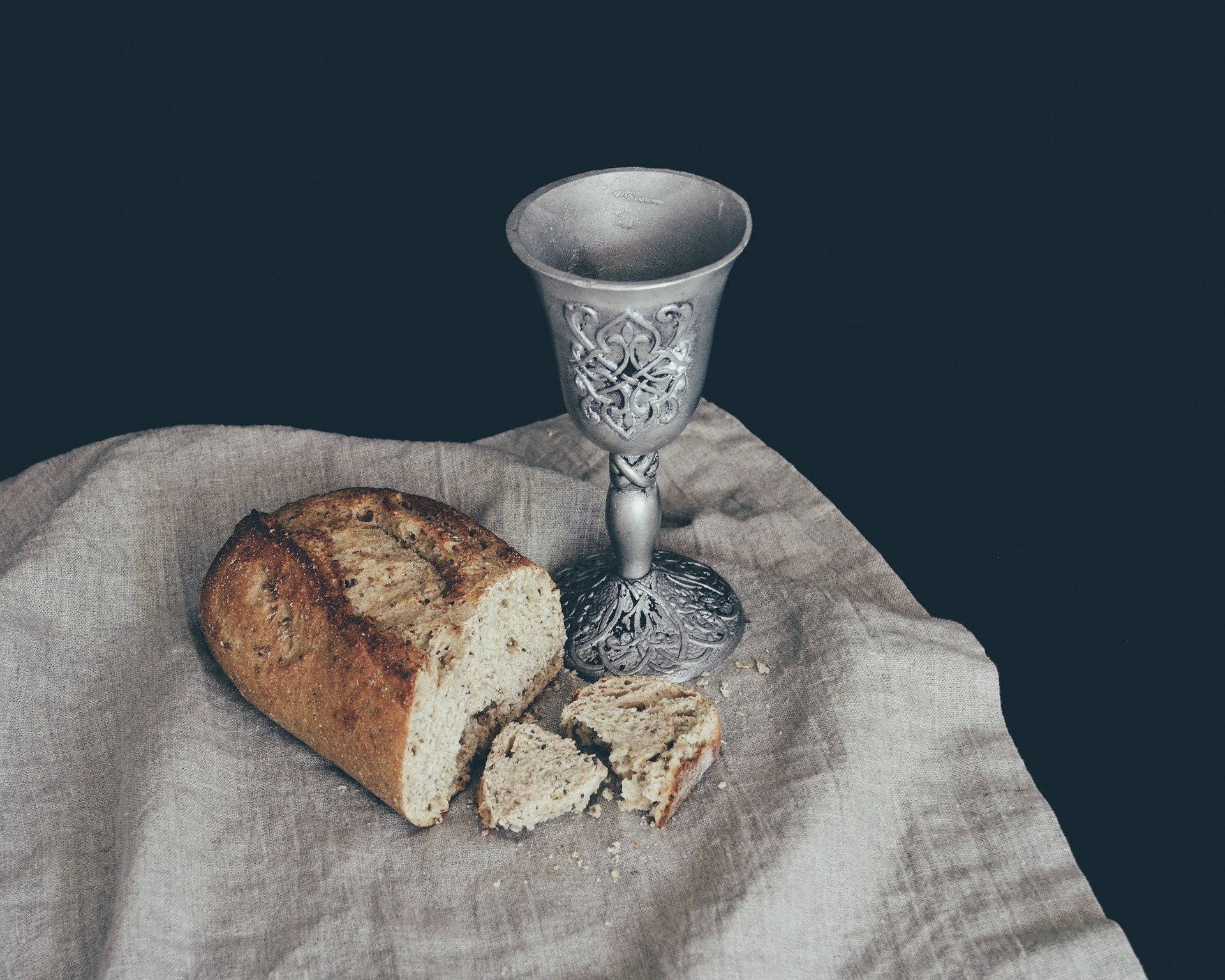
Verses 12-19 offer the psalmist’s response. Gratitude and acts of thanksgiving dominate these verses. In verse 13 the author writes, “I’ll lift up the cup of thanksgiving. I’ll call on the Lord’s name.” This cup overflows with God’s blessings. Lifting it and calling on God’s name are acts of worship. Keeping the promises made to God, done so publicly, reveals the psalmist’s strong commitment to God. This public witness encourages others in their faith. As we walk through Holy Week may all that we say and do “Praise the Lord!”

Prayer: Lord God, we join the psalmist in gratitude for your presence in our lives. We are so grateful that you hear our prayers. We celebrate the fact that you are on our side. Your love for us calls us to respond with acts of love towards you. May we witness well to our love of you this day and every day. Amen.
Leave a comment

The King of…

Reading: John 12:12-19

John 12:13 – “They took palm branches and went out to meet him. They shouted, ‘Hosanna!'”

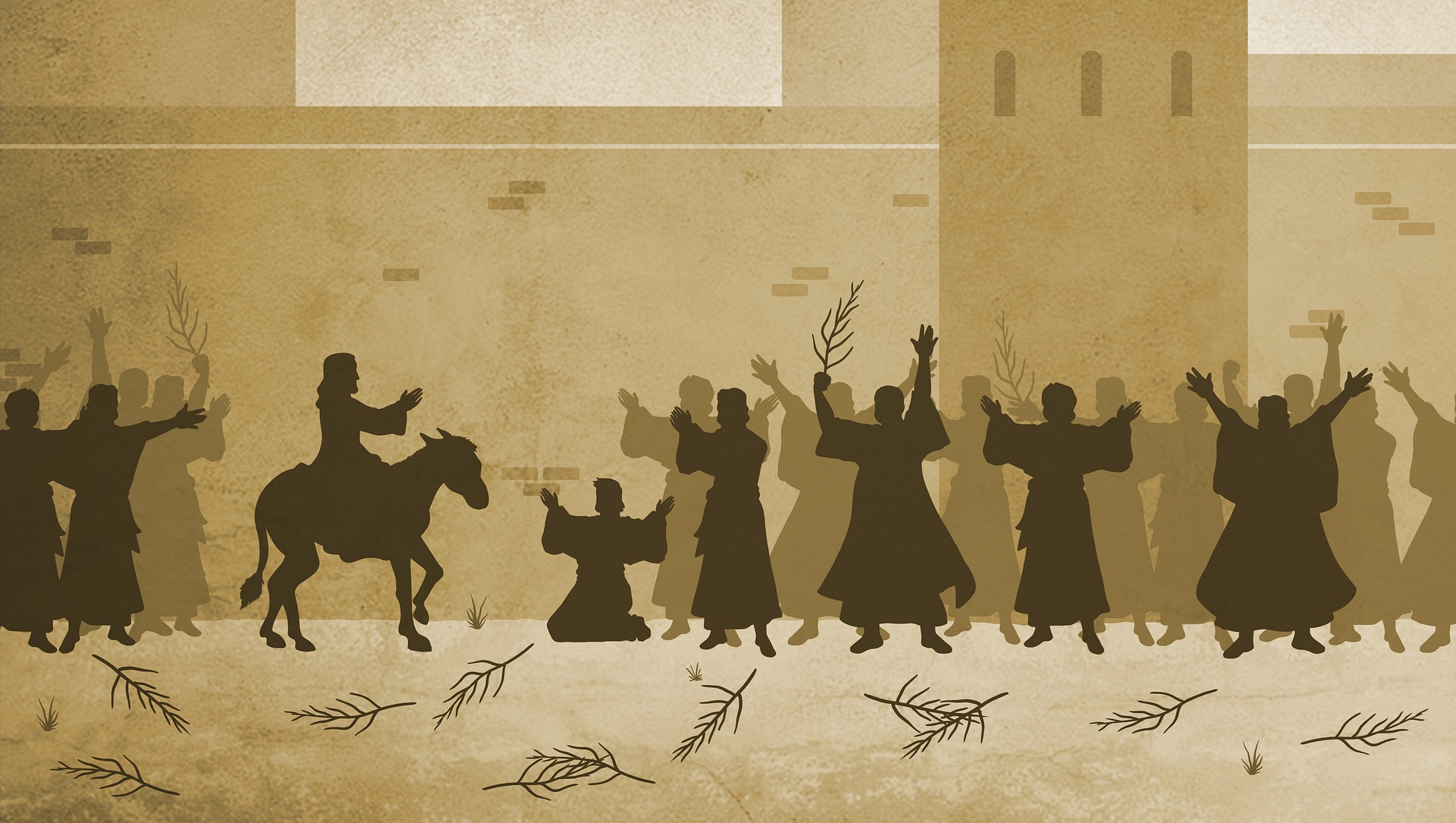
Entering into Holy Week in the gospel of John, we begin the passion of the Christ with Jesus’ triumphal entry into Jerusalem. Unique to his gospel, John gives a reason for the large crowd that celebrates Jesus. People were buzzing over Jesus calling Lazarus out of the tomb after being dead for four days. In 12:10 we read of the jealousy caused by this miracle: “The chief priests decided that they would kill Lazarus too.” This jealousy shows out in verse 19 too, where the Pharisees pettily says, “Look! The whole world is following him!”

In verse 12 we read that the “great crowd” in town for the Passover festival heard that Jesus was coming. So, “They took palm branches and went out to meet him. They shouted, ‘Hosanna!'” The word “hosanna” translates to “save us, we pray!” Also from the Psalms, the crowd offers blessings to “the one who comes in the name of the Lord.” The crowd identifies Jesus as “the king of Israel.” Mid-story Jesus finds a young donkey and begins riding it. He too claims the title of “king,” quoting from the prophet Zechariah.

John admits, in verse 16, that the disciples didn’t connect the dots at first. John and his fellow disciples wouldn’t understand the meaning and connections until after Jesus died and rose. The indwelling presence of the Holy Spirit would help with this. In the same way, the Holy Spirit leads and guides is in our faith if we are willing to listen and obey.

Prayer: Lord God, we see a crowd caught up in the miracle Jesus offered. They cheer and shout. We too can do these things. We can come to Easter and shout “He is risen!” Then the Monday after is like any other Monday. Lord, may it not be so. Draw us deeper into our faith. Through the power and presence of the Holy Spirit, bring us understanding and obedience too. Lead and guide us to see and follow Jesus as the one who sits on the throne of our hearts. Amen.


Leave a comment

An Invitation to All

Readings: Mark 14:22-24 and Luke 22:19-21

Mark 14:24 – “This is my blood of the covenant, which is poured out for many.”

In both passages that we read today, we see Jesus instituting the sacrament of communion. This event is set within the context of the Passover meal. This meal was an annual event in which the Jews would remember and celebrate how God saved them as the angel of death passed over their houses. This final plague led to Pharaoh releasing Israel from bondage and slavery.

Mark and Luke both present Jesus offering the bread as symbolic of his body, broken for them and for us. Jesus’ body will be broken on the cross. In using the common element amongst the rich and the poor and all in between, Jesus takes the everyday and connects bread to himself and to us all.

Both gospels present the cup – representative of Jesus’ blood – as poured out for many, establishing the “new covenant.” Mark recalls these words of Jesus: “This is my blood of the covenant, which is poured out for many.” The new covenant is wrapped in mercy and grace, in forgiveness of sins. This common element of wine – again Jesus connecting the ordinary to his extraordinary gift.

In Mark’s gospel they sing a few songs and head to the Mount of Olives. But in Luke’s gospel, Jesus says, “But look! My betrayer is with me; his hand is on this table.” Jesus celebrates the first communion knowing that Judas will betray him. This is an invitation to us all – sinners each of us – to come to the table of grace. There we too will find welcome and forgiveness. Thanks be to God.

Prayer: Lord God, we humbly thank you for the gift of grace. Your Son did for us what we could not and cannot do for ourselves. It is only because of and through Jesus’ sacrifice that we are forgiven and made new, freed from the bonds of sin and death. Thank you, thank you, thank you. Amen.


Leave a comment

Born from Above

Reading: John 2:13-3:36

John 3:5 – “I assure you, unless someone is born of water and the Spirit, it’s not possible to enter God’s kingdom.”

As chapter 2 winds down, Jesus goes to Jerusalem. He goes to the temple. It is just before Passover, so the temple would be busy, abuzz with activity. Stepping into this scene, Jesus makes a whip and drives out those selling animals and those converting Roman coins to temple coins. The religious leaders question Jesus’ authority and he responds with “Destroy this temple and in three days I’ll raise it up.” The religious leaders are deeply confused but the disciples will remember these words after Jesus was raised – and they believed.

As Jesus does “miraculous signs” many come to believe. But this is a superficial faith. This is the human nature that Jesus does not fully trust himself to. In chapter 3 Jesus encounters someone wrestling with his faith. Nicodemus comes at night and recognizes that Jesus is from God – because of the miracles. Jesus cuts to the chase, telling Nicodemus that he must be born anew. Clarifying, Jesus says, “I assure you, unless someone is born of water and the Spirit, it’s not possible to enter God’s kingdom.” All people are born of the flesh. To see, to receive, to believe, one must be born of the Holy Spirit too.

Continuing and deepening the conversation, Jesus tells Nicodemus that the Human One (Jesus) must be lifted up just as Moses lifted the snake to bring healing and life to the Israelites. The life Jesus will offer, however, is eternal life. And contrary to popular belief, the Messiah did not come to judge but to save. Judgment will fall on those who fear and reject Jesus’ light.

Our reading closes with Jesus baptizing in Judea. John recognizes this as the sign that he must decrease so that Jesus can increase. The one from above is at work. He speaks God’s truth and gives the Spirit generously. By the end of the Gospel, Nicodemus will receive and believe. Thanks be to God.

Prayer: Lord God, you are indeed generous with your love and grace, with your mercy, and with your Spirit. Through receiving and believing we find the way to eternal life and to life abundant now. Use us today to share these blessings with others so that they too may receive and believe. Amen.


Leave a comment

Divinity and Humanity, Strengths and Weaknesses

Reading: Luke 22

Luke 22:42 – “Not my will but your will must be done.”

Our reading begins with Judas agreeing to hand Jesus over. It must be an opportunity without a crowd. This time comes as Jesus goes to the Mount of Olives to pray, which he does regularly. Another regular event was the celebration of the Passover meal. Peter and John are tasked with setting it up. At the table, though, Jesus becomes irregular. He changes the words and the meaning of this ancient ritual. The bread represents his body and the cup of wine represents the new covenant of his blood. He will become the new Passover lamb, sacrificed for many.

At the table, Jesus tells the disciples that his betrayer is present. They question who it could be, which leads to an argument about who is the greatest. To prove that we’re not the “weak link” we often resort to sharing our strengths to prove our own innocence. Jesus reigns them in, reminding them to become low, like a servant, like Jesus himself. He also offers words of encouragement. Because they have (and will) continue to walk with Jesus, one day they’ll eat and drink at his table in heaven. One day they’ll each sit on a throne overseeing the tribes of Israel.

Jesus shifts gears, sharing with the disciples that Satan will “sift you all like wheat.” Peter boldly states that he is ready to go to prison or even to die with Jesus. Alas, Peter, you will deny Jesus three times this very night – all before the rooster crows. Jesus then goes to the Mount of Olives to pray. He first asks God to take away this cup of suffering and death. He then prays, “Not my will but your will must be done.” Jesus is committed to God’s plan. He’s then betrayed by a kiss, is arrested, is beaten and questioned. In the midst of all this, he heals a servant. Peter denies him three times, then breaks down, sobbing uncontrollably. Jesus makes the claim that he will now be seated at God’s right hand. His words seal his fate.

Prayer: Lord God, a plan hurtles towards completion. We know the story and the steps. We’re reminded of both Jesus’ divinity and of his humanity. We too carry these within us. We’re also reminded of the disciples’ strengths and weaknesses. We too possess plenty of both. Lord, be present to us today so that we too might know and follow your will. Amen.


Leave a comment

Real Stories

Reading: Mark 14

Mark 14:31 – “But Peter insisted, ‘If I must die alongside you, I won’t deny you.’ And they all said the same thing.”

Just before the Passover, Jesus is in Bethany. A woman anoints Jesus with some very expensive perfume, preparing his body for burial. Although the disciples think this is a waste, Jesus defends her and tells them that her actions will be remembered and told as part of the good news. Judas leaves and agrees to betray Jesus.

Gathering the 12, Jesus celebrates the Passover. Again his instructions about how and where come true. Jesus announces his betrayal and they all ask, “It’s not me, is it?” While eating the meal Jesus says of the bread, “Take, this is my body.” Taking the cup, he says, “This is my blood of the covenant, which is poured out for many.” After singing praises, they head out to the Mount of Olives.

There, Jesus tells them they will all fall away. Peter boldly declares his loyalty to Jesus. But Jesus says to Peter, before the roosters crowd twice you’ll deny me three times. Peter insists, “If I must die alongside you, I won’t deny you.” The other eleven say the same thing. Yet when asked to pray with and for Jesus, they all fall asleep. Jesus struggles with the coming suffering, yet remains committed to God’s plan and purposes.

Judas then comes with a mob and betrays Jesus with a kiss. Jesus is arrested and all the disciples run away. We too profess a faith willing to die for Jesus yet in those moments when discipleship has a cost, how often we too run away. A sham trial seals Jesus’ fate. It is Jesus’ words of truth that actually condemn him.

We close today with Peter living our Jesus’ words. Three times Peter denies being with Jesus. The rooster crows. Peter recalls Jesus’ words and breaks down in tears. We too are familiar with failing Jesus and with the feelings of remorse. They too are signs of our humanity. And they are a step on the path of mercy and grace. Thanks be to God for both.

Prayer: Lord God, how real today’s stories are. Sometimes we are the woman – a part of a story of faith. Sometimes we are Peter – sure of our rock solid faith yet so vulnerable to fear. And sometimes we’re Judas – betraying you with our words and actions. No matter what, though, you love us just the same. For your great and unconditional love, we say thank you. Amen.


Leave a comment

Bold Words

Reading: Matthew 26

Matthew 26:35 – “Peter said, ‘Even if I must die alongside you, I won’t deny you.’ All the disciples said the same thing.”

In Matthew 26 we move into Jesus final days. He announces that in two days he will be handed over and crucified. Matthew notes that the chief priests and elders don’t want it to happen during the feast – they fear the people’s reaction. But it will happen as Jesus said and as God has planned.

That night at the house of Simon (formerly the leper), a woman anoints Jesus’ head with very expensive perfume, preparing him for burial. The disciples see it as a waste, but Jesus commends her actions. Judas then goes and agrees to betray Jesus. The next day Jesus and the disciples celebrate the Passover meal. Jesus tells them that one of them will betray him and Judas is eventually identified. Jesus then offers the first communion. Judas is still there. They sing some songs and then go to the Mount of Olives.

Jesus tells them that they’ll all fall away that night. Peter says he’ll never stumble. Jesus tells him that he’ll deny Jesus three times that night – “before the rooster crows.” Boldly Peter says, Even if I must die alongside you, I won’t deny you.” The others echo this sentiment. Jesus moves to the area known as Gethsemane to pray, inviting the disciples to “keep alert” as they join him in prayer. They sleep. Jesus wrestles with the suffering to come but ultimately prays to God that this will be “what you want.” Awakening the disciples, Judas and the crowd arrive.

Identified with a kiss, Jesus is arrested. All is to fulfill the scriptures. All the disciples run away. Jesus is taken not to the temple but to the home of Caiaphas, the high priest. Peter follows at a distance. It is at a distance that he will boldly deny Jesus three times. The fake trial ends with the religious leaders hitting and spitting on a condemned Jesus. Funny how their literal actions mirror what the disciples did to Jesus, figuratively speaking. Sadly, at times, we do the same.

Prayer: Lord God, the sad but glorious ending begins to unfold. Human weakness, pride, jealousy, betrayal – all are present. Obedience, trust, faith, courage – all present as well. Lord, help us to be like you instead of like the religious leaders and like the disciples in their moments of fear. Lord, empower our faith and trust, our obedience and courage. May our words and our actions be bold. Amen.


Leave a comment

For Me. For Us. For You.

Readings: Psalms 113-118

‭Psalm 118:6 – “The LORD is for me — I won’t be afraid. What can anyone do to me?”

Today’s six Psalms are known as the “Egyptian Hallelujah.” These words of praise were recited each year at the Passover meal. Psalms 113 and 114 were recited before the meal. These Psalms celebrate God’s actions on behalf of the poor and needy and on behalf of Israel during the exodus. Psalm 113 exalts the God who lifts up the poor, who raises the needy, who brings the barren woman the joy of motherhood. These words echo “Hannah’s Song” from 1st Samuel 2 where God acted on behalf of the faithful. Psalm 114 remembers the parting of the sea and river, the bringing of water from the rocks – more signs of God’s faithful love.

After eating the Passover meal, Psalms 115 through 118 would be recited. Although lost in translation, Psalms 115 and 118 were originally written and spoken as call-and-response liturgy. Psalm 115 lifts up God’s power and might, contrasting God with worthless idols who “have mouths, but they can’t speak.” God is Israel’s “strength and shield.” 115 closes with blessings to all. Psalm 116 is a celebration of an individual’s rescue, reminding Israel that God is a personal God too. Because of God’s deliverance the individual will “lift up the cup of salvation… will keep the promises” made to God. Psalm 117 lifts up God’s strong love.

The Hallelujah closes with Psalm 118. The setting is an individual coming to the temple to give thanks to God. This Psalm calls Israel, the priests, and all who honor the Lord to declare, “God’s faithful love lasts forever!” Because of their experience with this in the exodus, the psalmist writes, “The LORD is for me — I won’t be afraid. What can anyone do to me?” God was faithful. God is faithful. God will be faithful. What is to fear?

Verses 22 and 27 are often connected to Jesus – the stone rejected, the light that shined, the offering led to the new altar, the cross. These are echoes found in the ever expanding story of God’s love, reflections on the final Passover lamb.

Prayer: Lord God, today’s words celebrate your presence with your people. Just as you rescued and delivered, just as you provided and made a way, do so for us in our lives too, O God. We seek to walk in your strong and faithful love, a love that lasts forever. Thank you, Lord, for your love. Amen.


Leave a comment

Through It All

Readings: 2nd Chronicles 33, 2nd Chronicles 34, 2nd Chronicles 35, 2nd Chronicles 36

2nd Chronicles 34:2 – “He did what was right in the LORD’s eyes… not deviating from it even a bit to the right or left.”

Today we begin with Manasseh. The first part of his long reign is as evil as could be. He leads Judah to do great evil in God’s eyes. He is captured and hauled off to Babylon. There he repents and submits himself fully to God. Returned to Judah, he removes pagan worship and serves the Lord. Manasseh dies and gives way to Amon. He is so evil he’s killed by his own officials after just two years.

Josiah reigns for 31 years. Right away he has Judah purified of idol worship and he repairs the temple and its system. The priest Hilkiah finds the instruction scroll and it is read to Josiah. He tears his clothing, realizing that God must be furious. Josiah renews the covenant and celebrates the Passover. Josiah then interferes in Neco’s war, despite God sending the Egyptians to war. Josiah is injured and dies. Jehoahaz rules for three months and then is removed by the Egyptian king.

Jehoiakim and Jehoachin reign next. Both do evil in God’s eyes. The Assyrians come during Jehoiakim’s reign, conquering Judah. Hezekiah is appointed as a puppet king. He does evil. He ignores Jeremiah. He rebels against King Nebuchadnezzar. Assyria levels all of Jerusalem and hauls almost everything and everyone off into exile in Babylon.

Chronicles ends with two bright spots. Because of the exile, the land will lie fallow. This healing fulfills the words of Jeremiah. A new power emerges in the world scene: Persia. King Cyrus receives a word from God: build the temple in Jerusalem. Cyrus orders the followers of God to go back home. God is at work once again.

Prayer: Lord God, through the ups and downs, through the good and the bad, through it all – you remain present to the people of God. You do the same with us. Your love and faithfulness knows no bounds. Thank you, Lord. Amen.


Leave a comment

The Lord Will Fight

Readings: 2nd Chronicles 29, 2nd Chronicles 30, 2nd Chronicles 31, 2nd Chronicles 32

2nd Chronicles 32:8 – “All he has is human strength, but we have the LORD our God, who will help us fight our battles!”

Hezekiah is the focus of today’s readings. In the first month of his rule he reopens the temple and sets the priests to making it holy once again. After eight days the temple is purified. Early the next morning sacrifices are offered for all Israel, songs are sung, the Lord is praised. Hezekiah invites the people to bring thank offerings to God. The response is so great that the Levites have to step in and help.

Next Hezekiah reestablishes the celebration of the Passover. He sends word throughout all of Judah – and Israel. Some from up north laugh and make fun of the invitation, but some come from Israel. A huge crowd gathers and celebrates the Passover. So wonderful and joyous is the celebration, they decide to worship God for seven more days. Fueled by this celebration the people go out and cleanse Judah of all idol worship. The pillars, poles, shrines, and altars are all destroyed.

Hezekiah then calls for the resumption of the tithe to support the daily needs of the priests. The people bring their best in great abundance. Judah is at its high point in its relationship with God – the best since the days of Solomon. It is then that King Sennacherib of Assyria comes. Hezekiah trusts fully in God. He encourages the troops to be brave and strong. He says, “All he has is human strength, but we have the LORD our God, who will help us fight our battles!” Hezekiah trusts that the Lord will fight the battle. That very night God’s messenger comes and kills 185,000 Assyrian soldiers (2nd Kings 19.) Sennacherib goes home in disgrace.

A deadly illness then sets in on Hezekiah but he cries out to God and is healed. But in that moment he is too proud to properly thank God. He and Israel begin to feel God’s anger. They repent and God’s blessings return. Hezekiah dies and is buried in the “upper area” of the tombs with David’s sons. Gold star!

Prayer: Lord God, what a great reminder of the value of a long, steady, obedient faith. In the big and the small, your will and your ways were the focus. Trust in you was sure. Help us to live out this kind of faith. Amen.