pastorjohnb

Thoughts and musings on faith and our mighty God!


Leave a comment

Trust and Honor the Lord

Reading: Malachi 1-2

Malachi 2:8 – “But you have turned from the path. You have caused many to stumble… You have corrupted the covenant of Levi.”

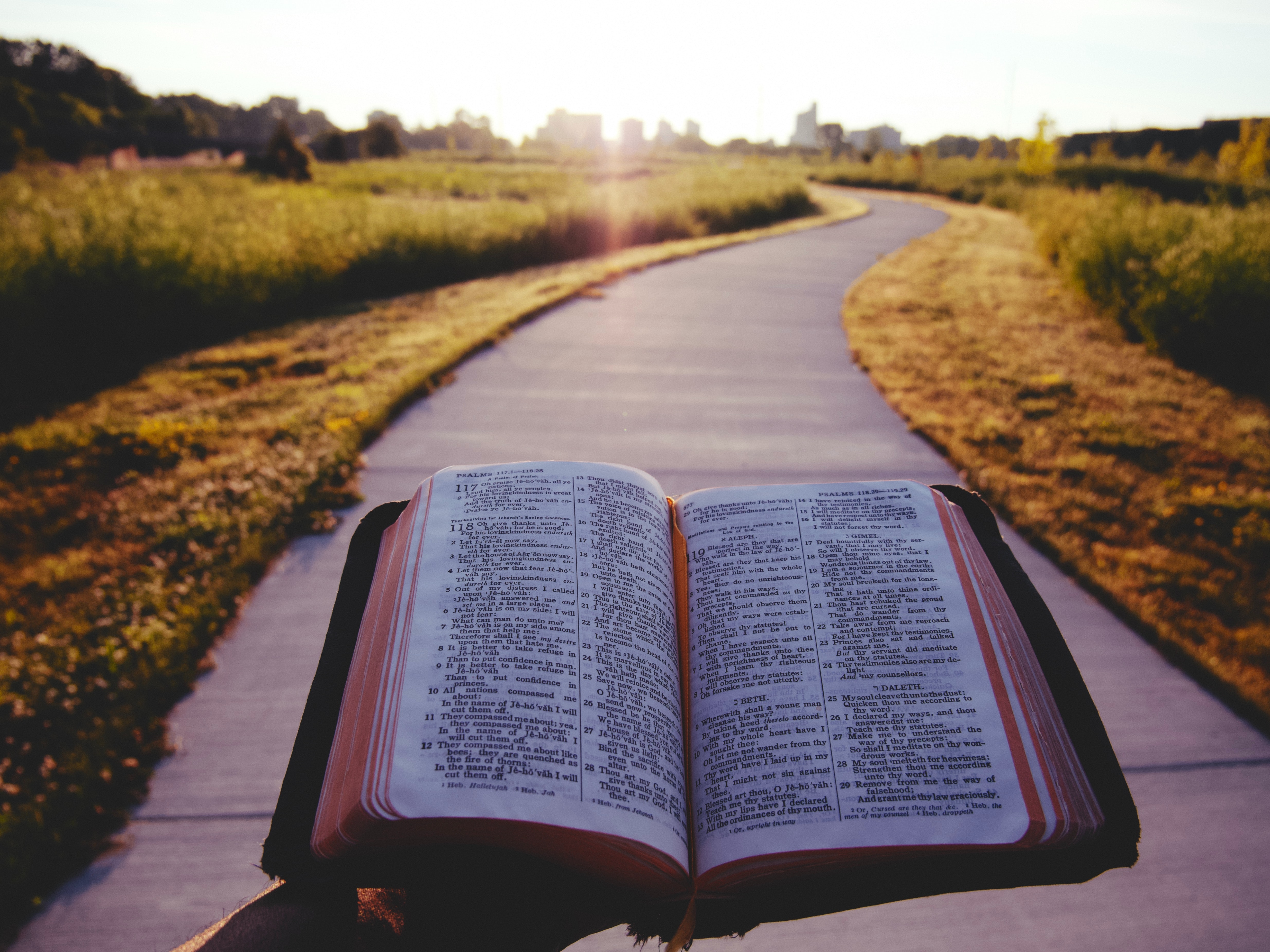
Photo credit: Daniel Hooper

Throughout Malachi we hear a call to holiness. The people’s holiness should be reflected in all areas of their lives: in worship practices, in service, in marriage, in interactions with one another. Unfortunately, God’s people are far from holy. So Malachi calls for repentance, for changed hearts.

Chapter 1 begins with the people questioning God’s love for them. They are struggling along while neighbor Edom is doing well. God reminds them that God chose Jacob, not Esau. In turn, God asks them, “Where is my honor?” The priests despise God, accepting blind, lame, and sick animals for the sacrifices. God takes no delight in this and goes so far as to suggest closing the temple doors. “Nevertheless” God says, God’s name will be honored among the nations. Just not at home. God will curse those who bring impure offerings when there are healthy males in the flock. This conversation with God makes me wonder: when do we bring impure or less than our best as offerings to the Lord our God?

Chapter 2 begins by addressing the priests. God threatens a curse on them. Then maybe the covenant with Levi will be honored. To live within the covenant is life and peace. There would be true instruction on their lips. If only. God declares, “But you have turned from the path. You have caused many to stumble… You have corrupted the covenant of Levi.” We too are called to hold one another accountable, to help one another to walk daily in faith. How are we doing with this calling or charge?

Turning to the people, God asks, “Isn’t there one father?” God is reminding them that they’re one family. God then asks why they all cheat each another. God uses their marriages to foreign wives as an example. The men are breaking the covenant with their wives. God tells them to cover the altar with “tears, weeping, and groaning” – signs of repentance. This chapter closes with a declaration that God is tired of the people’s words. The people are questioning God’s goodness and justice. This is something that we continue to do. May we instead choose to trust and Honor the Lord our God.

Prayer: Lord God, you continue to call us today to holiness in all of life. You desire pure hearts that seek to be your light and love, your grace and kindness in the world. When temptations arise, when we become half-hearted, send your Holy Spirit to revive us, to strengthen our faith. Empower us to walk your path. Amen.


Leave a comment

Receive Your Reward

Daniel 12:1 – “At that time, every one of your people who is found written in the scroll will be rescued.”

Today we read Daniel’s visions. These difficult and challenging words carry both a historical meaning and they speak into future times as well. In the historical sense, these words deal largely with Antiochus IV, a Greek king who heavily persecuted the Israelites. His reign brought the first known attempt by a political ruler to wipe out a religion. The historical time frame is 176-164 BCE. These words come much later than Daniel 1-6, set around 400 BCE.

Daniel’s first vision is of four beasts. These kingdoms will rise and fall. All will impact God’s people. But in the end, “the holy ones of the Most High will receive the kingship.” In the end, God will triumph. The fourth, the most evil, represents Antiochus. The 3 1/2 years lines up with his actual reign, as do the wars fought with the “southern king” – Egypt.

Daniel’s second vision of the ram and he-goat are about Persia/Media and the Greeks/Alexander the Great. As strong and powerful and dominant as Alexander will be, his kingdom is divided into four smaller, weaker kingdoms. This vision is followed by Daniel’s prayer in chapter 9. His humble words of confession and repentance move heaven. Gabriel is sent. He affirms Daniel as “greatly treasured” but also confirms the persecution soon to come upon God’s faithful.

Chapter 10 offers insight into another battlefront – the heavenly conflict. Michael helped in the battle against Persia’s powers so that the messenger could get to Daniel. Chapter 11 is some review – the battles between Antiochus and Ptolemy III of Egypt. It is about the persecution the people of God will face too. They are assured that this too will end.

Chapter 12 closes the book of Daniel with words of hope, with words of resurrection and rescue. The messenger speaks of the faithful who “will shine like the stars forever and ever.” In the end, Daniel is also encouraged. He’s told that he “will rest and will stand to receive your reward.” He too will be a part of this glorious eternity. May we also persevere through the challenges, remaining humbly faithful, trusting in God’s power to rescue and redeem.

Prayer: Lord God, as we read these words that the people of God lived through, we too are reminded of the lasting nature of evil. Antiochus wasn’t the first or the last to persecute the faithful. More came. More are yet to come. Lord, lead us to walk in faith, humbling turning to you, the only one with the power to save and rescue. Amen.


Leave a comment

God Will Teach Them

Reading: Jeremiah 13-16

Jeremiah 13:11 – “Just as a linen undergarment clings to the body, so I created the people of Israel and Judah to cling to me.”

Photo credit: Kenny Eliason

Our reading today begins with an illustration. Jeremiah buys, wears, and then buries an undergarment in the Euphrates River (in Babylon.) He digs it up and it is ruined, just like the people of God will be. God laments, “Just as a linen undergarment clings to the body, so I created the people of Israel and Judah to cling to me.” Because of their sin and disobedience, God will not have pity or compassion or mercy. They will be “dragged off to exile” and God will “scatter you like straw.”

Drought comes. It initially gets their attention. The people acknowledge their sin but then accuse God of being absent. God responds by telling Jeremiah not to pray for them. And God won’t accept their fast or their offerings. God will send war, famine, and disease. Brief attention is given to the false prophets. Yes, God says, they too will die – and their families. Chapter 14 closes with another attempt by the people. Yes, we’ve sinned. Yes, we’re sinning. But don’t reject us, don’t break your covenant. There is no repentance, no intent to turn from their sins.

God is so upset that God declares that even if Moses and Samuel came and interceded for the people, God still wouldn’t listen. God’s hand is set against Judah. The widows will “outnumber the sand.” In 15:10 Jeremiah laments his treatment. God asks, “Haven’t I taken care of you?” Jeremiah declares his love for God’s word. God offers to take him back – if he is faithful. God then promises to rescue and protect Jeremiah.

In chapter 16 God tells Jeremiah not to marry or to have children. That’s how bad it will be. The people are accused of being worse than their ancestors. Even so, in verses 14 and 15 we find hope. One day God will bring them home. But first they will be paid back double for their sins. God will teach them. “They will understand that I am the Lord,” declares God. Yes they will.

Prayer: Lord God, sin and disobedience break your heart. They create separation between who we are being and who we are meant to be. Teach us too, O Lord, how to walk faithfully and obediently. Guard us from sin. Plant your word in our hearts, enabling us to shine your love out into the world. Amen.


Leave a comment

The First Steps

Readings: Psalms 25-28

‭Psalm 25:10 – “All the LORD’s paths are loving and faithful for those who keep his covenant and laws.”

Photo credit: David Brook Martin

Psalm 25 is a prayer for forgiveness and protection. The psalmist’s declaration of trust is followed by a request to prevent any shame from coming their way. The psalmist edges up to asking God for forgiveness – don’t remember my sins. Verse 10 sums up the psalmist’s belief and what they hold to be true: “All the LORD’s paths are loving and faithful for those who keep his covenant and laws.” If one is faithful, one experiences God’s love. That is the hope. Closing the Psalm, because he or she looks to the Lord, well then, God should forgive their sin and end their suffering. Save me God – because I seek you.

The next Psalm declares the author’s innocence. There are echoes of the book of Job in Psalm 26. Give me justice, God, because I have integrity. Examine me, God, because I’m innocent. I don’t spend time with the wicked. No, I love being in your presence, God. So save me! As was the case with Job, we too feel injustice when good people suffer – especially when it is us.

Psalm 27 is a song of hope during suffering. There is a trust in God’s light and salvation. It is a trust that counters fear. Again the psalmist seeks to be in God’s presence. There God will shelter us, will hide us, and will set our feet high upon a solid rock, above the storms of life. The Psalm closes with a “sure faith” that he or she will experience God’s goodness. In our storms, may this be our hope and our trust.

We close today’s readings with a petition that God would hear and respond. Psalm 28 begins by saying “don’t refuse to hear me” because “you are my rock.” Today I read this and other parts of these Psalms as transactional. I too can treat God that way at times. Returning to the text, a request is made to give the wicked what they deserve. This too would bring relief to the psalmist. The Psalm closes with a declaration of hope, trust, and rejoicing.

Throughout these four Psalms there is a common theme. We must be faithful to and connected to God if we desire for God to hear and respond to our prayers. While this is true, it pre-supposes a relationship as the first step. I am also struck today by the lack of introspection, confession, and repentance. These are essential elements – steps – for a healthy relationship with God. May we take these first steps today. It is where our relationship with God begins anew each day. May it be so.

Prayer: Lord God, you’ve created us in your image, designed us to live in a relationship with you. We can sense this connection, this call. But we are not always faithful. We stray and we fall short. Have patience. Build our trust and faith. Guide our steps. Order them according to your heart. Bless us as we seek to walk daily with you. Amen.


Leave a comment

God with Us

Reading: Genesis 4, Genesis 5

Genesis 4:10: “The Lord said, ‘What have you done? Listen! Your brother’s blood cries out to me from the ground.'”

Chapter 4 contains the story of Cain and Abel – Adam and Eve’s first two sons. Living outside of the garden because of their parents’ sin, Abel works as a shepherd and Cain as a farmer. These two brothers bring an offering to God. Cain brings some of his crops and Abel brings the firstborn, including their fat portions. God sees Abel’s offering as “favorable,” angering Cain. At times we all come to this place that Cain came to – realizing that our offering to God was less than what it could or should have been. Maybe it was a half-hearted effort with that neighbor. Maybe we came to worship with a really poor attitude. When the realization comes that we fell short, we too can get angry. It’s always harder to look within.

Even though God warns Cain – “sin will be waiting at your door ready to strike” – Cain still allows his anger to smolder, leading him to murder Abel. God knows yet asks, “What have you done? Listen! Your brother’s blood cries out to me from the ground.” God is not searching for the answer but for remorse and repentance. None is found. Cain even doubles down, denying any knowledge of what has happened to Abel. As a result, Cain is moved further from community. He is to be a wandering nomad. Punishment at least brings a hint of remorse. Even here, God’s grace remains present. Isolated, alone, vulnerable, God marks Cain with a sign, protecting him from harm. Like Cain, as bad as we can become, God remains with us.

Chapter 5 brings a list of descendants. Many are just names. They lived a long time before the flood – 930, 912, 962… All but Enoch died. He was “taken up,” presumably because he walked faithfully with God. As sin continues to grow, this rapidly becomes less common. The list of singular descendants branches out at Noah. Each of his three sons will have a role in the ongoing story of God.

Prayer: Lord God, thank you for always being with us, even in our sin. Thank you for not giving up on us and for always trying to work us towards your good plans. Please forgive us when we go astray, pursuing other things. Thank you for your love and grace. Amen.


Leave a comment

Work to Be Done

Reading: 2nd Peter 3:8-12

Verses 11-12: “What sort of persons ought you to be in leading lives of holiness and godliness, waiting for and hastening the coming of the day of God.”

Photo credit: Clay Banks

As Peter closes his second letter, he addresses their concerns about the delay of Jesus’ return. He first reminds them of the difference between God’s time and their time. It has been about 30 years since Jesus was raised from the tomb. In the present moment, 30 years of waiting does feel like a really long time for us. Yet from God’s perspective, 30 years isn’t even a miniscule blip on the eternal timeline. Yet Peter does understand the believers desire for Jesus to return. I love Peter’s words and thoughts that address this longing: “God is patient with you, not wanting anyone to perish, but everyone to come to repentance.”

I love the fact that Peter sees beyond just the believers. It’s not all about them (or us in today’s context.) It is partly about the other. As the day will come “like a thief’s – unexpected and suddenly – the followers of Jesus need to always “live holy and godly lives.” Day by day they must live always ready for Christ to come. Peter is echoing Jesus’ words from last week: stay alert, be ready, keep awake. The second emphasis in this part of the passage is on the other. They are why God is patient. They are why the second coming has not yet occurred. God wants “everyone to come to repentance.” Everyone.

Peter’s encouragement to live holy and godly lives is both for their own salvation and for the non-believers salvation. The believers must live this way to be able to witness to the other. Always loving and caring for others reveals Jesus’ love and care for the other. This is how they and we work “to speed its coming.” Yes, there is still work to be done. Let’s get busy!

Prayer: Lord God, what great love you have for all of humanity. Your patience is waiting on us to make disciples of all peoples. This feels like an “all” – not just some, not just most. This requires us to have a love as deep and wide as your love. Make it so within us, O God. Amen.


Leave a comment

How God Does It

Reading: Joshua 24:16-25

Verse 24: “We will serve the Lord our God and obey God.”

After declaring that he and his house will serve the Lord, Joshua turns the focus to the people. In today’s passage the people respond to Joshua’s declaration with a recounting of God’s power and presence among them. This recounting ends with “We too will serve the Lord because he is our God.” Joshua challenges this statement. Maybe you’ve done this too with that friend who is less than stellar about walking the walk. They’re maybe quick to volunteer but seldom show. They’re great at committing to things but not so good on following through.

Joshua bluntly tells the people that they are not able to serve God. He tells them that God is jealous and holy. He tells them that God will not again and again forgive their rebellion and sin. The people say, “No! We will serve the Lord!” His challenge to their original commitment raises the bar. He is saying they can’t just talk the talk. That’s easy. Joshua then calls them as witnesses against themselves. He is doubling down, asking them if they’re really, really, really sure. Joshua then once more commands them to “throw away” their idols. In turn the people commit to God once again, saying, “We will serve the Lord our God and obey God.”

As I read this passage and note how Joshua questions their commitment again and again, I wonder how God does it. When I’ve struggled with a difficult sin, I come to God again and again with words of confession and repentance. Each time, yes, I’m a little more committed to actually changing. Each time God’s Spirit convicts me a little quicker, a little more deeply. Each time the Spirit increases my resolve, helping me to better walk the walk. How does God do it? Through unconditional love and unending grace. What an awesome God we serve.

Prayer: Lord God, as I consider the wilderness wanderings of the Israelites and as I think about my own wanderings, I am amazed at your continued presence. In my human understanding it is hard to fathom, hard to comprehend. So great is your love for us, so deep is your mercy, so wide is your forgiveness. I am humbled. I bow before you and say thank you, thank you, thank you. Amen.


Leave a comment

Conflict Resolution

Reading: Matthew 18:15-20

Verse 20: “For where two or three gather in my name, there am I with them.”

In this week’s gospel text Jesus addresses how to deal with conflict within the church. As followers of Jesus Christ we are not immune from being human. As such, we can hurt and even harm one another. For Jesus, this is a given. So in today’s passage he gives direction for how to lovingly deal with the inevitable.

Step one is personal – go to that person and explain how they hurt or harmed you. This will resolve most issues. If that does not bring healing to the relationship, the next step is to bring one or two people along as you again explain the offense. Often other perspectives help to work things out. And it is a check on our motives. If this too fails to bring resolution then we are to bring the matter before the church. There the collective wisdom and love of the body can be used to bring healing and reconciliation to the broken relationship. If even this step fails, then the final steps for the church is to exclude the offender from the body. This is not meant to be punitive. It brings awareness that such behavior is unacceptable and it invites the offender to introspection and repentance.

None of these four steps are easy. That is why Jesus continues in verses 18-20. Jesus first promises that if we follow these steps then our decisions and actions will be godly and just. Accordingly, they will stand both in heaven and on earth. How is it possible to be godly and just in the middle of conflict, hurt, and harm? “For where two or three gather in my name, there am I with them.” In the midst of our conflict resolution, if we ask Jesus into the conversation, he will be there. With Jesus Christ leading and guiding the efforts, what we ask for and the just resolution that we seek – “it will be done for you by my father in heaven.” What a way to approach conflict resolution!

Prayer: Lord God, when the inevitable comes, lead and guide us through those difficult times in the life of the community of faith. Be present in our thoughts, in our words, in our actions. Through the Spirit’s loving presence, guide us in mercy, grace, love, honesty, humility, and forgiveness, bringing unity back to the body of Christ. Amen.


Leave a comment

The Love of God Almighty

Reading: Psalm 80:1-7

Verse 2: “Awaken your might; come and save us.”

Psalm 80 is an expression of lament that calls on God to be God. The words are couched in the Jewish understanding of covenant – God’s no-matter-what love for the children of God. The ‘how long’ feel and questions reflect the understanding that it is God alone with the power to keep the covenant. The great pleas are a recognition of how powerless humanity is and of how powerful and almighty God is.

Experiencing great loss naturally reminds us of these dynamics. For the psalmist and for the Israelites of his day, exile is their great loss and suffering. Their failure to uphold their side of the covenant has resulted in this hardship. They know that the drinking of “tears by the bowlful” is because of their choices and actions. The Israelites need God to rescue them. They need the Good Shepherd to guide them home. They need redemption and restoration from God Almighty.

This cycle of sin and separation followed by repentance and forgiveness is one that is played out again and again in the Bible. It is one played out over and over in our lives. It is in our human nature to struggle with greed, lust, jealousy… It is in God’s nature to love us in spite of and through these times and seasons of disobedience. With this understanding and with the faith and trust that it builds the psalmist can write, “Awaken your might; come and save us.” Because of the covenant love of God, the psalmist can cry out to the Lord Almighty, asking for God’s face to shine upon them, pleading for God’s mercy to save them. We are under this same covenant love. In our brokenness we too can cry out to God. Lord Almighty, come and save us!

Prayer: Lord God, your faithfulness began before creation and it will extend through all generations. Your covenant love knows no bounds, no limits, no exceptions. Hear the cries of your people today. Heal us, restore us, rescue us, redeem us, forgive us. Awaken your might, O God, and fill us with your power and glory. Amen.


Leave a comment

More Open, More Accessible

Reading: Acts 5:27-32

Verse 31: “God exalted him… that he might give repentance and forgiveness of sins to Israel.”

As we begin in Acts 5 today we focus on Jesus’ gifts of repentance and forgiveness. This was the primary conflict point between Jesus and the religious leaders. To the Jews, forgiveness came through the priests, the temple, the sacrificial system. It has been that way since Moses led the people on the 40 year wander. To the Israelites it feels like this has been the way back to God for, well, forever. It is practically all they’ve ever known. The rituals, the sacrifice, the role of priests – it was all threatened by Jesus and now is being challenged by his followers. The apostles were teaching and preaching about repentance and forgiveness and they were healing and forgiving sins in Jesus’ name.

There has always been and definitely remains a personal aspect to repentance and forgiveness. In Protestant denominations these are things we practice on a daily (or more frequent) basis. While we remember and celebrate Holy Communion, we believe that we can repent and receive forgiveness anytime, anywhere, on our own. The shift away from priests and the temple and the whole sacrificial system was a seismic shift in Jesus’ day and in the years to follow. This radical change to a more open and accessible church created great tension with the powers that be – enough to kill Jesus, enough to persecute and eventually martyr many who would follow Jesus.

How does the church today maintain this spirit? How do we as Christians stand up to keep the church open and accessible? How do the powers that be seek to work against these things? In many ways this is our charge to resist and oppose evil and injustice in the world. It is our call to stand with the widows and orphans, with all who are marginalized or oppressed by our culture, society, and even the larger church. It is therefore also our call to continue to move the church forward, ever drawing the circle wider, ever making the church more open and more accessible. O Lord, may it be so.

Prayer: Lord God, help me to be one who opens the door just a bit wider, who makes welcome just a bit more real. Empower me to do this again tomorrow and again the days after. Give me eyes and heart to see and connect to all of your beloved children. Amen.