pastorjohnb

Thoughts and musings on faith and our mighty God!


Leave a comment

But I Say to You…

Reading: Matthew 5:21-22 and 38-39

Matthew 5:21 – “You have heard that it was said…”

As the Sermon on the Mount progresses, Jesus begins to address the Law, starting in verse 17. He begins by stating that he did not come to do away with the Law and prophets but “to fulfill them.” Jesus declares that teaching and keeping the Law will result in righteousness. Then, in verses 21-48, Jesus teaches on the Law, calling on his followers to go above and beyond the basic letter of the Law. Each section begins with “You have heard that it was said…” followed by “But I say to you…” Each time Jesus expands the Law, getting down to the heart of the matter.

Our first verses deal with “Do not murder,” one of the 10 Commandments. Yes, Jesus begins, murder brings judgment. Then he expands this idea, getting down to the root causes, adding anger as something that places one in danger of judgment. And if one speaks harshly or cruelly to another, we are “in danger of a fiery hell.” Jesus goes even deeper in the next verses, demanding reconciliation and forgiveness, steps leading to the restoration of right relationship. We are not simply to stuff down our feelings of anger or judgement. We are to eradicate them if we want to be righteous.

Verses 38-38 deal with another Old Testament Law. This Law was given in Exodus 21, just after the giving of the 10 Commandments. “An eye for an eye…” was a means of limiting revenge and punishment. By Jesus’ time this has mostly shifted away from physical to monetary compensation. Again, Jesus calls his followers to more. He calls for forgiveness not revenge, for blessing not punishment. Jesus calls his followers to forgive as God forgives us – freely, generously, graciously. May it be so.

Prayer: Lord God, in each of these case studies of the Law, Jesus calls us to much more than the minimum. He calls us to stand out from the ways of the world, to rise up to the law of love in all situations. This is a call to surrender – to die to the human nature within us, to take on your nature. Lord, strengthen and encourage us in this pursuit of love. Be our guide. Be our power. Amen.



Leave a comment

All Things New

Reading: Amos 5-9

Amos 5:24 – “But let justice roll down like waters, and righteousness like an ever-flowing stream.”

Concluding the book of Amos we read words of lament and doom mixed in with words of hope and restoration. Ultimately, Amos closes with words of promise and blessing for God’s people. We too walk through this mix in our lives, holding onto God’s promises that will one day eternally be ours. Thanks be to God.

Amos 5 begins with a song of lament for the great losses soon to come and then encourages people to seek the Lord. The prophet then condemns those who are crushing the weak, taking bribes, and refusing to help the poor. Amos presents the correct choice: seek good and not evil. But the leaders choose evil. Therefore God rejects their worship and sacrifices. They are meaningless. God then presents the correct choice, saying, “But let justice roll down like waters, and righteousness like an ever-flowing stream.”

Chapters 6 and 7 contain warnings and visions from Amos. Those “resting comfortably” while drinking “bowls of wine” – they will be the first to go into exile. God promises to “shatter the great house [Israel] into bits… and pieces.” God’s people do not measure up to God’s plumb line. All will be laid to waste. These words lead to a confrontation with Amaziah the priest. He tells Amos to go home to Judah, to prophesy there. In response, Amos declares that it is Amaziah who will be going away, into exile, losing family and land as well.

Judgment continues in chapter 8 and the first half of chapter 9. God judges Israel’s immoral business practices, their greed, and their dishonesty. Feasts will become sad affairs. But the days are coming when there will be a thirst for hearing God’s word. There will be a day when broken places are rebuilt, when blessings flow, when God’s people will be planted upon their land. God will make all things new. Thanks be to God.

Prayer: Lord God, your justice and righteousness will prevail. They will indeed flow like water in a never-ending stream. You will remove all evil and establish your new kingdom here on earth. Worship will be pure and true. All will focus on your love, flowing from your heart into our hearts. What a day that will be! In between them and now, Lord, guide us to be justice, righteousness, and love here and now, as we seek to bring your kingdom to this earth. Amen.


Leave a comment

Our Truth Too

Reading: Hosea 11-14

Hosea 14:7 – “They will again live beneath my shadow, they will flourish like a garden; they will blossom like the vine.”

Hosea closes with hope. There are still moments where God recognizes and is angered by Israel’s sin, but words of hope dominate our reading today. This is the truth of our lives too. We are sinful by nature. God is merciful, loving, and forgiving by nature. We walk with hope because God’s love is greater than our sin.

Chapter 11 begins with parent-child imagery. God recalls raising Israel, as a loving parent. But Israel turned away, as most children do at some point. So they will return to Assyria and Egypt. Tough love will reign. Yet love will abide. God will gather the children home one day.

Charges come in chapter 12. Israel multiplies lies and violence, makes treaties with Assyria and Egypt. God recalls Jacob, the younger brother. God recalls wrestling with Jacob at Bethel, where Jacob came to truly know God. God calls Israel back to that relationship. But Ephraim is too proud. They thought themselves sinless. This is a bitter offense to God. We too do this to God when we become proud, when we think ourselves righteous.

Their pride and self-sufficiency was also compounded by their idolatry. Israel turned to these metal images. They are reminded that God alone can save. This will be reinforced when God falls upon them like a lion. God will come in the east wind, making Samaria desolate. Even the babies and pregnant women will fall before the Assyrians.

Hope rises again in chapter 14. God implores Israel to return and even gives them the words to speak: “Forgive all wickedness and receive the good.” God responds with promises to heal and love, to plant and raise up, to protect and provide: “They will again live beneath my shadow, they will flourish like a garden; they will blossom like the vine.” What a beautiful picture of grace and restoration, of wholeness and life. This picture can be ours too. This truth is our truth. Sinful as we are, sin will never define us. God always offers this gift of grace and restoration, of wholeness and life. With repentant hearts and a faithful Spirit, may we step into the truth of God’s love.

Prayer: Lord God, lead and guide us to walk daily and to trust eternally into your promises of love and grace, of forgiveness and restoration. You are our God, the only one who can save. Thank you, Lord. Amen.


Leave a comment

Redemption

Reading: Hosea 1-5

Hosea 2:19 – “I will take you for my wife forever; I will take you for my wife in righteousness and in justice, in devoted love, and in mercy.”

Hosea begins our journey through “The Twelve.” He ministered to Israel during a time of prosperity and expansion. Because times were good, Israel had a very superficial relationship with God. They worshipped idols and relied totally on themselves. These forms of idolatry are denounced as “prostitution” by Hosea. In Hosea’s words we also find hope. Ultimately, and above all else, God seeks to redeem Israel from its sin, bringing both creation and God’s people back into a covenant relationship.

As the book begins, God commands Hosea to marry a prostitute. This relationship and the emotions it generates mirror God’s relationship with Israel. Hosea and Gomer have children. Their names tell the story of Israel’s coming downfall. God will punish Israel. God will have no compassion. God will not be their God. And in the next verse God says, after all that, “Not my people” will be called “Children of the living God.” Redemption and restoration will come.

In chapters 2, 4, and 5, God lays out the charges against Israel. God charges them with giving all that God provided to Baal and other idols. But even so God will one day redeem them. In verse 19 we read, “I will take you for my wife forever; I will take you for my wife in righteousness and in justice, in devoted love, and in mercy.” Then in chapter 4 God condemns the priests. The people have no knowledge of God. Instead, the people “take advice from a piece of wood.” God declares that the spirit of prostitution” is in them. They are addicted to these evil behaviors.

In chapter 3 God directs Hosea to “make love” to Gomer again, even though she is lost in prostitution, just like Israel. Hosea finds her and brings her back home – he redeems her from her lovers – and has her stay with him for a long time without sex. This mirrors Israel’s long time in exile without the temple, without sacrifices, without priests. This time apart will lead Israel to seek the Lord. They will then reenter into God’s goodness.

Prayer: Lord God, you have chosen us. You form us in the womb and you laid out good plans for our lives. You seek to walk with us in Spirit, offering to lead and guide us. One might think we’d be perfect disciples. Yet that’s far from what we are. Like Israel, we wander. We worship other “gods.” We mistreat one another and your creation. And… you remain faithful, loving, forgiving. You are unconditional in your commitment to our relationship. O Lord, help us to be faithful. Amen.


Leave a comment

Live Amongst Us

Reading: Ezekiel 38-43

Ezekiel 38:23 – “I will display my greatness, show my holiness, and make myself known in the sight of many nations.”

Chapters 38-39 deal with Gog, a representation of the evil empires. Coming from the north, Gog could represent Nebuchadnezzar. Gog gathers many nations to his side. This mighty army comes to Israel, intent on conquering and looting God’s children. God’s anger is aroused and God unleashes nature on them, followed by turning their swords upon one another. God calls on the birds and animals of prey to feast on the horde’s bodies. So vast was the army, it took Israel seven years to bury the bodies. In the end God promises to pour out “my Spirit” upon Israel. With this Spirit within them, God will never again hide God’s face.

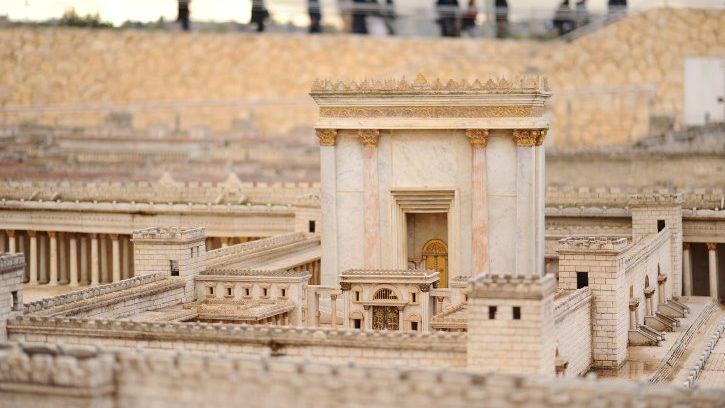
Chapters 40-42 contain the first part of Ezekiel’s temple vision. He is told to pay close attention so he can tell all to Israel. The temple described has some commonalities with Solomon’s temple, but much is different. While a temple will be rebuilt, this temple is never realized in the Bible. Ezekiel’s temple compound is 750 feet by 750 feet. It has three gates, courtyards, chambers, holy places and equipment. The Zadokite clan is set apart as the only Levites to “draw near” to God – to offer sacrifices on the altar. The temple is adorned with winged creatures and palm trees. There are holy chambers, places to store holy things.

The temple is at the center of God’s restoration of Israel, both physically and spiritually. It is a part of the sanctifying process, making Israel into the holy people of God. For Ezekiel and his audience, the temple represented God’s presence with the people. These words and vision bring hope and encouragement to the people living in exile. God longed to live amongst the people of God. God still longs to live amongst us today. May it be so.

Prayer: Lord God, your power and might extend over all things: over Gog and his allies, over today’s idols and temptations, over our selfish hearts. Ezekiel’s temple vision reflects your power and might. But it is still just a building. Just as your presence will fill this visionary temple, fill our hearts with your indwelling spirit, transforming our lives and our hearts. Amen.


Leave a comment

Lamenting Suffering

Reading: Lamentations 3-5

Lamentations 3:22 – “Certainly the faithful love of the LORD hasn’t ended; certainly God’s compassion isn’t through!”

Photo credit: Falaq Lazuardi

Today’s key verse summarizes the feel of Lamentations 3-5. There is hope in these words of lament. There is a hope that God isn’t utterly done with Israel. Yes, the author knows the promises of rescue and restoration, but in the depths of the suffering, hope can flicker.

Lamentations 3 is in the first person. It reads as if Jeremiah were reflecting on the hardships and trials of his life as a prophet. He has felt God’s hand against him. He has felt like God “silences my prayer.” These memories of suffering bring bitterness. He muses, “Certainly the faithful love of the LORD hasn’t ended; certainly God’s compassion isn’t through!” Hope arises, though, as he declares, “Great is your faithfulness… The Lord is my portion! Therefore I’ll wait for God.” As the chapter continues, there is an invitation to “examine our ways” and to recognize, “We rebelled.” This is step one to forgiveness.

Chapter 4 reflects on the people’s suffering. The children are thirsty and hungry. The author laments that their fate wasn’t like Sodom’s – quick and final. He laments, death by the sword would be better than death by famine. The false prophets draw some of the blame. There is reality in verse 12: “Our end had definitely come.”

The last chapter is a communal lament. They invite God to notice their disgrace. They recognize that they are burdened by past sins. Their joy is gone. They are “doomed because we have sinned.” Hope surfaces again as the community recalls how God reigns from one generation to the next. With that hope, they offer this request: “Return us, Lord, to yourself. Please let us return!” May it ever be so.

Prayer: Lord God, we too lament when we suffer justly for our sins and for our choices to be of the world. We too long to end these seasons and to return to you, our God and king. In the suffering and trial, refine us as you are working to rescue us. Draw us to you, O Lord, again and again. Amen.


Leave a comment

Love and Compassion… Forever

Reading: Jeremiah 30-33

Jeremiah 31:33b – “I will put my Instructions within them and engrave them on their hearts. I will be their God, and they will be my people.”

Today we read chapters 30-33, known as “The Book of Comfort.” This “scroll” offers words of hope and restoration. It opens with a declaration that the time is coming when God will bring back the captives. This section has the “what you’re about to go through will be really, really hard, but…” feel to it. There will be “screams of panic and terror… a time of unspeakable pain,” but God will deliver them; God will break the yoke on their necks. God will restore and rebuild. There will be laughter and joy. The Davidic line and the Levitical priesthood will both be reestablished. “You will be my people, and I will be your God.”

The defeat and time in exile will be part of the process. This refining and reshaping process will lead to a new covenant. God declares, “I will put my Instructions within them and engrave them on their hearts.” The sin that has been deeply engraved on their hearts will be written over. God states, “They will all know me, from the least of them to the greatest.”

Chapter 32 shares with us a critical moment for Jeremiah, offering him some tangible proof for these promises of God. Jeremiah is in confinement for prophesying the downfall of Jerusalem… He receives word that a cousin is coming to sell him some land. It all happens as God said it would. Jeremiah buys the land. In a practical sense this makes no sense. Judah is about to be conquered. Jerusalem and its temple will be destroyed. Most will die or go into exile. But this is an act of trust and faith. Jeremiah buys the land. God then declares that houses, fields, and vineyards will one day be bought and sold again in this land. Jeremiah responds with a beautiful prayer that recounts God’s power and might, that recalls the sins of Israel and Judah, and that reviews God’s promises of restoration and covenant renewal. Yes, hard times are ahead. Really hard times. But God is faithful. God’s love and compassion endure forever. Thanks be to God.

Prayer: Lord God, we are reminded once again today of our frailty and failures, set against the hope and promise of your enduring and unending love and grace. What a sharp contrast. How different we are from you in so many ways. And yet, yet you hold on, yet you love us anyway. So great is your love for us, O God. Strengthen and encourage us today to be your people. Today. Amen.


Leave a comment

Higher Than Our Ways

Reading: Isaiah 52:13-55:13

Isaiah 54:7 – “For a brief moment I abandoned you, but with great mercy I will bring you back.”

Photo credit: Kate Remmer

Today, as we conclude Second Isaiah, we begin with the fourth Servant Song. The servant grew up quietly. He was not one to behold, nor did he draw attention to himself. In time he was despised and avoided, his words piercing the soul. He suffered with and was familiar with the sick, the outcast, the lonely. He bore our sins and was pierced because of our rebellions. By these wounds we are healed. An unjust ruling led to his death but “after his deep anguish he will see the light.” On the third day he arose, returning to his “share with the great.

Chapter 54 speaks of Israel’s restoration. A nation that has become barren will “burst out” to the left and right. God will partner with Israel to rebuild the nation. In verse 7 we read, “For a brief moment I abandoned you, but with great mercy I will bring you back.” These days are like the days of Noah. The punishment is ended. The new restart begins. Israel will be founded on righteousness, oppression will not come near. The new generation will be “disciples of the Lord.”

The themes of joy and restoration continue in chapter 55. In my Bible it is titled “An Invitation to the Feast.” There is water for the thirsty and food for the hungry. The invitation is also to “listen, and you will live.” God will make an “everlasting covenant.” God also invites the wicked to abandon their ways. The God who is “generous with forgiveness” wants to have mercy on them. Yes, God’s ways are higher than our ways. Thanks be to God.

Prayer: Lord God, what hope and promise, both for your children then and for your children now. You went to great lengths to take in flesh and to suffer and pay for our transgressions. That spirit continues as you invite all to come to the table of grace, to feast on your generous mercy. Your words lead and guide us, they teach and instruct us. They do not return empty. Thank you, Lord. Amen.


Leave a comment

The Goodness of God

Readings: Psalms 102-104

‭Psalm 104:24 – “LORD, you have done so many things! You made them all so wisely! The earth is full of your creations!”

Psalm 102 begins in lament. The psalmist cries out for God to hear their prayers. Their bones are crushed; their heart is smashed. They eat ashes instead of bread. And then in verse 12 the psalmist remembers the God who reigns forever. Yes, God will stand up. Yes, God will look down, hear, and set free “those condemned to death.” Even though the psalmist feels like God is “cutting short my days,” the Psalm closes with a petition for God’s presence to be with his or her children and descendants.

The mood shifts in Psalms 103 and 104. These Psalms celebrate God’s love and care for all of creation. Psalm 103 begins with thanks for forgiveness and healing, for love and compassion, for the good things God provides. The psalmist celebrates God’s patience and mercy, remembering that we don’t get what our sins deserve. Instead, God removes our sins “as far as the east is from the west.” It is noted that this because God knows how we are made. God made us! And even though our days “are like grass,” God’s days are forever. The Psalm closes with a call for heaven and earth, for all of creation, to join the psalmist’s whole being in praising the Lord.

Psalm 104 continues this invitation. The psalmist celebrates God’s creative prowess. He or she recognizes the wine, oil, and bread that God provides to sustain and enrich our lives as signs of God’s goodness. The psalmist proclaims, “LORD, you have done so many things! You made them all so wisely! The earth is full of your creations!” What a celebration of who and what God is! In verses 29-30 we are reminded that God is the giver and taker of breath and life. Then at the end of this Psalm we find a request to “wipe clean from the earth” the wicked. When I read this it felt a bit out of place after all of the praise and celebration in verses 1-34. My Bible’s notes revealed this truth: these are those who seek to disrupt the goodness of God and God’s creation. Ah ha!

Prayer: Lord God, yes, we too have our days and seasons when we feel crushed, when we feel oppressed. In these times, Lord, remind us of your constant presence and of how you are faithful to hear and to respond. Bring to memory the healing and restoration we’ve experienced and lead us to trust into your love and compassion for us. From there may we respond with praise and thanksgiving to the one who creates and reigns wisely and faithfully. There may we celebrate the goodness of God. Amen


Leave a comment

Ups, Downs, Highs, Lows

Readings: Psalms 85-89

‭Psalm 86:2 – “Guard my life because I am faithful. Save your servant who trusts in you — you! My God!”

Photo credit: Franzie Allen Miranda

Today’s Psalms rise and fall like the highs and lows of our lives. Like these Psalms, our faith can bounce from “Praise God!” to “Where are you, God?” more often than we’d like. Psalm 85, for example, begins with thanks for God’s forgiveness then quickly pivots to a God who seems angry, who yet needs to forgive their sins. The Psalm closes beautifully and with hope. “Truth springs up… righteousness looks down.” Walk with the Lord!

Psalm 86 begins with a series of petitions, each followed by a “because.” In verse 2, for example, we read, “Guard my life because I am faithful. Save your servant who trusts in you — you! My God!” Do these things, God, because I have faith! After celebrating times when God was faithful, the psalmist invites God to act once again: “Come back to me! Have mercy on me!” A faithful one asks, “Where are you, God?”

A short Psalm 87 celebrates that those from Zion are blessed.

Next we turn to Psalm 88. Frankly, it is hard to read. It is a lament that goes down and down, ending in hopelessness. The psalmist cries out to God but feels beyond help. Friends have abandoned the writer. It feels like God has too. The Psalm concludes: “My only friend is darkness.” So why read Psalms like this? There is a really good reason. They remind us that life is not easy. Many people end up here. If you’re not one, then read this Psalm and allow yourself to feel the pain and darkness. The connection will bring a measure of empathy to how you minister to those who walk in the darkness.

We close with Psalm 89 as book 3 ends. A lengthy remembrance of God’s power and of God’s promises to David and his dynasty is followed by 15 verses that ask where God is. It seems that God has broken the covenant. It begs God to let the anger pass. There is an implied plea for restoration. Because you promised this God and because I am faithful… We can certainly relate.

Prayer: Lord God, we encounter so many ups and downs, so many highs and lows today in our readings. Thank you, Lord, for the reminder. We all struggle. We all need support, encouragement, understanding – from you and from one another. We can all offer these things to others. Guide us, O God, each day. As we receive, may we give. Amen.