pastorjohnb

Thoughts and musings on faith and our mighty God!


Leave a comment

An Invitation to All

Readings: Mark 14:22-24 and Luke 22:19-21

Mark 14:24 – “This is my blood of the covenant, which is poured out for many.”
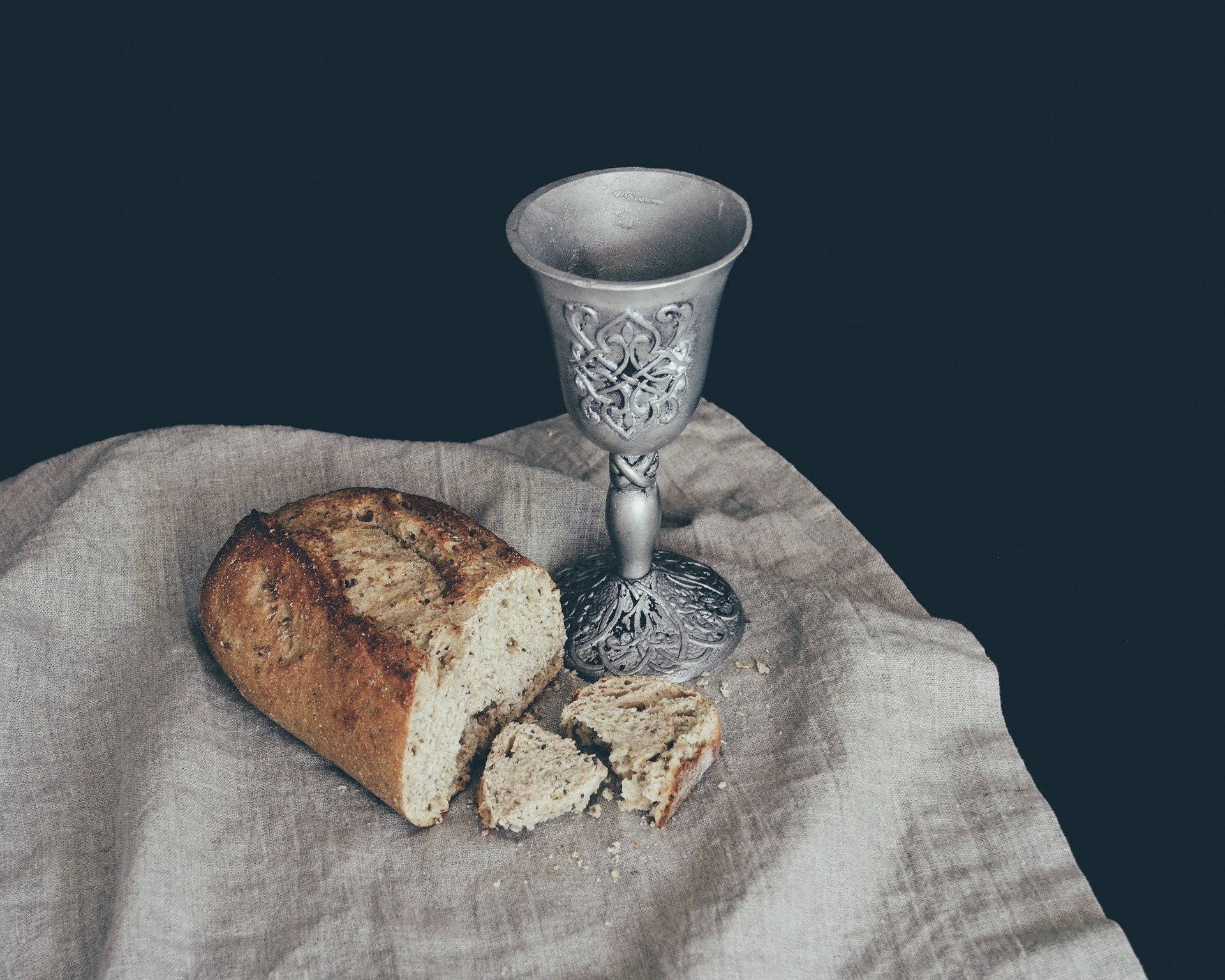
In both passages that we read today, we see Jesus instituting the sacrament of communion. This event is set within the context of the Passover meal. This meal was an annual event in which the Jews would remember and celebrate how God saved them as the angel of death passed over their houses. This final plague led to Pharaoh releasing Israel from bondage and slavery.

Mark and Luke both present Jesus offering the bread as symbolic of his body, broken for them and for us. Jesus’ body will be broken on the cross. In using the common element amongst the rich and the poor and all in between, Jesus takes the everyday and connects bread to himself and to us all.

Both gospels present the cup – representative of Jesus’ blood – as poured out for many, establishing the “new covenant.” Mark recalls these words of Jesus: “This is my blood of the covenant, which is poured out for many.” The new covenant is wrapped in mercy and grace, in forgiveness of sins. This common element of wine – again Jesus connecting the ordinary to his extraordinary gift.

In Mark’s gospel they sing a few songs and head to the Mount of Olives. But in Luke’s gospel, Jesus says, “But look! My betrayer is with me; his hand is on this table.” Jesus celebrates the first communion knowing that Judas will betray him. This is an invitation to us all – sinners each of us – to come to the table of grace. There we too will find welcome and forgiveness. Thanks be to God.

Prayer: Lord God, we humbly thank you for the gift of grace. Your Son did for us what we could not and cannot do for ourselves. It is only because of and through Jesus’ sacrifice that we are forgiven and made new, freed from the bonds of sin and death. Thank you, thank you, thank you. Amen.


Leave a comment

Into the Community

Reading: Luke 2:22-40

Verse 22: “Joseph and Mary took him to Jerusalem to present him to the Lord.”

The context for today’s passage is Mary and Joseph doing what all devout parents did – they brought Jesus to the temple to be redeemed. This ritual reminds me of our practice of baptism. As is the case with these parents, I can see Mary and Joseph beaming as they bring Jesus before the Lord. They offer the set amount to redeem their son – a sacrifice of two birds, the price required for a poor couple to bring their son back home.

On Sundays when parents present their child for baptism or for dedication, there is a special feeling, a sense of joy really, that covers the sacrament. It is contagious too – the smiles on the faces of the congregation are a little brighter as the child is made a part of the family of God and a part of our faith community. There is a joy in claiming the child and in committing to help that child walk in the way of the Lord.

There is a joy that we find today in Simeon and Anna. Both are devout, Holy Spirit filled Jews that are awaiting “the consolation of Israel” – the Messiah, the Savior. Both speak of the God-driven life that Jesus will lead. Both rejoice in the gift that Jesus is to them and to the world. Both are now at peace in their hearts. It is a beautiful scene.

As I think of baptism and this passage, I can’t quite imagine doing another baptism without incorporating verse 40: “And the child grew and became strong; he was filled with wisdom, and the grace of God was on him.” May it be so for each that we welcome into our community of faith.

Prayer: Lord God, there is such joy in dedicating a child to you. It brings happiness to our hearts to welcome them into the body of Christ. Lord, help us all to keep our commitments to these children. Amen.


Leave a comment

The Holy Spirit Descends

Reading: Matthew 3:13-17

Verse 16: “At that moment heaven was opened, and he saw the Spirit of God descending like a dove and alighting on him.”

Our gospel lesson this week is about baptism. In our reading, Jesus comes to John the Baptist as he is preparing the way, preaching repentance and baptizing out in the wilderness. John tried to deter Jesus initially – he recognizes that Jesus does not need to be baptized. Jesus insists, saying, “It is proper for us to do this to fulfill all righteousness.” Jesus is setting an example. He is preparing himself for a ministry that is about to begin. For each who is baptized, it is also an entry point into a life of faith.

Coming up out of the water, Jesus is changed. In verse 16 we read, “At that moment heaven was opened, and he saw the Spirit of God descending like a dove and alighting on him.” The Holy Spirit descends and becomes a part of the human Jesus’ life. In almost all Christian denominations this is part of our understanding of baptism too. Through the waters of baptism the Holy Spirit enters into that person’s life, beginning the lifelong transformation process. The change wrought in the individual’s life is not done by the power of the water that has been blessed or by the human words spoken in the baptism. The power is found in the Spirit that descends and indwells that person.

It is the power and presence of the Holy Spirit that then guides our lives, helping us to see and hear and live differently. It is the Holy Spirit that transforms us and opens us up to living as a witness to Jesus Christ’s love in the world. In living a life of faith, God also speaks the words of verse 17 over you and me: “This is my son, [this is my daughter], whom I love; with him [with her], I am well pleased.” May it be so.

Prayer: Lord God of the Holy Spirit, through the sacrament of baptism you draw us in and make us part of your family. Your Spirit becomes a part of who we are at the core. In birth we are created in your image. Through the power and presence of the Holy Spirit we come to reflect your image and being to the world. Help us to do this well. Use us in ways that reveal your saving love to our world. Amen.


Leave a comment

Baptized into Jesus

Reading: Acts 19: 1-7

Verses 5-6: “They were baptized into the name of the Lord Jesus… the Holy Spirit came on them”.

This week we have been looking at God’s creativity and power and strength and majesty found in creation. The call or response has been to praise and give glory to God. The passages from Genesis 1, Psalm 29, and Isaiah 60 were mostly corporate, focusing on God’s love for and interaction with those who believe. In today’s passage that love becomes more personal.

As we begin, we learn that Paul travels to Ephasus to preach and teach. Upon arriving he encounters some disciples of Jesus. There must have been something different about these men. Paul asks them if they have received the Holy Spirit. It is something they have never even heard of. Finding out that they received John’s baptism (a baptism of repentance), Paul points them towards being baptized in Jesus’ name. Desiring this baptism, the men are baptized in Jesus’ name. It is then that the “Holy Spirit came on them”. The result of the indwelling Spirit is that they spoke in tongues and prophesied. There was an obvious change in these twelve men. The baptism in Jesus’ name led to transformation. They were different now.

As we consider the sacrament of baptism about 2,000 years later, the same essentials remain. Whether your faith tradition baptizes mostly infants or mostly adults, whether your tradition immerses or sprinkles with water – it does not matter. It is not the pastor or the priest that changes or transforms the person in any way. God alone has the power. The clergy person is certainly a part of the sacrament but God is the change agent. To think otherwise would be akin to saying the kid who brought the new batch of baseballs to the umpire is responsible for the home run hit two pitches later.

In baptism one is inviting the power of God to be a part of that person’s life. Faith in Jesus Christ as Lord and Savior remains the catalyst for baptism. The indwelling of the Holy Spirit remains the result of baptism. Inclusion into the family of God begins the transformation process as one speaks and lives in a new and different way. The language of God’s love becomes the baptized believer’s primary language. It is a language that we become more proficient with as we continue to grow in Jesus Christ as we are led by the Spirit, being transformed day by day.

As we go forth in the world today, may we celebrate our place in the family of God, seeking to speak the language of love to the world. May it be so.

Prayer: Lord God, you lead and guide me from within and without. Your presence lives in me and your word and example are also a part of my daily life. Thank you so much for calling me and claiming me as one of your own. Amen.


Leave a comment

Anointed

Reading: 1 Samuel 16: 6-13

Verse 13: “Samuel took the horn of oil and anointed him… from that day on the Spirit of the Lord came upon him”.

As we return to this passage from 1 Samuel 16 we focus in on Samuel anointing David. God who sees the heart identifies David and guides Samuel to consecrate him with oil. There are no words spoken concerning what David is being consecrated for. The two usual times when this act was practiced was to anoint a new king or a new high priest. As David’s family was not of the line of Levi, some there may have wondered about what was happening. Saul was clearly established as the king of Israel who God himself had chosen.

Although we do not all anoint with oil in this fashion, we all do practice a sacrament that accomplishes the same end result. In the sacrament of baptism we are each marked – not with oil but with the water. In most Christian traditions the time of baptism marks the child or person as a member of the family of God. The sacred part of baptism is the Holy Spirit becoming part of that person’s life, much as it did for David in today’s passage. We see the same coming of the Holy Spirit in Jesus’ baptism. As we each profess faith in Jesus as our Lord and Savior, we become children of God as we receive the Spirit.

Jesus was anointed to live as a humble and obedient servant of God. Doing so, he set us an example and then gave his all for you and me. David was anointed to one day be king of Israel. You and I have also been anointed. We will probably have a journey of faith that looks more like David’s – plenty of ups and downs as we begin. As God and the Holy Spirit works within us we will mature as David did, finding less “downs” along the way. As we continue our Lenten journey, may we each consider how we are uniquely called to humbly serve God and our fellow children of God. Being led by the Holy Spirit, may we each be the presence of Christ in our world.

Prayer: Heavenly Father, this day use me as you will. Guide me to love and serve those I can and to be faithful and obedient to the lead of the Holy Spirit. Amen.


Leave a comment

Acceptable?

Reading: Isaiah 58: 1-5

Verse 2: “They seem eager to know my ways… and seem eager for God to come near them”.

Isaiah 58 starts with a pronouncement from God. In verse one God encourages Isaiah to “shout it aloud. Do not hold back”. Proclaim it from the rooftops! The message is something God wants all the people of Judah to hear. Getting right to the point, God declares the rebellion of the people, laying their sins before them. In verse two we get a hint at the heart of the problem: “They seem eager to know my ways… and seem eager for God to come near them”. In these phrases, the key word is “seem”. On the surface the people of Judah appear to be seeking God. In verse three the people try to defend themselves, asking why God did not notice their fasting. There is a reason.

Yesterday in church we celebrated communion. At our church we offer communion on the first Sunday of each month. In the words before coming forward there was a prayer and a time to lay our sins before the Lord, inviting us to offer repentance along with confession. Everyone in church took communion. Did all take the opportunity to search their hearts and to make a humble and sincere confession of their sins? Did all humbly desire to repent and go forth walking a more holy life? In an ideal world the answers to these questions would be yes and yes! But maybe someone was thinking instead about the Super Bowl snacks that lay ahead or about which commercial would be their favorite. Maybe someone thought they had no sins to confess. If anyone came and took communion in these or similar mindsets, they were practicing a ritual not participating in a sacrament.

The people of Judah were going through the motions of fasting. Yes, they were abstaining from food. But that is as far as their fast went. They were exploiting their workers. They were quarreling and fighting amongst themselves. The ritual of fasting was not changing their sinful ways. Their ritual fasting was not changing their hearts or helping them to be holy. A fast, when celebrated properly, works to draw one closer to God and deeper into walking in God’s ways. Communion should have the same affect. The same can be said of prayer, worship, Bible study, meditation, practicing Sabbath…

Our section for today ends with this question: “Is that what you call a fast, a day acceptable to the Lord”? Tough question. Reflect on yesterday for a minute or two. Would God ask this question of any part of your day set aside for God?

Prayer: Lord God, it is a bit disconcerting to think about when I just go through the motions instead of choosing to be fully present with you or others. Strip away my busyness, my selfishness, my distractions, my half-hearted efforts. Just as you are fully present with me, may I be so to you and to those you place before me today. Amen.


1 Comment

Well Pleased

Reading: Matthew 3: 13-17

As Jesus is baptized the presence of God is made known.  The heavens open, the Spirit descends, and God speaks.  God claims Jesus as His Son and voices pleasure with Jesus.  God is proud of His son.  It is a good proud – proud of who He has become, proud of how Jesus lived His life, proud of who Jesus will become.  This is what all parents hope for.  All parents want to be able to say, “That’s my boy!” or “That’s my girl!” in conversations with friends and others.  Parents do not long to say this because their child is beautiful or has a fancy car.  They long to claim their child because of who they are.  And so it is with God.

As each of us was baptized, we too are claimed by God.  In baptism, we are brought into the family of God.  Through the sacrament of baptism, we are identified or marked as a child of God.  We are baptized into the name of Christ, making us a fellow brother or sister with Jesus.  There is also an earthly component to  the baptism.  For the child’s immediate family, there is a covenant to raise the child in the family of faith.  For the new extended family, there is also a role to play.  Those welcoming the new son or daughter into the family are also committing to raise up a young Christian.  From God on down to every member of the church, all have roles to play in raising this new child of God.

Beginning with baptism, we are part of God’s family.  We are always a child of God, but with the sacrament others are acknowledging the relationship and the responsibilities.  As family, we love each other no matter what.  As family, we will help model, teach, and encourage one another.  As family, we will correct and rebuke as necessary.  As family, we will do all we each can to help God say, “This is my daughter (or son).  With her (or him) I am well pleased”.  May it be so this day and every day.


Leave a comment

Past Confession

Communion is a time we gather once a week or once a month as a community of faith.  In this sacrament we remember both what Christ did for us at the cross and what He continues to do for us.  Through Christ we can be cleansed, forgiven, and restored to a right relationship with God.

In Psalm 51 we find ourselves with David just after he has been convicted of his transgressions with Bathsheba and Uriah.  In the opening verses we can hear David’s pain and sorrow just pouring out.  A man who is known for being close to God’s heart finds himself away from God because of his own actions.  David acknowledges the sinful nature inherently in all of mankind.  He acknowledges that his sin is against God.  And he acknowledges that God desires more.  All of this is true of us and our relationship with God as well.

Our reality is that we sin more than once a week and certainly more than once a month.  We need to come before God more regularly than at the communion table.  And His good news is that we can.  Lamentations 3 reminds us that God’s mercy and compassion never fail.  They are new every morning and great is His faithfulness.  Each day, each hour, each moment we can come before our loving God to be made new.

David goes on past confession and we must also go there.  In the second half of the psalm he asks God to create in him a pure heart and a steadfast spirit.  He asks God to restore the joy of His salvation within.  May the God of all love, hope, and mercy create in each of us a pure and willing heart and a steadfast spirit that willingly kneels at the cross of Jesus Christ each day, each hour, and each moment.

Scripture reference: Psalm 51: 1-12