pastorjohnb

Thoughts and musings on faith and our mighty God!


Leave a comment

Words of Life

Reading: Jeremiah 15:15-21

Verse 19c: “Let this people turn to you, but you must not turn to them.”

Chapter 15 begins as a dual lament. God laments the disobedience and hard hearts of the people. Jeremiah laments where he finds himself – cursed and rejected, abused and alone. This leads him to wonder if God even cares. Our passage today begins with Jeremiah asking for God’s care – via revenge on his enemies. That’s a snapshot into his current emotional state. He laments how taking in and proclaiming God’s word has led him to being an outcast. He asks God why his pain – both physical and emotional – is unending. And then he questions God’s reliability, equating God to “a spring that fails.” His pity party has him spiraling deeper and deeper.

God takes no offense. God understands how hard it is to speak truth to a people bent on evil. God understands how frustrating it is to offer true and abundant life to a people refusing these gifts to chase after the things of this world. God understands because God has been here before and because God is once again torn up about the people’s choices. In grace, God invites Jeremiah back to the task, back to right relationship, back to speaking “worthy” words, back to holy living. This is a great challenge to Jeremiah, to live in the world but not of it. We too wrestle with this challenge.

Much of life is spent living in the world. We too are called to a holy life. God promises to be with us too, to “rescue and save you.” In those moments of doubt and questioning, may we recall these words of truth: “Let this people turn to you, but you must not turn to them.” We know the words of life. We know God is with us. May we ever stand upon these truths.

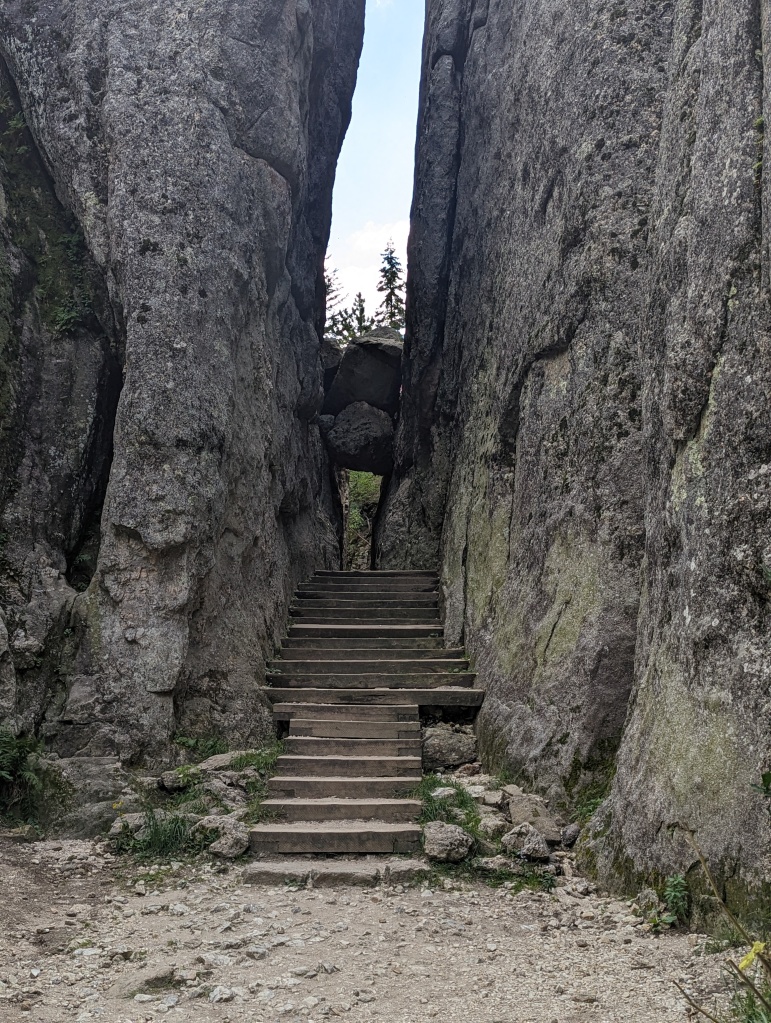
Prayer: Lord God, when the steps are hard, whisper your words of love. When the temptation to lessen who I am to fit in or to avoid conflict arises, whisper your truths. Strengthen and encourage me for all that living in this world brings. Amen.


Leave a comment

Holy Ground

Reading: Exodus 3:1-9

Verse 5: “Take off your sandals, for the place where you are standing is holy ground.”

Moses is living in a foreign land. He is an exile. Something is stirring in Moses so he travels with his flock to a place known for God’s presence. Moses is definitely not the first person to go to Mount Horeb. At times perhaps this has happened to you. Maybe that unease drove you to delve into the Bible. Maybe that unsettling circumstance brought you to a place of prayer – perhaps the sanctuary or chapel at your church. Or maybe it was a special place at the beach, in the woods…

When he arrives, Moses is alert, seeking, and probably a bit anxious. How and where will God show up? What will be the outcome of this encounter? It feels like Moses expects God to show up. In those times and places that I have earnestly sought God, the presence has come. Has that been your experience too?

God uses a burning bush to draw Moses closer. It is burning but not being consumed. God calls out to Moses. Here is his response: “Here I am.” There is purpose in these words – I came seeking you, you showed up, here I am. I love God’s first instruction: “Take off your sandals, for the place where you are standing is holy ground.” Yes, Moses, God is here to meet you. But God is still God. This is holy ground.

God speaks to Moses about connection: “I am the God of your father…” God speaks about relationship: “I have indeed seen the misery… heard them crying.” And then God speaks of mission: “So now go. I am sending you…” And if we read on a bit further, as Moses questions and frets, we meet the God who goes with us: “I will be with you.”

As we seek God, may we seek the God who met Moses. As we enter that holy or sacred place, may we expect God to meet us there, to connect with us personally, to understand the need, and to go with us as we are sent out to minister to others. May it be so.

Prayer: God, may we enter these sacred and holy places and spaces confident of your arrival. As we seek you out, may you be found. Give us the courage and strength not only to seek you, but to leave these encounters with willing hands and hearts. Amen.


Leave a comment

Sow Seeds

Reading: Matthew 13:18-23

Verse 23b: “This is the one who produces a crop, yielding a hundred, sixty or thirty times what was sown.”

Today we read Jesus’ explanation of the parable of the sower. Unpacking it for his disciples, Jesus covers the gamut of belief. He begins with those who hear the word of God but do not understand it. It does not even begin to take root, so it falls away quickly and easily. Then Jesus moves on to the three “soils” who hear and understand the word of God. Some, after receiving it, fall away because of the trouble or hardship caused by their faith. And others fall away because the cares and concerns of the world are stronger than their faith. Lastly, Jesus tells us that some will hear and understand and apply the word to their lives. These go out and do what Jesus says to do, leading others to faith by their witness. This is the crop yielded from their faith: new believers.

These various soils were the reality of Jesus’ day. People heard and accepted his teachings to various degrees. Some were all-in for the long haul. Many others were not. This has remained true throughout the ages. Even so, the task laid out in the parable remains the task of the disciple: sow seeds and trust that God will be at work, sprouting seeds into faith that lasts.

There is also a personal application to this parable. Our receptivity and obedience rises and falls. Some days, for example, we hear the voice of the Holy Spirit and we respond in faith. Other days we are deaf or lazy or… and the word is not responded to. And God the sower continues to scatter seeds of faith into our soil, looking for us to be good soil that produces a crop. May we do all we can to be good soil.

Prayer: Lord God, today I ask that you would use me to sow seeds of faith in other people’s lives as you sow seeds in my soil. Use me as you see fit. Amen.


Leave a comment

Known Yet Unknown

Reading: Acts 17:22-31

Verse 27: “God did this so that they would seek him and perhaps reach out for him and find him, though he is not far from any one of us.”

Photo credit: Paul Pastourmatzis

Paul’s witness to the people of Athens begins with a general description of God: created the heavens and earth and everything in it and gives all people “life and breath and everything else.” These two components are almost givens for all people everywhere. Ever since mankind has been trying to make sense of their world they have been crafting creation stories that frame their understanding of the world and their existence. In this sense God’s story is far from unique.

Then, in verse 27, Paul says, “God did this so that they would seek him and perhaps reach out for him and find him, though he is not far from any one of us.” Here Christianity begins to differ significantly from the pagan, native, and polytheistic norms about the god(s) and the people of the earth. In almost all religions or belief systems there is a desire to be close to the divine. But there is a healthy boundary. In most cases this forms a transactional relationship: I’ll sacrifice this animal, you make it rain… Most people groups had many gods – a god of fertility, a god of war… When one needed this, one went to this god. But what Paul is offering and speaking of is something different. Paul is implying that you can have a relationship with this God. One can seek and search and actually find God – because God is close to us. Not far away and distant in the heavens, but close to each of us. Whoa.

And then, once again connecting to the Athenians, Paul quotes from their culture: “For in him we live and move and have our being.” Here too Paul connects their world into an invitation into a personal relationship that God offers to all people. As our passage closes, Paul steps back towards the unknown, back into the mystery. He speaks of Jesus: the one God appointed to judge, the one God raised from the dead. Huh?! The known followed by the unknown. This jars some – it is too much – but it draws others towards more conversation. In these the Holy Spirit is at work.

Prayer: Lord God, you are known in so many ways, often in great depth. And yet so much remains unknown. There is ever so much more to know about you. And in this mystery, you offer to walk with us in a personal and intimate relationship. Even so, we cannot fully describe you. We can tell about parts of you, but our words fall short of the whole. Continue to draw us deeper into you, to be our all in all. Amen.


Leave a comment

May We Too Seek

Reading: John 9:24-41

Verse 36: “‘Who is he, sir?’ the man asked. ‘Tell me so that I may believe in him.’”

Photo credit: Diego Gennaro

As our passage in John 9 continues today, the formerly blind man is once again brought before the Pharisees. He reveals great insight and understanding about what has happened to him and about the one who healed him. The man states that God does not listen to sinners, so Jesus cannot be a sinner. He adds, “If this man were not from God, he could do nothing.” The Pharisees refuse to see or understand. In anger they drive the man out.

Sometimes it is hard to see things in a new way or to wrap our heads around the way that the Holy Spirit might be working. As individuals and as churches we can get stuck in our way of doing things. We can cling to the old traditions that we have even though they are worn thin. We can hold fast to our way of reading and understanding the scriptures. In these situations and more we too could sometimes be called ‘blind.’ Young people or older people with new ideas can feel rejected, unheard, or unwanted by us and by our churches. It is the Pharisees’ refusal to consider or see or understand the new thing that God is doing in and through Jesus that drives what he says in verses 39-41.

Jesus seeks out the man who was insulted and then thrown out by the Pharisees. We might not be that blatant about it, but there are lessons here for us and our churches: be aware of how we can do this, be willing to hear or see or understand the new or different, AND be sure to seek out and offer words of reconciliation when necessary. The man welcomes Jesus’ invitation to know the Son of Man. He says to Jesus, “Lord I believe” and he worships Jesus. May we too seek those who are blind or lost or rejected, for they too are dearly beloved by God.

Prayer: Lord God, open my eyes fully so that I may really see you are your workings in the world. Open my eyes to see all people clearly as your beloved – those inside the church and those outside the church. Open my heart to truly love, value, and serve all people – those inside the church and those outside the church. Use my life to draw others to Jesus Christ, our hope and our redeemer. Amen.


Leave a comment

Past the Surface

Reading: 1st Samuel 16:1-13

Verse 7b: “People look at the outward appearance, but the Lord looks at the heart.”

In our first Old Testament reading this week we visit a familiar passage and center in on a well-known verse. Samuel the prophet is sent to anoint the next king of Israel. Samuel the prophet brings God’s word to the people. Like most prophets it is often by offering words of correction and warning. His job is to get wayward people to walk faithfully. His most recent difficult words informed King Saul that he has been rejected by God. He has violated God’s command. He will reign, however, until the next king is ready. Over time people have come to fear seeing Samuel coming. This all is why the city elders tremble as Samuel draws near.

As the time comes to anoint the future king, Samuel sees and thinks as we can be tempted to see and think. First comes Eliab – oldest, strongest, tallest. Surely this is the one! No, God says, “People look at the outward appearance, but the Lord looks at the heart.” Son after son passes by Samuel. The oil remains in the horn. In the end the youngest is sent for – the one out tending the sheep. God says to Samuel, “Rise and anoint him. He is the one.” Maybe the least likely from human standards, but the one with the heart to follow God and to lead the people faithfully. The Spirit comes upon David and begins to prepare him to be king one day.

The key verse for today is the lesson we need to learn and to practice over and over. Go past the surface, get down below the shine to know the person’s heart. Hear their story, understand what has shaped and formed them. As we do, we will begin to see where God is working or where God could be at work. As David was, may we too be led by the Spirit.

Prayer: Lord God, help me to see what you see, to perceive as you perceive. Then guide me and use me to build your kingdom by encouraging and empowering others in their walk of faith. Amen.


Leave a comment

Patience, Love, Mercy

Reading: Exodus 17:3-7

Verse 6: “I will stand there before you… Strike the rock, and water will come out of it for the people to drink.”

Continuing in Exodus 17 today, the people are thirsty – parched. They grumble at Moses who grumbles to God. At this point, God demonstrates patience, love, and mercy. I imagine God first drawing a deep breath and then counting to 10. As God exhales slowly, I imagine God looking down in love upon this quarrelsome, doubting lot. As God looks upon these children panicking in the desert, God’s heart is once again moved to mercy. We don’t have to imagine this part. In verses 6 God tells Moses, “I will stand there before you… Strike the rock, and water will come out of it for the people to drink.” God goes before Moses, leading the way to water, to life, to joy.

First, a lesson from Moses: lead using the example you want others to follow. After receiving the peoples’ complaint, Moses should’ve gone to God in prayer. Moses should’ve first sought God’s direction, strength, guidance – and patience, love, and mercy. This is how God led. That’s our second lesson, this one from God. When seeking to help or care for someone in distress, practice patience, love, and mercy. See the person as they are, try to understand where they are, feel what it is like to be in their shoes. Then allow first love and then mercy to guide your efforts and your response.

We are now in our own season in the wilderness. We are journeying towards the cross during Lent. This season of introspection invites us to look within, to honestly see ourselves as we are. Maybe we’ll find some grumbling and a bit of quarreling. Maybe we’ll find anger or lust or pride or doubt or something else that needs to go. As we seek to root out these sinful behaviors as we prepare ourselves to stand at the foot of the cross in the presence of the one who surrendered all for us, may we too practice patience, love, and mercy with ourselves. The roots of our sin are deep and the journey is long and difficult. May God be with us.

Prayer: Lord God, today I ask that you pour out your patience, love, and mercy. Fill me with these so that I too can be generous with them – both with myself and with others. Lead me to look deeply within this day; guide me to that which I need to surrender to your will and way. Amen.


Leave a comment

Washed Clean

Reading: Psalm 32

Verse 5: “I acknowledged my sin to you and did not cover up my iniquity… you forgave the guilt of my sin.”

In our Psalm today we find a pattern that we all know intimately and we find the truth that breaks or redeems this pattern. Like David, the author of the Psalm, we are familiar with sin. Some may think that as our faith matures, we sin less. We do, I believe, get a handle on many things that caused us to sin when we were less mature in the faith. However, as our faith matures, we come to understand more as sin. Things that we did not see before as sinful, suddenly it is sinful. For me, for example, gossip was one of those things. At a point I realized that this was sinful and that I needed to control my tongue. And physical age, which tends to parallel our “faith age,” brings with it challenges that often require greater faith – health issues, emotional changes…

No matter our age or the maturity of our faith, David names something that we all struggle with. Strangely it is not the sin itself. If one is truly repentant and seeks God’s help, then God will provide all that we need to overcome that sin. It is the guilt that we can struggle with. I may be able, with lots of help from God, to get a judgmental attitude turned around. The guilt for damage done remains though. This too I need to surrender to God. In verses 5 we find the promise: “I acknowledged my sin to you and did not cover up my iniquity… you forgave the guilt of my sin.” When we are honest with God and seek God’s power, then God not only forgives but also takes away our guilt. Now we may have work to do to restore or reconcile that relationship, but the stain or the guilt is washed clean by God’s love.

Fully forgiven, we get to the place that David is at at the end of the Psalm. The guilt and the weight of the sin removed, we know that God’s unfailing love surrounds us. We can rejoice in the Lord. We can experience joy and gladness as we lift our praises to God. What a wonderful Savior. Thanks be to God!

Prayer: Lord God, you seek to walk with us daily. Beside us, you give us strength and courage. Beside us, you welcome our honest conversations and confessions. Through the life given by your son, you cleanse us and free us from the sun and guilt that we bear. Thank you for your mercy, for your grace, and for your great love. All my days may I praise your holy name. Amen.


Leave a comment

Hearing and Listening

Reading: Luke 15:1-3 and 11b-32

Verse 32: “But we had to celebrate and be glad… he was lost and is found.”

Today we return to the story of the “lost son.” He was the one who checked out early, squandered his wealth, came home defeated, and was received generously. Throughout the story we see the father. He met his younger son’s demand, longed for his return, and celebrated when the lost were found. The elder son formally enters the story in verse 25. Coming in from working in the fields, he gets angry over the celebration, at this welcoming home of his brother. We have the details or the facts of the story. But we don’t have much of the “why.” Why did the younger son ask such a thing of his father?…

We live around and interact with all sorts of people. We see their actions and we hear some of their words. And as is the case with the parable of the lost son, we can read into or infer some things. Yet we must be careful. These “insights” are guesses that come from within us and are often our perceptions or our own preconceived notions. We work with someone, for example, and we watch them for a bit and then we make assumptions about them. This is dangerous.

Each of us is unique and we all have our own stories. To really understand each other we must be willing to go beyond observations. We must become involved with one another, hearing and listening to each other’s stories. Only then do we enter into authentic relationships with one another, only then do we find space for ministering to one another. May we each be willing to spend time investing in our relationships, deepening our commitment to one another.

Prayer: Lord God, slow me down. Help me to be fully present to the one in front of me. Give me ears to hear and a heart to listen. Amen.


Leave a comment

A Difficult Road

Readings: Luke 13:1-5 and 1st Peter 3:8-17

Verse 8: “Finally, all of you, live in harmony with one another; be sympathetic, love as brothers, be compassionate and humble.”

Photo credit: Jan Huber

In the first half of this week’s passage from Luke 13, Jesus is presented with two scenarios, both with the same theme. In these scenarios people suffer a great tragedy. Those present ask Jesus if those who died suffered because they were “worse sinners”. In other words, did God single them out because of their sin? Jesus’ short and emphatic answer is “No!” Turning the conversation back to those present, Jesus twice says, “But unless you repent, you too will all perish.” Yes, we’ll all die one day. God does not go out of God’s way to punish us here for our sins. But ultimately, we will perish and spend eternity outside of God’s glory if we choose to live in sin.

These concepts of suffering and living faithfully are continues in our 1st Peter 3 passage. Our passage begins with these words: “Finally, all of you, live in harmony with one another; be sympathetic, love as brothers, be compassionate and humble.” Living faithfully involves getting along, being understanding and loving and caring, practicing humility. Jesus modeled this way of living. Peter also encourages us to not repay evil with evil but instead to be a blessing even to those who cause suffering in our lives. Jesus also modeled this way of living. Going further, Peter invites us to be willing to suffer for our faith at times. This idea of being willing to suffer is incongruent with our “feel good”, selfish culture. To do or say something that might bring some actual suffering is greatly avoided.

Yet this is the way of the cross. Jesus asks us to have a willingness to do what he did: to carry a cross, to walk a difficult road. For us, the first step is offered by Peter in verse 15: “in your heart set apart Christ as Lord.” This decision leads us to always choose Jesus’ way over the way of the world. Jesus’ way is primarily the way of love. Loving enough will lead us to times of suffering and sacrifice. This includes having less so that others can have some. This includes standing with those who are experiencing injustice, being a voice for equality, engaging oppressive systems. Each of these difficult roads invite suffering and require sacrifice. When we are willing to repent from the sinful ways of the world, when we are willing to practice compassion and empathy and understanding, when we are willing to carry a cross for the other, then we are our world will be changed. May it be so.

Prayer: Lord God, give me a willingness and a courage to walk the difficult road. With a heart to suffer for others, send me out into the brokenness of the world. With a holy courage, lead me to those who need voice, to those who need one willing to stand beside them. Amen.