pastorjohnb

Thoughts and musings on faith and our mighty God!


Leave a comment

Walking the “Holy Way”

Reading: Isaiah 35:8-10

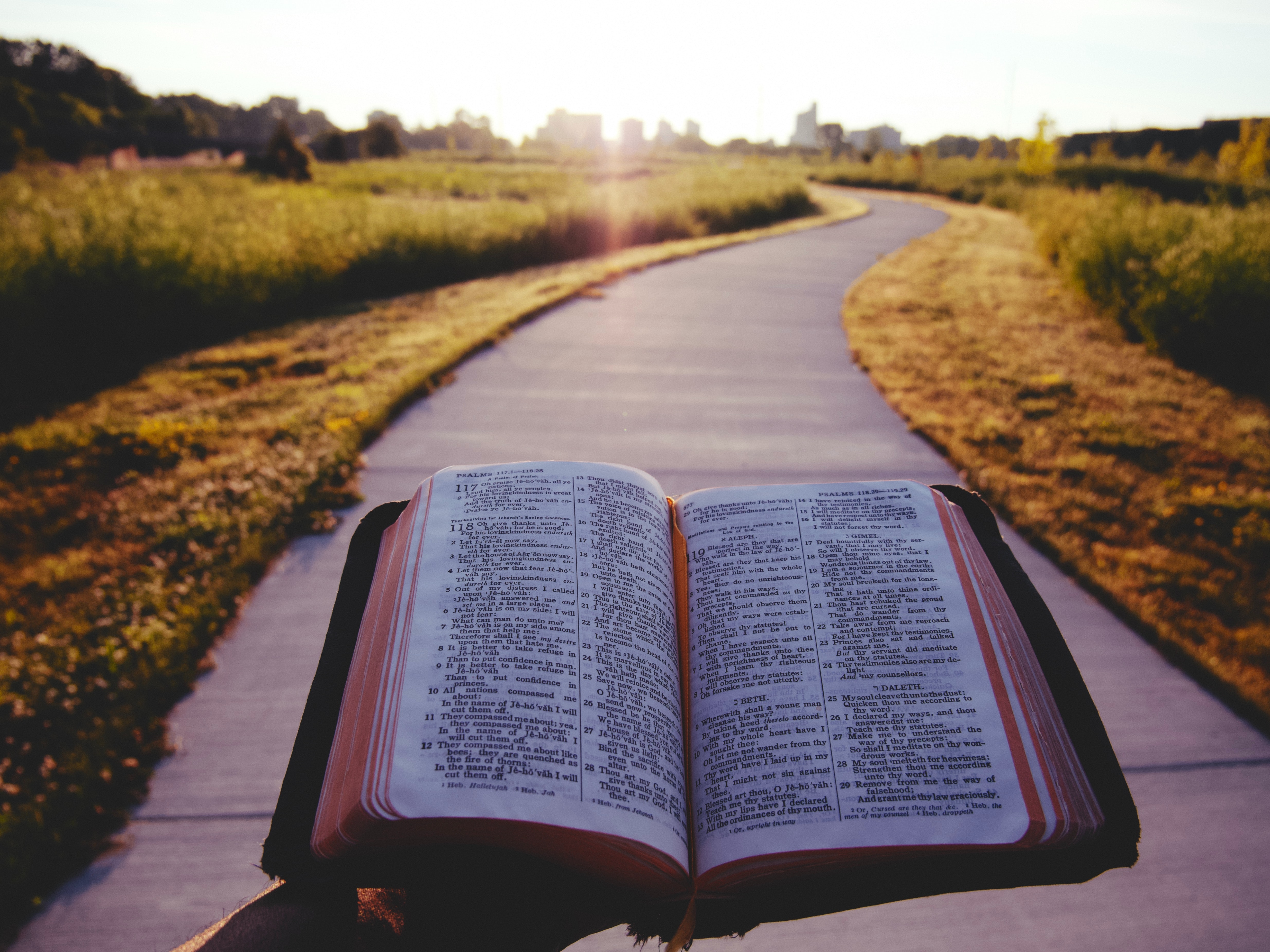
Isaiah 35:8-9 – “A highway will be there. It will be called The Holy Way… Only the redeemed will walk on it.”

Photo credit: Aaron Burden

Today we continue in Isaiah’s vision. In its original context the prophet was speaking of the exiles return to the promised land. Isaiah’s oracle spoke of God’s redemption of Israel and of their safe journey through the wilderness. As the exiles return home, this “way” will be free of predators and enemies. No one will get lost along the way. Those ransomed from exile in Babylon will enter Jerusalem “with singing, with everlasting joy.” The grief and groaning of past suffering will “flee away.” For a people familiar with the long, difficult, costly journey out of exile in Egypt, these words of guidance and protection and blessing brought great hope to Israel.

In the now-and-not-yet spirit of Advent we next look at these words of Isaiah as a messianic text. During his ministry, Jesus proclaimed, “I am the way, the truth, and the life” (John 14:6.) With these words in mind we reconsider verses 8 and 9 from Isaiah 35: “A highway will be there. It will be called The Holy Way… Only the redeemed will walk on it.” Jesus walked and taught in holiness and righteousness. He called his disciples to walk in his footsteps, following his example of holiness and righteousness. Jesus offered forgiveness of sins to those who repented and committed to walk in his ways and truth. Redeemed from our sins, we strive to daily walk and live Jesus Christ’s “Holy Way.”

Looking forward with hope, the trust that the faithful will one day enter “Zion,” the new Jerusalem in God’s coming new kingdom. In that day the ransomed will sing praises to the Lord. Everlasting joy and peace will be upon us. The grief, groaning, tears, and suffering of this present life will be no more in our eternal home. What great hope! Thanks be to God!

Prayer: Lord God, we rejoice and thank you for rescuing and redeeming your people long ago, bringing them home to their inheritance. We rejoice and thank you for rescuing and redeeming us from our sins and failures each day, empowering us by your Holy Spirit to walk in Christ’s way. And we rejoice and thank you for our coming final rescue and redemption, when we will joyfully stand in your eternal light and love. You are a most awesome God. Glory be to you, O Lord! Amen.


Leave a comment

Rescuer, Deliverer, Redeemer

Reading: Luke 1:76-79

Luke 1:77 – “You [John] will tell his people how to be saved through the forgiveness of their sins.”

As we continue in Zechariah’s prophecy today we read about the role that his son, John the Baptist, will play in the coming of the Messiah. We also learn more about who and what this Messiah will be. John will go before the Lord “to prepare his way.” Zechariah is channeling his inner Isaiah here, as John will also do during his ministry. Out there in the wilderness, along the Jordan River, John will tell his people how to be saved through the forgiveness of their sins.” Calling God’s people to a baptism of confession and repentance, John will prepare people’s hearts to receive the Messiah, Jesus Christ.

With these words, Zechariah is looping back around to the Savior who delivers and rescues God’s people from their enemies. John calls folks to battle with their sins, the enemies within. This call will next be echoed by Jesus. And after sending his Spirit, this call will be echoed down through the generations of believers, echoed in our hearts. This call is the “light to those sitting in darkness.” Whether from John, Jesus, or the Holy Spirit, the call to live out the covenant of love shines a light on our sins and the darkness that they create in us and in the world. This light and the change of heart that it leads to guides us to step out of “the shadow of death.” Freed from the power of sin and death through Jesus Christ, we are guided to walk on “the path of peace.” Thanks be to God for our Savior, deliverer, and redeemer!

Prayer: Lord God, thank you for the voice that calls out to us, inviting us to come before you, confessing and repenting of our inner darkness, committing to walk on your path of light and peace. Keep our hearts ever open to your still, small voice that whispers words of love. Free us, O Lord, to be people whose love helps others to know the Savior. Amen.


Leave a comment

Radical Love

Reading: Luke 23:33-38

Luke 23:34 – “Father, forgive them, for they don’t know what they’re doing.”

Our readings today and tomorrow focus on Jesus’ crucifixion. The way of Jesus stands in very sharp contrast to the ways of the world. This contrast begins in verse 33. The Romans crucify three people. Two crucifixions are just and one is unjust. All three accomplish the same goal: eliminating those who challenge your power. This remains the way of the world.

Those present at the crucifixion, all three groups named in today’s reading, they all equate power with strength, control, wealth, status. The religious leaders and the soldiers and the Roman governor sneer at and mock Jesus. They all want (or say they want) Jesus to exert some of his power to come down off the cross: “Save yourself.” That’s what we’d try to do. We’d try to save ourselves. Many there that day that utter these words have seen the miracles and heard the unearthly wisdom of Jesus’ teachings. Pilate’s sign above Jesus’ head mocks him too. A king? Surely he would save himself if that were true. Today we continue to mock and sneer at things and at people that do not meet our expectations and/or that we do not understand.

Jesus’ power runs counter to all of these ways of power and of the world. As he is physically being nailed to the cross – large spikes being driven through his palms and his feet – Jesus says, “Father, forgive them, for they don’t know what they’re doing.” As John Wesley noted in a sermon, Jesus ignores this incredible pain because he is more worried about the salvation of all involved in the crucifixion. Forgiving others always, this is power. The way of love for God and neighbor triumphs over all things. Thanks be to God for this most excellent way of love.

Prayer: Lord God, what great power we see in your radical way of love. It was unaffected by the things of the world going on around you. It was an unconditional love that reached out to those harming you and taking your life. Lord, fill us with this powerful love. Filled, send us out as your radical love lived out in the world. Amen.


Leave a comment

Alive and Connected

Reading: Luke 20:27-38

Luke 20:38 – “He [God] isn’t the God of the dead but of the living.”

The Sadducees come to Jesus with a question. The Sadducees were a group of religious scholars who were committed to a literal interpretation of the Law and to then applying this understanding to life. This group enjoyed challenging one another’s interpretation of the Law. What they are doing with Jesus was partly this practice. But it is also partly a power play. Because they interpret so literally, the Sadducees cannot make room for concepts like resurrection from the dead. In this interaction with Jesus, the Sadducees want to prove that their interpretation is correct, that their understanding is right. We too can be guilty of wanting scripture to fit our needs or to feel that our reading of this or that passage is the correct reading. We can, at times, want scripture to conform to our way instead of allowing scripture to conform us to God’s way.

In today’s interaction with Jesus, the Sadducees take a Mosaic Law and they run it out to the extreme. In Jewish culture, the oldest male in a family was privileged. For example, they received a double portion of the inheritance. They usually married first. If the oldest brother died without a male heir, the next brother would marry the widow to continue the oldest brother’s family name. So Jesus, in heaven, does the woman belong to the seventh brother or what? Well, Jesus tells them, in heaven there is no marriage. Like the angels, all who are worthy of this resurrection life are simply God’s children. That relationship will be all that we care about in the age to come.

As the interaction closes, Jesus brings the idea of being God’s children into this age too. He tells the Sadducees that God “isn’t the God of the dead but of the living.” This age matters. How we live in this age matters. Our relationship with God is paramount here too. Jesus adds, “To God they are all alive.” Living or dead as we see it is not how God sees us. Living or dead, our spirit, our connection to God, that is always alive. For this unchanging relationship, for this unending love, we say thanks be to God.

Prayer: Lord God, thank you for being our God, our Father, both in this age and in the age to come. Your love for us never changes. When we want to get a bit like the Sadducees, wanting our way to be the right way or the only way, remind us that your ways are far above our ways. Turning to the Spirit within, guide us to seek your voice, to discern your purposes. Help us to walk in faith each day in this life so that one day we can see you as you truly are. Amen.


Leave a comment

A Long Line

Reading: Ephesians 1:11-23

Ephesians 1:13 – “You too heard the word of truth in Christ, which is the good news of your salvation.”

Photo credit: Anne Nygard

Paul first reminds us in today’s passage that we who believe have “received an inheritance in Christ.” Paul sees this outcome as a part of God’s plan for all people. If God were to have God’s way, all people would be disciples of Jesus Christ. That is God’s plan for all people as we are created in the womb. But we do have a choice in the outcome. Sometimes people choose to live by their own way and not God’s way.

For those who have chosen God’s way, choosing to follow Christ, we are called to bring God glory through the living out of our faith. We do this by living as Christ lived. In this living we take our place in a long line of disciples who have shared the faith with others. On this All Saints’ Day we recall those who have lived as Christ, teaching and modeling for us what living a life of faith looks and feels like. In turn, we teach it to and we model it for others – in our homes, in our church, in our workplace, in our community…

We can do so because we have “heard the word of truth in Christ, which is the good news of your salvation.” Accepting this good news we are indwelled by the Holy Spirit. Paul describes this constant presence of the Spirit as a “down payment on our inheritance.” This is a foretaste of being in glory in eternity. The Spirit in us keeps us connected to God. Deposited in our hearts, we are empowered by God. Through this power at work in and through us, we can pass on the faith to others, to the next generation of saints. May it be so!

Prayer: Lord God, today we pray for one another as Paul prayed for the church in Ephesus. Lord, give us “a spirit of wisdom” so that we can know you more and more. Open the “eyes of our heart” so that we can live out the hope that we find in Christ Jesus. Lead us to spiritually kneel before Christ, the head of all things. Amen.


Leave a comment

The Most Important Thing

Reading: 1st Timothy 2:1-7

1st Timothy 2:1 – “First of all, then, I ask that requests, prayers, petitions, and thanksgiving be made for all people.”

Paul writes to Timothy to instruct him on how to build faithful congregations. These words are based on years and years of experience. This letter includes instructions on personal and communal living, on what and how to preach, and on how to guide a congregation to reveal Christ’s love to the world. In chapter 2 Paul hones in on the most important thing: prayer.

In verse 1 we read, “First of all, then, I ask that requests, prayers, petitions, and thanksgiving be made for all people.” Before you do anything else, pray. For Jesus, for Paul, and for for us, prayer is the foundation and life-blood of our faith. This simple practice is essential. For Paul, these basic conversations with God should include all people. This includes family, friends, neighbors, co-workers, brothers and sisters in Christ, the person you met at the market, leaders… To pray for others is to lift them and their needs to God. In this way, prayer is an act of humility.

For me, almost every day begins with a cup of coffee, sitting quietly on the couch, slowly praying through a long list of names. This is how I choose to begin my day because it focuses my heart and mind for the day ahead. This quiet work aligns me with God so that my words and actions might better reflect God’s love for all people.

Paul encouraged Timothy to model and teach prayer to his congregations. Paul knew from experience that praying congregations were faithful congregations. In and through prayer they found and we will find the power and the strength to live as God’s people in the world. May it be so for you and for me.

Prayer: Lord God, lead and guide us to be faithful first in our prayers. Whether early in the morning or late at night or somewhere in between, through your Holy Spirit ground us in your will and way as we spend quiet moments with you. Open our hearts and minds to hear your voice and to feel your direction for our lives and for our ministries. Amen.


Leave a comment

Intimately Acquainted

Reading: Psalm 1

Psalm 1:6 – “The Lord is intimately acquainted with the way of the righteous.”

Photo credit: Felipe Correia

Psalm 1 continues the ideas of Jeremiah 18, Luke 14, Psalm 139, Deuteronomy 30, and Philemon: there are two ways to live in this world. One can choose to deny self, to pick up one’s cross, to follow God’s commands, living a holy and righteous life. Or one can choose to live for self, to walk in the way of the world, living an inwardly focused, sinful life. Psalm 1 mostly paints the same black and white choice that we find in most of these other Old Testament passages.

For the psalmist, those who choose to love God’s instruction are “like a tree replanted by steams of water.” There is a hint of the potter recasting the clay here. To be replanted implies new or second life, redemption and restoration. A life of faith, a life dedicated to the Lord, it “bears fruit at just the right time.” David wrote of God’s plans for us in Psalm 139. To follow and live into God’s ways will be fruitful and will connect us to the one in whom we were fearfully and wonderfully made. To be holy is to walk closely with God. In verse 6 the psalmist describes the outcome of this choice this way: “The Lord is intimately acquainted with the way of the righteous.” For the writer and for us, true happiness and joy are found in a close, personal relationship with God.

This close, personal, intimate relationship is fostered and developed and grows when we “recite God’s instruction day and night.” For the psalmist, this was living with God’s will and way ever before him or her. This remains true today. In our lives, temptation is always there, always seeking to draw us away from God. So may we, like the psalmist, daily and regularly study and meditate on God’s word, becoming intimately acquainted with the Lord our God.

Prayer: Lord God, we ask that you would walk with us closely, guiding us and leading us as we seek to walk the path of life. Replant us when necessary, shaping and reshaping us as we wander and return. Each time, draw us deeper into relationship with you, our hope and our salvation. Amen.


Leave a comment

Loving, Obeying, Clinging

Reading: Deuteronomy 30:15-20

Deuteronomy 30:19-20 – “Now choose life… by loving the Lord your God, by obeying his voice, and by clinging to him.”

Photo credit: Nick Fewings

In today’s reading Moses speaks about the clear choice between life and death. On the surface Moses presents this choice as black and white. Throughout the Bible the choice between sinful and faithful living is almost always presented in this way. The reality, though, is that we often live in the gray. But this all-or-none approach applies to most of life. Running a race – you don’t hope to come in third. Applying for jobs – you don’t hope to settle for the job fifth on your list. Looking for a lifelong spouse – you don’t hope for one that’ll probably work out.

As Israel prepares to enter the Promised Land the giver of the Law holds up the ideal: obey the commands, love God, walk in God’s ways. Moses tells them, if you do so, “then you will live and thrive.” This is what we aim for in life – first place, dream job, perfect spouse. It is what we are called to aim for in faith – except we’d define “success” a little differently. In our reading, Moses gives us a great definition: “Now choose life… by loving the Lord your God, by obeying his voice, and by clinging to him.”

Moses, typically the Law guy, gives a description that is more “faith” than “religion,” more about a way of being in the world rather that about how to behave in the world. If we choose this relational walk of faith, rather than checking off a list of rules, then we are less likely to turn away from God or to worship other gods. Walking and living in a relationship with God, we will live and thrive. May it be so for you and for me.

Prayer: Lord God, today we hear the clear choice: choose you or choose self and the world that comes with it. While we do live in between, Lord, help us to choose your will and way more and more each day as we strive to grow closer and closer to you. Empower, encourage, and strengthen us moment by moment as we desire to love you more fully and to walk in your ways more completely, clinging to you always. You are our only hope. Amen.


Leave a comment

Our Great High Priest

Reading: Hebrews 10:19-24

Hebrews 10:19 – “Brothers and sisters, we have confidence that we can enter the Holy of Holies by means of Jesus’ blood.”

Hebrews 10 begins with a description of Christ’s “once-for-all” sacrifice. The author explains that Jesus, through his sacrificial death, put an end to the old sacrificial system. This system was unable to “take away our sins.” In addition, the mechanics of the system prevented a personal connection to God. The priest heard your sin and offered the atoning sacrifice on your behalf. There was also a second barrier to God. The Holy of Holies, the space which held the ark (God’s presence,) was separated off by a huge curtain. The high priest alone entered this most intimate and sacred space just once a year, seeking forgiveness and blessing for the people of God.

Verses 19-24 are a summary of what Christ’s sacrifice means for us. In the first verses we read, “Brothers and sisters, we have confidence that we can enter the Holy of Holies by means of Jesus’ blood.” As Christ breathed his last breath the curtain in the temple was literally torn in two, top to bottom. The physical barrier was removed. Christ opened the way, “a new and living way,” so that we could have a personal relationship with God. Christ is our new “great high priest” that invites us to draw near to God with a genuine, cleansed heart. Forgiveness and cleansing are ours every time we confess and repent of our sins. Jesus’ blood was and is the “once-for-all” sacrifice that stones for our sin. Hebrews also reminds us that we can “hold onto the confession of our hope,” because Jesus is faithful. We have confessed Jesus Christ as our Lord and Savior. It is only in and through him that we can remain faithful too. Thanks be to God.

Prayer: Lord God, thank you for the new covenant, one written on our hearts because Christ’s Spirit dwells in our hearts. This personal and intimate connection is a great gift. You are with us always. Lord, lead and guide us to live out our faith, encouraging one another in love. May this love lead us to be and do good in the world, drawing others into the new and living hope that we have in you. Amen.


Leave a comment

The Narrow Road

Reading: Luke 10:25-37

Luke 10:36 – “What do you think? Which one of the three was a neighbor to the man?”

Photo credit: Jan Huber

Today we turn to the parable of the Good Samaritan. This is very familiar ground. The lessons Jesus taught remain as relevant today as they were the day that he told the story. The religious continue to try and limit who is acceptable and worthy. We continue to see and define others by arbitrary things like ethnicity, race, gender, religion, education…

As the passage opens, a legal expert tests Jesus. The opening question is just to set up the second question. Any 5-year-old Jew could’ve answered the opening question. It’d be like asking a 5-year-old in one of our churches, ‘Who died on the cross for our sins?’ The second question has the meat on the bone. Jesus has been preaching that God’s kingdom and the salvation that he brings is for all people. He’s been eating with tax collectors and touching lepers. Clearly Jesus’ understanding of who a good Jew’s neighbor is needs some correcting.

The story unfolds and Jesus picks a most unlikely hero. A Samaritan would be about as far from a Jew’s neighbor as anyone could be. And he does not just stop and help. Maybe the legal expert could’ve tolerated that. Like, it might’ve been okay to stop and talk to Zacchaeus, but to go to his house and to eat with him? The Good Samaritan goes way above and beyond too. He shows mercy to the one in need. He is the one who sets for us an example.

Of this story, John Wesley writes, “Let us renounce that bigotry and party zeal which could contract our hearts into an insensitivity for all the human race, but for a small number whose sentiments and practices are so much our own.” From about 31 AD to the late 1700s to today. May it be so.

Prayer: Lord God, encourage and empower us to walk the narrow road. It is narrow. Our faith is assaulted on both sides – culture on the one side, “religion” on the other. The path of Jesus, the way of love, is a narrow lane. As you held back the waters of the Jordan, hold back these evils, O Lord. Be with us each moment as we seek to build your upside-down kingdom of love in this thin space. Amen.