pastorjohnb

Thoughts and musings on faith and our mighty God!


Leave a comment

Ingredients for Transformation

Reading: Acts 26:15-18

Acts 26;17-18 – “I am sending you to open their eyes. Then they can turn from darkness to light and from the power of Satan to God.”

Photo credit: Shane Rounce

In today’s reading Paul is telling his conversion and call story before King Agrippa. This is his last stop before being sent to Rome to stand trial before Caesar. As Paul is presenting his case, he starts at the beginning, on the day that he was traveling to Damascus to pursue and arrest more Christians. Blinded by a light from heaven, Paul encounters the risen Jesus. Gathering his bearings, Saul asks, “Who are you, Lord?”

Jesus identifies himself as “the one whom you are harassing.” The degree of connection that Jesus claims here is interesting. These words echo his words about “whenever you do this to one of the least of these…” (Matthew 25:40.) Jesus calls Saul, stating the he is here now “to appoint you as my servant and witness.” All the power and emotion of rage and hatred will be redirected as compassion and love. Further describing his new role, Jesus tells him, “I am sending you to open their eyes. Then they can turn from darkness to light and from the power of Satan to God.” Through Paul many will receive salvation, forgiveness of sin, and inclusion in the family of God.

Through this experience and others that will follow, Paul is made fully Jesus’. His whole life and being will focus on making Jesus known, on bringing others to a saving faith in Christ. In neither this account or the original telling (Acts 9) do we hear Paul apologizing to Jesus or repenting of his sinful actions against Jesus and his church. But the evidence bears witness to a complete 180, to a total change of heart. Making amends, admitting fault, seeking forgiveness are all necessary ingredients for transformation. Often these happen first in the heart, opening the way to bring made new.

Prayer: Lord God, speak into our hearts, open our eyes, reveal to us the ways that we are less than you call us to be in our witness to you and to our faith. Call us forward into the plans that you have for us, strengthening and encouraging us for the journey. Amen.



Leave a comment

Humble Service

Reading: Matthew 23:11-12

Matthew 23:11 – “The one who is greatest among you will be your servant.”

Matthew 23 compares who the religious leaders are with who Jesus calls his followers to be. Earlier in the chapter Jesus says, “Don’t do what they do.” The religious leaders are asking the people to do things they won’t do themselves. Looking at this admonition and the other context verses, I am reminded of the show, “Undercover Boss.” The title implies the premise of the show. A couple of things usually happen on every episode. First, the boss (or the owner) has their eyes opened as they become a new hire for their company. Performing these menial tasks takes them to the core of what it meant to be a servant in Jesus’ day. Remember the disciples’ shock when Jesus washed their feet? Servant! The second regular occurrence is the boss meeting an employee who is more servant than employee. This person’s love and dedication are noteworthy, they stand out. This is what Jesus is talking about when he says, “The one who is greatest among you will be your servant.”

The second verse in today’s passage also is a regular occurrence on “Undercover Boss.” The boss is usually the one who has lifted himself or herself up (in a good way – through hard work…) Often this rising up, though, breeds pride and/or arrogance, as it has in the religious leaders of Jesus’ day. The religious leaders work hard to set themselves apart from and therefore above the people. Opposite of this, Jesus notes, “all who make themselves low will be lifted up.” This is often the case on the show with the employee who is more like a servant. The boss rewards their servant attitude with a nice promotion or a generous raise. While God doesn’t give us promotions or raises when we choose to humbly serve others, there are definitely “rewards” – joy, peace, content… – that come with living our neighbors in ways that stand out. May we choose to serve well today.

Prayer: Lord God, it can be easy to get caught up in ourselves, thinking this task or that job is “below” us. It can be hard to humble ourselves to scrub a toilet or to mow a yard or… thinking “someone” else should do that. This poor attitude soon permeates our spirit. When we struggle in these ways, O God, remind us of Christ’s example. Call us to walk in his servant footsteps. Amen.


Leave a comment

Abundant and Generous

Reading: Isaiah 55:6-11

Isaiah 55:7 – “Let them return to the Lord so that he may have mercy on them… because he is generous with forgiveness.”

Photo credit: Freestocks

Isaiah 55 is an invitation to the feast of the Lord. The rations of captivity will become an abundant divine banquet. The covenant of love between God and Israel will be renewed. Through the prophet, God is telling Israel that pardon and return is possible. There are times in our lives when a relationship is strained or broken and we wonder if things can ever be made right again. We wonder if pardon and renewal are even possible.

Verses 6 and 7 reveal the first steps for Israel. First, seek and call on the Lord “while he is yet near.” The time is now. Isaiah invites the wicked to turn from their sinful ways and schemes. For us, these might be first steps too. To begin healing what is broken, seeking God’s wisdom and guidance in prayer is step one. And if the hurt or harm is ongoing, we must certainly stop this at once.

In the last part of verse 7 we read, “Let them return to the Lord so that he may have mercy on them… because he is generous with forgiveness.” God desires to forgive and restore, to renew the covenant relationship. For Israel and sometimes for us, we do not understand God’s terms. Our rational and prideful ways can block mercy and forgiveness. This is why we’re reminded that God’s ways and plans are so much higher than ours. God pours out generous forgiveness. With God, these promises and invitations, they are like the rain and snow that renews the earth. If we turn to God, if we abandon our sinful ways, then we will experience generous and abundant forgiveness and renewal. Following this model we can also experience forgiveness and renewal in our own broken relationships. May it be so.

Prayer: Lord God, thank you for your generous forgiveness and for your deep desire to walk with us, fallible as we are. Your grace and your love go far beyond our understanding yet we can grasp how we are to live and be in the world, how we are to treat one another. Forgiven and renewed ourselves, empower us to practice well your generous forgiveness and abundant love and grace. Amen.


Leave a comment

Worthy of the Call

Reading: Ephesians 4:1-7

Ephesians 4:2 – “Conduct yourselves with all humility, gentleness, and patience. Accept each other in love.”

Chapter 4 of Ephesians begins with Paul’s call to “live as people worthy of the call” of God. We can see this as the summary statement for what follows in the next few verses. Paul’s focus overall is the unity of the body of believers. The “church” should reflect to the world the love, grace, mercy… of God. To fail to do so greatly damages the church’s ability to witness to the world. If the world cannot see God and Christ in the church and in her actions, then the world will never listen to her words.

With these thoughts in mind, Paul gets down to specifics: “Conduct yourselves with all humility, gentleness, and patience. Accept each other in love.” Practicing these four virtues or behaviors on a regular basis will work to bring unity to the body of believers. Humility works against pride and judging – two primary dividers of any group of people. Gentleness guides our words, our thoughts, our actions, steering them away from gossip, critiquing, and harsh words and actions. Patience raises our levels of understanding concerning our differences in thought, belief, and practice, and it makes us take pause before speaking words that might cause harm or hurt. These first three virtues guide us to accept one another in genuine love, bringing peace and unity to the body of Christ.

When we as individuals and we as the church live out these Christ-following virtues, the oneness that Paul speaks of becomes evident in our lives and in our churches. This draws others towards Christ. Living a life and a faith worthy of our calling matters for us personally and it matters for the watching world. Therefore, in all things may we lift high the Lord our God.

Prayer: Lord God, living out these virtues – humility, gentleness, patience, acceptance – can be challenging. So, Lord, when we’re tempted to be less than you call us to be, whisper your words of love and grace, peace and unity into our ears. Bring before our hearts and hands the example of Christ. Empowered by these reminders, use us to build your kingdom in our hearts and here on earth. Amen.


Leave a comment

The Gospel of Reconciliation

Reading: 2nd Corinthians 5:14-20

2nd Corinthians 5:18 – “God… reconciled us to himself through Christ and… gave us the ministry of reconciliation.”

Our passage today sums up the heart of Paul’s gospel of reconciliation. Through his life on earth, experiencing our sinfulness and his own death, Jesus can identify with us and with our struggles. And through his death and resurrection, Jesus transformed our reality. Through Jesus Christ we are made part of the “new creation.” In this new reality we live no longer for self but for Christ.

Paul recalls a time when Jesus was known by “human standards.” He was a good teacher, maybe even a prophet of God. He could do some amazing things – but so could Moses, Elijah, Elisha… But because of Jesus’ sacrificial death and resurrection, believers know Jesus as God in the flesh. Through this understanding and through belief in Jesus Christ as Lord and Savior, that person is part of the “new creation.” Being made new, the old self dies, along with its sins. In this way we are made new and are reconciled to God.

For Paul though, and really for all true followers, there is a recognition that one is not “done” once one professes faith in Christ. Instead, our salvation leads to this understanding: “God… reconciled us to himself through Christ and… gave us the ministry of reconciliation.” We, like Paul, become “ambassadors” who represent Christ, sharing our faith so that others can also experience salvation and new life. God continues building the kingdom here on earth, “negotiating” through us for the salvation of lost souls. May we ever be ministers of the gospel of reconciliation and salvation!

Prayer: Lord God, we thank you for the gift given by the one who bled and died for our sins, opening the way for mercy and grace and love to reconcile us back to you. May our gratitude for this gift be expressed in how we share it with others. Amen.


Leave a comment

God Who Is Near

Reading: Acts 17:22-28

Acts 17:27-28 – “In fact, God isn’t far away from any of us. In God we live, move, and exist.”

In Acts 17 Paul acclimates himself to Athens, walking around, observing, listening. Eventually he engages in conversation. Unfortunately his speaking leads to being taken into custody. Paul is brought before the council. Fortunately these men are part of the crowd who “spend their time doing nothing but talking about or listening to the newest thing.” Taking his opportunity, Paul addresses the council and those gathered on Mars Hill.

Paul begin by acknowledging their very religious nature, commending them for this. He then notes that while walking around, looking at all of their objects of worship (idols,) he found one that read, “To an unknown god.” Because he is connecting to who and what the Athenians are and believe in, he can then speak words that might resonate. Establishing this positive connection, Paul introduces his “new thing.”

This “unknown god” Paul says, let me tell you about him. Paul says this to the council just as we could say it to anyone seeking God, whether they know it or not. Paul declares his God to be the maker of all creation. Countering their idolatry indirectly, he states that his God doesn’t live in temples and isn’t made by human hands. His God is far above humans in this sense but this God also created people to reach out, to seek and find him. Paul’s God is a God of relationship. Continuing this line of thinking, Paul adds, “In fact, God isn’t far away from any of us. In God we live, move, and exist.” Paul’s God – and our God – wants to know us and to be known by us. This God who dwells in our hearts, this God of relationship, this God loves us and all of creation. May this be the God that we know and follow, that we reflect to the world.

Prayer: Lord God, give us eyes to observe, minds to consider, ears to listen, and lips to speak. Use us as you used Paul, to meet folks where they are at, to connect to them personally, just as you seek to do with us. Use us to connect seekers to you, the one true God. Amen.


Leave a comment

The Path We Choose

Reading: Ezekiel 18:30-32

Ezekiel 18:30 – “Turn, turn away from all your sins. Don’t let them be sinful obstacles for you.”

In today’s passage Ezekiel addresses individual responsibility. Yes, the bad shepherds led Israel and then Judah into sin and then exile. Yes, they set a poor example for those living under their care. Yes, these actions made it easier for the common people to go astray and to wander away from God. But at the most basic, individual level, each person has to choose to remain faithful to God or to live selfishly and sinfully. The same is true today. You, me, all of us – we are in control of ourselves. We alone choose the path that we walk.

Verse 18 opens our reading with this reminder: “I will judge each of you according to your ways.” In this life and in the moment that we stand before our Creator, God will judge us on what we alone did or did not do, say, and think. Therefore, God says, “Turn, turn away from all your sins. Don’t let them be sinful obstacles for you.” Make a better choice, a holier decision. This is a call to repent, to change our ways. Our sins are very much obstacles to a healthy and whole relationship with God and with one another. God calls us to “abandon” our sins.

God encourages the faithful to “make yourselves a new heart and new spirit.” While it is with God’s power alone that this is possible, we must take the first step by turning away from our sin. This choice is essential to the transformation that God can and desires to work in us. The passage closes with the clear cut options. One is stated and one is implied. God declares, “Change you ways, and live!” The opposite is also true, also an option. May we choose faith so that we can truly live.

Prayer: Lord God, while the way that leads to life is narrow, this path is filled with joy and peace, with hope and grace, with love. The path of the world, the path of destruction, it is wide and filled with greed, with pride, with envy and want. Guide us to walk your narrow way, for there you walk with us. Lead us to follow in Jesus’ footsteps, finding strength and encouragement for our journey. Amen.


Leave a comment

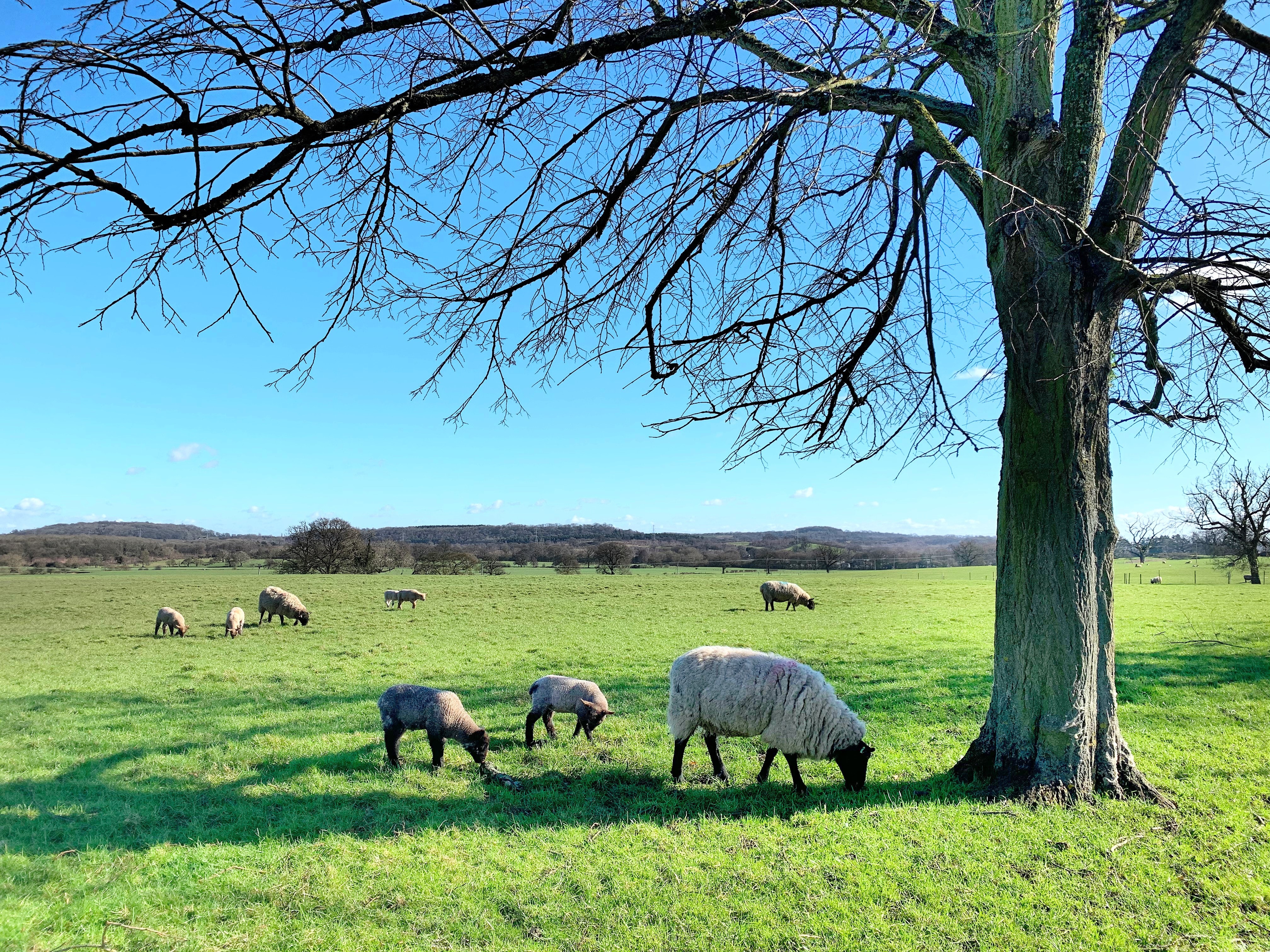
A Good Shepherd

Reading: Ezekiel 34:11-12 and 20-31

Ezekiel 34:27 – “They will be safe on their fertile land, and they will know that I am the Lord when I break the bars of their yoke.”

Photo credit: Ronnie Khan

Chapter 34 begins with the denouncement of Israel’s current leaders. What was the case before exile has continued in exile. God through Ezekiel pronounces doom on these poor leaders for living in luxury while ignoring the weak, the sick, the injured, the strays, the lost. There are many injustices so the flock scattered and then became prey. God promises to hold these bad shepherds accountable.

Beginning in verse 11, God offers the remedy. Here God proclaims: “I myself will search for my flock and seek them out… I will rescue them…” God will gather the scattered and care for the weak, the sick, the injured… As we continue in our reading we see that God will judge between the “fat and lean” sheep – between those living in luxury and those who struggle to survive.

God promises restoration, a new era. A David-like ruler will be appointed and a new covenant of peace will be established. Rains of blessing will pour down. Oppression and injustice will be no more. In verse 27 we read, “They will be safe on their fertile land, and they will know that I am the Lord when I break the bars of their yoke.” Without the yoke of oppression and injustice, there will be peace. There will be no famine; there will be no disgrace.

While the bad shepherds ignored these words of judgment, these words would offer great hope to the weak, the sick, the injured… to those living on the margins and edges. These words feel very relevant today. As injustices scatter people, as oppression sits heavy on others, as callous acts increase hunger, the people of God long for a good shepherd – not just for ourselves but also for the least of these among us. God’s children long for the rains of blessing and for a time of peace and grace. O God, may it be so.

Prayer: Lord God, you’ve always, always, always had a heart for the weak, the sick, the injured… You’ve always, always, always called for the faithful to join you in your care for the least of these. Lord, bridge the huge gulf between our reality and your preferred future. Use us to be a part of that bridge, each in our own ways caring for the weak, the sick, the injured… for the scattered and the oppressed. Amen.


Leave a comment

Shepherd of the Flock

Reading: John 10:11-16

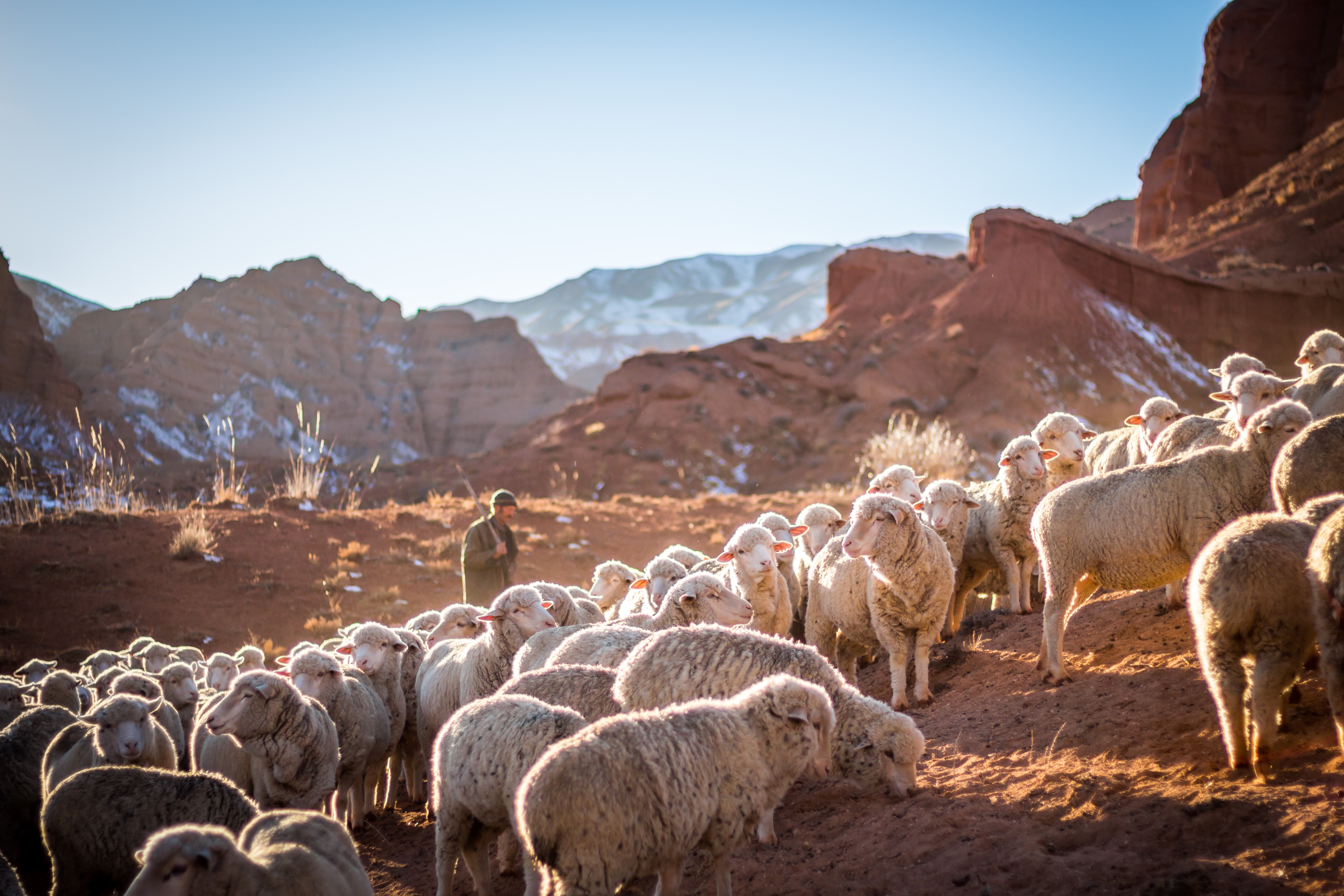
John 10:14 – “I am the good shepherd. I know my own sheep and they know me.”

Photo credit: Patrick Schneider

In the agrarian society of Jesus’ day, he often spoke in ways that connected to this reality. Sheep in particular are a common subject in Jesus’ teachings. He comes by this naturally. In tomorrow’s reading God identifies as “the good shepherd” too!

For the most part, Jesus attracted a crowd from the lower levels of society. “Blue collar” folks and people who lived on the edges were drawn to Jesus. His normal audience would be familiar with his shepherd imagery. Jesus states two times in this passage that he is the “good shepherd.” In the first instance, he declares that he will “lay down his life for the sheep.” He will not run away because the sheep truly matter to him. He will face the cross.

The second time, Jesus says, I am the good shepherd. I know my own sheep and they know me.” Here Jesus is speaking into the intimacy between shepherds and their sheep. Sheep learn the voice of their shepherd(s) and will only follow the voice(s) they know. Jesus sets the example in the ways that he follows God’s voice. He calls his sheep to do the same. Jesus then reiterates the fact that he will give his life for the sheep. In this spirit we too are called to sacrifice for others.

Jesus then extends the circle to include those who are not yet following him. Here Jesus is referring to both Jews and Gentiles, which really is another way of saying “all people.” Jesus longs to be known by all people, to shepherd them in his love. One day, may this be so, O Lord.

Prayer: Lord God, you lead us beside still waters and into green pastures. You provide rest and you offer sustenance. You protect us and you guide us. When we wander, you find us and bring us back home. You gave everything for us and continue to do about anything to keep us in the flock and to add to the flock. Thank you, Jesus. Amen.


Leave a comment

Breathing New Life

Reading: Ezekiel 37:1-11

Ezekiel 37:6 – “When I put breath in you, and you come to life, you will know that I am the Lord.”

Ezekiel witnessed Nebuchadnezzar’s siege and defeat of Jerusalem. He saw the leaders and then many others, himself included, taken away into Babylonian exile. Judah, like Israel to the north, was devastated. The temple was destroyed. Their relationship with God has been broken by their sin. Living in exile, hope was growing very thin and despair grew daily.

In chapters 33-36 Ezekiel begins to speak of redemption and restoration. He writes of changing their ways and of receiving a “new heart.” He leans into the image of God as the good shepherd who promises to rescue and protect the sheep. Speaking to the mountains of Israel, God through Ezekiel promises that the cities will be rebuilt and inhabited. Even with all of these hopeful words spoken, for those living in exile, the despair felt too great. Was all this even possible? Could God do it? Our passage today is God’s response to these questions.

In chapter 37 Ezekiel is taken in spirit to a valley full of very many dry bones. God asks the prophet if he thinks the bones can live. (Talk about impossible, right?) Ezekiel responds, “Lord God, only you know.” God says they can. After coming together, God adds sinew, flesh, and then skin. Then God says to the bodies, “When I put breath in you, and you come to life, you will know that I am the Lord.” Through Ezekiel’s words, new life enters the bones, “an extraordinarily large company.” They stand in the valley, as if waiting. God then tells Ezekiel (and therefore Israel), “Human One, these bones are the entire house of Israel.” God will restore and redeem not just some of God’s people. God will restore and redeem all of God’s people.

In our dry seasons of faith, in our times of sin and separation from God, in our experiences in the wilderness and in exile, God longs to redeem and restore us, to breath new life into our faith. O God, may it be so.

Prayer: Lord God, you will stop at nothing, you will do anything, you will try everything in order to bring us back into right relationship with you. This is true no matter how far we’ve run, no matter how deep we’ve fallen, no matter how long we’ve wandered. Thank you for your unconditional love and your unfailing grace. Amen.