Verse 27: “What is this? A new teaching – and with authority”!
Photo credit: Aron Visuals
After calling the first disciples, Jesus’ ministry quickly grows. In today’s passage Jesus’ teaching ability is only surpassed by his ability to cast out a demon. It is no wonder that as Jesus continues to teach and heal, his fame only grows. Jesus will soon become so popular that he will have to search for opportunities to slip away from the crowds to reconnect with God.
Fame tends to change people. The famous often become isolated or aloof or out of touch. Soon they are disconnected from the world around them. Once in a while, though, someone becomes famous and people say that they are still the same old Joe or Sally. This was the case with Jesus. No matter how big the crowds became, each person in the crowd mattered. We read in many places about how Jesus stayed late to heal all who were brought to him. No matter how hectic or busy things were, Jesus always had time to stop for the widow or the leper or whomever. Jesus always took the time for the other. No matter what.
As we consider this example that Jesus set, how can we seek to model it this week? How can we make each person that we encounter feel like they really matter to us? How can we live in such a way that we can stop and give our full attention to the other who crossed our path?
May we too live our lives in such a way that others say, “What is this?” as they encounter Jesus Christ within us. May it be so.
Prayer: Lord God, break me of my inward focus, of my need to complete the task. Guide me to be present to others. Slow me down, open my eyes and heart to the world around me. Turn me towards others this week. Amen.
Verse 28: “News about him spread quickly over the whole region of Galilee”.
Our gospel reading for today and tomorrow centers on Jesus’ authority. After arriving in Capernaum, Jesus goes to the synagogue on the Sabbath. As Jesus begins teaching, the people are “amazed” because he was “one who had authority”. Jesus spoke and taught in a way that clearly set him apart from the local scribes and teachers of the law that usually taught in the local synagogue. Jesus had a knowledge that was inherent, not learned or taught. Jesus, therefore, possessed a God-given, divine authority.
During his time in the synagogue a man possessed by an evil spirit cries out, recognizing Jesus as “the Holy One of God”. The spirit acknowledges the divine power in Jesus – “are you going to destroy us”? In response Jesus quiets the man and tells the evil spirit to come out of him. With a shriek the man is freed from his demon and is made well. This action adds a layer of amazement for those in the synagogue that day. As one might expect, “News about him spread quickly over the whole region of Galilee”.
Although not possessed, we each have moments when an evil spirit rises up within us, tempting us to sin. In those moments we also bump up against the Holy One – the indwelling presence of the Holy Spirit. In that moment, competing voices speak into our decision. Good and evil vie for control, for the outcome of that moment. The deceiver whispers lies, the Spirit speaks truth. In that moment, do we give Jesus authority in our lives? In the decision, do we allow the Holy One to have power over self?
These moments happen over and over on our journey of faith, many times every day. Each outcome determines how others see us and how they see our faith. As we walk out our days may we do so in a manner that causes “news about him” to spread quickly.
Prayer: Lord God, in each word and in each action, guide me to be attuned to the living presence of Jesus Christ within me. Tune my heart to the voice of the Holy Spirit. Bend my will to your will. Amen.
Verse 9: “Be careful, however, that the exercise of your freedom does not become a stumbling block to the weak”.
In the second half of our 1st Corinthians 8 passage, Paul reveals how our behavior can affect other believers. Some of the mature believers in the community of faith were comfortable eating food that had been sacrificed to idols. They may have been eating at an event in the temple or they may have purchased meat in the market that had been used in a temple sacrifice. To these mature believers, idols were meaningless so eating this meat was fine. But to the new believers, to those who were not far removed from worshipping these idols, this practice was a “stumbling block”. If a new believer ate of this meat, their conscience would get the best of them. They felt like they had defiled themselves. If they chose to abstain and felt guilt or weakness for needing to abstain when others in the church were partaking, this would weaken their faith. Paul says to the mature: “Be careful, however, that the exercise of your freedom does not become a stumbling block to the weak”. He is asking them to do this for the benefit of their new brothers and sisters in Christ.
Today we must be aware of potentially questionable situations that may also make a new believer stumble. For example, we would not want to talk up or invite a newly recovered person to join us in our bar ministry. If we knew someone had just left behind a sex addiction, we might do harm if we invited them to help in our outreach to sex workers. If we were aware of these conflicts and we asked anyway, we would be doing what those eating food sacrificed to idols were doing. We must also be aware of how our personal decisions and behaviors might adversely affect other believers.
There is a second layer to today’s reading that we as Christians and we as churches must also pay attention to. The mature in Corinth were not demonstrating concern for others. They were meeting their needs, doing their thing without regard for others. Although not explicit in the text, there must have been some conversations or some signal of their felt superiority and inferiority surrounding the eating of this food. Today we use “encouragements” like “if you just had enough faith” or “just trust God” that are hurtful to those new to the faith or to those struggling with their faith. Here we are not building up in love. Love would call us to be present, to listen, to walk with that person, to offer empathy.
Whether by our words or by our example, may we be mindful of our impact on others. May all we do and say build others up in love, for the glory of God and for the building of the kingdom.
Prayer: Lord God, make me aware of my impact. Use me for good in the world. Pull me up short when my example or my words have negative impacts. Guide me to build your kingdom here. Amen.
Paul begins this section on food sacrificed to idols by speaking of knowledge. He is talking about what is inside our heads. This is usually where faith begins. Most Christians follow the same path: learning about God, Jesus, and faith in Sunday school, youth group… as they mature in faith until one day the head knowledge becomes heart truth. As is true with almost everything in life, in our faith we understand more and more the longer we journey in faith. Within the Corinthian church some were relying their superior knowledge and it was causing division and it was hindering the faith journey of the new believers. In our churches today, we still do this at times. We allow our knowledge to “puff” us up.
The first way this happens is when we make our churches feel exclusive. We all look and talk alike, we act alike, we appear to be perfect Christians. We have those that we gravitate to each Sunday morning. A visitor can feel like an outsider very quickly, especially when they are not like the homogeneous crowd. Someone who comes because they are struggling with something really feels out of place when they enter a room full of people without any faults or issues. To further create a sense of “us” and “them” we use insider language and big fancy words. Maybe most regulars know what sanctification, justification, atonement, sacrament… mean. But if you are new to the faith, these terms can make you feel like an outsider very quickly.
In the Corinthian church the mature believers knew “that an idol is nothing at all”. To them, idols were just carved pieces of stone or wood. The mature believers knew that there was only one God, only one Lord. But for the new believers, the ones who had grown up worshipping these idols all their lives, this idea was a struggle. The mature believers were saying, in essence, “just get over it”, “just believe what I say I believe”. They were not willing to walk in love with their new brothers and sisters in Christ. They were not willing to enter the struggle, to walk alongside the one wrestling with their conscience.
We do this in our churches when we fail to talk about our sins and struggles. Church becomes a social club for the perfect and for the saints. Nope, no sin here. We know all we need to know to be good little Christians. In verse three Paul writes, “The man who loves God is known by God”. Loving God must lead to loving others. Jesus unpacks the truth of this idea in the parable of the sheep and the goats (Matthew 25: 31-46). When we say we love God, when we say all are welcome in our churches but do not really welcome the sinners and broken people into our communities of faith, we are falling short. When we look down on those “obviously” dealing with sin by making them feel unwelcome, we are falling short. When we indirectly but clearly say come back when you have your life together, we are falling short. May it not be so church. May it not be so.
Prayer: Lord God, help me to truly love others as a witness to my love for you. Strip away my pride and judgmental tendencies, guide me to walk side by side in love with those in struggle, with those living outside of your love. Give me the courage to admit my struggles and sins within the body of Christ. Grant me a welcoming and compassionate spirit. Amen.
Verse 9: “He provided redemption for his people; he ordained his covenant forever”.
Photo credit: Oscar Ivan Esquivel Artega
In the second half of Psalm 111 the focus shifts from the great works of God to the everlasting nature of God’s love. In verse seven the psalmist declares that God’s precepts or ways are trustworthy and are steadfast “for ever and ever”. Then in verse nine the writer speaks of the redemption that God provided as “he ordained his covenant forever”. Forever is always the nature of God’s covenants. They are not like a contract – that which we prefer. Contracts can be broken, renegotiated, bought out… when we no longer want to live under that arrangement. Not so with a covenant. God’s covenant states that he will be our God, our love, our hope forever. No matter what.
Marriage would be the closest thing we have to a covenant relationship. As one takes their marriage vows, one gets a sense of the forever, no matter what, unconditional love that God offers and gives in his covenant with us. As one says, “for richer or poorer, in sickness and in health…” they are really saying “forever” in terms of this earthly relationship. Marriage is an earthly relationship that models our eternal relationship with God. In fact, husband-wife and groom-bride language describes the relationship between Jesus and church, between follower and redeemer. Jesus chose this language intentionally. It both elevated our human marriages and it placed our covenant relationship with God in terms that we could grasp and understand.
Humans prefer contracts over covenants. They better suit our selfish hearts and our changing wants and desires. God prefers covenants. God is unchanging, steadfast, and true. God has chosen us forever. God created us for that purpose. Even though I may waver, even though I may stumble, even though I may fail, God remains eternally our God. Thanks be to God.
Prayer: Loving God, I am so grateful for your “no matter what” love – for the love that is always there for me. Thank you for redeeming me again and again, working in me to shape me and to transform me more and more into your image. Amen.
Verse 2: “Great are the works of the Lord; they are pondered by all who delight in them”.
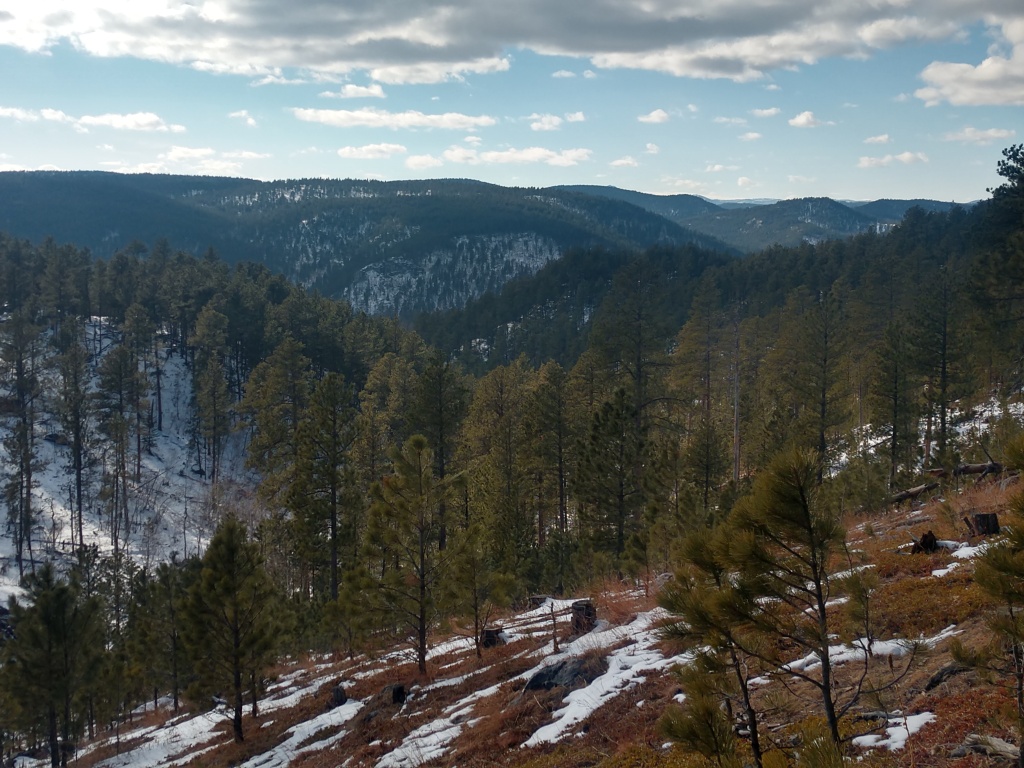
Psalm 111 is all about praising God. We can be drawn to praise in a variety of ways. Two days ago, for example, my wife and I were on a hike. There was about four inches of snow blanketing the ground. The sky was so blue. At times we would pause – sometimes along the path after a long uphill stretch and sometimes at a place that afforded a view. At both kinds of stops we were amazed by God’s creation. Along the path we stopped and could take in the small details and could hear all of the quiet sounds of nature. At the viewing stops, we could see out across the plains to the east or we could look west across the rolling hills covered in snow and pines. Here we could sense God’s grandeur and the majesty of creation. Here too we were reminded of our awesome God. We were able to praise God for the work of his hands.
In verse two the psalmist declares: “Great are the works of the Lord; they are pondered by all who delight in them”. On Sunday afternoon it was God’s creation that led us to delight in him. On Sunday morning it was a man’s testimony about God’s work on a mission trip that led us to praise and delight. In the first half of Psalm 111, God’s grace and compassion and provision are what draws the writer to praise God. These gifts of God are wrapped in the covenant, which also connects to the reasons to praise God found in the second half of the Psalm. Working out the covenant to Abraham, the psalmist remembers how God gave them the Promised Land. Recalling the steadfastness, faithfulness, and uprightness of God, the psalmist looks to the redemption that God provides, ordaining his covenant forever. Here I connect to the Psalm most personally. The redemption of God came in the person of Jesus, he who established the new covenant forever through his blood shed on the cross.
The Psalm closes by reminding us that “the fear of the Lord is the beginning of wisdom”. In the Biblical sense, fear is not being afraid of God. It is a fear in terms of reverence and awe. It was what I felt as I was awestruck gazing out at the scene pictured above. It is what you have felt when you have been caught by God’s power or love or grace at different times in your life. As our response today, may we too offer words of thanksgiving and praise to the Lord our God!
Prayer: Lord God, thank you for the many, many times when I have been amazed by your great works. These revelations, these epiphanies, are such a blessing. You are an amazing and awesome God! Amen.
Verse 18: “I will put my words in his mouth, and he will tell them everything I command him”.
In today’s passage we see some long term planning. In order to continue to help the people walk faithfully with God, he will raise up prophets like Moses to teach and guide them. In their desert experience, the people were amazed at God’s power and authority, but they were also afraid of God. They feared talking directly with God. They thought only Moses could do so and live. So they asked God for an intermediary, for a prophet to communicate God’s words to the people. God appreciates their idea and decides to continue to raise up prophets like Moses to be his voice to the people. In verse eighteen God says, “I will put my words in his mouth, and he will tell them everything I command him”. Prophets will speak on behalf of God, using the words God gives them. They will be an extension of God’s power and authority. Joshua, Samuel, Nathan, Amos, Micah, Jeremiah, Malachi, Ezekiel, the judges, Isaiah, Daniel… – just a small sampling of God’s prophets.
We are in the season of Epiphany, the season that celebrates the revelation of God incarnate in Jesus Christ. The season begins with the visit of the wise men – the first Gentiles to worship Jesus Christ. Jesus is, of course, in the line of prophets in the human sense. God in the flesh lived among us and spoke God’s words to the people, guiding and teaching them (and us) how to live faithfully with God and with one another. As we learn his ways and as we seek to become more and more like Jesus, we ourselves are living out epiphany – revealing Jesus to the world through our words and actions that reveal Christ alive in us. Today and every day, in all we are, in all we say and do, may we share Jesus with others. In this season, may our very lives celebrate Jesus among us, the living word, God in the flesh, the giver of life. As we live into the fullness of our faith, may others come to know Jesus.
Prayer: Living God, today I thank you first for the prophets, each who came and spoke your word. Each has much to offer us today. I also thank you for Jesus, the fullest revelation of your love and power and authority and might. May he reign each day in my life. Amen.
Verse 12: “You, O God, are strong… You, O Lord, are loving”.
In our reading today David begins by acknowledging that all of us are “nothing”, “only a breath”. We are each but a blip on God’s timeline. Therefore, David advises us not to trust in the things of this world, saying, “Do not set your hearts on them”. These are sobering thoughts. Yet they do not need to be frightening or to make us anxious. Our passage concludes with these words concerning God: “Surely you will reward each person according to what he has done”. We each have control over this reality. We are who controls and has influence over how God rewards us.
We are God’s creation, made in his image, born with the spark of the divine within us. We are also flesh and bone, drawn to the things of this world. David has experienced both sides of this, just as we have. As he writes from a place of maturity in his life and in his faith, he states, “You, O God, are strong… You, O Lord, are loving”. These two characteristics of God are what allow us the opportunity to receive an eternal reward that continues our relationship with the Lord. God’s strength is what guides us and empowers us to withstand the temptations of this world most of the time. God’s love is what forgives and redeems us when we fail to withstand. Thanks be to God for both his love and his strength!
Prayer: Lord God, as strong as you are, you understand my weakness. As loving as you are, you understand my selfishness. You understand both because in Jesus you walked both out in the world. So your love is always stronger than my weakness against the powers of the world. Guide me as I go out into the world; use me to help others know of your love and strength. Amen.
Verse 6: “He alone is my rock and my salvation; he is my fortress, I will not be shaken”.
At youth events over the past years we have asked the youth to do a trust fall. The youth stands on a table or platform, closes their eyes, folds their arms across their chest, holds their body rigid, and then falls backwards. They are trusting that the eight or so youth lined up behind them will catch them in their arms. The process is usually the hardest for the one who goes first. For every person, though, there comes a moment, just before they intentionally fall backwards, in which they must decide to trust that the group will catch them.
David is the author of today’s Psalm. He has been on enough “trust falls” to have come to this place of confidence and trust in God. Our section begins with these words: “Find rest, o my soul, in God alone”. David is assured of God’s presence and of his place in God’s kingdom. Each time that David was asked to step out in faith, God has been there. God has been steadfast and true – David knows that he can rest in God. In the next verse David writes, “He alone is my rock and my salvation; he is my fortress, I will not be shaken”. For David, there is no other – no other foundation, no other redeemer, no other protector. He trusts in God alone.
You and I will be asked to step out in faith as we continue to journey with Christ. Sometimes it is like a trust fall – we cannot see where we are going and we must trust in God as we leave the safety and security of our safe place. It can initially feel like a free fall as we cannot sense the way that God is leading. As we learn to trust, as we step out in faith, we come to know the assurance that pours out of David’s words in Psalm 62.
In verse eight we hear these words of encouragement: “Trust in him at all times, O people”. May it be so for you and for me.
Prayer: Leading God, give me the courage to go where you lead, to answer the call each time the Spirit whispers or nudges me. Use me as you will, O God. Amen.
Verse 18: “At once they left their nets and followed him”.
Photo credit: Jillian Werner
In today’s passage Jesus calls the first four disciples. They are just regular people. All four are fishermen, used to a hard life. They work long hours, endure the weather, and rely upon the water for their livelihood. This day began just about like every other day – until Jesus walks along the shore. This scenario is true for most of us. Our days start about the same each day and then sometimes Jesus shows up, calling us into ministry.
First Jesus comes to Simon and Andrew. They are at work when Jesus comes, casting their nets into the sea. He simply says, “Come, follow me, and I will make you fish for men”. We read that “at once” they left their nets – right there in the water – and followed. The call of James and John is similar. They are mending their nets when Jesus calls them. “Without delay” James and John leave their father and the hired men behind to follow Jesus. Is this the lesson we are to take from today’s reading?
It certainly is one of them. Most of the opportunities we have to “come and follow” are moments unfolding in life at that time. The person the Holy Spirit nudges us towards may not be there any more or the particular need may not be there when we see them the next time. The door or window of opportunity that is open when the Spirit whispers in our ear may close or shut if we say we’ll get to it “tomorrow”. And, honestly, what call would Jesus give to you or me that would compare to the call these four fishermen received today? Well, honestly, each call rises to the level of being a disciple.
The first step for Andrew, Simon, James, and John is the first step for each of us. The first step is to decide if we trust Jesus. When we are nudged to go to that person or when the Holy Spirit whispers into our heart, we have no idea where that step will take us. Yet, just like these fishermen, we are called to step forward in faith. As Jesus calls us today or tomorrow or another day, may we each trust in the Lord. Without delay, may we go where the Lord sends us.
Prayer: Lord God, I’ve come to see that “not now” most often means “no”. Help me to be better in those moments when you call. That “thing” that feels oh so important is never as important as the person or need you are calling me to. Make me more obedient, Lord. Amen.