pastorjohnb

Thoughts and musings on faith and our mighty God!


Leave a comment

Why Jesus Came

Reading: Acts 13:1-15:21

Acts 15:10 – “Why then are you now challenging God by placing a burden on the shoulders of these disciples that neither we or our ancestors could bear?”

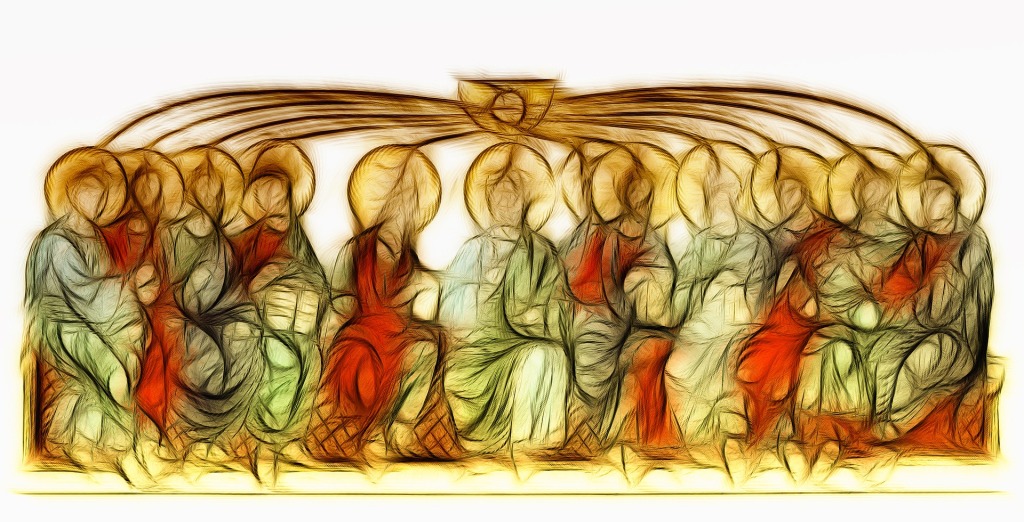
Photo credit: Frank McKenna

Beginning in chapter 13 we see the spread of the church past the first Gentile city out into the Gentile world. Paul, Barnabas, and John Mark are sent out from Antioch as missionaries. There is great success overall but the growth of the church is not without persecution and controversy.

The missionaries begin in Cyprus, proclaiming the word of God. Paul confronts a false prophet, demonstrating the power of the Holy Spirit. Moving on to Pisidian Antioch, John Mark deserts Paul and Barnabas, returning to Jerusalem. Paul accepts the invitation to preach on the Sabbath. His powerful sermon on Jewish history and Jesus’ ministry yields an invitation to preach again. A large crowd gathers on the next Sabbath, stirring up jealousy amongst the Jews. Their rejection of the message leads Paul and Barnabas to focus on the Gentiles. Moving on to Iconium, Luke reports that “the same thing happened” – some believe but others are opposed to their message.

Paul and Barnabas move on to Lystra. Here Paul heals a man who believed that he could be healed. The locals mistake Paul and Barnabas for Greek gods. They head off the sacrifice of bulls to them, but Jews arrive from Antioch and Iconium, stirring up the crowd. Paul is stoned and left for dead. He gets up and they travel to Derbe the next day. After making disciples there, Paul and Barnabas work their way back to Antioch. Along the way they encourage the believers and they appoint elders to lead these new churches.

Jews from Jerusalem arrive in Antioch and stir up some tension. They tell the Gentile believers that they must first be circumcised in order to be saved. The idea of “you’ve got to be just like us” is not an invention of the modern church. Paul, Barnabas, Peter, and James all argue against placing Jewish requirements on Gentile believers. Peter asks the pertinent question: “Why then are you now challenging God by placing a burden on the shoulders of these disciples that neither we or our ancestors could bear?” No one has been able to keep the Law. This is why Jesus came – to do for us what we could not do on our own. By his life, he gave us what we cannot earn and what we do not deserve: the forgiveness of sins that leads to life eternal. Thanks be to God.

Prayer: Lord God, how wide and deep is your love. It flows from your heart, out in all directions. It does not avoid certain places or people. It carries the power to wash away sins, barriers, and presumptions. May your love wash over us, filling us to overflowing with your love. Amen.


Leave a comment

As Jesus First Loved

Reading: John 13 and 14

John 13:34 – “I give you a new commandment: Love each other. Just as I have loved you, so you must love each other.”

As his time nears, Jesus demonstrates humble service, a form of love. During the meal, Jesus washes the disciples’ feet. This dirty job was normally done by a slave. Peter, recognizing the upside-down nature of what’s happening, protests Jesus washing his feet. Jesus persuades him and later explains that if the Lord and teacher washes feet, so too must they. This is a practical example of what Jesus says later in chapter 13: “I give you a new commandment: Love each other. Just as I have loved you, so you must love each other.” Love will do anything for the other.

This commandment comes after it is revealed that Judas is the betrayer. Jesus then tells Judas to do it quickly. Judas exits into the night. Jesus tells the disciples that they cannot go where he is going right now. One day they will. Peter declares, “Lord… I’ll give up my life for you.” No, Jesus says, first you’ll deny me three times – “before the rooster crows.”

Jesus offers words of great assurance and comfort in chapter 14. Calling them to trust over fear, Jesus tells them there is a room in heaven prepared for them. One day he will take them to dwell with him there in eternity. Because Jesus lives on, they too will live on. Into their confusion Jesus says, “I am the way, the truth, and the life.” Jesus assures them that they know the way because they have seen the Father and have heard the Father’s words, both revealed in and through Jesus. Because of this, whatever they ask in his name, it will be given to them.

Jesus then promises them the Companion – the Holy Spirit. Jesus and God “will come… and make our home with them.” Dwelling in the heart of all believers, the Spirit will teach and remind us of the words, will, and way of Jesus. Through this, the Spirit will empower believers to live as Jesus first loved us. May it be so.

Prayer: Lord God, today we see that loving as you loved involves doing the lowly yet simple as well as the costly and sacrificial. Your love knows no bounds, no limits, no conditions. Through the indwelling power and presence of the Holy Spirit may we love as you have loved each day. Amen.


Leave a comment

What Is Required?

Reading: 1st Thessalonians 4:13-18

Verse 17b: “And so we will be with the Lord forever.”

Today’s words from Paul connect really well with the themes and ideas around All-Saints’ Day. In Revelation 7 the vision of heaven and all its glory brought hope to the believers suffering in John’s time. These words offer hope to all believers. The Thessalonians aren’t quite there yet. The vision detailed in Revelation probably hasn’t reached them. They are concerned with the souls of those who have died (“fallen asleep”) before Jesus returned. The common belief was that Jesus was coming back any day, soon. They fear that these souls might miss out or forever be trapped in limbo.

Paul begins to address their fears and concerns by assuring them that because Jesus died and rose again that one day all who believe in him will one day rise with him. Paul further assures them using Jesus’ own teachings. He reminds them that Jesus taught that when he returns “the dead in Christ will rise first.” Those who have fallen asleep will indeed join Jesus in glory. Paul then turns to those who are alive, reminding them that Jesus taught that those who are still alive “will be caught up together with them.” All who call on Jesus as Lord and Savior “will be with the Lord forever.” What words of hope and encouragement Paul shared with the Thessalonians and with us!

The underlying question that bubbles up here for me is this: What is required of me so that I am one day a part of this heavenly gathering? I first turn to Micah 6:8. These words are my daily prayer of commitment to God. Each day I strive to act justly, to love mercy and kindness, and to walk humbly with the Lord. These words and actions focus and frame my day. What words and practices guide you to living in a way that brings honor and glory to God?

Prayer: Lord, justice, mercy, kindness, and humility – they are a good start but I know that this is not all that is required of me. By the power of your Holy Spirit fill me with your love and compassion, with your grace and forgiveness. Show me the way to daily serve you and neighbor. Amen.


Leave a comment

Small Seeds

Reading: Mark 4: 30-34

Verses 31-32: “It is like a mustard seed, which is the smallest seed… it grows and becomes the largest of all garden plants”.

Today we continue in Mark 4 with the planting of seeds. Yesterday we heard the call to scatter seeds of faith, trusting God to root, grow, and mature both our faith and the faith of others. Yesterday we heard that we are all called to plant seeds. Perhaps knowing that his audience then and that followers down through the ages would question or even balk at their ability to do this, Jesus continues with today’s parable.

Jesus begins by asking, “What shall we say the kingdom of God is like”? Well, it is not what we or the world think. Jesus shares this illustration: “It is like a mustard seed, which is the smallest seed… it grows and becomes the largest of all garden plants”. He chooses the smallest of all seeds. And yet the tiny seed produces a large plant which blesses the birds of the garden. Small gifts… big results. That is God’s kingdom at work. In the kingdom of the world, we think size matters. Larger bank accounts, bigger houses, fancier clothes – big seeds. But what difference do these things make in areas that really matter? None. It is the faithful, small gifts and actions that really build the kingdom of God. It is the many small words and humble actions of faithful followers that build the kingdom of God. Yes, you may hear a wonderful sermon today and you may be moved by the beautiful music. But if your time in church does not lead you to be Christ’s light and love in the world for the rest of the week, then how did worship matter?

The Holy Spirit gifts all believers. All of us have gifts to use in the building of God’s kingdom. How will you use the gifts and talents that God has given you to plant seeds for the building of the kingdom here on earth?

Prayer: Lord God, use me today to be a part of transforming the world. May I begin today with each I meet, pouring your love and grace into their lives. Amen.


Leave a comment

Limitless Love

Reading: Acts 10: 44-48

Verse 45: “The gift of the Holy Spirit had been poured out even on the Gentiles”.

Today’s passage is a great example of the growing circle of God’s love. Throughout the Bible we see that God’s love is much more expansive than was currently realized. At first it was just God and Adam and Eve. Then the immediate family grew. It was just Noah and family on an ark, then it grew. It was just Abram and family that headed out, following God’s promise. Eventually the people of God end up as slaves in Egypt. God redeems them and under Moses’ and then Joshua’s leadership the Israelites were God’s “chosen people”. For many years, one was a Jew or one was not. One was beloved by God or one was not. Even during most of Jesus’ ministry his focus was on his fellow Jews. There were hints of God’s love being bigger than that but the prevailing feeling was still one of exclusivity.

Peter was born and raised a Jew, steeped in this understanding of the Jews being THE chosen people. They were all that really mattered to God. And then God’s says, ‘Excuse me, Peter, but…’. In two visions that come in the first part of Acts 10 God shows Peter that his love is bigger. God begins by revising the traditional Jewish dietary restrictions – one of the big exclusivity definers. All that God created is clean. This is followed up by the Holy Spirit instructing Peter to go with three men to Cornelius’ home. Wait for it… Cornelius is a Roman centurion, a Gentile!

Turning to today’s passage, at Cornelius’ house Peter tells of the good news of Jesus Christ. During his teaching the same Holy Spirit falls on Cornelius and all who are present. All that God created is clean, acceptable, valued and loved by God. Preparing to baptize these new believers, an astonished Peter declares, “The gift of the Holy Spirit had been poured out even on the Gentiles”. In God’s sight the whole world is the mission field. All people are beloved by God. All people are created by God to be in the family of God. All people.

When I think about Peter being astonished, initially I feel a bit superior. I think, ‘Of course God loves the Gentiles. How silly of Peter to try and limit God’s love’. And then the Holy Spirit convicts me too – slaps me upside the head. There are folks I’d be astonished to see in the family of God. There are times I try and limit God’s love. I too need to better understand the limitless and unconditional nature of God’s love. Like Peter, I am still a work in progress. May God continue to break my heart for what breaks his.

Prayer: Loving God, this day help me to love more fully, to love more openly, to love deeper and wider. Keep praying open the circle of my love too. Your love knows no bounds, no barriers. Make my love the same. Amen.


Leave a comment

Fellowship with the Light

Reading: 1st John 1: 1-5

Verse 3: “We proclaim to you what we have seen and heard, so that you may have fellowship with us”.

In his first letter John proclaims the life of Jesus and the eternal life of Jesus. Just as he did in his gospel, John begins our passage today by reminding us that Jesus Christ was present with God at the beginning, in the creation of the world. John goes on to state that he himself has heard, seen, and even touched the physical Jesus. John did so for three years as a follower of Jesus. He was also blessed to see, hear, and touch the resurrected Jesus, “the eternal life”. John shares all of this firsthand evidence to let his readers know that Jesus was really real and that the resurrection really happened.

There is a point to John’s sharing of these facts. In verse three he writes, “We proclaim to you what we have seen and heard, so that you may have fellowship with us”. John shares his experiences with Jesus so that we too may know Jesus and can have fellowship “with us”. John goes on to define “us” in the next verse. Fellowship is not just with John or with the community of faith, but it is also with God the Father and with Jesus Christ, his Son. Christian fellowship always includes the divine. Without this holy presence we are simply friends gathering for a social function.

Much of the world prefers to function on this surface level – pleasant hellos and how are yous, general acceptance, polite conversations… Deadening all this is the constant noise and buzz of information that we seem to prefer to live amidst. It is refreshing to pause and to feel and hear John’s excitement surrounding his real experience with Jesus Christ. It is inviting. This shines out in verse five where John writes, “God is light; in him there is no darkness at all”. There is no noise, no buzz. The light is clear and bright. In the light we can see things as they are. It is easy to understand what we touch and are touched by. In the light, our journey of faith follows a clear path, easily seen as we study and learn about Jesus Christ. It is in this process that we too see, hear, and touch Jesus himself. As knowledge leads to belief, we are increasingly seen, touched by, and heard by Jesus the divine. Our fellowship with him deepens and our joy is ever made more complete. Thanks be to God for our fellowship with the light!

Prayer: Lord of life, continue to draw me into your son Jesus. As I walk each day, help me to see, hear, and touch Jesus both in my times of prayer and study and in my encounters with others in the world. To God be the glory! Amen.


Leave a comment

Believers in Fellowship

Reading: Acts 2: 42-47

Verse 44: “All the believers were together and had everything in common”.

The book of Acts records the early history of the church. In our passage today Luke writes about what makes the church the church. It remains true today. The early Christians learned about Jesus and God. They spent time together in fellowship meals (that included what we call communion) and in times of prayer. The Holy Spirit was present, filling them with awe and empowering the apostles to offer signs and miracles. Generosity abounded. No one was in need as they cared for one another. They were a community. Verse 44 summarizes this: “All the believers were together and had everything in common”. Over all of this was their faith in Jesus Christ, revealed in their love for one another. Non-Christians, who were primarily Jews with a few Romans mixed in, noticed. In some cases, they were drawn to the love and became followers of Jesus Christ.

There are many times when the church today reminds us and the larger world of the picture painted by Luke today. That picture continues to attract people to the church. In times of trial, the body surrounds someone or a family or group of people. In times of need people step up both financially and physically. At gatherings there is joy and love present. This is the common “scene” in many churches. But the scene outside most all of our churches is much different than the scene outside the early church in Jerusalem.

Although “the Lord added daily to their number”, the city was not particularly welcoming or friendly to this new group. The church was a very small minority in a very Jewish and Roman world. Neither the Jews nor the Romans liked these Christians. At this stage they were sort of tolerated. As the church stuck and started to grow the persecution and worse would grow too. The reality of this fellowship of believers would change soon. Yet it would grow and grow and grow. God remained at work in and through the church. The same remains true today. Faith and love still guide the way. The Lord still draws us closer and closer while inviting others in. Praise God!

Prayer: Lord God, I am so thankful for the church. Although not a building, it is a “place” filled with loving and faithful people. I am blessed to be a part of your church. Continue to be present to us, to lead and guide us in fellowship with you, with one another, and with the world. Amen.


Leave a comment

A Model to Follow

Reading: 2nd Thessalonians 3: 6-9

Verse 9: “We did this in order to make ourselves a model for you to follow”.

As the church in Thessalonica begins to develop, there are some growing pains. It is to be expected with most new organizations. Paul and others have come and taught the good news of Jesus Christ. They have taught new believers what it looks like to live out the gospel in a community of faith. Paul and the others could not stay there forever, so now the church continues along on their own. As it does so, new churches need occasional reminders and sometimes they need the ones who planted it to come back for a refresher course.

Most of the content of Paul’s letters falls into two categories. He often writes to continue teaching both churches and individuals about how to live out the faith. These instructions can be applied to most churches and to the lives of most believers. Paul also writes to bring correction or to address as issue. These passages tend to be more direct and address a certain church, believer, or group of believers. Yet, at times, even these can be applied to churches and people. Our struggles are often the same. We find both of these categories in 2nd Thessalonians.

In the section we read today, Paul is addressing two groups that are having a negative impact on the church. There are some who are idle – they are not willing to work. They are simply relying on the generosity of others to get by. Paul reminds them that this was not the example that they set. Paul and friends “worked day and night” so that they could contribute rather than be a burden. Churches today have idle folks. Some are those that come around only when they need something. Others are those who are present but never give. They do not serve in the church and they do not give financially. They come and take and go back home.

Paul also addresses those who “do not live according to the teaching” that was given. Being idle would be one example. Similarly, in churches today, there are people who fall into this category. They come on Sunday morning or Saturday night and worship and bow their heads and listen to the message. Then they go out the door and live a worldly life. Their faith has little or no impact on the other 167 hours of their week.

To all of these Paul says, “We did this in order to make ourselves a model for you to follow”. We, like the church in Thessalonica and like the believers that made up that church, are all works in progress. At times we must pause and consider our progress and seek out areas where we are falling short. Is Paul speaking to you today? Could you offer more to your church? Could your walk of faith be more consistent or be closer to the example set by Jesus Christ?

Prayer: Lord God, as I consider these questions, I know I am far from the example set by Paul and especially far from the example set by Jesus. Draw me deeper into you and your love today. May this love be reflected out in all of my life. May it be so, O God. Amen.


Leave a comment

Good Fruit

Reading: Isaiah 5: 3-7

Verse 4: “What more could have been done for my vineyard than I have done for it”?

Today we see the outcome of all the love and care that was poured into the vineyard. The yielding of bad fruit draws a passionate response from the gardener. The gardener wistfully says, “What more could have been done for my vineyard than I have done for it”? When one considers all of God’s love and care and patience and guidance poured into Israel, one can begin to understand God’s pain and heartache and even a little anger. All parents experience this process, but usually on a much smaller scale. We raise our children as best we can and they still make poor decisions and bad choices now and then in spite of our best efforts.

God’s response to the vineyard Israel is to tear down the hedge and wall and to allow thorns to infest the ground. God even withholds the rain. God is stepping back from the relationship. God is not abandoning Israel, but is allowing them to experience the consequences of their decisions and choices. The injustice and bloodshed will not have good outcomes; the unanswered cries of distress will go on. All of this pains God deeply. Stepping back is a loving and merciful response. It is the response of a God who loves the people deeply.

I imagine that as God looks down on the world today, there is much that is painful to see. I imagine that God frequently asks the same “what more can I do” question. And then God sees the good fruit, the kind and loving followers of Jesus, working to bring light and love out into the world. God sees believers seeking to love God and to love neighbor. Yes, there are images of God sharing God’s love and care and compassion and mercy and justice with a world in need. Won’t you be one of them today?

Prayer: Loving God, lead me to love like Jesus today. Help me to be compassion and mercy and grace lived out. May it be so for me today and every day. Amen.


Leave a comment

Unity in Love

Reading: John 17: 20-26

Verse 22: “I have given them the glory that you gave me, that they may be one as we are one: I in them and you in me”.

Our passage today focuses on unity. Jesus prays for unity between and among the believers. Unity was essential for the early church – the Jews and the Romans would put a lot of pressure on them to try and snuff out the early church. In both verses 20 and 22 Jesus prays that they “may be one” and He connects this prayer to how He and God are one. Jesus defines this further in verse 23, praying for “complete unity” among the believers. Such a unity reveals their absolute faith in Christ and also the love of Jesus that is in them and flows through them.

The second unity that Jesus focuses on is between the believers and Jesus himself. A unity between Jesus and those who follow Him is also essential. A relationship with Jesus is the core connection. It is the foundation upon which the believers’ relationships with one another will stand. Their personal relationship with Jesus is also what connects them to God. In verse 22 Jesus prays this prayer: “I in them and you in me”. It reveals this connection.

Throughout His time on earth Jesus revealed God’s love. All that Jesus did and said and prayed was based upon this love. Our passage today closes with a prayer for this love to be in the believers. In verse 26 Jesus prays, “I have made you known and will continue to… in order that the love you have for me may be in them and that I myself may be in them”. If we have the love of God in Christ inside of us, it will be revealed to the world. Just as Jesus came to reveal God’s love, we too are sent into the world to be like Christ, revealing God’s love by all we do and say. May it be so this day and every day.

Prayer: Lord Jesus, dwell fully in me this day. May I so know your love that it is evident to all. Fill me with your love so that I may share it with others. Thank you Jesus. Amen.