pastorjohnb

Thoughts and musings on faith and our mighty God!


Leave a comment

True Power and Presence

Reading: Isaiah 7:10-13

Isaiah 7:11 – “Ask a sign from the Lord your God. Make it as deep as the grave or as high as heaven.”

Photo credit: Dan Kiefer

At the start of chapter 7, King Ahaz of Judah receives a word from God through the prophet Isaiah. Ahaz is told that Aram and Israel will not overpower Judah. Both will fall to a resurgent Assyria. In the first half of this week’s reading from Isaiah 7, God says to Ahaz, “Ask a sign from the Lord your God.” A sign could be very reassuring for a still-fearful Ahaz. In times of tension or danger or doubt or fear, it is natural to want a sign that God is with us. It is normal to not want to feel all alone. A sign indicating God’s power and presence helps us to move forward, to not be so afraid…, to have some hope.

In the remainder of verse 11 God adds, “Make it as deep as the grave or as high as heaven.” Often we want this kind of sign from God. We want a flashing neon billboard-sized sign from God, one that is as high as the heavens (or as low as the grave.) We’d prefer a sign so large that there is absolutely no mistaking that God is present and large and in total control. Ahaz does not fall into this temptation. He states that he does not “want to test the Lord.” Although still fearful, Ahaz resists the temptation to ask God to prove God’s power, presence…

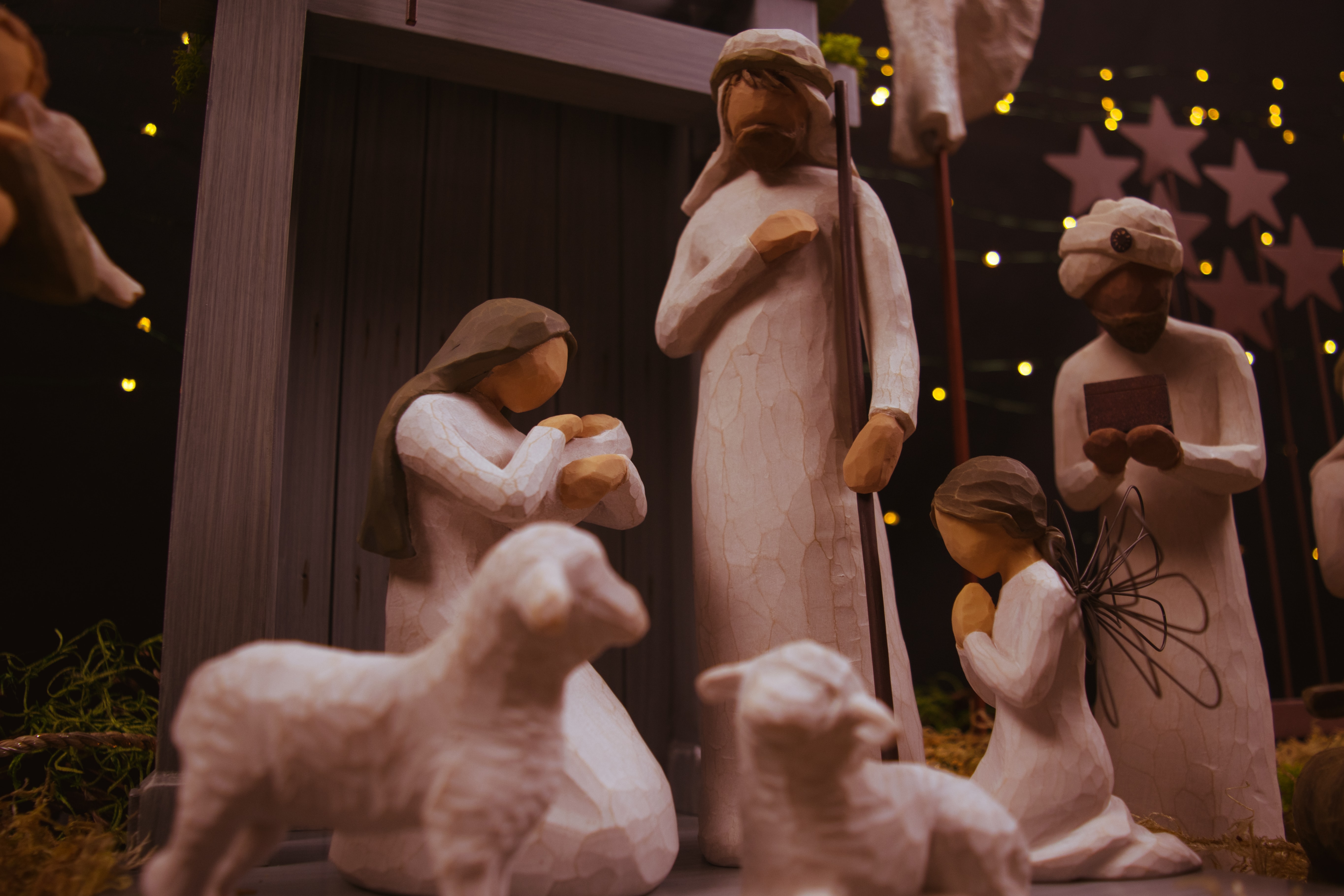
In this season of Advent we’re reminded that Immanuel, God with us, did not come in grand fashion. Christ wasn’t born into a powerful and wealthy family. Instead, Jesus was born to humble parents in the simplest of settings. In times when we are seeking God’s power and presence, may we remember that God most often comes in the humble, simple, and everyday of life. When this is the God that we seek, we will find signs of God’s true power and presence.

Prayer: Lord God, in our times of need, turn our eyes and hearts away from the amazing and awesome. Instead, focus our eyes and hearts on the many ways that you are present in and amongst us – in Spirit, in your Word, in one another, and in creation. May this constant presence strengthen and encourage us. Amen.


Leave a comment

Radical Love

Reading: Luke 23:33-38

Luke 23:34 – “Father, forgive them, for they don’t know what they’re doing.”

Our readings today and tomorrow focus on Jesus’ crucifixion. The way of Jesus stands in very sharp contrast to the ways of the world. This contrast begins in verse 33. The Romans crucify three people. Two crucifixions are just and one is unjust. All three accomplish the same goal: eliminating those who challenge your power. This remains the way of the world.

Those present at the crucifixion, all three groups named in today’s reading, they all equate power with strength, control, wealth, status. The religious leaders and the soldiers and the Roman governor sneer at and mock Jesus. They all want (or say they want) Jesus to exert some of his power to come down off the cross: “Save yourself.” That’s what we’d try to do. We’d try to save ourselves. Many there that day that utter these words have seen the miracles and heard the unearthly wisdom of Jesus’ teachings. Pilate’s sign above Jesus’ head mocks him too. A king? Surely he would save himself if that were true. Today we continue to mock and sneer at things and at people that do not meet our expectations and/or that we do not understand.

Jesus’ power runs counter to all of these ways of power and of the world. As he is physically being nailed to the cross – large spikes being driven through his palms and his feet – Jesus says, “Father, forgive them, for they don’t know what they’re doing.” As John Wesley noted in a sermon, Jesus ignores this incredible pain because he is more worried about the salvation of all involved in the crucifixion. Forgiving others always, this is power. The way of love for God and neighbor triumphs over all things. Thanks be to God for this most excellent way of love.

Prayer: Lord God, what great power we see in your radical way of love. It was unaffected by the things of the world going on around you. It was an unconditional love that reached out to those harming you and taking your life. Lord, fill us with this powerful love. Filled, send us out as your radical love lived out in the world. Amen.


Leave a comment

There Is a Plan

Reading: Habakkuk 1:1-4 and 2:1-4

Habakkuk 2:2 – “I will keep watch to see what the Lord says to me, and how he will respond to my complaint.”

Photo credit: Aaron Burden

The prophet Habakkuk receives a vision from God. He then has a dialogue with God that mostly centers on the age-old question: Why does God allow the righteous to suffer while the wicked prosper? Habakkuk wonders how and even why God would use Babylon as a part of God’s plan. This wondering leads the prophet to question how the righteous might face and live faithfully under evil’s domination.

Our reading begins with, “How long…?” This frequent refrain questions why God is not listening to Habakkuk’s cry for help. The violence, devestation, and injustices are all around. God’s instruction is ineffective. The wicked act unjustly, warping justice. From his human perspective, what is happening to Israel makes no sense. What is perhaps worse is the fact that God seems to be orchestrating all of it. At times we can feel this way too when we are in the midst of a season of trial or suffering.

Jumping to chapter 2, God has responded to Habakkuk and he has again questioned how a good and just God could use an evil, pagan nation to save Israel from its sins. Following this interchange, the prophet declares that he will wait for an answer. There is a trust in his decision. In verse 2 we read, “I will keep watch to see what the Lord says to me, and how he will respond to my complaint.” In spite of all that is going on around him, Habakkuk will wait for God to make sense of the present reality. God then offers a vision. There is a plan. Evil will not reign forever. God says to Habakkuk and to us, “wait for it; for it is surely coming…” God is in control. Trust God. And while you wait, God adds, “the righteous person will live honestly.” Even in the midst of evil and injustice, walk the walk of faith. Yes, may it be so.

Prayer: Lord God, when we find ourselves where Habakkuk was, deep in the valley, darkness and evil all around, remind us that you are forever and that you are in control. We know that you are eternally good and just. Help us to trust into, to lean into, to live out these truths. Empower us to always be faithful to you alone. Amen.


Leave a comment

Choose God

Reading: Jeremiah 32:1-3a and 6-15

Jeremiah 32:2 – “The army of the Babylonian king surrounded Jerusalem, and the prophet Jeremiah was confined to the prison quarters.”

As we turn to Jeremiah 32 things look bleak for Jerusalem. To the north, Nebuchadnezzar’s army had surged through Israel, defeating the northern kingdom swiftly and completely. The wave of terror and destruction then turned south, aiming for Jerusalem, the capital of the southern kingdom of Judah. The Babylonians buzzed through the towns and smaller cities north of Jerusalem in short order. During this time, the prophet Jeremiah spoke the word of the Lord to Judah’s King Hezekiah. Jeremiah’s words of accountability and doom landed him in prison. This is the context as we read, “The army of the Babylonian king surrounded Jerusalem, and the prophet Jeremiah was confined to the prison quarters.” It was a very dark time for Jeremiah and for Judah.

In the midst of this difficult time Jeremiah receives a word from God. He is told that a cousin is coming to sell him some land. The instructions from God: buy it. Judah has just watched Israel get decimated and hauled off into exile. Buy land? Now? That’d be like buying land on the Florida coast as a category 6 hurricane draws close to shore. But the cousin shows up and Jeremiah buys the land. This is an act of faith. His actions enact the word of God that Jeremiah speaks next: “The Lord proclaims: Houses, fields, and vineyards will again be bought in this land.” The winds are really picking up and the rain has started falling, but all will one day be okay. God is in control. This storm too will pass.

Jeremiah reminds us today that even in the darkest times, God is present and God is in control. When the enemy surrounds us, when the storm clouds build, we can choose to find shelter in the Lord. Yes, fear, doubt, worry… – they rise up in us. Yet in those moments, we can choose to turn to God, to allow the power of God’s presence to bring peace and strength, light and hope to our hearts. May this be our choice. May we trust into the Lord.

Prayer: Lord God, draw close to us in those moments when fear rises, when hope feels lost. Through your presence assure and encourage us. Bring us under the shadow of your wings. Thank you, O God. Amen.


Leave a comment

Treasure in Heaven

Reading: Matthew 19:16-22

Matthew 19:22 – “But when the young man heard this, he went away saddened, because he had many possessions.”

Photo credit: Falaq Lazuardi

In verse 16 a man approached Jesus and wanted to know what “good thing” must he do to get him into heaven. What must I do? The good part of this question is that the man has a concern about eternal life. In reality, I think everyone wants to go to heaven. But there are two issues here. First, the man believes it only takes so much to enter heaven. No, it requires surrendering our whole life to the will and way of God. Second, he thinks getting into heaven is about doing something good or even doing a lot of good things. No, there is no great balance scale that determines our merit for entry into eternal life. Living an earthly life worthy of eternal life is much more about being than doing. We are called to be Christ to the world.

Jesus responds by telling the man to keep the commands. Revealing the depth of issue one from above, the man asks, “Which ones?” In other words, keeping how many of the 600+ commands enables entry into heaven? Jesus lists six. The young man has kept these six commandments. But sensing there must be more to this than Jesus is letting on, he asks, “What still am I missing?” Addressing the reality of issue one in the man’s life, Jesus begins with, “If you want to be complete…” If you really want to surrender your life to God, then here is what you, in particular, must do.

Jesus tells the man, “Go, sell what you own, and give the money to the poor.” This kind of life surrender will store up treasure in heaven. Not money in the bank, but humility and generosity and compassion in the heart. These are the treasures of heaven – in this life and the life to come. But, alas, the man’s love of his “stuff” is too great. In the last verse we read, “But when the young man heard this, he went away saddened, because he had many possessions.”

For the man in this teaching, his possessions were on the throne of his heart. Maybe the same is true for you. Maybe this story felt convicting. Or maybe possessions are not your struggle. If it were me, for example, Jesus would say something along these lines: “John, give up that need to be in control, surrendering your pride as you trust others more.” Empowering others to be in service, building up their gifts, would be treasure in heaven. What is it that you need to work on surrendering in order to draw closer to being Christ in the world?

Prayer: Lord God, I ask that you would continue to work in me, chipping away at my pride, chiseling away at those other things that keep me from fully surrendering all of who I am to you. Do the same, O God, refining and transforming the hearts of all who desire to walk more closely with you. Empower each of us to more fully be Jesus’ hands and feet and hearts in the world. All for your glory. Amen.


Leave a comment

Pursuing God

Reading: 1st Timothy 6:5-12

1st Timothy 6:12 – “Compete in the good fight of faith. Grab hold of eternal life.”

As Paul closes his first letter to Timothy he lays out the difference between being faithful and wanting to look faithful. We see this today in our world as people claim to follow Jesus and then say and do things that Jesus would’ve never ever said or done. There is “constant bickering” in these circles and there is a constant desire for “more money” and for more power, more control, more… Paul’s words in verse 5 still ring true today.

Paul reminds Timothy that there is great profit in our faith. It is just not profit as the world defines this idea. Paul invites Timothy (and us) to be happy or content with what God has provided, whether food or clothing or whatever. This frame of mind helps to guard our hearts against loving and pursuing the things of this world. This contrasts sharply with those trying to “get rich” or to accumulate others things of this world. There folks easily “fall into temptation” as they become trapped in the endless cycle of “more!” Some of these have even “impaled themselves with a lot of pain” in their pursuit of earthly things.

Timothy is encouraged to “run away from these things.” Paul encourages him to pursue the things of God: “righteousness, holy living, faithfulness, love, endurance, gentleness.” These are the things we too are to pursue. Paul then implores Timothy (and us) to “Compete in the good fight of faith. Grab hold of eternal life.” To deny self, to not pursue the things of this world, it is a fight, a battle. In my study Bible the commentary notes, “In the end we will become not what we own but what we do.” Pursuing God, may we be transformed more and more into God’s image and character, day by day.

Prayer: Lord God, by the power of your Holy Spirit, fix our eyes and hearts on you. By this same power, guard our eyes and hearts against those things that our culture values. Lead us to find peace and contentment, joy and pleasure in all that you provide. Amen.


Leave a comment

With Us Always

Reading: Psalm 91:9-16

Psalm 91:10 – “No evil will happen to you; no disease will come near to your tent.”

Psalm 91 is a liturgy of divine protection. The psalmist is expressing his or her belief in God as protector. They express an absolute trust in God. In verse 9 God is declared to be a place of refuge, the place of residence. The Psalm closes with God’s promise to fill them with “old age” and to “show you my salvation.” Throughout the Psalm we see the Jewish belief that living a godly life will result in being blessed by God. There will be rescue, protection, answered prayer, saving.

In verse 10 we read, “No evil will happen to you; no disease will come near to your tent.” This is backed up in verse 11, where we read that God will order the angels to protect us “wherever you go.” In verse 12 we read that we won’t even “bruise a foot” because the angels will carry us. With God’s protection we’ll be able to “march on top of lions and vipers.” These words express trust and faith in God. These words were written in a time when all things were seen as under God’s control.

As the biblical narrative unfolds, we see a shift in understanding. God created and designed the world and set it into motion. God does not, however, micromanage the world. Evil, free will, selfishness, greed… – these are part of the human condition. Nobody teaches a young child, for example, to want that toy just for themselves. They must be taught to share. Illness and death are also part of the human condition. Our bodies are amazing, complex creations of God. We are not, however, bulletproof, fireproof, illness-proof… These realities of life bring oppression, injustice, pain, grief, suffering. God desires to be with us in these hard moments. Calling upon God in faith and trust, our God of relationship will walk with us always.

Prayer: Lord God, thank you for always being with us when we call out. Lead and guide us to have a deep trust in your love and care for us. Impart upon us also an understanding of the realities of the human condition. In moments of goodness and joy, in moments when evil or illness or when poor decisions impact our lives, draw us to you, be present in our trials, walk with us in all of life. Amen.


Leave a comment

All Are One

Readings: 1st Timothy 2:11-12, 1st Corinthians 14:32-35, Ephesians 5:22-25, Galatians 3:26-28

Galatians 3:27 – “All of you who were baptized into Christ have clothed yourself in Christ.”

Photo credit: Wylly Suhendra

As we wrestle with the challenging parts of the Bible this week, today we turn to Paul’s words about the place or role of women in the community of faith. As we do so, it is important to remember that these words were written in a specific context and culture, in a time different from our own. This filter can help us greatly in our understanding and application of these words.

In 1st Timothy 2:11-12 Paul begins by stating that women should “learn quietly with complete submission.” This is followed by a prohibition against a wife teaching or controlling her husband. These words are rooted in two beliefs of Paul’s day: women’s minds are weaker than men’s and it was Eve who caused the original sin to occur. Clearly the men should lead and be the decision-makers. Within this context and time.

1st Corinthians 14 echoes these themes. Women are to be quiet in church and to ask their questions at home. Most of the Ephesians 5 passage sounds similar: wives submit to your husbands in everything. These parts of these passages have been and are still quoted in patriarchal settings. Dig deeper though. In Corinthians this is Paul’s practical response to a specific issue in an individual church: the women are curious, they are asking questions as they seek to grow in their faith. The questions, however, are disrupting worship. In Ephesians Paul is talking about submitting to Christ. These verses today apply this to marriage too. The overall theme: submit to one another as you submit to Christ. Don’t miss or skip verse 25: Husbands love your wives as Christ loved the church, giving yourself up for her.

In Galatians 3:26-28, Paul declares total equality between male and female in God’s church. All baptized into Christ are clothed in Christ. All means all. That’s clear as Paul goes on to remove all lines and barriers, including the statement that there is “no male and female” in Christ. All are one in Christ. May this be so in all ways – in our homes, in our churches, in our society and culture.

Prayer: Lord God, as we read, ponder, think and wrestle through these passages, help us to do so within the overarching core tenets of our faith: love, grace, peace, hope, humility, service. Guide us then to understand how culture and norms influence writing, as does context. Center us always on the calls to love you and others above self. Amen.


Leave a comment

Believe

Reading: John 11 and 12

John 11:25 – “I am the resurrection and the life.”

Photo credit: Kyle Johnson

Lazarus is the focus of most of chapter 11. He falls ill and Mary and Martha send for Jesus. He stays where he is at. Only when Lazarus has died does Jesus head for Bethany. Many Jews come to mourn. As Jesus nears, Martha hears and goes out to meet him. She says as Mary will later say, “Lord, if you had been here…” They believe that Jesus could have healed their brother. While true, there is a greater plan at work. Jesus tells Martha, “I am the resurrection and the life.” To believe in Jesus leads to eternal life. We will all die in the physical sense as our body passes into death. After weeping with Mary and Martha, Jesus calls for the stone to be removed. This is a test of their faith. Do they believe that Jesus’ power can reach beyond the stone of death?

Jesus calls Lazarus out of the tomb. Many come to believe. But typical of the division in John, others go to the Pharisees with the news. They fear that a miracle like this will lead to a loss of control, which will lead the Romans to take action. The religious leaders know that Jesus would not play their game. So they decide that Jesus must die. Jesus withdraws to a secluded place for a time.

As the Passover nears, Jesus goes to Bethany. At a dinner at Lazarus’ house, Mary anoints Jesus’ feet with expensive perfume, preparing him for burial. A greedy Judas protests. The next day Jesus enters Jerusalem. A great crowd celebrates his humble entry. The Pharisees lament, “Look! The whole world is following him!” This kingship is different. Jesus speaks of a single seed falling and dying. Only then can it “bear much fruit.” Jesus reminds the people that he came to be light in darkness and that he came not to judge but to save.

Prayer: Lord God, help us to believe when we have not seen. The signs – we can read about them and trust that they happened. Your words is true. Lord, touch us and our lives with your presence and with your Spirit. May we feel the light and life within us, leading us to believe. May we walk daily with your Holy Spirit. Amen.


Leave a comment

Surrender and Live

Reading: Jeremiah 34-38

Jeremiah 36:3 – “Perhaps when the people of Judah hear about every disaster I intend to bring upon them, they will turn from their evil ways, and I will forgive their wrongdoing and sins.”

Photo credit: Einar Storsul

Our reading opens with King Zedekiah inquiring about the future. Jeremiah tells him that Jerusalem will fall but that he’ll live. He’ll be taken to Babylon where he will die in peace. Zedekiah then makes a covenant to release all Hebrew slaves. This is done but is quickly reversed. God declares that Judah will be freed instead: free to “die by the sword, famine, and disease!” Judah will become a wasteland.

In chapter 35 we find a great contrast. God sends Jeremiah to the Rechabites. They are a nomadic family group that has long kept the commands given to their ancestor. God asks Judah, “Can’t you learn a lesson?” No, they can’t, won’t, don’t. God will bring disaster on Judah, blessing in the Rechabites.

God directs Jeremiah to record all of his words in chapter 36. Perhaps Judah will hear them and turn from their evil ways. Baruch is the scribe. Because Jeremiah is in confinement, Baruch reads the scroll in the temple. It’s then read to some officials, who tell Baruch to hide with Jeremiah. The scroll is read to King Jehoiakin, who burns the scroll piece by piece as it is read. God directs Jeremiah to make a new scroll. Jehoiakin will die without heirs.

In chapter 37 Judah gets false hope. Egypt marches our. Babylon withdraws from the siege on Jerusalem to face this threat. Egypt will return home. But Jeremiah takes the opportunity to try and see his new land. He is arrested as he exits the city and is accused of defecting. He’s beaten and imprisoned. He repeats Zedekiah’s fate to him. It provided an opportunity to ask for a prison upgrade. But there he continues to call for surrender. This leads him to be put in a muddy cistern, where he sinks. Ebed-Melech rescues him from this. The message remains the same: surrender and live, refuse and die. The message remains the same today. May we choose to surrender to God and live.

Prayer: Lord God, surrender – such a hard thing. We like control, power… We think we’re the master of our own destinies. How wrong and sinful we are. Help us to hear anew today the call to surrender to your will and way. There we find true life. Loosen our grips, open our hands to you. Amen.