pastorjohnb

Thoughts and musings on faith and our mighty God!


Leave a comment

Worthy of the Kingdom

Reading: Matthew 9-10

Matthew 10:22 – “Everyone will hate you on account of my name. But whoever stands firm until the end will be saved.”

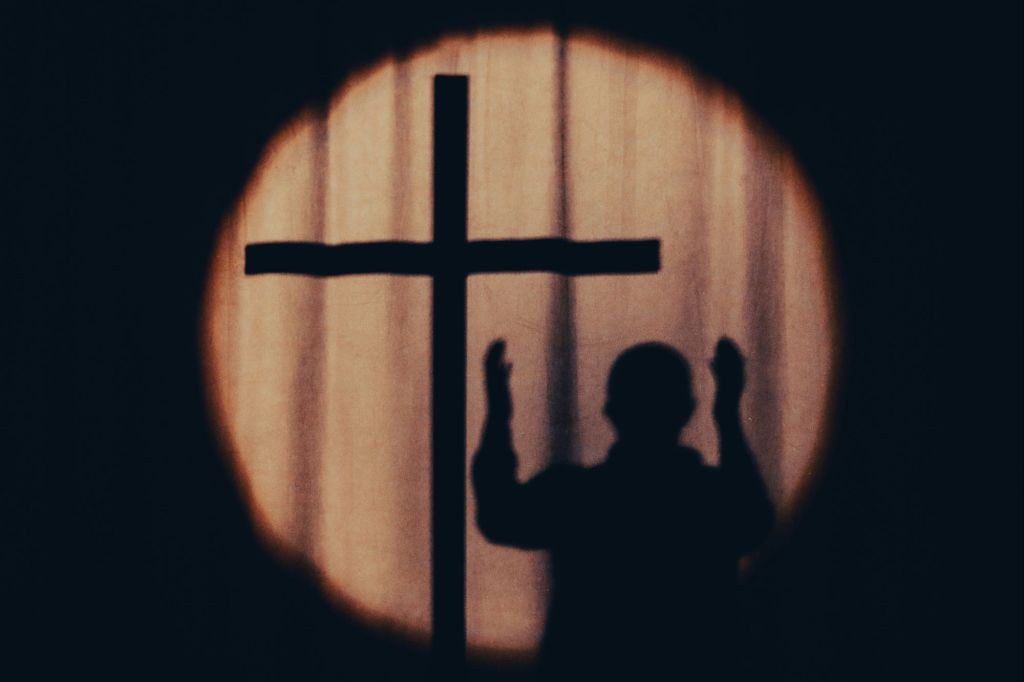
Photo credit: Shane Rounce

Chapter 9 is mostly about the healings that Jesus brought to people. There is the calling of Matthew too and the questioning of why Jesus ate with “tax collectors and sinners.” Chapter 10 shifts first to the calling and sending of the 12. The chapter ends with the realities of the cost of discipleship. This was and still is a reality for the followers of Jesus.

Chapter 9 begins with the healing of a paralyzed man. Jesus begins by forgiving his sins. This is just a means to draw in the “legal experts,” to prove that Jesus has the power to forgive sins and to heal sicknesses. Jesus then calls Matthew, saying, “Follow me.” Later, at dinner, the Pharisees question Jesus’ choice of table mates. He declares, “I didn’t come to call righteous people, but sinners.” As the chapter continues, Jesus heals five more people and Matthew closes with a summary of Jesus’ early ministry. Jesus taught and healed, announcing the good news of the kingdom. The chapter closes with a lament: the harvest is huge but the workers are few. Jesus encourages his disciples to “plead” with God for workers.

Chapter 10 begins with God’s response. The 12 are called and given authority to cast out demons and to heal diseases. They are then sent out to “the lost sheep… of Israel.” The disciples are to go without anything, relying on worthy people to take them in. They will bless these homes. If no one is found worthy in a place, the disciples will move on.

Starting in verse 16, Jesus begins to detail the cost of discipleship. The 12 go out as “sheep among wolves.” They will be arrested and beaten. But the Spirit will be with them and in their words. Jesus says, “Everyone will hate you on account of my name. But whoever stands firm until the end will be saved.” Families will come apart and turn on one another because Jesus did not “come to bring peace but sword.” The disciples are encouraged to “pick up their cross” as they follow Jesus. Doing so, they will be counted as worthy in the kingdom of God. May it be so for you and for me.

Prayer: Lord God, send us out as workers, fully cognizant of the cost of discipleship and fully aware of your Spirit’s presence with us. Lord, use us to bring healing and wholeness to others, encouraging them with the good news of your kingdom through us and our ministries. Strengthen and empower us as we too seek to follow in the footsteps of Jesus. Amen.


Leave a comment

Charges and Judgments

Reading: Ezekiel 22-26

Ezekiel 22:30 – “I looked for anyone to repair the wall and stand in the gap for me on behalf of the land… But I couldn’t find anyone.”

Photo credit: Jametlene Reskp

We begin with chapter 22, where God brings charges against Jerusalem and then closes with a lament, revealing the heart of God. The charges are a summary of how Judah broke each of the Ten Commandments. God will scatter them and refine them like silver in the process. The chapter ends with this lament: “I looked for anyone to repair the wall and stand in the gap for me on behalf of the land… But I couldn’t find anyone.”

Chapter 23 contains an allegory of two sisters. It is the story of Israel and Judah, God’s people who prostituted themselves with multiple foreign powers and their idols, one after the other. The younger sister, Judah, proceeded to outdo the older sister, Israel. Instead of learning from her sister’s wayward ways, she amplified them. God turned both sisters lovers against them, pouring out God’s wrath upon them.

There are two parts to chapter 24. In the first part Judah is compared to a corroded pot. It will be heated so hot that its corrosion will be consumed. Judah will not be cleansed until God’s wrath has fully burned. In the second part, Ezekiel’s wife dies as a part of a sign act. God directs him not to mourn in any way. He follows instructions. So thorough will be Judah’s defeat that they too will walk around in stunned silence, unable to even grieve.

Chapters 25 and 26 contain oracles or judgments about Judah’s neighbors: Ammon, Moab, Edom, Philistia, and Tyre. Ammon and Moab took great delight in Judah’s downfall. Edom joyfully took part in Jerusalem’s destruction. The Philistines exacted revenge for past defeats and losses. All but Edom “will know that I am the Lord.” Our reading closes with the judgment of Tyre. They too ridiculed Judah (and God) at her downfall. The people around Tyre will shudder in terror at what befalls Tyre, who will “disappear” as God leads them “down into the pit.” Such will be the fate of all who oppose the Lord our God.

Prayer: Lord God, our innate selfishness is on full display today. We continue to struggle with want and greed, with lust and desires, with idolatry and disobedience. We are not all that different than Oholah and Oholibah, than Moab or Philistia. We too deserve your wrath. We too should be refined like silver. Instead, you brought grace in the form of your son. Today, Lord God, we thank you that we stand on this side of the cross, where love was poured out instead of wrath. Thank you, Lord Jesus. Amen.


Leave a comment

Act(s) of Salvation

Readings: Exodus 7:14-25, Exodus 8, Exodus 9, Exodus 10, Exodus 11, Exodus 12:1-30

Exodus 12:14 – “This day will be a day of remembering for you. You will observe it as a festival to the LORD… for all time.”

Photo credit: RebeccaB Designs

As the plagues begin, the Lord turns the Nile to blood and then brings frogs upon all the land. Pharaoh’s religious experts duplicate these acts of God. Pharaoh is stubborn, refusing to let the Israelites go to worship God. Next comes the plague of lice. The experts are unable to do this. They tell Pharaoh, “This is something only God could do!” Pharaoh remains stubborn. Next comes a swarm of insects. Pharaoh says he’ll let Israel go worship but changes his mind after God removes the insects.

Chapter 9 brings the plague of sores and blisters. This time we read that God made Pharaoh stubborn. The animals that die are only the ones belonging to the Egyptians. This plague begins to build to a climax in chapter 12. Hail then pounds the land next – but not in Goshen. Pharaoh admits his sin and asks for prayer, saying he’ll let them go. Moses will make it stop but also states that he knows Pharaoh and his officials do not take God seriously. Again Pharaoh gets stubborn, refusing to let Israel go.

The plague of locust and the plague of darkness come in chapter 10. Again God differentiates between Egypt and Israel. Again Pharaoh almost budges but then turns stubborn. The chapter closes with Pharaoh threatening Moses. We see a shift in chapter 11. God gives very specific instructions to the Israelites. This prioritizes reenactment and remembering over the actual event. The Passover is about shaping and forming each generation to come. This is why God says, “This day will be a day of remembering for you. You will observe it as a festival to the LORD… for all time.” The lamb, its slaughter, the blood, the meal – it will be reenacted each year to remember and to be shaped by this act of salvation. This festival remains the high point of the Jewish religious year. For us, it connects to the blood of the Lamb that spread on the cross, again a mighty act of salvation for the people of God. For this event that we reenact every year, for this act of grace that shapes and forms us, we too say thanks be to God.

Prayer: Lord God, thank you for the gifts of salvation – for both the one in Egypt and for the one on Calvary. Thank you for the love that will stop at nothing to rescue, save, and redeem us. Amen.


Leave a comment

What Can Anyone Give?

Reading: Matthew 16:24-28

Verse 26: “What can anyone give in exchange for their soul?”

Today’s passage begins with Jesus offering a challenge and an invitation. He states that if one wants to follow him (that’s what happens after we profess him as our Lord and Savior), that one must do two things. First, one must deny self. Second, one must take up their own cross. In the reality of faith, I believe these are often repeated events and practices.

Professing Jesus as Lord is step 1 of denying self. In this confession we are declaring that Jesus is our top priority, that he is the #1, that he occupies the throne of our heart. The flip side is that we are none of these things. This is the beginning of denying self. Making the declaration is the easy part. It is often made in a moment of passion for Christ. We are “on fire.” The much harder and ongoing challenge is keeping the profession as we enter the world. These daily steps are the hardest. The ways, norms, and practices of the world often clash with our faith, causing us to evaluate our choices and decisions one by one in the light of faith.

In the same way, taking up our cross is not a once-in-a-lifetime act. It is not exactly the same as when Jesus took up the actual cross. It is the same in that taking up our cross involves sacrifice and it is on behalf of others. And, oh yes, there is usually also some suffering involved. As with denying self, there is a cost to this act too. One can take up the cross in many ways. Some efforts provide the arc of our faith journey. Think of a missionary in China or of Mother Teresa in India. For most of us, though, they are shorter term. Strung together they reveal the arc of our story of faith. We might stand against an injustice being done. This ends when justice prevails. We might befriend someone who is an outsider or outcast. This ends when our love leads others to love and include this person. We might commit to walking with someone experiencing addiction. This ends with long-term sobriety or recovery. Some of these can be lengthy but not forever.

Taken together these become our journey of faith. Casually speaking, these practices become our lifestyle. Lived out, we experience losing this earthly life and all of its attachments. In turn we gain true life – a life focused ultimately on the gift of eternal life, both for us and for all others. It is a day by day, moment by moment focus. Jesus asks, “What can anyone give in exchange for their soul?” Nothing but a day by day, moment by moment walk of faith. May it be so for you and for me.

Prayer: Lord God, you ask for all of me to be given, to be poured out for you. From the outside it seemed like such an ask. But now on the inside, it feels like the only possible choice, understanding what you did and do for me. Use me this day and every day in loving service to you and to my neighbors. Amen.


Leave a comment

Restore, Reconcile

Reading: Genesis 45:1-4

Verse 3: “His brothers were not able to answer him, because they were terrified at his presence.”

In chapter 45 of Genesis, Joseph finally reveals who he is to his brothers. In the previous 3 chapters he has demonstrated his power and might. Joseph has used his position of authority to both provide for and to test his brothers’ hearts. The brothers have felt totally powerless before this man who is second in command in all of Egypt. As chapter 44 closes it is Judah (the one who came up with the idea to sell Joseph to the traveling merchants) who begs for mercy, offering himself up in place of Benjamin. Judah tells Joseph that losing a second son would kill his father.

The willingness to sacrifice self for others finally breaks Joseph. He clears the room and sobs wildly before his brothers, so overwhelmed is he by this act of courage and love. Joseph then reveals his identity to his brothers. In the text we see their reaction: “His brothers were not able to answer him, because they were terrified at his presence.” How they must’ve feared for their lives. What revenge would he seek? What justice would he extract from them?

Joseph does not want to punish. He wants to restore and reconcile. He wants a new relationship with his brothers. This type of love and mercy and grace and forgiveness is modeled for us almost 1,600 years later as Jesus offers these gifts from the cross. Even to those who treated him so, Jesus offers grace, love, mercy, and forgiveness. These are the first steps towards a new and right relationship. Through Christ, God desires a relationship with you and with me. Through Christ we are offered restoration and reconciliation. May these, in turn, be offered outward as we strive to truly love our neighbors today and every day.

Prayer: Lord God, what love and grace are modeled for us first in Joseph today and then ultimately in Christ Jesus. What depth of mercy and forgiveness that you offer to me, a sinner. As you continue to change my heart, O God, use me more and more to spread abroad your love and grace, your mercy and forgiveness. Amen.


Leave a comment

Great Cost

Reading: Matthew 10:32-39

Verse 38: “Whoever does not take up the cross and follow me is not worthy of me.”

Returning to Matthew 10 today Jesus gets crystal clear concerning the cost of discipleship. He begins by reminding the disciples of the eternal reality: deny me here and I’ll deny you in heaven; acknowledge me here and I’ll acknowledge you in eternity. He’s asking them if they are all in.

In verses 34-37 Jesus directly addresses the cost of discipleship. He starts by telling them that he “did not come to bring peace, but a sword.” Faith is a comfort; it is not meant to be comfortable. Jesus challenges us to be more like him, not more like the world. In a world where most people have wealth and possessions and power and status as their gods, to be a follower of Jesus will put us in conflict with family, friends, and neighbors.

Then, in verse 38 Jesus drives it home. Here he says, “Whoever does not take up the cross and follow me is not worthy of me.” To take up one’s cross is to stand against those in power, against those with wealth, against the world’s success standards. In Jesus’ day this was the Romans and the Jewish religious leaders. It was risky, dangerous, costly. That is the path of discipleship.

Jesus closes our passage for today once again speaking of true life. When we find life in this world comfortable, easy, safe – we lose our heavenly connection. But when we are willing to die to the things of this world, we gain true life. It comes with a great cost. May we be willing.

Prayer: Lord God, help me to walk the walk each day. Give me the courage and trust to shed the things of this world, instead putting on your love and grace and mercy and compassion. Use me to invite others into the life that you offer – the beautiful, hard, joyful, challenging life of a follower of Jesus. Amen.


Leave a comment

A Solemn and Sad Day

Reading: Matthew 27:57-66

Verses 59-60: “Joseph took the body, wrapped it in a clean linen cloth, and placed it in his own new tomb.”

Photo credit: Falaq Lazuardi

As evening approaches Joseph of Arimathea gains permission to bury Jesus’ body. Normally the crucified would be buried in a slowly growing mass grave alongside the road. The Romans believed that was all a crucified criminal deserved. But Joseph thought differently. We read, “Joseph took the body, wrapped it in a clean linen cloth, and placed it in his own new tomb.” He cared for the body of the one he must’ve believed in. Joseph is not just some guy doing a random good deed.

In verse 61 we read that “Mary Magdalene and the other Mary” were present while Joseph prepared and laid Jesus’ body in the tomb. Joseph was a ‘secret’ follower of Jesus. Being a member of the Jewish ruling council, he has to keep this quiet. So Mary and Mary were the only two of Jesus’ regular followers to stick around through the whole gruesome event. No disciples came to care for Jesus’ body. No family members came.

On this solemn and sad Sabbath day, the followers and disciples of Jesus were surely overwhelmed with emotions: grief, shock, sadness, disbelief, doubt… Joseph cared for the body. Mary and Mary stayed present and grieved. They would prepare spices and perfumes to go early the next morning to finish caring for the body. No one expected the resurrection. Hope was lost. Love had died.

Prayer: Lord, help me to imagine what this day was like long ago. Let me feel the emptiness and loneliness and despair of the saddest of days. Temper the joy of the resurrection just this day so that I too can remain close to the one who died for me. Amen.


Leave a comment

Love and Seek to Follow

Reading: Hebrews 12:1-3 and John 13:21-32

Verse 1: “Let us throw off everything that hinders and the sin that so easily entangles. And let us run with perseverance the race marked out for us.”

Hebrews 12 calls us to “fix our eyes on Jesus, the author and perfecter of our faith.” We are pointed to Jesus’ example not so that we can be perfect but so that we can draw strength and encouragement from him. The author of Hebrews has just walked through the stories of the ‘heroes of the faith’ – Abel, Enoch, Noah, Abraham… This is the “great cloud of witness” that he or she refers to in our passage today. It culminates with Jesus in Hebrews 13. Since this writing there have been many others who stand in this line. We are encouraged to strive to stand in that line. To that end the author writes, “Let us throw off everything that hinders and the sin that so easily entangles. And let us run with perseverance the race marked out for us.” And then again, in verse 3, we are drawn back to Jesus Christ.

Jesus was the one who “endured” much from sinful men. One of these was Judas, the betrayer. Maybe you’re not like me, but I struggle with those who betray me. Anger and thoughts of revenge can creep in pretty quickly. That is not the example that Jesus sets for us in John 13. He lays it out there that one of the disciples will betray him, he identifies Judas, and he says to him, “What you are about to do, do quickly.” Jesus understands the frailty of humanity. He knows how easily we can get entangled in sin. There is no anger or animosity or thoughts of revenge.

And there’s one more thing. It is not something that happens in the Bible but it is something that I am sure would’ve given the opportunity. I say this based on the whole example set by Jesus in the gospels. Had Judas come and sought forgiveness, Jesus would’ve gladly extended it. He might’ve even offered it before Judas said a word. That’s the Jesus I love and seek to follow. May it be so for us all.

Prayer: Lord God, you endured so much. Yet you willingly went to the cross, for these men and for me. You continue to endure much from sinners like me. And in love, I know you’d go to the cross again and again if that was what it took to save us. Lord, lead and guide me each day to model and share that love and grace for and with others. Amen.


Leave a comment

Patience, Love, Mercy

Reading: Exodus 17:3-7

Verse 6: “I will stand there before you… Strike the rock, and water will come out of it for the people to drink.”

Continuing in Exodus 17 today, the people are thirsty – parched. They grumble at Moses who grumbles to God. At this point, God demonstrates patience, love, and mercy. I imagine God first drawing a deep breath and then counting to 10. As God exhales slowly, I imagine God looking down in love upon this quarrelsome, doubting lot. As God looks upon these children panicking in the desert, God’s heart is once again moved to mercy. We don’t have to imagine this part. In verses 6 God tells Moses, “I will stand there before you… Strike the rock, and water will come out of it for the people to drink.” God goes before Moses, leading the way to water, to life, to joy.

First, a lesson from Moses: lead using the example you want others to follow. After receiving the peoples’ complaint, Moses should’ve gone to God in prayer. Moses should’ve first sought God’s direction, strength, guidance – and patience, love, and mercy. This is how God led. That’s our second lesson, this one from God. When seeking to help or care for someone in distress, practice patience, love, and mercy. See the person as they are, try to understand where they are, feel what it is like to be in their shoes. Then allow first love and then mercy to guide your efforts and your response.

We are now in our own season in the wilderness. We are journeying towards the cross during Lent. This season of introspection invites us to look within, to honestly see ourselves as we are. Maybe we’ll find some grumbling and a bit of quarreling. Maybe we’ll find anger or lust or pride or doubt or something else that needs to go. As we seek to root out these sinful behaviors as we prepare ourselves to stand at the foot of the cross in the presence of the one who surrendered all for us, may we too practice patience, love, and mercy with ourselves. The roots of our sin are deep and the journey is long and difficult. May God be with us.

Prayer: Lord God, today I ask that you pour out your patience, love, and mercy. Fill me with these so that I too can be generous with them – both with myself and with others. Lead me to look deeply within this day; guide me to that which I need to surrender to your will and way. Amen.


2 Comments

Today’s Wrestle

Reading: John 3:11-17

Verse 16: “For God so loved the world …”

Photo credit: Hans Zatzka

Continuing today in John 3 we again enter the conversation between Jesus and Nicodemus. Because of Nicodemus’ confusion, Jesus draws upon an example that Nicodemus would know well. Jesus was a good teacher. He reminds Nicodemus of an event early in Israel’s time in the wilderness experience. Sin had brought death once again. The people grumbled and tested God and Moses. God sent poisonous snakes into camp. Many died. Lesson learned. Yet some snakes remained. God directed that a golden snake be made and placed upon a pole. Looking at this image would save those who were bitten.

In verse 16 Jesus says, “For God so loved the world that he gave his one and only Son, that whoever believes in him shall not perish but have eternal life.” God came in the flesh to be that which would save us from sin and death. To look to Jesus as Savior will lead to life – and not just to life here but also to eternal life. Further connecting to the Old Testament story, Jesus tells Nicodemus that God sent his son to save the world, not to condemn it. No poisonous snakes this time. The price for our sin will be paid by Jesus on the cross.

Funny thing about the snake. Eventually it became an idol and had to be destroyed. In our churches and in our faith we too can have idols. And we can try and shape Jesus into the image that we prefer. Unwritten rules and expectations that people be and act like us can make people feel unwelcome. As an example of how these two ideas can combine, ever since the first artwork of Jesus was created we’ve known that Jesus was from the Middle East. We still know it today. Yet Jesus was made into the dominant group’s image. Today I am wrestling with the images of Jesus in our church. I don’t want them to be a stumbling block to anyone. Here’s the question I’m wrestling with: What would a person of color think and feel as they walk in and see blonde-haired, blue-eyed Jesus?

Prayer: Lord, Lent is a season of wrestling. Today you’ve brought the wrestle to my heart. Lead me and guide me, O Great Jehovah, even if it’s uncomfortable, even if it’s unpopular. Amen.

Very truly I tell you, we speak of what we know, and we testify to what we have seen, but still you people do not accept our testimony. I have spoken to you of earthly things and you do not believe; how then will you believe if I speak of heavenly things? No one has ever gone into heaven except the one who came from heaven—the Son of Man. Just as Moses lifted up the snake in the wilderness, so the Son of Man must be lifted up, that everyone who believes may have eternal life in him.” For God so loved the world that he gave his one and only Son, that whoever believes in him shall not perish but have eternal life. For God did not send his Son into the world to condemn the world, but to save the world through him. John 3:11‭-‬17 NIV https://bible.com/bible/111/jhn.3.11-17.NIV