pastorjohnb

Thoughts and musings on faith and our mighty God!


Leave a comment

The Cornerstone

Reading: Matthew 21

Matthew 21:21 – “I assure you that if you have faith and don’t doubt… You will even say to this mountain, ‘Be lifted up and thrown into the lake.’ And it will happen.”

Photo credit: Aaron Burden

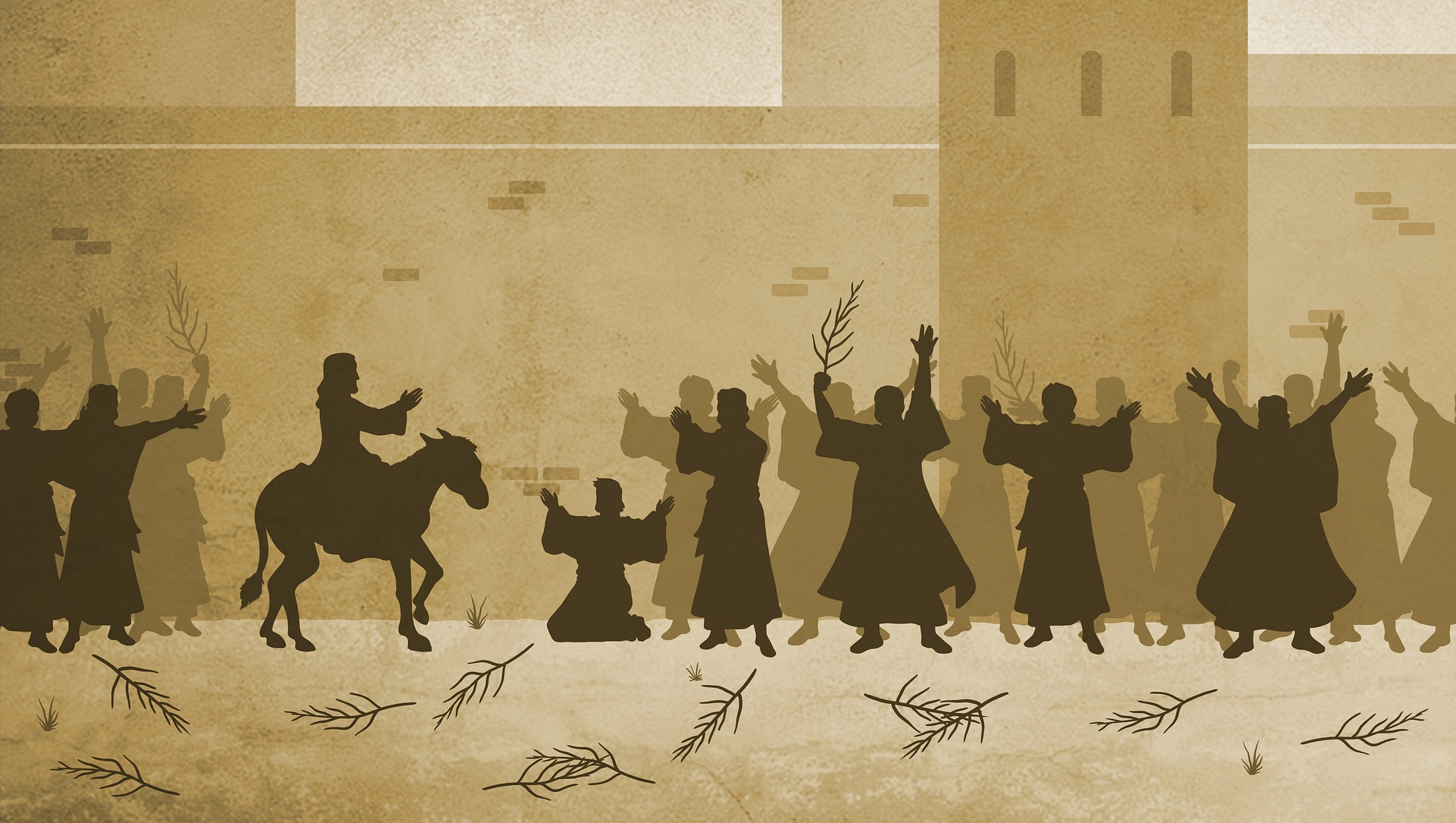
Today’s reading begins with Matthew’s version of what we know as Palm Sunday. Jesus’ triumphal entry is highlighted by praise and adoration from the crowd and from his disciples. There is a buzz in the city. Jesus rides this wave into the temple, where he overturns tables and chairs, throwing out those who have made “God’s house of prayer” into a “hideout for crooks.” He then heals the blind and lame who come into the temple – likely for the first time since becoming blind or lame. Children run around the temple shouting praises. The religious leaders are deeply offended by all of this.

Returning to the city the next morning, Jesus curses a fruitless fig tree. The disciples are amazed at his power. He says to them, “I assure you that if you have faith and don’t doubt… You will even say to this mountain, ‘Be lifted up and thrown into the lake.’ And it will happen.” Build your faith on me, he says, and be amazed at what God will do. As Jesus enters the temple again we see the opposite of this. The leaders question Jesus’ authority. His response begins with a question: Where did John the Baptist get his authority? There is no right answer for the religious leaders. So Jesus tells two parables to reveal their lack of faith and to condemn their fruitless ministry.

In the first parable the religious leaders know it is the first son who does the father’s will. He was obedient. Jesus then tells these leaders that tax collectors and prostitutes are entering the kingdom ahead of them. They heard and believed John, changing hearts and lives. Even this fruit didn’t convince the religious leaders to change. In the second parable tenants mistreat and even kill some of the servants sent to collect fruit. They then kill the son who is sent. The religious leaders tell Jesus that the owner will “totally destroy” these wicked tenants. Jesus then quotes Psalms, claiming to be the stone that the builders rejected. But he tells the leaders that this stone will become the cornerstone, the foundation of the new, coming kingdom.

Prayer: Lord God, you call us to shout “Hosanna!” with our voices and with our actions – not one day a year but every day. When things get in the way of us doing this, clear our lives like Jesus cleared the temple. Build up in us a faith without doubts, a faith that stands firmly on the cornerstone, on Jesus Christ. Amen.


Leave a comment

Faith, Love, Compassion

Reading: Matthew 14-15

Matthew 15:6-7 – “You do away with God’s Law for the sake of the rules that have been handed down to you. Hypocrites!”

Photo credit: Nathan Lemon

Today’s two chapters cover a wide variety of topics – abuse of power, feeding and healing, doubt and fear, great faith. In some stories, these topics intertwine. Chapter 14 begins with the death of John the Baptist. Abusing his power is nothing new for Herod. Here it costs John his life. At his birthday party, Herod promises “anything” to his daughter-in-law. She asks for John’s head. Jesus learns of this, is grieved, and withdraws to a “deserted place” by himself.

The crowds find Jesus and bring the sick to him. With compassion he heals them. Late in the day, the disciples urge Jesus to send them away to buy food. His response: “You give them something.” The impossible becomes reality as 5,000 men plus women and children eat their fill from 5 fish and 2 loaves. In the end each disciple holds a basket full of leftovers. Later, in chapter 15, Jesus feeds a crowd of 4,000 men plus women and children.

Jesus dismisses the crowd, sends the disciples on across the lake, and goes up the mountain to pray. In the early morning he comes to them, walking on the water during a storm. Here is where Peter walks in the water – until his fears and doubts overcome his faith. Jesus rescues him. Later it is a Canaanite woman, another outsider, who shows great faith, persevering until Jesus heals her daughter.

At the start of chapter 15 there is an encounter between Jesus and the religious leaders. Being “clean” is the core issue. Jesus says, “You do away with God’s Law for the sake of the rules that have been handed down to you. Hypocrites!” His example: man’s rule (giving money to the temple) has overridden God’s Law (honor father and mother.) This too is an abuse of power. Getting to the core issue, Jesus tells the crowd and then the disciples that it is what comes out of the mouth (and therefore out of the heart) that makes one unclean. When one allows evil thoughts, adultery, insults… to form in the heart and then to come out of the mouth, then one becomes unclean. May it not be so.

Prayer: Lord God, like today’s reading, life brings a variety of challenges as we seek to walk faithfully with you. Faith, love, compassion – may these be our guides as we strive to love you and to love neighbor in all the ways we can, in all the times we can. Amen.


Leave a comment

Happy Are…

Reading: Matthew 13

Matthew 13:16 – “Happy are your eyes because they see. Happy are your ears because they hear.”

Today’s reading holds seven parables all aimed at showing how God is at work in our world and in our lives. In these teachings, Matthew shows that God is engaged in daily life and desires to be in connection with us. In the first parable a farmer scatters seed. In a day when every seed mattered, “scatter” would draw people’s attention. Most seeds do not bear fruit. The many cares of this world are too much. The seed that does fall on good soil produces a great crop. Hearts that receive and nurture God’s word leads others to do the same, creating more disciples.

Matthew connects to Isaiah, using his words as a means to explain why many do not understand the parables. They have become “calloused” and refuse to “change their hearts and lives.” This was the invitation given by John the Baptist and by Jesus. It continues to be given each time the world is read or proclaimed.

Each of the remaining parables begins with the phrase, “The kingdom of heaven is like…” It is like a field with good plants and weeds, like a net with good and bad fish. One day the angels will sort out and burn the bad. The good will be saved. It is like a mustard seed or some yeast – small but powerful, able to spread and grow into something large. It is like a hidden treasure or a pearl of great worth. Once found, a person must be willing to sell all else, investing everything they have into their faith.

As Jesus teaches in parables he asks his disciples if they understand. They do. In response, Jesus says, “Happy are your eyes because they see. Happy are your ears because they hear.” May our eyes and ears be happy as well.

Prayer: Lord God, thank you for opening our eyes and ears to your word. We don’t always get it 100% but as we keep at it, reading, studying, seeking to understand, your Spirit works in us, giving us more insight and understanding. Each time we encounter that word, the connection grows stronger, deeper. Thank you for your continuing work in us. Amen.


Leave a comment

Jesus’ Power

Reading: Matthew 7-8

Matthew 7:14 – “The gate that leads to life is narrow and the road difficult, so few people find it.”

Jesus first addresses our tendency to be judgemental as we begin chapter 7. He asks why we’re concerned with a splinter in our neighbor’s eye when we have a log in our own eye. It is so true. We’ve all been here – again and again and again… His advice? Take care of the log first. Then maybe, just maybe, you can help your neighbor with that splinter.

From this great challenge, Jesus next brings encouragement. Ask, search, and knock and you will receive, find, and have the door opened. God wants to give good things. In the same way, treat others as you wish to be treated. Simple words to hear and comprehend, challenging to live out daily. That’s why Jesus next says, “The gate that leads to life is narrow and the road difficult, so few people find it.” By contrast, the gate to destruction is broad and the road is wide. Many walk this path.

Jesus then teaches about false prophets and false faith. Both are evident by their bad fruit or by their lack of fruit. “Fruit” is the good done in the world. This kind of fruitful faith comes from our foundation. Are we building faith on the bedrock of Jesus Christ or on the shifting sands of the world? On the rock, our faith will not only produce good fruit, it will also withstand the storms of life.

Chapter 8 begins with many healings. Central is the healing of the centurion’s servant. He knows that he is unworthy of having Jesus in his home. He also knows authority when he sees it. He knows Jesus has it. Jesus can say a word and healing will come. Jesus declares he hasn’t seen faith like this in all of Israel. A few are drawn to follow Jesus after the healings, but they have too many worldly concerns to really be a disciple.

The chapter closes with two different reactions to Jesus’ power. After calming the storm (and admonishing the disciples for their weak faith), people are amazed at Jesus’ power. After freeing two men of their demon possession, the townspeople are afraid of his power. They plead with him to leave. Today people have the same reactions when they brush up against Jesus’ power.

Prayer: Lord God, you invite us to love well – ourselves and others. You invite us to bring your healing touch – to ourselves and to others. You offer peace in the storms and relief from worry, doubt, fear – for ourselves and for others. May we know your power today, O God – for ourselves and for others. Amen.


Leave a comment

Trust, Faith… Each Day

Reading: Matthew 6

Matthew 6:24 – “No one can serve two masters.”

Photo credit: Wesual Click

As Jesus continues the Sermon on the Mount he addresses showy religion, prayer, and fasting. To give to the poor or to pray or to fast in ways to be noticed by others – then that recognition will be our only reward. Jesus advises us to do these things in private or in secret. Then our reward will come from God. When we pray, Jesus cautions against “a flow of empty words.” He gives us a simple and humble prayer, one grounded in loving God and neighbor. We know this prayer as “The Lord’s Prayer.”

Jesus then addresses our tendency towards our “treasures.” Today he’d caution us against collecting homes, cars, the latest gadgets, bigger bank accounts… Instead he encourages us to collect treasures in heaven. Some examples of how to do this were given in verses 1-18. In verses 22-24 Jesus connects this struggle into the common Old Testament, Jewish understanding about good/evil, light/dark. In first century Palestine the eye was seen as the window or door to the heart (or soul for us). Jesus clearly believes the best choice is light. He then states, “No one can serve two masters.” God and wealth is the example Jesus gives. While probably the biggest struggle for most of us, there are many other things that we can prioritize over our relationship with God.

Chapter 6 closes with perhaps one of our greatest adversaries in our battle to trust God: worry. We can worry about so many things, big and small. Jesus points to the birds and lilies – examples of parts of creation that God cares wonderfully for. He points out that we are worth much more than these to God. We are told to “desire first and foremost God’s kingdom.” Keep God #1 in your life, Jesus says, and “all these things” will be given to you by God as well. Jesus concludes, “Stop worrying about tomorrow… Each day has enough trouble of its own.” Trust God each day, believing that our “daily bread” will come from our God who loves us.

Prayer: Lord God, you call us to a simple faith, to a day by day walk with you. To focus on the day, to live each moment, we have a chance to notice the opportunities and ways you call us to love completely. To stay in the moment, it focuses our heart on you and in your presence in our lives each day. Help us to live a simple and honest faith today, O God. Amen.


Leave a comment

Complete Love

Reading: Matthew 5

Matthew 5:48 – “Just as your heavenly Father is complete in showing love to everyone, so also you must be complete.”

Chapter 5 begins with nine statements known as the Beatitudes. In these phrases Jesus describes those who are happy or blessed. The hopeless become happy because they find hope in God’s kingdom. The humble become happy because they know God’s presence. The disciples who are insulted or harassed because of their faith become happy when they realize their “great reward” in heaven. All nine statements frame a happy or blessed life in the context of faith and trust in God and in God’s plans for one’s life.

Jesus then reminds his disciples that they are to be salt and light. These things are no good if hidden or lost. They are to be lived out, to be shared with the world. In doing so, others will see the good we do and will praise God.

The balance of chapter 5 deals with the Law. Jesus begins in verse 17 by stating that he came not to do away with the Law but to fulfill it. To keep and teach these commands, Jesus says, will lead to being called great in the kingdom of heaven. Each teaching is framed in “You have heard it said… But I say to you…” language. In each case Jesus goes deeper or beyond the minimal following of the letter of the Law. He is getting at the matters of our hearts.

Don’t murder, they say. Jesus says don’t get angry and don’t use harsh words. Don’t commit adultery, they say. Jesus says don’t even look lustfully at another. An eye for an eye, they say. Jesus says, no, give them what they want or demand plus give some more. Love your neighbor, they say. Jesus says, yes, but love your enemies too. And pray for them! Verse 48 serves as a summary verse: “Just as your heavenly Father is complete in showing love to everyone, so also you must be complete.” May it ever be so.

Prayer: Lord God, with you we are truly happy and blessed – not because all things are rosy and good but because you are with us in all things. This too is our model. You call us to flavor the world with love, mercy, kindness. You call us to bring light into dark valleys and shadowy places. You call us to an exemplary walk, one that causes others to take notice of our unconditional love for all people. Lead and guide us to live completely and fully, just as you love us. Amen.


Leave a comment

“I Do Not Change”

Reading: Malachi 3-4

Malachi 3:10b – “See whether I do not open all the windows of the heavens for you and empty out a blessing until there is enough.”

Today we close out the Old Testament as we read Malachi 3 and 4. Some of the words today point to the Messiah. Chapter 3 begins with a prophecy about a messenger that will come to “clear the path.” Then suddenly the Lord will be in the temple. How Simeon and Anna rejoice on that day! This covenant Messiah will be like a refiner and cleaner. The priests will be purified. He will testify against the sorcerers, adulterers, cheaters, oppressors. He will call out those who ignore the foreigners in their midst and those who do not really revere God. The section closes with this declaration: “I am the Lord, and I do not change.” Jesus will be God in the flesh – no more, no less.

Beginning in verse 7 we return to the disputes between God and Israel. God invites them to return to God. They ask, “How?” God tells them step 1 is to return to giving the full tithe. This is a step of faith and trust, as it is for us today. God challenges them (and us), saying, “Put me to the test.” Step up and see what happens. Continuing, God proclaims, “See whether I do not open all the windows of the heavens for you and empty out a blessing until there is enough.”

The next dispute centered on harsh things being said about God. They think serving God is useless. As evidence they point to the evil people who are prospering. They “test God and escape.” Instead of responding directly, God turns to the righteous few. They revere God. They drew close to God. They will be God’s “special possession” when God distinguishes between the righteous and the wicked. The arrogant and evil will burn like straw on that day. The “sun of righteousness” will rise on the faithful, bringing healing in its wings.

The book ends with God declaring, “Look, I am sending Elijah.” The second Elijah will come to clear the path before the “great and terrifying day of the Lord.” God invites Israel to turn the hearts of parents and children to one another. This will avoid the curse and will prepare them for the refining arrival of the Lord. We dive into that tomorrow as we begin our journey through the New Testament.

Prayer: Lord God, you do not change. You are the same yesterday, today, and forever. Your heart for the least flowed throughout the Hebrew scriptures. Sometimes this was for your people. And sometimes it was for “the other.” In Jesus, your heart for the least and the other was revealed as he loved such as these. You invite us to be your heart, to be Jesus’ heart, to love the least. May it be so. Amen.


Leave a comment

A Good Plan

Reading: Haggai 1-2

Haggai 2:4 – “Be strong, all you people of the land… Work, for I am with you.”

Photo credit: Robert Linder

As we read Haggai’s words today we move past exile and back to Jerusalem. The small remnant that returned has built homes for themselves. But the temple still lies in ruins. Haggai is sent by God to encourage the people in this next step. At the start of the book, we read that Zerubbabel, Joshua, and the people do not think it’s time to start rebuilding the temple. God questions this. God says there is a reason they sow much and eat little. The drought and the lack of abundance are God’s doing. God’s house lies in ruins. The people hear Haggai’s words and they respond in faith, getting to work.

A month passes and God’s word comes to Haggai. He asks if anyone remembers the first temple. From Ezra 3 we recall that some did remember. They wept when they recalled the former temple’s glory. Haggai encourages them to be strong, to trust that God is with them, saying, “Be strong, all you people of the land… Work, for I am with you.” God then promises to shake the earth, leading nations to bring their wealth to the temple, making it more glorious than the first temple.

Fourteen months in, God’s word comes again. In the first message, Haggai asks questions about being clean and unclean. The priests know the right answers. The faith knowledge is there. God declares that the nation is unclean. The priests and the people have work to do. When God struck them before – providing just enough to survive – they didn’t return to God. But now the people have worked hard and the foundation is complete. God will now begin to bless them.

Haggai’s second word focuses on Zerubbabel directly and on Israel indirectly. God will take down the other nations, securing Israel. On that day, God will appoint Zerubbabel to reign. Once again, one from David’s line will rule over Israel. God has a plan and it is good. Thanks be to God.

Prayer: Lord God, just as you encouraged your people to work on your house, you continue to encourage us to work on building your kingdom here on earth. Just as their obedience was a sign of their holiness and commitment, may our humble acts of service bear witness to our faith and to our love for you and for our neighbors. Use us to reveal your glory to the world. Amen.


Leave a comment

Required… Good…

Reading: Micah 5-7

Micah 6:14 – “You devour, but you aren’t satisfied; a gnawing emptiness is within you.”

Today’s reading begins with a messianic prophecy: “As for you, Bethlehem… one who is to be a ruler in Israel on my behalf will come out of you.” This ruler will “stand and shepherd his flock” – all in the strength of the Lord. Micah declares, “He will become great throughout the earth.” But first, Assyria will invade and then they too will be defeated. The few survivors, the remnant, will be “amid many peoples.”

Micah then expresses God’s judgment against Israel’s neighbors. God will “exact vengeance” on those who don’t obey. In chapter 6 God brings a “lawsuit” against Israel. God first invites them to remember all that God has done for Israel. Then a question is asked: What does God require? Is it the sacrifice of 1,000 rams or the giving of torrents of oil? Is it sacrificing a first child for one’s sins? No, Micah says, God has told you what is required and good: “to do justice, embrace faithful love, and walk humbly with your God.” Here he summarizes the whole Torah in these three simple yet difficult actions.

Israel is far from this standard. Wicked scales and bags of false weights betray their greed. Violence and dishonesty shows their true hearts. Verse 14 describes the state of their souls: “You devour, but you aren’t satisfied; a gnawing emptiness is within you.” This all sounds much like our day, where many chase after idols and pursue more and more and more.

Micah feels doomed and alone. Yet he declares that he will keep watch, that he will wait for God’s salvation. For Israel there is a price to be paid, but there is also hope. God will show Israel “wonderful things.” God will pardon their iniquity and show “faithful love.” God will have compassion on them. We, like Micah did, await the fulfilment of these words with hope and with faith. And as we wait, may we do justice, embrace faithful love, and walk humbly with the Lord our God.

Prayer: Lord God, we know well the truth of exile – the result of our attempts to satisfy our own hungers leave us far from you. We also know well the price of these decisions – a growing emptiness in our souls. You long to redeem us, to forgive our sins, to restore our relationship with you and with one another. So guide us into a humble walk, to a place of surrender – both of our sins and of our hearts. Shepherd us, your people. Amen.


Leave a comment

To the Test

Reading: Daniel 1-3

Daniel 2:47 – “No doubt about it: your God is God of gods, Lord of kings, and a revealer of mysteries.”

Photo credit: Nadine Shaabana

As the book of Daniel begins, Babylon’s king attacks Jerusalem. Although the city does not fall, God hands over Judah’s king. In addition, they took into exile some men who were good-looking, skilled, intelligent, and capable. These men were to be trained as officials in Babylon’s government. Among these were Daniel, Hananiah, Mishael, and Azariah. The last three will be known as Shadrach, Meshach, and Abednego. Daniel will also receive a Babylonian name, but he will be known as “Daniel” throughout the book.

The first test comes around food. In training they are to eat the king’s food and to drink his wine. This would defile them. Daniel works out a test period, eating and drinking only vegetables and water. In the end they are healthier. God also blessed them with knowledge, wisdom, and understanding. When have you been in a position to eat or drink something that would “defile” you? What insights or strength do you gain from their example?

The second test comes around a dream. In a rage, the king declares that the sages must not only interpret his dream, but they must also tell him the dream. No one can do the impossible. All sages are to be executed, including the four. Daniel secures a brief respite and gathers his friends. They seek help from God. God responds to their trust and faith, allowing Daniel to tell and interpret the dream, doing the impossible. The king is very impressed, declaring, “No doubt about it: your God is God of gods, Lord of kings, and a revealer of mysteries.” When has your trust or faith in God helped another to see God’s power and might at work?

The third test comes around idolatry. King Nebuchadnezzar builds a 90 foot statue and orders everybody to worship it. He has forgotten what he just said about God. Shadrach, Meshach, and Abednego refuse – initially and then when before the king. They boldly declare their allegiance to God alone. Thrown into the fiery furnace, they not only survive but emerge totally unaffected by the flames. This time the king offers words of praise to God. God is working on his heart. How can you stand apart from or even against the things this world idolizes, leading others to praise God?

Prayer: Lord God, our faith is often put to the test. We must decide daily if we will choose to honor you, to trust you, to stand up to be counted as yours. Give us the strength to face these challenges that call us to risk for you. Help us to walk in your will and according to your ways, bringing you praise, honor, and glory. Amen.