pastorjohnb

Thoughts and musings on faith and our mighty God!


Leave a comment

Radical and Unconditional

Readings: Isaiah 56:1-8 and Matthew 21:12-16

Isaiah 56:6-7 – “Everyone who keeps the Sabbath… who hold fast to my covenant: I will bring them to my holy mountain, and bring them joy in my house of prayer.”

Photo credit: Jon Tyson

Beginning with Isaiah 56 we feel the connection that God desires to have with all people who act justly and do what is right. To those who keep the Sabbath and honor the covenant, God’s salvation is “coming soon.” God’s prophet includes two groups that are normally excluded from the temple: immigrants and eunuchs. In verses 6 and 7 we read, “Everyone who keeps the Sabbath… who hold fast to my covenant: I will bring them to my holy mountain, and bring them joy in my house of prayer.” In New Testament language we would say there is no Jew or Gentile, no slave or free, no rich or poor… All people – all – who are devoted to God’s ways are welcome in God’s “house of prayer,” the temple. These were radical words to the closed-circle Jews of Isaiah’s day.

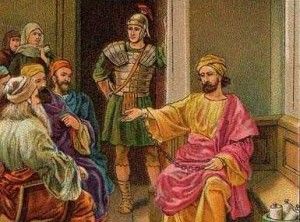
Turning to Matthew 21 we see another prophet doing and saying radical things. Entering God’s house, Jesus forces out the people changing money into temple coins and the folks selling animals for sacrifice. Quoting from our Isaiah 56 passage and Jeremiah 7:11, Jesus denounces these profiteering practices. Cleared of these “crooks,” the blind, the lame, and the children enter the temple. Jesus makes space for these normally excluded groups, mirroring the spirit of Isaiah 56. He heals the blind and the lame and rejoices over the children. The religious leaders are angry about all of this. Their closed circle has been broken wide open by the radical and unconditional love of God present in Jesus. May this breaking open of the circle and of our hearts also be our regular practice as we seek to follow Jesus’ example.

Prayer: Lord God, it is a beautiful thing when you reclaim and include those often excluded and unwelcome by the religious of the world. You create each and every one of us in your image. You weave each of us together in the womb with intention and purpose. From our first breath you long to walk in relationship with each of us. Lord, as you walk with us, fill us with your radical and unconditional love. Filled with this great love, may our regular habit be to include and welcome all people into your house and into your family. Amen.

Leave a comment

God at Work

Reading: Mark 2:1-12

Mark 2:2 – “So many gathered that there was no longer space, not even near the door.”

Photo credit: Milo Weiler

In Mark 2 we find a story that is not directly about prayer but can speak to us about prayer. We’re early in Mark’s gospel. According to what’s written, Jesus has healed people and is beginning to draw a crowd. Of those who packed out the house in today’s reading, how many do you think prayed on their way there?

The story first focuses in on four people who have brought their paralyzed friend to be seen by Jesus. Surely all five prayed in the way to see Jesus. So great was their perseverance, so strong their love for their friend, they tore open the roof to get their friend before Jesus. And Jesus’ initial words? “Child, your sins are forgiven.” Likely not what these five were praying for. Great for the man, but…

Jesus then perceives the thoughts of the legal experts. He calls them out. What prayers do you think they quickly muttered? They certainly were not praying to be put in their place by Jesus. Yet they are. Their thoughts opened the door for God to work good in many ways. It is at this point that the man is healed, answering the prayers of the group of five. In this moment, the crowd is amazed and praises God.

While many prayers went unanswered this day, God was still very much at work in the lives of all of these people. We hold hope for the legal experts. Maybe this humbling experience led to growth in their faith too. God’s desire was and is to draw all people to a saving knowledge of God. So may we continue to pray faithfully, trusting in God to work good in our lives and in our world.

Prayer: Lord God, thank you for the reminder to ever seek your presence, to linger in that space, expecting good from you. Help us to ever be open to what you are doing, especially when it is beyond our limited vision or understanding. Draw us closer to you, moment by moment, encounter by encounter. Amen.


Leave a comment

Heed the Teachings

Reading: Luke 16:19-31

Luke 16:31 – “If they didn’t listen to Moses and the Prophets, then neither will they be persuaded if someone rises from the dead.”

Our parable for today comes just after a clash between Jesus and the Pharisees. In verse 14 this group of religious leaders is identified as “money-lovers.” Jesus told them that their worldly wealth is “deeply offensive to God.” After reminding them that they have Moses and the Prophets and now the good news, Jesus launches into today’s parable. It is clear who the rich man really is.

There is a rich man, finely dressed, who feasts “luxuriously” every day. Outside his gate is a poor man, Lazarus, who longs for crumbs from the rich man’s table. Lazarus dies and is carried to Abraham’s side in heaven. The rich man dies and now suffers torment in the flames. Their places in life are reversed in the afterlife. The rich man now longs – for a drop of water to cool his tongue. But it is not possible, says Abraham. A great crevasse separates heaven from hell.

The torment of hell is so great that the rich man finally thinks of someone other than self. He begs Abraham to send Lazarus to warn his brothers. Apparently they are as self-centered as he was in life. They too have ignored the call of the great commands and more. Abraham reminds the rich man that his brothers have the Law and Prophets. Alas, he knows they’ve ignored them just as he did. The rich man again asks that Lazarus be sent. Then they’ll change hearts and lives. No, Abraham says, “If they didn’t listen to Moses and the Prophets, then neither will they be persuaded if someone rises from the dead.” How true.

May we heed the teachings in the Bible and the example set by Jesus, he who rose from the dead.

Prayer: Lord God, wealth is not all that can drag us away from loving you and loving neighbor. We can love power or status or titles or beauty or… more than you, which, in turn, means more than others. Lord, remind us again and again of the danger of placing anything above you. The harm, the cost, the outcome – all detrimental to our relationships with you and with those around us. Heal our brokenness. Break our selfishness. Lead us to find wholeness and contentment in you alone. Amen.


Leave a comment

People of Grace and Love

Reading: Philemon

Philemon 1:15 – “Maybe… Onesimus was separated from you for a while so that you might have him back forever.”

Today we turn to Paul’s letter to Philemon. He is appealing to Philemon to receive Onesimus back not as a slave but as a brother in Christ. Paul walks the fine line between coercion and appeal, at least twice crossing this line. Paul writes this letter not just to Philemon but also to the church that Philemon is a part of. What Paul asks of Philemon extends to the whole community of faith.

As I read this story today my mind went to the parable of the prodigal son. It also reminds me of estrangements that I’ve heard of in families I know well. We’re familiar with and maybe even have been involved in stories of separation, in experiences where one party somehow hurt or offended the other, making reconciliation difficult. In the story of the prodigal son we see how grace and love overcome the harm done to welcome the younger son back into the family. We are left hanging concerning the younger son’s estrangement from the older brother. We hope that they are reconciled. In situations we’ve experienced (or are still experiencing), love and grace are the keys to reconciliation.

Just as the younger brother and perhaps that family member or friend changed for the better to open the door for reconciling, so too has Onesimus changed. As a brother in Christ he has become useful to Paul. To Philemon he writes, “Maybe… Onesimus was separated from you for a while so that you might have him back forever.” Maybe the younger son had to experience the bottom of the pit to change. Maybe that estranged family member or friend had to experience something really hard to be changed. When change occurs, though, the ball is in our court. We hope that Philemon received Onesimus back as a brother in Christ. May we too be people of grace and love.

Prayer: Lord God, reconciliation is not easy. At times we are deeply wronged. Perhaps we’ve also suffered financially or physically. When the hurt and pain are deep, Lord, may your love and grace be deeper still. Through these, heal the hurt and pain in our hearts. Lead us then to be as you are, generous and abundant in our love and grace. Amen.


Leave a comment

Unhindered

Reading: Acts 27 and 28

Acts 28:31 – “Unhindered and with complete confidence, he [Paul] continued to preach God’s kingdom and to teach about the Lord Jesus Christ.”

Today we conclude the book of Acts. Paul sails to Rome and then settles into two years of evangelism there. The journey to Rome begins well. Paul is treated kindly by Julius, the centurion in charge. Soon the going becomes difficult and slow. The voyage becomes potentially dangerous because it is now fall. Against Paul’s advice, they sail on. A violent storm begins. The ship is wrapped in cables as they drift along. Cargo then the ship’s gear gets tossed overboard. All hope faded.

An angel comes to Paul and assures him that he will get to Rome and that all on board have been “graciously given to you.” Nearing land, the sailors try to abandon ship. Following Paul’s advice, Julius stops them. Paul encourages all to eat and all 263 eat. The next day they see and make for a beach. The ship hits a sandbar and begins to break apart. Because of Paul, Julius intervenes and saves the prisoners. All reach shore safely.

On Malta now, they are received kindly. Paul is unaffected by a bite from a poisonous snake. He heals Publius’ father, then all who were sick on the island. After three months they set sail. Arriving in Rome, Paul is welcomed and encouraged by the brothers and sisters there. He then gathers the Jewish leaders. After explaining why he is in Rome, Paul teaches and preaches Jesus from the Law and Prophets. Some believe and others refuse to believe. Paul declares that salvation will come to the Gentiles because they will listen.

Paul lives in Rome, under house arrest, for two years. He welcomes all who visit. Acts closes with this: “Unhindered and with complete confidence, he [Paul] continued to preach God’s kingdom and to teach about the Lord Jesus Christ.” May it be so for you and for me too!

Prayer: Lord God, maybe be unhindered, undignified, and unafraid as we proclaim the good news of Jesus Christ. May we teach and preach in word and deed so that some may be saved. Amen.


Leave a comment

Why Jesus Came

Reading: Acts 13:1-15:21

Acts 15:10 – “Why then are you now challenging God by placing a burden on the shoulders of these disciples that neither we or our ancestors could bear?”

Photo credit: Frank McKenna

Beginning in chapter 13 we see the spread of the church past the first Gentile city out into the Gentile world. Paul, Barnabas, and John Mark are sent out from Antioch as missionaries. There is great success overall but the growth of the church is not without persecution and controversy.

The missionaries begin in Cyprus, proclaiming the word of God. Paul confronts a false prophet, demonstrating the power of the Holy Spirit. Moving on to Pisidian Antioch, John Mark deserts Paul and Barnabas, returning to Jerusalem. Paul accepts the invitation to preach on the Sabbath. His powerful sermon on Jewish history and Jesus’ ministry yields an invitation to preach again. A large crowd gathers on the next Sabbath, stirring up jealousy amongst the Jews. Their rejection of the message leads Paul and Barnabas to focus on the Gentiles. Moving on to Iconium, Luke reports that “the same thing happened” – some believe but others are opposed to their message.

Paul and Barnabas move on to Lystra. Here Paul heals a man who believed that he could be healed. The locals mistake Paul and Barnabas for Greek gods. They head off the sacrifice of bulls to them, but Jews arrive from Antioch and Iconium, stirring up the crowd. Paul is stoned and left for dead. He gets up and they travel to Derbe the next day. After making disciples there, Paul and Barnabas work their way back to Antioch. Along the way they encourage the believers and they appoint elders to lead these new churches.

Jews from Jerusalem arrive in Antioch and stir up some tension. They tell the Gentile believers that they must first be circumcised in order to be saved. The idea of “you’ve got to be just like us” is not an invention of the modern church. Paul, Barnabas, Peter, and James all argue against placing Jewish requirements on Gentile believers. Peter asks the pertinent question: “Why then are you now challenging God by placing a burden on the shoulders of these disciples that neither we or our ancestors could bear?” No one has been able to keep the Law. This is why Jesus came – to do for us what we could not do on our own. By his life, he gave us what we cannot earn and what we do not deserve: the forgiveness of sins that leads to life eternal. Thanks be to God.

Prayer: Lord God, how wide and deep is your love. It flows from your heart, out in all directions. It does not avoid certain places or people. It carries the power to wash away sins, barriers, and presumptions. May your love wash over us, filling us to overflowing with your love. Amen.


Leave a comment

Ripe for Harvest

Reading: John 4

John 4:35 – “Open your eyes and notice that the fields are already ripe for the harvest.”

Photo credit: Paz Arando

As Jesus travels from Judea to Galilee, he passes through Samaria. Stopping at a well to rest, he encounters a Samaritan woman. Jesus shocks her by asking for a drink. Eventually he offers her “living water” – a water that satisfies and that “bubbles up to eternal life.” She desires this water. Jesus reveals that he is a prophet and then as the Messiah. The woman goes back to town and says to all, “Come and see… Could this man be the Christ?” Many do come and see and others encounter Jesus as he stays and teaches for two days. Many believe that Jesus “is truly the Savior of the world.”

In the moments when the woman is in town, Jesus tells the disciples that he is “fed by doing the will of the one who sent me.” Turning to their call to be sent, he invites them to “Open your eyes and notice that the fields are already ripe for the harvest.” Jesus encourages them to “gather fruit for eternal life.” The disciples will see and experience this at the well and in the town of Sychar.

Chapter 4 closes with Jesus traveling to Cana. Along the way he meets a man who asks Jesus to heal his dying son. In faith this man has sought out Jesus. Jesus says, “Go home. Your son lives.” On the way back home the man meets his servants, who tell him the son was healed at the very moment Jesus spoke the words. The man and his entire household come to believe in Jesus.

In each encounter people experience Jesus’ power to change hearts and lives. Many come to believe. Jesus still has the power to change hearts and lives. May this power be revealed in and through you and me. With eyes wide open, may we faithfully enter the harvest field.

Prayer: Lord God, with a word you change hearts and lives. Through the Spirit, plant your words in our hearts. Place your words of life upon our tongues. Use us each day to draw others to you, changer of hearts and lives. Amen.


Leave a comment

Outward and Upward

Reading: Luke 17-18

Luke 18:14b – “All who lift themselves up will be brought low, and those who make themselves low will be lifted up.”

Our text today begins with words of accountability. We are to help one another in our walk of faith, warning others when they sin. We are also to forgive others when they sincerely repent. Recognizing the challenge in living out these words, the disciples say to Jesus, “Increase our faith!”

As Jesus travels along the border between Samaria and Galilee he encounters ten lepers. They seek and receive healing. Only one comes to give thanks. Jesus sends the Samaritan on his way, healed by faith. At the end of our reading a persistent blind man is healed because of his faith. In between a widow’s persistence is rewarded, much as our prayers for justice will be answered by God. She received justice from an unjust judge. Imagine how our prayers for justice will be answered by our just God.

The Pharisees ask Jesus when God’s kingdom is coming. He first tells them that it is already among them. He then speaks of the time when he’ll come again – because they’re missing the present. It will be like it was in the days of Noah and of Lot. People will be eating, drinking, living life… Then Jesus will return like a flash of lightning, swift and sure as the flood came or as the fire and sulfur rained down. In that moment, “one will be taken and the other left.” We must remain faithful and ready for this day.

Two stories illustrate what being faithful and ready looks like. It begins with having a selfless and humble attitude. Like the tax collector we must pray again and again, “God, have mercy on me, a sinner.” And unlike the ruler, we must keep our faith as the top priority, forsaking wealth, power, status… We are reminded, “All who lift themselves up will be brought low, and those who make themselves low will be lifted up.” May it be so for you and for me.

Prayer: Lord God, help us to ever keep our focus and commitment outward and upward. We need your help because we are naturally selfish. Yet we know that all things are possible with you. Keep us persistent in our faith, generous with our blessings, and humble in our walk. Amen.


Leave a comment

Are we? Do we? Will we?

Reading: Luke 10-11:36

Luke 10:36 – “What do you think? Which one of these three was a neighbor to the man who encountered thieves?”

Jesus sends out the 72 because the harvest is big and the workers are few. They are to heal and cast out demons. They are to share their blessing with people of peace. They are to trust in God to provide. Because they bring the kingdom of God near to people’s lives, they can rejoice: their names are written in heaven. We can be like the 72. Are we?

Next Jesus speaks of those places that have rejected the kingdom of God. It will be better for Tyre and Sidon and for Nineveh – the first would’ve listened and Nineveh did change hearts and lives. Jonah stood as a sign for Nineveh and now one stands in Israel’s midst who is greater than Jonah. Christ stands in our midst yet today. Which city will we be like?

Jesus is then tested by a legal expert. He asks what he must do to gain eternal life. When asked what he thinks, the expert offers the two great commandments. Pushing the issue, he asks, “Who is my neighbor?” Well, a man going down to Jericho was attacked and left for dead. A priest and then a Levite see the man and pass him by. A Samaritan, moved by compassion, cares for the man – extravagantly. Jesus asks the expert, “What do you think? Which one of these three was a neighbor to the man who encountered thieves?” Yes, the one who showed mercy is the neighbor. The expert is told: “Go and do likewise.” We are told the same thing, again and again in the Gospels. Do we?

Choosing faith is the focus of the teaching about Martha and Mary. Being persistent is the focus of Jesus’ teachings about prayer. Jesus tells us, “Ask… receive. Seek… find. Knock… the door will be opened.” Our good, good father God wants to and will give the Holy Spirit to those of us who ask, seek, and knock. But will we?

Prayer: Lord God, we read today of the call to trust, to witness, to change our hearts and lives, to be a good neighbor, to be persistent, and to go to you expecting a good answer from a good, good God. We see the results of lives lived in these ways. Our question today, God, is if we choose this way of life. Today, Lord, encourage and empower us to “go and do likewise,” loving you and neighbor extravagantly with all of our being. Amen.


Leave a comment

Great Love and Compassion

Reading: Luke 7-8:39

Luke 7:50 – “Your faith has saved you. Go in peace.”

Luke 7 begins with a story about a man with great faith. The centurion first asks Jesus to come heal his valued servant. He then realizes that he is unworthy to have Jesus come to him. So he sends words, recognizing Jesus’ authority to simply speak a word to heal the servant. It is so.

Jesus next encounters a funeral procession. A widow’s only son has died. With great compassion Jesus resuscitates the son, providing for the widow.

From prison John the Baptist sends some disciples to ask Jesus, “Are you the one?” Jesus heals many people right then and tells the disciples to tell John what they saw. This is a physical demonstration that fulfills Isaiah 35 and 61. It is Jesus’ “yes” to John’s question. He then laments this current generation’s lack of faith.

Jesus is then invited to dinner at a Pharisee’s home. While there, a sinful woman comes and washes Jesus’ feet with her tears and hair, kissing them and then anointing them with oil. In his thoughts, the Pharisee is condescending of both Jesus and the woman. This leader skipped all the normal hospitality customs. Jesus says to the woman, “Your faith has saved you. Go in peace.” Her revelation of great love leads to her salvation.

After naming some of the women who support Jesus’ ministry, he tells the parable of the soils. It is about our receptivity to Jesus’ words and example. These women are the good soil. Jesus then encourages us to let our light shine. It is to shine on all soil/soul types.

Jesus then reveals his power over wind and sea before encountering “Legion” – a man long possessed by many demons. The demons recognize Jesus and negotiate release into the pigs. The man is totally healed. The townfolk are awed but are also afraid of Jesus’ unexplainable power. They ask him to leave. The man is told to stay behind, to witness to Jesus’ power. He goes home to “tell the story.”

Prayer: Lord God, you continue to have great love and compassion for us. You respond when we call out in faith. And you sometimes come even when we don’t call out. You know what we need and this drives your responses. Thank you. Amen.