pastorjohnb

Thoughts and musings on faith and our mighty God!


Leave a comment

Trustworthy and Good

Reading: Daniel 6:1-10

Daniel 6:5 – “We won’t find any fault in Daniel, unless we can find something to use against him from his religious practices.”

As our reading begins King Darius appoints three gifted men to rule over his kingdom. Daniel is one of the three who are in charge of 120 chief administrators spread throughout the kingdom. Daniel excels, soon riding above the other two. The king is ready to reorganize, making Daniel the one in charge. Jealousy and envy kick in the other two main officers. They want to maintain their power and status. But instead of working harder… they choose to try to take Daniel down. We see this kind of behavior practiced all the time in our world.

As these men begin to plot and scheme, they soon discover a problem. They can’t find any dirt on Daniel. All he does is trustworthy and good. So they turn to the thing that makes him different. They say to one another, “We won’t find any fault in Daniel, unless we can find something to use against him from his religious practices.” It’s not that Daniel’s religion is wrong or illicit or anything else bad. It’s just different. So these two men, along with the 120 administrators, go to the king and trick him into writing a law that makes Daniel’s faith practices illegal. We also see this done today. Someone or a group of someones is different than “us.” Maybe “they” work harder than we want to or maybe “they” don’t believe or live or act like “we” do. So “we” label “them” and try to find ways to be rid of or to oppress or to extradite “them” from our presence.

The law is signed by the king and Daniel knows it. Despite it now being illegal, Daniel goes to his upper room and prays, as he always did. What leads Daniel to choose to honor God over the king’s law? Daniel is trustworthy and good. His priorities match his commitment. God and his faith are the most important things in Daniel’s life. May it be so for you and for me.

Prayer: Lord God, we can do relate to this story – maybe too often from the wrong side. We can be quick to judge and label others, leading to mistreatment, marginalization, or worse. When we are tempted to do these evils, remind us what absolute faith and trust in you looks like. Guide us to keep you on the throne of our hearts, no matter what. Lead us to live lives that are trustworthy and good. Amen.


Leave a comment

God’s Goodness and Faithfulness

Reading: Psalm 77:1-15

Psalm 77:6-7 – “I complain, and my spirit keeps searching: Will my Lord reject me forever? Will he never be pleased again?”

Today’s reading has two distinct portions. In verses 1-10 Asaph, the psalmist, pours our the complaint of a troubled heart. This is all lament. In verses 11-15 the focus shifts to a remembrance of God’s works in the past.

The Psalm begins with a crying out and searching for the Lord. The physical joins the spiritual as hands are outstretched, reaching out for God. Weariness caused by an inability to sleep adds to the lament. In verses 6-7 we read, “I complain, and my spirit keeps searching: Will my Lord reject me forever? Will he never be pleased again?” As he continues, Asaph wonders if God has forgotten the promises made to future generations.

We have all felt what Asaph is feeling. Some of us may be in the midst of trial and suffering right now. We can recall times when the illness just lingered in or when the oppression would not cease. We’ve longed for God to intervene and have wondered where God was as that season or situation drug on and on.

Beginning in verse 11 there is a shift. Asaph begins to recall who and what God has been in the past. He remembers wondrous works and demonstrations of God’s strength. He recalls when God redeemed Israel. Asaph is reminding himself of God’s might. This brings him hope. And he is also inviting God to act in these ways once again. He is reminding God of who God is. This too builds his faith.

In our times of hardship and trial – future or present – may we tune into who and what God is, inviting God to walk with us as we work our way back into God’s presence through prayer and the study of God’s word.

Prayer: Lord God, the times when we feel all alone will surely come. Those seasons are a part of everyone’s life at times. When we find ourselves there, Lord, send the whispers of the Holy Spirit straight to our hearts. Guide us to turn to scripture to remind ourselves of your goodness and faithfulness to all generations. Remind us too of the times you redeemed and restored us. Thank you, God. Amen.


Leave a comment

May the God of…

Reading: 1st Samuel 1:9-17

1st Samuel 1:16b – “This whole time I’ve been praying out of my great worry and trouble.”

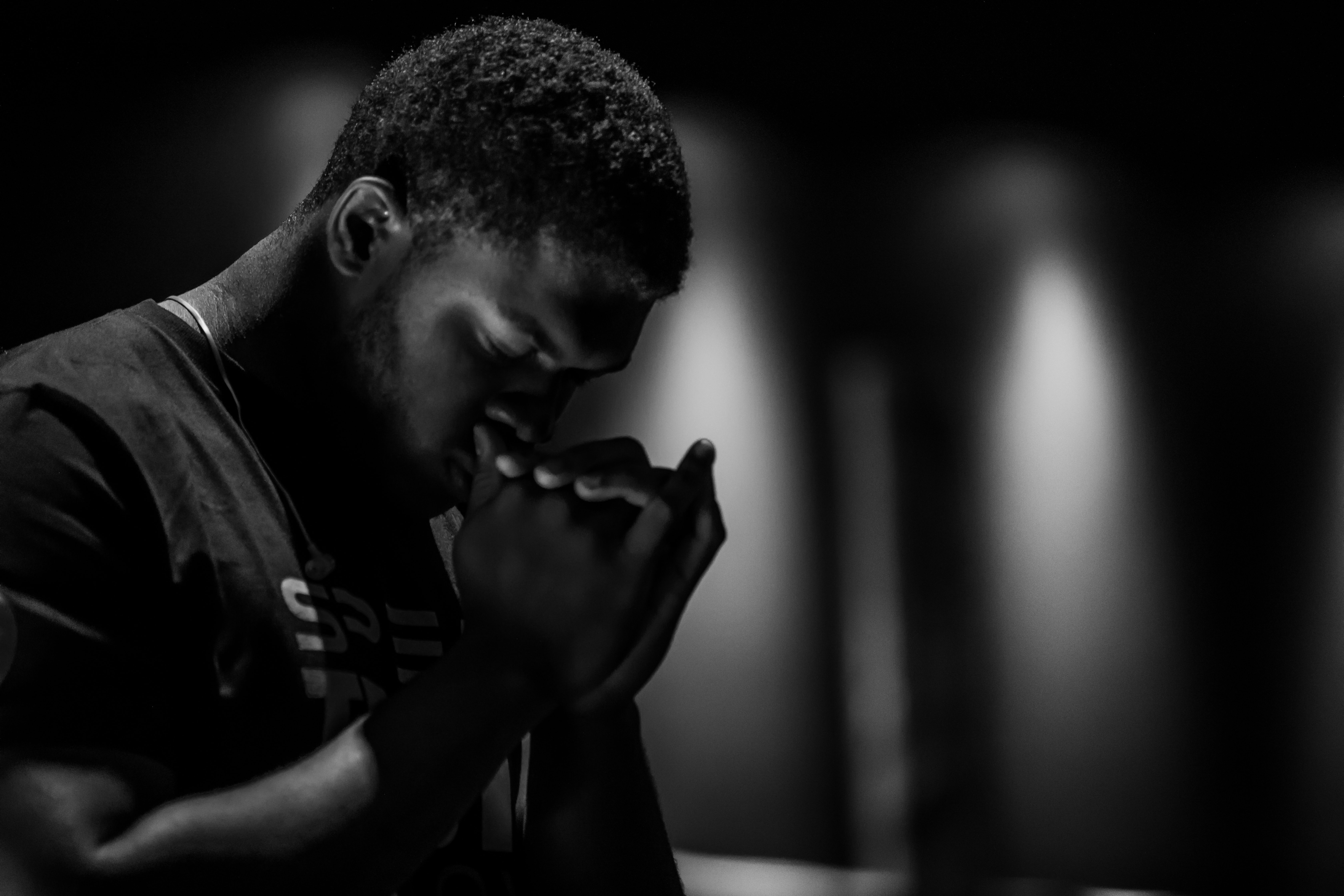
Photo credit: Rainier Ridao

Today’s scene is located in a place of worship in Shiloh. Elkanah, the husband of Hannah and Peninnah, takes his family here once a year to worship and sacrifice to the Lord. Hannah’s life is very hard emotionally. Peninnah would “make fun of her mercilessly” because Hannah was unable to conceive children. Children, especially male children, were highly valued in that culture. If Elkanah died, for example, Hannah’s survival would depend on her offspring. Bearing and raising children was Hannah’s main responsibility in life and she was unable to meet this expectation.

It is with heaviness of heart and soul that Hannah goes to the place of worship. She is “very upset” and she “couldn’t stop crying.” She pours our her heart to God, begging for a son, promising to “give him to the Lord for his entire life.” This willingness to give up a son reveals the depth of her pain and shame over being childless. While our society today doesn’t place the same premium on bearing children, what does bring shame in our culture? If you are without ____, what marginalizes people today?

Eli sees Hannah praying. The priest assumes that she is drunk. She is not. She says to Eli, “This whole time I’ve been praying out of my great worry and trouble.” She has almost assuredly prayer for a child ever since marrying Elkanah. The desperation has risen with each child Peninnah bore to him. Understanding the depth of her pain, sorrow, and shame, Eli blesses her, saying, “May the God of Israel give you what you’ve asked from him.” In our moments of great need, may it be so for us as well.

Prayer: Lord God, sometimes we feel like Hannah. Sometimes we feel marginalized and less than. For some folks, though, that is their “normal.” Lord, open our eyes and awaken our hearts to those who exist on the edges today. With your love and compassion, guide us to draw them into community, into a place where they can find meaning and worth. Through the sharing of our blessings, use us to meet their needs. Amen.


Leave a comment

Walking Closer

Reading: Psalm 51:1-13

Psalm 51:12 – “Return the joy of your salvation to me and sustain me with a willing spirit.”

In this Psalm David circles his need for forgiveness and cleansing. This need has been brought on by Nathan’s confrontation around David’s sins with Bathsheba. Many were his sins: lust, deceit, adultery, conspiracy, murder… It is the realization of and the weight of these sins that are driving the depth of David’s pleas for mercy…

We also circle our need for forgiveness and cleansing – often. Our sin is like David’s in that it separates us from God. Whether lust or gossip, deceit or a little white lie, adultery or pornography… all sin separates us from God. No matter the sin, to be made right with God, we too must seek mercy, compassion, cleansing, and forgiveness.

To receive these graces of God we must begin where David began: confession. He admits his sin and acknowledges that God is justified in seeing him as guilty, as unclean. David then longs to be cleansed and purified, to be made whole again. Then he can rejoice in God’s presence. David knows, as we do, that God alone is capable of this restoration and redemption.

David also pledges repentance. This is the necessary second step if being made right with God. Confession is not worth much at all if not accompanied by a commitment to walking in a new way. David longs to know God’s truth and wisdom. He wants to have a willing heart. In verse 12 David asks this if God: “Return the joy of your salvation to me and sustain me with a willing spirit.” From this place of contrition and commitment, David will help others to walk closer with God. May this be the path that we seek to walk daily.

Prayer: Lord God, lead us to a time each day when we can reflect on our lives and the heart within. By the power of your Holy Spirit reveal our sins and failures. Guide us to a place of humble confession and genuine repentance. In that place, cleanse us and restore us, equip and encourage us to walk closer with you. Amen.


Leave a comment

Our Simple, Normal Response

Reading: 1st Kings 18:16-39

1st Kings 18:21 – “How long will you hobble back and forth between two opinions?”

Continuing the story today, as Ahab and Elijah meet, Ahab asks, “Is that you, the one who troubles Israel?” This is the question of a man trying to blame the consequences of his sins on another. Elijah says as much. It is Ahab and family who have deserted God for Baal. A showdown is set up to occur on Mount Carmel. It will be a battle between God and the pagan gods Baal and Asherah. Once gathered with all the people of Israel, Elijah asks them, “How long will you hobble back and forth between two opinions?” What great words choices: hobble and opinions. What a picture they paint!

This is a question that we could be asked frequently. It happens when we silence the voice of the Holy Spirit instead of challenging sinful behavior – in self or in others. It happens when we are less than we are created and called to be in order to attain material gain or some other earthly treasure. It happens when we gossip or tell a white lie or… instead of holding true to our faith. These are but a few of the ways that we hobble back and forth between God and the world.

In the showdown the pagan prophets go first. No matter what they do, no matter how extreme they get, their gods don’t answer. They’re not real. Elijah begins by rebuilding the altar that Ahab has destroyed – one stone for each tribe of Israel. Once all is readied, Elijah has water added to soak the sacrifice, wood, and altar. After lifting a simple prayer centered on changing hearts, the fire of God falls, consuming everything – even the water. In response to this awesome display of power, the people exclaim, “The Lord is the real God!” Oh, if this would just be our simple, normal, 24/7 response. May it be so.

Prayer: Lord God, how we tend to hobble back and forth. We’re filled up on Sunday morning, readied to take on the world for you. But how soon that fire can be doused, cooled, tamed when left unattended. Lord, day by day draw us to you through moments of prayer, study, reflection, and praise. Lead us to be filled again and again, over and over. Equip us to choose faith and to stand with you in each moment of decision each day. Amen.


Leave a comment

The Moment of Connection

Reading: Matthew 19:29-34

Matthew 19:32 – “What do you want me to do for you?”

The scene is Jericho. This is the place that the walls came tumbling down almost 400 years ago. It was Israel’s entry point into and first victory in the Promised Land. The presence of the Lord was there as Joshua led the army around the city and the Lord’s presence is there as two blind men cry out.

As our passage opens, Jesus, the disciples, and a large crowd are leaving Jericho. From here Jesus will turn towards Jerusalem, entering the city for the final week leading up to the cross. In Matthew’s gospel this healing is followed by Jesus’ triumphal entry we celebrate as Palm Sunday. Is this Jericho crowd the same crowd that will cheer and shout “Hosanna…” as Jesus rides into Jerusalem?

Knowing all that lay ahead Jesus must’ve had a lot on his mind and heart. Imagine how you would be if you knew you had one week to live and you had much to accomplish in that week. As Jesus… is passing by, two blind men shout out, “Show us mercy, Lord, Son of David!” The crowd tries to hush them, but they just shout louder. Jesus hears them. He “stopped in his tracks.” We cannot miss this detail. All else becomes totally unimportant to Jesus. Focusing on these two blind men, Jesus asks them, “What do you want me to do for you?” They want to see. Jesus restores their sight. They follow Jesus.

May we do as Jesus did. May we notice the cry of the one in need, ignoring the noise of the crowd. May we stop and turn our whole focus to the one God places in our path. May we clarify what they say they need. And then may we work to meet their need, either personally or through connecting them to those who can meet their need.

Prayer: Lord God, thank you for this example of empathy, presence, and compassion. Enable and empower us to do as Jesus did. Lord, stop us in our tracks when we hear the cry for help. Guide us to be Christ’s presence in the moment of connection. Use us then to meet the need, however we can. In all things, may you be glorified and lifted up. Amen.


Leave a comment

Our Great High Priest

Reading: Hebrews 10:19-24

Hebrews 10:19 – “Brothers and sisters, we have confidence that we can enter the Holy of Holies by means of Jesus’ blood.”

Hebrews 10 begins with a description of Christ’s “once-for-all” sacrifice. The author explains that Jesus, through his sacrificial death, put an end to the old sacrificial system. This system was unable to “take away our sins.” In addition, the mechanics of the system prevented a personal connection to God. The priest heard your sin and offered the atoning sacrifice on your behalf. There was also a second barrier to God. The Holy of Holies, the space which held the ark (God’s presence,) was separated off by a huge curtain. The high priest alone entered this most intimate and sacred space just once a year, seeking forgiveness and blessing for the people of God.

Verses 19-24 are a summary of what Christ’s sacrifice means for us. In the first verses we read, “Brothers and sisters, we have confidence that we can enter the Holy of Holies by means of Jesus’ blood.” As Christ breathed his last breath the curtain in the temple was literally torn in two, top to bottom. The physical barrier was removed. Christ opened the way, “a new and living way,” so that we could have a personal relationship with God. Christ is our new “great high priest” that invites us to draw near to God with a genuine, cleansed heart. Forgiveness and cleansing are ours every time we confess and repent of our sins. Jesus’ blood was and is the “once-for-all” sacrifice that stones for our sin. Hebrews also reminds us that we can “hold onto the confession of our hope,” because Jesus is faithful. We have confessed Jesus Christ as our Lord and Savior. It is only in and through him that we can remain faithful too. Thanks be to God.

Prayer: Lord God, thank you for the new covenant, one written on our hearts because Christ’s Spirit dwells in our hearts. This personal and intimate connection is a great gift. You are with us always. Lord, lead and guide us to live out our faith, encouraging one another in love. May this love lead us to be and do good in the world, drawing others into the new and living hope that we have in you. Amen.


Leave a comment

The Kingdom of God

Reading: John 18:33-38a

John 18:36 – “My kingdom doesn’t originate from this world.”

As we continue in John’s passion story, Jesus is before Pilate for a second conversation. Verses 28-32 hold the first exchange. In this encounter it is clear that the religious leaders want Jesus charged and killed. In the words John shares, there is no stated charge. It is clear that only Pilate has the power and authority to bring about Jesus’ death. As we turn to verse 33 we can infer that there must have been more to the conversation about Jesus. In this verse Pilate asks Jesus, “Are you the king of the Jews?” This is a question without a “yes” or “no” answer in this setting.

Jesus responds with a question. He is trying to force Pilate’s hand. As the conversation continues, Pilate shares that the Jews and chief priests have handed him over. Pilate’s “What have you done?” reveals his level of concern. Prior to this, Jesus was not on Rome’s radar. If Jesus is indeed a rebel with messianic claims then he is a threat to Rome. If not, Pilate has no issues with Jesus. Jesus confirms that he is not a physical threat to Rome, stating, “My kingdom doesn’t originate from this world.”

Pilate hears “kingdom” and asks Jesus if he is indeed a king. Again, not a yes/no question. Jesus tells Pilate that he came into the world “to testify to the truth.” Pilate scoffs at this answer but is sure that Jesus is no threat to him or to Rome. No, Jesus is not an immediate threat. But Jesus is a threat to all worldly kingdoms.

Jesus is a threat because of what “truth” is. Jesus came to fulfill God’s covenant plan. He revealed in word and deed what it looks like to love God and neighbor with all of one’s being. This impacts all of our relationships and all of our choices – social, religious, personal, vocational, political, economic. The world’s kingdoms run on selfishness, greed, power, pride. Yes, Jesus’ kingdom is a threat to the kingdoms of this world.

Prayer: Lord God, we feel the pull of both of these kingdoms. Part of us is human so we feel the call for more, for self. Yes we are also of your kingdom, brothers and sisters in Christ. Guide us to align our hearts, our words, our actions with your kingdom. Use us to build your kingdom here on earth. Amen.


Leave a comment

The King of…

Reading: John 12:12-19

John 12:13 – “They took palm branches and went out to meet him. They shouted, ‘Hosanna!'”

Entering into Holy Week in the gospel of John, we begin the passion of the Christ with Jesus’ triumphal entry into Jerusalem. Unique to his gospel, John gives a reason for the large crowd that celebrates Jesus. People were buzzing over Jesus calling Lazarus out of the tomb after being dead for four days. In 12:10 we read of the jealousy caused by this miracle: “The chief priests decided that they would kill Lazarus too.” This jealousy shows out in verse 19 too, where the Pharisees pettily says, “Look! The whole world is following him!”

In verse 12 we read that the “great crowd” in town for the Passover festival heard that Jesus was coming. So, “They took palm branches and went out to meet him. They shouted, ‘Hosanna!'” The word “hosanna” translates to “save us, we pray!” Also from the Psalms, the crowd offers blessings to “the one who comes in the name of the Lord.” The crowd identifies Jesus as “the king of Israel.” Mid-story Jesus finds a young donkey and begins riding it. He too claims the title of “king,” quoting from the prophet Zechariah.

John admits, in verse 16, that the disciples didn’t connect the dots at first. John and his fellow disciples wouldn’t understand the meaning and connections until after Jesus died and rose. The indwelling presence of the Holy Spirit would help with this. In the same way, the Holy Spirit leads and guides is in our faith if we are willing to listen and obey.

Prayer: Lord God, we see a crowd caught up in the miracle Jesus offered. They cheer and shout. We too can do these things. We can come to Easter and shout “He is risen!” Then the Monday after is like any other Monday. Lord, may it not be so. Draw us deeper into our faith. Through the power and presence of the Holy Spirit, bring us understanding and obedience too. Lead and guide us to see and follow Jesus as the one who sits on the throne of our hearts. Amen.


Leave a comment

Today

Reading: Luke 23:32-43

Luke 23:41 – “But this man has done nothing wrong.”

Photo credit: Thanti Nguyen

Most of Luke’s account of Jesus’ crucifixion takes place in our reading for today. In some ways Jesus is treated like a common criminal. He is crucified between two. His charge is placed above his head: “This is the king of the Jews.” Like the crucifixion itself, the posting of the charge was also a deterrent.

Almost everyone present mocks or insults Jesus. The religious leaders mock the one who saved others. If he really was who he said he was then he’d save himself. The soldiers mock his kingship. If he really was a king, he’d surely be able to save himself. One of the criminals being crucified insults Jesus for not saving himself – and his fellow criminals. All of these people understand “save” in a different, more limited context. The immediate situation is all they are thinking about. Perhaps that is part of the reason Jesus prays at the outset, “Father, forgive them, for they don’t know what they’re doing.”

The second criminal sees beyond this moment on the cross. He rebukes the other criminal, admits that they are “tightly condemned,” and states, “But this man has done nothing wrong.” Grasping who Jesus truly is, this man asks Jesus to remember him “when you come into your kingdom.” This repentant man is told, “Today you will be with me in paradise.” Today. Not some distant, future date. Today. The same is true for us. When we ask Jesus to remember us, he is present with us today. The kingdom of God is here and now. Jesus is with us here and now. Thanks be to God.

Prayer: Lord God, help us to see and to live into your kingdom here on earth. Open our hearts to feel your presence. Open our eyes to see you with and among us. And, Lord, use us to build your kingdom here on earth as we seek to be love and light to the world. Amen.