pastorjohnb

Thoughts and musings on faith and our mighty God!


Leave a comment

Together with One Voice

Reading: Romans 15:4-6

Romans 15:4 – “Whatever was written in the past was written for our instruction so that we could have hope through endurance.”

Photo credit: Fredrik Ohlander

As we enter Romans in chapter 15, Paul is in the process of elevating the community over the individual. For example, in chapter 12, Paul argues that individuals are given gifts by the Spirit for the benefit of the community (not for individual gain or glory.) In chapter 14 Paul emphasizes pleasing God and loving neighbors more than self. At the start of chapter 15 Paul encourages patience with those who are less mature in faith. As Christ did, Paul invites those who are able to build up their neighbors.

Today in verse 4 we read, “Whatever was written in the past was written for our instruction so that we could have hope through endurance.” Paul and his theology are deeply rooted in the Old Testament and in the Law in particular. But his understanding and application of the scriptures changed radically through his relationship with Jesus Christ. Paul saw and understood how Jesus came not to abolish the Law but to fulfill it. There is no better example of this than in the Sermon on the Mount, beginning in Matthew 5. Again and again Jesus unpacks the Law through his use of the sayings, “You have heard that it was said… But I say to you…” In each of these examples and in how he lived out his faith, Jesus was demonstrating what love of God and love of neighbor truly looked like. Paul looks at these examples and encourages the church to emulate Christ’s attitude in their lives.

The early church needed hope so that they could endure the trials and persecution of their day. We too need hope to faithfully love God and neighbor in the midst of a culture that elevates self above all else. Like the early church, may we find strength in the scriptures, in Christ, and in our community of faith, all to “glorify God… together with one voice.”

Prayer: Lord God, we pray for daily strength and encouragement, for hope and peace. Draw us deeper into your word, deeper in our relationship with Christ, and deeper into our communities of faith. In these things we find support, help, and the power to love you and to love neighbors as Christ first loved us. Lord, use our daily living to glorify your name and to build your church. Amen.


Leave a comment

The Path We Choose

Reading: Ezekiel 18:30-32

Ezekiel 18:30 – “Turn, turn away from all your sins. Don’t let them be sinful obstacles for you.”

In today’s passage Ezekiel addresses individual responsibility. Yes, the bad shepherds led Israel and then Judah into sin and then exile. Yes, they set a poor example for those living under their care. Yes, these actions made it easier for the common people to go astray and to wander away from God. But at the most basic, individual level, each person has to choose to remain faithful to God or to live selfishly and sinfully. The same is true today. You, me, all of us – we are in control of ourselves. We alone choose the path that we walk.

Verse 18 opens our reading with this reminder: “I will judge each of you according to your ways.” In this life and in the moment that we stand before our Creator, God will judge us on what we alone did or did not do, say, and think. Therefore, God says, “Turn, turn away from all your sins. Don’t let them be sinful obstacles for you.” Make a better choice, a holier decision. This is a call to repent, to change our ways. Our sins are very much obstacles to a healthy and whole relationship with God and with one another. God calls us to “abandon” our sins.

God encourages the faithful to “make yourselves a new heart and new spirit.” While it is with God’s power alone that this is possible, we must take the first step by turning away from our sin. This choice is essential to the transformation that God can and desires to work in us. The passage closes with the clear cut options. One is stated and one is implied. God declares, “Change you ways, and live!” The opposite is also true, also an option. May we choose faith so that we can truly live.

Prayer: Lord God, while the way that leads to life is narrow, this path is filled with joy and peace, with hope and grace, with love. The path of the world, the path of destruction, it is wide and filled with greed, with pride, with envy and want. Guide us to walk your narrow way, for there you walk with us. Lead us to follow in Jesus’ footsteps, finding strength and encouragement for our journey. Amen.


Leave a comment

Communion = Community

Reading: 1st Corinthians 11:23-32

1st Corinthians 11:28 – “Each individual should test himself or herself, and eat from the bread and drink from the cup in that way.”

Photo credit: Geda Zyvatkauskaite

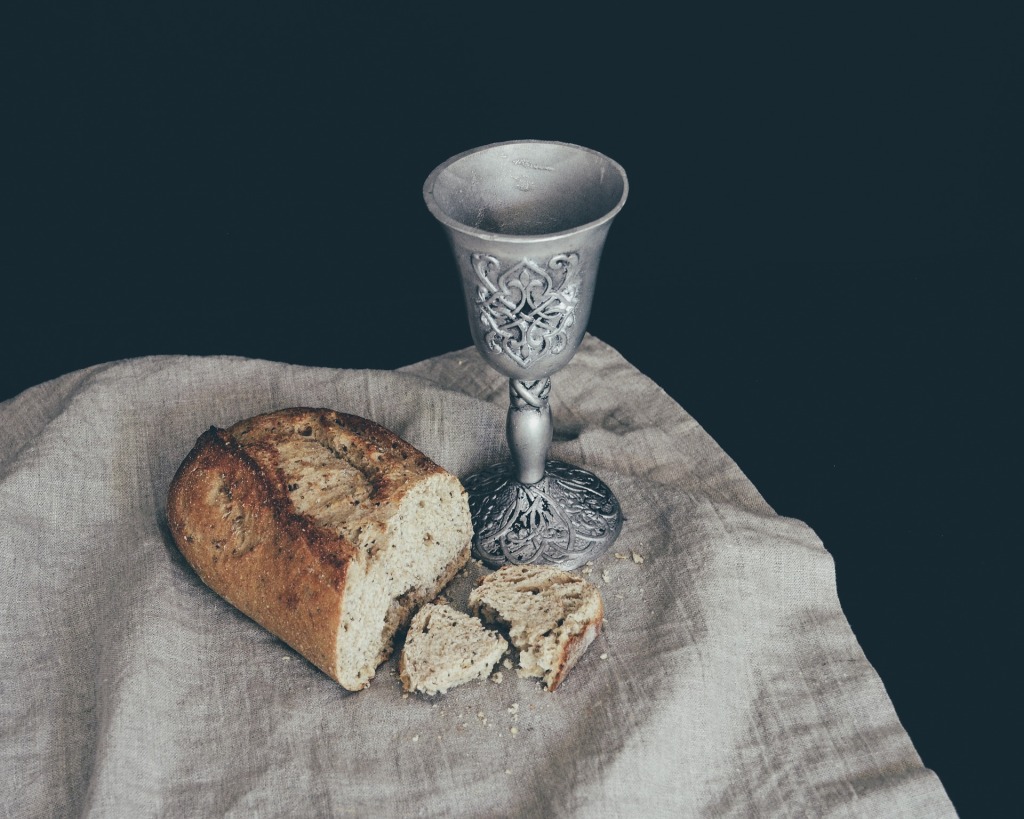
We seek to “stay in love with God” through various means of grace. One of these is Holy Communion. This sacrament first reminds us of Christ’s loving sacrifice on our behalf. The giving of his innocent blood in place of ours made atonement for our sins, paying the price for forgiveness. We approach this gift with a deep sense of awe and reverence.

Sometimes we do something for a while and it becomes just going through the motions. Perhaps you’ve felt that before with something like the Lord’s Prayer. For the church in Corinth, the Lord’s Supper had become one of those things. It was now causing more harm than good. It was creating division in the church. At this point it was more like what we’d call a “love feast” than what we recognize as a communion with its liturgy and formality. In Corinth, it had become a “private meal” with the rich getting drunk and stuffed while the poor were left hungry and thirsty. The church has forgotten that love, sacrifice, service, and community were at the heart of the Lord’s Supper.

Paul addresses this situation by reminding the church that the Lord’s Supper is centered on and celebrates the new covenant made by Jesus Christ. He also reminds them, though, that this communal celebration begins with individual preparation: “Each individual should test himself or herself, and eat from the bread and drink from the cup in that way.” Each person must come before God, humbling confessing and repenting of their sins. This necessary step prepares each to be made “new” again as the blood of the Lamb washes away their sin. To not take this step is to hide or hold onto one’s sin. This brings judgment and condemnation instead of forgiveness and grace.

For each person to come before God, to confess and repent, it levels the playing field. It places us all equally before the table of grace, all sinners redeemed by his blood. In this way, community is restored. It brought one body to the one bread, one blood. That was Paul’s goal. It should be our goal. May it be so.

Prayer: Lord God, draw us to our knees, to the place of confessing and repenting of our sins. Open up our hands and hearts to release all that separates us from you and from one another. As we come clean, thank you for making us clean. Thank you for your great love that washes away our sins and failures. Thank you for your redeeming love. Amen.


Leave a comment

For Me. For Us. For You.

Readings: Psalms 113-118

‭Psalm 118:6 – “The LORD is for me — I won’t be afraid. What can anyone do to me?”

Today’s six Psalms are known as the “Egyptian Hallelujah.” These words of praise were recited each year at the Passover meal. Psalms 113 and 114 were recited before the meal. These Psalms celebrate God’s actions on behalf of the poor and needy and on behalf of Israel during the exodus. Psalm 113 exalts the God who lifts up the poor, who raises the needy, who brings the barren woman the joy of motherhood. These words echo “Hannah’s Song” from 1st Samuel 2 where God acted on behalf of the faithful. Psalm 114 remembers the parting of the sea and river, the bringing of water from the rocks – more signs of God’s faithful love.

After eating the Passover meal, Psalms 115 through 118 would be recited. Although lost in translation, Psalms 115 and 118 were originally written and spoken as call-and-response liturgy. Psalm 115 lifts up God’s power and might, contrasting God with worthless idols who “have mouths, but they can’t speak.” God is Israel’s “strength and shield.” 115 closes with blessings to all. Psalm 116 is a celebration of an individual’s rescue, reminding Israel that God is a personal God too. Because of God’s deliverance the individual will “lift up the cup of salvation… will keep the promises” made to God. Psalm 117 lifts up God’s strong love.

The Hallelujah closes with Psalm 118. The setting is an individual coming to the temple to give thanks to God. This Psalm calls Israel, the priests, and all who honor the Lord to declare, “God’s faithful love lasts forever!” Because of their experience with this in the exodus, the psalmist writes, “The LORD is for me — I won’t be afraid. What can anyone do to me?” God was faithful. God is faithful. God will be faithful. What is to fear?

Verses 22 and 27 are often connected to Jesus – the stone rejected, the light that shined, the offering led to the new altar, the cross. These are echoes found in the ever expanding story of God’s love, reflections on the final Passover lamb.

Prayer: Lord God, today’s words celebrate your presence with your people. Just as you rescued and delivered, just as you provided and made a way, do so for us in our lives too, O God. We seek to walk in your strong and faithful love, a love that lasts forever. Thank you, Lord, for your love. Amen.


Leave a comment

A Word on the Word

Reading: Psalm 119:97-104

Verse 101: “I have kept my feet from every evil path so that I might obey your word.”

In this week’s reading from the Psalms, the author is overflowing with joy in the Lord and with confidence in his or her faith. These words are a celebration of God’s word and a declaration that the word of God is better than any human teaching. These words, or at least the ideas driving them, are worthy of emulation. Oh to meditate on God’s word all day long! Oh to gain understanding from the word of God!

The psalmist is, naturally, writing in the first person. These verses are about his or her relationship with God. Yet there are lots of “I” statements in there. It feels like it’s a lot about the psalmist’s efforts and achievements. While we cannot assume anything about the author, we can acknowledge that at times we can get a little too high and mighty with our faith. We can assert that this is really what God is saying in this passage, implying that our interpretation is the only possible correct one. We can pick and choose from scripture to “prove” our point in a discussion or argument. We can too easily forget that the word of God is alive and active and has many applications and interpretations.

Often I have read a verse or passage that I’ve read many times before and thought, ‘How did I miss that last time?’ Other times I’ve re-read something and found different meaning or application. Passages I’ve read and took lightly have hit me like a ton of bricks the next reading. My understanding of God’s word has grown and even changed as I better grasp the scope and overall messages of the Bible. The Bible gives guidance for how to live out our faith (and how not to!) We all have an individual and unique relationship with the Lord. So may we read God’s word with this in mind as we apply these words to our lives and as we share this good news with others.

Prayer: Lord God, may I ever learn and study and grow in you. Yet as my ‘knowledge’ grows, may my love for you and for others far exceed this growth. Day by day mold me more and more into the image of your son, the Christ. Amen.


Leave a comment

The Shift

Reading: Jeremiah 31:27-30

Verse 30: “Instead, everyone will die for his [or her] own sin; whoever eats sour grapes, their teeth will be set on edge.”

In this week’s passage from Jeremiah 31, God is beginning to look towards a new phase in the relationship with Israel. Even though Jeremiah lived about 600 years before Jesus, God is starting to prepare the people for his coming in the flesh. Jesus will usher in a new era and a new covenant between God and the people. We’ll delve deeper into this aspect on Friday.

In verse 27 the Lord declares, “the days are coming…” Living in the time of exile, these words are words of hope. Just as God has recently “watched over” Israel and Judah to “uproot… overthrow… destroy and bring disaster” for their corporate sins, God promises to one day watch over them as God “plants and builds” the house of Israel. God will one day redeem and restore the people of God. But they will have a new relationship. It will not be like when we reconcile with a friend and go back to being friends as if nothing had happened. No, this new covenant will be ushered in by a new relationship between God and the people of God. This change is indicated in verses 29-30.

In their current reality the “fathers” ate sour grapes – they sinned – and the price is being paid by their “children.” Generations suffered the consequences of others sin. Indicating a shift from the corporate to the individual, in verse 30 we read, “Instead, everyone will die for his [or her] own sin; whoever eats sour grapes, their teeth will be set on edge.” The relationship will be personal. If I sin, I alone am responsible. Just me relationship with God is impacted. My sun will set just my teeth on edge. This shift will be initiated and fulfilled in and through Jesus Christ, the one who stands in our place. Thanks be to God!

Prayer: Lord, I am grateful for the new covenant. Yes, the community of faith matters, but my relationship with you is the most important one in my life. Yes, as a body of believers we walk together in faith. Yet I am accountable ultimately to you alone. Yes, you died for the sins of the world, but you would’ve died just for me and my sins. Thank you, Jesus. Amen.


Leave a comment

Gather to Worship

Reading: 2nd Timothy 1:8-16

Verse 12: “I know whom I have believed, and I am convinced that he is able to guard what I have entrusted to him for that day.”

Today is World Communion Sunday in my denomination. Although apart physically, we share in communion with people all over the world. Each person will come today as unique individuals yet in spirit we will all gather around the one common table. We will gather and come as we are. Some will come in secret and some will come because another insisted. Some will come with joy and some will come with heavy burdens. Some will come to praise, others to find solace. Some will come seeking faith; some to celebrate their saving faith. We gather with many different stories.

Perspective is an important part of our stories. In the culture of his day, to be arrested usually brought shame. The shame fell upon the criminal and upon their family. Such was not the case with Paul and his family in Christ. He tells Timothy not to be ashamed of his faith or of where it has landed him. Quite the opposite – he invites Timothy to join him in his suffering. The invitation is based upon his faith in Jesus Christ. In verse 12 Paul declares, “I know whom I have believed, and I am convinced that he is able to guard what I have entrusted to him for that day.” Paul knows that Jesus has the power to save and to raise him to new life. He knows that Jesus will protect him in this trial and will keep safe the promise of eternal life. Paul invites Timothy and us to live into this trust.

As we come and gather as the community of faith, both in person and online, both as local churches and as the global body of Christ, we join as one to worship our risen Savior. We celebrate and worship the one who died to pay the price for our sins and who rose from the grave to pave the way to life eternal. We rejoice today in the truths and we step into our tomorrows “with the help of the Holy Spirit who lives in us.” Thanks be to God!

Prayer: Lord God, today as we gather, help me to be aware of those around me. We all gather, coming from many places and spaces. Draw us together, being generous and loving to one another. Draw us to you, our all in all. Amen.


Leave a comment

The Better Way

Reading: 1st Corinthians 12:12-26

Verse 18: “In fact God has arranged the parts of the body, every one of them, just as God wanted them to be.”

Photo credit: Sigmund

Our time in 1st Corinthians 12 this week begins with these words: “The body is a unit… made up of many parts… they form one body.” This description fits all churches, some to a greater degree than others. Even in churches that appear very homogeneous, each person is unique, individual. In churches that appear very diverse, each person is unique, individual. In all churches, though, the call is to be unified in and around Jesus Christ.

Paul uses the parts of the hunan body to demonstrate the unity and connections and interrelatedness that should be found in all churches. Our body needs hands and feet, eyes and ears, and so on. One part is not more valuable than another. All are needed. The same is true in our churches – each part matters, each part has equal worth. Each part should have equal concern for the other parts. It is or should be this way because “in fact God has arranged the parts of the body, every one of them, just as God wanted them to be.”

In some ways this statement of Paul’s reminds me of when mom or dad used to say, “because I said so.” Things should be such and such a way because they said so. While we might have gone along with it right then, we soon deviated. The same is true in most of our churches. We know that God loves all people and that we should too. But each person is unique, individual. We can find a million reasons to separate and divide – looks, worship style, dress, ethnicity, economics, politics, vocation… Yes, we can find the reasons. Or we can choose the better way, the way God designed us to be as the church – loving, welcoming, unified in and around Jesus Christ. May it be so in us and in our churches.

Prayer: Lord God, give me eyes to see and appreciate and value our uniqueness, our individuality. And give me a heart to truly love each part in all its uniqueness and individuality. Doing so, draw the church, each church, closer to your design. Amen.


Leave a comment

In His Presence

Reading: John 6: 24-35

Verse 32: “It is my Father who gives you true bread from heaven”.

Photo credit: Abram Mourad Blokpoel

There is a personal, individual component to our passage. As we turn a second day to John 6, let us hear Jesus speaking to us, offering you and me the gift of life. Emphasizing his connection to God, Jesus says, “It is my Father who gives you true bread from heaven”. It is God who sent the Son to save the world. It is God who sent Jesus to save you and me.

In the time and place of Jesus, bread was an essential staple. This important part of their diet sustained them. In the same way Jesus “gives life” to all who believe in him. The life Jesus Christ offers is filled with hope and peace, love and forgiveness, mercy and grace, power and strength, comfort and joy. He sustains us on our journey of faith.

Today in many houses of worship people will drink the cup and eat the bread. We will literally celebrate that Jesus is the “bread of life”. We will rejoice that Christ hears our confession, accepts our repentance, and washes away our sin. Through communion we are redeemed and restored, made new again. Holy and perfect in his sight at least for the moment, we do not hunger and thirst for the things of this world. Holy and perfect we rest in his divine presence, assured of his love. May we rest in Christ’s presence today.

Prayer: Lord God, thank you for walking with us on this journey of faith. Thank you for sustaining us through all that life throws our way. Help me to rest in you. Amen.


Leave a comment

The Wilderness

Reading: Psalm 107: 1-3

Verse 1: “Give thanks to the Lord, for he is good; his love endures forever”.

Psalm 107 is a Psalm that reminds us of God’s faithful love. It is a song of thanksgiving to the God that never abandons or leaves his people. The Israelites and individuals within the faith community have experienced this faithful love. The nation has experienced exile, slavery, and times of oppression and conflict with those living around them. Individuals like Joseph, David, Samuel, and Job have had their own wilderness experiences. Each time that the community has found themselves in the wilderness, whatever that may be, God has remained present and connected to his people. At times the connection was to a small remnant, but God was always faithful. Experiencing this over and over has led them to “give thanks to the Lord, for he is good; his love endures forever”.

As we experience life we also find ourselves in the wilderness from time to time. We find ourselves there in many ways. Loss and grief can lead us into the wilderness. Moving, job loss, and other forms of unwanted change can lead us to this place. Sudden bouts of physical or mental illness can take us to the place of isolation and fear. Yes, there are many ways that we can find ourselves in the wilderness. If we choose to remain connected to God, then we experience what the psalmist and the Israelites experienced. God remains present. God sustains us. God’s faithful love endures the trials with us. From these experiences we too can proclaim: “Give thanks to the Lord, for he is good; his love endures forever”. Thanks be to God.

Prayer: Lord, your love is grander than the mountains and deeper than the ocean’s depths. Your faithfulness stretches past the furthest star. I am but a tiny speck in the cosmos, but you love me as if I were the only speck. Thank you, God. Amen.