pastorjohnb

Thoughts and musings on faith and our mighty God!


Leave a comment

Struggles and Promises

Reading: Revelation 1-2

Revelation 1:8 – “I am the Alpha and Omega… the one who is and was and is coming, the Almighty.”

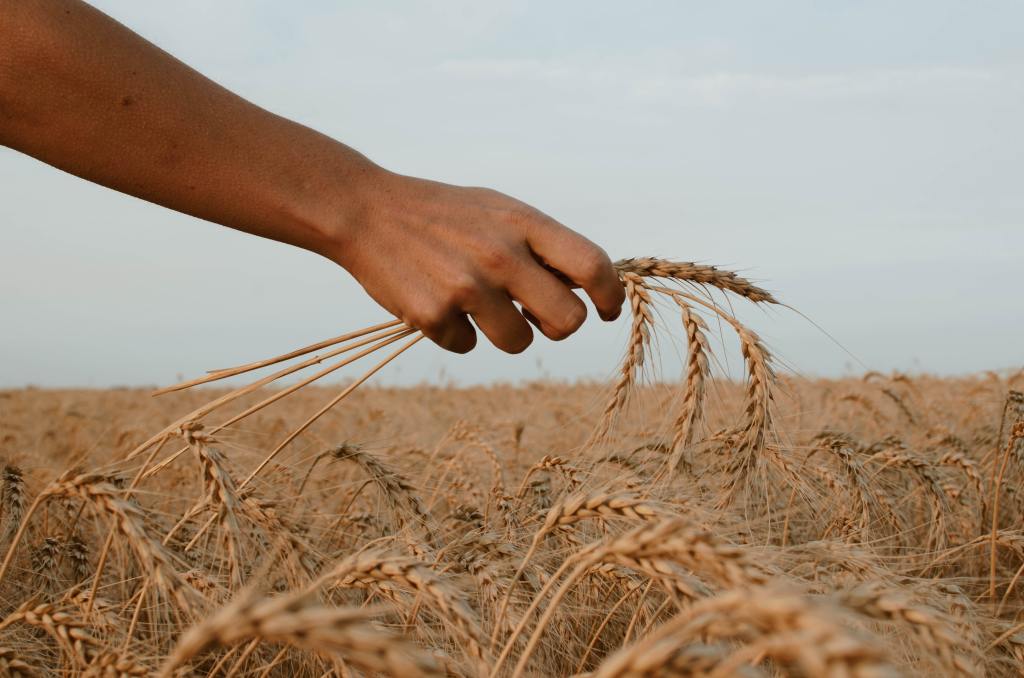
Photo credit: Noah Silliman

Today we begin Revelation, a vision given to Christ’s servant John. It is to the “seven churches” and is from Jesus Christ, the “firstborn from among the dead.” John writes that when Jesus comes in the clouds, all will see him and the nations will mourn. The Lord God then declares, “I am the Alpha and Omega… the one who is and was and is coming, the Almighty.”

John shared that he also suffers hardship, exiled on Patmos, an island where political opponents were sent. In a “Spirit-led trance,” John receives these words for the seven churches. He receives these words from Jesus Christ, whose appearance is “like the sun shining with all its power.” Jesus directs John to write down these words and to send them to the seven churches.

In today’s reading Jesus addresses the churches in Ephesus, Smyrna, Pergamum, and Thyatira. There is good to be found: good works, endurance in suffering, faith in hardship, service to others. Some have rooted out false teachers but others have fallen to their lies, following them into sin. Ephesus has forgotten her “first love” – Jesus. To the faithful, promises are made. The faithful and those who change hearts and lives will “eat from the tree of life,” will receive the “crown of life… the hidden manna… the white stone… authority over the nations… the morning star.”

These struggles remain in our churches and in our lives. The promises remain for those who are faithful. Thanks be to God.

Prayer: Lord God, today we are first reminded of your eternal power and mighty. All glory and honor are yours! We are also reminded that faith is not easy, that trials will come, and that temptations are aplenty. Lead and guide us, O God, to remain faithful to you alone. Thank you. Amen.


Leave a comment

The Spirit Gives Life

Reading: John 6:22-7:10

John 6:51 – “Whoever eats this bread will live forever, and the bread that I will give for the life of this world is my flesh.”

After feeding the 5,000, the crowd realizes that Jesus is “missing.” They follow the disciples by boat to Capernaum and find Jesus already there. They ask how he got there. Ignoring their question he implies they are looking for more bread. Jesus encourages them to work for “food that endures for eternal life” – the food that he will give. The crowd wants to know what to do to receive this bread. Just believe in the one sent by God. The crowd, though, wants a sign, something like the manna. Their hearts and minds are stuck in the concrete and tangible. Jesus tries to get them to understand the spiritual.

Jesus first reminds them that it was not Moses who gave the manna. He says that in the same way God has once again sent bread from heaven. The crowd desires this bread. To them Jesus says, “I am the bread of life.” Eat and never be hungry. Believe and have eternal life. Their ancestors are manna and died. Eat from Jesus and never die. He declares, “Whoever eats this bread will live forever, and the bread that I will give for the life of this world is my flesh.”

The crowd is lost. How can one literally eat his flesh and drink his blood? Jesus says this is necessary to remain in him and for him to remain in them. They are stuck in the literal. They grumble. This is a hard teaching. Jesus reminds them that the Spirit gives true life. He’s inviting them to think spiritually. The flesh cannot do this. God must enable people to believe in and to receive Jesus. Many cannot hear what Jesus is saying. Many turn away and no longer follow him.

Jesus asks the 12 if they want to leave too. Peter asks, “Where would we go?” Peter declares that Jesus holds the words of eternal life and is the one sent by God. The 12 believe. Jesus’ brothers struggle. They want him to go to Judea, to “show yourself to the world.” Jesus tells this his time has not come yet. Or has it come?…

Prayer: Lord God, sometimes we too get stuck, get hung up on something, fail to understand. Here we too can struggle with belief. In these moments, Lord, may the Holy Spirit lead and guide us, opening our hearts and minds to your will, your way, your plan, your purposes. You are truly the word of life. Thank you. Amen.


Leave a comment

To Do as You Did

Reading: John 5:1-6:21

John 5:19 – “I assure you that the Son can’t do anything by himself… Whatever the Father does, the Son does likewise.”

Photo credit: Felipe Correia

Our reading begins with a healing on the Sabbath. At the pool called Bathsaida, a sick man has been trying to get into the waters for 38 years. Jesus asks him, “Do you want to get well?” The man explains his dilemma: others get in first because he has no one to help him. Jesus says, “Get up! Pick up your mat and walk.” The man does. The Jewish leaders get on the man for carrying his mat on the Sabbath. It is work. Later, when it is revealed that Jesus healed the man, these leaders harass Jesus. He replies, “My Father is still working, and I am working too.” The leaders want to kill Jesus even more.

This tension leads to a long response from Jesus. He begins by declaring, “I assure you that the Son can’t do anything by himself… Whatever the Father does, the Son does likewise.” The Father gives life so the Son gives life. If people hear Jesus’ words and believe, they will have eternal life. This choice will lead to doing good things, which will lead to the “resurrection of life.” To refuse to believe? That choice leads to doing wicked things and to the “resurrection of judgment.” Jesus reminds them of John the Baptist’s testimony – which they almost believed – and of Moses’ testimony about the Messiah. Jesus’ response ends with a question: If you don’t believe Moses’ words, how will you believe my words?

Leaving there, Jesus crosses the Sea of Galilee. A large crowd follows. Jesus tests Philip by asking about feeding them. Andrew finds a boy with five loaves and two fish. Jesus seats the people and then blesses and multiplies the food. All “had plenty to eat.” Twelve baskets of leftovers are gathered. This “manna” in the wilderness leads the people to think about making Jesus their king. He slips away up the mountain.

As the disciples struggle to cross back over, three or four miles into the journey, Jesus comes to them, walking on the water. Into their fear he says, “I am. Don’t be afraid.” They reach solid ground. Jesus is with them. All is again well. May it be so for you and for me.

Prayer: Lord God, taking on flesh you were healing, loving, feeding, doing good. Be Christ in us, leading us to do as you did. Amen.


Leave a comment

Questions

Readings: Exodus 15:22-27, Exodus 16, Exodus 17, Exodus 18

Exodus 16:8 – “Who are we? Your complaints aren’t against us but against the LORD.”

Coming fresh off of the amazing rescue at the sea, today we become familiar with an oft-repeated pattern in the wilderness. The Hebrews are lacking in something so they argue/complain/grumble against Moses. Moses, often in frustration, turns to God and God provides food, water, protection… We often see a version of this played out in our lives, just without Moses as the middle man. We go straight to God with our grumbles, complaints, charges…

At Marah the water is bitter. God makes it sweet. Those hardships or challenges that become blessings? We experience these too, don’t we? Then, in the Sin Desert, hunger sets in. They long for the meat and bread of slavery. Ever look back in the good old days? God provides meat and bread. These come with instructions. These begin to establish the Sabbath. It was not possible in Egypt. As slaves of another they worked 7 days a week. We have a choice. Do we allow ourselves to be controlled by work…? Or do we honor God and ourselves in sabbath rest?

After preserving some manna for future generations, the Israelites travel on to Rephidim. No water. They accuse Moses (read: God) of bringing them out into the desert to die of thirst. Moses hits the rock at Horeb with his staff -> water comes out! Then Amalek comes to fight them. Joshua leads the troops into battle as Moses, Aaron, and Hur go up the mountain. The staff, now held aloft, continues to represent God’s presence. Aaron and Hur help Moses and God gives Israel victory. This leads into Jethro’s visit and suggestion. He sees Moses is too busy. He won’t last like this. Following his wise father-in-law’s advice, Moses appoints judges, sharing the load. God shared the load in battle. Moses shared the load with others. Which kind of sharing is harder for you? What did you learn today about sharing?

Prayer: Lord God, it is a little scary to see how little we’ve changed since Moses’ time. We get caught in nostalgia, we lose faith quickly, we question your love. Today I thank you so much for your enduring patience through the generations and for your great patience with me. Teach me to turn quicker to you and to hold onto your hand longer and more steadily. Amen.


Leave a comment

The Bread of Life

Reading: John 6: 24-35

Verse 27: “Do not work for food that spoils, but for food that endures to eternal life”.

Photo credit: Paz Arando

In our passage Jesus begins his words to the crowd pointing out the real reason that they have sought him out. They have come again for more food. In a time when most were subsistence farmers or basic laborers, where many experienced hunger and other affects of poverty regularly, it is natural to seek more food. In our time many people live with this same scarcity mentality, living day to day, just trying to get by. They too are attuned to opportunities to attain resources that aid in their survival.

The crowd has exerted effort to attain more food. They have crossed the lake in hopes of another meal. In his teaching Jesus invites them to more, not once but twice. In verse 27 Jesus says, “Do not work for food that spoils, but for food that endures to eternal life”. Jesus invites the crowd past the physical food that doesn’t last and on to the eternal food that does not perish. He invites them to consider a relationship with the Son of Man, to believe in Jesus. The crowd speaks of the manna that God gave daily for years in the desert, trying to revert back to their need for food and to their scarcity mentality. Jesus again points them past the physical food that God gave their ancestors and on to the “true bread” that stands before them and offers “life to the world”. Jesus again invites them to come through him and to believe in him. He promises that those who do will never hunger or thirst again.

Physical thirst and hunger exist in all of our communities, no matter how small. As followers of Jesus Christ we are called to meet these needs. Yes, yes, yes! Today’s passage also invites us to go deeper, to also connect people to the bread of life. How will you begin to do both of these things in your community today?

Prayer: Lord God, lead and guide me to meet needs both physical and spiritual. The needs are so great. Fill the fields with workers, Lord. Amen.


Leave a comment

Abundant

Reading: Exodus 16: 9-15

Verse 12: “…Then you will know that I am the Lord your God”.

As our passage opens, Aaron calls the community of faith together, acknowledging that God has heard their grumbling. As they gather to come before the Lord, God’s glory is revealed in the cloud. In verse eleven we again hear God acknowledge to Moses that he has heard their grumbling. In response, Moses passes along that the people will have meat in the evening and bread in the morning. The announcement closes with the pronouncement: “…Then you will know that I am the Lord your God”.

In the provision, the Israelites certainly know that it was God who provided. In the evening, the quail come and cover the camp. Cover the camp – there is an overabundance implied here. The same is true with the manna. A covering of dew surrounds the camp. It was not here and there – it surrounded the camp. After the dew is gone, God’s care is again made evident as bread appears and covers the desert floor. Again, a feeling of overabundance. Each and every person is able to gather as much as they need.

Is there something to be learned about God because the quail and manna come in such abundance? Can we learn something about God and our relationship with God through this passage? I tend to think that God sounds annoyed by the grumbling. That is because I know I would feel annoyed. In the same way, at first I see the overabundance as God saying, “Do you have enough? How about now? Now?” as the quail and manna almost pile up. But these thoughts do no align well with my overall understanding of God. God hears the grumbling through the unconditional love that defines all God does and says and is. The abundance is a reflection of that endless, unconditional love. That is the lens through which God sees their relationship too. Yes, the people grumble; they complain. Maybe even a few whine. I’m guilty of all three at times. When I digress into these attitudes and when my prayers reflect this, it is because I lack trust, because I think God is taking too long to answer, … We grumble… not because we think God unloving or uncaring. We grumble because we are not loving God enough, not trusting enough, not secure enough…

God loves us. In abundance. God will care for us. In abundance. May our growing faith step more fully into God’s abundant love and care.

Prayer: Loving God, in my heart I know you love me fully, dearly, completely, abundantly. It is a love I can only begin to fathom, a love I can just scratch the surface of emulating. In your abundant love, guide me to love you and others better today than yesterday, better tomorrow than today… Amen.


Leave a comment

First and Always

Reading: Exodus 17: 1-7

Verse 3: “Moses replied, ‘Why do you quarrel with me? Why do you put the Lord to the test'”?

Moses is leading the people on a journey to the Promised Land. It will be a forty years journey. When I think of the length of the journey, it reminds me of the long drives to Montana. Sometimes before we even left South Dakota, the “Are we there yet?” refrains would begin. When that happened I knew it was going to feel like a long trip. Even though it was only an eleven hour drive, I think it felt a little bit like Moses was feeling in our passage today.

The Israelites have recently been rescued from slavery in Egypt. In this process, God brought plague upon plague, finally breaking Pharaoh’s spirit with the death of the firstborn. The Israelites were passed over by the angel of death. This miracle became an event they celebrate every year, to this day. The hand of God continued to be upon Moses as he parted the sea and saved the Israelites from the pursuing Egyptian army. God has just provided manna, quail, and water to all the people. As they set out once again the people find themselves at a place with no water. Instead of turning to God in prayer, thanking him for the many saving acts that they have just experienced and seeking one more, they choose to grumble at and quarrel with Moses. In response Moses asks, “Why do you quarrel with me? Why do you put the Lord to the test“? I imagine God was thinking the same thing, don’t you?

At times I’m sure I’ve made God think that. I know God loves and cares for me, provides for and protects me, leads me and guides me. Even so, trust in God is not always my default response when a need arises or when I find myself in a time of trial. Seeking God is usually my first response, but not always. And it should be always. Maybe you are like me and know your need to turn to God first and always. As we remember how dearly loved we are by God may we make intentional efforts this week to rely first on God in all things. May it be so.

Prayer: Lord, I know no one loves me like you do. No one has good plans for me like you do. May the Spirit remind me of these things over and over as I seek to follow Jesus more closely. Thank you, Lord. Amen.


Leave a comment

Hard Teaching

Reading: John 6: 56-60

Verse 60: “On hearing it, many of His disciples said, ‘This is a hard teaching, who can accept it'”?

The miracles and the healings attracted people to Jesus. The thought of being able to see or to walk brought many. The idea of being freed of a disease or illness or of the demons inside brought others. Jesus’ touch offered wholeness and welcome back into community. The latest miracle involved food and the crowd returns the next day looking for more bread. But this day Jesus offers a different kind of bread.

Jesus reminded them of the manna – the bread that God had sent down from heaven to feed His chosen people in the desert. It offered the people sustenance, but it was just food. Jesus tells them that He too was sent down from heaven by God to feed the people. Jesus parallels himself to the manna in the sense that it must be eaten to receive life. To “eat” Jesus is to take in His teachings, to follow His way of love, to absorb who and what Jesus is so that one receives spiritual life, eternal life.

Many in the crowd struggled with this. Today we read, “On hearing it, many of His disciples said, ‘This is a hard teaching, who can accept it'”? Many had just come for some more bread. Some probably just came in search of healing. But this? And this certainly is not the first or last hard teaching that Jesus will give. He speaks the truth and sometimes the truth is hard to hear.

Today some people are just like these in the crowd. They just come when there is a need. They cruise through life until a crisis arises and then Jesus is their best friend. Until the crisis passes. Others discover Jesus and dive into the relationship. But they come to a point where the teaching is hard. They love that thing more than they love Jesus and they walk away.

As followers we too know these struggles. Staying true in our walk with Jesus has its hard moments, when that “hard teaching” hits home and requires something inside to die to self. In those difficult moments may we remember the promise: “he who feeds on this bread will live forever”. May we ever feed on the Word made flesh, ever drawing strength for the journey. Amen.


Leave a comment

Choose Life

Bread is usually a basic part of most people’s diets.  When Jesus proclaimed that He was the ‘bread of life’ those listening would have connected this to one of the necessities of life.  His Jewish audience would also connect this statement to the manna that saved their ancestors in the desert.  Jesus points out to them that that bread was also from God.

As food is a necessity for life, hunger can drive our thoughts and actions.  Jesus often spoke of meeting the needs of the those who were hungry by giving them something to eat.  Yet Jesus knew that this earthly food was only temporary.  Even though satisfied right then it was only for a moment.  So Jesus offered Himself to His audience and to us as the ‘bread of life’ – bread that satisfies a deeper hunger that resides in all of us.

Food satisfies out physical need or hunger.  But this is not the only type of hunger we face.  We all crave to be loved, to find companionship, to fit in, to be successful, to be in control, ….  The list goes on and on.  We are vulnerable to being tempted to try to fill our hungers in unhealthy and temporal ways.  The recent story of David and Bathsheba reminds us how quickly it can go bad when one gives in to the desires of our flesh.

Jesus offers Himself to us as the ‘bread of life’ in the passage today.  Through this, He offers us life abundant.  Jesus can also be our ‘living water’, rising up within us.  When we choose to walk with Jesus we are filled with His presence.  Like bread, He sustains us when we are in need or are struggling with temptations.  Like water, He quenches our thirst for all we desire.  When we choose Jesus, we choose life.

Scripture reference: John 6: 24-35