pastorjohnb

Thoughts and musings on faith and our mighty God!


Leave a comment

May Blessings Flow

Reading: Ezekiel 53-48

Ezekiel 47:9 – “Wherever the river flows, every living thing that moves will thrive.”

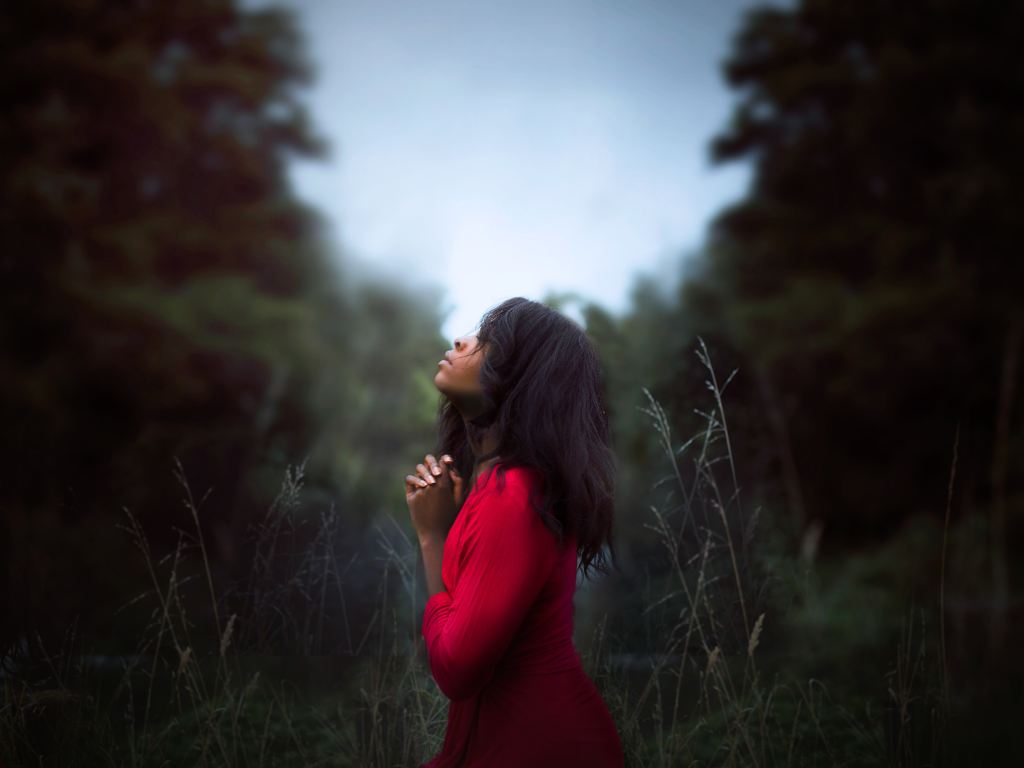
Photo credit: Kazuend

The majority of today’s reading focuses on God’s presence re-entering the new temple and on the ordering of all aspects of worship and temple life. God’s glory fills the temple, leading Ezekiel to fall in worship. God then instructs him to listen carefully and to write down these new instructions. The central focus is on holy versus unholy or clean versus unclean. Building and purifying the altar, proper worship on the Sabbath and during the two festivals (used to be three), honoring the east gate, setting aside sacred spaces, regular offerings – all were aimed at maintaining the holy. To keep and hold these spiritual practices in the highest ways would work against a return to the “detestable practices” of old, to the unholy.

In chapter 47 there is a river that flows from the temple, out the east gate – the gate that God’s holiness entered through. The trickle grows to a vast river that brings life and abundance to the people of God. As God’s presence is brought out into the world, blessings flow with it. This remains true today.

Ezekiel closes by defining Israel’s borders and by allotting land to the tribes. These boundaries connect back to what God originally laid out for Moses back in Numbers 35. Land is allotted, beginning in the north, to Dan, Asher, Naphtali, Manasseh, Ephraim, Reuben, and Judah. Next comes the Holy portion, with the temple at its center. The city and Prince are allotted land here in this central section. Moving to the south, land is allotted to Benjamin, Simeon, Issachar, Zebulun, and Gad. Benjamin and Judah remain central, just flipped from their pre-exile locations. Similarly, the tribes furthest out are the children of the maidservants. Each tribe received an equal portion of the land. This time the Levites are included. The twelve city gates are named after the original sons of Jacob. Joseph’s sons are combined to make space for Levi. God’s new kingdom envisioned here will one day be established here on earth. We await the day!

Prayer: Lord God, what a vision for what will be at the end of this present age. You will be the center, the focus, the life source. Yes, we do await the day. Yet, as we wait, Lord God, use us to draw this world closer to this vision. Use us as the life-giving river that flows out into the world, bringing blessings and abundance into people’s lives. Amen.

Leave a comment

Live Amongst Us

Reading: Ezekiel 38-43

Ezekiel 38:23 – “I will display my greatness, show my holiness, and make myself known in the sight of many nations.”

Chapters 38-39 deal with Gog, a representation of the evil empires. Coming from the north, Gog could represent Nebuchadnezzar. Gog gathers many nations to his side. This mighty army comes to Israel, intent on conquering and looting God’s children. God’s anger is aroused and God unleashes nature on them, followed by turning their swords upon one another. God calls on the birds and animals of prey to feast on the horde’s bodies. So vast was the army, it took Israel seven years to bury the bodies. In the end God promises to pour out “my Spirit” upon Israel. With this Spirit within them, God will never again hide God’s face.

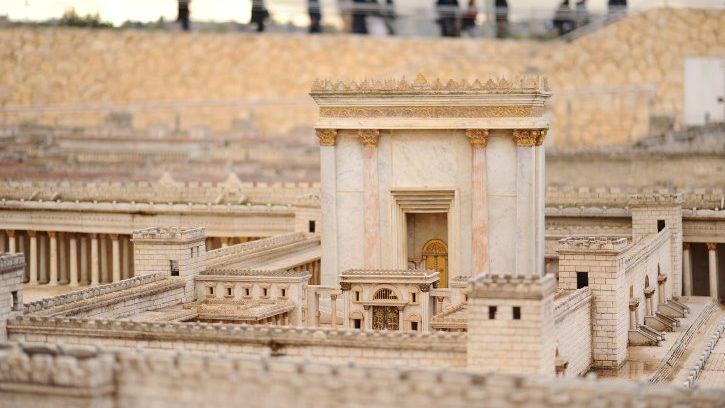
Chapters 40-42 contain the first part of Ezekiel’s temple vision. He is told to pay close attention so he can tell all to Israel. The temple described has some commonalities with Solomon’s temple, but much is different. While a temple will be rebuilt, this temple is never realized in the Bible. Ezekiel’s temple compound is 750 feet by 750 feet. It has three gates, courtyards, chambers, holy places and equipment. The Zadokite clan is set apart as the only Levites to “draw near” to God – to offer sacrifices on the altar. The temple is adorned with winged creatures and palm trees. There are holy chambers, places to store holy things.

The temple is at the center of God’s restoration of Israel, both physically and spiritually. It is a part of the sanctifying process, making Israel into the holy people of God. For Ezekiel and his audience, the temple represented God’s presence with the people. These words and vision bring hope and encouragement to the people living in exile. God longed to live amongst the people of God. God still longs to live amongst us today. May it be so.

Prayer: Lord God, your power and might extend over all things: over Gog and his allies, over today’s idols and temptations, over our selfish hearts. Ezekiel’s temple vision reflects your power and might. But it is still just a building. Just as your presence will fill this visionary temple, fill our hearts with your indwelling spirit, transforming our lives and our hearts. Amen.


Leave a comment

Beautiful Feet

‭Isaiah 49:6 – “I will also appoint you as light to the nations so that my salvation may reach to the end of the earth.”

In today’s readings we have two Servant Songs. In 49:1-7 Isaiah speaks of his calling before birth and of his role to bring Jacob back to God. In verse 6 we hear the expanding of God’s circle: I will also appoint you as light to the nations so that my salvation may reach to the end of the earth.” In 50:4-11 we find the third Servant Song. The prophet is given words by God, words to instruct others in the way of the Lord. The servant suffers but remains faithful to his call. There is a confidence in God’s power and presence: “The one who will declare me innocent is near.” A sure faith resides in the one who loves and fears the Lord.

The tone of the rest of today’s reading is mostly celebratory and joyful. God has chosen Israel. The day of salvation is near. Their compassionate God will make a way home, safely passing through the heat, drinking abundantly of the water God will provide. The deserted land will soon be overflowing with children. Isaiah calls the people to remember Abraham and Sarah and God’s promises to them. God will honor the covenant promises, making Zion into Eden, a place of happiness, joy, and singing.

Here is Second Isaiah we also have other glimpses beyond the return from exile. For God, Isaiah proclaims that righteousness is forever and salvation is for all generations. For the faithful servant, Isaiah declares “how beautiful are the feet” of those who proclaim peace, bring good news, and proclaim salvation. Beautiful indeed! May our feet be beautiful today.

Prayer: Lord God, what hope for Israel and Judah, what hope for us! We too have been chosen, we too have been talked with being “a light to the nations.” Lord, encourage us, empower us, and engage us in bringing the hope we have in you to a world in need of hope. Amen.


Leave a comment

What a Glorious Day

Reading: Isaiah 32-35

‭Isaiah 33:22 – “The LORD is our judge… our leader… our king — he will deliver us.”

Isaiah lifts up the image of a faithful king in chapter 32. This portrait is centered on justice and righteousness. The blind will see, the deaf will hear. When the “Spirit from on high” is poured out, the fruit of righteousness will be peace, calm, and security. Tucked in between these times will be a time of hardship. Isaiah warns the carefree because they will struggle greatly during this difficult time.

Chapter 33 goes back and forth. Assyria will be destroyed. God is our strength and salvation. Jerusalem cries out, the covenant is broken, no one cares for humanity. The Lord arises and stands tall, declaring, “Know my strength!” The devouring fire brings terror to the sinners. A righteous and truthful one will lead. In this hope-filled portion we read, “The LORD is our judge… our leader… our king — he will deliver us.”

Our last two chapters, 34 and 35, are likely from another time and author. Chapter 34 calls for vengeance against Edom. This nation helped Babylon sack Jerusalem in 587 BCE. Edom will experience “a year of payback for Zion’s cause.” Edom clearly falls on the wrong side of God’s “measuring line.” In chapter 35 we find a vision consistent with Second Isaiah. Here we read of the desert coming to bloom and of God’s glory and splendor. The weak and unsteady will have strength and support. The blind, deaf, lame, and mute will be made whole. The righteous will walk “The Holy Way” as they stream home to Zion, ransomed from exile. What a glorious day!

Prayer: Lord God, how we long for leadership marked by justice and righteousness, for a world filled with peace and security, with wholeness for all. We long for you to rise up, to lay low the wicked and the evildoers. We long to walk your holy highway, ransomed from our sin, drawing close to your glorious presence. May it be so, O Lord. Amen.


Leave a comment

Inner Strength

Readings: Psalms 137-140

‭Psalm 138:3 – “On the day I cried out, you answered me. You encouraged me with inner strength.”

Psalms 137 and 138 offer lament and then raise up thanks and trust. These two represent much of what we find in the Psalms and in all of life – highs and lows. In Psalm 137 the psalmist laments a hard experience in exile. Their “tormentors” wanted them to sing a joyful song. How could they sing joyfully in exile? The response, instead, is a plea for Babylon’s (and Edom’s) downfall. In Psalm 138 we see a better choice. The psalmist turns towards Jerusalem and the temple. Here we read, “On the day I cried out, you answered me. You encouraged me with inner strength.” God is faithful. God hears and responds. The Psalm closes with this plea to God: “don’t let go.”

Psalm 139 expresses a deep connection with God. The psalmist recognizes that God knows them inside out. This is at first overwhelming, “too much for me.” There is nowhere the psalmist could go to avoid this overwhelming knowing. Even darkness would be no relief. In verse 13 there is a shift. The psalmist realizes that God knit them together and that God has good plans for them. After a brief dive into hating evil and seeking their destruction, the psalmist returns to self, inviting God to know him or her even more.

Psalm 140 is a plea for protection. For those who plot evil,“spider poison is on their lips.” The psalmist cries out to God for help, hoping for evil’s downfall. In the end, the psalmist knows deep down in his or her heart, “those who do right will live in your presence.” Through all of the highs and lows, for all in between, may this too be our daily choice: to live right, to be in God’s presence.

Prayer: Lord God, through all of life’s ebbs and flows, you are there. Walk with us daily, keeping us from evil and defending us when it arises in our lives. Grow in us a trust in you as our knowledge of you grows in us. Grant us an inner strength in the trials and sufferings, a strength that clings to you. Amen.


Leave a comment

Faithful Love Forever

Readings: Psalms 131-136

‭Psalm 135:14 – “The LORD gives justice to his people and has compassion on those who serve him.”

We begin with Psalm 131, a song of humility. The psalmist isn’t proud or conceited, doesn’t stray from his or her lane. There is contentment in God’s presence. So, “Israel, wait for the Lord.” Psalm 132 speaks of why they can and should. God dwells in the temple and God made a covenant with David. The promise was to have a Davidic king on the throne forever – if they’re faithful. God’s presence provides food, salvation, and protection. The faithful one will shine.

Psalm 133 speaks of unity: “how good and pleasing it is.” Living in unity brings blessings and leads to eternal life, two gifts of God. Psalm 134 gives a pattern of response: lift your hands, bless the Lord! Praise the maker of heaven and earth! Psalms 135 and 136 develop this theme.

Psalms 135 and 136 are very similar. Both call for praising the Lord. Both recall acts that show God’s wonder, power, and might in nature and in Israel’s history. Psalm 135 reminds us that idols are “just gold and silver.” How we still need that reminder. Wealth, in whatever form we chase, is “just gold and silver.” Psalm 136 repeats the line, “God’s faithful love lasts forever,” 26 times. It is the repeated response to all that God has done and to all that God is. May it be our response as well!

Prayer: Lord God, lead us to walk humbly today with you and with all that we encounter. Guide us to live as light, as ones anointed in your love. Remind us too of all the ways that you have compassion on us, your children. And use us today to reveal your faithful love to all of creation. Amen.


Leave a comment

Wait for the Lord…

Readings: Psalms 128-130

‭Psalm 130:6 – “My whole being waits for my Lord — more than the night watch waits for morning; yes, more than the night watch waits for morning!”

Today’s three Psalms form the rest of the “Songs of Ascent.” Now, that’s not to say that Psalm 17 or Psalm 136 couldn’t be sung on one’s way up to Jerusalem. This is so because just like yesterday’s Psalms 120-127 and just like almost any “set” of Psalms, within these three we find cries to God, oppression by the wicked, trust in God to act, and praises for God’s blessings and presence.

Psalm 128 equated being faithful and working hard to having a truly happy life. It offers blessings for a fruitful wife who produces many children, who are like “freshly planted olive trees.” It closes with a hope to “see your grandchildren” – to experience long life, another sign of God’s blessing.

The psalmist cries out for relief in Psalm 129. The enemy has “plowed my back like farmers.” This implies being scourged. Yet God rescued the writer. He or she prays the enemy would be like “grass on the roof” – that they’d experience a very short life because they are evil.

Today’s reading closes with Psalm 130. It is part cry for help, part recognition of God’s great mercy, part encouragement to “wait for the Lord!” The psalmist is in need of forgiveness. They cry out for mercy. They are grateful that “forgiveness is in you” and they acknowledge that without God’s mercy, no one would make it. So they wait eagerly, “More than the night watch waits for morning!” The repetition emphasizes their desperation. The Psalm closes by encouraging Israel to also wait for the Lord. May we do so as well.

Prayer: Lord God, you are so good to us. Your mercy never ends, your grace abounds, your love never fails. You are our guide and our strength, our shield and our defender, our gracious redeemer and our sure hope. Thank you, O Lord our God! Amen.


Leave a comment

For Me. For Us. For You.

Readings: Psalms 113-118

‭Psalm 118:6 – “The LORD is for me — I won’t be afraid. What can anyone do to me?”

Today’s six Psalms are known as the “Egyptian Hallelujah.” These words of praise were recited each year at the Passover meal. Psalms 113 and 114 were recited before the meal. These Psalms celebrate God’s actions on behalf of the poor and needy and on behalf of Israel during the exodus. Psalm 113 exalts the God who lifts up the poor, who raises the needy, who brings the barren woman the joy of motherhood. These words echo “Hannah’s Song” from 1st Samuel 2 where God acted on behalf of the faithful. Psalm 114 remembers the parting of the sea and river, the bringing of water from the rocks – more signs of God’s faithful love.

After eating the Passover meal, Psalms 115 through 118 would be recited. Although lost in translation, Psalms 115 and 118 were originally written and spoken as call-and-response liturgy. Psalm 115 lifts up God’s power and might, contrasting God with worthless idols who “have mouths, but they can’t speak.” God is Israel’s “strength and shield.” 115 closes with blessings to all. Psalm 116 is a celebration of an individual’s rescue, reminding Israel that God is a personal God too. Because of God’s deliverance the individual will “lift up the cup of salvation… will keep the promises” made to God. Psalm 117 lifts up God’s strong love.

The Hallelujah closes with Psalm 118. The setting is an individual coming to the temple to give thanks to God. This Psalm calls Israel, the priests, and all who honor the Lord to declare, “God’s faithful love lasts forever!” Because of their experience with this in the exodus, the psalmist writes, “The LORD is for me — I won’t be afraid. What can anyone do to me?” God was faithful. God is faithful. God will be faithful. What is to fear?

Verses 22 and 27 are often connected to Jesus – the stone rejected, the light that shined, the offering led to the new altar, the cross. These are echoes found in the ever expanding story of God’s love, reflections on the final Passover lamb.

Prayer: Lord God, today’s words celebrate your presence with your people. Just as you rescued and delivered, just as you provided and made a way, do so for us in our lives too, O God. We seek to walk in your strong and faithful love, a love that lasts forever. Thank you, Lord, for your love. Amen.


Leave a comment

An Extension

Readings: Psalms 108-112

‭Psalm 111:3 – “God’s deeds are majestic and glorious. God’s righteousness stands forever.”

Psalms 108 and 109 seek God’s presence in the struggles against enemies. Psalm 108 begins with praise to God. The psalmist’s “unwavering heart” will make music for all people, proclaiming God’s faithful love. The Psalm celebrates God choosing Gilead, Manasseh… and rejecting Moab, Edom… Yet the writer turns in verse 11, asking the familiar question: Where are you, God? The psalmist asks for God’s help because “human help is worthless.” Psalm 109 seeks God’s help too – just on a personal level. Verses 6-19 detail the “hateful words” spoken by the enemies. From a place of weakness the psalmist begs God to shame and disgrace his or her enemies.

Psalm 110 speaks of kingship. It invites God’s presence with the king, allowing the “mighty scepter” to reach far. The psalmist calls to mind God’s “solemn pledge” to establish the kings. The Psalm closes with a reminder that God’s justice will reign.

Psalms 111 and 112 are similar. They praise God’s work and the workings of a righteous life. There is a parallel here. In Psalm 111 the psalmist praises God’s works as magnificent, majestic, and glorious. God’s righteousness, mercy, and compassion are celebrated. God’s handiwork is honesty and justice. God brings redemption. It closes proverbially: “Fear of the Lord is where wisdom begins.” Psalm 112 echoes these traits of God. The people of God are to be an extension of God. We are to be righteous and generous, merciful and compassionate. In the end, then, we too will see our enemies’ defeat. Death and pain and oppression and struggle will be no more. Thanks be to God.

Prayer: Lord God, your presence is what we need. Whether beset by enemies or praising your glorious reign, we need your presence. On the stormy days and on the days of joy and peace, be present to us, O God. Guide us to walk and live faithfully, shining your love onto and into the world. Amen.


Leave a comment

A Yearning for God

Readings: Psalms 79-84

Psalm 84:10 – “Better is a single day in your courtyards than a thousand days anywhere else!”

Disaster has come upon Israel. Psalm 79 details how the temple was defiled, the walls were ruined, and the people were killed. The psalmist asks, “How long will you rage?” That is a question we all ask during extended seasons in the dark valleys. The psalmist begs for deliverance – and for vengeance. God pay them back. And remember us, the sheep of your own pasture.

Psalm 80 continues this plea. The psalmist reminds God that Israel is the vibe that God brought out of Egypt and planted in Zion. The vibe is now chopped down and burned. O God, attend to your vine. Be with us God and we will not turn away. Psalm 81 functions as a response from God. It begins with a call to praise God but quickly God begins to speak (through the psalmist’s words.) These words begin with a remembrance of the exile from Egypt. God warned them about idols but the people didn’t listen. God laments, only if they could “walk in my ways.” God would then subdue their enemies and feed Israel the finest wheat and honey. If only we would turn from our idols… then God would give us hope, peace, joy, grace…

Psalm 82 gives us a peak into ancient thought. In the divine council God questions how justice is (or isn’t) being administered. It seems that the “lesser beings” are not properly caring for the poor… God removes their immortality and steps in as the judge.

A call for God’s actions fills Psalm 83. The enemies have gathered and threatened Israel. The psalmist calls for God to act, to make the enemy “like tumbleweeds.” Then all will know that God alone rules over the whole earth. At times in our lives we can pray these prayers. We just want God to remove that which is causing us pain.

Our readings close with Psalm 84. These are beautiful words about being in God’s home. It begins with a yearning to be with God. The psalmist declares, “Better is a single day in your courtyards than a thousand days anywhere else!” Oh to be in God’s presence. Oh to experience God’s favor and glory. Oh to trust in the Lord our God. Oh we yearn to have God’s presence all around us. May it be so.

Prayer: Lord God, you are the Lord of all creation. You are our good shepherd who watches over us, leads us, provides for us. When we stray, pull us back into the fold, back into the presence that is better than life itself. Thank you, God. Amen.