pastorjohnb

Thoughts and musings on faith and our mighty God!


Leave a comment

A Profound Sense of Gratitude

Reading: Deuteronomy 26:1-11

Deuteronomy 26:10a – “I am bringing the early produce of the fertile ground that you, Lord, have given me.”
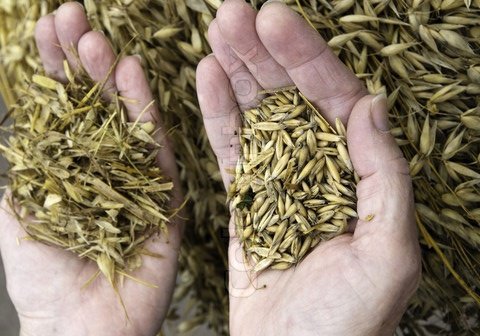
Our first readings this week focus in on giving thanks to God. In our Deuteronomy reading, the Israelites have just come out of many years of bondage and oppression in Egypt. They’ve most recently spent 40 years wandering in the wilderness, testing God and learning from their sinful mistakes. The Israelites have now been prepared to enter the Promised Land. As God has done for the years in Egypt and in the wilderness, God will continue to provide for God’s people as they enter into their inheritance.

As an expression of gratitude and dependence, each Israelite is to take some of the “first fruit” of the land and to bring it as a sacrifice to God. “First” implies not only earliest but also best or chief. God is calling for all of this from the people, giving to God before anything else. The solemn statement in verses 5 through 10a is a reminder of all that God has done since the time of Jacob. This reflection would raise up in Israel a profound sense of gratitude and an awareness that all that they have comes from God.

The reflection ends with these words: “I am bringing the early produce of the fertile ground that you, Lord, have given me.” For the Israelites this was their actual first fruits. What could we substitute into “I am bringing ____ that you, Lord, have given me.” What “crop” or talent or wealth or time could give to God with a profound sense of gratitude? How would being aware of this offering as a returning of something that really already belongs to God increase our thanksgiving? Take a few moments to ponder what you could give and then commit to offering these things with thanksgiving in your heart.

Prayer: Lord God, you are the giver of all things – material, spiritual, physical, relational, communal. Shape our hearts to be grateful for all that we have. Form us into people who generously return some of these blessings to you, O God, for the building of your kingdom in this time and place. Amen.



Leave a comment

Humble Surrender

Reading: 2nd Kings 5:1-3 and 5-14c

2nd Kings 5:14b – “Now I know for certain that there’s no God anywhere on earth except in Israel.”

Photo credit: Shane Rounce

A powerful general from Aram has a skin disease. Unlike in Israel, this does not make him an outcast in his country. But this disease still creates a physical need for healing. By chance (?) an Israelite girl is a slave in Naaman’s home. She comments, ‘Only if my master could see the prophet in Samaria…’ In no time, Naaman is off to Israel’s king – letter, thank you gift, and entourage in tow. The king of Israel is powerless to heal him so he receives this visit as an attempt to pick a fight. Elisha the prophet hears of this and tells the king to send Naaman his way.

Ultimately following Elisha’s simple directions, Naaman is beyond healed. His skin was restored to the skin of his youth. Not just the bad spot was cleansed. Returning to Elisha’s house, Naaman declares, “Now I know for certain that there’s no God anywhere on earth except in Israel.” The outsider, the foreigner, is profoundly affected. Professing his faith in God alone, Naaman will bring dirt back home so that he has a place to worship God. The cleansing of his disease has begun Naaman on a path that leads to wholeness for Naaman. This is found only in a relationship with the Lord.

Wholeness comes through living daily in a right relationship with God. This week we’ve talked about one means to focus on living this way. The Examen’s steps of request, relish, review, repent, and resolve take us daily to a place of honest reflection and introspection, drawing us closer to the Lord, empowering our daily walk. This discipline is grounded in humility and surrender. Kneeling on proverbial dirt, may we worship the Lord our God each day.

Prayer: Lord God, we can struggle as Naaman did, allowing pride and status to mislead us, to keep us from a place where we open ourselves up to your healing power. Like the servant who called him to humble surrender, may we hear the voice of your Spirit calling us to this place daily. Amen.


Leave a comment

Fire and Water

Reading: Psalm 66:5-12

Psalm 66:10 and 12 – “But you, God, have tested us – you’ve refined us like silver… we’ve been through fire and water.”

In today’s verses from Psalm 66, the author invites the reader to remember how “awesome” God’s works have been. The specific event remembered is the crossing of the sea. With Pharaoh’s army in hot pursuit, God “turned the sea into dry land” so that Israel could pass through the waters. The nation rejoiced in God’s power as the water closed back in on the Egyptians, freeing Israel. The rebellious leader (and his army) that had exulted self over God was no more. Israel took this as a word of warning against exulting self over God.

The third step in the Examen is “review” – the practice of looking back over the past day. While the corporate review of a major act of God is good for Israel and for our faith, it is the daily reflection that will shape and form us more intentionally. In reviewing the past day we ask ourselves questions like these: When did my words, actions, and thoughts bring healing or hope or light into another’s life? When did my words, actions, or thoughts bring harm to another or to myself? Where was God present? When did I miss or ignore God’s presence? How was I blessed? When did I bless others? When and how did I sin or otherwise fall short?

While the psalmist first celebrates God’s saving acts (relish), the second part of our reading reveals thoughts on these kinds of “review” questions. In verses 10 and 12 we read, “But you, God, have tested us – you’ve refined us like silver… we’ve been through fire and water.” The movement of review reminds us of the waters and fires of our previous day. Both the blessings and the struggles have things to teach us – most profoundly when we are very intentional in our time of reflection. May it be so for us each day as we practice this deep spiritual discipline.

Prayer: Lord God, be with us in Spirit as we pause to reflect on our past day. Help us to be honest – both with the good and with the bad of the day. Guide us to be truthful with ourselves and with you. Lead us to see where change and faith can be applied in order to deepen our walk with you and with one another. Amen.


Leave a comment

A Deeper Faith

Reading: Psalm 66:1-4

Psalm 66:1-2 – “Shout joyfully to God, all the earth! Sing praises to the glory of God’s name!”

Psalm 66 is a celebration of God’s mighty acts amongst the people of Israel. In the opening verses the psalmist invites us to “shout joyfully” and to “sing praises” so that God is glorified. In our walks of faith, gratitude and praise are two essential practices. Often in our life of faith, it is gratitude that leads to praise. In the first verses of Psalm 66 the gratitude comes from seeing God’s strength rescue Israel from “your enemies.” Being saved leads Israel to praise and glorify God. While it is a good habit to praise God, our relationship with God is about more than God thanking God for saving us. We’ll explore some other practices a bit today and throughout this week that can deepen our walk of faith.

In this week’s Disciplines, Rev. Dr. Mark Wethington shares insights into an ancient spiritual discipline established by Ignatius of Loyola called the Examen. This regular practice looks back and reflects on a period of time, usually a day. A modern take on this 16th century practice offers us the five R’s as a means to remember the steps: request, relish, review, repent, resolve. The practice begins with requesting God’s presence during this time of reflection and introspection. One then relishes God’s presence and blessings in the day. This is followed by a review of one’s day – what sins and failures were there? The movement turns next to repenting of the ways that one fell short and, lastly, one resolves that through God’s grace one will strive to live more like Christ in the next day.

As we work through this week’s lectionary readings we will do so with the five R’s in mind. There is not always a linear pattern in the scriptures. For example, Psalm 66 begins with “relish,” but will turn to “request” as we read the next verses later this week. As we close today, please take a moment to work through the five R’s. Each day this week, following the example given in the Disciplines, we will add depth to our practice of this ancient spiritual discipline.

Prayer: Lord God, guide us this week as we practice this ancient way of drawing closer to you day by day. Work within our hearts to form us more into the image of Christ. Thank you, Lord. Amen.


Leave a comment

Our Simple, Normal Response

Reading: 1st Kings 18:16-39

1st Kings 18:21 – “How long will you hobble back and forth between two opinions?”

Continuing the story today, as Ahab and Elijah meet, Ahab asks, “Is that you, the one who troubles Israel?” This is the question of a man trying to blame the consequences of his sins on another. Elijah says as much. It is Ahab and family who have deserted God for Baal. A showdown is set up to occur on Mount Carmel. It will be a battle between God and the pagan gods Baal and Asherah. Once gathered with all the people of Israel, Elijah asks them, “How long will you hobble back and forth between two opinions?” What great words choices: hobble and opinions. What a picture they paint!

This is a question that we could be asked frequently. It happens when we silence the voice of the Holy Spirit instead of challenging sinful behavior – in self or in others. It happens when we are less than we are created and called to be in order to attain material gain or some other earthly treasure. It happens when we gossip or tell a white lie or… instead of holding true to our faith. These are but a few of the ways that we hobble back and forth between God and the world.

In the showdown the pagan prophets go first. No matter what they do, no matter how extreme they get, their gods don’t answer. They’re not real. Elijah begins by rebuilding the altar that Ahab has destroyed – one stone for each tribe of Israel. Once all is readied, Elijah has water added to soak the sacrifice, wood, and altar. After lifting a simple prayer centered on changing hearts, the fire of God falls, consuming everything – even the water. In response to this awesome display of power, the people exclaim, “The Lord is the real God!” Oh, if this would just be our simple, normal, 24/7 response. May it be so.

Prayer: Lord God, how we tend to hobble back and forth. We’re filled up on Sunday morning, readied to take on the world for you. But how soon that fire can be doused, cooled, tamed when left unattended. Lord, day by day draw us to you through moments of prayer, study, reflection, and praise. Lead us to be filled again and again, over and over. Equip us to choose faith and to stand with you in each moment of decision each day. Amen.


Leave a comment

Draw Others In

Reading: John 18: 33-34

Verse 34: “Is that your own idea, or did others talk to you about me?”

Photo credit: Elisa Ph

In this week’s gospel writing we jump over to John. In today’s passage we find Jesus brought before Pilate, the Roman governor. The religious leaders hope that Pilate will crucify Jesus because they do not have this power under Roman law. They did not answer Pilate’s question concerning the charges brought against Jesus. As our passage begins Pilate asks Jesus if he is the king of the Jews.

It was often Jesus’ practice to answer a question with a question. This practice invited more conversation and regularly led to a time of reflection and introspection. For those interacting with Jesus it led to a deepening of the connection and sometimes was the start of a relationship. Jesus asks Pilate, “Is that your own idea, or did others talk to you about me?” From the text that we have in the first part of John 18, we know that the religious leaders did not identify Jesus this way. Pilate must have at least known of the contention between Jesus and the religious leaders. He must have had some knowledge of Jesus and his teachings and the working of miracles. Some news of Jesus must have made its way into the halls of Roman power. Jesus invites Pilate to consider what he has heard at a deeper level, at a personal level.

If we are living out our Christian witness we too will have opportunities to engage in conversations of faith. In many of these instances we can practice what Jesus does here. If, for example, someone asks about the peace we have in difficult or stressful situations, we can ask when they saw this or how it seemed to make a difference. Or if someone asks how we love or are kind to those that others struggle with, then we could ask them if they’ve ever felt unloved or we could inquire about their thoughts on why we might love in this way. Sometimes we must answer the question, sharing the power of Jesus Christ. But some of the time we will have opportunity to ask questions that deepen or prolong the conversation, questions that invite the other into reflection and thought. Leading others deeper into a relationship with Jesus is a calling we all have. May our actions and our conversations draw others in, leading them one step closer to Jesus.

Prayer: Lord God, guide my thoughts and words when others ask about my faith. Give me wisdom and insight. Give me a heart for the other. In all I say and do may you be glorified. Amen.


Leave a comment

The Vine

Reading: John 15: 1-8

Verse 5: “I am the vine; you are the branches. If a man remains in me and I in him, he will bear much fruit”.

Photo credit: Rohit Tandon

Jesus begins John 15 with a familiar analogy. Vineyards were common in Israel – a good topic to use to describe the connection between disciples and the divine. In the first verse Jesus establishes himself as the vine and God as the one who tends the vine. You and I are branches.

Over the years, on my walk of faith, I have found it very important for me to stay closely connected to Jesus. Has this been true for you? When I am faithful about my personal disciplines – early morning prayer, reading and study, reflection, journaling – then my daily life is better aligned with Jesus’ mission. In those seasons when I am just going through the motions, my connection weakens and my faith begins to get dry and stale. Challenges and difficulties arise during both seasons. Working through these with Jesus is much different than going it on my own. Has this been your experience too?

A grape vine, like all living organisms, is either growing or it is dying. Seeing the leaves and then the grapes appear and mature is easy. Noticing the vine growth is not so noticeable. Left unchecked a vine will grow and grow. If left on its own, the vine growth will decrease fruit production. This reminds me of something that I must guard against. In ministry it can be easy to say ‘yes’ to many things. I’m active and am a doer, so this is my natural tendency. I want to try new things, to offer more opportunities, to just keep adding. Because of this tendency, I am thankful for the gardener. At times God prunes me. The Holy Spirit reveals a busyness that can be let go. A fellow Christian questions my latest, greatest idea or impulse. A colleague in ministry helps me to return to the focus of my calling. Each of these persons reminds me of the truth of verse five: “I am the vine; you are the branches. If a man remains in me and I in him, he will bear much fruit”. To bear fruit you and I must remain closely connected to Jesus Christ, the source of our faith and love. May it ever be so for you and for me.

Prayer: Loving God, day by day, draw me to you. Fill me each mourning, nourishing me for the day ahead. Guard my heart and mind, leading me to walk the path you purpose for me. Connected to your son, may we bear much fruit. Amen.


Leave a comment

Looking Up

Reading: Numbers 21: 4-9

Verse 7: “We sinned when we spoke against the Lord and against you. Pray that the Lord will take the snakes away from us”.

Photo credit: Carolina Jacomin

As the Israelites near the end of their journey in the wilderness they are tired, impatient, and irritable. Three weeks into Lent and perhaps a few of us grow tired of the themes of reflection and introspection. In the bigger picture, today the source of our weariness and impatience and irritability is the pandemic. As the Israelites grumble against God and Moses, they are expressing these emotions. They long to go back to what was. Tired of their current situation, they let go of their frustration via complaint. This is the fifth complaint story during their wilderness journey. God has had enough. God sends venemous snakes among the Israelites and many die. Consequences.

Like Jesus’ subversive actions in the temple, this response of God makes us feel a little uncomfortable. Our reality, though, is that we have been here too. We have had the tables turned over a time or two or… We have been bitten by our poorly spoken words or via our sinful actions. We too have experienced how the pain drives us to confession and repentance, to turning back toward God. As we look up to the Lord, just like the Israelites did, we find reconciliation and restoration and forgiveness. God is faithful and moves quickly to bring us back into right relationship.

Lent is a wilderness experience, a season of introspection and reflection. In that spirit, let us consider times when our actions have harmed or caused pain for others. Perhaps we are in the midst of such a time. What words spoken have caused harm? What actions have damaged relationships? What words left unspoken or actions left undone have allowed harm or pain to continue? To wrestle with these questions first requires a humble and contrite spirit. On Ash Wednesday we were reminded that this is the posture of Lent – a humble and contrite spirit. It is what leads to a new heart within us and to the place of healing that God so graciously offers.

The Israelites looked up to the reminder that God is in control, to the serpent fashioned by Moses. Today, we lift our eyes to our source of healing and hope, to the one who offers mercy and grace, restoration and wholeness – Jesus Christ. On this Lenten journey, may the God of love continue to sustain you and to give life, even in the wilderness.

Prayer: Lord of life, you are so gracious and merciful and kind. Your love is overwhelming, your patience without end. Just as you continued to walk with the Israelites, walk with me day by day. Reveal to me the ways that I have caused and do cause harm so that I can repent and become more like your son, the Christ. Amen.


Leave a comment

The Journey

Reading: Psalm 25: 1-10

Verse 9: “He guides the humble in what is right and teaches them his way”.

Photo credit: Jan Huber

Today’s Psalm is about the trust and assurance that King David has in God. David begins Psalm 25 by lifting his soul up to God. This is what we do in Lent – this season of reflection and introspection. David asks not to be put to shame by God or by his enemies and perhaps not by himself. David then asks God to “teach me your paths”. David wants to know God’s ways, to be guided by God’s truths. His heart desires a closer walk with God. This desire is a the heart of the Lenten season as well.

In verse nine David writes, “He guides the humble in what is right and teaches them his way”. Humility is an essential part of our journey. If we are not humble we can get caught up in the shame that comes with our failures and sins, especially when we internalize the shame. Humility reminds us that we are not perfect and that we do not have to live out our faith on our own. God’s Spirit and the Word and our brothers and sisters in Christ walk alongside us. Humility allows us to learn and grow, both from our mistakes as well as our successes because both are grounded in the goodness and steadfastness of God.

Just as life was for King David, our Lenten journey will not be one steady ascent to the pinnacle of Easter Sunday. While we hope to continue growing closer and closer and to be more and more like Jesus during these forty days, we will have setbacks and pauses. We are limited and imperfect. In verse ten we read, “All of the ways of the Lord are loving and faithful”. All. Each day of our Lenten journey may we keep these truths in mind, allowing them to guide and empower our journey together with God and with one another. May it always be so.

Prayer: Lord God, as I lift up my soul to you, refine it as you may. Teach me your ways so that I may faithfully walk the path to the cross. When I stumble, as I know I will, lift me up and set me back upon your path. Amen.


Leave a comment

Pleasing to God

Reading: Isaiah 58: 1-12

Verse 4: “You cannot fast as you do today and expect your voice to be heard on high”.

Photo credit: Jordan Wozniak

Today is Ash Wednesday. This is a great passage to consider as we prepare to journey into the season of Lent. The words of this Psalm are a wake up call to Israel and to all who approach their relationship with God superficially.

The ashes that we will place on our foreheads reminds us of our mortality. Ashes were used for this same purpose in the days of Isaiah. Remembering our mortality reminds us that we are finite, limited, imperfect. Today begins the season that culminates the Saturday before Easter Sunday. On Easter Sunday we celebrate Jesus’ triumph over the grave. In his resurrection we find our eternal hope. We are invited to walk through Lent as a season of preparation for that day. These forty days are a time of reflection, introspection, refining.

The people of Isaiah’s day were putting ashes on their foreheads, wearing sack cloth, bowing their heads to God. They were exhibiting all the outward signs of fasting. Today we can show up at church and have a cross drawn on our foreheads. We too can go through the motions. In our passage God’s people fasted, yes, but also continued to exploit the marginalized, to strike one another with “evil fists”, and to ignore the injustices and the oppression all around them. Verse four sums up God’s response: “You cannot fast as you do today and expect your voice to be heard on high”. We cannot come to church and go through the motions of worship or Bible study or youth group and then go out and live as the world lives.

In verses six and seven God shares the kind of fast that is pleasing to him. As fast pleasing to God changes our hearts and leads us to fight injustice, to set the oppressed free, to share food with the hungry, to give shelter to the wanderer, to clothe the naked. In Lent we are called to look within, to repent of our sins, our selfishness, our indulgences. Doing so we will come to have a heart focused on drawing God’s kingdom near.

Verse eight reveals what happens when God’s people turn towards him and become like him: “Then your light will break forth like the dawn and your healing will quickly appear”. May it be so.

Prayer: God of the brokenhearted, the oppressed, the downtrodden, the needy – lead me to the place of honest confession and sincere repentance. Make me aware of how I contribute to the pain and misery of the world and turn me from my harmful and hurtful ways. Kill in me all that keeps me from fully loving and serving you and all of my brothers and sisters in Christ. Amen.