pastorjohnb

Thoughts and musings on faith and our mighty God!


Leave a comment

Faithful Love

Reading: Psalm 118:1-2 and 19-24

Psalm 118:22 – “The stone rejected by the builders is now the main foundation stone!”
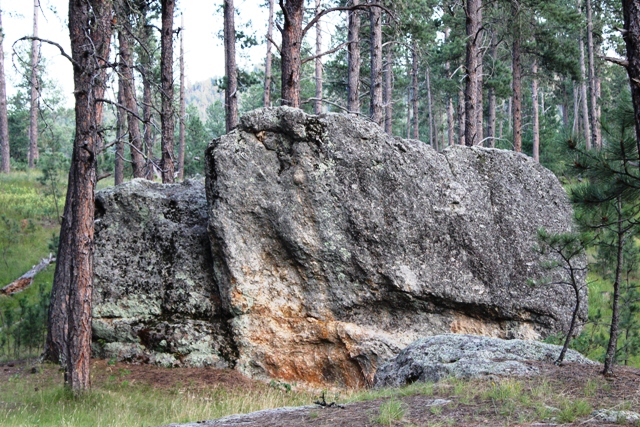
Psalm 118 is a song of praise that celebrates God’s deliverance. Originally used as a song that was sung after the Passover meal, it celebrated Israel’s exodus from slavery in Egypt. These words, however, also carry a broader meaning. This song extolling God’s love and goodness can be applicable at other times.

Verses 1 and 2 would’ve been used call-response style. The leader would declare verse 1: “Give thanks to the Lord, because he is good, because his faithful love lasts forever.” The gathered people would respond: “God’s faithful love lasts forever!” What a great reminder as one begins to offer a response to the Lord.

Skipping to verses 19-24, the scene shifts to the temple entrance. The writer asks for the gate to be opened. The response reminds the people that only the righteous may enter the Lord’s gate. Qualifying and entering the temple, the psalmist thanks God for answering his or her prayers. This prayer is about restoring Israel. In verse 22 we read, “The stone rejected by the builders is now the main foundation stone!” Restoring what was once held in slavery and oppression, Israel is once again God’s people, living in the Promised Land. Israel rejoices in and celebrates this time of salvation.

These verses also connect to Jesus. On this Holy Saturday we can rejoice and celebrate that the one who was rejected and killed by Israel’s religious leaders has become the cornerstone. In and through his death we’ve been freed from our slavery to sin. Tomorrow we celebrate the salvation given to us through his resurrection. Thanks be to the God whose faithful love lasts forever and ever!

Prayer: Lord God, we celebrate and rejoice in your great love for us. Walk with us and draw us into your righteousness. Lift our voices in praise and our lives in faithful witness to your saving grace. Amen.


Leave a comment

Many Are Healed

Reading: Mark 6

Mark 6:34 – “He had compassion on them because they were like sheep without a shepherd. Then he began to teach them many things.”

Photo credit: Jennifer Araujo

Today’s readings begin in Nazareth, Jesus’ hometown. At first people were surprised by his teaching authority. But then they think, “Isn’t this [just] the carpenter? Isn’t he Mary’s son…?” These thoughts lead to a rejection of Jesus as Messiah. Their unbelief greatly limits his ability to heal. He departs and begins to minister in the surrounding villages. He sends out the 12 two by two. They teach, heal, and cast out demons. They return with excitement, with stories to share. Jesus decides to take them away to a quiet place to rest, but the crowds follow on shore. In between these two events Mark drops in the story of the death of John the Baptist. He does so to tell us that even the king has heard of Jesus.

After landing ashore we read, “He had compassion on them because they were like sheep without a shepherd. Then he began to teach them many things.” After teaching all day in a remote place, the disciples ask Jesus to send the crowd away so they can buy food. Jesus tells the disciples to feed them. The impossible becomes reality as Jesus feeds the huge crowd from five loaves and two fish. So great is the blessing there are twelve baskets full of leftovers. After sending the 12 on ahead, Jesus dismisses the crowd and goes up the mountain to pray.

In the night the winds come up and the disciples are struggling along. Jesus walks across the lake. Mark notes, “intending to pass them by.” Why, why, why?! We’re left to ponder this. At first the disciples are afraid: is it a ghost? Jesus encourages them and then climbs in the boat. The wind dies down. They are “baffled” by this Jesus.

Our reading today closes in Gennesaret, a town close to Capernaum. The locals recognize Jesus and bring their sick to Jesus. Many are healed – even those that just touch his clothes. Jesus, through the Spirit, continues to bring healing and wholeness to our lives and to our world. Thanks be to God.

Prayer: Lord God, you continue to have compassion for us, your children. We are so grateful. Yet today many are like the crowds – they know of you and your power but they don’t know you. Through the power of the Holy Spirit and through our witness, Lord, make Jesus known today. Bring healing and wholeness to our world. Amen.


Leave a comment

The Cornerstone

Reading: Matthew 21

Matthew 21:21 – “I assure you that if you have faith and don’t doubt… You will even say to this mountain, ‘Be lifted up and thrown into the lake.’ And it will happen.”

Photo credit: Aaron Burden

Today’s reading begins with Matthew’s version of what we know as Palm Sunday. Jesus’ triumphal entry is highlighted by praise and adoration from the crowd and from his disciples. There is a buzz in the city. Jesus rides this wave into the temple, where he overturns tables and chairs, throwing out those who have made “God’s house of prayer” into a “hideout for crooks.” He then heals the blind and lame who come into the temple – likely for the first time since becoming blind or lame. Children run around the temple shouting praises. The religious leaders are deeply offended by all of this.

Returning to the city the next morning, Jesus curses a fruitless fig tree. The disciples are amazed at his power. He says to them, “I assure you that if you have faith and don’t doubt… You will even say to this mountain, ‘Be lifted up and thrown into the lake.’ And it will happen.” Build your faith on me, he says, and be amazed at what God will do. As Jesus enters the temple again we see the opposite of this. The leaders question Jesus’ authority. His response begins with a question: Where did John the Baptist get his authority? There is no right answer for the religious leaders. So Jesus tells two parables to reveal their lack of faith and to condemn their fruitless ministry.

In the first parable the religious leaders know it is the first son who does the father’s will. He was obedient. Jesus then tells these leaders that tax collectors and prostitutes are entering the kingdom ahead of them. They heard and believed John, changing hearts and lives. Even this fruit didn’t convince the religious leaders to change. In the second parable tenants mistreat and even kill some of the servants sent to collect fruit. They then kill the son who is sent. The religious leaders tell Jesus that the owner will “totally destroy” these wicked tenants. Jesus then quotes Psalms, claiming to be the stone that the builders rejected. But he tells the leaders that this stone will become the cornerstone, the foundation of the new, coming kingdom.

Prayer: Lord God, you call us to shout “Hosanna!” with our voices and with our actions – not one day a year but every day. When things get in the way of us doing this, clear our lives like Jesus cleared the temple. Build up in us a faith without doubts, a faith that stands firmly on the cornerstone, on Jesus Christ. Amen.


Leave a comment

Place of Rest, Strength, and Refuge

Readings: Psalms 60-63

‭Psalm 63:3 – “My lips praise you because your faithful love is better than life itself!”

Today’s Psalms provide a great and familiar pattern. Psalms 60 and 61 are prayers for God’s help. Psalm 62 confesses that God alone is the source of the strength that we need. Psalm 63 is a song of confidence in God. We often experience this movement in our lives. We cry out in the storm, God’s strength gives us a way through, we praise God.

Psalm 60 is a communal plea for help. Israel feels rejected – even though God once claimed Gilead, Manasseh… David asks God for a “flag” to rally around – a champion who will lead Israel to defeat the enemy. He closes with a plea for help against Moab, Edom, and Philistia because “human help is worthless.” How true. Yet how often do we try to win the battle on our own?

We enter a more personal plea in Psalm 61. The lament begins “When my heart is weak”… then God can be the rock, refuge, and tower of strength. The author longs to be in God’s “tent” (tabernacle.) The Psalm closes with a prayer for the king to live long and to be “enthroned forever before God.” Thoughts of dynasty echo here.

A shift comes in Psalm 62. God is the psalmist’s place of rest. God is his or her rock, salvation, stronghold. Then there is a reflection on life beginning in verse 9. Life is but a breath. So don’t trust in violence or in wealth. Trust in God’s faithful love and strength because God “will repay everyone according to their deeds.”

Most of Psalm 63 focuses on God’s power… David searches for, thirsts for God. David recalls encountering God in the sanctuary. With rejoicing he declares, “My lips praise you because your faithful love is better than life itself!” He finds joy when he meditates on God’s word. Then there’s a hard right at the end – destroy my enemies! Alas David.

Prayer: Lord God, be with us all of our days. When we or our community is suffering, be our strength and our place of rest and refuge. Guide us to place our trust fully in you alone. Only you can bring us through. Draw us into your presence and guard our hearts from evil thoughts. Justice is yours alone to hand out. Walk with us, O God, our rock and our stronghold. Amen.


Leave a comment

God’s Power Alone

Readings: Psalms 42-45

‭Psalm 44:25-26 – “Look: we’re going down to the dust… Stand up! Help us! Save us for the sake of your faithful love.”

Psalm 42 expresses a longing for God’s presence. This longing is something we’ve all felt. We all have dry seasons when our “whole being craves you, God.” Our tears too have been our food. In those moments it is important to remember God’s faithful love in the past. It is important even then to lift a song of praise to God. As the refrain says, “Hope in God! Because I will again give him thanks, my saving presence and my God.” God is unchanging. This truth will ever be true. God is our hope.

Psalm 43 is a continuation of Psalm 42. It closes with the exact same refrain. The writer calls for God’s light and truth. These will guide the psalmist; they will guide you and me. They lead to God, “my joy and my delight.”

Lament returns in full force in Psalm 44. It is a communal lament. The psalmist begins by remembering God’s guidance and provision in the past. This recalls Joshua’s conquest of the Promised Land, when God went before Israel. There is a recognition that it was God’s power alone that brought victory. It is the very thought that they count on now that they’ve been “rejected and humiliated.” When we struggle we too can draw upon God’s power, upon our memories of when God made a way. Remembering is a form of praying our faith forward. A desperate plea closes Psalm 44: “Look: we’re going down to the dust… Stand up! Help us! Save us for the sake of your faithful love.” Oh how we’ve prayed these words in our own translation. And may we pray them again and again.

As I began reading Psalm 45 at first I thought: “What?! A love song?!” Why, yes, a love song of God to God’s people. An invitation to celebrate, to be, to live out grace and beauty, truth and righteousness, humility and justice. From one generation to the next may our whole being embody, reveal, and bring praise to God forever and ever.

Prayer: Lord God, a song echoes in my mind: “Oh no, you never let go. In every high and every low, Lord, you never let go of me.” In seasons of disconnection, in times of suffering, in the valleys and on the mountaintops, may we declare your glory with our lives. May we trust daily in the only one who saves, in you, our God and King, our Lord and Savior. Amen.


Leave a comment

Words of Life

Reading: Jeremiah 15:15-21

Verse 19c: “Let this people turn to you, but you must not turn to them.”

Chapter 15 begins as a dual lament. God laments the disobedience and hard hearts of the people. Jeremiah laments where he finds himself – cursed and rejected, abused and alone. This leads him to wonder if God even cares. Our passage today begins with Jeremiah asking for God’s care – via revenge on his enemies. That’s a snapshot into his current emotional state. He laments how taking in and proclaiming God’s word has led him to being an outcast. He asks God why his pain – both physical and emotional – is unending. And then he questions God’s reliability, equating God to “a spring that fails.” His pity party has him spiraling deeper and deeper.

God takes no offense. God understands how hard it is to speak truth to a people bent on evil. God understands how frustrating it is to offer true and abundant life to a people refusing these gifts to chase after the things of this world. God understands because God has been here before and because God is once again torn up about the people’s choices. In grace, God invites Jeremiah back to the task, back to right relationship, back to speaking “worthy” words, back to holy living. This is a great challenge to Jeremiah, to live in the world but not of it. We too wrestle with this challenge.

Much of life is spent living in the world. We too are called to a holy life. God promises to be with us too, to “rescue and save you.” In those moments of doubt and questioning, may we recall these words of truth: “Let this people turn to you, but you must not turn to them.” We know the words of life. We know God is with us. May we ever stand upon these truths.

Prayer: Lord God, when the steps are hard, whisper your words of love. When the temptation to lessen who I am to fit in or to avoid conflict arises, whisper your truths. Strengthen and encourage me for all that living in this world brings. Amen.


Leave a comment

Hear the Cries

Reading: Genesis 21: 8-15

Verse 17: “What is the matter, Hagar? Do not be afraid”.

Hagar and Ishmael are sent out into the wilderness. They are given a small amount of food and water. Soon these run out. Hagar must have been struggling with this fate – we all would. Why would life have to end like this? What do you think being rejected and cast out felt like? People all over our nation are wrestling with the idea of being outcast, rejected, marginalized. Some are like Hagar, on the inside looking out. Others are on the outside and many are trying to understand and are trying to be a part of the solution.

Hagar prepares to die, along with her son. Both weep tears. Ishmael’s are probably of sadness and loneliness and confusion. Hagar feels these emotions, but more: anger, hurt, unworthiness, isolation, hopelessness. But as they cry, God hears them. God says to her, “What is the matter, Hagar? Do not be afraid”. Those words – “do not be afraid”. These words are echoed throughout the story of faith. They say, God is near, God is with us. Today is not the end. Hagar and her son will not only survive, he will become a great nation too. God is saying that they matter, that their lives are important to God. God hears the cry of the outcast and the rejected. They are of sacred worth to God. God is their God too.

God continues to hear the cry of those that some see as less worthy, as less than. Jesus certainly heard their cries too. He invited us to hear the cries of the needy, the marginalized. And he told us to respond, to meet needs, to love them just as he first loved us. There is a great need in our nation right now for social justice and equality. May we, as followers of Jesus Christ, hear the cries of the outcast and oppressed. And may we, like God, choose to walk with them.

Prayer: Lord God, strengthen me for the day ahead. Gird me up to love all people well, to model that love after Jesus’ love. Lead me to act justly and to love mercy as I strive to walk humbly with you. Amen.


Leave a comment

For me, for you, for us

Reading: Isaiah 52:13 – 53:13

Verse 53:5 – “He was pierced for our transgressions, he was crushed for our iniquities… by his wounds we are healed”.

In these verses from the prophet Isaiah one can see and feel the connections to Jesus and to Good Friday that the very first Christians felt just after his death. The raising up and the exalting by God, the being despised and rejected by men, the taking up of our infirmities and the carrying of our sorrows – these verses all speak of Jesus and his last hours on this earth.

Today, on this day when Jesus goes to the cross, verse six stands out for me: “We all, like sheep, have gone astray”. Each of us turn our own way as we wander astray from Jesus. We do over and over. Yes, we do manage to die to some of our sins, but others seem to dog us all of our days: ego, pride, judging others, just to name a few of my struggles. Perhaps these are yours too or maybe you have a few of your own.

And then we come back around to verse five with me. Here we read, “He was pierced for our transgressions, he was crushed for our iniquities… by his wounds we are healed”. These words make both this day and my struggle with sin so much more real – pierced, crushed, wounds. Jesus paid a steep price just to get to the cross, to the place where he took on our sins. Then, there on the cross, Jesus paid for our sins with his blood and with his life. For me, a wandering sheep. For you, a wayward son or daughter. For us, the family of God. Thanks be to God. Again, thanks be to God.

Prayer: God, yes, God, thank you. Thank you Jesus for all you endured for me. Thank you God for allowing your son to walk that road for me. Thank you for doing what I could never do. Thank you for your love for me. Amen.


1 Comment

Kingdom Fruit

Reading: Matthew 21: 42-46

Verse 42: The stone the builders rejected has become the cornerstone.

Jesus transitions quickly from the parable of the tenants to today’s passage.  We recall that in this parable Jesus revealed that God is true owner of all and we are simply tenants.  In today’s passage, Jesus opens with a quote from Psalm 118. But before the quote, Jesus says to the chief priests and Pharisees, “Have you never read in the scriptures…”?  He transitions from God and the kingdom to claiming His own place in it.  He is proclaiming this role as He quotes from Psalm 118, saying, “The stone the builders rejected has become the cornerstone”.  Jesus’ implication is that the chief priests and Pharisees are rejecting Him but that He will still become the cornerstone of the church.

Yes, Jesus is giving it to the chief priests and Pharisees and many of us relish these scenes.  But, we must also evaluate our own faith and see where we place Jesus in our lives.  Is Jesus the cornerstone – that upon which all else stands?  Or is He in a room that we go to just in our times of need or want?  Is He the first and last consideration in all the decisions we make, in all of our words and actions?  Jesus wants to be our cornerstone.  Is that where He is in our lives?  If so, we will see kingdom fruit producing a deeper faith within us as well as the fruit that comes from sharing the good news with others.

The chief priests and Pharisees are not producing fruit.  More than anything, Jesus sees them and all of their man-made rules as barriers to people connecting with God.  He blatantly tells them, “the kingdom of God will be taken from you and given to a people who will produce fruit”.  Ouch.

Are we people who are producing fruit?  To produce fruit, our words and actions must always draw people to Christ.  To produce fruit, we must be humble servants, allowing others to see the example set by Jesus as the way of life that we are all called to follow.  To produce fruit, our love must be Jesus’ love – a live for one and all that places self last.  In all we think and do and say, may we love God first and neighbor second.  Then we will produce much kingdom fruit.