pastorjohnb

Thoughts and musings on faith and our mighty God!


Leave a comment

Abundant and Generous

Reading: Isaiah 55:6-11

Isaiah 55:7 – “Let them return to the Lord so that he may have mercy on them… because he is generous with forgiveness.”

Photo credit: Freestocks

Isaiah 55 is an invitation to the feast of the Lord. The rations of captivity will become an abundant divine banquet. The covenant of love between God and Israel will be renewed. Through the prophet, God is telling Israel that pardon and return is possible. There are times in our lives when a relationship is strained or broken and we wonder if things can ever be made right again. We wonder if pardon and renewal are even possible.

Verses 6 and 7 reveal the first steps for Israel. First, seek and call on the Lord “while he is yet near.” The time is now. Isaiah invites the wicked to turn from their sinful ways and schemes. For us, these might be first steps too. To begin healing what is broken, seeking God’s wisdom and guidance in prayer is step one. And if the hurt or harm is ongoing, we must certainly stop this at once.

In the last part of verse 7 we read, “Let them return to the Lord so that he may have mercy on them… because he is generous with forgiveness.” God desires to forgive and restore, to renew the covenant relationship. For Israel and sometimes for us, we do not understand God’s terms. Our rational and prideful ways can block mercy and forgiveness. This is why we’re reminded that God’s ways and plans are so much higher than ours. God pours out generous forgiveness. With God, these promises and invitations, they are like the rain and snow that renews the earth. If we turn to God, if we abandon our sinful ways, then we will experience generous and abundant forgiveness and renewal. Following this model we can also experience forgiveness and renewal in our own broken relationships. May it be so.

Prayer: Lord God, thank you for your generous forgiveness and for your deep desire to walk with us, fallible as we are. Your grace and your love go far beyond our understanding yet we can grasp how we are to live and be in the world, how we are to treat one another. Forgiven and renewed ourselves, empower us to practice well your generous forgiveness and abundant love and grace. Amen.


Leave a comment

God Who Is Near

Reading: Acts 17:22-28

Acts 17:27-28 – “In fact, God isn’t far away from any of us. In God we live, move, and exist.”

In Acts 17 Paul acclimates himself to Athens, walking around, observing, listening. Eventually he engages in conversation. Unfortunately his speaking leads to being taken into custody. Paul is brought before the council. Fortunately these men are part of the crowd who “spend their time doing nothing but talking about or listening to the newest thing.” Taking his opportunity, Paul addresses the council and those gathered on Mars Hill.

Paul begin by acknowledging their very religious nature, commending them for this. He then notes that while walking around, looking at all of their objects of worship (idols,) he found one that read, “To an unknown god.” Because he is connecting to who and what the Athenians are and believe in, he can then speak words that might resonate. Establishing this positive connection, Paul introduces his “new thing.”

This “unknown god” Paul says, let me tell you about him. Paul says this to the council just as we could say it to anyone seeking God, whether they know it or not. Paul declares his God to be the maker of all creation. Countering their idolatry indirectly, he states that his God doesn’t live in temples and isn’t made by human hands. His God is far above humans in this sense but this God also created people to reach out, to seek and find him. Paul’s God is a God of relationship. Continuing this line of thinking, Paul adds, “In fact, God isn’t far away from any of us. In God we live, move, and exist.” Paul’s God – and our God – wants to know us and to be known by us. This God who dwells in our hearts, this God of relationship, this God loves us and all of creation. May this be the God that we know and follow, that we reflect to the world.

Prayer: Lord God, give us eyes to observe, minds to consider, ears to listen, and lips to speak. Use us as you used Paul, to meet folks where they are at, to connect to them personally, just as you seek to do with us. Use us to connect seekers to you, the one true God. Amen.


Leave a comment

A Good Shepherd

Reading: Ezekiel 34:11-12 and 20-31

Ezekiel 34:27 – “They will be safe on their fertile land, and they will know that I am the Lord when I break the bars of their yoke.”

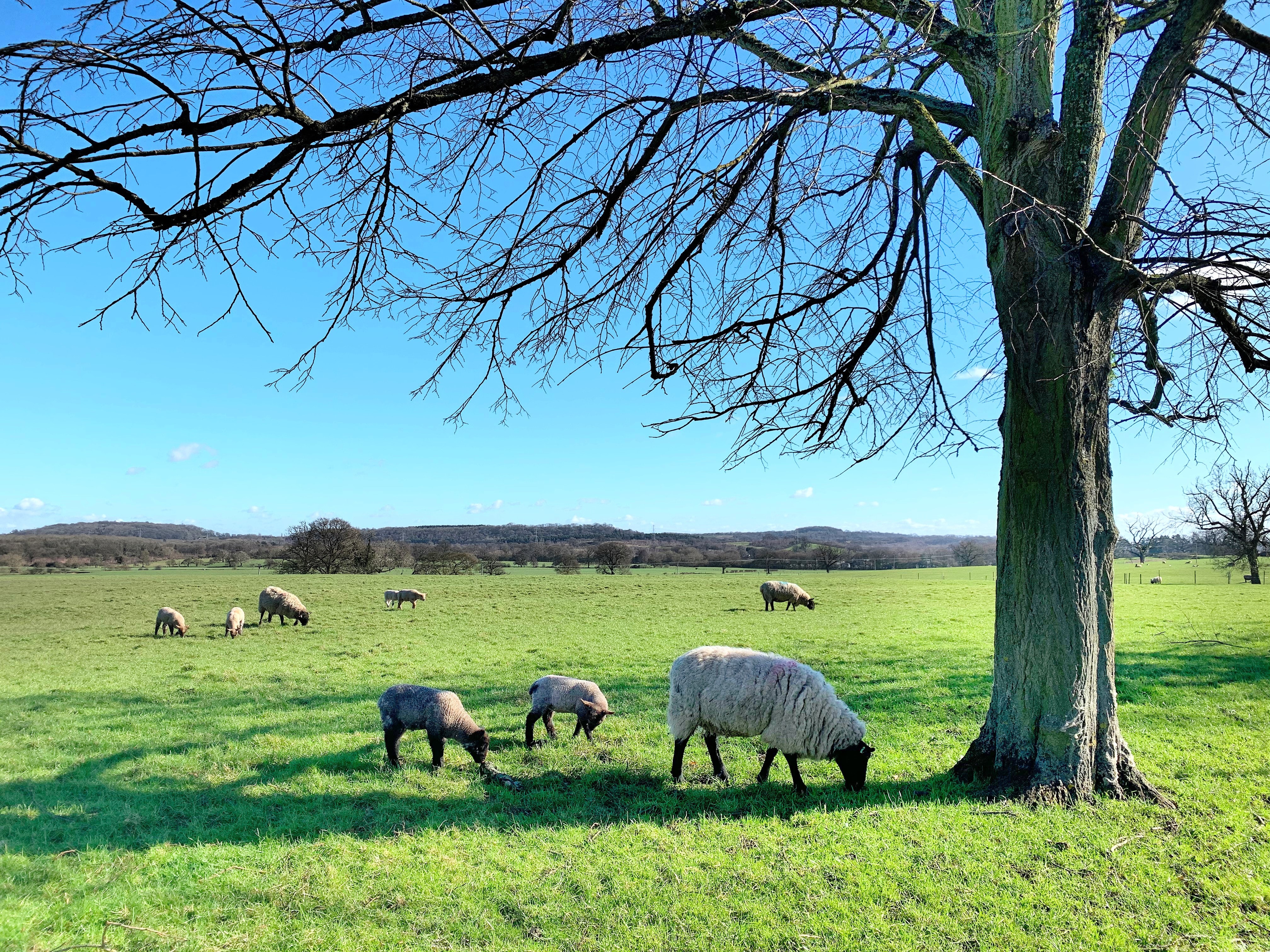
Photo credit: Ronnie Khan

Chapter 34 begins with the denouncement of Israel’s current leaders. What was the case before exile has continued in exile. God through Ezekiel pronounces doom on these poor leaders for living in luxury while ignoring the weak, the sick, the injured, the strays, the lost. There are many injustices so the flock scattered and then became prey. God promises to hold these bad shepherds accountable.

Beginning in verse 11, God offers the remedy. Here God proclaims: “I myself will search for my flock and seek them out… I will rescue them…” God will gather the scattered and care for the weak, the sick, the injured… As we continue in our reading we see that God will judge between the “fat and lean” sheep – between those living in luxury and those who struggle to survive.

God promises restoration, a new era. A David-like ruler will be appointed and a new covenant of peace will be established. Rains of blessing will pour down. Oppression and injustice will be no more. In verse 27 we read, “They will be safe on their fertile land, and they will know that I am the Lord when I break the bars of their yoke.” Without the yoke of oppression and injustice, there will be peace. There will be no famine; there will be no disgrace.

While the bad shepherds ignored these words of judgment, these words would offer great hope to the weak, the sick, the injured… to those living on the margins and edges. These words feel very relevant today. As injustices scatter people, as oppression sits heavy on others, as callous acts increase hunger, the people of God long for a good shepherd – not just for ourselves but also for the least of these among us. God’s children long for the rains of blessing and for a time of peace and grace. O God, may it be so.

Prayer: Lord God, you’ve always, always, always had a heart for the weak, the sick, the injured… You’ve always, always, always called for the faithful to join you in your care for the least of these. Lord, bridge the huge gulf between our reality and your preferred future. Use us to be a part of that bridge, each in our own ways caring for the weak, the sick, the injured… for the scattered and the oppressed. Amen.


Leave a comment

This Jesus

Reading: Luke 19:1-6

Luke 19:6 – “So Zacchaeus came down at once, happy to welcome Jesus.”

“Zacchaeus was a wee little man, and a wee little man was he.” Did your brain jump to the next line? The children’s song and the story are familiar to most followers of Jesus. While we only read the first part of the story in today’s text, we know what happens when Zacchaeus comes down out of that sycamore tree.

One day Jesus was passing through town. The chief tax collector is curious. He wants to see this man that lots of people are talking about. Wild stories of healings and of profound teachings circulate amongst the Jews in Galilee and beyond. Zacchaeus was short – both physically and in statute amongst the local people. Collecting the burdensome taxes for the hated occupying force did not win him any friends. So he has to resort to climbing a tree so that he can simply see this Jesus as he walks through Jericho.

We will encounter people like Zacchaeus – sinned and flawed like us, curious about this man they’ve heard about. We are other believers are the stories the curious have heard and seen. The abnormal kindness, the ever present grace and peace, the contentment, the care and concern for those others ignore or shun – there is something attractional about this Jesus we follow and strive to emulate. This Jesus noticed, stopped, and talked with Zacchaeus. In verse 6 we read about the results: “So Zacchaeus came down at once, happy to welcome Jesus.” May we too be willing to engage those seeking, opening the door of their hearts to welcome this Jesus home.

Prayer: Lord God, first, walk with us daily, filling us with your Spirit and your presence, empowering us to be a good example of your love, grace, compassion… Second, prepare us for the conversations that come with living our lives for you and for others. By the power of your Holy Spirit, give us the words to say to those seeking, drawing them deeper in their curiosity about this Jesus, the life changer. Amen.


Leave a comment

Bring Your Kingdom

Reading: Luke 11:1-13

Luke 11:9 – “Ask and you will receive. Seek and you will find. Knock and the door will be opened to you.”

Today’s passage holds three connected teachings on prayer. The first gives us a model for prayer. The second teaches us to be persistent in our prayers. The third reflects on the goodness of God’s answers to our prayers.

Our passage begins with a disciple asking Jesus to teach them how to pray. Jesus models a prayer life that is worth emulating. The disciple wants to have what Jesus receives when he prays: joy, peace, strength, hope. The prayer Jesus teaches is a simple prayer. It begins with praise to God and quickly moves to seeking God’s will. Notice the focus: God. It then shifts to needs: our need for daily provision and our need for forgiveness – both given and received. The prayer model closes with a plea for protection from the world, our source of temptation.

Verses 5-10 tell the story of a friend in need. Hospitality was and is highly valued in Judaism. In the story a man cannot offer hospitality. He turns to his neighbor, who initially refuses to help. But because of his friend’s persistence around doing a good and right thing, the friends give his what is needed. Connecting to the idea of prayer, Jesus says, “Ask and you will receive. Seek and you will find. Knock and the door will be opened to you.”

Our reading closes by unpacking what verse 9 means in terms of God’s answers to our prayers. Jesus tells us that our heavenly Father, who is good, will surely give good gifts to his children. Running through the bread example and this portion is the meaning of “bring your kingdom.” In the translation that we know better it is worded “your will be done.” This good and right alignment will most often yield a fish or an egg instead of a snake or scorpion. And when our prayers yield what we see as a snake or scorpion at first – may we keep the faith in our good God who works all things towards good for those who love God.

Prayer: Lord God, prayer is at the center of our relationship with you. It is the place where we can openly and honestly express all that is on our hearts and minds – our needs, emotions, struggles, joys, praises. Help us to focus on the ways that our lives bring your kingdom into this world. Empower us to walk and live in faith. Amen.


Leave a comment

Present and Future Reality

Readings: John 5:25-29 and Luke 19:7-10

Luke 19:10 – “The Human One came to seek and save the lost.”

Photo credit: Nathan Dumlao

God sent Jesus to save, not to condemn, to give eternal life, not to bring eternal punishment. Today’s readings speak to this and to the reality that salvation is both a present and future reality.

In John 5 Jesus declares that “the time is coming – and is here!” Those who are dead in their faith can hear Jesus’ words and have their faith come to life. This is the present reality. Jesus also speaks into the heaven-hell reality. “All who are in their graves” – the physically dead – they too will hear Jesus’ voice one day. When that day comes, some will be resurrected to life (heaven) and some will be resurrected to judgment (hell.) In the end, we all have a destination. How we live in the present will determine our outcome.

Turning to Luke 19 we enter the story of Zacchaeus. Jesus has just invited himself to Zacchaeus’ house. This causes everyone to grumble. A large crowd had gathered to see Jesus. What could or would he do for them? To choose Zacchaeus, tax collector and known sinner – unbelievable! In response to the crowd or to Jesus’ invitation (or both?) Zacchaeus declares his faith. He speaks in the present. Jesus tells the crowd that salvation has come to Zacchaeus. Jesus adds, “The Human One came to seek and save the lost.” Jesus came to change hearts and lives in the present. Jesus came to save and to bring eternal life to the lost. Thanks be to God.

Prayer: Lord God, your intent for all people isn’t just to enter heaven one day. It is also for us to experience heaven on earth here in the present – “on earth as it is in heaven” is what we pray each Sunday. Help us to walk daily in faith, being heaven to others so that they too can begin to experience your intent for their lives in the here and now. Amen.


Leave a comment

Are we? Do we? Will we?

Reading: Luke 10-11:36

Luke 10:36 – “What do you think? Which one of these three was a neighbor to the man who encountered thieves?”

Jesus sends out the 72 because the harvest is big and the workers are few. They are to heal and cast out demons. They are to share their blessing with people of peace. They are to trust in God to provide. Because they bring the kingdom of God near to people’s lives, they can rejoice: their names are written in heaven. We can be like the 72. Are we?

Next Jesus speaks of those places that have rejected the kingdom of God. It will be better for Tyre and Sidon and for Nineveh – the first would’ve listened and Nineveh did change hearts and lives. Jonah stood as a sign for Nineveh and now one stands in Israel’s midst who is greater than Jonah. Christ stands in our midst yet today. Which city will we be like?

Jesus is then tested by a legal expert. He asks what he must do to gain eternal life. When asked what he thinks, the expert offers the two great commandments. Pushing the issue, he asks, “Who is my neighbor?” Well, a man going down to Jericho was attacked and left for dead. A priest and then a Levite see the man and pass him by. A Samaritan, moved by compassion, cares for the man – extravagantly. Jesus asks the expert, “What do you think? Which one of these three was a neighbor to the man who encountered thieves?” Yes, the one who showed mercy is the neighbor. The expert is told: “Go and do likewise.” We are told the same thing, again and again in the Gospels. Do we?

Choosing faith is the focus of the teaching about Martha and Mary. Being persistent is the focus of Jesus’ teachings about prayer. Jesus tells us, “Ask… receive. Seek… find. Knock… the door will be opened.” Our good, good father God wants to and will give the Holy Spirit to those of us who ask, seek, and knock. But will we?

Prayer: Lord God, we read today of the call to trust, to witness, to change our hearts and lives, to be a good neighbor, to be persistent, and to go to you expecting a good answer from a good, good God. We see the results of lives lived in these ways. Our question today, God, is if we choose this way of life. Today, Lord, encourage and empower us to “go and do likewise,” loving you and neighbor extravagantly with all of our being. Amen.


Leave a comment

What a Day!

Reading: Zephaniah 1-3

Zephaniah 3:15 – “The LORD has removed your judgment; he has turned away your enemy. The LORD… is in your midst.”

Zephaniah proclaims the coming “day of the Lord.” Those who are humble and seek the Lord will find refuge in God. Those who relied upon themselves, their idols, their wealth and power – they will have nowhere to turn. Judgment will fall on the surrounding nations and then upon Judah. Zephaniah concludes with hope. He speaks of a time after judgment, when all people will “serve God as one.”

Zephaniah begins with judgment for the “world.” God will “eliminate humanity.” The prophet is likely referring to the small world surrounding Judah. He is speaking of and to God’s people. God’s hand will stretch out against those turning away instead of seeking God. Those in power will be punished for their violence, greed, and pride. It will be a horrible day, a day of “fury… distress… desolation… destruction… darkness.”

God encourages the humble to gather and to seek righteousness. They may be “hidden” on the day of the Lord. Zephaniah then turns to Judah’s neighbors next. Gaza, Ashod, Ekron, Philistia – doom is coming. Moab and Ammon will be made like Sodom and Gomorrah because of their taunting and boasting over Judah. Cush and Assyria will perish. And then in chapter 3 the focus shifts to Jerusalem – the city that wouldn’t listen and wouldn’t accept discipline. God will “rise up as a witness” against Jerusalem, pouring out “the heat of my anger.”

In verses 9-20 we read of the restoration that will follow. All people’s speech will change. They will call on God’s name and will “serve him as one.” Their shame will be removed along with their pride. A humble and powerless people will seek and find refuge in God. The lame and the outcast will be exalted. Judgment removed, enemies no more, Israel will know, The LORD… is in your midst.” All will be restored. What a day that will be!

Prayer: Lord God, one day judgment will fall. As a God of justice and righteousness there will be an accounting. But as a God of love and mercy, a day of healing and restoration will follow. In the end, the world will be as you created it to be. Thank you, Lord. Amen.


Leave a comment

Redemption

Reading: Hosea 1-5

Hosea 2:19 – “I will take you for my wife forever; I will take you for my wife in righteousness and in justice, in devoted love, and in mercy.”

Hosea begins our journey through “The Twelve.” He ministered to Israel during a time of prosperity and expansion. Because times were good, Israel had a very superficial relationship with God. They worshipped idols and relied totally on themselves. These forms of idolatry are denounced as “prostitution” by Hosea. In Hosea’s words we also find hope. Ultimately, and above all else, God seeks to redeem Israel from its sin, bringing both creation and God’s people back into a covenant relationship.

As the book begins, God commands Hosea to marry a prostitute. This relationship and the emotions it generates mirror God’s relationship with Israel. Hosea and Gomer have children. Their names tell the story of Israel’s coming downfall. God will punish Israel. God will have no compassion. God will not be their God. And in the next verse God says, after all that, “Not my people” will be called “Children of the living God.” Redemption and restoration will come.

In chapters 2, 4, and 5, God lays out the charges against Israel. God charges them with giving all that God provided to Baal and other idols. But even so God will one day redeem them. In verse 19 we read, “I will take you for my wife forever; I will take you for my wife in righteousness and in justice, in devoted love, and in mercy.” Then in chapter 4 God condemns the priests. The people have no knowledge of God. Instead, the people “take advice from a piece of wood.” God declares that the spirit of prostitution” is in them. They are addicted to these evil behaviors.

In chapter 3 God directs Hosea to “make love” to Gomer again, even though she is lost in prostitution, just like Israel. Hosea finds her and brings her back home – he redeems her from her lovers – and has her stay with him for a long time without sex. This mirrors Israel’s long time in exile without the temple, without sacrifices, without priests. This time apart will lead Israel to seek the Lord. They will then reenter into God’s goodness.

Prayer: Lord God, you have chosen us. You form us in the womb and you laid out good plans for our lives. You seek to walk with us in Spirit, offering to lead and guide us. One might think we’d be perfect disciples. Yet that’s far from what we are. Like Israel, we wander. We worship other “gods.” We mistreat one another and your creation. And… you remain faithful, loving, forgiving. You are unconditional in your commitment to our relationship. O Lord, help us to be faithful. Amen.


Leave a comment

To the Test

Reading: Daniel 1-3

Daniel 2:47 – “No doubt about it: your God is God of gods, Lord of kings, and a revealer of mysteries.”

Photo credit: Nadine Shaabana

As the book of Daniel begins, Babylon’s king attacks Jerusalem. Although the city does not fall, God hands over Judah’s king. In addition, they took into exile some men who were good-looking, skilled, intelligent, and capable. These men were to be trained as officials in Babylon’s government. Among these were Daniel, Hananiah, Mishael, and Azariah. The last three will be known as Shadrach, Meshach, and Abednego. Daniel will also receive a Babylonian name, but he will be known as “Daniel” throughout the book.

The first test comes around food. In training they are to eat the king’s food and to drink his wine. This would defile them. Daniel works out a test period, eating and drinking only vegetables and water. In the end they are healthier. God also blessed them with knowledge, wisdom, and understanding. When have you been in a position to eat or drink something that would “defile” you? What insights or strength do you gain from their example?

The second test comes around a dream. In a rage, the king declares that the sages must not only interpret his dream, but they must also tell him the dream. No one can do the impossible. All sages are to be executed, including the four. Daniel secures a brief respite and gathers his friends. They seek help from God. God responds to their trust and faith, allowing Daniel to tell and interpret the dream, doing the impossible. The king is very impressed, declaring, “No doubt about it: your God is God of gods, Lord of kings, and a revealer of mysteries.” When has your trust or faith in God helped another to see God’s power and might at work?

The third test comes around idolatry. King Nebuchadnezzar builds a 90 foot statue and orders everybody to worship it. He has forgotten what he just said about God. Shadrach, Meshach, and Abednego refuse – initially and then when before the king. They boldly declare their allegiance to God alone. Thrown into the fiery furnace, they not only survive but emerge totally unaffected by the flames. This time the king offers words of praise to God. God is working on his heart. How can you stand apart from or even against the things this world idolizes, leading others to praise God?

Prayer: Lord God, our faith is often put to the test. We must decide daily if we will choose to honor you, to trust you, to stand up to be counted as yours. Give us the strength to face these challenges that call us to risk for you. Help us to walk in your will and according to your ways, bringing you praise, honor, and glory. Amen.