pastorjohnb

Thoughts and musings on faith and our mighty God!


Leave a comment

Disciplined Faithfulness

Reading: 2nd Timothy 2:8-15

2nd Timothy 2:15 – “Present yourself to God as a tried-and-true worker… one who interprets the message of truth correctly.”
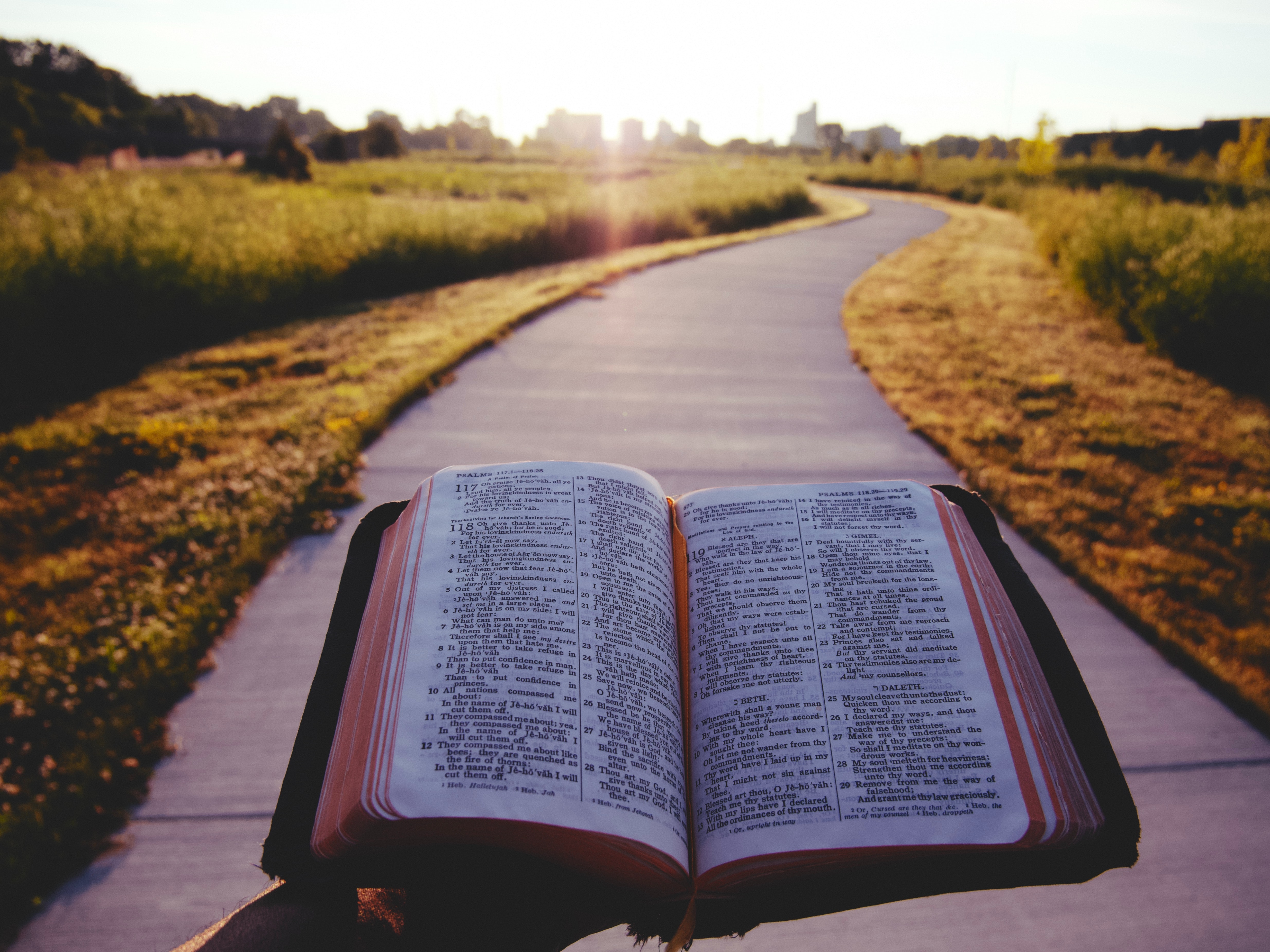
Photo credit: Aaron Burden

In today’s reading Paul is encouraging Timothy to pass on the message of the good news faithfully and correctly. In verses 8-10 Paul reminds Timothy of the example that Paul has set. Paul’s focus is on Jesus. This focus has led to suffering (he is in prison) yet Paul endures so that others “may experience salvation in Christ Jesus with eternal glory.” Paul’s faithfulness has allowed others to know the good news of Jesus Christ.

Verses 11-13 present the reality of our faithfulness when held up against Christ’s. When we do live faithfully – dying to ourselves, enduring suffering – then we live and rule with Christ. When we deny these things, living for self, then Jesus denies us too. In sin, we create this separation. Hope comes in the last verse: even when we are disloyal, Christ is faithful – that’s just who Jesus is. This is why Jesus is always there, always present to us.

Verse 11 engages the fourth step of Ignatuis’ Examen: repentance. Paul appeals to Timothy and to readers of this text to “die together” with Jesus Christ. This involves making the choice to die to those sins, both words and actions, that deny the Christ within us. Confession and repentance naturally flow out of step three (review) and they bring forgiveness, which brings us back into living faithfully with Jesus. To this end, Paul encourages Timothy to “not engage in battles over words” that cause harm. Such good advice for today! Paul then says, “Present yourself to God as a tried-and-true worker… one who interprets the message of truth correctly.” This connects back to Paul’s words in verses 1-7, where he offers examples of disciplined faithfulness. This faithful daily living allows us to not only interpret the message correctly, but it also helps us to live it correctly, bringing God the glory and honor and praise.

Prayer: Lord God, on the good days, we are able to live faithfully, witnessing to your love and grace. But when life gets hard or when we suffer, the walk is more difficult. In these times, make your power and presence known in our hearts. Empower us to the disciplined faithfulness that allowed Paul to endure all things. Amen.



Leave a comment

Breathing New Life

Reading: Ezekiel 37:1-11

Ezekiel 37:6 – “When I put breath in you, and you come to life, you will know that I am the Lord.”

Ezekiel witnessed Nebuchadnezzar’s siege and defeat of Jerusalem. He saw the leaders and then many others, himself included, taken away into Babylonian exile. Judah, like Israel to the north, was devastated. The temple was destroyed. Their relationship with God has been broken by their sin. Living in exile, hope was growing very thin and despair grew daily.

In chapters 33-36 Ezekiel begins to speak of redemption and restoration. He writes of changing their ways and of receiving a “new heart.” He leans into the image of God as the good shepherd who promises to rescue and protect the sheep. Speaking to the mountains of Israel, God through Ezekiel promises that the cities will be rebuilt and inhabited. Even with all of these hopeful words spoken, for those living in exile, the despair felt too great. Was all this even possible? Could God do it? Our passage today is God’s response to these questions.

In chapter 37 Ezekiel is taken in spirit to a valley full of very many dry bones. God asks the prophet if he thinks the bones can live. (Talk about impossible, right?) Ezekiel responds, “Lord God, only you know.” God says they can. After coming together, God adds sinew, flesh, and then skin. Then God says to the bodies, “When I put breath in you, and you come to life, you will know that I am the Lord.” Through Ezekiel’s words, new life enters the bones, “an extraordinarily large company.” They stand in the valley, as if waiting. God then tells Ezekiel (and therefore Israel), “Human One, these bones are the entire house of Israel.” God will restore and redeem not just some of God’s people. God will restore and redeem all of God’s people.

In our dry seasons of faith, in our times of sin and separation from God, in our experiences in the wilderness and in exile, God longs to redeem and restore us, to breath new life into our faith. O God, may it be so.

Prayer: Lord God, you will stop at nothing, you will do anything, you will try everything in order to bring us back into right relationship with you. This is true no matter how far we’ve run, no matter how deep we’ve fallen, no matter how long we’ve wandered. Thank you for your unconditional love and your unfailing grace. Amen.


Leave a comment

To Trust in Faith

Reading: Matthew 26:36-39

Matthew 26:39 – “My Father, if it’s possible, take this cup of suffering away from me.”

As we wrap up a week on faith overcoming our fears, we turn today to Jesus’ time in the Garden of Gethsemane. It has been a tumultuous week in Jerusalem. Jesus has clashed with the religious leaders. He has washed the disciples’ feet and instituted holy communion. He has spoken of betrayal and denial. As the time for his arrest, trial, suffering, and death nears, Jesus goes to a place of prayer that he has frequented. The disciples know this about Jesus and this place.

Entering the Garden, Jesus leaves most of the disciples, instructing them to “stay here” while he goes to pray. Taking Peter, John, and James a little further into the Garden and into his struggle, Jesus tells them, “I’m very sad. It’s as if I’m dying.” He tells them to stay they and to “keep alert” – pray! Falling to the ground, Jesus prays, “My Father, if it’s possible, take this cup of suffering away from me.” The human piece of Jesus fears what is soon to come: the arrest… The Divine piece of Jesus fears the separation from God when he takes upon himself our sins.

Choosing faith and trust over fear, Jesus prays, “However – not what I want but what you want.” What’s coming will be extremely hard, painful, difficult. But it is God’s plan. It’s always been the plan. In our moments of fear, when we can see what’s coming and when it is the unknown that raises up fear in us, may we too choose to trust in faith, knowing that our good, good God loves us and is in control. May it be so.

Prayer: Lord God, fear is something that we deal with often. It rises up in times of risk and danger; it rises up in times of challenge and trial. In the moments when fear is beginning to grip us, Lord speak into our hearts and minds. By the power of the Spirit, remind us that we are yours and yours alone. Amen.


Leave a comment

Heart Conditions

Reading: Matthew 5:21-22 and 27-30

Matthew 5:30 – “It’s better that you lose part of your body than that your whole body go into hell.”

As we continue to wrestle with the question of heaven or hell we turn today to some of Jesus’ words concerning what can lead a person into hell. Our two short sections on murder and adultery begin a series of teachings where Jesus also addresses divorce, oaths, retaliation, and love. In all of these teachings, Jesus calls us beyond the minimum of the letter of the Law. He’s really digging down into the condition of our hearts.

One of the Ten Commandments says, “Do not murder.” Yes, Jesus says, but he adds a warning about anger. This first emotion leads to harsh words which can lead to… Jesus could’ve warned about envy or arrogance or… Anger is not the only sin that could lead to murder.

Another of the Ten Commandments says, “Don’t commit adultery.” Again, Jesus goes to the root, warning about even looking lustfully at someone else. And, again, lust is not the only emotion that can begin the journey towards adultery. Illustrating that sin is often a progression, Jesus tells us to cut out our eye if it causes us to lust. And if a hand next continues the lustful action – “cut it off.” Sin is serious. It begins with temptation. It leads to separation from God – often temporarily but potentially eternally. Therefore, Jesus summarizes, “It’s better that you lose part of your body than that your whole body go into hell.” Clearly we must begin with an honest evaluation of the condition of our heart.

Prayer: Lord God, you see all things, know all things. Bring this truth to the fore when our humanity begins to wander towards less than you call us to be. May the voice and the nudge of your Holy Spirit work powerfully in our hearts and minds, aligning us with your charge to love you and neighbor more than self. Guide us to walk faithfully this day and every day. Amen.


Leave a comment

God Is…

Readings: Exodus 31, Exodus 32, Exodus 33, Exodus 34

Exodus 34:6-7 – “The LORD! A God who is compassionate and merciful, very patient, full of great loyalty and faithfulness… forgiving.”

Photo credit: Diego Gennaro

Chapter 31 begins with the appointment of two skilled artisans to oversee the building of the tabernacle. This is followed up by a reiteration of the Sabbath guidelines. God’s point: even the building of God’s home is not to be used as an excuse to break the Sabbath. All of our excuses pale by comparison.

The story of the gold bull calf fills chapter 32. The people go astray and Aaron goes along. Moses has been gone a long time. The people forget who and what God has been and done. An idol is made and is worshipped. God is ready to “devour” them in fury, but Moses intercedes, reminding God of their history. God’s anger relents. Moses and Joshua return to camp. Moses becomes furious, smashing the covenant tablets. He destroys the bull calf and forces the Israelites to drink its ash mixed in water. Moses then rallies the Levites. About 3,000 are killed by the sword. A plague then follows.

As chapter 33 begins, God refuses to go with these stubborn people. Moses sets up a tent outside of the camp, symbolic of real separation that their sin has created. God meets with Moses in the tent. The people are faithful, paying close attention. Moses again intercedes for the people, laying his relationship with God on the line. God relents. Moses is then allowed to see God’s glory. Passing by Moses, God declares that God is compassionate and merciful, very patient, full of great loyalty and faithfulness… forgiving.”

God then renews the covenant with the people. God warns the people about making a covenant with those that God will drive out. God instructs them to purge the land of the idols and altars that are there. They are warned about marrying the locals. God then reiterates much of the material from the first covenant. This time Moses comes down with a face aglow – reflecting God’s glory.

In today’s return to a story format we can again see ourselves – at times as the sinful, idol-worshipping Israelites and at times as Moses as he pleads with God. We can see ourselves as the Israelites eagerly watching for God and as the people who need warnings about the pagan culture around us. Through it all, though, both then and now, God remains compassionate and merciful, patient and forgiving. Thanks be to God.

Prayer: Lord God, how true and faithful you are. What a long, patient walk you have been on with your children. I am awed by your love. Amen.


Leave a comment

Recalling Faith and God

Reading- ‭Psalms ‭85:1‭-‬2‬ ‭- “LORD, you’ve been kind to your land; you’ve changed Jacob’s circumstances for the better. You’ve forgiven your people’s wrongdoing; you’ve covered all their sins.”

Photo credit: Diego Gennaro

Psalm 85 is a song of remembrance. Although we only read portions today and tomorrow, the whole song remembers both the good and the bad of Israel’s relationship with God. It recalls times of joy and times of sorrow. It thanks God for God’s presence and it begs God for God’s presence. In the general sense, then, it mirrors most of our lives of faith – the days when we are close to God and the days when we feel distant, the times of joy and the times of sorrow. These emotions and feelings are amplified in the holidays.

Like many Psalms and other books of the Bible, Psalm 85 reflects on the story of faith. Today’s two verses celebrate when God’s “favor” was shown, restoring the peoples’ lives. The restoration centers on the forgiveness of their sins. Sin is often what creates the separation and sorrow. God’s love and grace remedy this division. As a people of God and as persons of faith, it is important to remember that God always restores us – both in particular instances and in the continual mercy and grace that always abounds in our lives.

In the spirit of the Psalm, what stories of God’s presence do you recall? What special moments happened at this Christmas or at that family gathering? It is important to also reconnect to the moments when God has been tangibly present in Advent or Christmas Eve worship. Take some time to recall these God moments and the blessings of God for you and your family. And in doing so, be assured that God is with us now and will be with us in our future.

Prayer: Lord God, thank you for the many ways that you have touched our lives and our faith. As we’ve recalled these moments, we now rejoice in your love for us and for our place in the family of God. We are grateful for our place and for the love and presence that will continue to walk with us each and every day. Thank you, Lord God. Amen.


Leave a comment

Patiently, Attentively, Actively

Reading: Psalm 80:1-7 and 17-19

Verses 2-3: “Awaken your might; come and save us. Restore us, O God; make your face shine on us, that we may be saved.”

In this week’s Psalm the people of God are waiting to hear from God. The Psalm begins, “Hear us, O Shepherd of Israel.” They have lifted prayers to God and eagerly await God’s response. This is not like that text or email that we send that says, ‘Call me when you get a chance.’ This is lifting a prayer to God and then actively and attentively waiting for a response from God. Devotional writer Willie James Jennings beautifully describes it this way: “It is waiting inside a conversation that is happening inside a life with God.” The prayers of the psalmist and the prayers of the people are words offered within an intimate and personal relationship with the Lord.

At this point, as was the case in Isaiah’s passage yesterday, the Israelites feel or sense separation from God. Their sins have created this feeling. Sin isn’t the only thing to create a feeling of separation. Challenges that life throws at us can also cause these feelings. I think today of my beloved relationships. When I have caused hurt in these, I offer words of apology or healing and then I wait for a response. I don’t offer these words and then go off to do something else. I wait patiently and attentively.

The great plea offered in Psalm 80 comes in verses 2-3: “Awaken your might; come and save us. Restore us, O God; make your face shine on us, that we may be saved.” There are words of restoration and salvation in this plea. There is a hope and a trust that God will respond. These lead to waiting for God’s response, waiting patiently, attentively, actively with an open and obedient heart. In our moments and seasons when we feel separated and in need of restoration and salvation, may we too wait patiently, attentively, and actively.

Prayer: Lord God, I’m waiting here for you. In my distress and in my trial, I come to you seeking guidance and direction, a restoration to wholeness. Pour out your healing power, lay on the balm of your love. I will wait in hope and with trust in you, O God. Amen.


Leave a comment

Drawn Back

Reading: Isaiah 64:1-9

Verse 8: “Yet you, Lord, are our Father. We are the clay, you are the potter; we are all the work of your hand.”

Photo credit: Rainier Ridao

In ‭Isaiah‬ ‭64, God seems absent to Isaiah and to the people of God. The prophet longs for God to “rend the heavens and come down.” Isaiah longs for the people of God to once again know the God who “acts on behalf of those who wait for him.” When God has been known and then feels absent or withdrawn, one feels that. Life seems abnormal. We’ve all experienced this.

Isaiah recalls that God has indeed “come to help those who gladly do right.” When one lives faithfully and obediently, God is definitely active and present in one’s life. When we are aligned with God’s will and ways, it feels like we are walking closely with God. We too have experienced this.

Continuing on, Isaiah recognizes that the people have remained in their sin. They are “unclean” and right now “no one calls on God’s name.” They are out of alignment with God. They are not even seeking God. It is no wonder that God feels distant and disconnected. We too have experienced this.

Turning to verse 8, we find hope. Isaiah holds to a sure truth: God is present and just waiting to act. God does not abandon us ever. Speaking with hope and confidence Isaiah says, “Yet you, Lord, are our Father. We are the clay, you are the potter; we are all the work of your hand.” God is yet there, ready and willing to shape and form the people back into who God created them to be. The prophet asks God to look upon them once again. Isaiah longs for restoration and reconnection. God is faithful. The people will be drawn back to God. We have experienced this too. Thanks be to God.

Prayer: Lord God, when life leads me to question your presence or your love, when my choices or actions create a feeling of separation – draw me back to you. May the Holy Spirit call out my name; may my faith be rekindled, drawing me back to the only source of true life. Amen.


Leave a comment

The Love of God Almighty

Reading: Psalm 80:1-7

Verse 2: “Awaken your might; come and save us.”

Psalm 80 is an expression of lament that calls on God to be God. The words are couched in the Jewish understanding of covenant – God’s no-matter-what love for the children of God. The ‘how long’ feel and questions reflect the understanding that it is God alone with the power to keep the covenant. The great pleas are a recognition of how powerless humanity is and of how powerful and almighty God is.

Experiencing great loss naturally reminds us of these dynamics. For the psalmist and for the Israelites of his day, exile is their great loss and suffering. Their failure to uphold their side of the covenant has resulted in this hardship. They know that the drinking of “tears by the bowlful” is because of their choices and actions. The Israelites need God to rescue them. They need the Good Shepherd to guide them home. They need redemption and restoration from God Almighty.

This cycle of sin and separation followed by repentance and forgiveness is one that is played out again and again in the Bible. It is one played out over and over in our lives. It is in our human nature to struggle with greed, lust, jealousy… It is in God’s nature to love us in spite of and through these times and seasons of disobedience. With this understanding and with the faith and trust that it builds the psalmist can write, “Awaken your might; come and save us.” Because of the covenant love of God, the psalmist can cry out to the Lord Almighty, asking for God’s face to shine upon them, pleading for God’s mercy to save them. We are under this same covenant love. In our brokenness we too can cry out to God. Lord Almighty, come and save us!

Prayer: Lord God, your faithfulness began before creation and it will extend through all generations. Your covenant love knows no bounds, no limits, no exceptions. Hear the cries of your people today. Heal us, restore us, rescue us, redeem us, forgive us. Awaken your might, O God, and fill us with your power and glory. Amen.


Leave a comment

Living Abundantly

Reading: Joel 2:23-27

Verse 27: “Then you will know that I am in Israel, that I am the Lord your God, and that there is no other.”

Photo credit: Zac Harris

When was the last time that you really messed up? When was the last time that a poor decision or a sinful action created separation or distance between you and God or another that you love? If you are like me, you don’t have to think very far back to come up with a time that you were selfish or spiteful or sinful in some other way. Thinking back reminds us: we don’t want to go there again. That is verse 25 in today’s passage. Amidst the good news of how God will restore Israel is a reminder of why that’s necessary. “The years the locusts have eaten” reminds Israel of the time spent in exile, separated from God. We too can have seasons or even years when life is difficult because we have chosen to live outside of relationship with God.

Most of the verses in today’s reading – before and after verse 25 – speak of the abundant life that God offers. In verses 23-24 Joel speaks of the abundant rains that God will bless the people and the land with – rains that will yield grain and wine and oil. This will lead the people to praise God, to rejoice in the wonders that God has worked among them. Israel can be glad and can rejoice when life is good, when they are blessed with abundant provision. Just as we at times mess up and experience hardship in life and in our relationship with God and/or with others we love, so too have we experienced living abundantly within God’s love and provision. We too have lived verse 27: “Then you will know that I am in Israel, that I am the Lord your God, and that there is no other.” Thanks be to God.

Prayer: Lord God, my walk is not always hand in hand with you. Sometimes I let go and head off on my own path. This often leads to a time in the wilderness, filled with locusts and worse. When I begin to venture away, call me back quickly, restore me to abundant life. Amen.